
The quiet settles in around mid-afternoon. The coffee has gone cold, the phone hasn’t rung, and you’re fine, but something aches a little. That is loneliness, and this article is about the loneliness fix nobody talks about, which takes less than 10 minutes a day.
I cover why living alone and feeling alone are not the same, how task visits differ from connection visits, why a regular call beats an occasional long visit, and how to stay close from far away. I also cover why seniors hide loneliness, a checklist to see how connected you are, and why asking family for more is fair.
If you are not a senior yourself but want to help one feel less alone, adopting an elderly person for Christmas is one warm way to start.
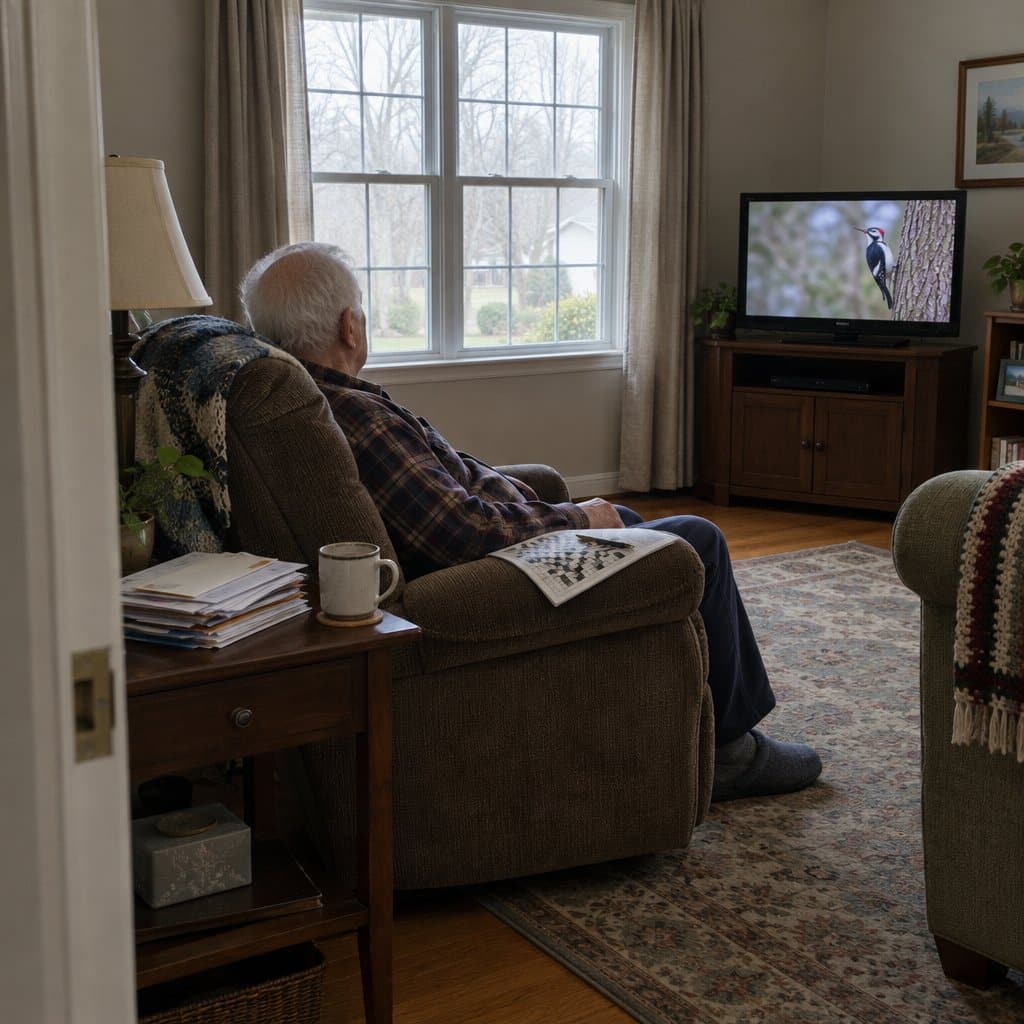
Why Small Moments of Connection Work Better Than You’d Expect
Most people assume that more time with others equals less loneliness. That’s not quite how it works.
The size of a social interaction isn’t what determines its impact. What matters is whether you feel seen and valued during it.
A five-minute conversation where someone feels genuinely heard can outperform two hours of passive togetherness, like sitting in the same room, watching TV, existing in parallel without really connecting.
Your brain registers intentional connection differently from incidental contact. A brief exchange where someone asks a real question, listens to the answer, and responds with care activates a sense of belonging that background presence simply doesn’t replicate.
People often underestimate the impact they have on others during these brief exchanges. A phone call that feels small to you can be the brightest part of someone else’s day.
You don’t need more time with people. You need more intentional moments with people. Those are not the same thing, and one of them is completely within reach today.
Research into reminiscence and meaningful conversation consistently shows that brief, emotionally present exchanges do more for wellbeing than longer interactions that stay on the surface.
Why Living Alone and Feeling Alone Are Not the Same
Loneliness is not only a feeling. Research links long-term loneliness and social isolation to faster cognitive decline, a higher risk of dementia, and a higher risk of early death. Some have compared it to smoking. Ask your doctor what this means for you.
Living alone and feeling alone are also two different things. Many people live independently, manage their homes, drive to appointments, and still feel profoundly isolated.
That is why a visit or a call from family is worth more than it looks. For someone with limited daily human contact, it is a real benefit to their brain function, immune health, and overall wellbeing.
One caution: the research shows the risks of isolation, but a single visit or call will not fix it alone. Regular contact is what counts.
The Micro-Connection Method: 3 Daily Actions That Take 10 Minutes Total
Three specific micro-habits, each taking just a few minutes, can meaningfully reduce the daily experience of loneliness when practiced consistently.
This isn’t a social calendar. It’s a 10-minute daily ritual that tells the people in your life, and you, that connection is a priority.
Action 1: The Morning Message (2 to 3 Minutes)
Send one text, voice message, or handwritten note to someone you’re thinking about.
It doesn’t need to be long. It just needs to be genuine: a memory, a question, something that says ‘I thought of you today.’
The act of sending matters as much as receiving a response. You’re not waiting for connection to come to you. You’re initiating it.
Personalized greeting card subscription services make this even easier. Curated, ready-to-send cards arrive monthly, so the ‘I want to reach out but don’t know what to say’ problem goes away.






Action 2: The Meaningful Check-In (5 Minutes)
One brief but intentional conversation per day. Not small talk, but one real question.
‘What’s been the best part of your week?’ or ‘Tell me something that made you smile lately.’
Depth, not duration, is what makes a conversation feel like real connection. You may find that five focused minutes beat thirty distracted ones.
Action 3: The Anticipation Builder (2 to 3 Minutes)
Create something to look forward to in your correspondence.
A letter you’re writing over several days. A card you’re preparing to send. A photo you’re gathering to share.
Anticipation itself can lift your mood. Having something to look forward to, even something small, changes how the whole day feels.
When the technical side of reaching out feels like the obstacle, simplified tablet setups (like the Amazon Echo Show) make video calls as easy as saying someone’s name. The easier it is, the more likely you are to follow through.




This isn’t about filling a schedule. It’s about feeding a real need, consistently and without drama.
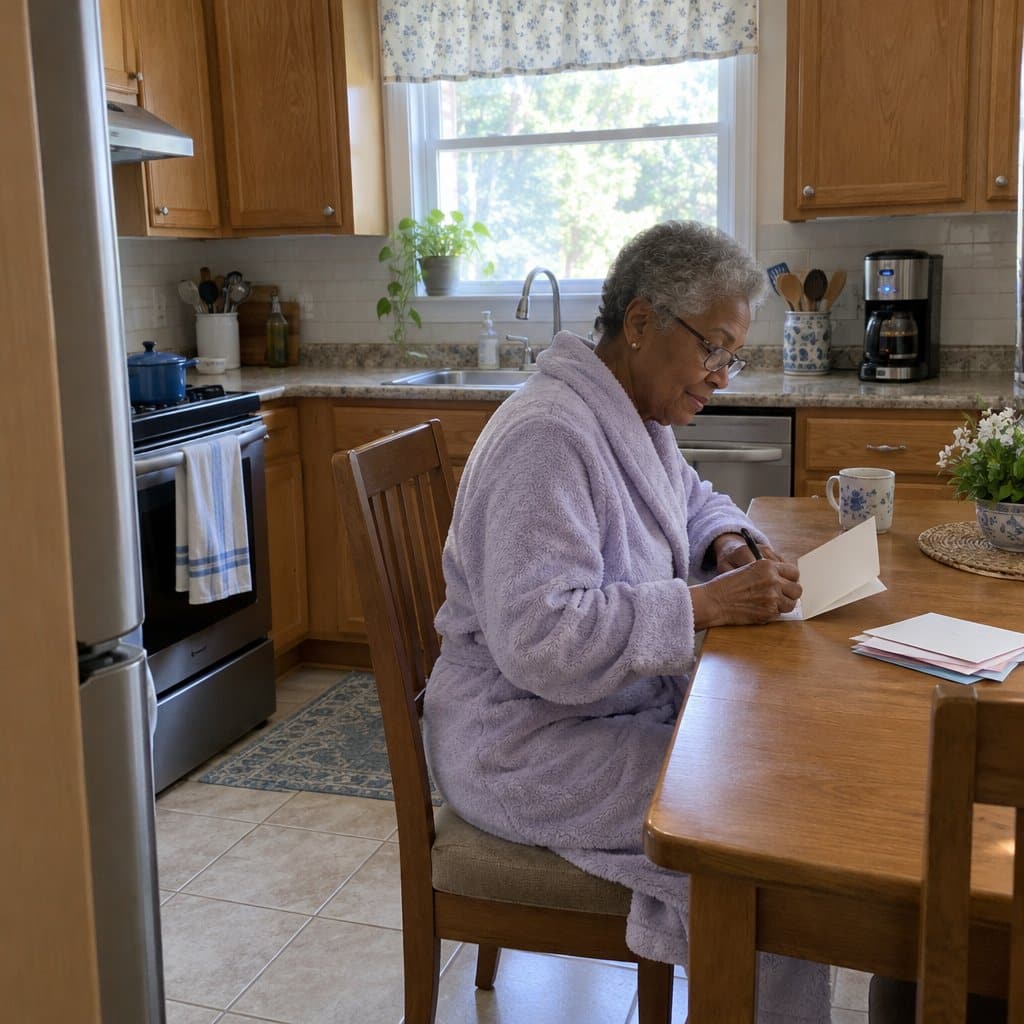
The Connection Anchor Technique: Attaching Connection to What You Already Do
The most effective habits are the ones attached to existing routines. Connection habits are no different.
This is sometimes called ‘habit stacking’: pairing a new micro-habit with an existing daily anchor so you never have to remember to do it separately.
Simple Connection Anchors That Work
- Write one card while morning coffee brews
- Send a voice message during a TV commercial break
- Make a 5-minute call as part of a daily walk
- Text someone a photo from your day right after lunch
The predictability of an anchor routine also creates something valuable: a sense of purpose and rhythm. Days with structure feel different from days that drift.
Consider the difference between someone who intends to call family ‘when I have time’ and rarely does, and someone who has made a standing 5-minute call part of their morning coffee ritual and never misses it. Same desire. Completely different outcome. Not because of discipline, but because of structure.
You’re not adding something to your day. You’re enriching something that’s already there.
For video calls as a connection anchor, devices like the Amazon Echo Show or GrandPad tablets make it possible to connect with a single tap, with no complex menus and no forgotten passwords. That makes the habit easier to stick with.
Staying socially connected is linked to better brain health and lower stress. These micro-habits are not just emotionally meaningful. They may help your body too.
Want more practical strategies for living fully and independently? Subscribe to our newsletter for ideas and recommendations for older adults and the people who care about them.
Why Seniors Hide How Lonely They Are, and What Quiet Withdrawal Can Mean
Say your mom tells you she is fine. She stays busy, she has her shows, and she does not complain. Because she sounds okay, you believe her.
That she rarely mentions being lonely does not mean she is not. It may only show how well she has learned to protect you.
Many older adults raised families in a time that valued self-sufficiency. They spent decades taking care of other people. Asking for more connection can feel like weakness, or like being a burden.
That sets up a loop. Your parent does not say they are lonely, so you assume all is well. Visits stay few, the isolation deepens, and your parent goes further into silence.
Depression can also look like withdrawal and quiet disengagement, not tears or complaints. What looks like contentment is sometimes something else. If you have noticed withdrawal or a low mood, mention it to their doctor, and the checklist of signs that a parent may need a higher level of support is worth reading.
If you are the adult child, try changing the question. Instead of “How are you doing?”, ask “What’s been the best part of your week?” or “Has anything been on your mind lately?” It leaves an opening that “I’m fine” cannot close as easily.
It also helps to ask yourself a few plain questions:
- Does my parent know when they will hear from me next?
- In my last three conversations, did I ask about their thoughts, or mostly handle logistics?
- Am I assuming they are okay because they have not complained, or because I have real evidence?
Most caring families find a gap or two. That is normal, and it is a place to start, not a reason for shame.
If you are the one feeling lonely, what you feel is not a character flaw. Wanting more contact with people you love is a real need. Saying “I’d love to see you more often” is not a complaint. If you want more ideas, how older adults can beat loneliness and find new friends may help.
One trade-off: a better question will not always bring out a real answer the first time. Your parent may need to hear it a few times before they trust that you want the truth.
Why a Regular Call Beats an Occasional Long Visit
Here is something that surprises most families: the visit itself is only part of what helps. Knowing the next one is coming matters too.
Looking forward to contact lifts mood. When visits and calls are predictable and expected, the stretches in between may feel easier.
That changes the math for anyone short on time. A steady 20-minute call every week does more good than one long visit every two months.
Even brief contact gives steady comfort that sporadic big visits cannot match. A holiday gathering or a birthday visit is meaningful, but it does not make up for weeks of very little contact.
The same goes for phone calls, video calls, and handwritten letters when you live far away. What counts is not how long you stay. It is that your parent knows you will show up, and when.
So open your calendar and set a recurring time, even 20 minutes, and treat it like any appointment you would not skip. Before you hang up, say when the next call will be. “I’ll call you Thursday” gives them something to look forward to until Thursday.
A phone call can’t replace a hug, though, so it’s worth knowing the signs of touch deprivation in seniors too.
Keep in mind that a rhythm also helps you notice change. If you see withdrawal or a low mood, the warning signs that a parent may need more support are worth knowing about. It also helps to understand how an unsafe or isolating home affects a senior’s brain and body, since that shows why steady contact matters so much.
One trade-off: a rhythm only works if you keep it. A schedule you cannot sustain is worse than a smaller one you can, so pick something you will actually protect.
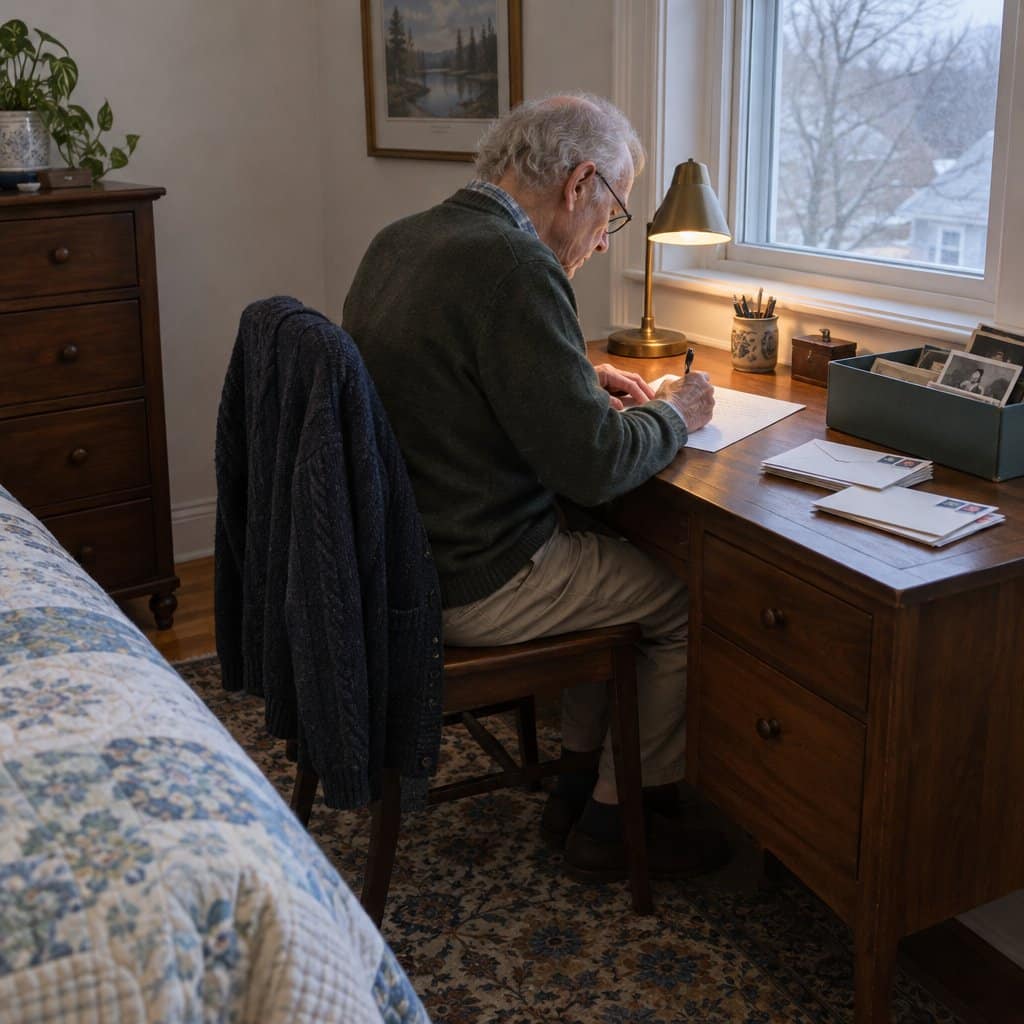
The Pen-Pal Approach: Why Correspondence Creates Connection That Lasts
Receiving something physical in the mail triggers a different emotional response than a text or email. It takes effort to send. It takes time to arrive. And when it does, it communicates: you were worth this.
A simple, ongoing correspondence, even with someone you see regularly, creates anticipation, purpose, and a felt sense of being thought of between visits or calls.
Why Letter Writing Works on Multiple Levels
- It gives you something to look forward to (their reply)
- It gives them something to look forward to (your letter)
- The act of writing engages memory, reflection, and creativity
- It creates a thread of connection that persists between in-person interactions
Think about the difference between a quick text exchange that ends in minutes versus a letter exchange where each reply is anticipated, savored, and responded to thoughtfully. Both involve words. Only one registers as lasting connection.
This approach works well for people who find the pace of digital communication overstimulating or impersonal, but it works for anyone who wants connection that feels intentional rather than incidental.
Correspondence isn’t old-fashioned. It’s a rich form of connection, and it requires nothing more than a pen, some paper, and 10 minutes.




Purposeful engagement like letter writing and creative correspondence is also good for keeping your mind active, which makes it a meaningful activity on more than one level.
Asking Your Family for More Connection Is Not Asking Too Much
If you are the older adult reading this, this part is for you. Many people hold back from saying they are lonely or asking for more contact. The fear of seeming needy or like a burden is real, and it keeps a lot of people quietly isolated when they do not have to be.
Asking for connection is not weakness. It is speaking up for a real health need, no different than asking your doctor to review a medication that is not working.
Your family likely wants to connect more than their schedules show. The gap is usually not a lack of love. It is a lack of structure, and a lack of a specific invitation.
Here are some scripts that work:
- “I’ve been thinking about you. Could we set up a regular call?”
- “I’d love to hear about what the kids are up to. Could we do a video call this week?”
- “I miss our conversations. Could we plan something, even just 20 minutes on Sunday?”
Be specific rather than general. “I miss you” is easy to file away. “Could we talk every Sunday at 2?” gives someone something concrete to say yes to.
You can also give them something to talk about. Ask about a memory or story and the conversation has somewhere to go. Your family will not always know what you would enjoy until you say so.
Family contact also belongs in the same conversation as blood pressure checks, and neglecting it has a slow, quiet cost, much like an unsafe home that wears on health a little at a time. Asking is a skill, and it is worth practicing.
Here is a small step for this week. Pick one person you would like to hear from more often. Write one specific, low-pressure invitation and send it before the week is over.
One trade-off: your first invitation may not get a quick yes, since schedules are crowded. A clear, specific ask still gives your family something to work with.
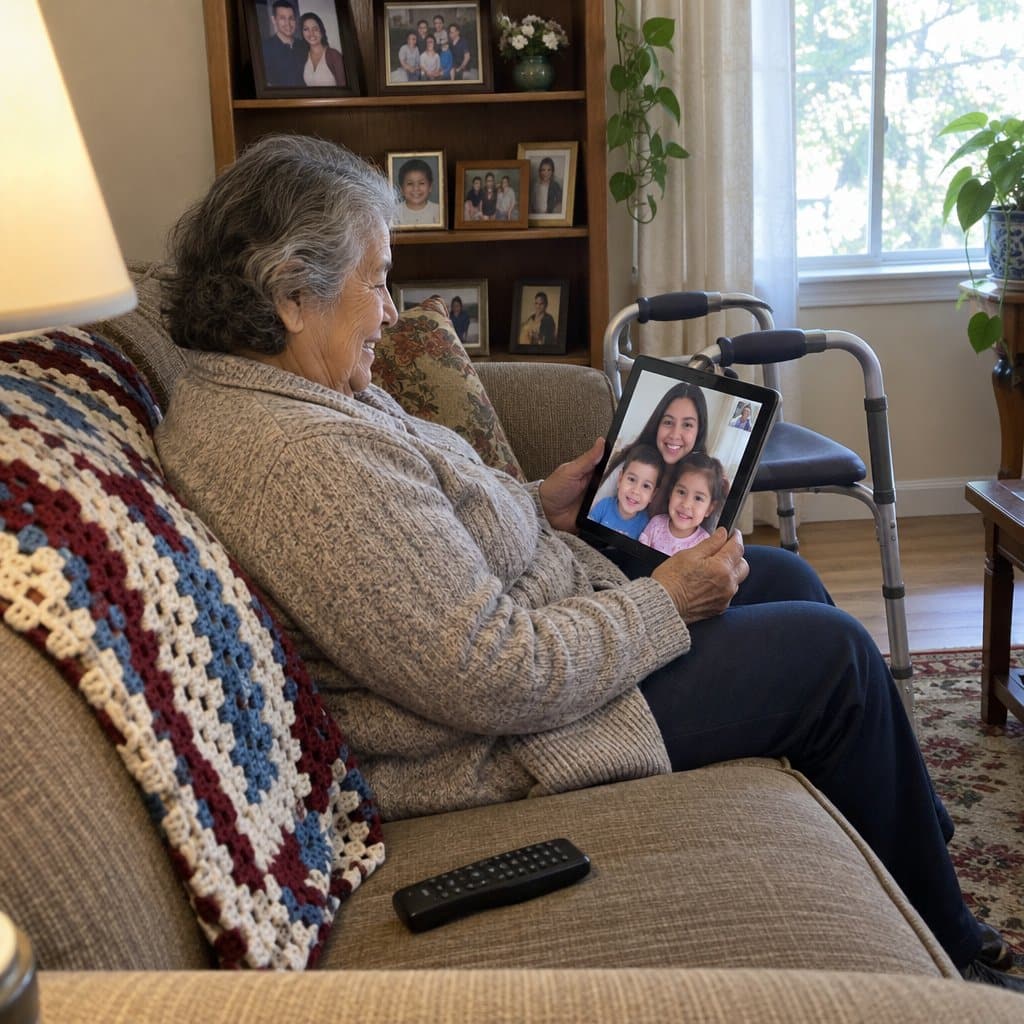
Staying Close When You Live Far Apart
Meaningful connection does not require living nearby. What it requires is predictability.
A weekly video call works best with a little structure. Come with one question, one photo to share, or one memory to revisit, because calls with no plan run out of steam quickly.
A video calling tablet made for seniors takes the tech barrier out of the picture.
A shared photo stream or family group chat gives daily presence without a scheduled call. Grandchildren can post photos and updates, and your parent does not have to reply to feel included. Just seeing the stream matters.
Care packages work when they are personal. A handwritten note, a newspaper clipping, or something that nods to an inside story says more than a generic gift. Grandchildren can add a short voice message or a drawing.
Some families do not fit the usual advice, and “just call more” is not a complete answer for everyone. If distance is the problem, a short text, a quick photo, or a 10-minute call repeated reliably beats an occasional long visit.
If the relationship is strained, the goal is not forced closeness. It is small steps toward steady presence, however imperfect. A brief, genuine check-in is worth more than waiting for ideal circumstances that may never come.
If the family is small, friends, faith communities, neighbors, and structured social programs carry similar benefits. Widening the circle is a real health strategy, not a consolation prize.
Staying emotionally present also gets harder when worry is crowding your mind. Knowing the effects of an unsafe home on a senior’s brain and body, and the 15-minute fix is one worry you can take off the list.
One trade-off: none of this works by being picked and forgotten. Choose one ritual, put it on the calendar, and keep it small enough to last.
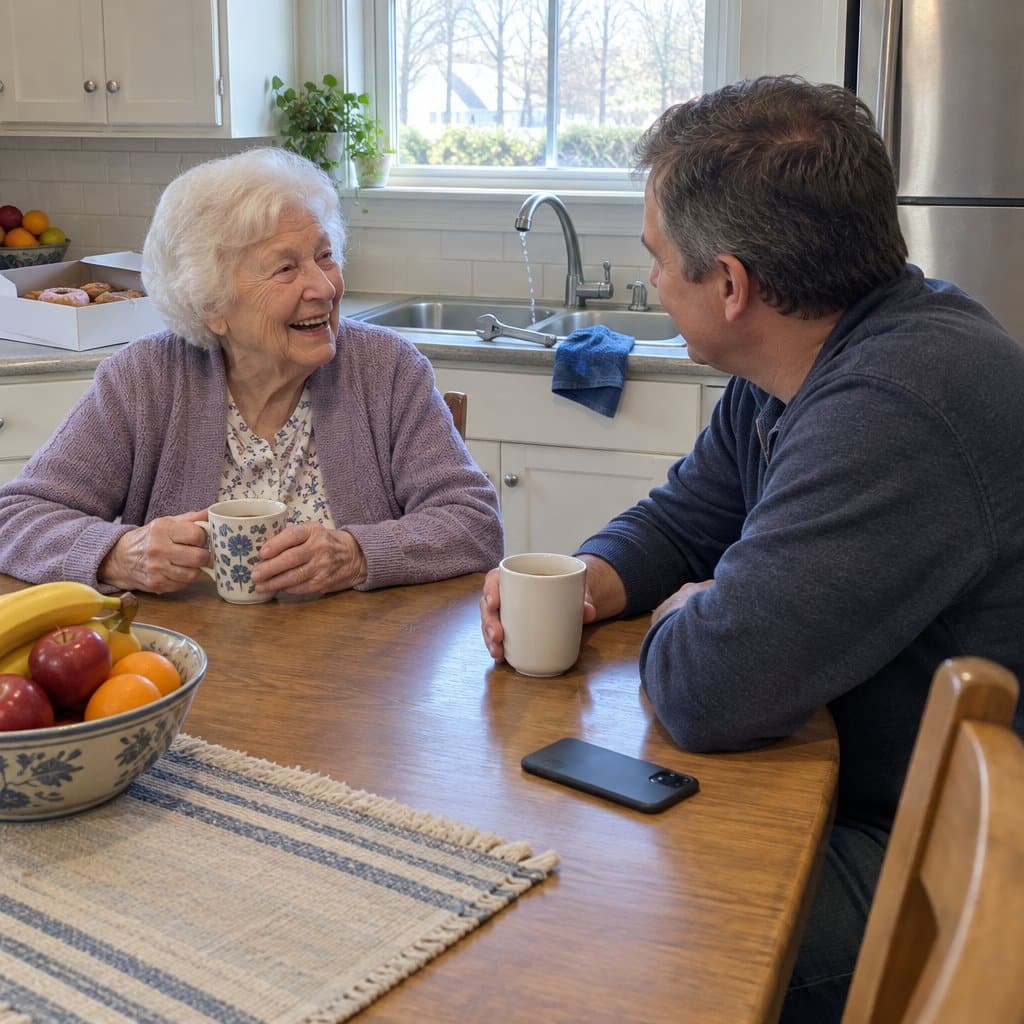
Task Visits Versus Connection Visits
Say your mom’s prescriptions are filled, her groceries are delivered, and you handle her doctor appointments. Most families believe that means they are doing enough, and in many ways they are.
Still, not all family contact does the same good. Fixing the gutters, checking the fridge and dropping off medications is valuable. But it lands differently than time where she feels seen and enjoyed rather than managed.
Consider two versions of a Sunday visit. In the first, you check the medication organizer, fix a leaky faucet, confirm the next appointment, and head out in 45 minutes.
In the second, you bring coffee, sit at the kitchen table, and ask about a memory or story you have never heard before. You stay an hour and leave nothing fixed, except maybe how your mom feels about herself.
Both visits involve showing up. Only the second one gives the feeling of belonging. There is a real gap between being someone’s project and being someone’s person.
You do not need more visits to close that gap. You need a different kind of presence in the one you already have planned. Pick one upcoming visit or call and shift it, even briefly, from task mode to connection mode.
Talking about the past is one of the quickest ways to do that, and structured reminiscing may leave you both feeling sharper and happier, even in a short visit.
Leaving out connection carries a slow, quiet cost, much like an unsafe home that wears on a senior’s health. Nobody notices it day to day, but it adds up.
One trade-off: the practical jobs still need doing. The point is to add the kitchen table conversation, not to drop the faucet repair.
For Caregivers: The 3-2-1 Rule for Reducing a Loved One’s Isolation
If you can’t be physically present as often as you’d like, this simple weekly structure can make a real difference without requiring extra hours in your day.
The 3-2-1 Rule
3 brief messages throughout the week:
A text, a voice message, a funny memory, a simple question. ‘Thinking of you today.’ ‘Saw this and thought of you.’ These don’t need to be long. They need to be consistent.
2 intentional check-in calls of 5 to 10 minutes:
Not logistics calls (‘Did you take your medication?’). Real conversations focused on one meaningful topic: a memory, a question about their life, something they’re looking forward to.
1 something to look forward to each week:
A card in the mail. A scheduled video call. A small surprise delivery. Something that creates anticipation, because anticipation can help push back against the flatness that loneliness creates.
Why Consistency Beats Grand Gestures
A predictable small connection every few days may do more for daily loneliness than an occasional long visit. It’s not about intensity. It’s about felt presence: the sense that someone is thinking of you regularly, not just when circumstances allow.
Professional caregivers can introduce this framework to the families they work with as a low-effort strategy. Supporting aging parents who are isolated becomes more manageable when there’s a simple structure in place, not just good intentions. If your parent lives far away, you may also want to read about summer isolation in older adults and ways to help from a distance.
For the video call component, set up a dedicated device for your loved one, one that connects to your face when they tap one button. That removes the technical barrier. Cognitive decline and isolation often go together, which makes early, consistent connection habits especially important.
You don’t need to be there every day to make your loved one feel consistently connected. You just need a simple structure and 10 minutes spread across the week.
A Checklist to See How Connected You Really Are
Most caring adult children think they are more connected to a parent than they are. It is not neglect. Memory smooths over the gaps.
Read through these questions and answer them plainly:
- When did I last give my parent my full, undivided attention in a conversation?
- Does my parent know right now when they will hear from me next?
- In my last three conversations, did I ask about their opinions and current life, or mostly handle logistics?
- Has my parent mentioned feeling lonely, bored, or that time moves slowly?
- Am I assuming they are okay because they have not complained, or because I have real evidence?
- When I visit or call, is my phone put away and silenced the whole time?
- Is there a reliable, recurring pattern to our contact, or does it happen when I remember?
Most people who care deeply will find a gap or two. That is normal, and it is not a reason for shame. It is the place to start.
If you are the parent reading this, you can hand these questions to a family member. Or you can simply say, “I’d love to see you more often.” That is a reasonable thing to ask.
If your answers turn up signs of withdrawal, disengagement, or a low mood, I’d suggest reading about the warning signs that a parent may need a higher level of support. The point is to stay ahead of changes before they become crises.
One trade-off: a checklist only shows you the gaps. It will not close them, so choose one answer you did not like and change that first.
Start Today: Just Pick One
The loneliness fix nobody talks about isn’t complicated. It’s quiet, consistent, and completely within reach.
Three small daily actions. A habit anchor that fits what you already do. A letter in the mail. Ten intentional minutes.
Whether you’re an older adult with quiet afternoons, or a caregiver dealing with guilt and distance, connection doesn’t require perfect circumstances. It requires small, consistent choices.
Here’s what I’d encourage you to do: pick just one strategy from this article and try it today. Not this week. Today.
Send the morning message. Write the first line of a letter. Text one person something genuine.
Addressing loneliness early, before it becomes entrenched, is one of the kindest things you can do for your long-term wellbeing. And it starts with a single intentional moment.
Which approach are you going to try first? Share it in the comments. Your answer might be exactly what someone else needed to read today.