
You’re sitting with your mother. She hasn’t responded to her name in hours. You’ve tried conversation, photos, her favorite food — nothing.
Then a song comes on. One she loved at nineteen.
And she starts singing. Every word. Eyes bright. Fully present.
If you’ve witnessed that moment, you already know something extraordinary is happening. And if you haven’t yet — understanding why it happens can help you create it on purpose.
There is real neuroscience behind these moments. Once you understand it, you can use music intentionally to comfort, calm, connect, and motivate your loved one in ways that conversation, routine, and even medication often cannot reach. This article covers both the “why” and the “how” — including how to build a playlist that actually works.
Music and Memory: Your Caregiver’s Quick-Reference Guide
Download our practical guide that shows you exactly how to take control of this challenge with simple, proven strategies designed specifically for older adults, caregivers, and families.
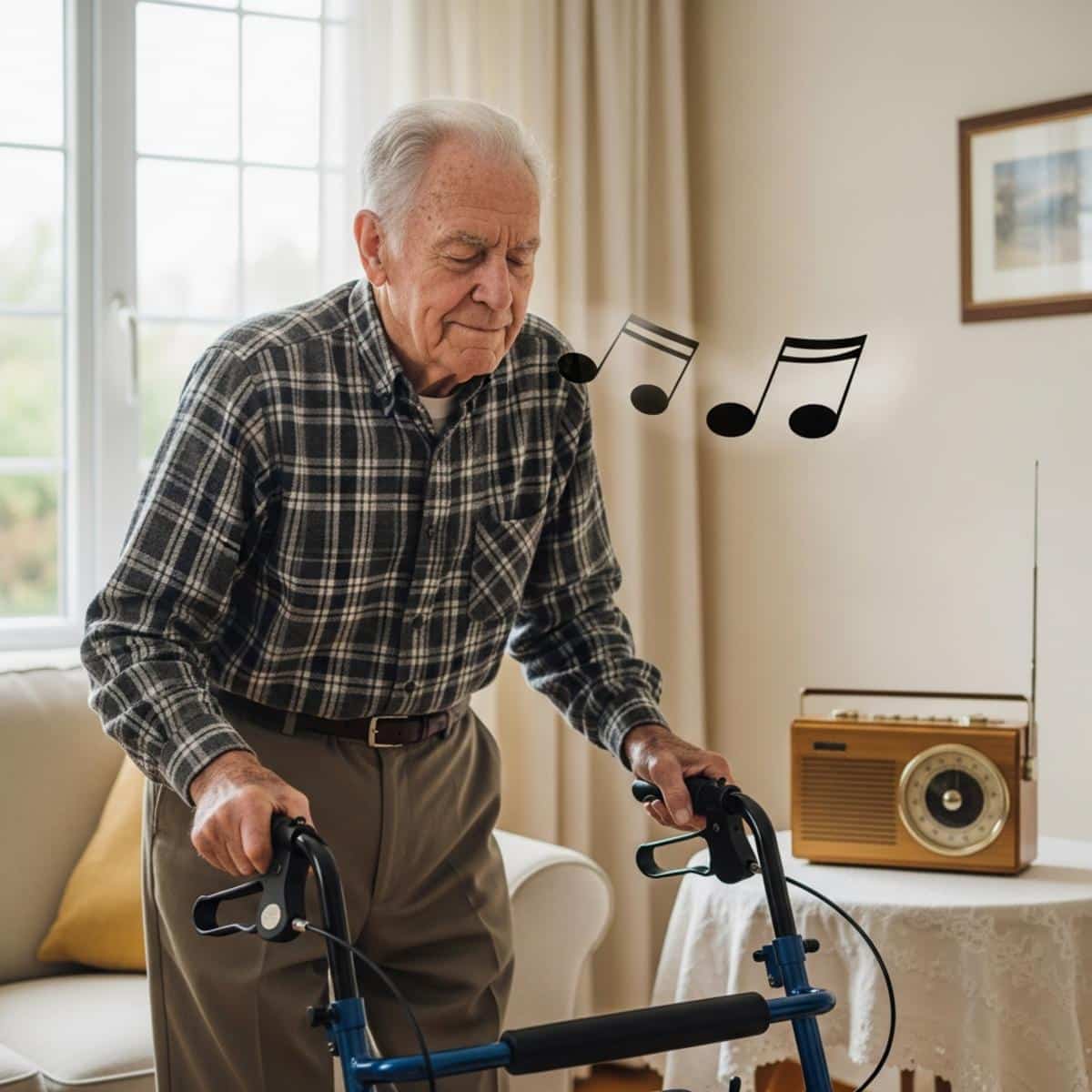
Why Music Reaches the Brain When Everything Else Has Gone Quiet
Most memories are stored in regions of the brain that Alzheimer’s and dementia damage early — the hippocampus, the frontal lobe, the areas responsible for names, faces, and recent events.
Musical memory is different.
Familiar songs are encoded across multiple brain regions simultaneously, including areas that tend to be more resilient to neurological decline. The auditory cortex, the cerebellum, the basal ganglia, and the limbic system all participate in processing music — why a song can survive cognitively long after a person’s name cannot.
There’s also something called procedural memory at work. This is the same system that lets you ride a bike decades after your last ride. When someone with dementia hums along, taps a rhythm, or sings a chorus without prompting, they’re drawing on a deeply embedded motor and sensory pattern — one the disease hasn’t erased.
This isn’t coincidence or luck. It’s consistent, reproducible biology. Researchers and professional caregivers are now building formal approaches around it — what’s sometimes called reminiscence therapy, which uses sensory triggers like music and photographs to access long-term memory and reduce agitation.
Witnessing your loved one respond to music isn’t a miracle. It’s their brain working exactly as it was designed to.



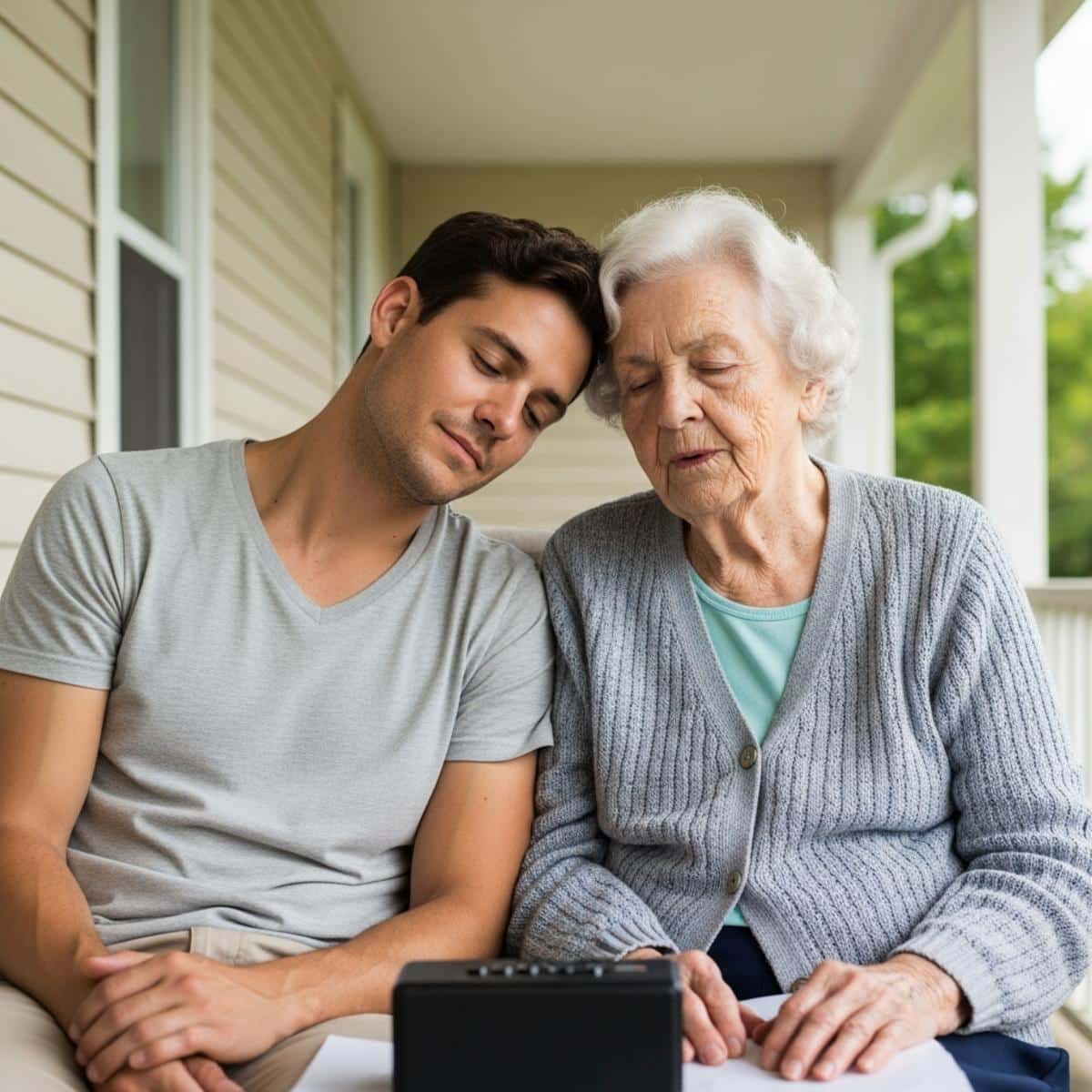
The Music That Matters Most — and Why It’s Probably From Their Teenage Years
Not all music works equally well. And the most powerful songs are almost never recent ones.
Researchers have identified a phenomenon called the reminiscence bump — the brain’s tendency to disproportionately encode experiences from late adolescence and early adulthood, roughly ages 15 to 25. This is when emotional intensity is highest, when identity is forming, when first loves and major life milestones are happening. Those experiences create stronger, more durable memory traces.
The music tied to those years carries the same encoding advantage.
A practical way to think about it:
- Born in the 1930s? Their most resonant music is likely from the late 1940s through mid-1950s — big band, early rock and roll, classic crooners.
- Born in the 1940s? Think late 1950s through mid-1960s — Motown, early Beatles, classic country.
- Born in the 1950s? Look to the late 1960s through mid-1970s — classic rock, soul, folk.
Familiarity alone is less powerful than genuine emotional resonance. A song they simply heard often is not the same as a song tied to a meaningful moment. Ask family members. Look through old photos for clues about what they loved. The effort to find the right music is worth it.
For families who want to simplify this process, pre-loaded music players designed for seniors — loaded with era-specific songs — remove the friction of streaming services and complicated interfaces, making it easier for your loved one to access their music independently. If you are choosing one, this guide on how to find a simple music player for seniors that actually gets used walks through matching the device to the person.



Five Ways Music Improves Senior Health Beyond Mood
Music’s benefits go well beyond emotional comfort. Here are five specific, documented ways it supports senior health:
Pain management. Familiar music activates the brain’s reward system and naturally shifts attention away from discomfort. Studies show it can meaningfully reduce perceived pain intensity — without side effects.
Anxiety and agitation reduction. Calming, familiar music lowers cortisol levels and creates a predictable sensory environment. This is especially valuable for managing late-day agitation and sundowning, when distress tends to peak.
Sleep quality. Slow-tempo music played in the 30 minutes before bed can help older adults fall asleep faster and experience more restful sleep cycles — a meaningful benefit for those whose sleep patterns have shifted with age.
Movement motivation. Rhythmic music naturally encourages physical movement. Pairing music with a daily walk, physical therapy exercises, or light activity can increase participation and reduce resistance.
Social connection. Shared music experiences — singing together, tapping along, simply listening side by side — reduce isolation and loneliness and create genuine interaction even for those with limited verbal communication.
Music is not just comfort. It’s a multi-purpose health tool you can deploy intentionally across the day.


Want more practical, research-backed strategies for caregiving and aging well? Subscribe to the Graying With Grace newsletter for trusted advice delivered directly to your inbox every week.

How to Build a Playlist Your Parent Will Actually Respond To
Effective playlists are personal, not generic. Here’s a research-backed approach to building one:
Step 1: Start with the reminiscence bump years.
Identify the era when your loved one was between 15 and 25. That’s your starting point. Talk to siblings, look through old records, or search era-specific song lists online to build a candidate pool.
Step 2: Watch for physical and emotional signals.
Tapping, humming, a visible change in facial expression, relaxed posture, or spontaneous singing are all signs a song is resonating. These responses are your feedback loop.
Step 3: Keep it short and consistent at first.
Start with 10–15 songs rather than a sprawling playlist. Familiarity and repetition matter more than variety in the early stages. Expand gradually as you identify what lands.
Step 4: Match the playlist to the moment.
- Morning: Upbeat, energizing songs to support the transition into the day
- Afternoon / sundowning window: Slow-tempo, deeply familiar songs played before agitation peaks — not after. High-energy or unfamiliar music during this window can increase distress rather than reduce it.
- Pre-sleep: Gentle, calming music with tempos under 60 beats per minute
For sundowning specifically, timing matters as much as song choice. Starting music in the late afternoon — before the anxiety window arrives — is significantly more effective than using it reactively once agitation has already set in.
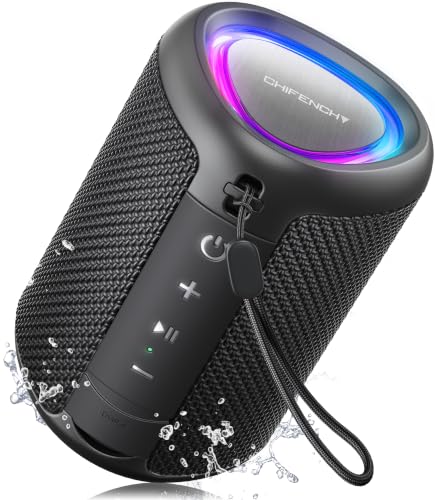
Large-button radios and simple MP3 players pre-loaded with familiar songs make it easier for seniors to access music independently, without navigating streaming apps or complicated interfaces. A Bluetooth speaker placed in a common area also allows caregivers to manage playback without disrupting the moment.
Building this playlist is one of the most meaningful and practically effective things you can do as a caregiver — and it doesn’t require any musical training or clinical background.
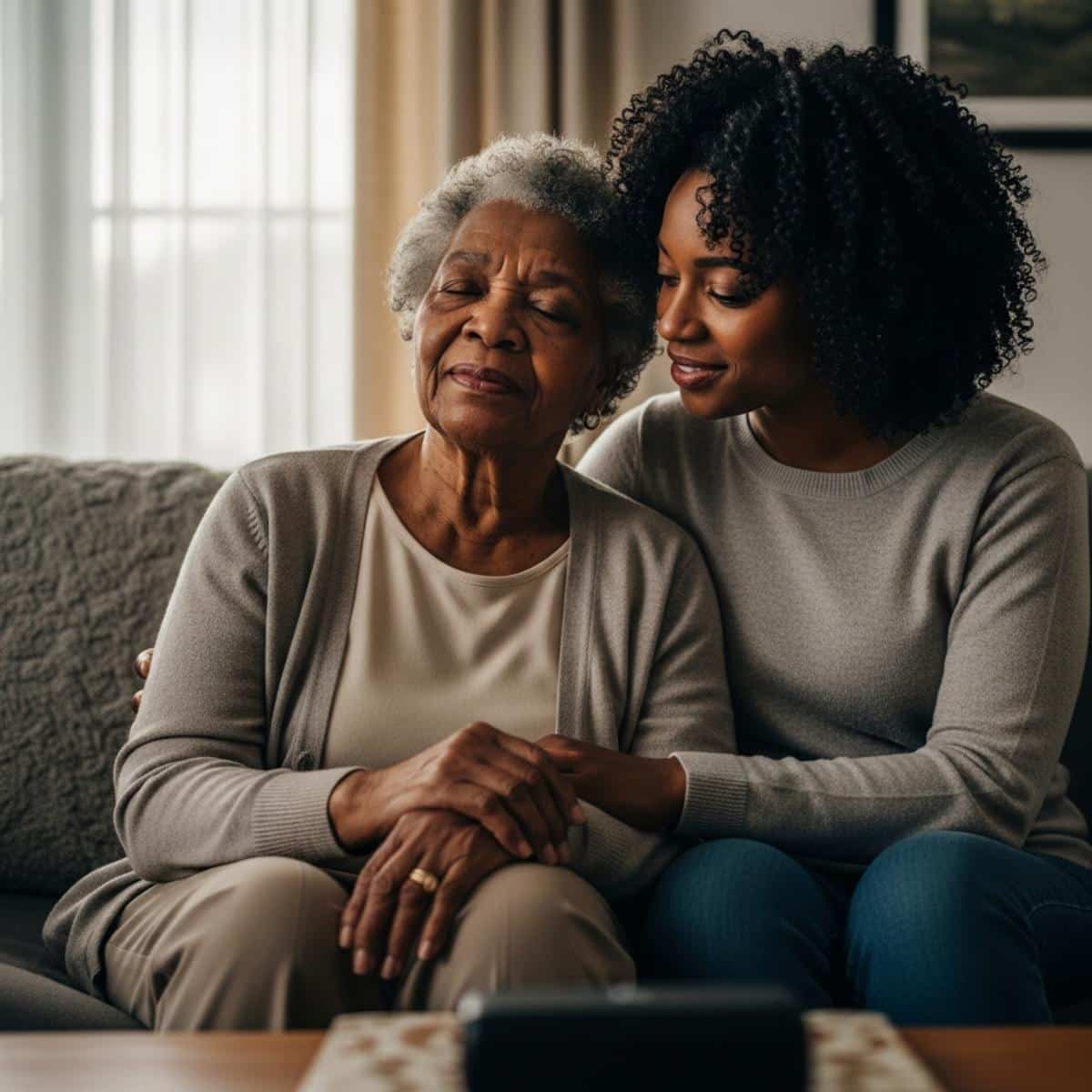
The Music Care Approach — What Professional Caregivers Know That You Can Use at Home
Professional caregivers are increasingly adopting a structured practice sometimes called music care — intentional, relationship-centered music sharing that goes well beyond pressing play and walking away.
The distinction matters. Background music is passive. Music care is engaged.
Here’s what it looks like in practice, and how you can bring it home:
Sing or hum along yourself. Your participation creates shared connection that passive playback alone cannot. You don’t need to be a good singer. Presence matters more than pitch.
Use music as a transition tool. Playing a familiar song during a resistant moment — bathing, dressing, medication time — can reduce pushback and create a positive sensory anchor for that activity. Over time, the music itself becomes a signal that the moment is safe.
Try simple group activities. Clapping along, tapping a rhythm on the table, gentle swaying, or simply listening side by side with attentive presence are all forms of meaningful engagement. These activities work across a wide range of cognitive levels — including those who can no longer hold a conversation. This connects naturally to what researchers have documented about activities that genuinely reach people with dementia rather than simply occupying their time.
Be consistent. The same songs at the same times of day build a rhythm of familiarity that provides comfort and predictability — both of which are deeply calming for someone with cognitive decline.
A Bluetooth speaker in the bathroom, bedroom, or kitchen makes it easy to bring music into the moments that matter most — including the ones most often accompanied by resistance or distress.
You don’t need to be a music therapist to bring these benefits into your loved one’s daily life. You need a song they love and the willingness to be present with them in it.
Music and Memory: Your Caregiver’s Quick-Reference Guide
Download our practical guide that shows you exactly how to take control of this challenge with simple, proven strategies designed specifically for older adults, caregivers, and families.
Start With Three Songs This Week
The moment when a loved one lights up at a familiar song is not random. It is biology, memory, and human connection working together — and now that you understand why it happens, you have the tools to create those moments on purpose.
Building a playlist, choosing the right music for the right time of day, sitting with your loved one through a song they once loved — these are not small things. They reach places that conversation, medication, and routine often cannot.
Start small this week. Identify three or four songs from your loved one’s teenage years and play them during a quiet moment together. Watch their face. Notice what moves them.
If you want to go deeper on how reminiscence and sensory connection support cognitive health, that research points in the same direction — and gives you even more tools to work with.
What songs have reached your loved one in a way nothing else could? Share in the comments — your experience might be exactly what another caregiver needs to hear today.