Most people who think about kitchen safety immediately picture a wet floor. A spill, a slip, a fall.
Here’s what I’ve learned after two decades of working with older adults: the wet floor matters — but it’s rarely what actually causes the fall. The real culprits are the movements you make dozens of times a day without a second thought.
Reaching for the pasta bowl on the top shelf. Carrying a heavy pot across the kitchen to drain it. Standing through a long cooking session on hard tile. Bending into the back of a low cabinet to find the right lid.
None of those feel dangerous. That’s exactly why they are.
Understanding the actual kitchen fall risks — and the simple fixes for each — can make this space feel significantly safer without a single contractor visit or major renovation. Your kitchen should work for you, not against you. If a kitchen rug is part of your worry, here are rug safety fixes that hold up that need no tools or contractors.
If the stove is your biggest worry, here are the stove safety devices for aging in place and which one matches which situation.
Kitchen Fall Risk Checklist: 5 Hidden Hazards Fixed
Download this printable checklist to identify the five hidden fall hazards in your kitchen and get specific, low-cost fixes you can implement immediately to cook safely and independently.
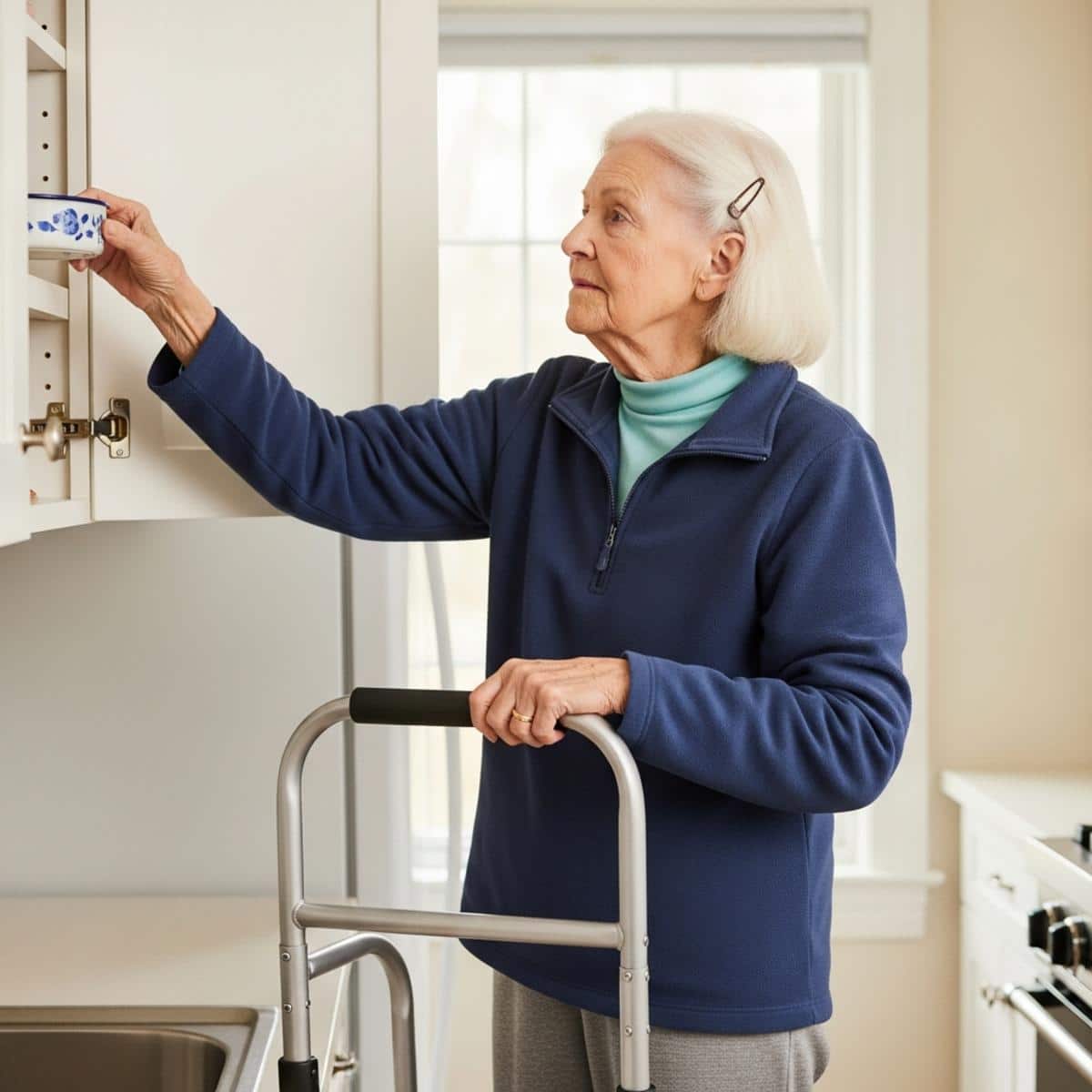
The Overhead Reach Hazard: Why the Top Shelf Is the Biggest Risk in Your Kitchen
Reaching overhead for frequently used items is one of the most common kitchen fall triggers — and one of the most preventable.
Here’s what’s happening physically: when you raise your arms above shoulder height, your center of gravity shifts upward. Your balance becomes less stable. And if you start to tip, your instinct is to grab the shelf or the cabinet door — which often makes the fall worse, not better.
Add a heavy or awkward item — a cast iron skillet, a large mixing bowl — and the risk compounds significantly.
The fix is straightforward: reorganize so that everything you use daily sits between shoulder and hip height. Items used occasionally can go higher. Items almost never used can go lower.
This one change alone eliminates a significant share of reach-related falls in the kitchen.
It’s not admitting defeat. It’s making your kitchen work smarter for the way you actually live now.
Your action point: Spend five minutes identifying the items you reach for every single day. Ask honestly: could any of them move to a more accessible shelf? In most kitchens, the answer is yes — and the adjustment takes about twenty minutes.

The Pivot-and-Carry Problem: Why Moving a Heavy Pot Across the Kitchen Is Riskier Than It Looks
Carrying a full pot of pasta water from the stove to the sink looks like a simple task. But it combines three fall risk factors at once: weight shift, balance challenge, and movement across a hard floor.
When you carry something heavy, your center of gravity shifts forward. Your ability to self-correct a stumble drops. Add a pivoting step on tile or hardwood, and you’ve created a genuinely risky moment without realizing it.
There’s a related pattern I see often: the refrigerator door hazard. When you pull open a heavy fridge door, the instinctive back-step can trigger a fall on a slick floor — fast, and with almost no warning.
The fix: Separate the task into two safe steps instead of one risky one.
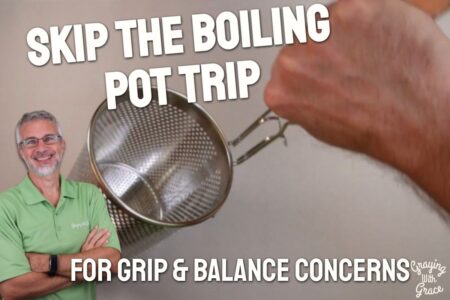
Drain pasta using a ladle or a handheld strainer at the stove, then move the lighter pot. Transfer soup into a bowl before carrying it to the table. Don’t carry and pivot at the same time when you can avoid it.
This isn’t about avoiding cooking. It’s about rethinking one specific movement that carries more risk than it appears to.
Your action point: Think through your own kitchen routines. Where do you regularly carry something heavy across the room? That’s where a two-step approach makes the biggest difference.
For broader fall prevention strategies that go room by room, these same principles of separating high-risk movements apply throughout the home.
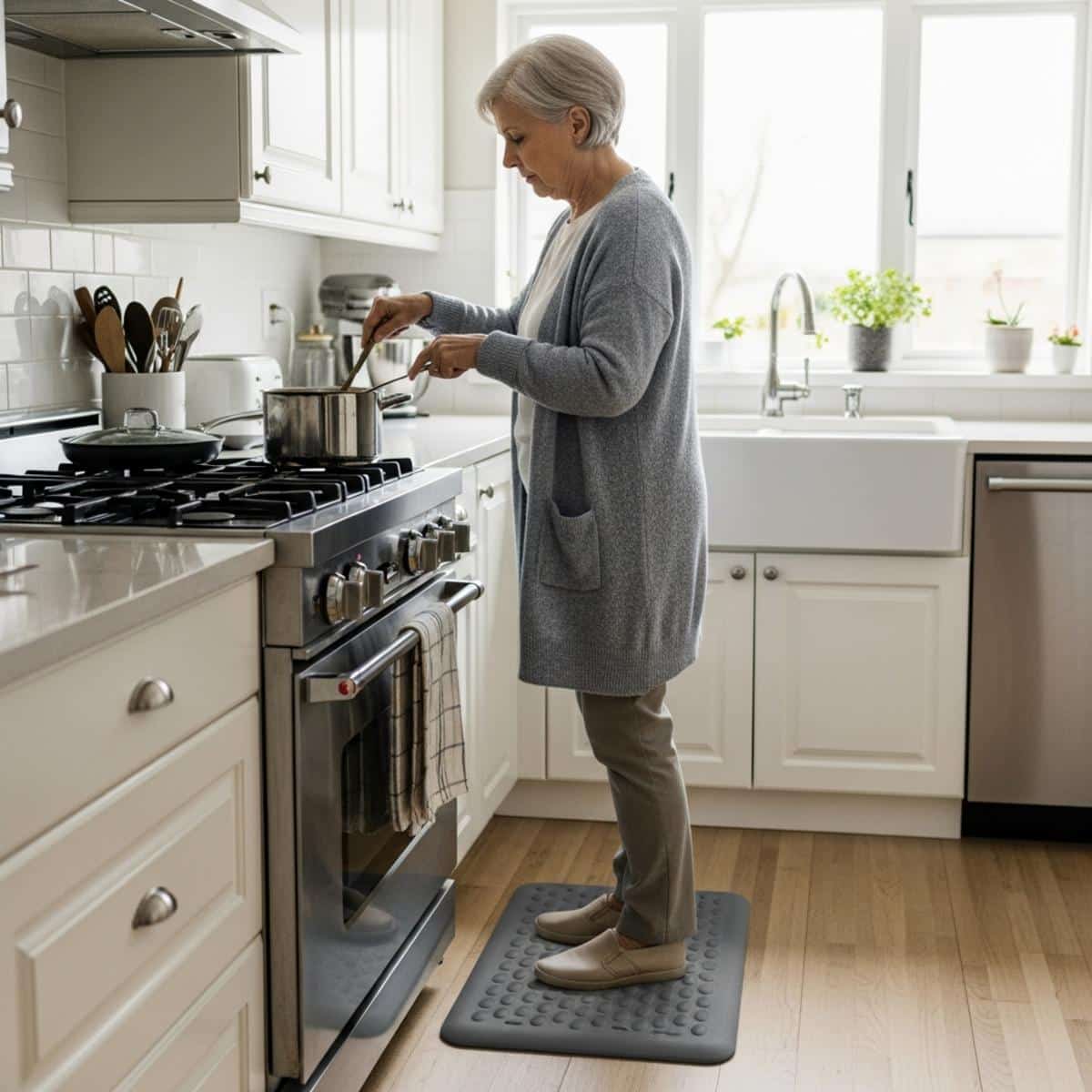
Standing Fatigue: The Hidden Mechanism Behind More Kitchen Falls Than You’d Expect
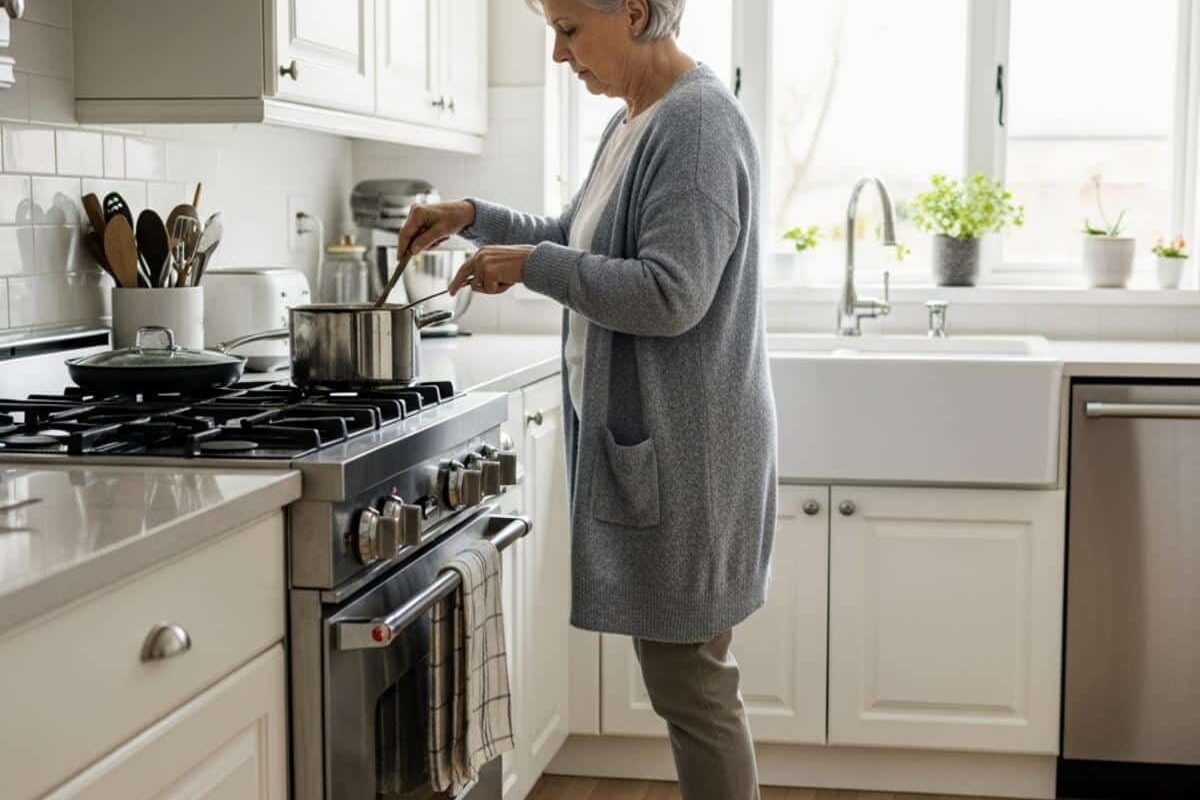
Here’s something most people never connect: standing on hard tile for 20–30 minutes quietly degrades your balance — even if you don’t feel tired.
Hard flooring creates cumulative muscle fatigue in the legs and feet. Your body constantly makes tiny micro-adjustments to maintain balance. As fatigue builds, those adjustments become slower and less precise.
You may not notice it. But your body does.
There’s a specific pattern I call the ‘refill trip’ risk: the second or third time you walk back to the kitchen for something you forgot, your fatigue has already built up. That trip — the one that feels routine — carries more fall risk than the first.
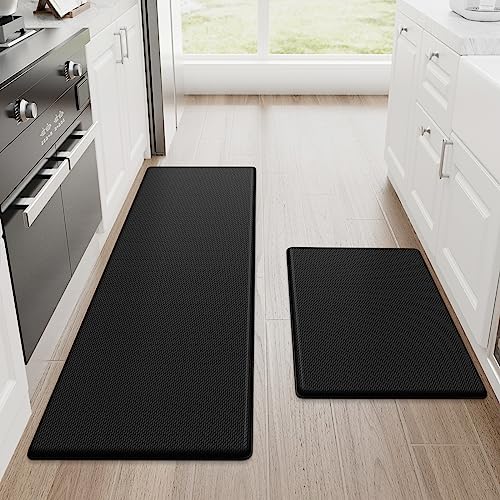
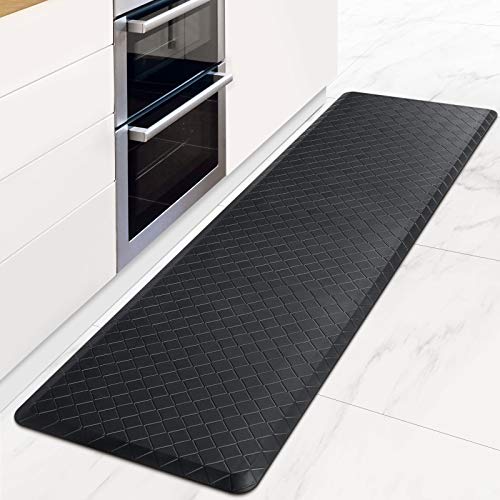
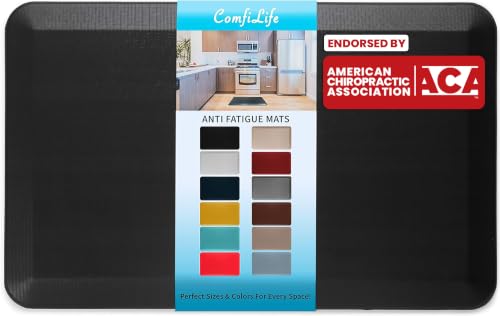
The fix: An anti-fatigue kitchen mat. The slight cushioning engages stabilizing muscles differently, slows the fatigue buildup, and keeps your balance sharper through a longer cooking session.
When you’re shopping for one, look for mats with beveled edges (not square edges that create their own trip hazard), non-slip backing, and enough cushion to make a measurable difference without being so thick the surface becomes unstable.
An anti-fatigue mat isn’t a medical device — it’s a practical kitchen upgrade that happens to protect your balance.




Want more practical home safety tips delivered straight to your inbox? Subscribe to our newsletter for expert-tested recommendations designed specifically for older adults aging in place.
This same fatigue mechanism plays a role in balance training for fall prevention — and understanding both gives you a much clearer picture of how the kitchen environment either supports or undermines your stability.
The Low Cabinet Bend: A Simple Reorganization That Protects Your Balance Every Day
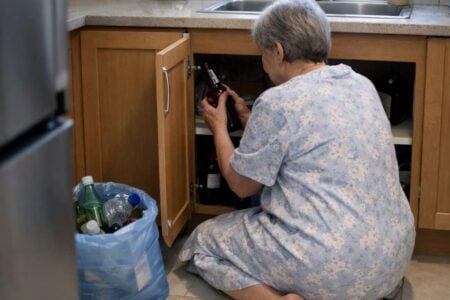
Bending forward and down creates the same instability problem as reaching overhead — your center of gravity shifts significantly, and your position makes recovery much harder if something disrupts your balance.
Now add pulling a heavy item from the back of a low corner cabinet while in that bent position. A stand mixer. A large stockpot. That’s a high-risk moment dressed up as an ordinary task.
Two fixes that make a real difference:
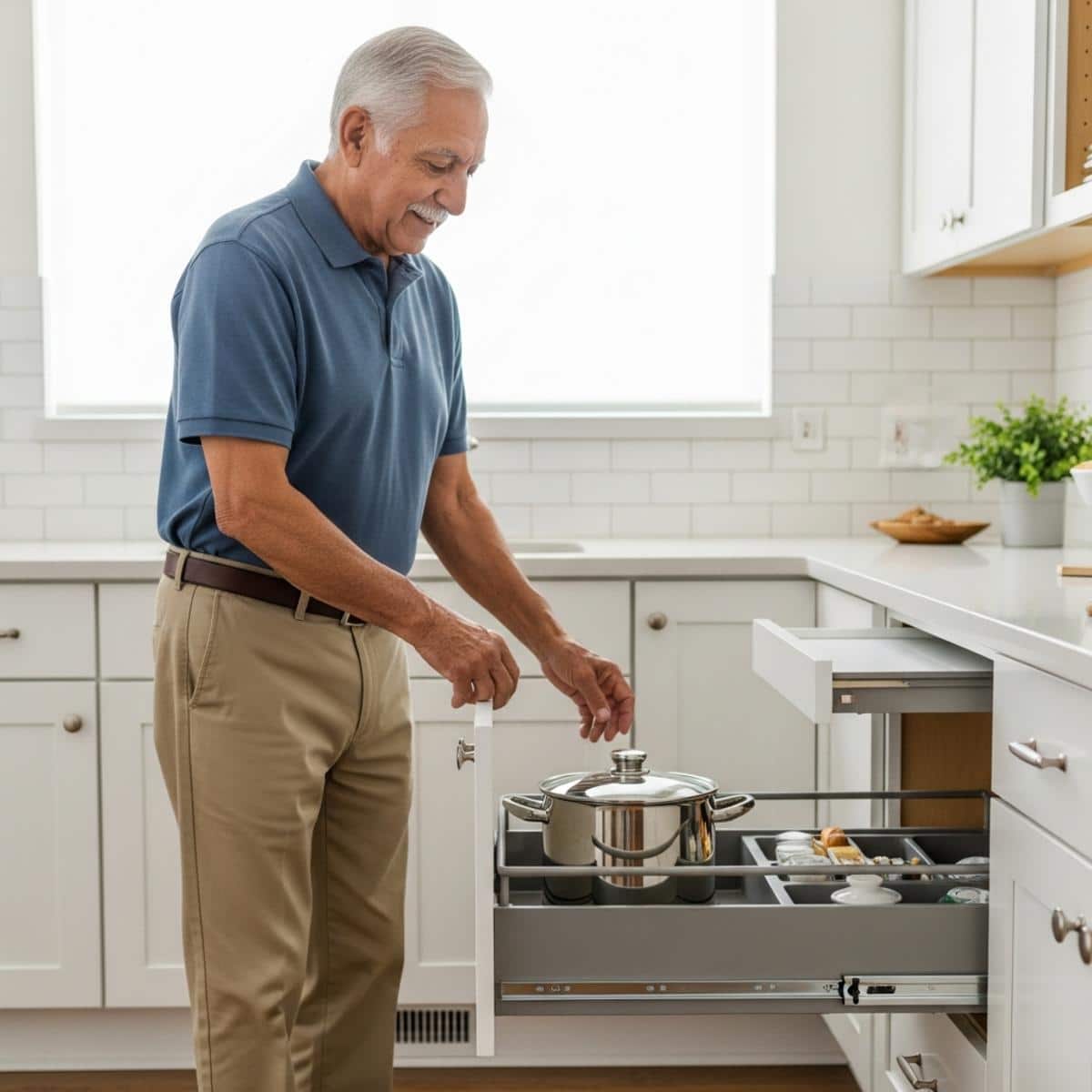
Pull-out drawer organizers and lazy Susans for lower cabinets — they bring items forward and up to the front of the cabinet, so you’re not bending and reaching deep at the same time. These can be retrofitted without a full kitchen remodel, and smooth-glide systems make the movement easy even with limited grip strength.
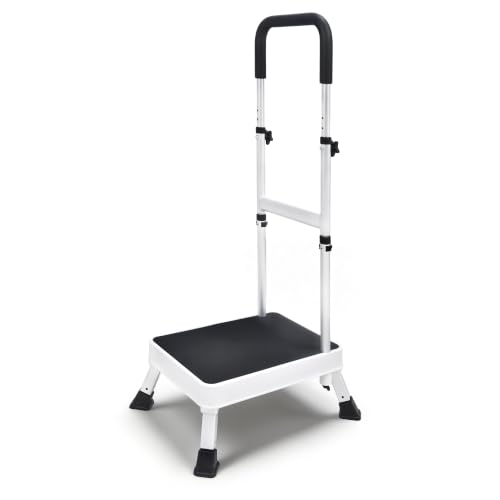
Step stools with safety rails for situations where overhead reach is unavoidable — the rails provide a grip point that dramatically reduces fall risk compared to standing on tiptoe or, worse, on a chair.


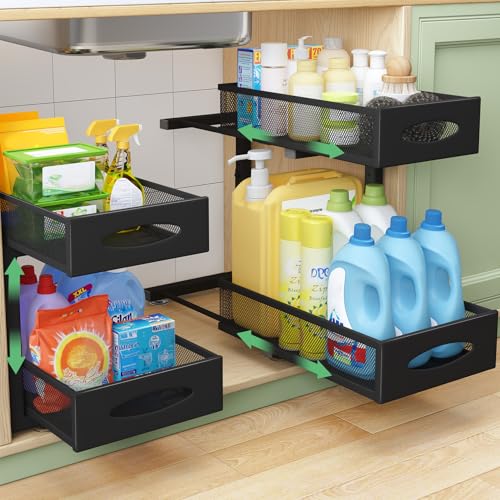


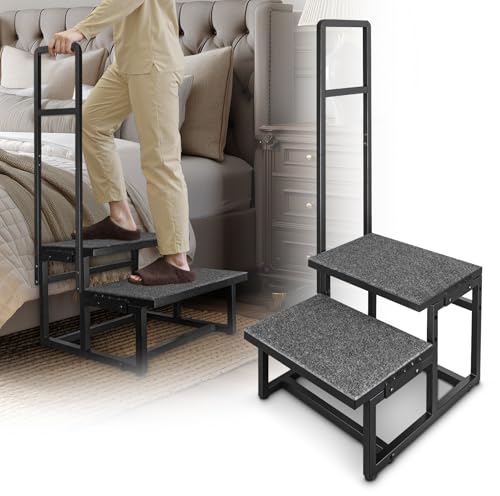


Contrast these two situations: someone awkwardly bending and twisting to retrieve a heavy pot from the back of a low corner cabinet versus someone whose pull-out drawer brings everything to the front at a reachable height. The task is identical. The risk is entirely different.
Your action point: Open your lower cabinets and take an honest look. If you’re regularly bending and reaching deep to find what you need, a pull-out organizer is one of the highest-return upgrades you can make. If you’re not sure which type fits your cabinets, this guide to pull-out shelves and corner organizers walks through the options and how to install them safely.
The same logic applies to how an unsafe home affects the body and brain over time — small daily frictions add up, and fixing them one by one protects far more than just your balance.
Kitchen Fall Risk Checklist: 5 Hidden Hazards Fixed
Download this printable checklist to identify the five hidden fall hazards in your kitchen and get specific, low-cost fixes you can implement immediately to cook safely and independently.
Poor Task Lighting: How Visual Fatigue in the Kitchen Leads to Falls You Never Saw Coming
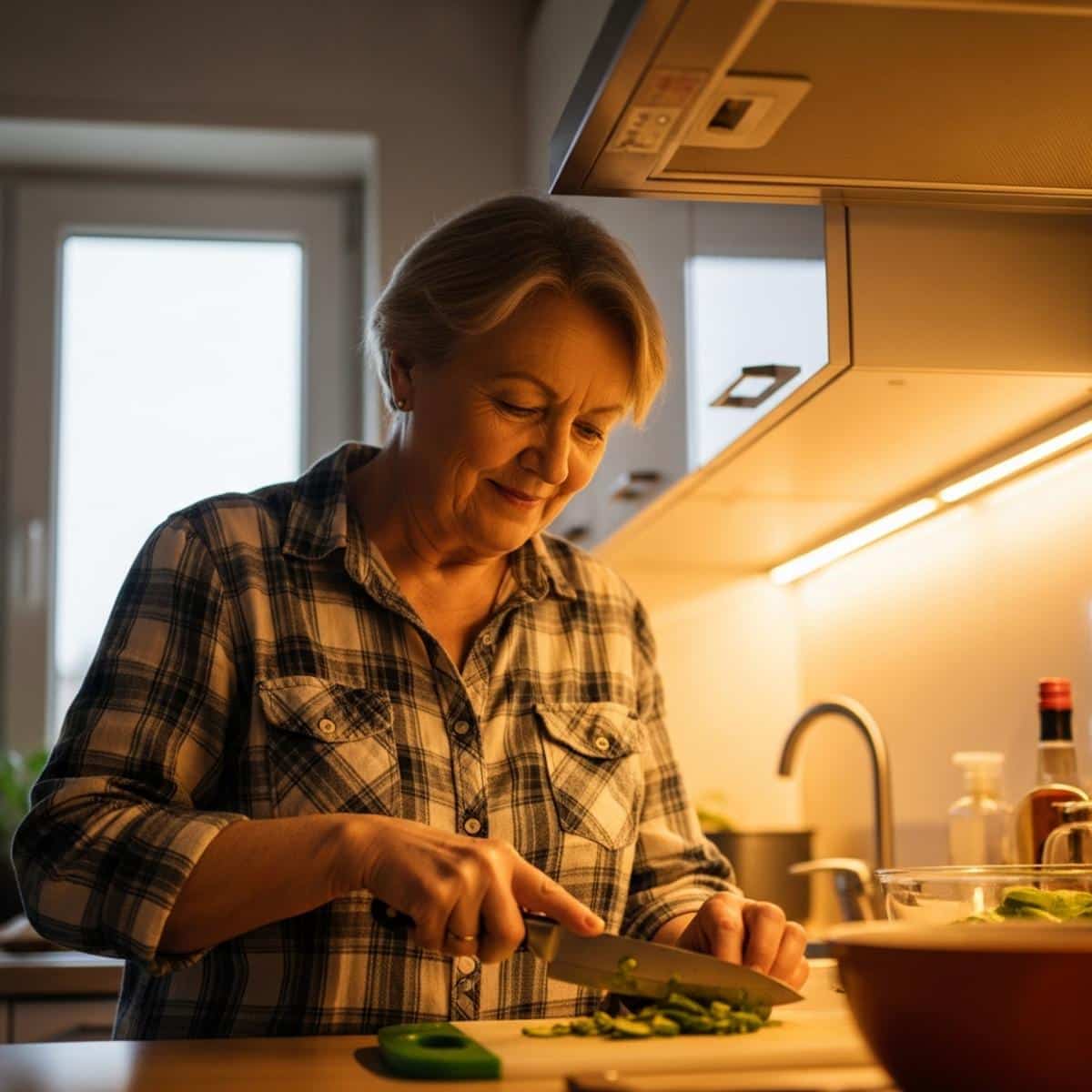
Dim or uneven lighting in the kitchen doesn’t just make cooking harder — it creates subtle misjudgments in depth and distance that contribute directly to falls.
Overhead kitchen lighting alone creates shadows precisely where you’re most active: on the counter surface, at the cutting board, along the edges where the counter meets the floor. Your eyes are working harder than they should to compensate.





Over time, that extra visual effort drains the attentional resources your brain uses to maintain balance and coordination. It’s a slow leak, not a sudden event — but the effect is real.
The misjudgments it causes are small: slightly underestimating the height of a step, not quite registering where the counter edge is, missing a slight change in flooring level. Any one of those can be the moment that tips into a fall.
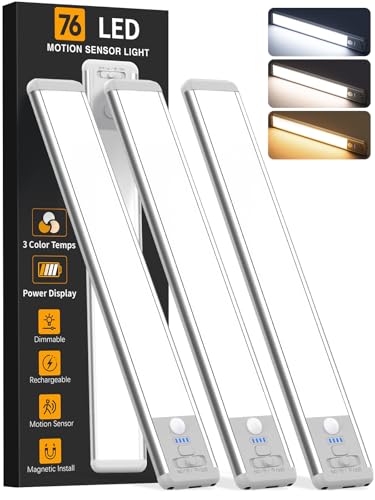
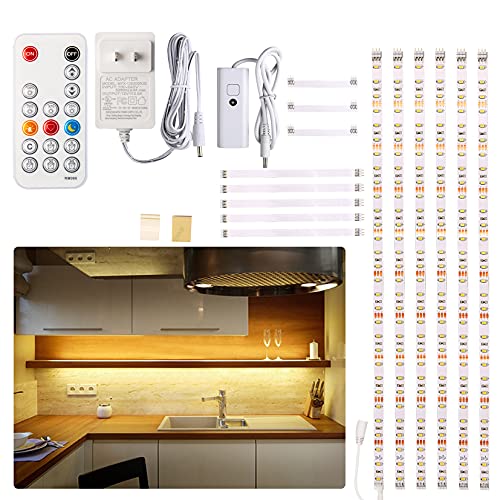
The fix: Under-cabinet LED lighting strips. They illuminate the work surface directly, eliminate the counter shadows, and make the most-used part of the kitchen dramatically clearer.
Look for options with peel-and-stick or clip installation, warm light tones that reduce eye strain during longer cooking sessions, and motion-activation as a bonus feature for middle-of-the-night kitchen trips.
Good lighting isn’t a luxury. In the kitchen, it’s one of the most cost-effective fall prevention upgrades available.
If you haven’t thought about lighting in other parts of the home, this room-by-room home safety guide walks through specific fixes for every high-risk area.
One Change This Week
The wet floor matters. But the reach, the pivot, the fatigue, the bend, and the lighting are doing far more quiet damage — and they’re happening in kitchens that feel completely familiar and safe.
None of the fixes here require a contractor, a major renovation, or any compromise on the cooking you love. Each one is a small, strategic upgrade that builds toward a meaningfully safer kitchen.
You don’t need to tackle all five this week. Pick one hazard from this article. Make one change. Then walk through your kitchen with fresh eyes and look for the next one.
If you found a risk you hadn’t thought about before — or if you’ve already made one of these changes and noticed a difference — share it in the comments. Your experience might be exactly what another reader needs to hear.
And if you want to go deeper on fall prevention throughout your home, this complete guide to what families get wrong after a senior falls is worth reading before you need it.