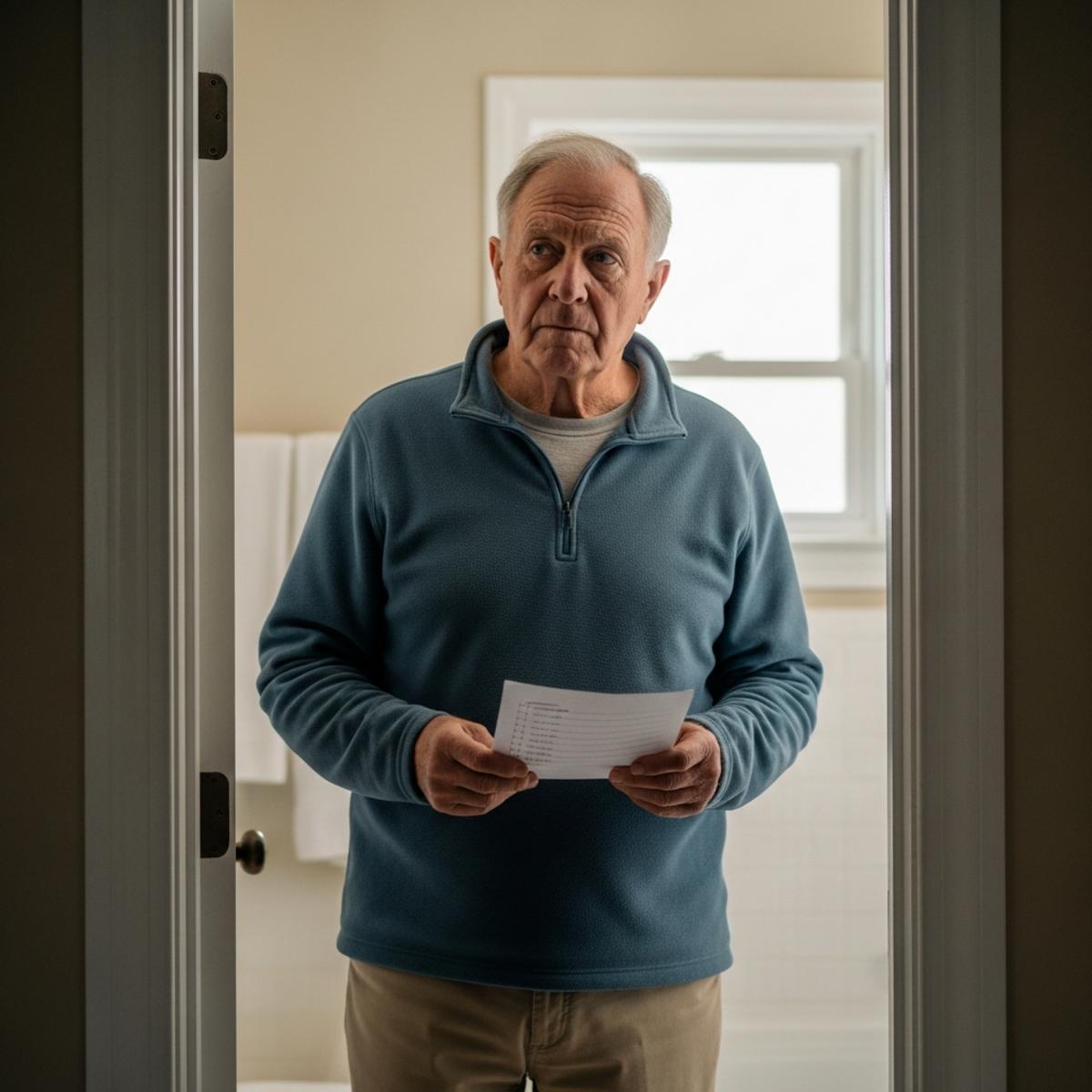
You think of yourself as safety-conscious. You have a bath mat. You hold the wall when you step in. And yet bathroom falls are the leading cause of in-home injuries for older adults — and most of them happen to people who thought they were being careful.
Here’s what most people don’t realize: the bathroom isn’t one big risk. It’s seven distinct danger zones, each with its own failure point — and its own simple fix.
As you read through each zone, I’d encourage you to do a quick mental walkthrough of your own bathroom. You’ll probably spot at least one thing you’ve never thought about before.
Nothing in this article requires a contractor. Nothing costs more than $35. And every fix can be done in an afternoon.
Bathroom Safety Checklist: 7 Danger Zones, 7 Fixes
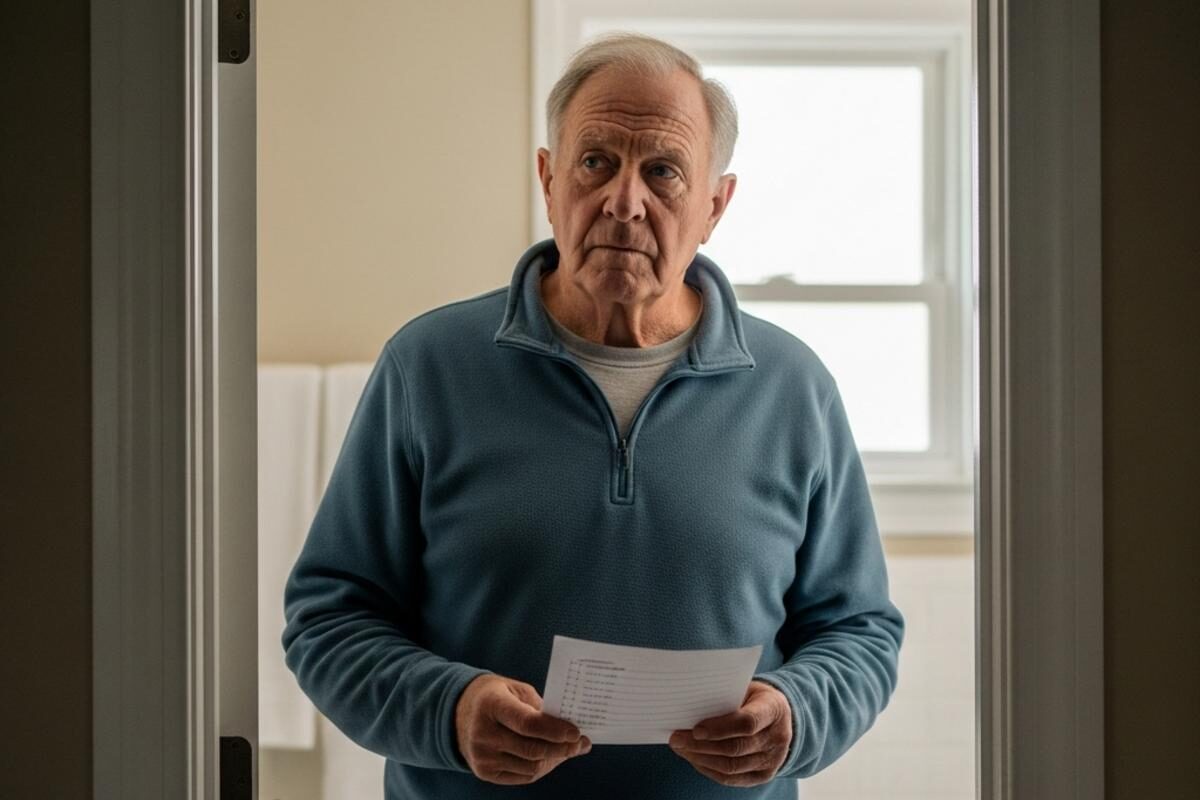
Download this printable bathroom safety checklist to identify all seven hidden fall risks in your bathroom and get the specific, affordable fix for each one—so you can age in place with confidence and independence.
Danger Zone #1: The Shower Entry Step
The transition from bathroom floor to shower floor is one of the most dangerous moments in any bathroom visit.
Here’s why: the step edge is often wet, sometimes raised, and almost always the same color as the surrounding tile. When vision or depth perception has changed with age, that step edge becomes nearly invisible — even in a shower you’ve used for years.
Familiarity creates false confidence. You know the step is there, so you stop looking for it. That’s exactly when misjudging it happens.
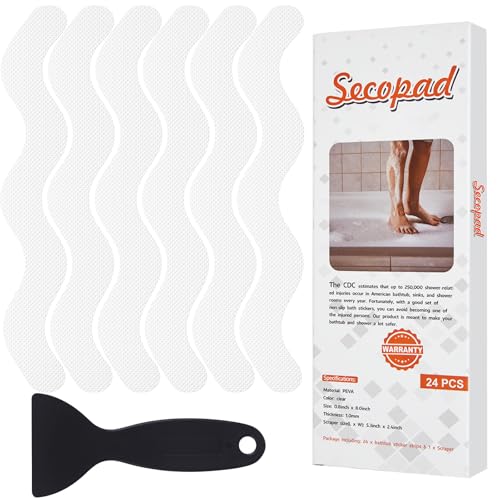
The fix: Contrast-color threshold strips ($8–12) applied to the step edge make it immediately visible and add grip at the same moment you need it most. This is one of those changes that takes ten minutes and lasts for years.



Danger Zone #2: The Wet Floor Just Outside Your Shower or Tub
Not all bath mats are created equal — and the wrong one can actually increase your fall risk rather than reduce it.
Most people own a decorative bath mat. It absorbs some water. It looks nice. But the edges curl, the suction cups have weakened over time, and the mat slides slightly underfoot — especially when stepped on at an angle while stepping out of the tub.
That slight slide is all it takes.
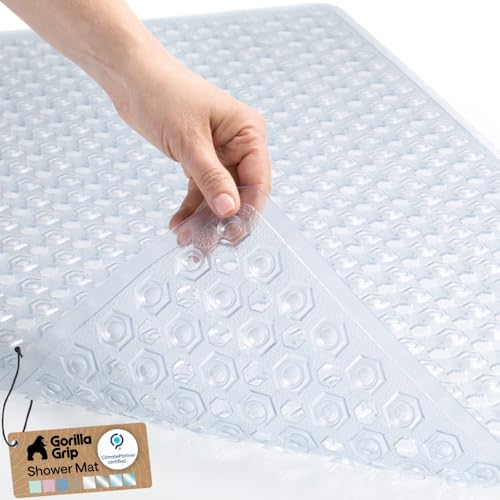
The quick test: Lift one corner of your current mat. If it comes up easily, it no longer has adequate suction. Time to replace it.
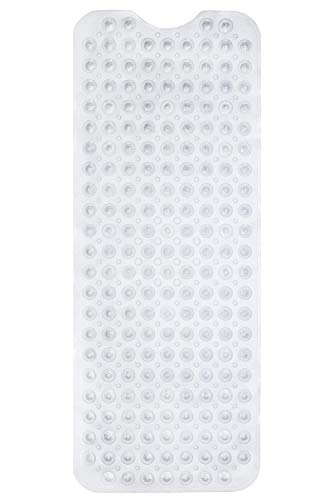
What to look for in a real non-slip bath mat: dense suction cup coverage across the entire base (not just the edges), a weight that keeps it from floating when wet, and a surface texture that grips even when wet feet land off-center.
The fix: A quality non-slip bath mat with strong suction cup coverage runs $15–25 and is one of the single most impactful bathroom upgrades available.



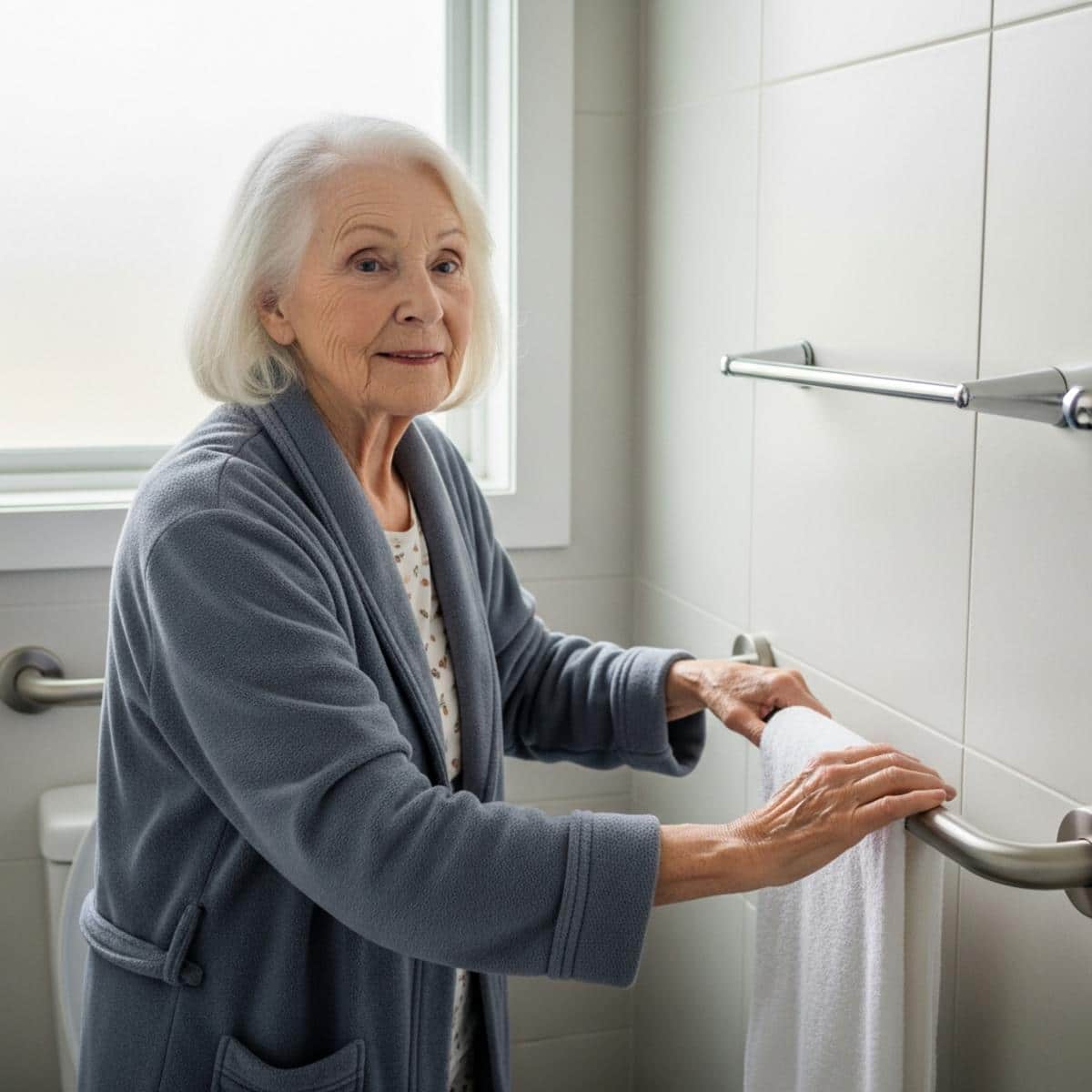
Danger Zone #3: The Toilet — Where Height Matters More Than You Think
The toilet is responsible for more bathroom falls than most people realize — and the floor isn’t the main culprit. The height is.
Lowering onto and rising from a standard toilet seat puts significant strain on knees, hips, and balance. The effort required to push yourself to standing increases fall risk, especially for anyone managing joint pain or reduced leg strength.
This risk compounds in the morning, when stiffness is greatest and balance is least reliable.
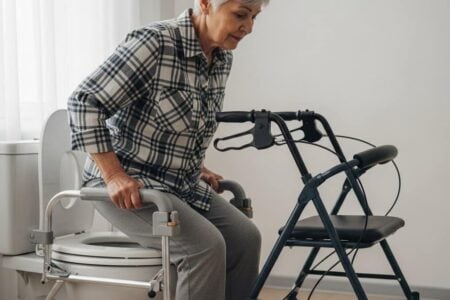
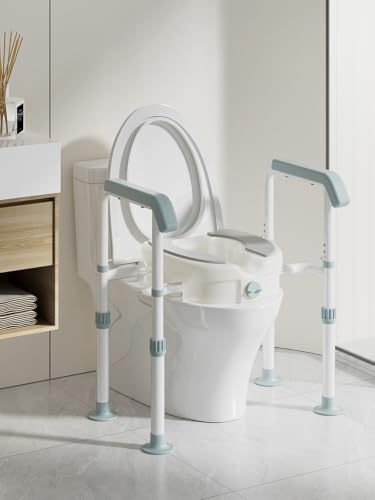
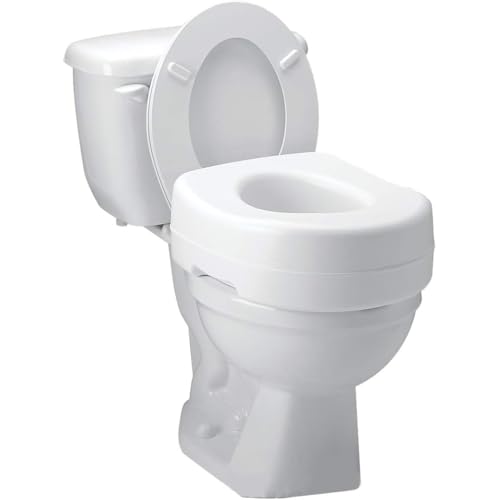
Are toilet risers worth it for seniors? In my experience working with older adults, they’re one of the highest-impact, lowest-cost improvements available. Adding 3–5 inches of height to the seat dramatically reduces the effort required to stand — and some models include built-in armrests for additional support.
The fix: A toilet safety riser requires no tools and installs in minutes. Expect to pay around $25–35 for a basic model, more if you want integrated armrests.




Want more expert-tested tips for making your home safer and aging more comfortably? Subscribe to the Graying With Grace newsletter — practical guidance delivered straight to your inbox.
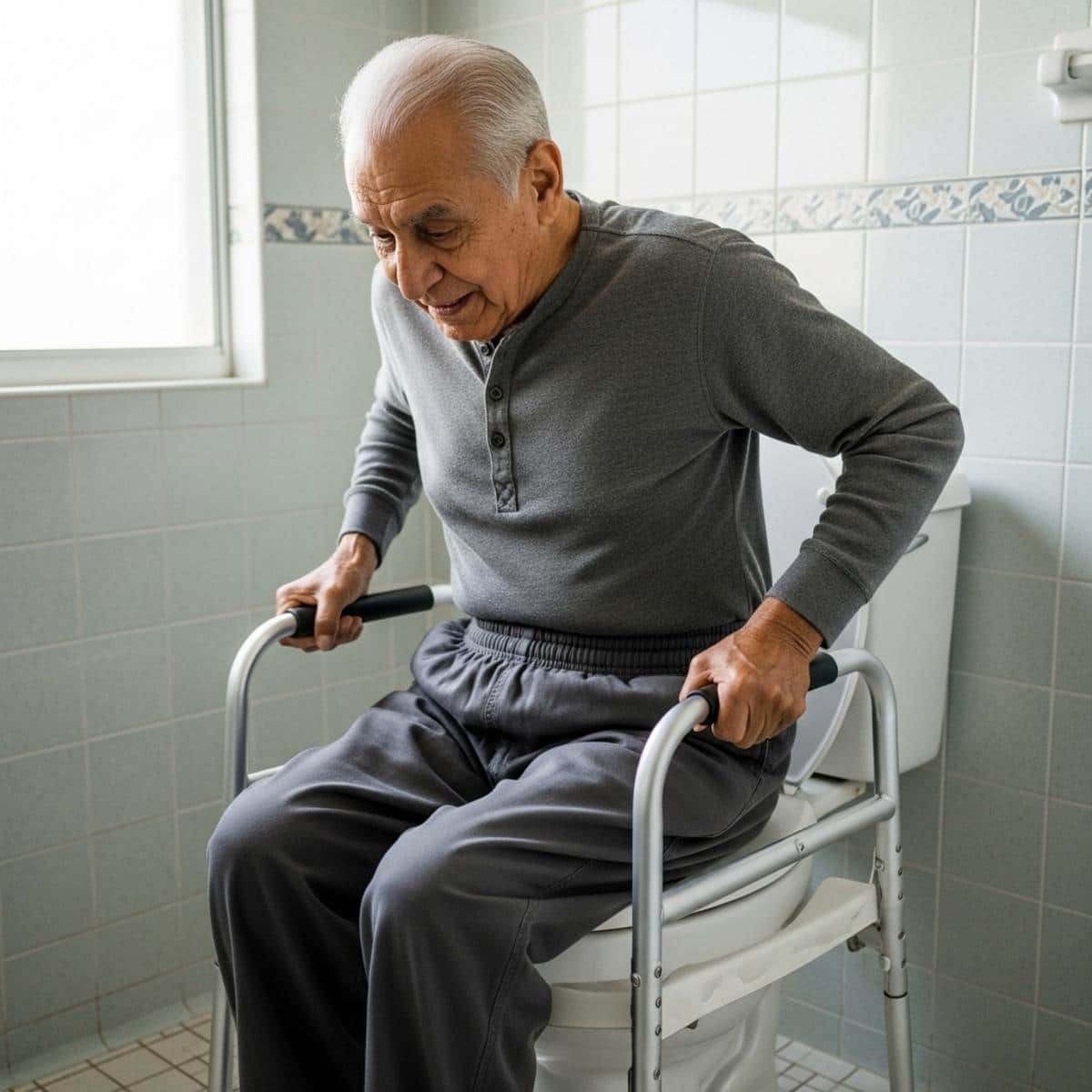
Danger Zones #4 and #5: The Towel Bar and Shower Curtain — Two Grab Points That Will Fail You
Here’s one that surprises almost everyone: two of the most instinctively reached-for surfaces in any bathroom are not designed to hold your weight.
Standard towel bars are mounted for storage, not support. Under sudden load — the kind that happens when you start to slip — the drywall anchors can pull free without warning.
Shower curtain rods are even more dangerous. A grab for the curtain in an unsteady moment pulls the entire rod down and offers zero support on the way to the floor.
The risk pattern is specific: a moment of instability, a reflex grab for the nearest thing, and the nearest thing fails.
I’ve seen this happen to people who had no idea their towel bar was an unreliable handhold. They’d reached for it a hundred times without incident. Until the one time it mattered.
Do suction grab bars work in showers? Yes — when you choose the right kind. Look for bars with large, commercial-grade suction cups, a locking lever mechanism, and a weight rating of at least 250 lbs. Always test before relying on them by pressing firmly and attempting to release the cup before use.
The fix: Suction cup grab bars offer a no-drill installation option for renters or anyone not ready for permanent hardware, running $20–35. For a permanent solution, a wall-mounted grab bar professionally anchored into studs is the gold standard.
The goal isn’t to remove the towel bar — it’s to add a real grab bar nearby so the towel bar is never the only option within reach. The 4 bedroom changes that prevent nighttime falls follow the same logic: close the specific gaps, don’t overhaul the room.
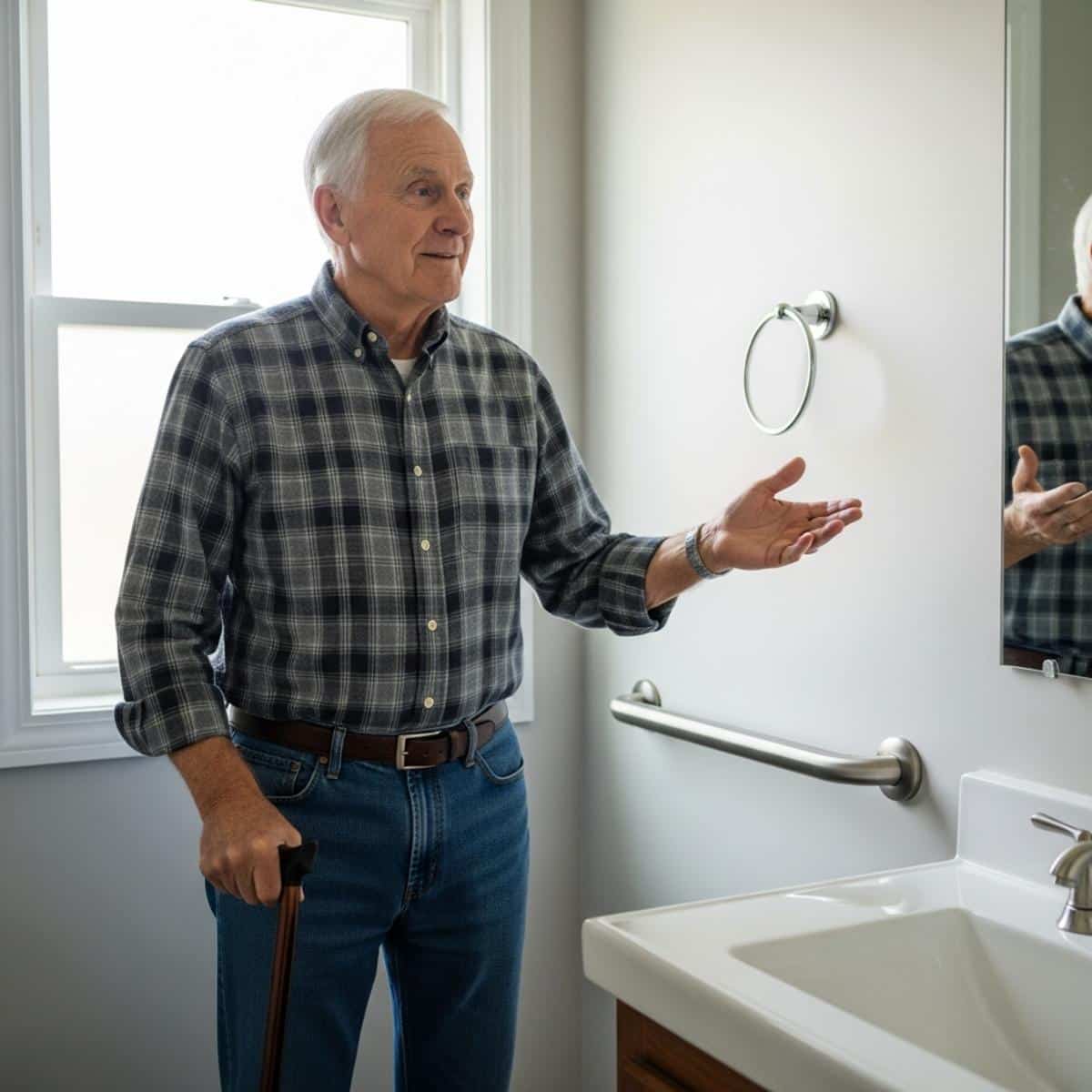
Danger Zones #6 and #7: The Dark Bathroom at Night and the Vanity Lean
Two under-discussed risk moments — the middle-of-the-night bathroom trip and the forward lean at the sink — account for a surprising number of falls that are entirely preventable.
The Night Entry Zone
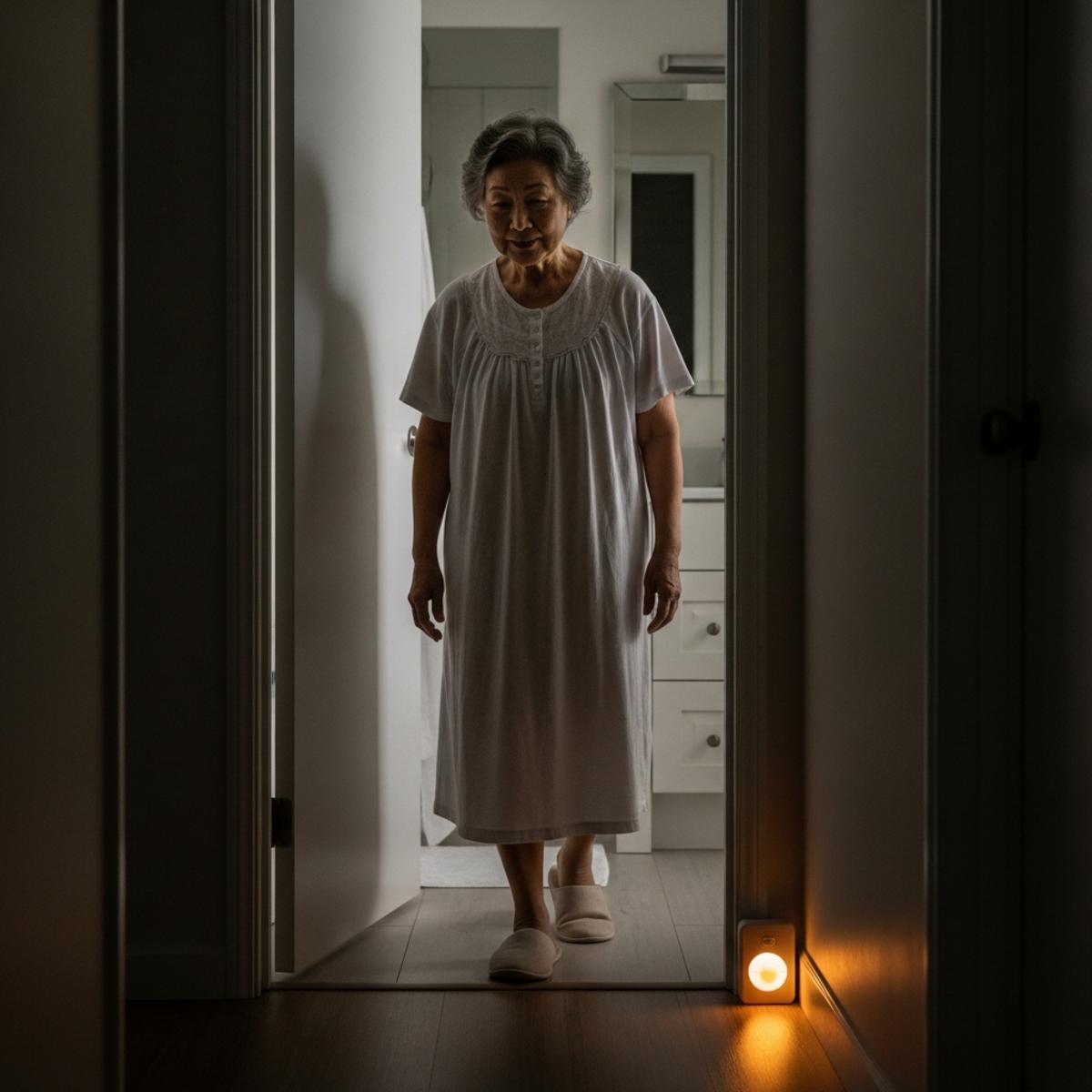
Nighttime bathroom trips are disproportionately dangerous for three reasons: disorientation from being recently woken, low light, and reduced balance reliability during the first few minutes after waking.
Most people’s instinct is to turn on the overhead light. This is actually counterproductive — the bright shock of a ceiling light temporarily impairs your adjusted vision and jolts you into full wakefulness at the worst possible moment.
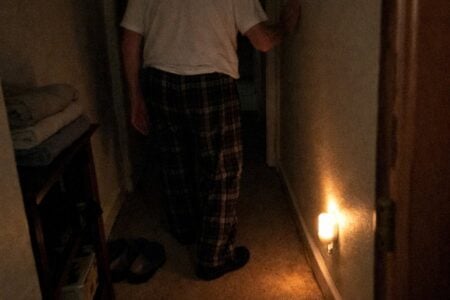
Motion night light placement for fall prevention: Two locations matter most — near the bathroom door at baseboard level, and near the toilet. Foot-level light guides your path without blinding you or fully disrupting sleep.
The fix: Motion-sensor plug-in nightlights positioned at baseboard level provide exactly the right illumination for a safe 2am trip. Expect to pay $10–15 for a quality model with reliable motion detection.
The Vanity Lean Zone
This one is easy to overlook. Leaning forward toward the mirror — to apply medication, check something closely, rinse your face — creates an unsupported forward lean that shifts your center of gravity without warning.
For anyone managing balance challenges, this momentary lean is enough.
The fix: A small grab rail or wall-mounted support near the vanity gives you a stabilizing point during these forward-lean moments. It doesn’t need to be elaborate — it just needs to be there.
Bathroom Safety Checklist: 7 Danger Zones, 7 Fixes
Download this printable bathroom safety checklist to identify all seven hidden fall risks in your bathroom and get the specific, affordable fix for each one—so you can age in place with confidence and independence.
Your Bathroom Walkthrough Starts Now
Bathroom falls are the leading cause of in-home senior injuries. But every danger zone in this article has a specific, affordable fix — and none of them require a contractor or a major renovation.
Here’s a quick summary of what to look for:
- Shower entry — Can you clearly see the step edge? Add contrast threshold strips.
- Wet floor zone — Does your bath mat pass the lift test? Replace with a high-density suction mat.
- Toilet zone — Is rising from the seat a strain? A toilet safety riser changes that immediately.
- Towel bar zone — Is the towel bar the nearest handhold to your toilet or shower? Add a real grab bar.
- Shower curtain zone — Is the curtain rod reachable during a slip? Replace instinct with a suction grab bar.
- Night entry zone — Is your path to the bathroom dark? Add motion-sensor nightlights at baseboard level.
- Vanity zone — Do you lean forward unsupported at the sink? Add a nearby grab point.
If you want to go further, understanding what to do after a senior falls and how to make your home safer room by room are both worth reading alongside this one.
For caregivers helping a parent: the 9-question checklist for assisted living decisions can help you distinguish between a home that needs modifications and one where a higher level of support has become necessary.
Pick one zone — the one that made you pause — and make that fix this week. Then come back for the next one.
Which danger zone surprised you most? Share in the comments. Your answer might be exactly what someone else needed to hear.