Maybe you’ve noticed your mom is spending more time in the bathroom lately. When you ask if everything’s okay, she waves you off. “I’m fine,” she says. But something feels off — and you’re not sure how to bring it up without embarrassing her.
You’re not alone in this. Bathroom hygiene is one of the most common and least-discussed challenges in senior care. It’s uncomfortable to raise, and most older adults would rather quietly struggle than ask for help with something so personal.
Here’s the good news: bathroom hygiene solutions for elderly adults have come a long way. There are five practical, affordable tools that can restore independence and dignity — without requiring an awkward conversation or hands-on caregiver involvement. Let me walk you through each one.

The Senior Bathroom Independence Checklist: 5 Simple Upgrades That Restore Dignity & Privacy
Download our free checklist of 5 bathroom upgrades specifically designed to restore independence and dignity for seniors—no expensive renovations, no caregiver involvement required.
Why Bathroom Hygiene Gets Harder With Age (And Why It Matters)
This isn’t a character flaw or a sign of failure. It’s physics.
As we age, reduced shoulder flexibility, hip stiffness, arthritis in the hands, and balance concerns make standard bathroom hygiene genuinely difficult. Reaching, twisting, and gripping — movements most of us take for granted — can become painful or even impossible.
Why the Problem Stays Hidden
Most seniors won’t bring this up. There’s real shame attached to it, and adult children often don’t know how to raise it either. So the problem quietly grows.
Left unaddressed, hygiene challenges can lead to skin irritation, urinary tract infections, and a slow erosion of self-confidence. The real cost isn’t just physical — it’s the quiet loss of dignity that comes from struggling with something so basic.
The Reassurance
This is fixable. And the solutions are simpler — and more affordable — than most caregivers expect.
Helping your parent with bathroom independence isn’t overstepping. In my experience working with families over the past two decades, it’s one of the most meaningful things an adult child can do for a parent’s quality of life. Now let’s get into the five hacks.

Hack #1: Switch to a Bidet Bottle for Hands-Free Cleaning


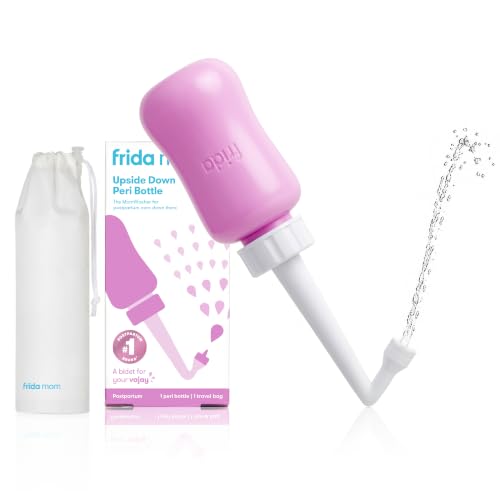


If I had to recommend just one bathroom hygiene solution for elderly adults, this would be it.
A bidet bottle is a handheld squeeze bottle with an angled nozzle that directs a gentle stream of water for cleaning — no reaching, no twisting, no gripping a wad of paper. It’s the single most effective, affordable, and dignity-preserving tool available for seniors who struggle with wiping.
Who It’s Best For
A bidet bottle is ideal for older adults dealing with:
- Arthritis in the hands or wrists
- Limited shoulder or hip mobility
- Post-surgical restrictions (hip or knee replacement recovery)
- Any condition that makes reaching and twisting painful
It addresses the core problem — wiping aids for seniors with limited mobility — without requiring any caregiver involvement whatsoever. No installation. No plumbing. No tools. It costs a fraction of what you’d spend on a full bidet seat.
How to Introduce It Without Embarrassment
Here’s a practical tip I share with families navigating this: don’t make it a conversation. Simply order a bidet bottle, leave it on the back of the toilet or the edge of the sink, and let your parent discover it on their own terms.
Frame it — if it comes up — as something easier and more thorough, not as a response to a problem you’ve noticed. Many younger adults use bidet bottles by choice. It’s a tool, not a label.
A bidet bottle for seniors with limited reach is the easiest first step you can take today, and it often makes an immediate difference.

Hack #2: Add a Long-Reach Toilet Aid Wand for Independent Wiping


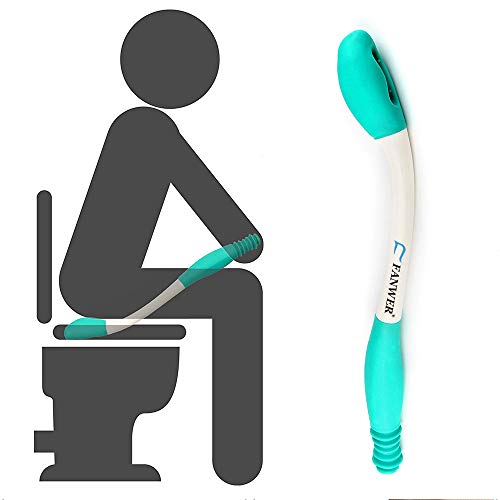


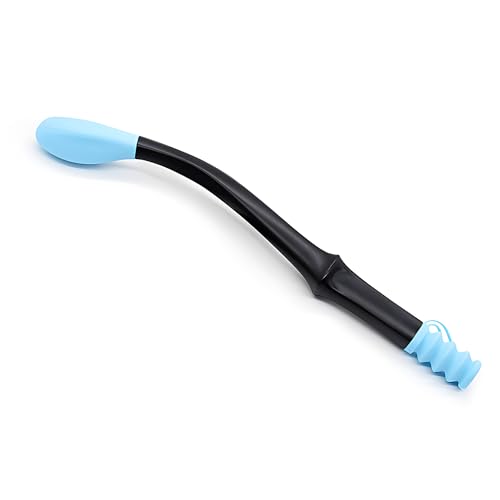

For seniors who prefer using toilet paper or wipes, a long-reach toilet aid wand eliminates the need to twist or reach entirely.
This is an extended-handle tool — typically 15 to 18 inches long — with a grip mechanism at the end that holds toilet paper or a pre-moistened wipe. Your parent can clean themselves completely independently, without bending forward or contorting their back.
Who Benefits Most
A toilet aid wand is especially well-suited for older adults with:
- Hip replacements (many post-surgical protocols restrict bending past 90 degrees)
- Chronic lower back pain
- Limited shoulder range of motion
- Obesity, which limits natural reach
Bidet Bottle vs. Toilet Aid Wand: Which Is Better?
Both solve the same core problem — they just take different approaches. The bidet bottle uses water; the wand uses paper or wipes. Some seniors strongly prefer one over the other, and that’s completely fine.
My suggestion: give your parent the choice. Offer both options and let them decide which feels more natural. Preserving their sense of control over their own care makes adoption far more likely — and that matters.
A long-reach toilet aid wand for seniors requires no installation and no caregiver involvement. It’s a straightforward tool that solves a real problem.
Ready to discover more practical solutions for aging with dignity? Subscribe to our newsletter for expert-tested tips and product recommendations designed specifically for older adults and the caregivers who love them.

Hack #3: Install a Raised Toilet Seat With Handles for Safer Positioning

Getting on and off the toilet safely is just as important as what happens during the visit — and a raised toilet seat with handles solves both problems at once.
Standard toilet seats sit low to the ground, which forces seniors to lower themselves deeply and push back up — movements that put real strain on arthritic knees and hips. That struggle affects more than comfort. When your parent feels unstable or rushed, hygiene tasks get cut short.
What a Raised Seat Provides
- Added height — reduces the range of motion needed to sit and rise
- Armrests — provide stability for safer positioning throughout
- Better access — a more stable, upright seated position makes self-hygiene significantly easier
Most models require no tools and fit standard toilets in minutes. They’re also easy to remove when other family members visit.
Think of It as a Hygiene Hack, Not Just a Safety Product
Better positioning equals better access equals greater independence. This is especially powerful when paired with a bidet bottle — together, they create a complete bathroom independence setup that requires no caregiver involvement at all.


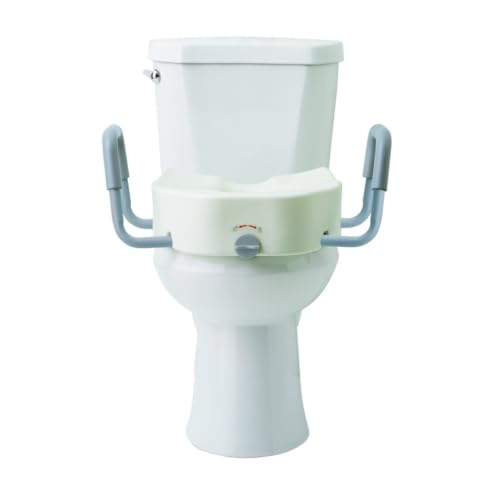

A raised toilet seat with handles is one of the most impactful modifications you can make to a senior’s bathroom, and most families are surprised by how affordable it is.
For a broader look at bathroom safety modifications, the top bathroom safety products for elderly adults guide covers the full picture — including what an industry expert considers most essential.

Hack #4: Add a Toilet Safety Frame for Stability and Confidence
Here’s something I’ve observed consistently in my work with older adults: fear of falling makes everything harder. When your parent is anxious about balance, they rush — and rushing leads to hygiene shortcuts.
A toilet safety frame gives them the confidence to slow down and take care of themselves properly.
What a Safety Frame Does
A toilet safety frame sits around the toilet — either floor-mounted or toilet-mounted — and provides sturdy grab handles at exactly the moment a senior needs them most: when lowering, stabilizing, and rising.
That sense of security changes behavior. When your parent isn’t white-knuckling through the process, they can focus on doing things thoroughly.
Safety Frame vs. Raised Seat: Do You Need Both?
They serve slightly different needs. A raised seat reduces the distance traveled; a safety frame provides handholds for balance and push-up support. Some seniors benefit most from one; others benefit from both together.
If your parent is reluctant to accept anything that looks like a “medical device,” try framing a safety frame purely as fall prevention. That framing tends to meet far less resistance — and it gets the tool in place where it can help.


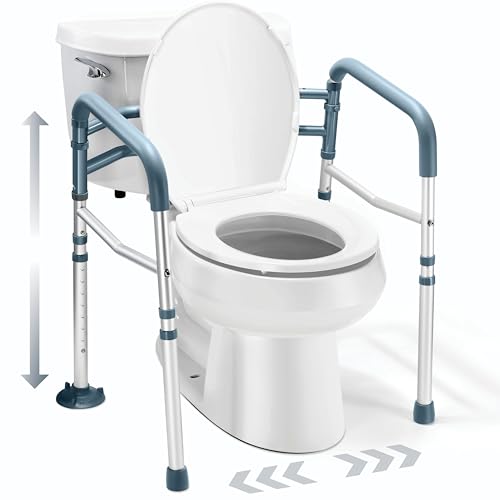


A toilet safety frame for seniors is a meaningful step toward independent bathroom use. And because it requires no permanent modifications, it’s easy to install — and easy to remove if circumstances change.
You might also find our fall prevention checklist for elderly adults helpful for thinking through the full scope of bathroom safety.
Hack #5: Keep Flushable Wipes Within Easy Reach





Sometimes the simplest solution is the most overlooked. This one requires zero installation, zero embarrassing conversations, and you can do it today.
Why Standard Toilet Paper Falls Short
Dry toilet paper is harder to grip effectively, especially for seniors with reduced sensation or strength in their fingers. It also tends to require more wiping passes to achieve the same result — which compounds the physical challenge.
Flushable wipes are moist, textured, and easier to grip. They’re gentler on sensitive skin and more effective per pass. For many seniors, switching to wipes is the single easiest upgrade with immediate results.
Placement Matters More Than You Think
Don’t store wipes under the sink or in a cabinet. Place them in an easy-access dispenser at arm level — right beside the toilet, where they can be grabbed without leaning, stretching, or searching.
One quick caution: verify the specific product is genuinely safe for your plumbing. Look for septic-safe labeling and confirm the brand’s flushing claims. Not all products marketed as “flushable” break down at the same rate.



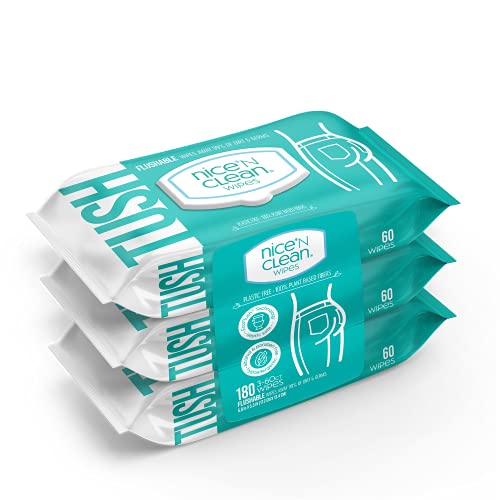

Flushable wipes for seniors are the zero-barrier first step — and pairing them with grab bars near the toilet makes both placement and bathroom navigation safer overall.
For a full overview of bathroom grab bar options and where they matter most, the shower safety tips guide covers placement strategies that apply beyond just the shower.
The Senior Bathroom Independence Checklist: 5 Simple Upgrades That Restore Dignity & Privacy
Download our free checklist of 5 bathroom upgrades specifically designed to restore independence and dignity for seniors—no expensive renovations, no caregiver involvement required.
You’re Already Doing Something Right
Let me say this clearly: the fact that you’re researching this is already an act of love and good caregiving. Most people don’t know where to start. You’re figuring it out — and that matters.
Bathroom hygiene solutions for elderly adults don’t require expensive renovations, difficult conversations, or hands-on caregiver involvement. These five hacks — led by the bidet bottle — address how to help elderly parents with bathroom hygiene in ways that preserve dignity and restore genuine independence.
Your parent doesn’t have to ask for help if the right tools are already there. Sometimes quietly equipping the bathroom speaks louder than any words.
Start with one. The bidet bottle is the easiest, most impactful first step — order one, set it in place, and see what happens. Add the others as needed.
Have you tried any of these solutions with a parent or loved one? I’d love to hear what’s worked for your family — share your experience in the comments below. And if this was helpful, share it with another caregiver who might need it today.
For more ways to support an aging parent’s independence at home, the guide to must-have products for elderly people living alone is a great next step — it covers everything from medication management to mobility aids in one place.