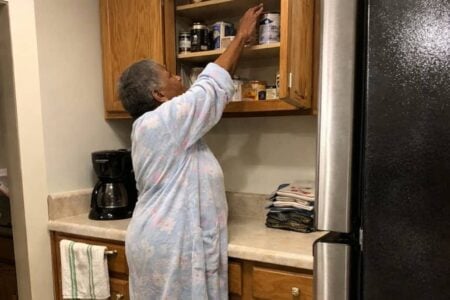
You pad across the kitchen in the morning to make coffee. The floors are clean. The lighting is fine. Nothing looks dangerous.
And yet, this is one of the most common moments when older adults lose their footing at home.
Most fall prevention conversations start with expensive renovations, grab bars, or major lifestyle changes — and that scale can make the whole problem feel too big to tackle. But sometimes the most effective solution is also the simplest one. And this is one of those cases.
Grip socks for seniors are a legitimate, affordable, and immediate solution to a real and underestimated hazard. By the end of this article, you’ll know exactly what to look for, why they work, and which ones are worth buying.
Home Fall Prevention Checklist: 7 Safety Zones to Review Today
Download our free guide to building a compassionate caregiving plan that reduces burnout, ensures nothing falls through the cracks, and helps you maintain your own health while caring for others.
The Floor Beneath Your Feet Is More Dangerous Than You Think
Most older adults underestimate how much fall risk exists inside their own home. And regular cotton socks are a hidden hazard on the most common flooring surfaces.
Hardwood, laminate, tile, and polished vinyl — the flooring in most modern homes — create genuinely slippery conditions underfoot. Cotton socks have almost no traction on these surfaces.
Layer that with the natural changes that come with aging — shifts in gait, slower reaction time, and subtle balance adjustments — and you have a combination that doesn’t work well together.
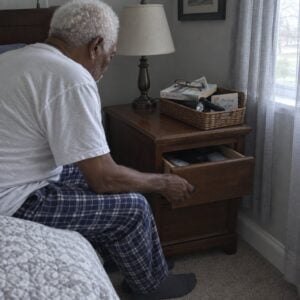
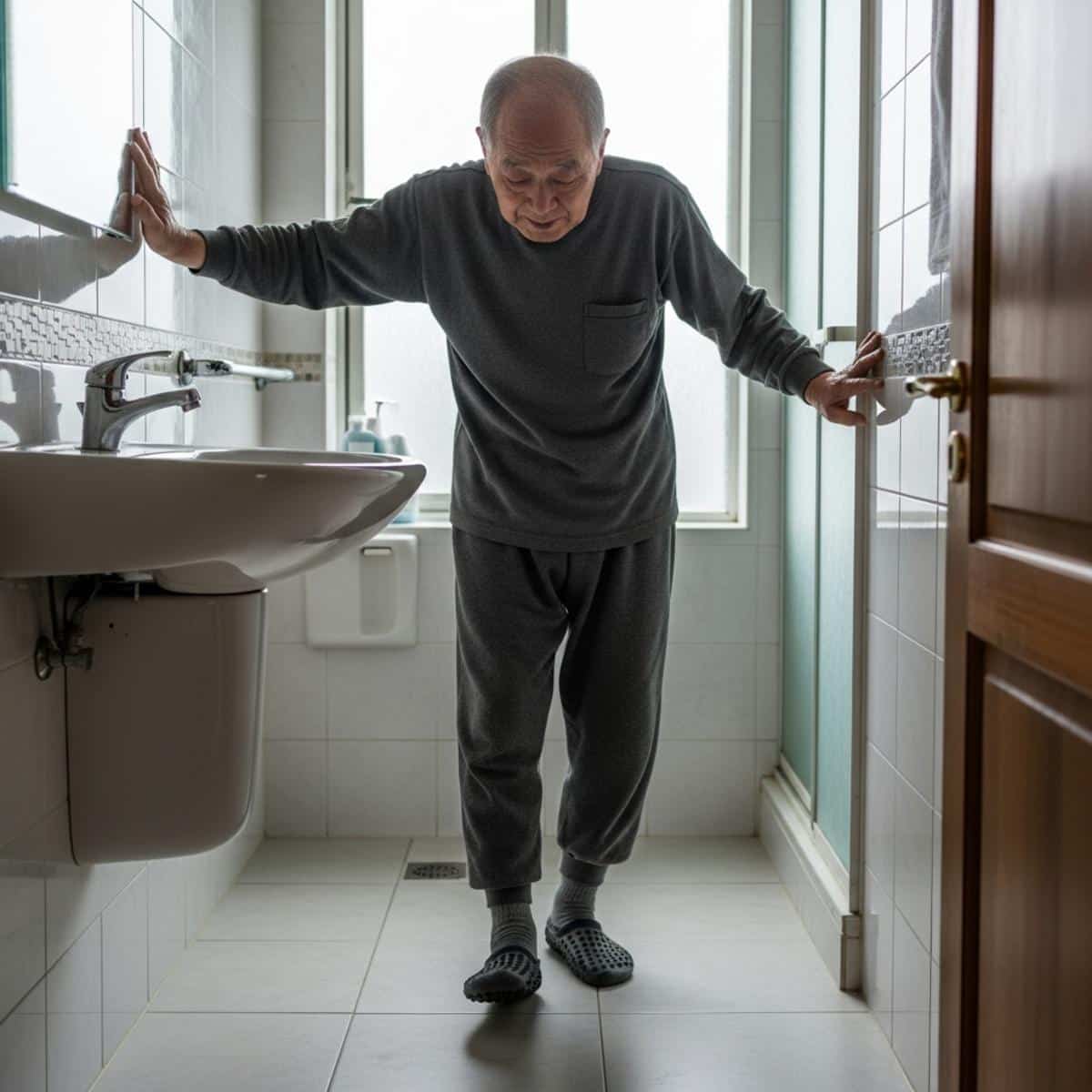
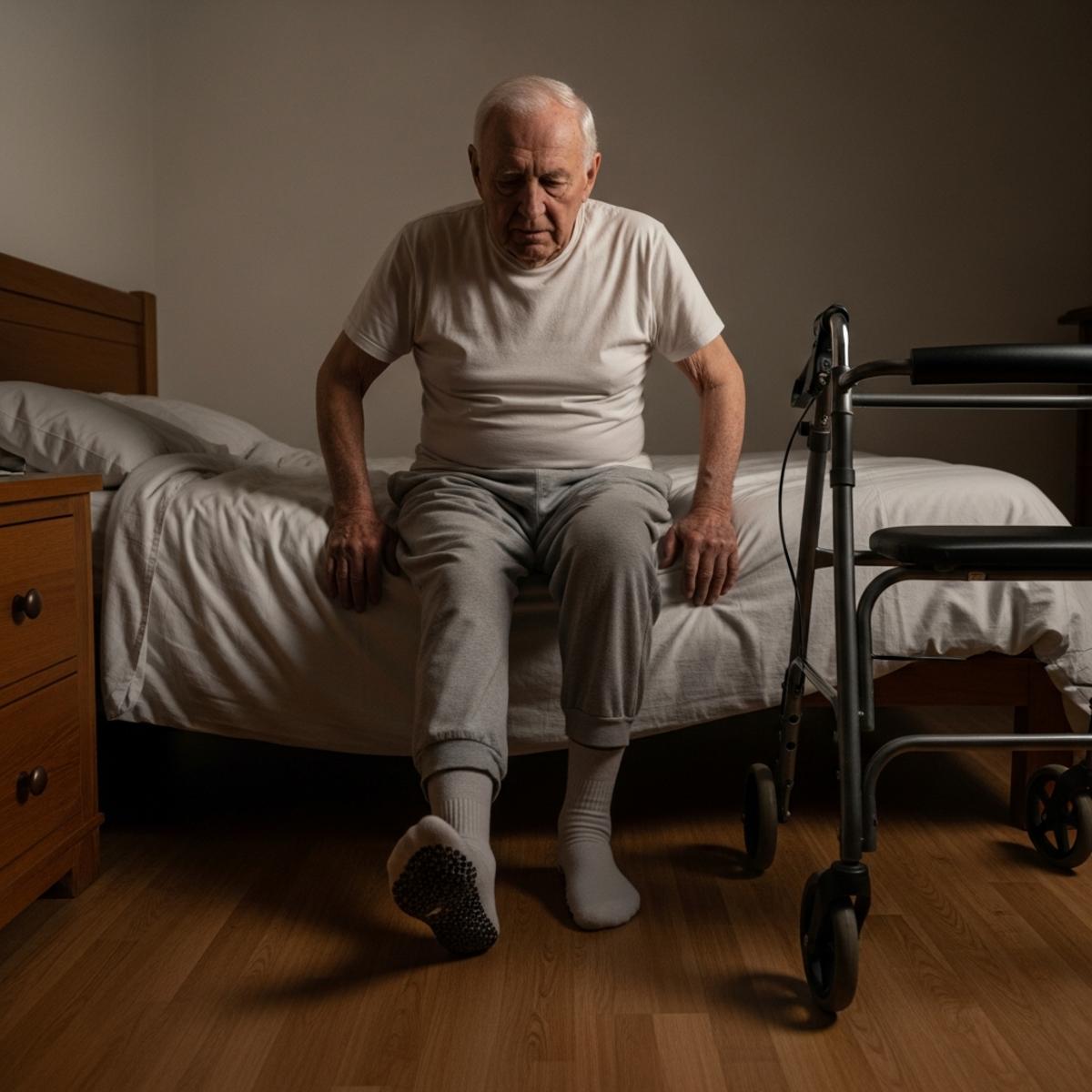
Here’s what makes this particularly tricky: nothing looks wrong. There’s no spill on the floor. No obvious hazard. Just a quick pivot in the kitchen, a reach across the bathroom counter, or that shuffle from bed to the hallway at 2 a.m.
Those are the moments that catch people off guard.
This isn’t about being fragile. It’s about understanding that certain surfaces and certain footwear create a combination that increases your risk — and that knowing this is the first step to fixing it. Understanding how your home environment affects your brain and body is one of the smartest things you can do for your long-term independence.
What Grip Socks Actually Do — And Why the Science Makes Sense
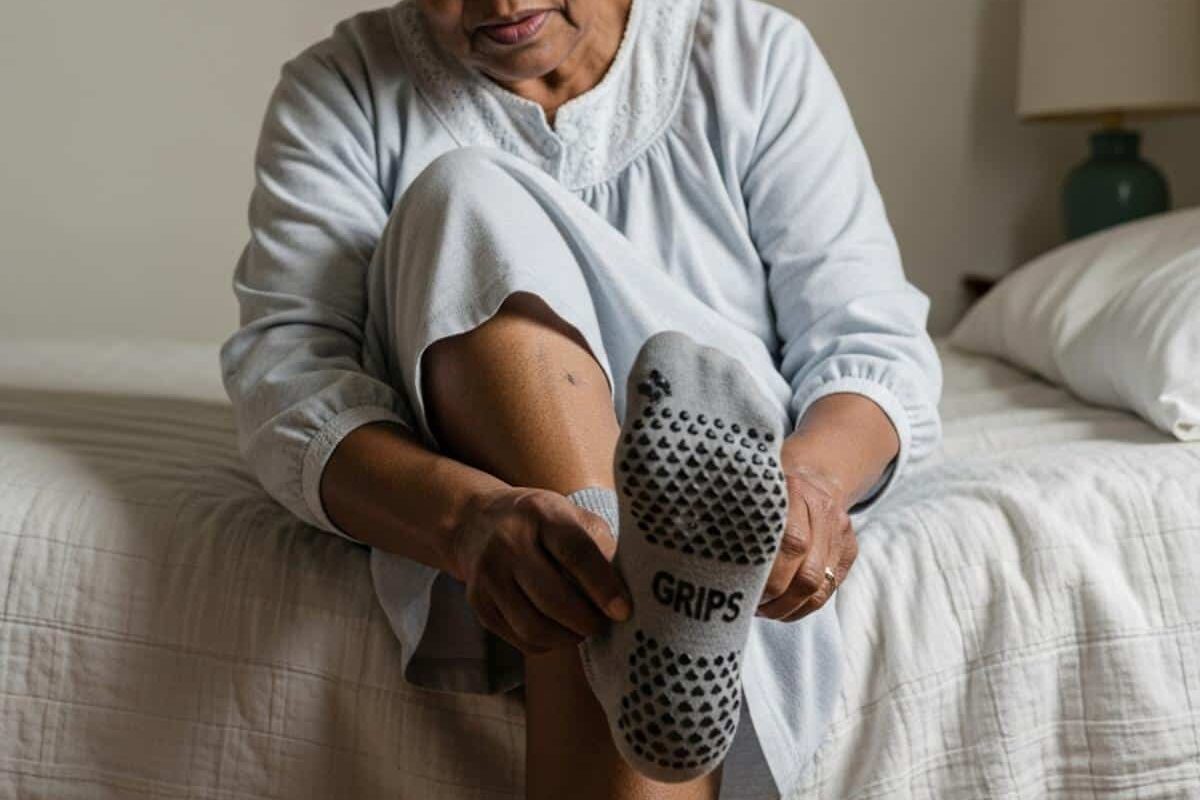
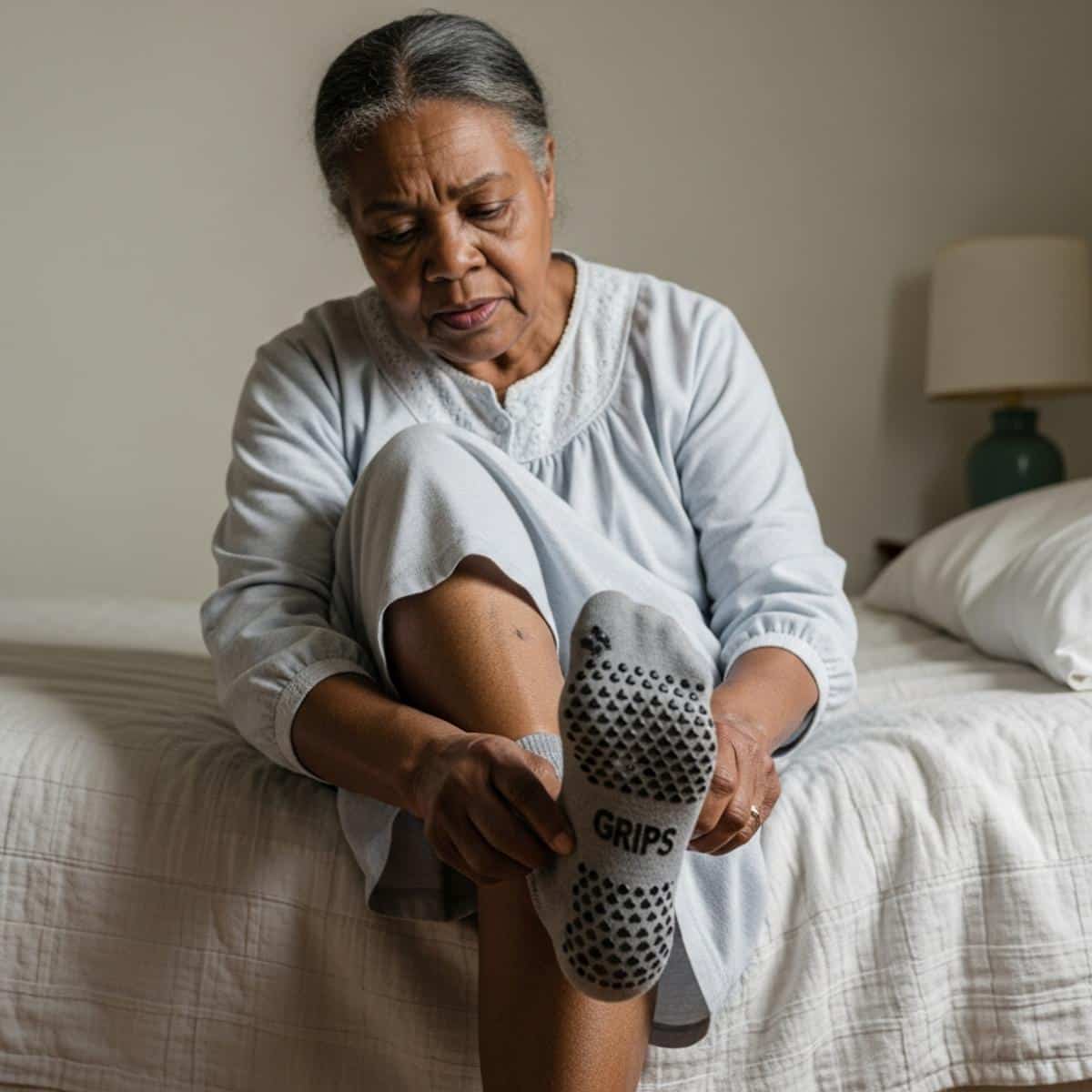
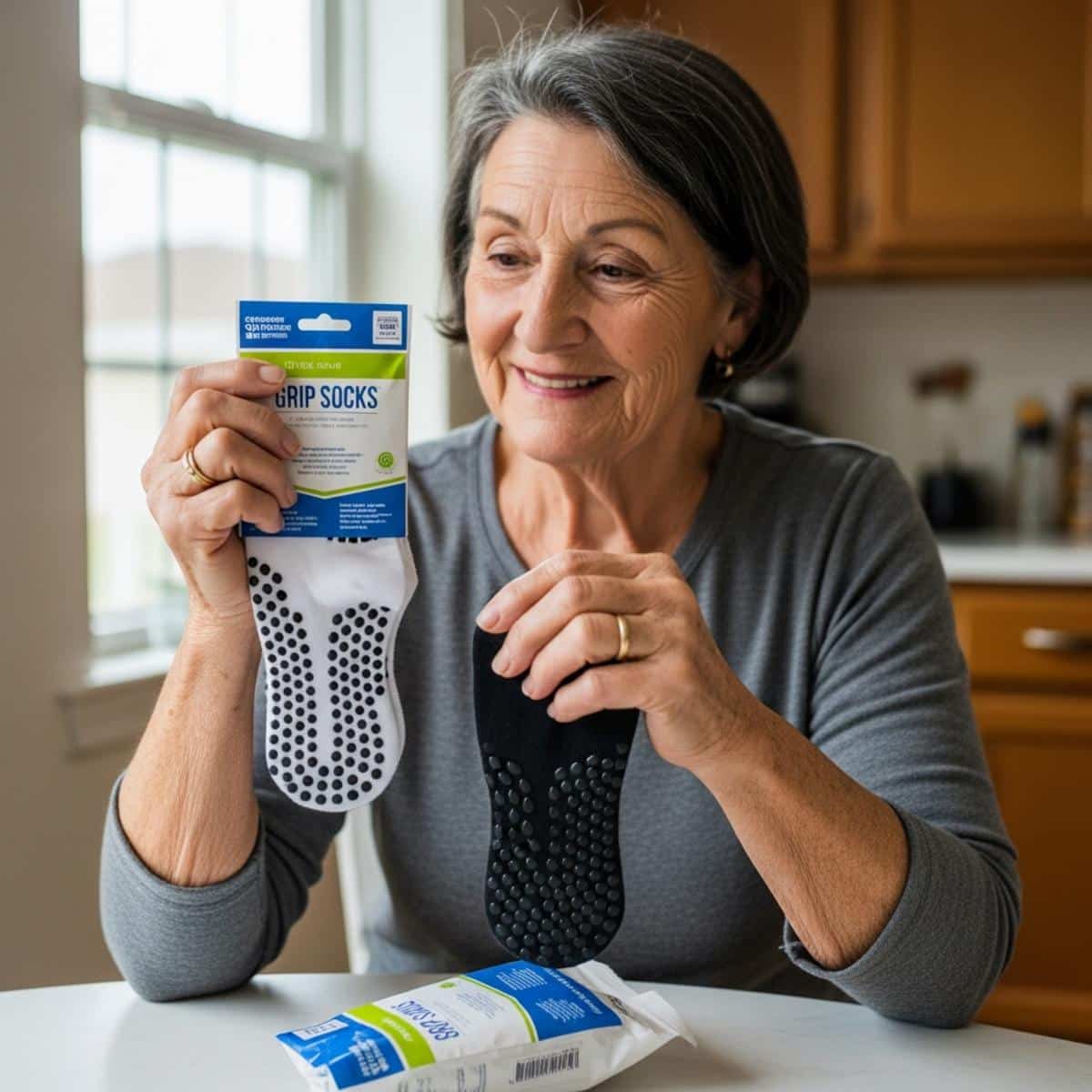
Grip socks aren’t a gimmick. The rubberized or silicone traction pattern on the sole creates genuine friction between your foot and the floor — friction that standard cotton socks completely lack.
Here’s the simple physics: smooth fabric on smooth flooring gives your foot almost nothing to grip. The grip pattern on a quality non-slip sock changes that equation by increasing surface-to-surface contact and resistance.
Coverage area matters more than most people realize. There’s a meaningful difference between:
- Full-sole coverage — the most protective, grips regardless of how your foot lands
- Heel-and-toe patterns — solid for most movement, leaves the arch area smooth
- Minimal dot patterns — better than nothing, but large areas of smooth fabric still contact the floor
Grip socks also support a natural walking gait rather than forcing a shuffle. That matters for maintaining movement confidence — which is its own form of fall prevention.
Do grip socks really prevent falls? Here’s an honest answer: they’re one layer of protection, not a complete solution. They meaningfully reduce slip risk on smooth indoor surfaces during normal daily movement. They don’t replace grab bars in the bathroom, non-slip mats, or simple bedroom modifications that prevent nighttime falls. But as a starting point, they’re one of the highest-value, lowest-effort changes you can make today.


Want more practical, affordable ways to stay safe and independent at home? Subscribe to the Graying With Grace newsletter for expert-tested tips and product recommendations designed specifically for older adults.
Grip Socks vs. Non-Slip Slippers — Which One Does the Job Better?
Both have a place in a fall-safe home. But they’re not interchangeable — and knowing which to reach for makes a real difference.
Grip socks are typically the better choice when:
- You’re moving actively through the house
- It’s a quick trip to the bathroom at night
- You want to avoid the effort of putting on footwear for short trips
- Arthritis or reduced hand dexterity makes slipper closures frustrating
Non-slip slippers tend to work better when:
- Floors are cold and you’ll be wearing them for longer stretches
- You’re transitioning between indoor surfaces and a doorstep
- You prefer more structure around your foot
Here’s the honest comparison: slippers add bulk and can create their own trip hazard if they fit loosely or slide off the heel. Grip socks conform to your foot and move naturally with every step.
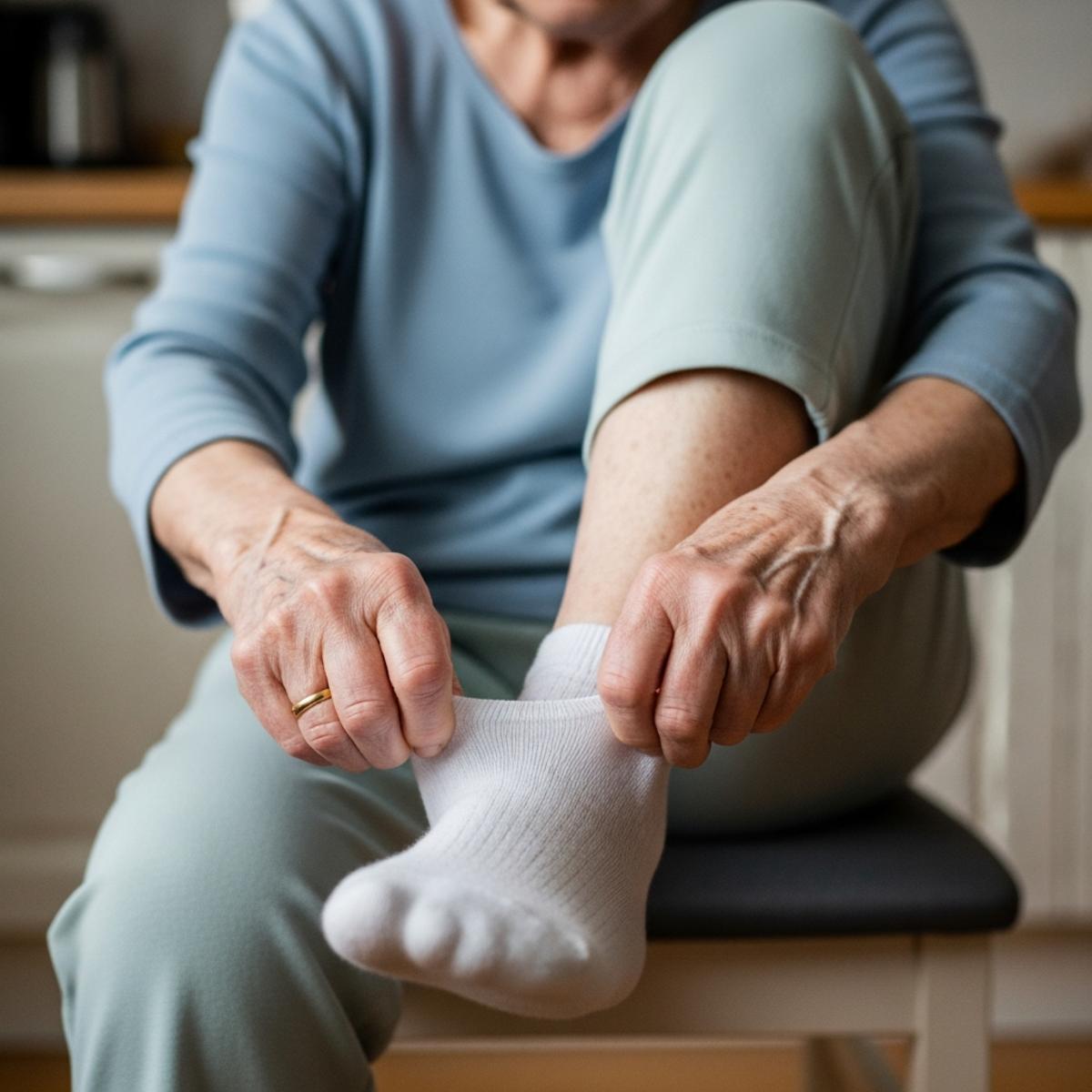
For older adults with arthritis, this difference is significant. Slip-on grip socks are often far easier to manage than buckles, velcro, or stiff slipper openings. Managing arthritis at home is about removing friction from daily routines — and footwear is no exception.
Many older adults keep both on hand: grip socks for active movement and a supportive non-slip slipper for longer sitting-to-standing periods or colder mornings. That’s a smart approach.


What to Look For — The Four Things That Separate a Good Grip Sock from a Great One
Not all grip socks are created equal. Here’s what actually matters:
1. Sole Coverage
Look for full-sole or near-full-sole grip patterns. Minimal dot patterns leave large areas of smooth fabric in contact with the floor — which defeats the purpose on slick hardwood or tile.
2. Fabric and Breathability
Cotton blends are the most comfortable for daily wear. Avoid purely synthetic fabrics that trap heat, especially if foot temperature regulation is already a concern — which it often is for older adults.
3. Ease of Putting On
This is the detail most product descriptions skip. For arthritis-friendly use, look for:
- Wide sock openings that don’t require a strong pinch grip
- Non-binding cuffs that don’t cut into the ankle
- Minimal stretch resistance — you shouldn’t have to fight them
- Extra-wide width options if foot swelling or orthotics are a factor
4. Washing Durability
The grip pattern should hold up to repeated machine washing. Cheaper options often start peeling or losing traction within a few weeks. Quality socks maintain their grip for months of regular use — which is what makes them worth the investment.
What to avoid: Socks with grip only on the heel or a tiny strip across the ball of the foot. If the pattern doesn’t cover where your foot actually contacts the floor during a pivot or a sudden stop, it won’t help when you need it.
This is also worth bookmarking if you’re thinking about a broader fall-proofing approach for your home — grip socks are the first layer, but they work best alongside a few other targeted changes.
The $12 Gift That Might Be the Best Safety Decision You Make This Year
For adult children and caregivers, grip socks are one of the highest-value, lowest-resistance safety gifts available.
Here’s why they work where other fall prevention products fail:
- No installation required — no tools, no contractor, no weekend project
- No implication of serious decline — unlike grab bars or walkers, grip socks carry no emotional weight
- No measurements needed — a simple size check is all it takes
- Immediate daily use — they go on the first morning and stay useful every day after
Many older adults resist grab bars, raised toilet seats, or mobility aids because of what those products symbolize. Grip socks carry none of that baggage. They’re comfortable, often stylish, and easy to accept.
For adult children: This is also a natural conversation opener. Giving grip socks can lead into a broader home safety conversation — about rugs, thresholds, bathroom surfaces — without triggering the defensiveness that comes with bigger interventions. If you’re already thinking about your parent’s safety at home, knowing when to take action on those concerns requires exactly this kind of gradual, trust-building approach.
For hospital stays: Standard hospital-issued grip socks are often thin, poorly fitted, and inadequate for older adults with balance challenges. Bringing a quality pair from home — with full-sole coverage and a proper fit — is a small detail that makes a real difference during recovery, when fall risk is at its highest.
For Grace: Choosing grip socks isn’t a concession to age. It’s a smart, practical decision that also happens to come in attractive designs and comfortable fabrics. Your style preferences are valid — and the good news is that the best grip socks don’t look institutional at all.
Home Fall Prevention Checklist: 7 Safety Zones to Review Today
Download our free guide to building a compassionate caregiving plan that reduces burnout, ensures nothing falls through the cracks, and helps you maintain your own health while caring for others.
One Small Change With a Real Payoff
Fall prevention doesn’t always require major expense or dramatic change. Sometimes the right $12 purchase, worn consistently, makes a meaningful difference in daily safety at home.
Here’s your one immediate action: look at the flooring you walk across most in socks — the kitchen, the hallway to the bathroom, the bedroom floor at night. If it’s hardwood, laminate, or tile, you’re walking on a slip risk every single day.
Grip socks are the simplest fix available. They work the moment you put them on. And they’re the kind of thing that gets used every single day — which is exactly what makes them worth it.
If you’ve already tried grip socks, I’d love to hear what’s worked for you. And if you’re just getting started, drop a comment below — which room in your home feels the most slippery? That’s the right place to start.
For a broader look at reducing fall risk throughout your home, including bathroom modifications and nighttime safety changes, the resources are there when you’re ready for them.