
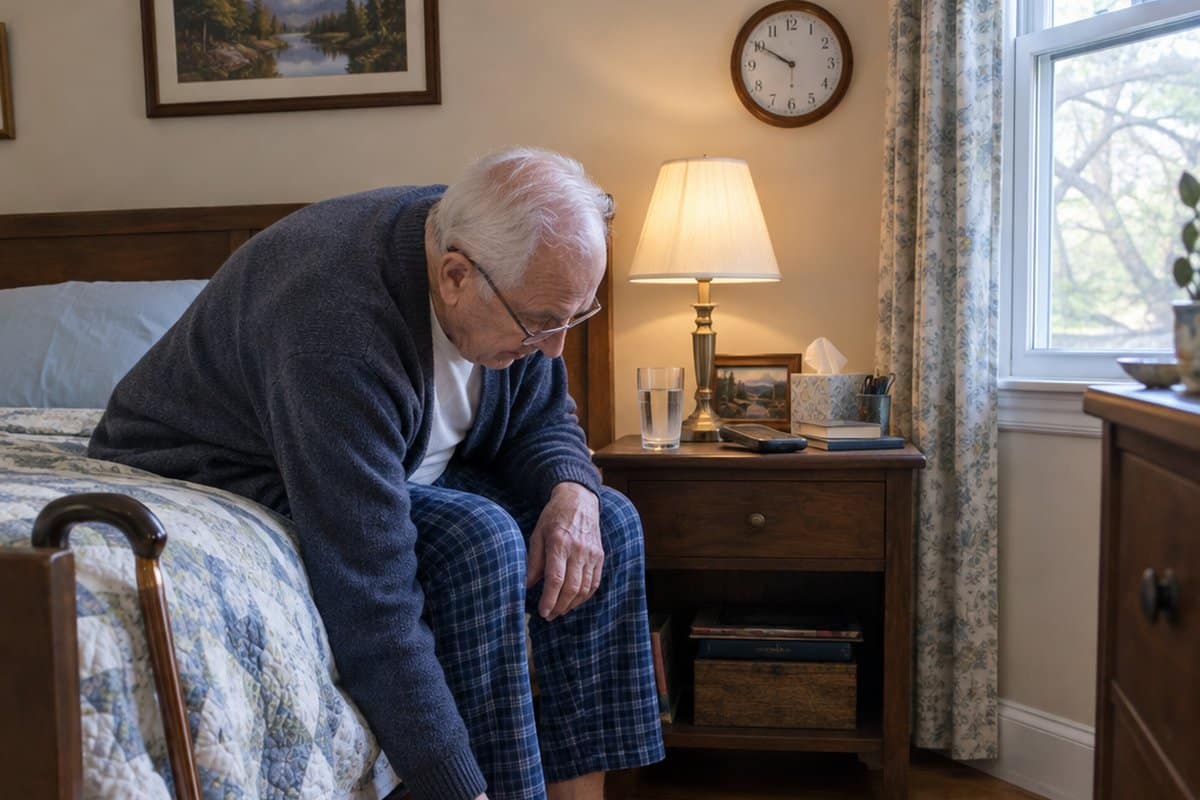
It’s 3am, the house is dark, and you wake up needing the bathroom. You swing your legs over the side of the bed and stand up.
Everything feels fine, but this is where bedroom fall prevention really counts.
Most falls at night don’t happen on the rug. They happen in the getting-up and the walk back to bed.
This article covers bed height, how to get out of bed, lighting, the closet and doorway, what to keep near the bed, and how to talk with a loved one about changes.
If you still have rugs in the bedroom, these fixes for sliding and curling rugs are worth doing before anything else.
Here’s what most people don’t know: the hazards that matter most in bedroom fall prevention aren’t static obstacles. They’re movement moments.
And once you know what they are, every single one has a simple, affordable fix.
Bedroom Nighttime Fall Prevention Checklist for Safer Sleep
Download this printable bedroom fall prevention checklist to identify and fix hidden nighttime hazards in under an hour, so you can sleep soundly knowing you can move safely in the dark without risk of falling.
The Real #1 Culprit Most People Never Check
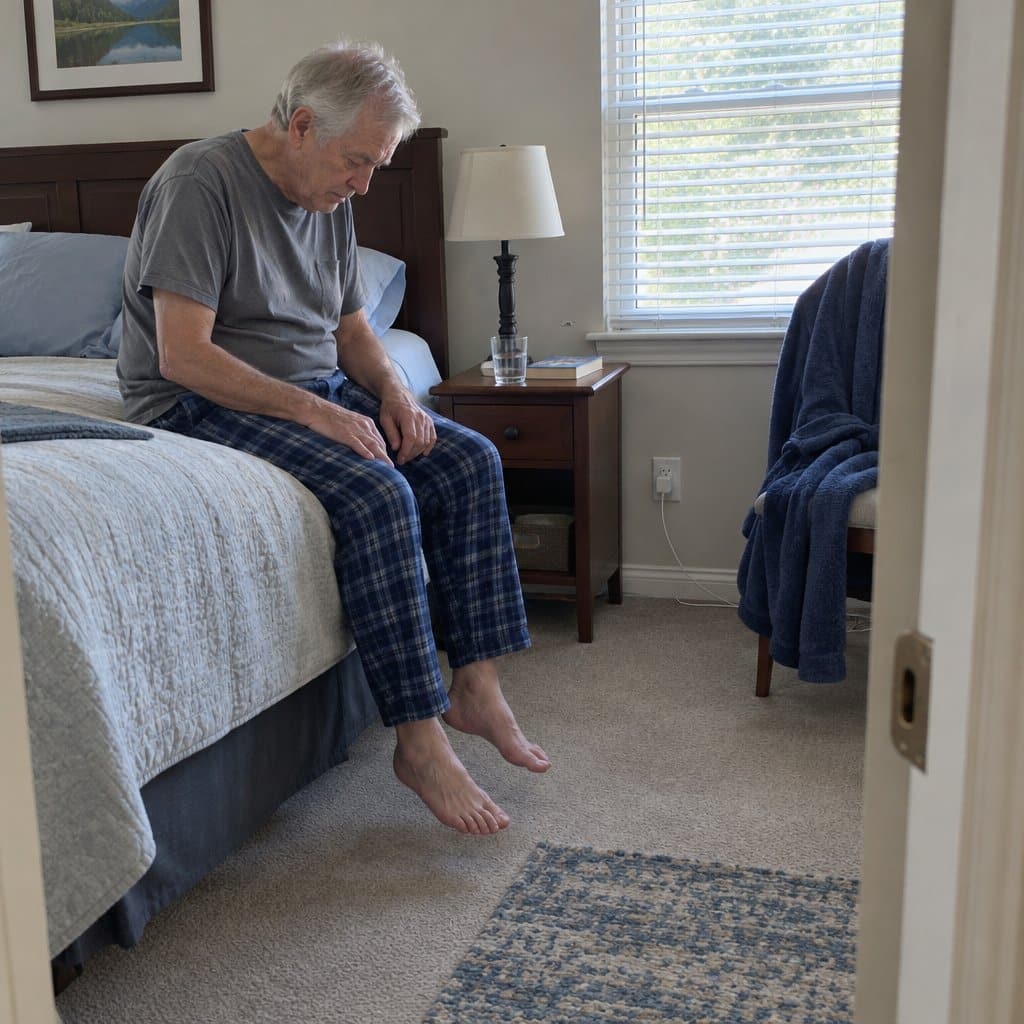
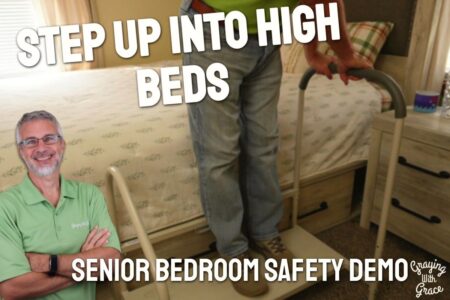
Bed height is one of the most overlooked bedroom fall risks, and a bed set at the wrong height makes standing harder.
Here’s the quick test: Sit on the edge of your mattress. Your feet should rest flat on the floor with your knees at approximately a 90-degree angle.
If your feet dangle, the bed may be too high. If your knees rise above your hips, it may be too low. A doctor or physical therapist can help you find the right height.
When the bed is too high, you may slide or push off with momentum rather than rising in a controlled movement. That momentum has to go somewhere, and it can go sideways.
When the bed is too low, standing requires a forward lunge that challenges balance before you’ve taken a single step.
This is a two-minute check that could matter enormously. And the fix rarely requires a new bed.
- Bed too low? Bed risers can raise the frame a few inches. Make sure they are rated for the bed’s weight and sit firmly, and ask a doctor or physical therapist to check the right bed height.
- Bed too high? A low-profile bed frame or removing the box spring often brings it right to the correct height.




Why the Bedroom at Night Is Where Falls Happen
Waking from deep sleep, your body is not ready to move safely, not right away. Your muscles are stiff, and your blood pressure needs a moment to adjust as you go from lying down to standing.
Your balance is also a step behind. Add the dark and the feeling that you need to hurry, and you have the conditions for a fall.
That has nothing to do with being frail or losing ability. It is simple physics working against anyone whose bedroom has not been set up for those first few seconds.
Falls can happen in the hours between midnight and early morning. That is why a bathroom trip that feels routine deserves more thought than the rest of your day does.
If you want to see how small bits of friction around the house add up to bigger risks, what happens to the brain and body when a home isn’t safe explains it clearly.
The good news is that the cause is the setup, not you. The trade-off is that no single change covers every one of these factors, so the fixes below work best together.
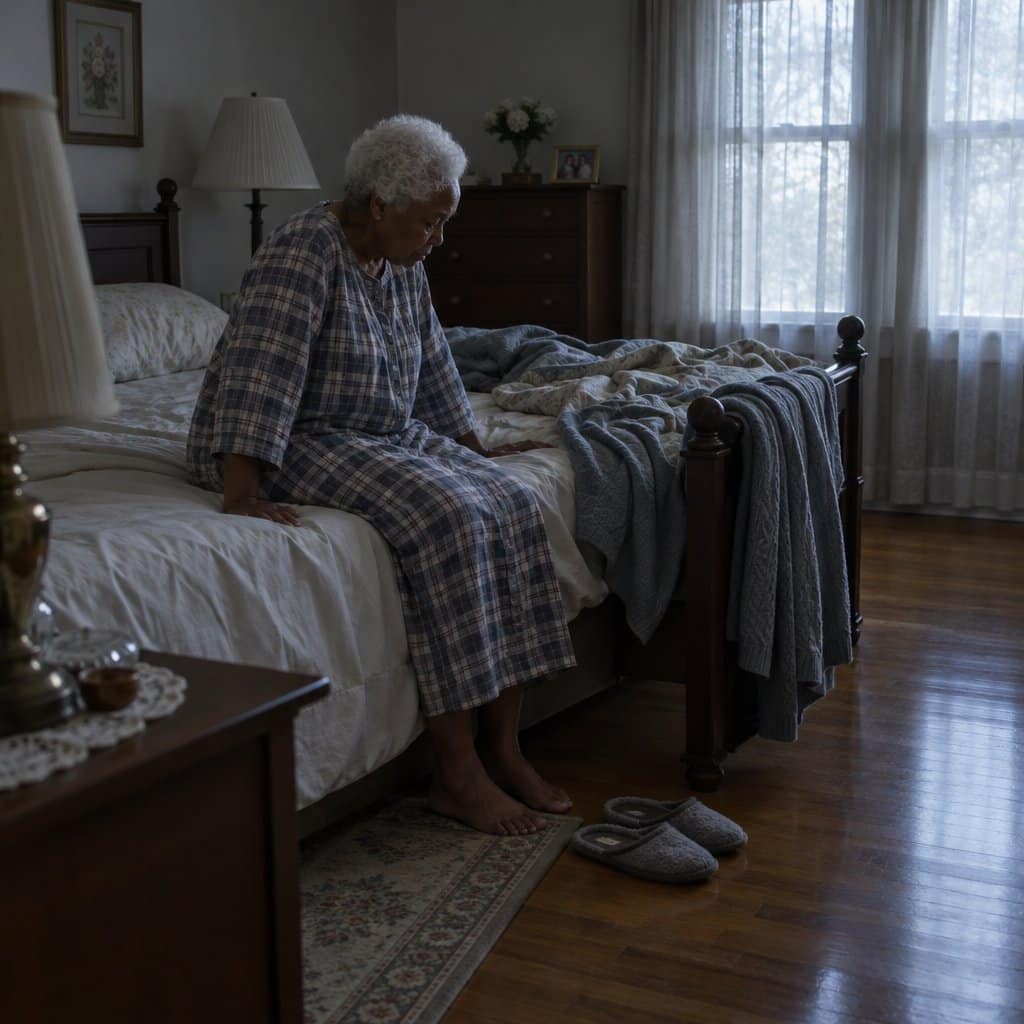
The Sit-Stand Sequence That Prevents the Most Common Fall Moment
How you get out of bed matters as much as what surrounds you.
The most common mistake is sitting up and immediately standing in one fast, forward motion. That creates momentum your body then has to correct, and in those first few seconds after waking, your balance is still catching up.
There’s a safer three-step sequence:
- Roll to your side before pushing up. This reduces the strain on your core and avoids the abrupt forward lurch.
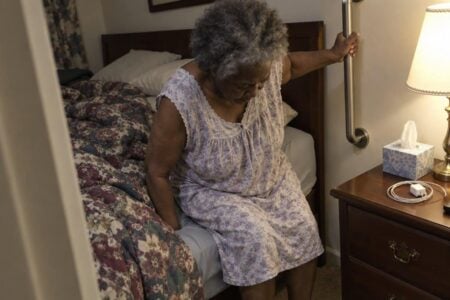
- Push up to seated using your arms, and pause at the edge of the bed for 20 to 30 seconds.
- Then stand slowly, using something stable for support.
That pause in step two isn’t optional. Orthostatic hypotension, a brief drop in blood pressure when you stand, is common. It’s that fleeting dizziness you might feel when you rise quickly. Balance changes like this are exactly why fall prevention requires a different approach, and this pause is one of the simplest ways to address it.
For the stand phase, you need something stable to hold. A freestanding bedside grab pole (a floor-to-ceiling tension pole that needs no drilling) puts a vertical grip where you need it during that final rise from seated to standing.
This isn’t about slowing down. It’s about building in the two seconds that prevent a fall.
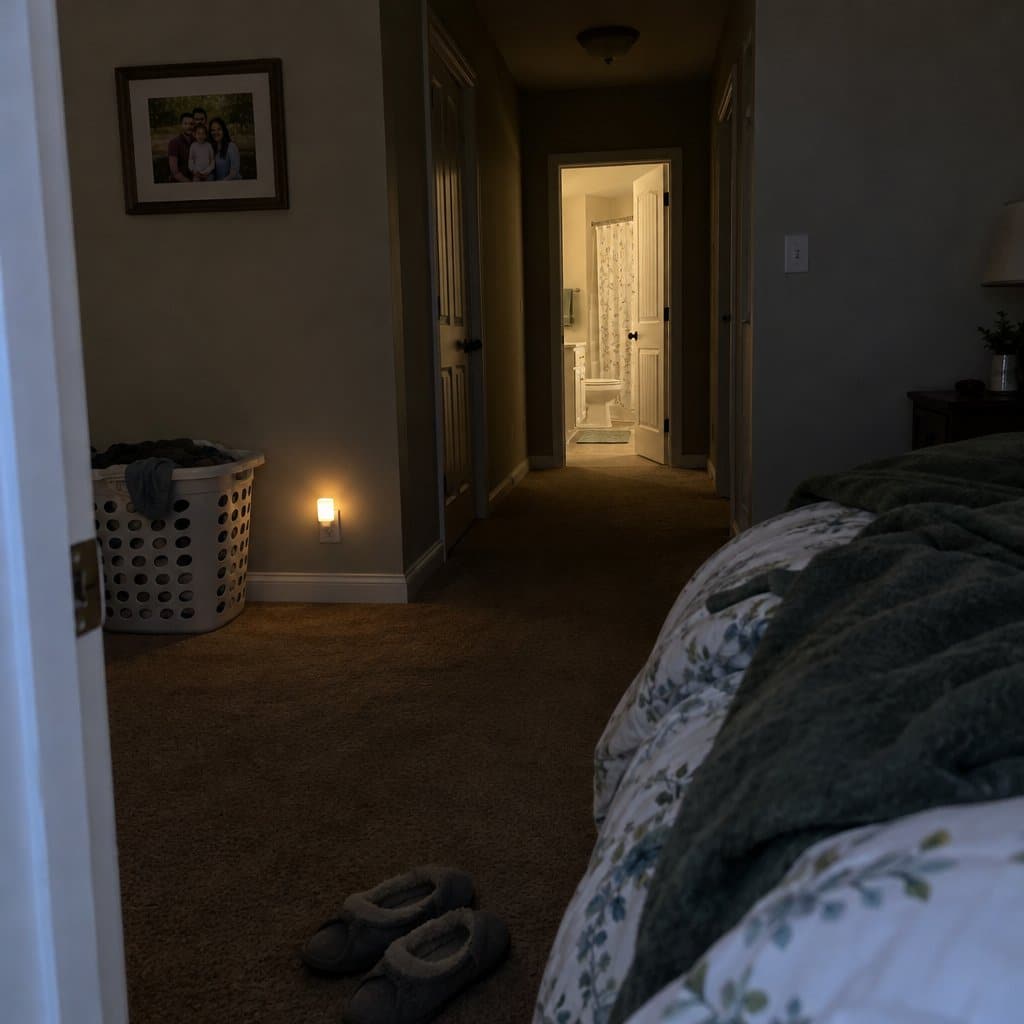
Why the Trip Back From the Bathroom Is More Dangerous Than the Trip There
Most people focus on the walk to the bathroom. But the return trip can carry a higher fall risk.
Here’s why: waking from deep sleep creates a brief disorientation window. Your brain is moving from rest toward alertness, and on the way back to bed you’re moving toward rest again, so alertness is already fading.
The bathroom itself often has a light. The bedroom corridor and the space directly beside your bed usually don’t, and that’s where orientation is weakest.
The instinct is to flip on the overhead light. But harsh light at 3am disrupts melatonin production and makes it harder to fall back asleep. You also risk waking a partner.
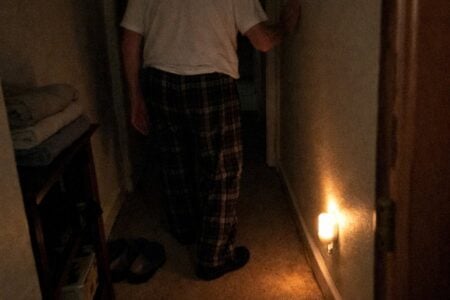
What actually works: low-level floor lighting that guides the path without fully waking the brain.
There are two reliable approaches:
- Motion-activated LED floor lighting responds automatically when you get up. No switches, no fumbling, no forgetting.
- Smart plug schedule lighting keeps a soft light on during a set nighttime window (say, 11pm to 6am) without requiring any trigger at all.
The key placement detail: lighting belongs at floor level along the bedroom-to-bathroom corridor, not at eye level. A nightstand lamp illuminates the ceiling. Floor-level lighting shows you where your feet are going.
Want more practical tips for safer, more comfortable aging at home? Subscribe to our newsletter for expert-tested advice and trusted product recommendations designed specifically for older adults.
Closets, Doorways and the Route to the Bathroom
Falls do not only start at the bed. The closet, the bedroom door and the distance to the bathroom all play a part, and each one has a plain fix.
Start with the closet. High shelves and clothing rods are a hazard if you have to stretch or climb a step stool to reach a sweater. Adjustable-height shelving and rods solve most of that.
A lowered rod is one option. An automated wardrobe lift brings hanging clothes down to a reachable level at the push of a button.
A rolling storage cart keeps the things you use often within easy reach. Baskets on shelves cut down on bending, and a shoe rack at a comfortable height keeps shoes off the floor.
Set aside one spot for your daily outfit, such as a special hanger or a section of the closet. Then you have everything ready for the day. For a bigger clear-out, the decluttering guide goes step by step.
Closet lighting matters too. Motion-sensor lights or light bars inside the closet turn on hands-free the moment you open it.
Next, the doorway. If you use a walker or wheelchair, the door needs to be wide enough to pass through. The standard for accessibility is at least 32 inches, and 36 inches gives you more room to maneuver. If you are shopping for a chair, there are wheelchairs made for narrow doorways.
Widening a doorway is a permanent fix. If that is not possible right now, swing-away offset hinges let the door open fully and give you a few extra inches. Taking the door off, or moving nearby furniture, can help right away.
Finally, the trip to the bathroom. Keep the path clear from bed to bathroom. Motion-sensor night lights or soft lighting guide you without fully waking you up. Grab rails in the bathroom, and along the path if you can, give you something to hold.
If you are able to have a bathroom attached to the bedroom, the walk at night gets much shorter, and that lowers the risk.
The trade-off is that widening a doorway or adding a bathroom is a real renovation, so the smaller fixes may be what you can do first.
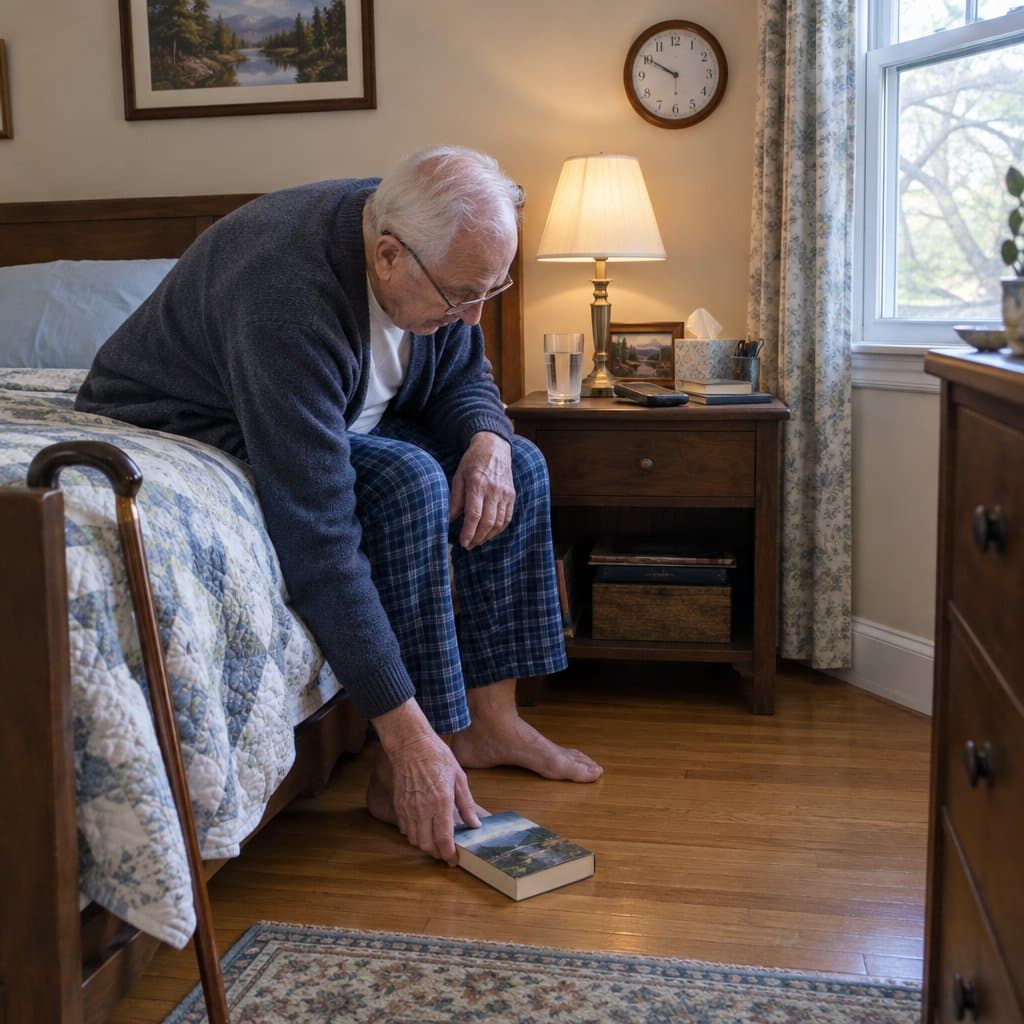
What You Keep, and Don’t Keep, Within Arm’s Reach of the Bed
Reaching, leaning, and bending from a seated position at the bedside are high-risk movements, and most of them are avoidable.
These four items should be within arm’s reach without leaning:
- Phone
- Glasses
- Water
- Any nighttime medications
Leaning forward from the edge of the bed to pick something up off the floor is one of the most underestimated fall triggers. The center of gravity shifts forward, the feet aren’t yet firmly planted, and the body isn’t fully oriented from sleep. It’s a bad combination.
And don’t overlook the floor itself. Bare feet on cold hardwood or tile can feel stiff and unsteady, which makes standing harder.
The single most practical fix most people skip: a pair of non-slip slippers with a closed back and a firm sole, placed directly beside the bed so they’re the first thing your feet touch when you stand.
Not shuffle-style slippers. Not socks. Closed-back, firm-soled non-slip slippers. The same principle that grip socks address for fall prevention on smooth indoor floors applies here, but with added ankle support.
Quick audit: Take 60 seconds tonight to look at what’s on and around your nightstand. Anything you’d need to lean or bend for should move.
Bedroom Nighttime Fall Prevention Checklist for Safer Sleep
Download this printable bedroom fall prevention checklist to identify and fix hidden nighttime hazards in under an hour, so you can sleep soundly knowing you can move safely in the dark without risk of falling.
Getting Your Loved One On Board With Bedroom Changes
Even the best plan goes nowhere if the person who sleeps in the room does not want it. How you bring it up matters as much as what you change.
Present the changes as comfort improvements, not safety modifications. Talk about convenience: “Now you won’t have to fumble for the light switch when you get up at night.”
Talk about independence too: “This setup means you can move around safely without needing to call for help.” Most people are glad to hear that a change keeps them on their own two feet.
Then involve them in the choices. Ask, “Would you prefer the nightlight here or here?” or “Which of these two lamp styles do you like better?” It is their room, and they should have a say in it.
Start small. Make one or two changes first, let them notice the benefit, and then add more.
If you want ideas for what to change first, the fall prevention checklist lays out simple options. When the answer is still no, what to say when an aging parent refuses help can give you some words to use.
The trade-off is that going slowly means some hazards stay in place a little longer. Starting with one or two changes they agree to is usually better than a full makeover they resent.
Making the Bedroom Safer Without Spending Much or Losing Your Style
Before you buy anything, look at what is already in the room. Could the furniture be arranged to give you a safer path? Is there clutter you could clear? Those changes cost nothing, and they often matter most.
A few low-cost fixes are worth knowing. Double-sided tape keeps a rug from slipping. Higher-wattage bulbs brighten the room, and good lighting helps prevent falls.
Second-hand shopping can work too. Adjustable beds and bedside rails are sometimes sold at a fraction of their original price on Facebook Marketplace or at local thrift stores. Many stores also offer senior discounts, so it is worth asking.
If expenses are the hurdle, local community centers and non-profits that focus on senior care may know of grants, insurance coverage options or programs for home safety.
Safety items do not have to look medical. You can choose bed rails with a wood finish that matches your furniture. A non-slip rug in a color you like adds a cozy touch and still keeps your feet steady. Look into safer flooring choices if you are thinking bigger.
Lamps, night lights and grab bars also come in many designs. A stylish lamp within arm’s reach gives you light and looks good doing it. A padded bench at the foot of the bed gives you a place to sit and put on shoes. If your bed is the wrong height, bed steps are another option to look at.
The trade-off is that second-hand safety gear is only a good deal if it works well. Check that a rail or adjustable bed is sturdy before you bring it home, and expect to compromise a little between the style you want and the models available.
A Weekend Plan to Make the Bedroom Safe
If all of this feels like a lot, spread it over a weekend. Three short blocks of time cover the whole bedroom.
Friday evening is the walk-through, about 30 minutes. Walk the room in the dark, using only the light you have now. Note every obstacle, shadow or spot where your footing feels uncertain.
Then walk to the bathroom at a normal pace. Look for furniture edges, doorway thresholds and changes in the flooring. Write down everything that could cause a problem. That list is your weekend project.
Saturday is for the changes, about three hours. In the morning (two hours), do the lighting and furniture:
- Install motion-activated lights along the path to the bathroom
- Move furniture to open up clear walkways
- Set up the bedside station with the things you need
In the afternoon (one hour), finish up:
- Secure loose rugs or remove them
- Run electrical cords along the walls
- Test every light to make sure you can see well enough
For other simple changes to put on your list, the fall prevention checklist is a good place to look.
Sunday is testing, about 30 minutes. Try the new layout in daylight, then again in low light. Adjust anything that feels wrong, and ask the person who sleeps there what they think.
Finish by making an emergency plan that everyone in the family understands.
The trade-off is that a weekend is a quick way to get started, but it will not catch everything. Your Sunday adjustments matter, so treat the first layout as a draft and expect to move a few things.
Keep Non-Slip Socks or Slippers on the Nightstand
Non-slip socks are one of the most effective fall-prevention tools out there. The trouble is rarely that people don’t own a pair. The trouble is that the pair is in a drawer or the closet when you wake up at 2 AM.
Smooth floors like hardwood, tile or laminate are slippery under bare or socked feet. Stepping out of bed onto one of them in the dark, in a hurry, is when a slide is most likely.
The fix is a habit, not a gadget. Keep a pair on the nightstand, where you can see them and reach them the moment you wake. Socks in a drawer do nothing for you.
If you would rather wear slippers, closed-back ones with a firm sole and a non-slip bottom are the kind to choose. Set them right beside the bed so they are the first thing your feet touch.
When you shop for grip socks, look for these:
- Grip across the whole sole, not just the heel or toe
- A comfortable fit that slips on easily, without bending down awkwardly
- Washable, durable material
- Multipacks, so you can rotate pairs while others are in the wash
This works best alongside the other bedside habits. Keep your phone, glasses and water in arm’s reach, and a plug-in motion-sensor night light near the bed at floor level helps you see where your feet are going.
If a fall does happen despite your best planning, the first things to do after a senior falls is worth reading ahead of time. If you are helping someone whose care needs are getting more complicated, what senior care centers actually do and the questions that reveal if one is worth it gives a clear look at when more support makes sense.
The trade-off is that grip socks only help if they are on your feet. If you tend to step out of bed without thinking, you will need to build the habit of reaching for them first.
What Professional Caregivers Take Out of Seniors' Bedrooms
Professional caregivers walk into a bedroom and spot things family members have walked past for years. Here is what they look for, and what they change.
Sleep and light come first. Digital alarm clocks with bright displays, TVs, tablets and charging cables with little indicator lights can all disrupt sleep. Caregivers swap in an analog clock with luminous hands, take the TV out of the bedroom or cover its standby light with electrical tape, and charge devices in another room.
Next is the air. Decorative pillows and stuffed animals collect dust and allergens, and heavy drapes that rarely get washed trap dust. Air fresheners, scented candles and potpourri can irritate sensitive breathing. Caregivers cut back on the clutter, choose washable curtains, and freshen the room by airing it out and cleaning with non-toxic products. Learning what professional caregivers know that families don’t can help you see more of this.
They also catch trip hazards. Extension cords across walkways are a risk even when taped down. Furniture that makes narrow pathways is another, since wider paths are safer, especially with a walker or cane. Bedskirts that hang too far can catch on feet or walkers.
Medication is the next check. Pills kept in the bedroom, the bathroom and the kitchen make missed or double doses more likely. Caregivers keep one central system with clear AM and PM labels, and they throw out expired medications kept “just in case.” A pill reminder app can help with tracking, and unmarked organizers cause confusion on drowsy mornings and evenings. Large, clear markings make them easier to read, and pill dispensers made for dementia are built around that idea.
Last is emergency response. A phone or call button should be within reach of the bed, so no one has to get up to call for help. A bedside phone with large buttons or an emergency response system works well. The bedroom door should not be blocked by furniture, so responders can get in quickly.
Keep a clear, well-lit path to the door and bathroom, with motion-activated night lights along the way.
The trade-off is that a bedroom with fewer decorations, no TV and a tidier nightstand may feel plainer. Let the person who sleeps there help decide what stays, so safety does not cost them comfort.
If you worry the room will feel too plain, here are some ideas for decorating a senior’s bedroom for comfort and safety.
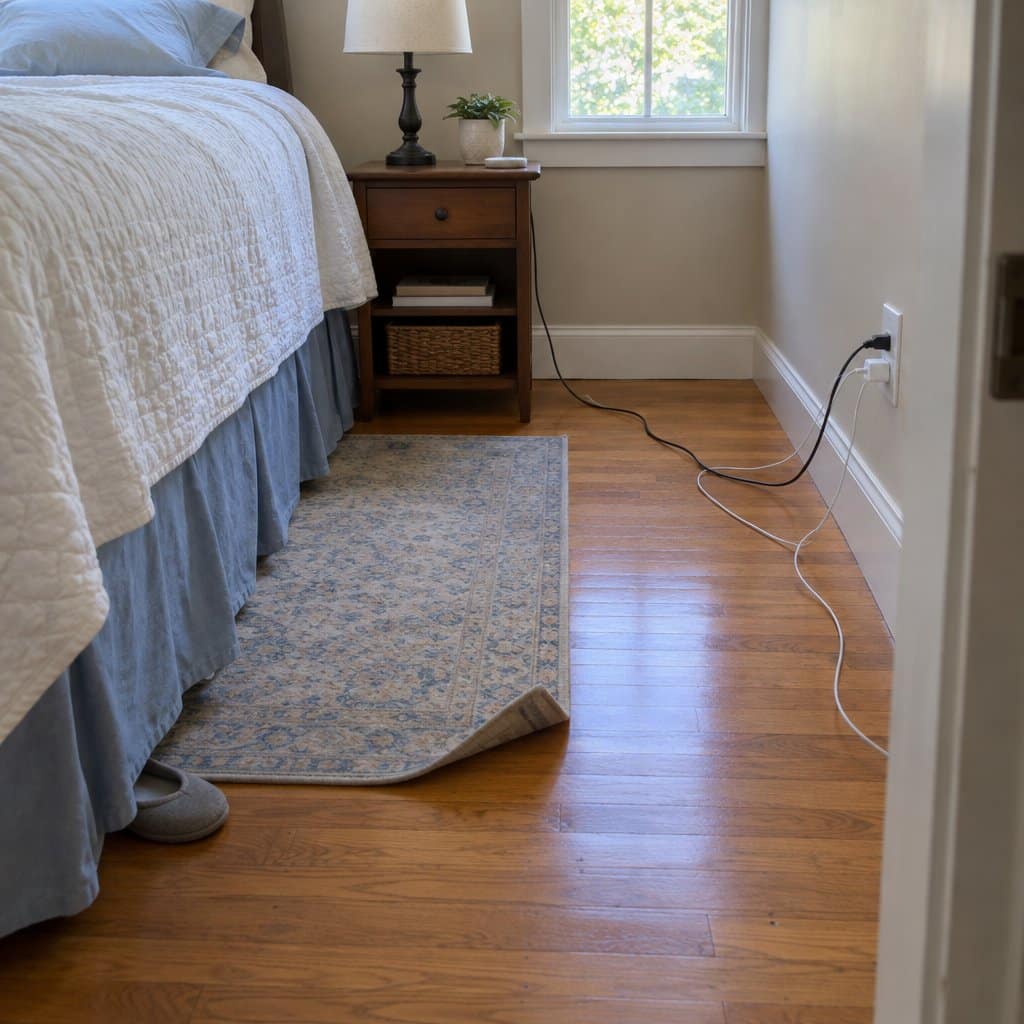
Rugs, Cords and a Clear Path Around the Bed
The floor around the bed deserves a look too. A few small fixes there make the rest of your setup work better.
Start by clearing a 3-foot path around the whole bed. That may mean moving a nightstand or a chair so you have open space to walk.
Next, look at the cords. Phone chargers, lamp cords and any medical equipment wiring should never cross a walking path. Route them along the wall, or use cord covers to keep them flat and out of the way.
Then check the rugs. Area rugs can shift underfoot, so the safest choice is to remove them or secure them. If you want to keep a rug beside the bed, heavy-duty rug grippers or double-sided tape will stop it from sliding.
Say your mom insists on keeping her bedside rug. Offer to secure it instead of taking it away, and the conversation goes a lot easier. If it gets sticky, what to say when an aging parent refuses help can give you some words to use.
For a wider look at other simple changes around the house, the fall prevention checklist is a good place to go next.
The trade-off is that a clear path means rearranging furniture you may have had in the same spot for years. Some pieces may not fit anywhere else in the room, so you may have to decide what stays.
Bed Rail or Grab Pole: Which One Do You Actually Need?
The answer depends on where in the getting-up sequence you feel least stable.


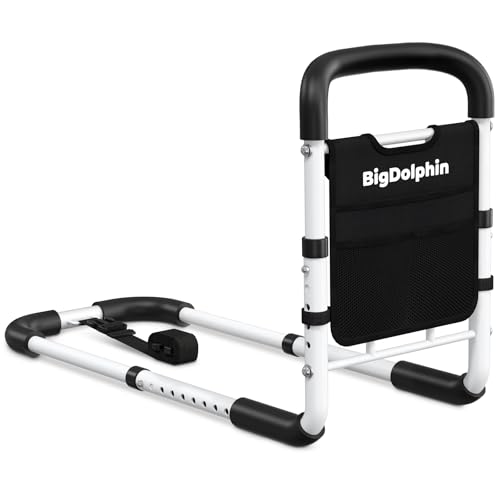
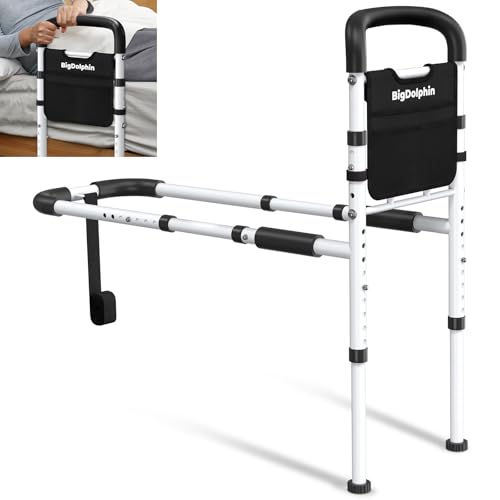
Bed rails attach to the bed frame and provide a gripping surface for:
- Repositioning yourself in bed
- Rolling to your side
- Initiating the push-up to seated
They’re the right choice when the difficulty is in the middle of the bed, such as rolling over or pushing up from lying flat.


Grab poles are freestanding and positioned beside the bed. They’re designed for:
- The sit-to-stand transition
- Stability during that 20 to 30 second edge pause
- The final rise from seated to standing
They’re the right choice when the difficulty is in that last moment before you’re fully upright.
One important safety note: If you’re considering a bed rail, choose a half-length rail, not a full-length one. Full-length rails create an entrapment risk that isn’t worth taking. Half-length rails positioned at the upper portion of the mattress provide the grip support without that hazard. For more on checking rail gaps and safer alternatives like poles or canes, see checking rail gaps and safer alternatives.
Both can coexist in the same bedroom if needed. They solve different problems.
Two-question self-assessment:
- Do I struggle most while repositioning in bed or rolling to the edge? → Bed rail.
- Do I struggle most during the final stand from seated? → Grab pole.
For many people, the assisted living transition guide touches on how this kind of home assessment shapes decisions about aging in place. Getting the right support tools in place early helps keep those conversations further down the road.
The Two-Minute Check That Might Be the Most Important Safety Upgrade in Your Home
Bedroom falls rarely happen on the rug. They tend to happen in the dark, during a 3am bathroom trip, during the moment of standing, or while reaching for glasses before the feet have settled.
None of the hazards covered here require a contractor, a major renovation, or making your bedroom feel clinical. They require only awareness and a few targeted changes.
Here’s where to start tonight:
- Sit on the edge of your mattress and notice how your bed height feels. If it seems too high or too low, ask a doctor or physical therapist to check the right height for you.
- Look at your nightstand. Is everything within reach without leaning?
- Walk the path from your bed to the bathroom and back. Where is it dark?
That’s your starting point. Fix one thing this week. Then another.
If you’re a caregiver reading this, the same walkthrough applies, and you can do it during any regular visit without making it feel like an inspection. What to actually do during a visit with an elderly parent has a practical framework for weaving safety observations into natural conversation.
For a broader look at how the home environment affects balance, cognition, and daily confidence, what happens to a senior’s brain and body when their home isn’t safe makes a compelling case for why these small changes carry outsized impact.
Start with the bed height check. It takes two minutes, and it may be one of the most useful safety adjustments in the home.
What did you find when you checked? Or what have you already changed that made a difference? Share it in the comments. Your experience might be exactly what someone else needs to hear.




![Older woman glow holder nighttime[1]](https://www.grayingwithgrace.com/wp-content/uploads/2026/02/older_woman_glow_holder_nighttime1-e1770642193342-450x300.jpg)


