

You walk into your mother’s bedroom after her last visit from a well-meaning relative, and something feels off.
The grab bar near the bed is white and stark. The nightstand has been cleared of her favorite photos. The warm quilt she loves has been swapped out for something easier to wash. The room is safer, technically. But it no longer feels like hers.
Here’s what I’ve seen in over two decades of working with older adults: when a bedroom stops reflecting the person who lives in it, something quietly shifts. People spend less time there. They sleep worse. They feel managed instead of at home.
The good news? You don’t have to choose between a safe bedroom and a beautiful one. With a few intentional choices across five key areas, you can create a space that genuinely supports comfort, ease of movement, and the kind of deep personal warmth that makes a room feel like a sanctuary.
Senior Bedroom Comfort and Safety Checklist
Download this free checklist to transform your bedroom into a space that feels like home while ensuring safe, restful sleep—covering lighting, comfort, storage, personal touches, and bed setup in one printable guide.
The Right Lighting Makes Everything Feel Different

Lighting is the fastest way to change how a room feels – and most bedrooms get it wrong in one of two directions: too bright and harsh, or too dim to be safe.
The goal is layered lighting. Think of it in three parts:
- Ambient light – a dimmable overhead that sets the room’s overall tone
- Task lighting – a warm bedside lamp for reading, getting dressed, or winding down
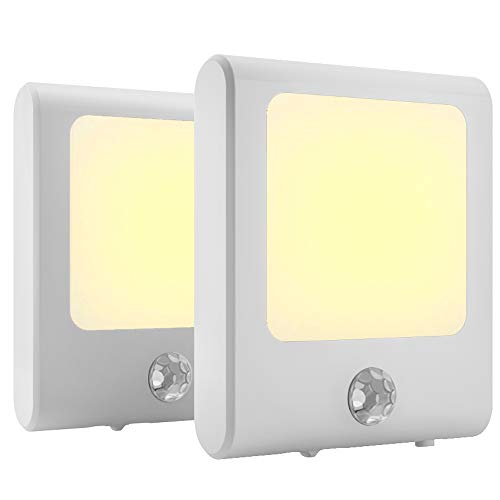
- Pathway lighting – motion-activated night lights positioned low along the route to the bathroom
Bulb color matters more than most people realize. Warm-toned bulbs in the 2700K-3000K range create the kind of glow that makes a room feel restful and inviting. Cool white bulbs (4000K and above) make even a beautifully furnished room feel clinical.
Motion-activated plug-in night lights deserve special attention. Placed near the floor along the path from the bed to the bathroom door, they eliminate the fumbling-for-switches problem without requiring anyone to leave a light on all night. They’re inexpensive, easy to install, and genuinely effective. Preventing nighttime falls often comes down to exactly this kind of simple, low-cost change.
Start here: replace one overhead bulb with a warm-toned option and add a single motion-activated night light near the bed. That alone changes the feel of the room immediately.




Colors and Textures That Feel Like a Hug

The visual temperature of a bedroom shapes how people feel before they even sit down.
Soft, muted tones – warm creams, sage greens, dusty blues, gentle terracotta – create an environment that signals rest. They feel personal and considered, not institutional.
Texture matters just as much as color:
- A layered quilt in soft earth tones reads as cozy, not medical
- A plush area rug adds warmth and sound absorption
- An upholstered headboard transforms a bed from furniture into a focal point
Here’s something worth knowing: high-contrast elements – like a richly colored rug against light flooring – aren’t just beautiful. They also serve as gentle visual cues that help with spatial orientation, which becomes genuinely useful as vision changes with age. Good design and practical function working together.
Visual clutter, on the other hand, works against the goal. A crowded room can feel disorienting and make navigation harder. Simplifying surfaces doesn’t mean stripping the room of personality – it means giving what remains room to breathe.
A weighted blanket or a set of layered soft cotton throws adds tactile warmth and can also support better sleep quality, which matters more than most people realize.
The action step here is simple: identify one color or texture currently missing from the room that would make it feel warmer. Start there.





Storage That Works for You – Without the Institutional Look

Reaching, bending, and stepping over things are three of the most common ways bedroom injuries happen. Smart storage eliminates all three without making the room look like a supply closet.
Think through the five things most often reached for during the night or first thing in the morning:
- Glasses
- Phone and charger
- Water
- Medication
- A book or remote
Every one of those should be within arm’s reach of the bed, at a comfortable height, without requiring a stretch or lean. A stylish bedside caddy, a small tray on the nightstand, or a simple under-bed storage drawer with an easy-pull handle can accomplish this while looking completely intentional.
Clear pathways matter too. The floor between the bed and the bathroom door should be obstacle-free – not sparse and bare, but deliberately clear. A single well-placed rug (secured with non-slip backing) is a design element. Multiple rugs and stray items are a hazard.
Organizing the bedroom for safe navigation doesn’t require sacrificing personality. It requires thoughtful placement.




Want practical ideas for making your home feel safer and more comfortable as you age? Subscribe to the Graying With Grace newsletter for expert-tested tips and trusted product recommendations delivered to your inbox each week.
Over-bed organizer trays and pull-handle under-bed storage are two of the most underrated tools in this category. They keep essentials accessible, look tidy, and require zero renovation.
Surround Yourself With What Matters Most

A bedroom filled with meaningful photos and familiar objects isn’t just beautiful – it’s doing real work.
For older adults, a space that reflects their history and relationships provides a quiet sense of continuity and identity. For those managing early memory concerns, familiar faces and meaningful images create gentle, comforting orientation that no clinical intervention can replicate.
This doesn’t require elaborate displays. Even three to five framed photos arranged on a dresser or small gallery wall transforms how a room feels. The key is intentionality – choosing images that genuinely matter rather than displaying things out of habit or obligation.
Digital photo frames have become one of my favorite recommendations in this space. A quality digital frame cycling through family photos on a dresser or nightstand does something static frames can’t: it brings the room to life with changing faces and moments. Helping older adults feel connected to the people they love has documented benefits for emotional wellbeing and cognitive health.
For family members supporting a parent’s space: this is one of the most loving things you can do. Gather photos currently in storage or scattered around the house. Bring them into the bedroom. Make the room tell her story.
A rotating digital photo frame – including options like the MemoryBoard and similar displays – makes this easy to maintain without cluttering surfaces with dozens of frames.
The action step: identify three to five photos or meaningful objects currently in storage or elsewhere in the home that belong in the bedroom. Start placing them.






A Bed That’s Easy to Get Into – and Hard to Want to Leave

The bed is the centerpiece of the room – and getting the setup right has more impact than almost any other single change.
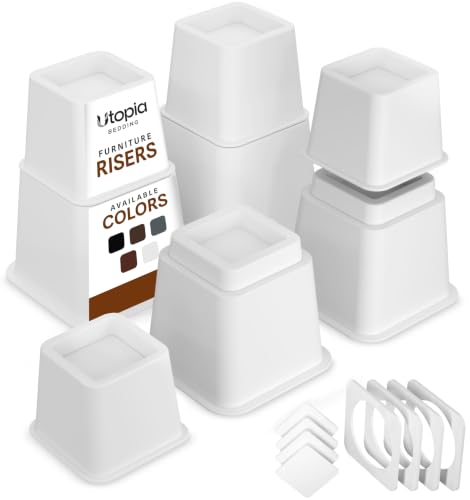
Bed height is the first thing to evaluate. A bed that sits too low makes the sit-to-stand movement significantly harder on the knees and hips. The ideal height allows feet to rest flat on the floor when seated at the edge – roughly 20-23 inches from floor to mattress top. Adjustable bed risers can raise a frame that sits too low in minutes, with no tools and no renovation.
Bed rails and grab handles are worth addressing directly, because they carry an unfair reputation. A well-chosen bedside grab handle – one with a clean design that tucks alongside the mattress – provides genuine support for getting in and out without announcing itself as medical equipment. Getting in and out of bed safely is one of the highest-risk moments of the day, and a discreet handle changes that equation significantly.
Bedding choices matter more than people think:
- Heavy single duvets are difficult to manage and can create a tangled fall hazard during nighttime movement
- Layered lightweight options – a soft blanket, a quilt, a throw – are easier to adjust and easier to push aside when getting up
- Natural fiber options tend to sleep cooler and feel more comfortable for temperature regulation
Furniture arrangement is the final piece. The path from the bed to the bathroom door should be clear and direct. That doesn’t mean the room has to feel sparse – it means the arrangement is intentional. A well-arranged bedroom that feels both beautiful and easy to move through is absolutely achievable.





Senior Bedroom Comfort and Safety Checklist
Download this free checklist to transform your bedroom into a space that feels like home while ensuring safe, restful sleep—covering lighting, comfort, storage, personal touches, and bed setup in one printable guide.
Your Bedroom Should Feel Like Yours
A senior’s bedroom doesn’t have to be a compromise between safety and warmth. The most thoughtful approach to aging in place treats these as the same goal – a space that supports ease of movement, restful sleep, and genuine comfort while reflecting the personality and history of the person who lives there.
You don’t need to overhaul everything. Pick the one area from this list that resonates most – the lighting, the storage, the photos, the bedding – and make one change this week. Notice how the room shifts.
A space that feels like yours is one you’ll want to spend time in. And that matters more than most safety checklists ever acknowledge.
What’s one change you’re thinking about making? Share it in the comments – your idea might be exactly what someone else needs to hear.


![Keep older woman walking lit bedroom pathway night lights[1]](https://www.grayingwithgrace.com/wp-content/uploads/2026/05/KEEP-older_woman_walking_lit_bedroom_pathway_night_lights1-e1779139524852-450x300.jpg)




![Older woman glow holder nighttime[1]](https://www.grayingwithgrace.com/wp-content/uploads/2026/02/older_woman_glow_holder_nighttime1-e1770642193342-450x300.jpg)


