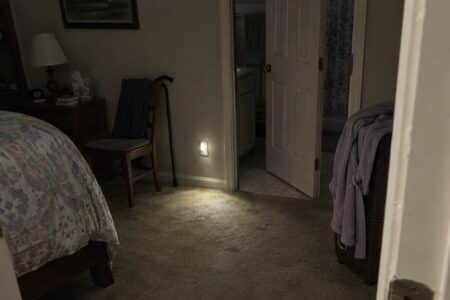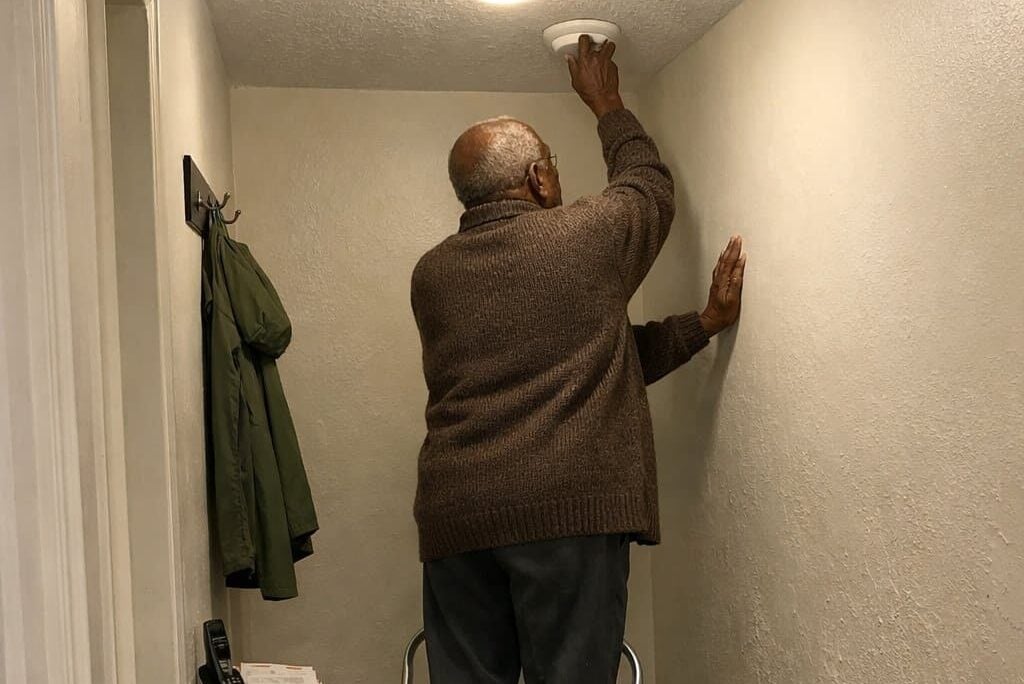
Picture this: a smoke alarm goes off at 2 a.m. The batteries are fresh. The unit is mounted exactly where it should be. And the person sleeping 30 feet away, behind a closed door, with a fan running — never wakes up.
The alarm didn't fail. The person had gradual high-frequency hearing loss — the kind that builds slowly over years, that many older adults never formally diagnose, and that makes the standard 3,000 Hz beep almost inaudible during deep sleep. That's the gap this article is about.
We're not talking about whether an alarm is installed. We're talking about whether it will actually wake you when it counts. There are four types of solutions that close that gap: bed-shaker and strobe alarms, 10-year sealed-battery smoke alarms, combination smoke and CO alarms, and interconnected wireless alarms. The sealed-battery type also solves a second problem most people never think about — the alarm that quietly expired while nobody was looking.
Smoke & CO Alarm Shopping Guide for Hearing Loss
Download this free shopping guide to find smoke and CO alarms specifically designed for hearing loss—complete with a checklist you can take to the store so you choose the right protection for your bedroom and skip the expensive mistakes.
What to Look For
Before you buy anything, know the specifications that actually matter. High decibel ratings alone are not enough.
Frequency, not just volume Standard smoke alarms emit their primary signal at 3,000–4,000 Hz. That is precisely the frequency range most affected by age-related hearing loss (presbycusis). Low-frequency alarms signal at 520 Hz. The National Fire Protection Association (NFPA) recommends 520 Hz square-wave signals for sleeping areas where occupants have hearing loss. A 520 Hz alarm at 75 dB will wake a hard-of-hearing sleeper more reliably than a 3,000 Hz alarm at 85 dB. Look for alarms that specify low-frequency output — not just a loud number.
Bed-shaker output and placement Bed-shaker units should produce at least 12 volts of vibration output. The shaker must go under a pillow or mattress topper — not on a nightstand. Confirm the cable is long enough (most run 6–10 feet) to reach from the outlet to under the pillow.
Strobe intensity For bedroom use, look for strobe units rated at a minimum of 110 candela. Weaker strobes may not penetrate closed eyelids or light sleep.
Interconnect compatibility Wireless interconnected alarms communicate on a specific radio frequency — typically 433 MHz or 900 MHz. Alarms must be from compatible product families. Mixing brands within a wireless network usually does not work.
Expiration and replacement schedule Smoke sensing elements have a rated lifespan of 10 years from the manufacture date stamped on the unit — not the purchase date. CO sensing elements expire earlier, typically at 5–7 years for standalone units. Combination alarms turn over on the CO schedule, which means the whole unit comes down when the CO sensor expires, even if the smoke sensor still seems fine.
UL listing and local code compliance All alarms should carry UL 217 (smoke) or UL 2034 (CO) certification. If you live in a rental or newer construction, verify local code requirements before purchasing an interconnected system — some jurisdictions require hardwired interconnect.
Bed-Shaker and Strobe Alarms
Standard smoke alarm signals operate at frequencies that age-related hearing loss affects most — and a closed bedroom door drops those sound levels further. Bed-shaker and strobe systems route the alert through vibration and light instead, reaching sleepers who remove hearing aids at night or use fans and white noise machines.


A bed-shaker or strobe system doesn't make the alarm louder — it routes the alert through a completely different sensory channel. A wireless receiver plugged into a bedroom outlet detects when the smoke or CO alarm triggers. It then activates a disc shaker tucked under the pillow, a strobe light that floods the room with light, or both at once.
This type of solution is especially important for anyone who removes hearing aids at night — which is the majority of hearing aid users. It also addresses the physics problem that no amount of volume can solve: a closed bedroom door drops sound levels significantly, and a fan or white noise machine can mask whatever gets through.
Where this approach requires honest consideration: it depends on a reliable outlet near the bed, a clear wireless signal path from the alarm to the receiver, and — most critically — a daily behavioral habit. The shaker has to be placed under the pillow every single night to be effective. If the setup is inconvenient, it will gradually stop being used.
Sonic Alert HomeAware® II Basic Starter Kit
The HomeAware II is a complete alerting ecosystem designed specifically for deaf and hard-of-hearing individuals. The system includes a transmitter that listens for your existing smoke alarm's audio signal and wirelessly triggers bed-shaker and strobe receivers throughout the home. That means you are not required to replace your current smoke alarm to use it — the transmitter picks up the sound and relays the alert.
This is a strong fit for someone who already has functional, up-to-date alarms and simply needs the alerting signal to reach the bedroom reliably. The system is expandable, so additional rooms can be added without starting over.
The honest limitation here is cost and setup complexity. This is a multi-component system, and pairing the transmitter with the receivers requires following the instructions carefully. If the transmitter is placed too far from the alarm or behind a barrier, signal pickup can be inconsistent.
Bellman & Symfon Alarm Clock Receiver with Bed Shaker
The Bellman & Symfon receiver is designed to pair with Bellman's own transmitter ecosystem, delivering both flashing light and bed-shaker alerts when an alarm triggers. The build quality reflects the brand's Scandinavian focus on assistive technology — components feel deliberate rather than generic.
This unit suits someone who is setting up a new alerting system from scratch and wants a receiver with a track record in the hearing-loss community. The flashing light component adds redundancy for moments when the shaker alone might not be enough — a brightly lit room provides a second sensory channel.
Confirm compatibility with your specific alarm before purchasing. Bellman receivers are designed to work within the Bellman product family, and pairing with third-party alarms may require their audio transmitter accessory.
Sonic Bomb Dual Extra Loud Alarm Clock with Bed Shaker
The Sonic Bomb is primarily an alarm clock, but the bed-shaker component it uses is the same mechanism that matters most for fire safety awareness. Its 113 dB alarm output combined with a vibrating shaker makes it one of the more aggressive wake-up tools available. Many people who use it for daily waking find it doubles as a proof-of-concept for how effective pillow vibration is during sleep.
This is worth noting because one of the barriers to adopting a bed-shaker fire alerting system is uncertainty about whether vibration alone will actually wake you. Using this clock daily builds both the habit and the confidence that the approach works for you specifically.
This is not a standalone fire alarm system — it will not detect smoke or CO. Its value in this context is as a companion habit-builder and as an alarm clock solution for heavy sleepers who also need fire alerting.
ROCAM Extra Loud Alarm Clock with Bed Shaker

The ROCAM combines a loud alarm with a bed-shaker designed for heavy sleepers and deaf users. The unit is straightforward to set up and includes a shaker cable of reasonable length for most bedside configurations. The display is large and easy to read, which matters for anyone reaching for it before glasses are on.
This suits someone who wants a no-frills, practical solution for waking during both daily alarms and — when used alongside a compatible fire alerting receiver — nighttime emergencies. The simplicity of the controls is a genuine advantage for older adults who do not want to navigate menus.
As with the Sonic Bomb, this is an alarm clock, not a fire detection device. It works best as part of a layered approach where a separate bed-shaker receiver handles the fire alarm signal.
Clarity Wake Assure+ Desktop Alarm Clock with Vibrating Bed Shaker
Clarity is a brand with a long history in assistive listening and alerting products for people with hearing loss. The Wake Assure+ brings that pedigree to a desktop alarm clock format with an integrated bed-shaker port. The unit is designed with the specific needs of the hard-of-hearing user in mind — not adapted from a mainstream product.
The desktop format means the shaker connects directly from the clock unit to under the pillow without a separate receiver to manage. For someone who prefers fewer components and a simpler nightly setup, this is worth noting.
Confirm the shaker cable length against your specific bed configuration before purchasing. Tight cable runs between the clock position and under the pillow can become a nuisance that reduces compliance over time.
ANJANK Super Loud Alarm Clock with Wireless Bed Shaker
The ANJANK stands out in this category for one specific reason: the bed shaker is wireless. That removes the cable management problem that makes some shaker setups awkward for older adults, particularly those who change bed positions or use adjustable bases. A wireless shaker simplifies the nightly placement habit considerably.
The alarm itself is rated at high decibel output with a flashing light component, giving it three alerting channels: sound, light, and vibration. For someone with moderate hearing loss who also sleeps in a room with some ambient light, that redundancy is meaningful.
Wireless components introduce a battery dependency in the shaker itself that wired units avoid. Confirm the shaker's battery life and replacement schedule, and factor that into the maintenance routine. A shaker with a dead battery provides no vibration alert — and there may be no visible indication until you check it.
10-Year Sealed-Battery Smoke Alarms
A smoke alarm with a missing or dead battery looks exactly like a functioning one from across the room. Sealed-battery alarms ship with a non-removable lithium battery rated for the unit’s full 10-year life, eliminating the battery-swap failure mode and the middle-of-the-night chirping that too often ends with the battery removed and never replaced.


A sealed-battery alarm ships with a non-removable lithium battery rated to power the unit for its entire 10-year service life. When the unit reaches the end of that period, the whole alarm is replaced — no battery swap, no step stool required mid-cycle, no chirping at 3 a.m. that ends with someone removing the battery and never putting it back.
That last scenario is more common than most people acknowledge. A smoke alarm with a missing battery looks exactly like a functioning smoke alarm from across the room. Sealed-battery units eliminate that failure mode entirely.
This type is the right choice for anyone managing a home solo, anyone who has ever climbed something to silence a chirping alarm, and anyone who travels or spends extended time away. It is not a complete solution for someone with significant hearing loss who sleeps behind a closed door — the signal characteristics may be identical to a standard alarm. That person may need to pair a sealed-battery unit with a bed-shaker receiver.
One important detail: the 10-year clock starts at the manufacture date printed on the unit — not the purchase date. A unit sitting on a retailer's shelf for two years is already two years into its rated life. Check the manufacture date before purchasing, particularly from third-party sellers or when buying in bulk.
First Alert 10-Year Battery Smoke Alarm
First Alert's standard 10-year sealed-battery smoke alarm is the straightforward entry in this category — a single-sensor unit built around the maintenance-free premise. The manufacture date is printed on the back of the unit, which is where you should look before installation to confirm you are starting with a full-life alarm.
This suits someone replacing an expired alarm in a single location and prioritizing simplicity. One alarm, one install, one date to remember for replacement.
This is a smoke-only unit with a standard frequency output. It does not address the low-frequency signal need for someone with hearing loss, and it does not detect CO. For those concerns, see the combination alarm section below.
Kidde 10-Year Battery Smoke Detector (Single Pack)
Kidde's 10-year sealed-battery detector carries UL 217 certification and an 85 dB output at 10 feet. The LED status light provides a visible at-a-glance indicator that the unit is functioning — a small but useful feature for older adults who want passive confirmation without pressing buttons.
This unit suits a straightforward room-by-room replacement of expired alarms. The single-pack format is useful when replacing one alarm at a time rather than all at once.
Confirm the manufacture date on the packaging before purchase. Kidde prints it on the back label. If purchasing online, check seller notes or product listing dates carefully — manufacture date and listing date are not the same.
Kidde 10-Year Battery Smoke Detector (3-Pack)
The three-pack format from Kidde is the practical choice for a whole-home replacement project. Buying matched units from the same manufacture run reduces the chance of staggered expiration dates across rooms — when one expires, the others are likely near the end of their life as well, which simplifies the replacement schedule.
For a caregiver doing a home safety audit on a visit, purchasing a three-pack and replacing every smoke alarm in the home in a single afternoon is a more reliable approach than replacing only the visibly expired ones.
The same manufacture-date caveat applies here. Confirm the date on the box, and write the replacement year on the back of each unit in permanent marker at installation.
First Alert 10-Year Battery Smoke Alarm Slim Profile
The slim profile version of First Alert's 10-year alarm is designed for lower-profile mounting in areas where a standard alarm housing depth is visually intrusive or clearance is limited. The functionality is equivalent to the standard model — sealed battery, 10-year rated life, UL 217 listed.
This is worth considering for someone who has resisted replacing alarms partly because of aesthetics — the slim format is less obtrusive on a ceiling. It is the same protection in a less conspicuous form.
As with the standard model, this is a smoke-only unit at standard frequency output. The slim profile does not affect signal characteristics.
HEIMAN Smoke Detector 10-Year Sealed Battery (3-Pack)
HEIMAN's 3-pack carries UL 217 10th edition certification, which reflects the current standard for smoke detector performance. The 10th edition of UL 217 introduced requirements for flaming and smoldering fire detection that earlier certified units were not tested against — a meaningful distinction when comparing newer alarms to older ones.
This suits someone who wants to ensure their replacement alarms meet current certification standards, not just older ones. For a whole-home replacement, the 3-pack provides reasonable coverage of the common areas at a clear per-unit cost.
Verify the manufacture date across all three units in the pack before installation. Three units bought together should carry the same or very close manufacture dates.
First Alert 10-Year Battery Smoke Alarm, Dual Sensor
The dual-sensor version from First Alert combines an ionization sensor (faster at detecting fast-flaming fires) with a photoelectric sensor (more responsive to slow, smoldering fires). Single-sensor alarms favor one detection type. Dual-sensor units address both.
This is the right choice for living areas, bedrooms, and any space where both fire types are plausible — which, practically speaking, is most rooms. Knowing the difference between fast-flaming and smoldering fires matters more when you understand how fall risks and fire risks often overlap in the same spaces — a kitchen where cooking grease could ignite quickly, or a living room where a candle left unattended smolders slowly.
The dual-sensor format comes at a slight cost premium over single-sensor units. For bedrooms and primary living areas, the broader detection coverage is worth it.
Combination Smoke and CO Alarms
Carbon monoxide is invisible and odorless, and its sources — gas furnaces, water heaters, attached garages — are common in homes where older adults age in place. Combination alarms detect both smoke and CO in a single unit, reducing the number of devices to install, test, and replace while ensuring both threats are covered.


A combination unit detects both smoke and carbon monoxide in a single device. One alarm, one mounting location, one expiration date to track. For a home with gas appliances, a furnace, a water heater, a gas dryer, or an attached garage, this is the category that handles both threats at once.
The practical advantage is consolidation. A CO alarm that gets installed in a hallway and forgotten is less useful than a combination alarm positioned near a sleeping area. Fewer devices means fewer things to forget.
The critical nuance: combination units expire on the CO schedule, not the smoke schedule. CO sensors typically have a rated life of 5–7 years — shorter than the 10-year smoke sensor life. The entire unit comes down when the CO element expires, even if the smoke detector still passes its test button check. Many people keep combination alarms well past their CO expiration date because the smoke alarm function appears to work fine. That is a meaningful gap in CO protection.
First Alert Battery Combination Smoke & CO Alarm (Standard)
This First Alert combination unit runs on standard replaceable batteries and covers both smoke and CO detection in a single housing. The unit uses distinct alarm patterns for smoke versus CO detection — a meaningful feature for someone with partial hearing who may be able to distinguish between signal types.
This suits a straightforward replacement of an expired combination unit in a home that already has a working battery replacement routine. The replaceable-battery format means battery changes are required, but the unit itself does not need full replacement until the CO sensor expires.
Check the CO sensor expiration date in the product documentation before purchasing. Mark that date on your calendar at installation — not just the smoke sensor's 10-year mark.
First Alert Battery Combination Smoke & CO Alarm (Updated Model)
This is a current-generation First Alert combination unit with battery power and both smoke and CO detection. The distinction from the previous model above is in the specific sensor generation and manufacturing revision — both carry the First Alert combination alarm platform, but components and rated specifications may differ slightly between production runs.
When choosing between two similar units in this category, verify the CO expiration period listed in the product documentation for each specific ASIN, as it can vary even within a product family. The unit with the longer CO sensor life represents better long-term value for the same installation effort.
For a caregiver purchasing remotely for a parent's home, note that this type of unit needs hands-on installation — it should not be mailed and left for an older adult to install without a walkthrough of what the CO alarm tone sounds like versus the smoke alarm tone.
First Alert 10-Year Battery Combination Smoke & CO Alarm
The 10-year sealed-battery version of First Alert's combination alarm applies the maintenance-free premise to a two-threat unit. No battery swaps, no mid-night chirps, no step-stool moments. The unit is replaced as a whole at the end of its rated life.
The important clarification: "10-year" here refers to the battery life, not necessarily the CO sensor life. Confirm the CO sensor expiration period in the product documentation — it may be shorter than 10 years, meaning the unit should be replaced before the battery is exhausted. Check the documentation carefully and mark the CO expiration date at installation.
This suits someone who wants the maintenance simplicity of a sealed-battery unit while also covering CO. It is a strong choice for older adults living alone who cannot reliably manage battery changes. For a complete picture of home safety products worth having when living alone, this type of combination alarm belongs near the top of that list.
X-Sense Smoke and CO Detector Combo, SC07 (Single Pack)
The X-Sense SC07 is a combination smoke and CO alarm with a digital display that shows CO concentration in parts per million. That display is a genuinely useful feature. Most combination alarms only alert at threshold levels — they sound when CO reaches a dangerous concentration. The X-Sense SC07 shows you the number while it is still low, which allows you to identify a slow leak or a ventilation problem before it reaches alarm threshold.
This suits someone who wants more information than a simple alarm state — particularly anyone with a gas furnace, water heater, or attached garage where low-level CO accumulation is a realistic concern. The digital readout converts an invisible threat into a visible one.
The display and added electronics mean the unit has more components that can fail over its rated life than a simpler unit. Follow the manufacturer's replacement schedule carefully.
First Alert Hardwire Combination Smoke & CO Alarm
This First Alert unit is designed for hardwired installation — it connects directly to your home's electrical system and includes a battery backup for power outages. Hardwired alarms are required by code in new construction and many renovated homes, and they offer the advantage of continuous power without battery dependency.
This suits a home that already has hardwired alarm infrastructure and needs a combination unit replacement. It also suits a caregiver doing a significant home safety upgrade who wants to tie into the home's electrical system for reliability — though hardwired installation should be done by a licensed electrician if the homeowner is not comfortable with the work.
Battery backup is critical in this type of unit. Confirm the backup battery is installed, functional, and replaced on the manufacturer's recommended schedule. A hardwired alarm with a dead backup battery provides no protection during a power outage — which is exactly when a fire might occur.
First Alert 10-Year Battery Combination Smoke & CO Alarm (Alternate Model)
This is a second 10-year sealed-battery combination unit in the First Alert line, distinguished from the B0CJMMVST2 above by its specific sensor configuration and product generation. Both use the sealed-battery, replace-the-whole-unit approach; the differences lie in rated specifications and sensor technology generation.
When purchasing a 10-year combination unit, compare the CO sensor expiration period between both models before deciding. If one carries a longer CO sensor rated life, that unit delivers more value for the same installation effort. Confirm with the product documentation rather than assuming both 10-year units share the same CO expiration schedule.
For a whole-home upgrade replacing multiple alarms at once, buying matched units from the same product family simplifies replacement scheduling — all units go out of service around the same time, making future audits straightforward.
Interconnected Wireless Alarms
A basement alarm that triggers at 3 a.m. while you sleep on the second floor with a door closed provides almost no practical warning. Wireless interconnected alarms solve that distance problem without any hardwiring — when one alarm detects smoke or CO, every alarm in the network sounds at once.


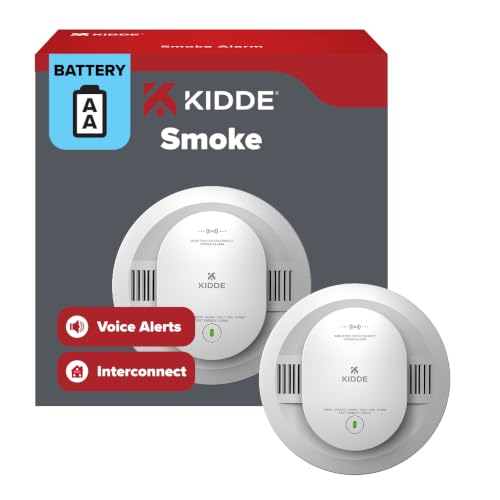

Wireless interconnected alarms form a network across a home. When any single alarm in the network detects smoke or CO, every alarm in the network sounds simultaneously. No hardwiring is required between units — each alarm is powered independently and communicates via radio frequency.
This matters most in multi-level homes, homes with long hallways, or homes where sleeping areas are far from kitchens, basements, or attached garages. A basement alarm that triggers at 3 a.m. while you sleep on the second floor with a door closed provides almost no practical warning. Interconnection closes that distance gap entirely.
For older adults who have lived in the same home for decades — a home that may have been built before interconnect requirements became standard — wireless interconnection is the retrofit solution that does not require tearing into walls.
The setup requirement is real: all alarms in the network must be from the same compatible product family. Adding a single incompatible unit breaks the network for that device. And the network must be tested as a complete system — triggering one alarm and confirming every other alarm responds — not just tested unit by unit. Many people skip that whole-network test entirely.
X-Sense Interconnected Smoke and CO Detector, SC07-W (6-Pack)
The X-Sense SC07-W is a combination smoke and CO alarm with wireless interconnect. The 6-pack is sized for whole-home coverage in a single purchase — a practical configuration for someone doing a complete alarm replacement rather than a piecemeal upgrade. All units in the pack are matched for network compatibility.
The SC07-W includes a digital CO display, which carries the same benefit described in the standalone SC07 above: CO concentration in parts per million is visible before it reaches alarm threshold. That feature is preserved in the interconnected version.
When installing a 6-pack, pair and test the full network before trusting it. Confirm that triggering one unit causes every other unit to sound. A unit that fails to pair will not participate in the network, and that failure is silent — the alarm still sounds locally, but the whole-home interconnect does not activate.
HEIMAN Smart Wireless Interconnected Smoke Detector, S1-R (6-Pack + Gateway)
The HEIMAN S1-R system adds a gateway component that connects the alarm network to your home's Wi-Fi. When any alarm triggers, the gateway can send a notification to a smartphone — which means a family member or caregiver can receive an alert even when not home.
This is a meaningful capability for a caregiver who manages a parent's home safety remotely. Monitoring an elderly parent from a distance typically requires a layered set of tools, and a smoke alarm that sends a phone notification when it triggers adds a meaningful layer to that system.
The gateway dependency introduces a failure point: if the home's internet connection is down, or the gateway loses power, the smartphone notification does not go out. The alarms themselves still sound and interconnect normally — the smart notification is the affected component, not the core fire detection.
HEIMAN Wireless Interconnected Smoke Alarm (3-Pack)
The HEIMAN 3-pack is a smoke-only wireless interconnected alarm without the gateway component. It provides the core interconnect benefit — whole-home alerting when any unit triggers — without the smartphone notification feature.
This suits a smaller home or apartment where three units provide adequate coverage, or someone who wants the interconnect benefit without the added complexity of a gateway. The smoke-only format means CO detection is not included — a separate CO alarm would be needed for homes with gas appliances or attached garages.
Verify that the 3-pack units are from the same network-compatible family as any additional HEIMAN units you may add later. The gateway-equipped systems use different product identifiers, and confirming cross-compatibility before purchasing prevents pairing issues.
X-Sense Interconnected Smoke and CO Detector Combo, SC01-W (3-Pack)
The SC01-W is X-Sense's three-unit interconnected combination alarm. It covers both smoke and CO in each unit, with wireless interconnect that alerts the full network when any detector triggers. The three-pack is sized for a single floor, a smaller home, or a targeted coverage expansion.
This suits someone upgrading a specific section of a home — adding bedroom coverage to a network that already covers common areas, for example. The SC01-W units will pair with other X-Sense interconnected alarms from compatible product families, which allows incremental expansion.
Confirm SC01-W and SC07-W compatibility if mixing unit types in one network. X-Sense's interconnect protocols have been consistent across recent product generations, but verify before purchasing if combining units from different packs or purchase dates.
Kidde Smoke Detector, AA Battery-Powered, 20SDR-VRF
The Kidde 20SDR-VRF is a wireless interconnected smoke alarm designed to pair with other Kidde RF interconnect-compatible units. Kidde's wireless interconnect platform has broad coverage across their product line, which is useful in a home where some alarms may already be Kidde units — adding compatible interconnected alarms extends the network without requiring a full system replacement.
The AA battery format means batteries must be replaced on a regular schedule — typically annually. The tradeoff is that standard AA batteries are widely available, and the replacement process is straightforward. Unlike sealed-battery units, the alarm housing itself is not replaced at battery change time — only at the end of the unit's 10-year rated smoke sensor life.
For a home safety audit that reveals a mix of older Kidde and newer alarms, this unit offers a path to interconnection that works within existing infrastructure rather than requiring a complete system overhaul.
X-Sense Interconnected Smoke and CO Detector, SC07-W (3-Pack)
The SC07-W in three-pack format is the smaller-quantity version of the 6-pack reviewed above. The alarm features are identical — combination smoke and CO detection, digital CO display, wireless interconnect. The three-pack suits a single-floor home, a smaller dwelling, or a targeted upgrade of one section of a larger home.
Purchasing three matched units from the same pack ensures they carry the same firmware and network protocol version, which simplifies pairing. The digital CO readout on each unit remains useful regardless of network configuration — it provides CO level visibility at each alarm's location, not just at a central panel.
For a caregiver establishing basic interconnected coverage in a parent's home on a single visit, three matched units covering the bedroom hallway, kitchen, and common area is a practical starting configuration. Bathroom safety modifications and alarm upgrades often make sense as part of the same home safety visit — combining both tasks maximizes a limited window of time.
Frequently Asked Questions
Will a standard smoke alarm wake someone with hearing loss?
It depends on the degree of hearing loss and where the alarm is placed. Standard alarms emit their primary signal at 3,000–4,000 Hz — the frequency range most commonly affected by age-related hearing loss. If the alarm is in a hallway and the bedroom door is closed, sound levels drop significantly by the time they reach the sleeping person. The NFPA recommends 520 Hz signals and supplemental bed-shaker or strobe alerting for sleeping areas where occupants have hearing loss. A functional alarm that cannot wake the sleeping occupant is not providing meaningful protection.
How do I find the expiration date on my smoke alarm?
Look on the back of the unit — the manufacture date is typically printed on a label there. On some models it appears inside the battery compartment. The replacement date is 10 years from the manufacture date for smoke-only alarms. For combination smoke/CO alarms, the CO sensor expires earlier — check the product documentation for the specific CO expiration period, which may be 5, 7, or 10 years depending on the model. If the label is missing or illegible, replace the unit.
Can I use a bed-shaker receiver with the smoke alarm I already have?
Some bed-shaker systems are designed to pair with existing third-party alarms. They listen for the alarm's audio output and trigger the receiver when they detect it. Others require a proprietary alarm unit from the same brand. Check the product documentation carefully before purchasing. If the receiver requires a specific alarm unit, factor that cost into the total.
Do I need a CO alarm if I have an all-electric home?
CO is produced by combustion. If your home has no gas appliances, no oil or wood-burning heat, no attached garage, and no generator, CO exposure risk is low. However, if you have an attached garage, a gas range, or any fuel-burning appliance, CO detection is important. Check with your local fire marshal's office for applicable code requirements in your jurisdiction.
How often should I test my alarms?
The NFPA recommends testing every smoke and CO alarm monthly using the test button. Replace batteries in non-sealed units at least once per year — the daylight saving time change works as a consistent reminder. For interconnected systems, test the full network at least twice per year by triggering one alarm and confirming all others respond.
What is the 520 Hz standard, and should I specifically look for it?
520 Hz refers to the frequency of the alarm's square-wave audio signal. Research has shown that this lower frequency is significantly more effective at waking people with high-frequency hearing loss than the standard 3,000 Hz signal. If you or a family member has any degree of hearing loss, looking specifically for a 520 Hz alarm output — not just a high decibel rating — is a meaningful specification to check.
Hacks and Advice
Start with the manufacture date audit, not the product search.
Before purchasing anything, check the manufacture date on every alarm in the home. Write the dates down. If any alarm is more than 10 years old from its manufacture date — not its install date — it is past its rated service life regardless of whether it appears to work. This audit is free, takes 15 minutes, and frequently reveals that two or three alarms need immediate replacement regardless of any hearing loss considerations.
Test behavior, not just function.
Pressing the test button confirms the alarm can make a sound. It does not confirm you can hear it from your bedroom with the door closed. Have a family member press the test button on each alarm while you are in bed with your door closed at your normal sleep volume. What you hear — or don't — tells you exactly where supplemental alerting is needed.
The shaker has to be under the pillow, every night.
This is the one that determines whether a bed-shaker system actually works. If the setup routine is inconvenient enough that it gets skipped even occasionally, the protection is inconsistent. Choose a receiver and shaker configuration that fits naturally into your bedtime routine — not one that requires a separate setup step you might forget.
Don't mix wireless networks.
If you choose wireless interconnected alarms, buy all units from the same product family in a single purchase. Adding units later risks compatibility issues if the manufacturer has updated their protocol. Confirm cross-compatibility before assuming two Kidde units or two X-Sense units will pair — model generation matters.
Replace combination alarms on the CO schedule, not the smoke schedule.
Mark the CO expiration date on your calendar the day you install a combination unit. The smoke sensor may still test fine after the CO element has expired — but the unit should come down regardless. A complete fire safety review for your home covers more than just alarm placement, and the CO expiration date is one of the most commonly overlooked items in that review.
For caregiver family members: photograph every alarm's manufacture date label before you leave.
You will not remember the dates, and neither will your parent. A photo takes five seconds and saves a separate trip to verify later. Store the photos in a shared note or folder where both of you can find them.
Smoke & CO Alarm Shopping Guide for Hearing Loss
Download this free shopping guide to find smoke and CO alarms specifically designed for hearing loss—complete with a checklist you can take to the store so you choose the right protection for your bedroom and skip the expensive mistakes.
Conclusion
The gap between an alarm that is installed and an alarm that actually wakes you is where real fire risk lives for older adults with hearing loss. The four product types in this guide close that gap in different ways — through a different signaling channel entirely (bed-shaker and strobe), through a more reliable maintenance schedule (10-year sealed battery), through fewer devices to track (combination smoke and CO), or through whole-home coverage regardless of where you sleep (wireless interconnect).
The right answer depends on your home's layout, your current hearing, and how much your current alarms are actually worth trusting.
Start with a walk-through today. Locate every smoke and CO alarm in the home. Check the manufacture date on the back of each unit. If any alarm is missing its label or has a manufacture date more than 10 years ago, that alarm needs immediate replacement.
Your home's lighting setup affects both fire safety and fall risk at night — the same walk-through that surfaces expired alarms is a good moment to check both. And if you want a structured way to assess the full picture, a Home Safety and Independent Living Assessment covers alarms, fall risks, and the modifications most worth prioritizing first. Reach out to learn more about how that works.