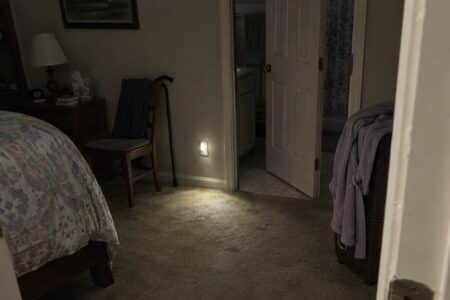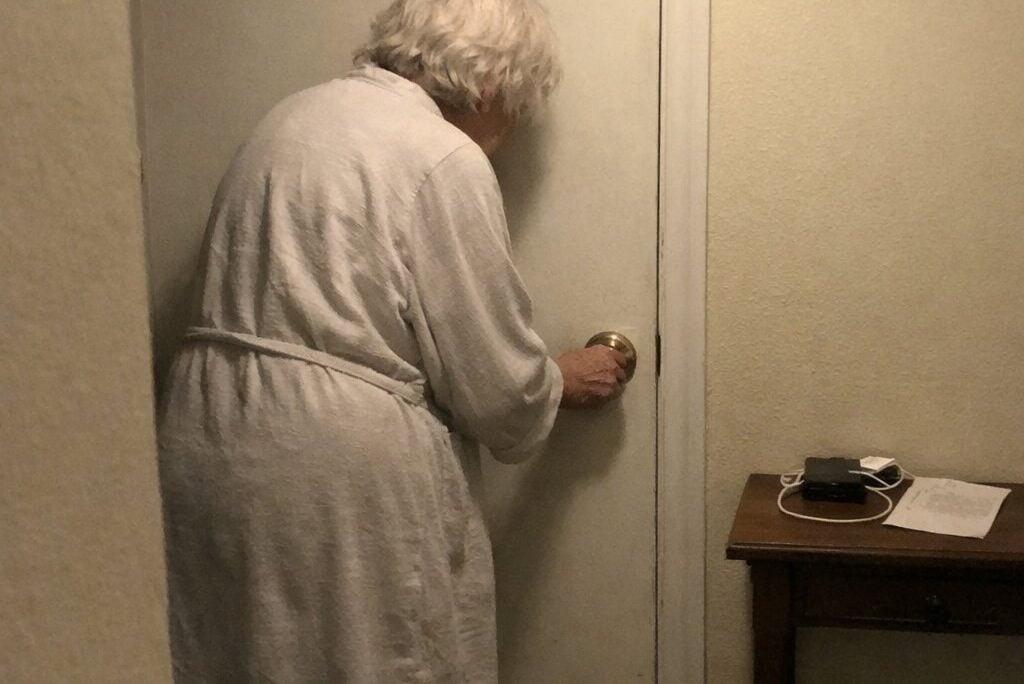
Picture this: it's 2 a.m., you need the bathroom, and the hallway door has a round knob that takes a full-fist grip and a wrist twist to open. On a good morning that's mildly annoying. On a morning when arthritis flares, or when both hands are steadying a walker, it becomes the kind of obstacle that causes falls.
Most families assume accessible doorways require a contractor, a permit, and a renovation budget. So they put it off. Then a fall happens, or a walker arrives, and the delay becomes obvious. Here's the thing: round knobs and narrow doorways are two completely different problems. A lever handle set solves the grip problem. A swing-clear hinge solves the width problem. Confusing the two means spending money on the wrong product.
In this article I'll cover four hardware types — lever handle sets, slip-on lever adapters, swing-clear offset hinges, and door closers — and by the end you'll know which one, or which combination, applies to the specific doors in your home.
Door Handle & Hinge Accessibility Shopping Guide
Download this shopping guide to find the exact door hardware upgrades that match your home’s measurements—no guessing, no wasted returns, just the right solution for each door that’s giving you trouble.
What to Look For
Before you order anything, take five minutes to gather these measurements. I've seen the same ordering mistake repeated more than any other: the hardware arrives, the person tries to install it, and it doesn't fit because they skipped this step.
Backset distance (lever handle sets): The backset is the distance from the center of the hole on the door's edge — where the latch bolt sits — to the center of the large hole on the door face. Standard residential backsets are 2-3/8 inches and 2-3/4 inches. Most lever sets accommodate both, but you must confirm before ordering. A mismatched backset means the latch won't align with the strike plate in the door frame.
Bore diameter (lever handle sets): The bore hole is the large circular hole through the door face that the lockset body passes through. Homes built after roughly 1960 almost always have a 2-1/8-inch bore. Pre-1960 homes — especially those with mortise hardware, the large rectangular mechanism recessed into the door edge — often have a different configuration that a standard lever set cannot accept without significant modification. Mortise-hardware homes should look at slip-on adapters instead.
Door thickness: Standard interior doors measure 1-3/8 inches thick. Standard exterior doors measure 1-3/4 inches. Lever sets are rated for specific thicknesses, and a spindle that's too short for an exterior door won't catch the latch mechanism properly.
Doorway clear width (swing-clear hinges): Measure the gap between the open door and the opposite jamb with the door fully open on its existing hinges. ADA guidelines call for at least 32 inches of clear passage width for a walker and 36 inches for comfortable wheelchair use. Swing-clear hinges recover approximately 1-1/2 to 2 inches by swinging the door completely outside the frame. A doorway measuring 28 inches is a framing problem, not a hinge problem — no hinge swap will solve it.
Door weight and closer sizing: Door closers are rated in sizes — typically 1 through 6 — corresponding to door width and weight. A standard 32–36-inch interior door fits a size 1–2. A heavy exterior door may need a size 3–4. An undersized closer fails quickly on a heavy door.
Finish compatibility: If you're replacing only one piece of hardware on a door, check the finish of the existing hardware first — satin nickel, oil-rubbed bronze, matte black — so the new piece doesn't look mismatched and trigger a full swap you didn't plan for.
Lever Handle Sets
Round door knobs require a full-fist grip and wrist rotation that becomes painful or impossible with arthritis or reduced grip strength. Lever handle sets replace the entire lockset with a lever arm that opens with a simple downward press of the palm or forearm — no gripping or twisting required.


A lever handle set solves one specific problem: the round knob requires a closed-fist grip, full wrist rotation, and sustained pressure. That's the exact motion that becomes painful or impossible with arthritis, reduced grip strength, or hand tremor. A lever handle requires only a downward press of the palm or forearm. That's the entire mechanical advantage, and it's a meaningful one. The same idea works at the sink, where lever handles, extenders and touch faucets can take the grip and twist out of turning the water on.
Which rooms to prioritize first: Start with the bathroom door. A grip failure in a wet environment — when hands are damp or lotion is involved — is a fall risk that compounds quickly. The front door comes next, because fumbling with a knob while carrying groceries or managing a walker is exactly the kind of distraction that causes trips. Interior bedroom and hallway doors can follow.
The honest limitation: you must measure the backset distance and bore diameter before ordering. Most lever sets on the market accommodate both standard backsets and the 2-1/8-inch bore, but pre-1960 homes with mortise hardware cannot accept a standard lever set without significant modification. If you're in one of those homes, go to the slip-on adapter section below.
When comparing lever sets, watch for these distinctions: ANSI/BHMA grade (Grade 2 is worth the modest price premium over Grade 3 for a primary entry door), handle return angle (some lever designs snag on sleeves if the arm droops too far), and function type — bathroom doors need a privacy function with an interior turn and an emergency release slot on the outside, not a keyed lock. ADA-compliant labeling on the packaging signals the lever meets the 5-pound maximum operating force standard.
Probrico Privacy Door Levers Interior Door Handles, Wave Style Bed Bath Door Handle
This is a single-pack privacy lever set in a wave-style profile — the lever curves gently upward rather than ending in a sharp horizontal return, which reduces the chance of snagging on clothing or a sleeve. Privacy function means there's a push-button lock on the interior side and an emergency release slot on the exterior, making it appropriate for bathroom and bedroom doors.
It suits homeowners who want to replace one specific door — the bathroom, the bedroom — without committing to a multi-pack. Single-unit purchases also make sense when you're matching an existing lever on an adjacent door and want to verify the finish before ordering in bulk.
The limitation here, as with any lever set, is the measurement prerequisite. Confirm the backset and bore diameter before ordering, and verify the door thickness falls within the set's rated range.
GOBEKOR 6 Pack Privacy Door Levers Interior Door Handles Brushed Nickel Lever Handles
A six-pack of privacy lever sets in brushed nickel — a practical quantity for households that want to convert multiple interior doors in a single order. Buying in bulk like this is the smarter approach when the goal is to address every bedroom and bathroom door in the home rather than one at a time.
Brushed nickel is among the most broadly compatible finishes, pairing reasonably well with chrome, satin nickel, and many stainless fixtures already in place. That reduces the risk of a mismatched look when you're replacing only the door hardware.
The privacy function makes these appropriate for bedroom and bathroom applications. Confirm that the lever arm return style works for left-hand and right-hand door configurations in your home before ordering, as not all multi-packs include both orientations.
Gobrico 6 Pack Privacy Locksets Interior Door Levers/Handles for Bedroom Bath, Wave Levers
Another six-pack in the wave-lever profile, with privacy function suited to bedroom and bathroom doors. The wave arm design is worth noting for households where snagging is a concern — the upward curve at the lever tip means the arm naturally guides a hand into the grip rather than presenting a blunt end that catches fabric.
This quantity makes sense when you're doing a full interior pass — every bedroom, every bathroom, the laundry room — rather than a spot fix. Ordering all at once also ensures finish consistency across the home.
Check the rated door thickness before ordering. If any interior doors in the home are non-standard thickness — older craftsman-era homes sometimes have thicker interior slabs — verify compatibility with the product specifications.
Estmoon 5 Pack Matte Black Door Handles Interior Door Knobs
Despite the product name including "door knobs," these are lever-style handles in matte black — a finish that has become a popular interior choice and pairs well with black cabinet hardware, plumbing fixtures, and light switch plates. A five-pack covers most of the interior doors in a typical home in one order.
Matte black is worth considering if the existing interior hardware already runs in that direction. Mismatched finishes on the same door are visually obvious, and a consistent finish across all doors gives the home a more intentional look without any additional cost.
Confirm the privacy or passage function before ordering based on your specific doors. A hallway door doesn't need a privacy lock; a bathroom door does.
KNOBWELL 6 Pack Door Handles Black, Privacy Door Lever Bed and Bath Leverset Lockset
A six-pack of privacy lever sets in black, with the ADA-compliant lever design noted in the product specifications. ADA compliance here matters because it signals the lever meets the 5-pound maximum operating force standard — relevant for anyone with reduced hand strength who will be using these doors daily.
The privacy function is appropriate for bedroom and bathroom doors. The six-pack quantity suits a full interior hardware conversion rather than a single-door replacement.
Left-hand and right-hand door configurations are worth verifying before ordering any multi-pack. Most lever sets are reversible or available in both orientations, but confirm this for your specific doors before completing the purchase.
HOSOM Interior Door Levers, Passage Door Handles, No Locking Doors Handle Set for Hallway
This is a passage function lever set — meaning there is no locking mechanism. That makes it appropriate for hallways, closets, and utility rooms where privacy is not needed and where the goal is simply to replace a hard-to-grip round knob with a lever arm.
Passage function sets are often overlooked when people plan a hardware conversion, but hallway and closet doors are the exact doors that get used dozens of times a day. Replacing those knobs with passage levers is a low-cost step that compounds the benefit of privacy lever replacements on the bathroom and bedroom.
The limitation is intentional: because there is no lock, this set is not appropriate for any door where privacy or security matters. Use it specifically for non-locking interior doors.
Probrico 10 Pack Privacy Door Lever, Locking Black Door Handle Set for Bathroom & Bedroom
A ten-pack of privacy lever sets in black — the right quantity for a household converting every locking interior door in a single project. Doing a full home conversion at once avoids the situation where some doors have been updated and others haven't, which tends to make the remaining round knobs feel more frustrating by comparison.
Ten units also provides a spare or two for a future addition, a replacement if one unit develops a mechanical issue, or coverage for a second property.
As with any multi-pack, verify the finish against existing hardware, confirm the backset and bore diameter match your doors, and check the door thickness rating before ordering. The investment in measurement time pays for itself when ten sets arrive and all ten fit correctly.
Slip-On Lever Adapters
For renters and homeowners with pre-1950 mortise locksets, slip-on lever adapters convert an existing round knob into a lever-style grip without replacing or modifying the lockset. They install in minutes with no tools beyond a set screw and are fully removable, making them the correct first-class solution when a full lever set replacement is not an option.


A slip-on lever adapter solves the same grip problem as a full lever handle set — a round knob that's too difficult to turn — but without replacing or modifying the lockset at all. The adapter fits over the existing round knob and locks in place with a set screw or friction collar, converting the knob profile into a lever-shaped grip.
This is the right solution for two specific situations. First, renters who cannot modify the landlord's hardware. Second, homeowners with pre-1950 mortise locksets where the round knob is integral to a mechanism that a standard lever set cannot replace without significant work. Neither group should treat this as a consolation prize — it's the correct product for those use cases.
The honest limitation: fit is variable. Smooth, round knobs accept most adapters well. Faceted, tapered, or oversized knobs may not seat securely. Some users with hand tremor find that the increased diameter of an adapter-over-knob is actually harder to manage than the improved lever motion is worth. Measure the widest point of your knob before ordering and compare it against the adapter's maximum knob diameter listed in the specifications.
Generic 2 Pack Door Knob Grip & Lever Extension with Clamps – Non-Slip Rubber Door Knob Cover Converter
A two-pack of rubber slip-on lever adapters secured with clamps rather than set screws. The rubber material provides both grip texture and a degree of vibration damping, which can make the conversion feel more secure on a knob that isn't perfectly smooth.
Clamp-style retention is worth understanding: it requires enough structural contact between the adapter and the knob surface to resist daily torque. On very small or tapered knobs, that contact area may be insufficient. This adapter suits standard round doorknobs in the typical residential size range.
The two-pack makes sense for addressing two problem doors — often the bathroom and one other — before deciding whether to commit to a full lever handle conversion or additional adapters elsewhere.
Freedom Distributors Leveron Round Doorknob Adapter Changes Round Doorknob to a Lever
The Leveron is a dedicated knob-to-lever conversion product designed specifically for this use case rather than as a generic grip cover. That specificity typically translates to better fit geometry and more reliable retention across a wider range of standard knob profiles.
This suits renters and mortise-hardware homeowners who want a purpose-built solution rather than a general-purpose rubber cover. The lever arm design means the motion benefit — press down rather than grip and rotate — is the same as a full lever set replacement.
Verify the knob diameter against the product's fit range before ordering. A product designed for this purpose will list the compatible knob size range explicitly; compare that against the measurement of your widest knob point.
Pongle Door Knob Extension for Only with 2-2.5 inch Ball-Shaped Doorknobs
This adapter specifies compatibility with 2 to 2.5-inch ball-shaped doorknobs only — which is an honest and useful constraint. Many adapters claim universal fit but perform poorly on knobs outside a narrow size range. A product that states its fit range plainly is easier to buy correctly.
If your problem knobs fall in the 2 to 2.5-inch ball profile — the classic smooth round residential knob — this adapter is worth considering. If your knobs are smaller, larger, or non-spherical, look at a different adapter.
This is a good choice for a household that wants to confirm fit on one or two doors before committing to a full lever handle replacement project, especially in a rental where the locksets cannot be modified.
Sammons Preston Soft Rubber Doorknob Extension Handle, Extender Snaps Around Standard Door
Sammons Preston is a well-established name in adaptive equipment and daily living aids, which gives this product a different origin point than a generic hardware adapter. The soft rubber construction snaps around the existing knob without tools — no set screw, no clamp adjustment.
The snap-fit design makes installation and removal fast, which is relevant for renters who may need to restore the original hardware before moving out. It also means the adapter can be moved between doors or removed for a guest who prefers the standard knob.
The trade-off of no mechanical fastener is that retention depends entirely on the rubber's grip on the knob surface. On older knobs that have become slightly smooth or greasy from years of hand contact, confirm the snap holds securely before relying on it daily.
Swing-Clear Offset Hinges
When a standard door stands open at 90 degrees, the door slab itself blocks 1-1/2 to 2 inches of the doorway opening. Swing-clear offset hinges move the pivot point so the door swings completely outside the frame, recovering that width and bringing a near-threshold doorway up to the clear passage width needed for a walker or wheelchair — with no framing work required.


Swing-clear hinges solve a width problem, not a grip problem. When a standard door is open at 90 degrees, the door itself occupies approximately 1-1/2 to 2 inches of the doorway opening — the thickness of the door slab plus the hinge knuckle projection. Swing-clear hinges offset the pivot point so the door swings completely outside the frame when open, recovering that 1-1/2 to 2 inches of clear passage width.
This fix is often invisible once installed. It requires no framing, no drywall work, and no permit. On a doorway that currently measures 30 inches of clear width on standard hinges, offset hinges can bring that to 31-1/2 or 32 inches — enough to meet the practical walker threshold — with a screwdriver and an afternoon.
The honest limitation: swing-clear hinges recover approximately 1-1/2 to 2 inches, and not a fraction more. A doorway with 28 inches of clear width is a framing problem. No hinge swap will solve it. Measure the clear width with the door open before ordering. If the gap is already 31 inches, offset hinges likely solve it. If it's 27 inches, the solution involves framing work, not hardware.
When comparing offset hinges, watch for these variables: door weight rating (light-duty hinges handle doors up to 80 pounds; heavy-duty up to 200 pounds — exterior doors typically need the heavier rating), screw hole pattern (wide-throw offset hinges have a different pattern than standard hinges and may require filling and re-drilling the old holes), and the offset dimension itself — verify it is listed as "full clear" or specifies at least 1-1/2 inches of offset. Most offset hinges replace standard 3-1/2-inch or 4-inch hinges directly if the weight rating matches.
KBH APPLICATIONS 3-Pack Offset Door Hinges, Brushed Nickel, 3.5 Inch 5/8" Radius Corner
A three-pack of 3.5-inch offset hinges in brushed nickel with a 5/8-inch radius corner — the standard configuration for most interior residential doors in North America. Three hinges cover a standard interior door; exterior doors and heavier slabs typically use three hinges as well, making this quantity work for one full door.
Brushed nickel is a broadly compatible finish that pairs well with most existing interior hardware. If the existing hinges are in this finish, the swap will be visually seamless.
Confirm the weight rating handles your specific door before ordering. A solid-core interior door is heavier than a hollow-core slab, and that difference matters for long-term hinge performance.
KOLET Offset Door Hinges, 3.5 Inches, 5/8" Radius, Brushed Nickel, 3 Packs
Another 3.5-inch offset hinge set in brushed nickel, three per pack. The 5/8-inch radius corner matches the standard mortise profile found on most interior door frames built after 1960, which means the replacement hinge drops into the existing mortise without requiring additional chiseling.
When two products occupy the same specification category, the decision often comes down to availability, price at the time of purchase, and finish lot consistency — which matters if you're doing multiple doors and want the hardware to look uniform.
This set suits the same standard interior door application as others in this category. The key pre-purchase check remains the weight rating and the screw hole pattern relative to your existing hinge mortises.
KBH APPLICATIONS 3-Pack Offset Door Hinges, Brushed Brass, 3.5 Inch 5/8" Radius Corner
The same offset hinge specification as the KBH brushed nickel set, but in brushed brass — which matters for homes with brass or antique brass hardware throughout the interior. Replacing hinges in the wrong finish is the kind of detail that looks minor in a product photo and obvious in person.
Brushed brass has seen a return in interior design, and homes with brass lever handles or brass plumbing fixtures will benefit from a finish-matched hinge set. This is the same product in a different finish, not a different product category.
The same pre-purchase checks apply: verify the clear width measurement first, confirm the weight rating, and check the screw hole pattern against the existing hinge mortises.
Generic 3.5 Inch Swing Clear Offset Door Hinge, 5/8" Radius, Satin Nickel
A single offset hinge in satin nickel — useful when you need to replace one hinge on a door where the others are still in good condition, or when you want to test the fit and function of an offset hinge on one door before purchasing full sets for multiple doors.
Satin nickel and brushed nickel are visually similar but not identical under certain lighting. If you're mixing with existing hardware, compare in person or order a small quantity first to confirm the match.
Single-unit purchases also suit situations where only one hinge on a door is showing wear or misalignment, and the width recovery is needed but the other hinges don't require replacement.
KOLET Offset Door Hinge, 4 Inches, 5/8" Radius, Brushed Nickel, 3 Packs

A 4-inch offset hinge set — the larger format that suits heavier doors, exterior doors, and taller door slabs that carry more weight. The 4-inch leaf covers more surface area, distributes load more effectively across the door frame, and is appropriate where a 3.5-inch hinge would be undersized.
If your exterior door currently uses 4-inch standard hinges, this is the correct swap. Installing 3.5-inch offset hinges where 4-inch hinges are called for will result in accelerated wear and loose screws over time.
Confirm the weight rating and the existing hinge size before ordering. Measuring the current hinge from top to bottom of the leaf takes ten seconds and prevents ordering the wrong size.
Haidms 3 Pack Offset Hinges Black Expandable Door Hinges 3.5 Inch Heavy Duty Full Mortise
Black offset hinges in a heavy-duty full mortise configuration — appropriate for homes where the interior hardware runs in matte black or oil-rubbed bronze. The heavy-duty rating also means this hinge handles solid-core doors more reliably than light-duty alternatives.
"Full mortise" in this context means the hinge leaf is designed to sit flush in the mortised recess in the door frame and door edge — the standard configuration for most residential doors. Confirm the existing mortise dimensions match the hinge leaf size before ordering.
This set suits the combination of a heavier door and a black or dark hardware finish scheme — a combination that comes up in transitional and modern-farmhouse interior styles where all the hardware has been converted to black.
Door Closers and Hold-Opens
Exterior storm doors and heavy self-closing doors that swing shut faster than a slow walker can clear them are a specific fall risk that lever handles and hinges cannot address. Door closers with adjustable closing speed — or hold-open arms — give the person passing through enough time to clear the threshold completely before the door begins to close.


Door closers solve a specific and underappreciated hazard: the exterior storm door or heavy self-closing door that begins swinging shut before the person is through it. For someone managing a walker, that means the door is catching the walker frame, the shoulder, or the foot before they've cleared the threshold.
The solution is a door closer with adjustable closing speed — or a hold-open arm — that allows a person to pass through at their own pace. This is particularly relevant for caregivers who are modifying an exterior entry before a parent's mobility declines further, because exterior access is often the first thing that limits independence.
The honest limitation: door closers require consistent door alignment to function correctly. A door that sticks, drags on the threshold, or has a warped frame will fight the closer mechanism. Before installing a closer, confirm the door opens and closes freely under its own weight. If it doesn't, address the alignment first.
Closer sizing matters. The package should specify the door width and weight range the closer handles. Key features to look for: separate closing speed and latching speed controls (the door should close slowly, then latch firmly at the last inch); a back-check feature that prevents the door from being flung open hard enough to damage the arm; and a hold-open position for walker users who need both hands free before the door begins to close.
FORTSTRONG Automatic Door Closer FS-1306 Residential Hydraulic Auto Door Closer, Grade 3

A residential-grade hydraulic surface-mount door closer in silver. Hydraulic closers use fluid resistance to control closing speed — which means the speed can be adjusted by turning a valve screw, rather than being fixed by spring tension alone. That adjustability is the key feature for slower-moving users.
Grade 3 residential rating suits standard interior and light exterior doors. Surface mounting means no mortising is required — the closer mounts to the door face and frame with standard screws.
Confirm the door width and weight fall within this unit's rated range before ordering. An undersized closer on a heavy exterior door will wear out quickly or fail to latch consistently.
Dynasty Hardware 4000 Series Door Closer, Sprayed Aluminum, Spring 4
A Spring Size 4 door closer in sprayed aluminum — sized for heavier or wider doors than a residential Grade 3 unit handles. Spring size 4 corresponds to larger door widths and heavier door weights, making this appropriate for a substantial exterior entry door or a commercial-weight interior door.
Sprayed aluminum finish is neutral and unobtrusive on most door colors. Surface-mount installation applies here as well.
The higher spring size means more closing force, which is appropriate for heavier doors but may be more than needed for a standard hollow-core interior door. Match the spring size to the door's actual weight and width using the manufacturer's sizing table.
Wright Products Heavy-Duty Pneumatic Storm Door Closer – Durable, Adjustable, Quiet-Closing (shorter)
Wright Products makes a line of pneumatic storm door closers that address the specific hazard of a storm door slamming shut on a slow walker. Pneumatic closers use air cylinder resistance to control closing speed — simpler mechanically than hydraulic units and typically sufficient for aluminum storm door weight.
This model suits standard storm door applications where the primary goal is slowing the closing speed to a pace that allows a person using a walker or cane to clear the threshold without rushing.
Adjustable closing speed is the feature to confirm in the specifications. A closer with only a fixed spring and no speed adjustment doesn't solve the timing problem — it just changes how hard the door slams.
Wright Products Heavy-Duty Pneumatic Storm Door Closer – Durable, Adjustable, Quiet-Closing (longer)
The longer model in Wright Products' pneumatic storm door closer line — appropriate for taller storm doors where the standard-length arm doesn't reach the door frame correctly. Arm length determines whether the closer installs at the right geometry to control the door through its full range of motion.
Installing a closer with an arm that's too short results in incorrect mounting angles that wear the mechanism prematurely and produce uneven closing force. If the storm door is a taller unit — 84 inches or above — confirm the arm length against the door height before ordering.
The same pneumatic closing mechanism and adjustable speed features apply. Quiet operation is a secondary benefit worth noting for households where a slamming door is also a disruption.
Green Star Touch 'n Hold Smooth Door Closer – Single Kit, White
The Touch 'n Hold is a hold-open device rather than a conventional closer — it catches the door at a set open position and holds it there until the user pushes through, at which point normal closing resumes. That's a meaningfully different function from a standard closer.
For walker users who need both hands on the walker frame while passing through a doorway, a hold-open mechanism removes the need to manage the door at all. The door waits. The person passes. The door closes on its own.
This suits interior doorways where a standard closer would create timing pressure. It's a less common product category, which means it solves a problem that standard closers don't address — confirming whether the hold-open function or the speed-control function is what's actually needed is the key decision before purchasing.
The Door Bull Series 5000 Automatic Door Closer – Hold Open Arm Features
The Door Bull Series 5000 combines automatic closing with a hold-open arm — addressing both the slamming problem and the timing problem in a single unit. The hold-open arm locks the door at a set position; the closer mechanism takes over when the hold is released.
This combination is useful for exterior entries where a storm door needs to stay fully open during a transfer — bringing in groceries, navigating a walker over a threshold, assisting someone from a vehicle — and then close automatically once the passage is complete.
Confirm the door weight and width fall within this unit's rated range, and verify the alignment of the existing door before installation. A door that drags or binds will prevent the closer from latching consistently regardless of the unit's quality.
Frequently Asked Questions
How do I know if I need a lever handle or a swing-clear hinge?
Try this: stand at the door and ask two questions. First, can you turn the knob easily? If turning the knob is painful, difficult, or requires both hands, you have a grip problem — a lever handle or adapter solves it. Second, can you fit through the doorway comfortably with your walker or wheelchair? If the passage feels tight or you have to angle sideways, you have a width problem — swing-clear hinges may solve it. You may have both problems, which means both fixes.
What measurements do I need before ordering a lever handle set?
Three measurements: the backset (center of the door edge hole to center of the face hole — standard sizes are 2-3/8 inches or 2-3/4 inches), the bore diameter (the large face hole — typically 2-1/8 inches in homes built after 1960), and the door thickness (1-3/8 inches for standard interior doors, 1-3/4 inches for exterior doors). A tape measure and five minutes prevents a return shipment.
How much width do swing-clear hinges actually add?
Approximately 1-1/2 to 2 inches of clear passage width. In practice, that means a doorway currently at 30-1/2 inches of clear width can reach the 32-inch walker threshold. For wheelchair use, the target is 36 inches of clear width — a doorway currently at 34 inches can reach it; a doorway at 28 inches cannot, regardless of which hinges are installed.
Can a renter install any of these products?
Slip-on adapters require no modification to the existing hardware and leave no trace when removed — a landlord-friendly solution. Swing-clear hinges and lever handle sets replace existing hardware and leave different screw patterns when removed. Most leases prohibit that level of modification without landlord permission. When in doubt, ask first, or stick with the slip-on adapter.
Which door should I modify first?
The bathroom door first — grip failure in a wet environment creates the highest fall risk. The primary entry door second — fumbling with a knob while managing groceries or a walker is a common distraction-related fall scenario. The overnight route from bedroom to bathroom third — that path happens in low light, at lower alertness, and sometimes urgently. If budget is limited, improving safety in that sequence addresses the highest-risk moments first.
My doorway is 28 inches wide. Will swing-clear hinges fix it?
No. Offset hinges recover approximately 1-1/2 to 2 inches. A doorway at 28 inches of clear width would reach 29-1/2 to 30 inches — still below the practical minimum for comfortable walker passage and well below the wheelchair threshold. That gap requires framing work to widen the rough opening. Offset hinges are the right tool for doorways that are close but not quite there — not for doorways that are substantially undersized.
Hacks and Advice
Do the door audit first. Walk every interior and exterior door in the home today and note which ones require two hands, a firm grip, or a sideways angle to clear. That list tells you exactly what to order and where to start. It takes ten minutes, and it prevents the common mistake of ordering based on a guess rather than an observation.
The most common ordering mistake is skipping the backset measurement. The two standard backset distances — 2-3/8 inches and 2-3/4 inches — look nearly identical on paper. They are not interchangeable. A tape measure and two minutes prevents receiving a lever set that won't align with the strike plate.
Prioritize the overnight path. The sequence from bed to bathroom at night is the highest-risk route in the home. It happens in low light, at lower alertness, sometimes urgently. If budget is limited, address that path — bedroom door, hallway, bathroom door — before any other. That's also the sequence where bathroom safety products matter most.
Check offset hinges annually. The wider throw of a swing-clear hinge places more mechanical stress on the screws than a standard hinge. Over time, the screws can work loose and reduce the hinge's ability to hold alignment. A 30-second check with a screwdriver each year keeps them functioning correctly and prevents a door that gradually drifts back to a narrower opening.
Mortise hardware is not a dead end. Pre-1950 homes with the large rectangular mortise lockset recessed into the door edge are not inaccessible. Slip-on adapters solve the grip problem without touching the lockset. Swing-clear hinges solve the width problem without touching the lockset. Neither requires a contractor, and neither leaves the home worse off if the approach doesn't work as expected.
For renters: document before you modify anything. If you have landlord permission to install lever sets or offset hinges, photograph the existing hardware before removal. That documentation protects you if there's a dispute at move-out and ensures you know exactly what to reinstall.
If you discover that the home needs more than door hardware — grab bars, safer flooring, or threshold modifications — those projects layer well on top of what a door hardware conversion starts.
Door Handle & Hinge Accessibility Shopping Guide
Download this shopping guide to find the exact door hardware upgrades that match your home’s measurements—no guessing, no wasted returns, just the right solution for each door that’s giving you trouble.
Conclusion
Grip failure and width failure are two different problems with two different solutions. A round knob that's too hard to turn is a grip problem — a lever handle set or slip-on adapter solves it. A doorway that's too narrow to clear comfortably with a walker is a width problem — swing-clear hinges may solve it. A storm door that slams shut before you're through is a timing problem — a door closer with adjustable speed solves it.
Identifying which problem you actually have takes less than ten minutes: try turning each knob and measure each doorway. That's the entire diagnostic.
Making these changes before a fall, before a walker arrives, or before a parent's mobility declines isn't overreacting. It's the kind of forward-thinking that protects independence without a renovation budget and without a contractor. These are hardware swaps. They are within reach this week.
Start with the door audit. Walk every door in the home, note which ones give you trouble, and match each one to the product type that addresses its specific problem. For a broader look at what else makes a home genuinely safer for older adults, this home safety guide for family caregivers is a natural next step — and it pairs well with the door improvements you've just made.