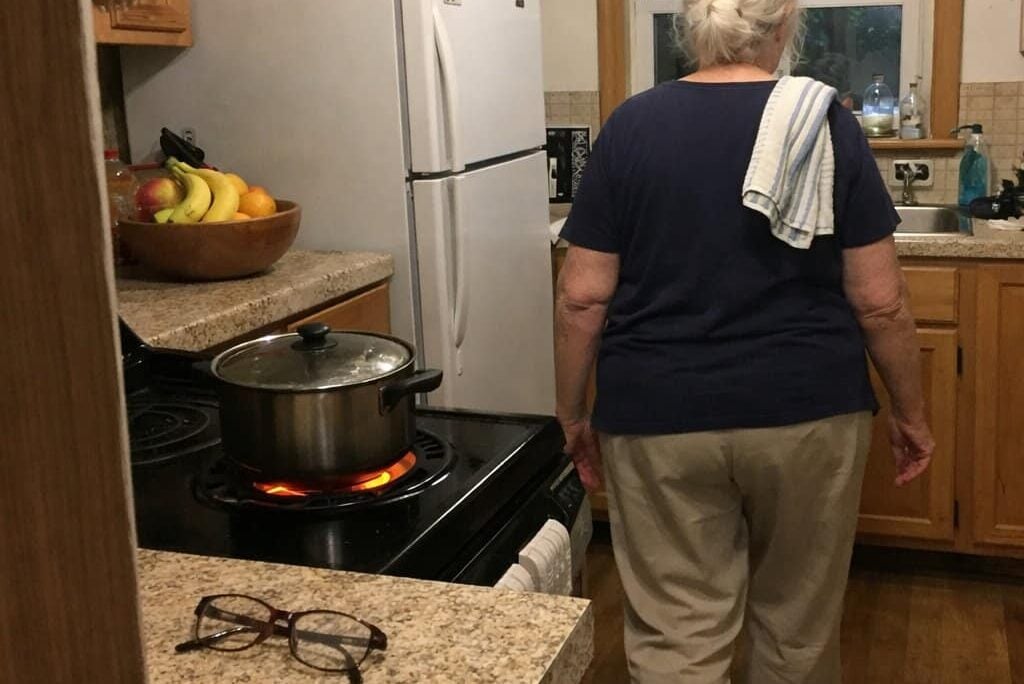
You walked into the kitchen and found the back burner still on. The pot was dry. The tea had been made an hour ago.
Maybe it was your parent. Maybe it was you. Either way, you are here now — and the question is not whether to do something. The question is what to do without taking more away than you need to.
Stove-related fires and burns are among the most preventable kitchen hazards for older adults, and among the most emotionally loaded to address. The instinct is to remove access — pull the knobs, disable the range, call it solved. But cooking is routine, identity, and autonomy. Removing it before the situation genuinely requires it can accelerate the loss of confidence and daily structure that keeps older adults functioning well at home.
The better question is this: how much independence can this particular person safely hold right now? The right product type depends entirely on the honest answer.
This article covers four types of stove safety devices — automatic shut-off devices, knob covers and removable knobs, stovetop fire suppression canisters, and tactile knob markers. Each one addresses a different situation. I will help you match your situation to the right type, rather than defaulting to the most restrictive option.
Stove Safety Device Shopping Guide for Aging in Place
Download this practical shopping guide to choose the exact stove safety device that matches your situation—whether you need automatic shut-off, access restriction, sensory markers, or fire suppression—and eliminate dangerous guesswork before you buy.
What to Look For
Before you evaluate any product in this article, two things must happen first.
Identify your stove type. This is the single most common purchase mistake in this category. Electric coil, smooth-top electric (radiant and induction), and gas ranges require different devices. Some products only work with one type. Gas ranges have an additional consideration: automatic devices must interrupt gas flow rather than an electric circuit, which requires a different class of product entirely. Know your stove type before reading any product listing.
Do the independence assessment before the product decision. Three questions determine which product type belongs in your kitchen:
- Can this person still cook safely most of the time, with only an occasional lapse in attention?
- Can they follow the same routine they have followed for years if the hazard is reduced rather than eliminated?
- Is the concern about forgetting to turn something off, about a sensory difficulty confirming the off position, or about judgment — putting something on and not remembering it is there?
The answers point to different product types. Forgetting to turn a burner off after cooking is done points toward automatic shut-off. Unsafe unsupervised stove use points toward access restriction. Uncertainty about whether the knob is fully off points toward tactile markers. Layering a last-resort fire backstop onto any of those points toward suppression canisters.
For Automatic Shut-Off Devices
- Detection method. Most residential devices use passive infrared (PIR) sensors to detect motion above the stove, combined with a timer. If the cook leaves the kitchen longer than the threshold — to answer the phone, sit down to eat, or rest — the device shuts the range off. Look for adjustable timer thresholds, typically 5 to 45 minutes, and confirm the range before purchasing.
- Power interruption method. Devices that plug into the range outlet require a plug-in range, not a hardwired one. Hardwired ranges require a circuit-level device installed by a licensed electrician. Confirm your range configuration before purchasing.
- Override capability. Some devices allow the cook to extend the timer manually for longer tasks like simmering soup. Note whether override is available and what it requires.
- Remote monitoring. Some devices send an alert to a phone when they shut off the range. For adult children managing a parent's kitchen from a distance, this feature meaningfully changes the product's value.
For Knob Covers and Removable Knobs
- Verify effectiveness before purchasing. This is the most important step. Knob covers only work if the person they are meant to stop cannot defeat them. Many adults with intact fine motor skills and problem-solving ability can remove most consumer knob covers in seconds. If access restriction is the goal, removing the knobs entirely — most pull straight off without tools — costs nothing, is fully reversible, and is more effective than any cover for someone who could work around one.
- Knob diameter compatibility. Covers are not universal. Most list a compatible diameter range, typically 1.5 to 3 inches. Measure your knobs before ordering.
- Removal mechanism for the caregiver. Key lock, squeeze-to-release, and slide mechanisms vary in how quickly a caregiver can remove a cover to supervise cooking. Consider this when choosing.
For Stovetop Fire Suppression Canisters
- Mounting height. Most residential canisters are rated to discharge when the temperature at canister level reaches 280°F to 320°F. Mount at the manufacturer's specified height — typically 18 to 36 inches above the burner. Too high delays activation; too low risks false discharge.
- Coverage area. Canisters are rated to suppress fires on one to four burners depending on size. Confirm coverage for your range.
- Single-use and replacement. All consumer-grade canisters are single-use. Even if never discharged, they have a manufacturer service life — typically 5 to 10 years — after which the suppression agent may degrade. Note the replacement cost before purchasing.
- Suppression agent. Wet chemical agents (potassium-based) are generally preferred for cooking fires involving oils and fats. Confirm the agent type.
For Tactile Knob Markers
- Heat resistance. Knobs adjacent to burners can reach 150°F or more. Look for markers rated for this temperature range. Products without an explicit heat resistance rating carry real risk of adhesive failure or material degradation over time.
- Adhesive durability. Markers must hold through repeated contact and cleaning. Confirm the adhesive is rated for non-porous surfaces.
- Size and contrast. For low vision rather than tactile difficulty, high-contrast markers — white or yellow on dark knobs — can serve a dual function alongside tactile reference.
Automatic Stove Shut-Off Devices
Automatic stove shut-off devices cut power or gas to the range when a burner is left unattended beyond a set time, acting as a safety backstop for older adults who still cook independently but occasionally lose track of an active burner.
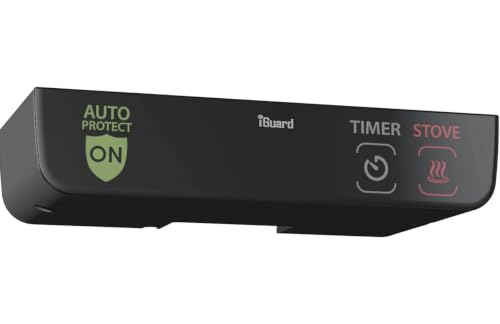


Automatic shut-off devices are the right starting point for the largest group of people reading this article: older adults who are still cooking safely and independently, but whose families want a backstop for the moments when attention lapses. The device preserves the cooking routine completely. The person cooks exactly as they always have. It only intervenes when a burner is left unattended beyond the timer threshold.
That distinction matters. This is not access restriction. It is a safety net beneath an otherwise intact routine.
Who this suits: Someone who has had one or two close calls with an unattended burner but whose cooking judgment is otherwise intact. Someone who lives alone and cooks regularly. Any situation where the goal is preventing an infrequent lapse, not restricting daily access.
Who this does not suit: Someone who can no longer safely manage the cooking process itself — not just forgetting to turn off a burner, but forgetting a pot is on, or placing inappropriate items on the burner. In those situations, restricting access rather than monitoring it is the more appropriate next step.
Automatic shut-off devices are the most independence-preserving option in this article. They are also the most expensive, and they require a plug-in range outlet or professional installation for hardwired ranges. For families managing a parent's kitchen from a distance, the remote alert feature on some devices significantly changes the value calculation.
iGuard Smart Stove Timer Automatic Stove Shut Off (3-Prong)
The iGuard uses a motion sensor above the stove to monitor activity and shuts off the range when the cook has been away too long. It plugs into the range outlet and interrupts power to the stove, requiring no modification to the stove itself. This version uses a 3-prong cord, which matches most standard electric range outlets — confirm your outlet configuration before purchasing.
The timer threshold is adjustable, which is one of the more important features to verify in this category. A fixed short timer will shut off a simmering pot while the cook is simply in the next room; an adjustable range allows the household to tune the device to actual cooking patterns.
This product is suited to plug-in electric ranges. It does not work with hardwired ranges or with gas stoves.
FireAvert Electric Auto Stove Shut-Off Safety Device (3 or 4 Prong)
FireAvert takes a different detection approach from motion-based devices. It connects to an existing smoke detector and shuts the range off when the smoke detector alarm sounds — addressing the scenario where a fire or significant smoke has already started rather than preventing the unattended burner in the first place. It plugs into the range outlet and works with plug-in electric ranges.
This approach means the device does not generate false shut-offs during normal cooking. The range only shuts off when smoke reaches the detector threshold. The trade-off is that it responds to smoke rather than preventing the unattended burner situation that typically precedes smoke.
For families who want protection against the escalated scenario — not just prevention — this is a meaningful distinction. It pairs well with a motion-based device but addresses a different point in the risk chain on its own.
FireAvert Electric Auto Stove Shut-Off Safety Device (3 or 4 Prong) — Shark Tank Version
This is the same smoke-detector-connected shut-off device as the FireAvert above, offered in a listing that reflects the version that appeared on Shark Tank. The underlying function is identical: it listens for an existing smoke detector alarm and cuts power to the range through the outlet connection. Confirm whether you need a 3-prong or 4-prong connection for your range before ordering, as this listing covers both configurations.
The Shark Tank association brings wider recognition but does not alter the product's operating logic. It still responds to smoke rather than motion, and it still requires a plug-in range outlet.
If your situation calls for smoke-triggered shut-off rather than inactivity-triggered shut-off, either FireAvert electric listing will serve the same function. The choice between them typically comes down to availability and price at the time of purchase.
FireAvert Gas Stove Auto Shut-Off Device (1/2" Pipe Line)
FireAvert's gas version addresses a fundamentally different engineering challenge. Rather than interrupting an electrical circuit, it installs on the gas supply line and closes a valve when the connected smoke detector triggers. This is the only product in the automatic shut-off section designed for gas ranges, and it requires a 1/2-inch gas pipe connection — confirm your pipe size before purchasing.
Installation involves connecting to the gas line, which is work most households will want a licensed plumber or gas technician to perform. This adds to the cost of the device. Factor that into the total investment.
For households with gas ranges where a plug-in electric device is not an option, this is the relevant product type. The smoke-detector trigger logic is the same as the electric FireAvert models — the range shuts off when smoke is detected, not when the cook steps away.
iGuard Smart Stove Timer Automatic Stove Shut Off (4-Prong)
This is the 4-prong version of the iGuard motion-sensor-based shut-off device. The function is identical to the 3-prong model: a sensor monitors motion above the stove, and the range shuts off after a configurable period of inactivity. The distinction is the power cord configuration, which must match the range outlet.
Four-prong outlets are standard for electric ranges installed after 2000 in the United States. If your range was installed more recently or the outlet was updated, this is likely the correct version. If you are unsure, check the outlet before ordering either iGuard model.
The adjustable timer remains the feature most worth confirming in either iGuard version. A household with longer cooking tasks — soups, braises, slow-cooked dishes — needs the higher end of the timer range to avoid interrupting the cooking process unnecessarily.
FireAvert PRO Electric Stove Auto Shut-Off Device (3-Prong) + Monitoring Subscription
The FireAvert PRO adds a monitoring subscription layer to the standard smoke-detector-connected shut-off function. When the device shuts off the range, it sends a notification through the connected app, allowing a family member or caregiver to see in real time that the alarm triggered and the stove was shut off. This moves the product from a local safety device to a remote monitoring tool.
For adult children managing a parent's kitchen from a distance, this feature changes the product's value significantly. Knowing the range shut off — and approximately when — allows a follow-up phone call to confirm the situation is resolved rather than discovering it hours later.
The monitoring subscription is required for the remote alert function. Confirm the subscription terms and ongoing cost before purchasing. The shut-off function itself still operates through the smoke detector connection regardless of subscription status.
Stove Knob Covers and Removable Knobs
Stove knob covers and removable knobs restrict access to the burner controls, providing a physical barrier for households where unsupervised stove use has become a safety concern rather than an occasional lapse.

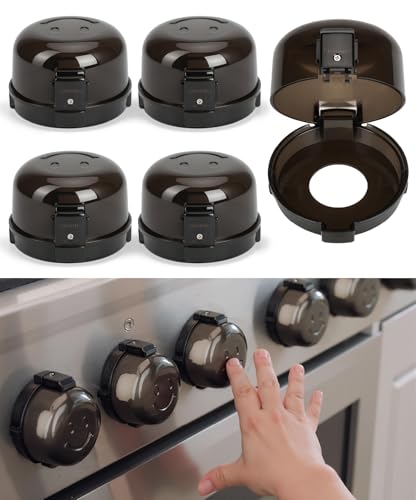


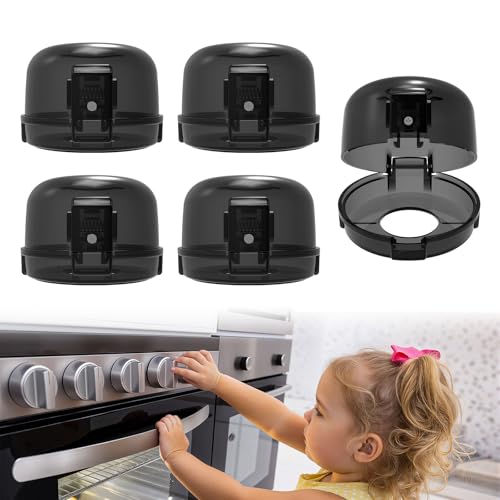
Knob covers and removable knobs address a different situation from automatic shut-off devices. The goal here shifts from adding a safety backstop to restricting access — when unsupervised stove use has become a safety concern, not just a lapse in attention after cooking.
Before I describe any of the products in this section, there is something I need to say plainly: removing the stove knobs entirely is often more effective than any cover.
Most knobs pull straight off without tools. No product, no cost, no installation. If a caregiver is present during cooking, the knobs go back on. If they are not, the knobs are off. For someone who would defeat a cover, knob removal costs nothing and leaves nothing to work around. Knob covers offer discretion — a less confrontational appearance — but they do not offer meaningfully greater protection for someone with intact fine motor skills and problem-solving ability.
Who knob covers suit: Someone with mild to moderate cognitive impairment who may attempt to use the stove but can be slowed or deterred by a physical obstacle they cannot easily work around. Someone for whom the appearance of normal knobs matters, and who genuinely cannot remove the cover.
Who knob covers do not suit: Someone who can manipulate small objects, problem-solve mechanical obstacles, or who would simply remove the covers when encountered. Test any cover with the person present before relying on it. Buy one, install it on one burner, and observe.
The honest limitation of this entire product type is that its effectiveness is person-specific. A product that one person cannot defeat in two minutes, another may remove in fifteen seconds. No knob cover in this category prevents determined access by someone with functioning dexterity.
Safety 1st Child Proof Stove Knob Covers, Clear View (Set of 5)
Safety 1st makes this product for child safety, which is worth naming upfront because it affects the knob size range these covers are designed to fit. The clear view design allows the knob markings underneath to remain visible, which can help caregivers verify settings without removing the cover.
These covers work by requiring a specific squeeze-and-turn motion to engage the knob beneath. For a child, this is a meaningful barrier. For an older adult with intact fine motor coordination, the squeeze-and-turn mechanism may not present a meaningful obstacle. Test with the person present before relying on these for access restriction.
Measure your knob diameter before ordering. Child-safety-marketed covers tend to fit a narrower knob diameter range than some gas range knobs, which can be larger.
Bates Stove Knob Safety Covers, 5 Pack Black Universal Size
The Bates covers come in black and are marketed as universal size, with a design intended to accommodate a range of knob diameters. The opaque design means knob markings are not visible through the cover, which may make it harder for a caregiver to confirm settings without removing the cover.
As with any knob cover in this section, the effective diameter range listed by the manufacturer should be verified against the actual knob size on your range. Universal does not mean unlimited — it means the cover is designed to flex across a common range of sizes.
These are a straightforward, low-cost option for households where the primary goal is visual deterrence and mild physical barrier, and where the person using the stove is unlikely to attempt to remove them.
SINSETU 6 Pack Gas Stove Knob Locks, Silicone Oven Knob Safety Covers
SINSETU's silicone covers are specifically described for gas stove knobs, which tend to be larger in diameter than electric range knobs. The silicone material provides some flexibility to fit a range of knob shapes, and six covers in the set allows full coverage of most four- or five-burner gas ranges with one extra.
Silicone covers are generally easier to clean than rigid plastic covers. They are also typically softer in resistance, which can make them somewhat easier to manipulate for someone determined to remove them.
Confirm the compatible knob diameter range against your specific knobs before purchasing. Gas stove knob sizes vary considerably between manufacturers and models.
Vadiff Mom's Choice Award Stove Knob Locks, 5-Pack Silicone Child Safety Lock Set
Vadiff's covers carry a Mom's Choice Award designation and are silicone construction in a five-pack. The child safety marketing context is again worth noting — the mechanism is designed to resist a child's manipulation, and the resistance level for an older adult with intact motor function will be different.
These covers feature a squeeze-to-release mechanism. The silicone construction means they can flex to fit a range of knob diameters, but they work best within the manufacturer's listed range. Measure before purchasing.
For households where the primary goal is deterrence rather than absolute restriction, and where the person cannot easily defeat a squeeze mechanism, these are a reasonable option at a modest cost.
GRENFU Stove Knob Safety Covers (5 + 1 Pack), Clear View
GRENFU's clear view design keeps the underlying knob markings visible, which can be useful when caregivers need to confirm settings quickly. The five-plus-one pack provides a spare, which is practical for covers that may occasionally crack or wear.
Clear view covers tend to be rigid plastic construction. Rigid covers can be more precise in their fit — which can mean a better barrier when the fit is right, or a poor fit when the knob diameter falls outside the designed range. Measure knob diameter carefully before purchasing.
The same caution applies here as to every cover in this section: verify with the person present whether this specific cover presents a meaningful obstacle for them before depending on it for safety.
Jool Baby Clear Stove Knob Covers (5 Pack), Durable Design
Jool Baby's clear covers are another child-safety-marketed option with a see-through design. The durable construction claim in the product name is worth noting in practical terms: covers that are used frequently — replaced and reinstalled by caregivers across cooking sessions — benefit from materials that hold up to repeated handling.
The clear design allows the knob's heat setting markings to remain visible beneath the cover. For households where the stove is still in supervised use during mealtimes, this can reduce the friction of verifying settings each time a cover is removed and replaced.
Confirm compatibility with your knob diameter range. As with other child-safety-marketed covers, the design is optimized for a standard residential knob size range.
BBsecure Stove Knob Safety Covers, 5 Pack Heat Resistant
BBsecure describes these covers as heat resistant, which is a specification worth paying attention to in this category. Knobs on gas ranges and some electric ranges can reach significant surface temperatures during and after cooking. A cover material that degrades or deforms under heat is a safety concern as well as a functional one.
Heat resistance does not mean the cover can be left in place on an active burner — these are access restriction devices, not thermal barriers. The heat resistance rating refers to the cover's ability to tolerate the ambient temperature that knobs experience during normal range use.
These are a five-pack of opaque covers with the heat resistance specification as their primary differentiation from other options in this section.
Stovetop Fire Suppression Canisters
Stovetop fire suppression canisters mount above the burners and discharge automatically when heat from a fire reaches the activation temperature, providing a last-resort fire response layer that requires nothing from the cook in the moment.


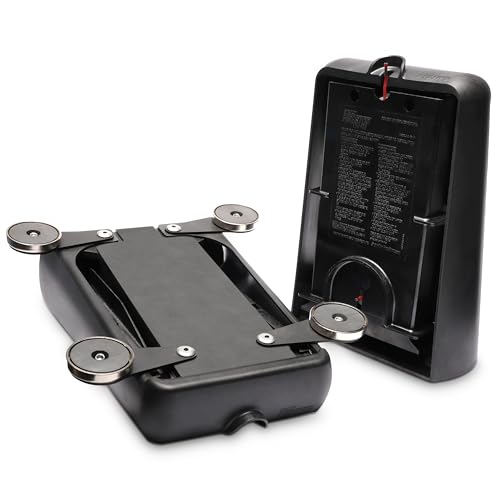
Stovetop fire suppression canisters are the only product in this article that operates entirely without the cook. They activate automatically in response to heat from a fire, require nothing from the person in the moment, and function as a last-resort layer regardless of what other interventions are in place.
This is not a replacement for any other product type in this article. It is an addition to them.
Suppression canisters address fire after it starts. Automatic shut-off devices and knob covers address the conditions that cause fire before they escalate. Both layers serve a purpose. A canister alone — without any prevention layer — is like wearing a seatbelt while declining to fix the brakes.
What every reader in this section needs to know before purchasing:
Every consumer-grade stovetop suppression canister is single-use. After discharge, it must be replaced. Even if never discharged, it has a manufacturer service life — typically 5 to 10 years — after which the suppression agent may degrade. Write the installation date on the canister with a permanent marker the day you install it, and add a calendar reminder for the replacement date immediately. This is easy to forget and genuinely important.
Mounting height must follow the manufacturer's specification exactly. Mounting too high delays activation; mounting too low risks false discharge from ordinary cooking heat. Most residential canisters activate between 280°F and 320°F at canister level.
Wet chemical agents (potassium-based) are generally preferred over dry chemical for cooking fires involving oils and fats. Confirm the agent type before purchasing.
StoveTop FireStop Rangehood Fire Suppressor
The StoveTop FireStop Rangehood model is designed to mount inside a range hood — the ventilation unit above the stove — and discharge downward onto the burners when a fire reaches the activation temperature. This mounting location places the canister in a position with direct line of sight to the cooking surface, which is the intended configuration.
This product requires a range hood with interior space sufficient for the canister to mount securely at the manufacturer's specified height above the burners. Confirm your range hood configuration and interior dimensions before purchasing.
The rangehood mounting approach keeps the device out of sight during normal cooking, which matters for households where the goal is to add safety without changing the kitchen's appearance or function.
StoveTop FireStop Microhood Suppressor
The Microhood version is designed for kitchens where an over-the-range microwave serves as the ventilation unit above the stove — a very common configuration in residential kitchens, particularly in apartments and condominiums. The canister mounts to the underside of the microwave, facing the burners below.
Confirm that the mounting surface of your over-the-range microwave is compatible with the canister's attachment method before purchasing. The distance from the microwave's underside to the burner surface must fall within the manufacturer's specified range for proper activation temperature at canister level.
This is the appropriate StoveTop FireStop model for over-the-range microwave configurations. The Rangehood model is for conventional ventilation hoods; they are not interchangeable based on your installation.
S.I.T.S Stovetop Fire Stop Automatic Fire Suppression Canister
S.I.T.S. offers an alternative to the StoveTop FireStop brand in this category. The heat-activated suppression function is the same class of product: the canister mounts above the burners and discharges when fire raises the temperature at canister level to the activation threshold.
When evaluating any suppression canister, confirm the activation temperature rating, the coverage area in terms of number of burners, the suppression agent type, and the manufacturer's service life before the canister must be replaced regardless of discharge. These specifications determine whether the product matches the specific range and situation.
This canister is worth comparing against the StoveTop FireStop options on these specifications, particularly suppression agent type and coverage area, to determine which product fits the installation.
StoveTop FireStop Lowpro Fire Suppressor
The Lowpro model is described for over-the-range microwave installations and appears to address configurations where vertical clearance between the microwave's underside and the burners is more limited than standard. The lower profile of the canister may allow mounting in installations where the standard Microhood canister's dimensions do not fit.
If you have an over-the-range microwave and measured that the standard Microhood canister's dimensions exceed the available space, this model is the appropriate comparison point. Confirm manufacturer mounting specifications against your measured clearance before purchasing either microwave-mount model.
As with all suppression canisters: single-use, service-life-limited, and not a substitute for smoke detectors. It suppresses a fire at the burner; it does not replace the systems that alert to fire that has spread.
Tactile Knob Markers
Tactile knob markers add a raised or high-contrast reference point to stove knobs so that older adults with low vision or reduced tactile sensitivity can confirm the off position by touch or sight rather than guessing.

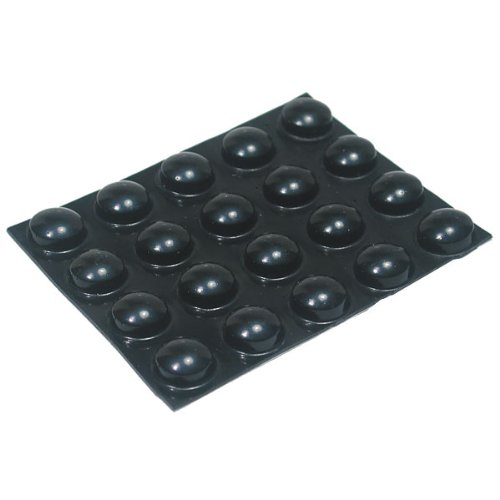




Tactile knob markers address a different problem from every other product type in this article. Not forgetfulness. Not access restriction. Not fire response.
They address the specific error that happens when someone cannot reliably confirm that the knob is fully in the off position.
This is a sensory and perceptual issue — most common in older adults with low vision, peripheral neuropathy that reduces tactile feedback, or kitchens with knobs where the off position does not feel distinctly different from the adjacent settings. The marker provides a reference point the person can verify by touch or by high-contrast sight, rather than guessing.
Who this suits: Someone who is still cooking safely and independently, but who has had moments of uncertainty about whether a burner was fully off. Someone with low vision for whom reading fine knob markings is difficult. Kitchens where the off position does not engage with a distinct detent.
Who this does not suit: Situations involving memory or judgment impairment where the issue is not distinguishing off from on, but forgetting to check at all. Tactile markers require the person to reach for the check — the product does not prompt them to do so.
Tactile markers are the least expensive product in this article and the most limited in scope. Their value is specific and genuine within that scope. If your situation involves more than a sensory difficulty, a different product type is the appropriate primary intervention.
One practical note: bump-dot sets with multiple sizes and shapes typically offer more cost-effective coverage than single-purpose stove marker products — particularly useful if you want to mark the off position on multiple appliances, not just the stove.
TNJPSEK 220 Pcs Raised Dots for Visually Impaired, Silicone Bump Tactile Stickers
TNJPSEK's 220-piece set offers multiple sizes of silicone bump dots, which is useful for marking different appliances with differently sized or shaped reference points so they can be distinguished by touch. A set this size provides enough markers to address the stove and several other frequently used controls in the kitchen.
Silicone material provides tactile distinction and some flexibility in conforming to curved knob surfaces. Confirm the heat resistance rating for any silicone marker intended for placement on a knob that may reach elevated temperatures during cooking.
The large quantity in this set makes it practical for households where multiple appliances need marking, reducing per-marker cost compared to small packs.
20 Small Black Bump Dots, Self-Adhesive Tactile Locator Dots for Blind and Low Vision
This is a small-quantity option — 20 dots — suited for households where only the stove knobs need marking and a large set would go unused. The black color provides visual contrast against light-colored knob surfaces, serving a dual function for low vision users who benefit from both tactile reference and visual contrast.
Confirm that the adhesive is rated for the surface material of your knobs — most are plastic or metal — and that it will hold through repeated contact and regular cleaning. Adhesive durability is the primary functional specification to verify in this product category.
Small packs like this are also useful for testing adhesive and tactile performance on one knob before committing to marking the full range.
BLEWAY Tactile Icon Stickers Combo Pack, Raised Tactile Bump Dots for Oven, Washing Machine
BLEWAY's combo pack is notable because it is specifically described for appliance use — ovens, washing machines, and similar household controls — rather than being a general-purpose bump-dot accessory. This matters because it suggests the adhesive and materials were evaluated with appliance surfaces and temperatures in mind, rather than being adapted from an office or electronics application.
Confirm the specific heat resistance rating in the product listing before applying to knobs that reach elevated temperatures. An explicit appliance-use designation is a useful signal, but the specific temperature rating is the specification that determines whether this product is appropriate for your stove knob configuration.
The combo pack format means different icon or bump shapes may be included, which can help differentiate positions — for example, a round bump for off and a square bump for high — if distinguishing between settings by touch is the goal rather than simply marking the off position.
20 Mini Clear Bump Dots, Small Self-Adhesive Tactile Locator Bumps for Low Vision and Blind
Clear bump dots serve a different visual purpose than black or colored dots. They add a tactile reference point without visually altering the appearance of the knob or obscuring the knob's printed markings underneath. For households where maintaining the original appearance of the knob matters — or where the knob markings are still useful and should remain readable — clear markers preserve both.
The trade-off is that clear markers provide no visual contrast benefit for low vision users. If the goal is both tactile reference and improved visibility, a higher-contrast color marker is more appropriate.
At 20 dots in a small pack, this is a minimal-quantity option for targeted marking on a single appliance.
Cosprint Bump Dots for Visually Impaired, 250PCS Combo Pack, Assorted Sizes
Cosprint's 250-piece combo pack with assorted sizes provides meaningful flexibility for households marking multiple appliances and controls. Assorted sizes allow different positions or different appliances to use different marker sizes — which can help create a tactile vocabulary across the kitchen rather than a uniform bump on every control.
For older adults who are marking stove knobs alongside other frequently used appliances — the microwave, the coffee maker, the thermostat — a larger assorted set reduces the need to purchase multiple products and can bring consistency to the approach.
Confirm heat resistance specifications before placing markers on stove knobs, particularly for markers that will be immediately adjacent to burners.
YAFIYGI 144 Pcs Bump Dots for Visually Impaired, Mixed Shapes Bright Pink Square and Yellow
YAFIYGI's set stands out in this section for its color — bright pink squares and yellow dots rather than clear or black markers. For low vision users where tactile reference alone is insufficient, high-visibility color markers provide a visual cue that is often easier to locate than the printed markings on a dark or busy knob surface.
The mixed shapes (square and round) allow position differentiation by both touch and color — for example, a pink square for off and a yellow circle for medium — which can reduce reliance on any single sensory channel.
As with all markers in this section, confirm adhesive compatibility with your knob surface material and heat resistance for knobs that reach elevated temperatures during use.
Frequently Asked Questions
My parent has mild cognitive impairment. Which product is right for them?
The answer depends on what the concern actually is. If the issue is forgetting to turn a burner off after cooking — a lapse in attention after the cooking is done — an automatic shut-off device is the appropriate first step. It preserves the cooking routine entirely and acts only when a burner is left unattended beyond the timer threshold.
If the issue is attempting to use the stove when doing so is no longer safe — not just forgetting to turn it off, but forgetting a pot is on, or using the stove unsafely — access restriction through knob covers or knob removal is more appropriate. These address different problems, and choosing the wrong type means the product does not actually address the situation you have. If dementia is the reason behind the unsafe stove use, you can see the options in this rundown of stove locks for seniors with dementia.
If you are genuinely unsure which situation applies, talking to your parent's physician or a home safety occupational therapist is worth doing before purchasing anything.
Will an automatic shut-off device turn off the stove while my parent is still cooking?
Yes, if they leave the kitchen longer than the timer threshold. This includes sitting down to eat, taking a phone call, or moving to another room temporarily. This is the most common friction point with motion-sensor-based devices.
Adjustable timer thresholds — some devices allow up to 45 minutes — reduce false shut-off frequency. The cook will need to return to the stove to resume cooking, which resets the motion sensor on most devices. For households with longer cooking tasks like soups or braises, confirming the available timer range before purchasing is essential.
Can my parent defeat a stove knob cover?
Many people can. This is the most important question in the knob cover section. If the person has intact fine motor skills and problem-solving ability, most consumer knob covers can be removed with minimal effort.
Test any cover with the person present before depending on it. Buy one, install it on one burner, and watch. A cover that one person cannot defeat in two minutes, another may remove in fifteen seconds. If the test reveals the cover does not present a real barrier, removing the knobs entirely is a more reliable and free alternative.
My stove is hardwired, not a plug-in. Do any of these products work for me?
Most automatic shut-off devices designed for consumer use require a plug-in range outlet. They interrupt power through the outlet connection. Hardwired ranges require a smart outlet or circuit-level device installed by a licensed electrician.
If your range is hardwired, confirm this before purchasing any plug-in automatic shut-off device. An electrician consultation is the appropriate next step for hardwired configurations.
Is a stovetop fire suppression canister a substitute for a smoke detector?
No. A suppression canister suppresses a fire at the burner before it spreads. A smoke detector alerts to fire that has already spread to smoke. They address different stages of the same event. Both should be present in any kitchen where fire risk is a concern. A canister does not replace a smoke detector, and a smoke detector does not suppress a fire.
How often does a stovetop suppression canister need to be replaced?
Even if never discharged, suppression canisters have a manufacturer-specified service life — typically 5 to 10 years — after which the suppression agent may degrade and the canister may not perform as rated. Write the installation date on the canister with a permanent marker the day you install it, and add a calendar reminder for the replacement date immediately. Check the canister for a visible expiration indicator as well.
Hacks and Practical Advice
Check whether the burner knobs return fully to off before buying anything.
This is a two-minute check that costs nothing and identifies the most common source of accidental burner activation. After the stove has cooled completely, try to turn each burner on with only a gentle nudge from what appears to be the off position. If a burner clicks on or activates with minimal effort, the knob mechanism or knob fit has worn and the knob is not engaging the detent that cuts gas or power. This is a maintenance issue — sometimes solved by a new knob, sometimes by a service call — before it is a product purchase problem.
Remove the stove knobs before purchasing a knob cover.
Most knobs pull straight off — no tools, no permanent change, fully reversible. Before spending money on any knob cover product, try removing the knobs and see whether that solves the problem. If it does, and if a caregiver can replace them when present to supervise cooking, there is no reason to purchase a cover. Knob covers offer a less confrontational appearance. They do not offer meaningfully more protection than knob removal for someone who could defeat a cover.
Set a calendar reminder for the suppression canister the day you install it.
Write the installation date on the canister with a permanent marker. Add a calendar reminder for the manufacturer's service life date — typically 5 to 10 years out — immediately, on the same day. The canister will sit quietly above your stove for years if it works correctly, and that is exactly when it is easy to forget about the replacement date. Do not rely on remembering.
Test the knob cover with the person present before relying on it.
Buy one cover, install it on one burner, and observe whether the person can remove it. This is not a test of the product — it is a test of whether the product works for this specific person. A cover that one person cannot defeat may take another person fifteen seconds to remove. The test costs the price of one cover and takes five minutes. It tells you everything a product description cannot.
Talk to a home safety occupational therapist before a whole-kitchen overhaul.
A home safety OT can assess the kitchen in person, observe the person cooking, and make specific recommendations based on what they actually see. This is especially valuable when you are not sure whether the concern is sensory, memory-based, or judgment-based — because the product type that addresses each of those is different. Many local Area Agencies on Aging can connect families with home safety OT services at reduced cost. This is one of the most useful steps available to families navigating this decision, and it is often skipped.
Once a year, confirm your automatic shut-off device's sensor still has a clear line of sight.
Sensor-based devices can be blocked by items placed on the stove, on a shelf above it, or by changes in the kitchen layout. Once a year, confirm that nothing is obstructing the sensor field, that the device is still powered, and that the timer threshold is still appropriate for how the stove is currently being used. Cooking habits change over time, and a threshold that worked two years ago may now generate too many false shut-offs or too few.
Stove Safety Device Shopping Guide for Aging in Place
Download this practical shopping guide to choose the exact stove safety device that matches your situation—whether you need automatic shut-off, access restriction, sensory markers, or fire suppression—and eliminate dangerous guesswork before you buy.
Conclusion
The decision in front of you is not whether to act. It is how much independence this person can safely hold right now — and which product type honestly matches that answer.
Automatic shut-off devices preserve full cooking independence with a safety backstop. Knob covers and knob removal restrict unsupervised access. Stovetop suppression canisters add a last-resort fire layer. Tactile markers correct a specific sensory gap. None of them is right for every situation. Choosing the most restrictive option by default is not the same as choosing the safest one.
Acting on kitchen safety before a crisis forces the decision keeps more options open for longer. The family that installs an automatic shut-off device today may not need to remove the knobs for another two years. That is two more years of routine, dignity, and independence that a reactive response might have cost.
If you want to extend this assessment beyond the stove, our fall prevention checklist walks through the spaces and situations that matter most for aging in place — a structured way to see what is working, what needs attention, and what changes will do the most good.
The one free action you can take right now: Walk to the stove, let it cool completely, and check whether each burner knob returns fully to the off position. Try a gentle nudge from what appears to be off, in both directions. If a burner activates with minimal effort, that knob is not fully engaging — and that is where to start, before any product purchase.
It takes two minutes. It identifies the most common stove hazard. It costs nothing.