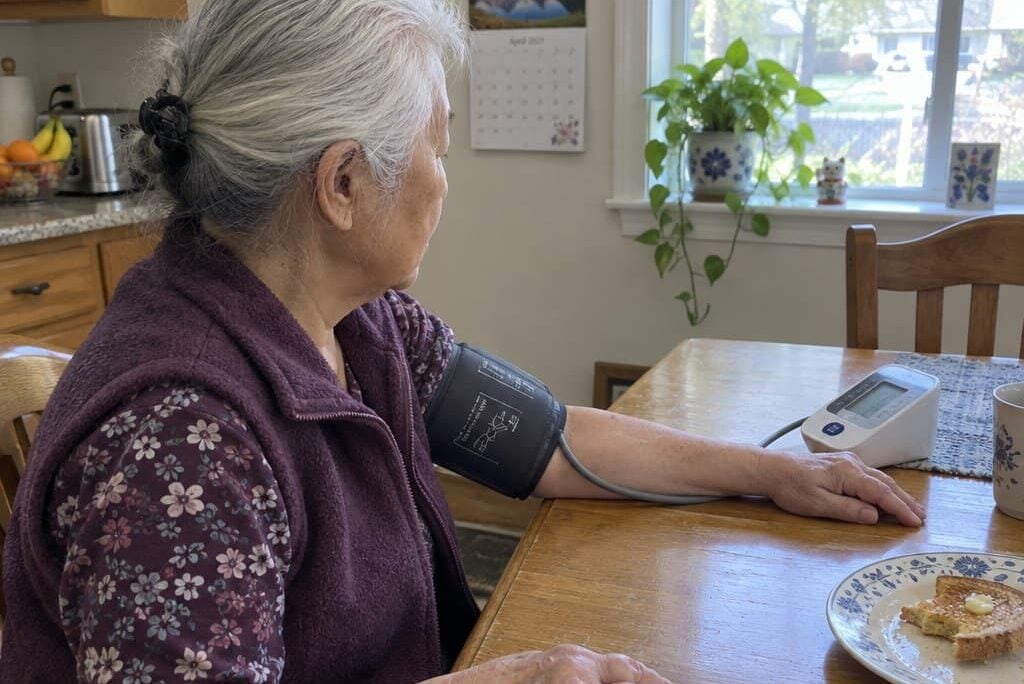
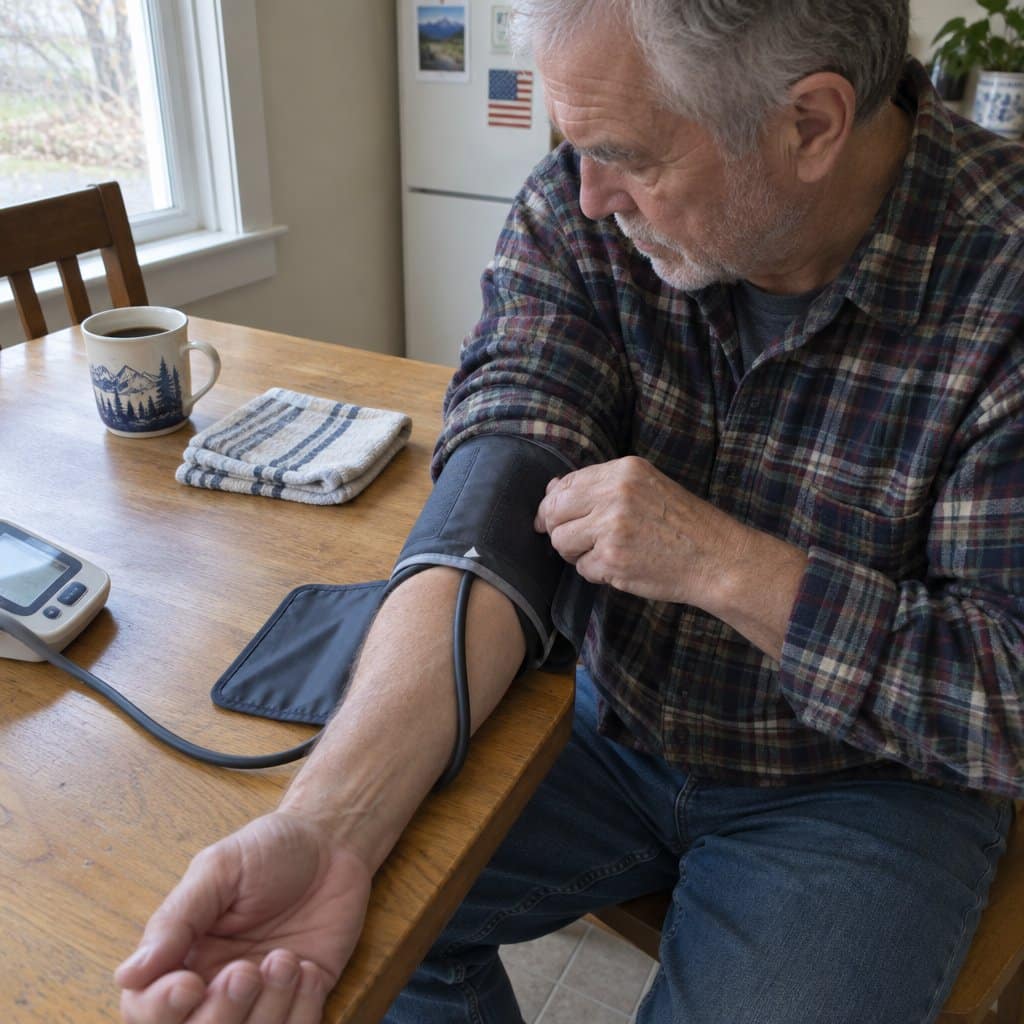
Picture this: you’re sitting at your kitchen table, blood pressure cuff in your lap, and you’ve just made your third attempt to get it wrapped snugly around your arm.
Your fingers aren’t cooperating the way they used to.
The cuff slips.
The velcro catches wrong.
You finally set it down and tell yourself you’ll try again tomorrow.
Tomorrow becomes next week.
If that sounds familiar, I want you to know something right away — this has nothing to do with how much you care about your health. You clearly care. The cuff itself is the problem. For older adults managing mild arthritis or reduced hand strength, blood pressure cuff wrapping with a traditional monitor is a genuinely difficult two-handed task — and that difficulty is the real reason so many people quietly fall out of the habit of checking at home.
The good news is that better options exist. The right monitor makes daily blood pressure checks accurate, manageable, and completely doable on your own. Before I walk you through those options, it helps to understand exactly why traditional cuffs are so hard to use — because it really isn’t user error.
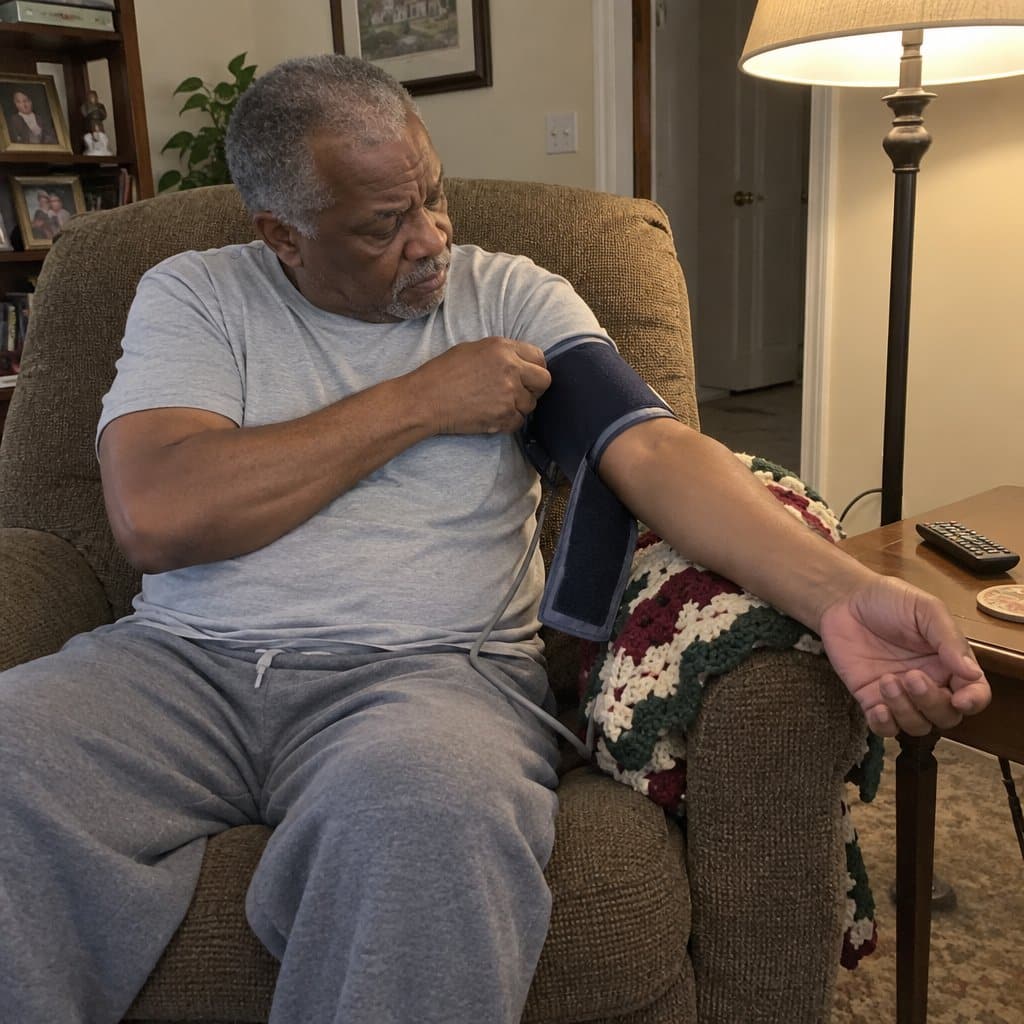
Home Blood Pressure Monitoring Checklist for Arthritic Hands
Download this practical checklist to find the right blood pressure monitor for arthritic or weak hands—and master one-handed techniques that make checking your pressure simple enough to do every single day.
Why Blood Pressure Cuff Wrapping Is Harder Than It Looks
The Design Assumes Two Fully Functional Hands
Most traditional upper-arm cuffs are designed around an assumption that simply doesn’t hold for millions of older adults: that you have two fully capable hands available at the same time.
To wrap a standard cuff correctly, you need one hand to hold the cuff open and steady while the other threads your arm through, positions the cuff, and tightens the closure — all while keeping your arm at roughly the right angle. That’s a lot of fine-motor coordination happening simultaneously.
Even a Small Positioning Error Affects Your Reading
Here’s what makes it more frustrating: even a slightly loose or incorrectly positioned cuff produces inaccurate readings. So if the cuff is hard to put on and you’re not confident it’s placed right, you’re left doubting whether the number you see even means anything.
That doubt alone is enough to make people stop checking altogether.
This Is a Design Problem, Not a Personal One
If wrapping the cuff feels like the hardest part of checking your blood pressure, that’s the monitor’s design problem — not yours. Good tools should work with your hands, not require a level of dexterity that arthritis or reduced grip strength has made difficult. The best monitors on the market today have recognized this and started solving it.
What to Look for in a Blood Pressure Monitor When Dexterity Is a Challenge

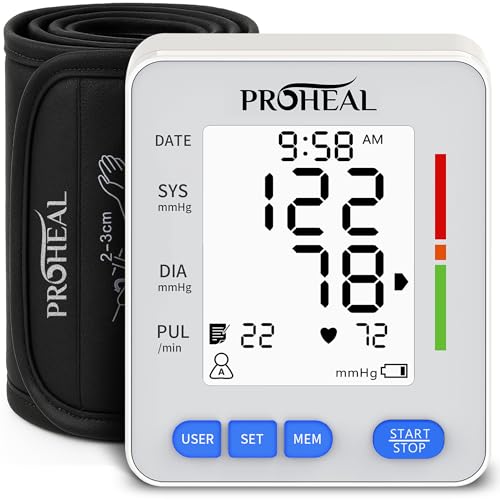
Pre-Formed Cuffs vs. Flat Strap Cuffs
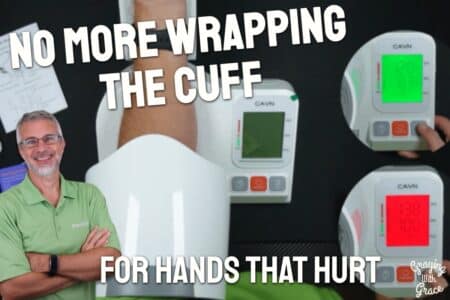
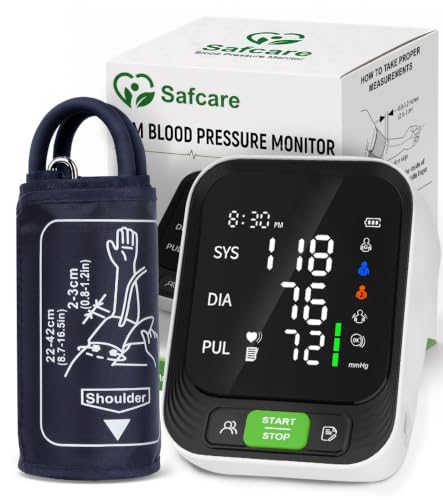
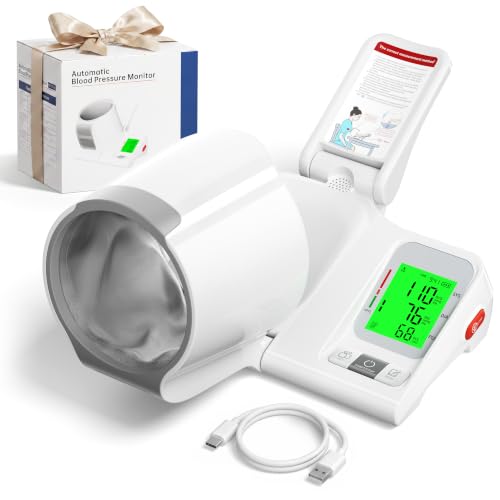
This is the single most important feature to look for if one-handed blood pressure cuff use is your goal. A pre-formed or D-ring cuff holds its shape on its own — you slip your arm through it like a sleeve rather than wrapping a flat strap around your arm and trying to hold it in place while you fasten it.
The difference in experience is dramatic. Flat strap cuffs require you to manage both ends at once. A pre-formed cuff just needs to be slipped on and positioned correctly.
One-Touch Automatic Operation
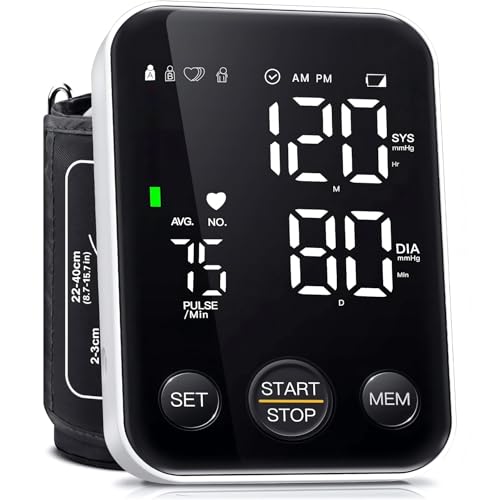
Once the cuff is on, automatic blood pressure monitors remove every other obstacle. You press one button, and the monitor inflates, takes the reading, deflates, and displays the result. No manual pumping, no second-guessing inflation pressure, no extra steps.
That’s the monitor doing the work — exactly as it should be.
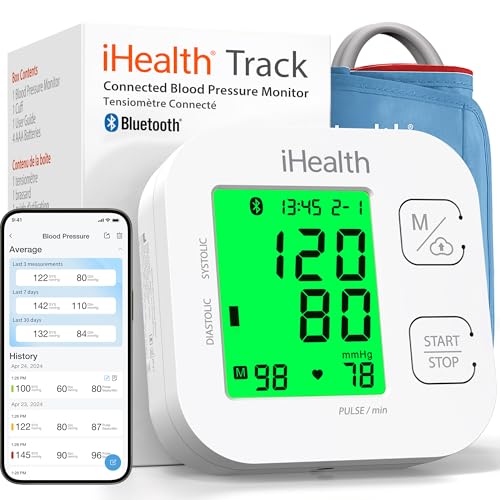


Cuff Sizing Matters More Than Most People Realize
An ill-fitting cuff is both harder to apply and less accurate when it’s on. Before choosing a monitor, measure the circumference of your upper arm at the midpoint between your shoulder and elbow.
Most monitors list their compatible arm sizes clearly. Choosing a cuff that fits your actual arm — not just a “standard” or “large” label — eliminates one of the biggest sources of both frustration and inaccurate readings.
Large Display and Simple Interface
This is a secondary feature, but worth naming: a large, clearly lit display with minimal buttons reduces the cognitive load of the whole process. When the monitor is also easy to read, checking your blood pressure feels less like operating equipment and more like a quick daily habit.
For older adults managing multiple health metrics, this matters more than it might seem.
Wrist Monitors as an Alternative
I’ll cover wrist monitors in more depth shortly, but they’re worth flagging here as a category. Wrist monitors eliminate the wrapping challenge almost entirely — they slip on like a watch. Their accuracy depends on correct positioning, which is a real consideration, but for many people they represent the most practical solution to the dexterity problem.
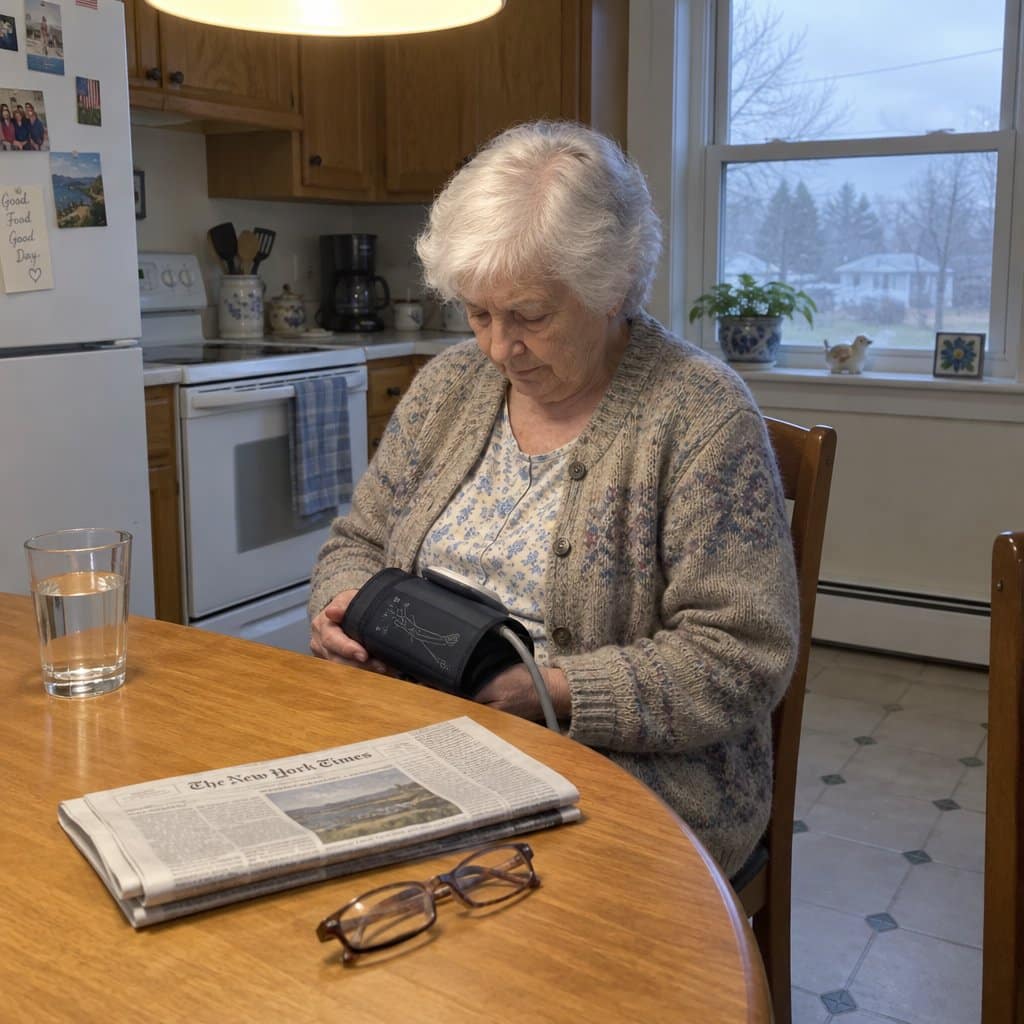
How to Actually Wrap a Blood Pressure Cuff One-Handed
If you’re working with a traditional arm cuff — either because you already own one or because your doctor has recommended upper-arm readings specifically — a few techniques can make one-handed wrapping genuinely manageable.
The Tabletop Anchor Method
This is the most effective technique I’ve come across, and it requires no special equipment.
- Place the cuff flat on a table or firm surface, opening facing up.
- Slide your arm through the cuff from above.
- Press the cuff gently against your thigh or the chair arm to hold it in place.
- Use your free hand to adjust the fit and secure the closure.
You’re essentially using a stable surface to do what a second hand would normally do. This technique uses your environment to do the work for you — and that’s not a workaround. It’s exactly the kind of adaptive strategy that clinical settings use.
The Velcro Adjustment Trick
Rather than trying to wrap and tighten the cuff in one motion, secure it loosely first, then adjust. Get the cuff on your arm at roughly the right position, fasten the velcro at whatever tension feels manageable, and then use your free hand to fine-tune the tightness. Splitting the task into two steps dramatically reduces the coordination required.
Seated Position Changes Everything
Sit with your arm resting flat on a table at approximately heart level before you try to position the cuff. When your arm is supported, you’re not fighting gravity or trying to hold your arm up while also managing the cuff. A good seated position removes a surprising amount of the difficulty.
Mark Your Placement Spot
Once you’ve found the correct position on your arm, place a small piece of tape or a marker dot on the cuff to show you where it should sit each time. That way you’re not guessing at placement — you’re just matching a reference point. Consistency in placement also improves the consistency of your readings.
Want more practical tips for managing your health independently at home? Subscribe to the Graying With Grace newsletter for trusted advice and product recommendations designed specifically for older adults.

Is a Wrist Blood Pressure Monitor a Better Option for You?


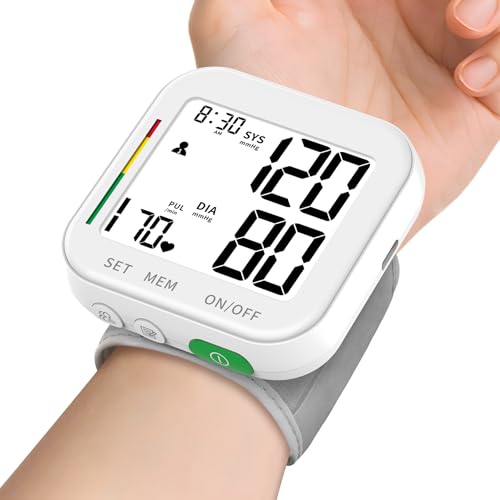

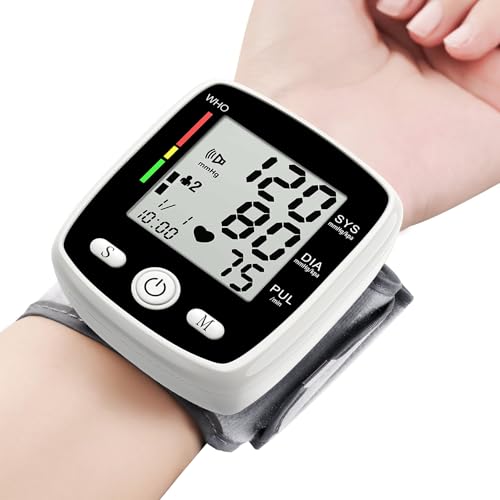

Why Wrist Monitors Solve the Wrapping Problem
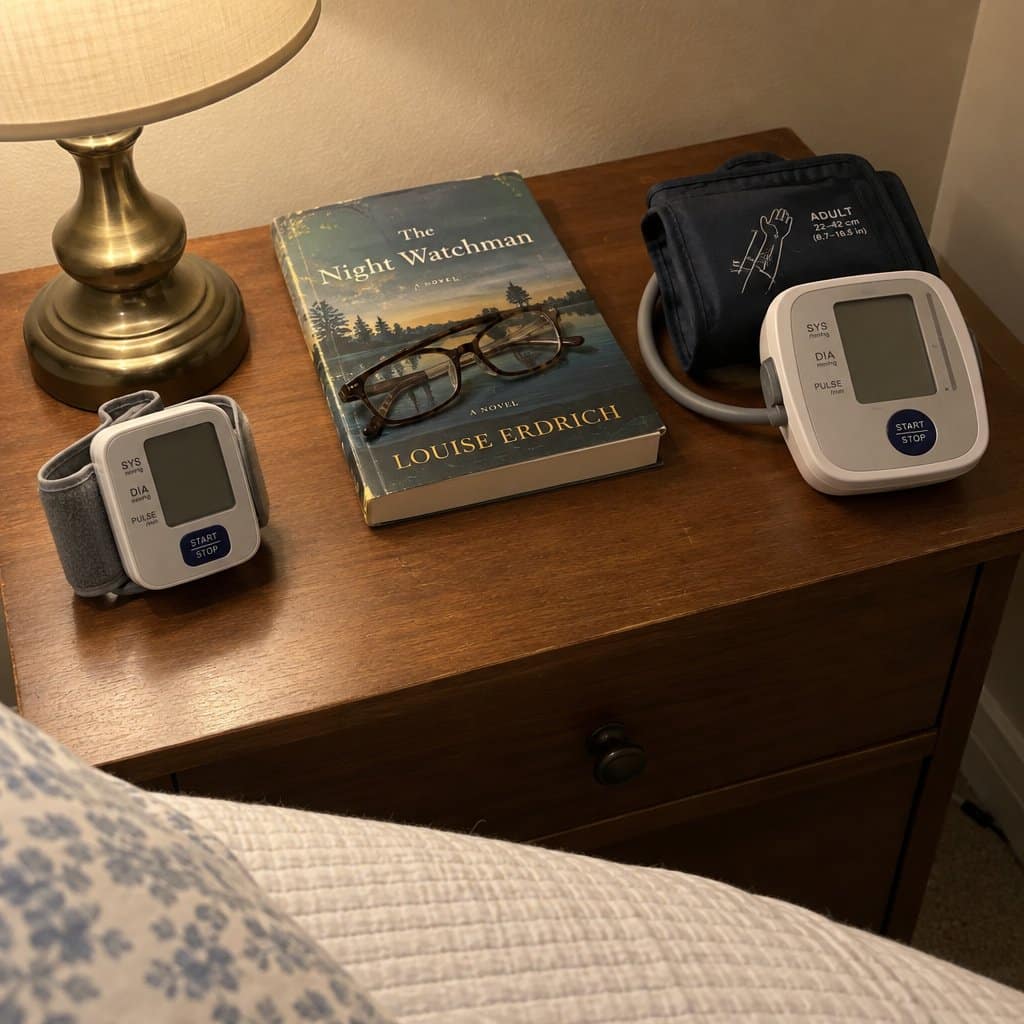
A wrist blood pressure monitor slips on exactly like a watch — no threading, no two-handed coordination, and almost no strength required. For anyone asking how to check blood pressure with arthritis or finding that a traditional arm cuff is consistently hard to put on alone, a wrist monitor is worth taking seriously.
The entire process becomes: slide it on, position your wrist, press the button. That’s it.


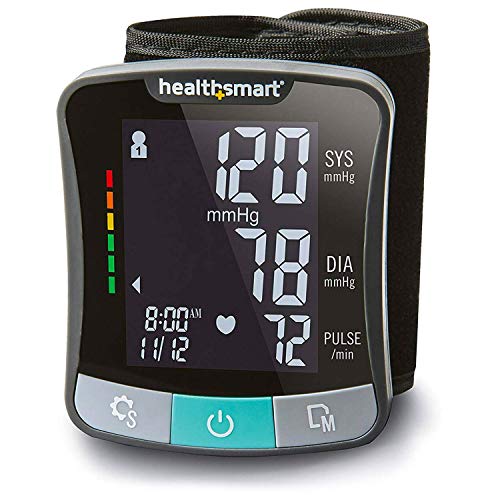


The One Accuracy Consideration You Need to Know
Wrist monitors are clinically accurate — with one important condition. Your wrist needs to be held at heart level during the reading. Readings taken with your wrist resting in your lap or hanging at your side will be meaningfully off.
This isn’t a dealbreaker, but it’s worth knowing before you choose. The fix is simple: rest your forearm on a firm surface at chest height, or hold your wrist deliberately at the right level before pressing the button.
Who Benefits Most From a Wrist Monitor
- People with larger arms where standard cuff sizing is consistently difficult
- Those with significant arthritis in one or both hands
- Anyone living alone who finds arm cuff wrapping consistently frustrating enough to skip readings
Who Should Stay With an Arm Monitor
- People with irregular heartbeats or known circulation issues in the wrist
- Those whose doctor has specifically recommended upper-arm readings
- Anyone whose healthcare provider has flagged a concern that makes wrist positioning consistently unreliable
The best blood pressure monitor is the one you actually use consistently. If a wrist monitor means you check your blood pressure every morning instead of putting it off, that’s a real and meaningful health outcome.
Managing health monitoring at home is part of the broader picture of staying safe and independent as an older adult living alone — and the right tools make that picture more achievable, not more complicated.
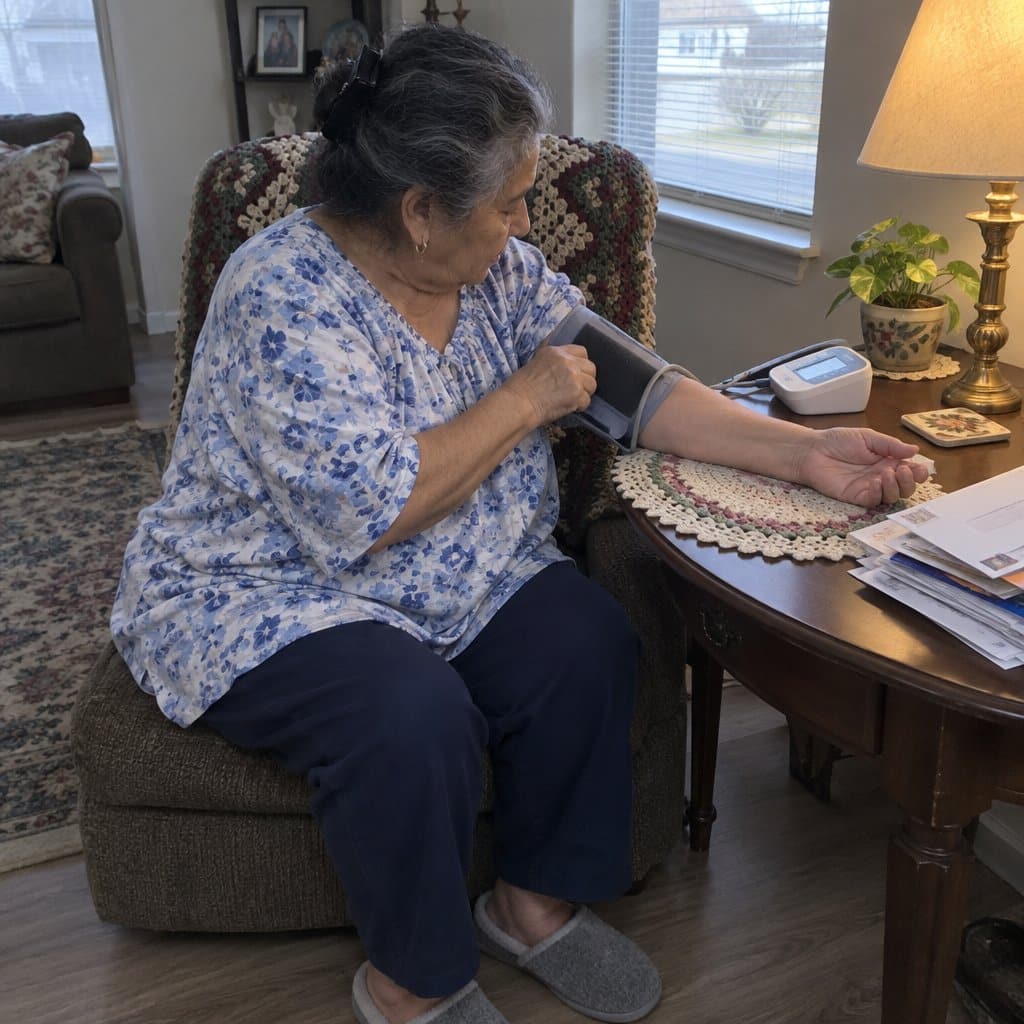
Building a Blood Pressure Monitoring Habit That Actually Sticks
Same Time, Same Chair, Every Day
Consistency in timing matters both for the accuracy of your readings and for making the habit feel automatic. Checking your blood pressure at the same time each morning — ideally before coffee or medication — removes the daily decision of “when should I do this.”
Once the timing is fixed, it stops feeling like a task and starts feeling like part of your morning.
Keep the Monitor Where You’ll See It
A monitor stored in a drawer is a monitor you’ll forget. One sitting on your kitchen counter or nightstand becomes part of your visual routine without any extra effort. Location is one of the simplest habit-formation tools available.
Track Your Readings Without Overcomplicating It
A small notebook next to your monitor — or a monitor with built-in memory — is all you need to notice patterns over time. You don’t need an app or a spreadsheet. Just a date and a number, written down while the reading is still on the screen.
That record becomes genuinely useful at doctor’s appointments, and it gives you a clear picture of your own trends over weeks and months.
Sit Quietly for Five Minutes Before You Read
This one step improves accuracy more than most people expect. Sitting quietly before taking a reading — not after rushing in from outside or immediately after a phone call — produces a calmer baseline and a more meaningful number. It also turns the process into a small, unhurried moment rather than a rushed medical chore.
For older adults managing arthritis alongside daily monitoring, the same principle applies to other daily tasks where the right tools make the difference. Kitchen utensils designed for arthritic hands follow the same logic: better design means the task gets done, and gets done comfortably.
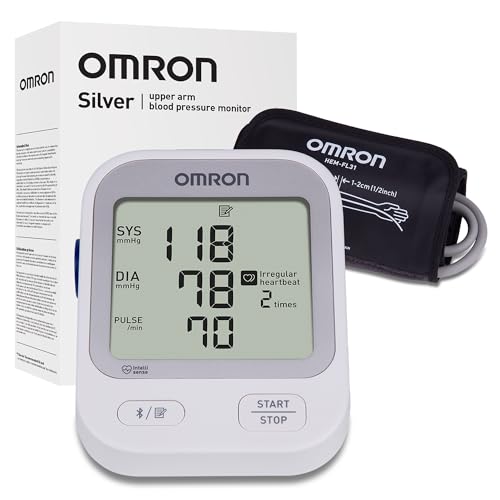
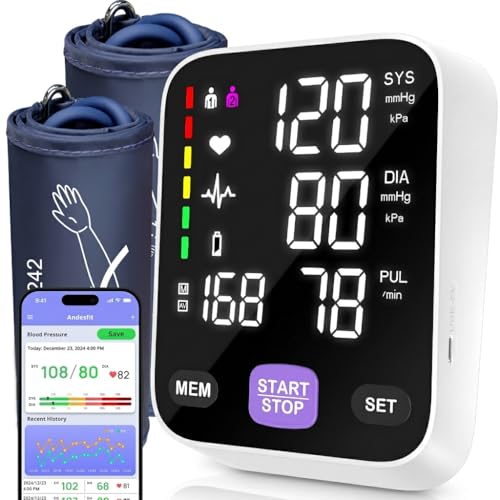
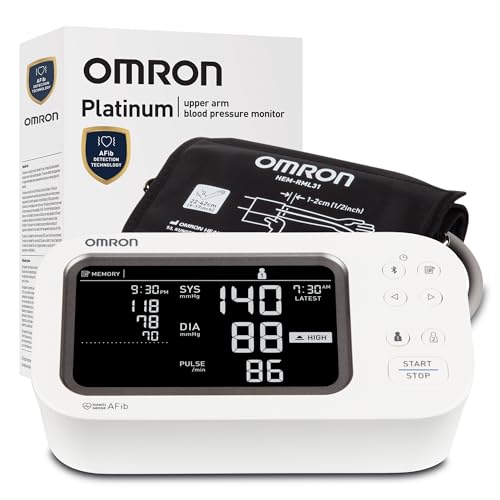
For arm monitors that combine easier application with built-in tracking and large, clear displays, it’s worth reviewing options in the upper-arm category specifically designed for older adults who want accuracy without the wrapping struggle.




Home Blood Pressure Monitoring Checklist for Arthritic Hands
Download this practical checklist to find the right blood pressure monitor for arthritic or weak hands—and master one-handed techniques that make checking your pressure simple enough to do every single day.
The Right Tool Changes Everything
Struggling to wrap a blood pressure cuff isn’t a sign of declining capability. It’s a sign that the wrong tool is being used for the job.
The right monitor — paired with a couple of simple techniques and a consistent routine — makes home blood pressure monitoring genuinely manageable, even with arthritis, limited hand strength, or one-handed use. And monitoring your blood pressure at home is one of the most empowering things you can do for your own health: staying informed about your own body, on your own terms, without needing anyone’s help.
Take an honest look at your current monitor. If wrapping it is the reason you skip readings, it’s worth exploring one of the options covered here. You deserve a tool that works with your hands — not one that makes you feel like the problem.
Have you found a technique or a specific monitor that’s made home blood pressure checking easier for you? Share it in the comments — your experience might be exactly what someone else needs to read today.
If you’re thinking more broadly about home safety and staying independent, these resources are worth a look: a comprehensive fall prevention checklist for older adults, along with a guide to the best bathroom safety products ranked by an industry expert. And if arthritis is affecting more than just your blood pressure monitor, an ergonomic computer mouse designed for arthritic hands is another small upgrade that makes a noticeable daily difference.