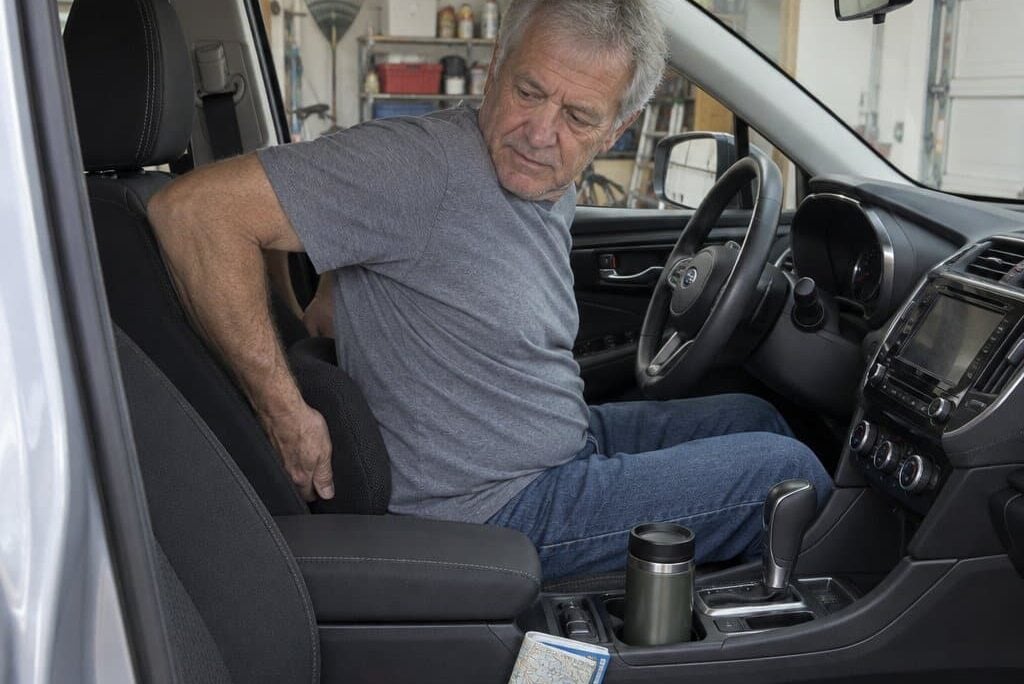
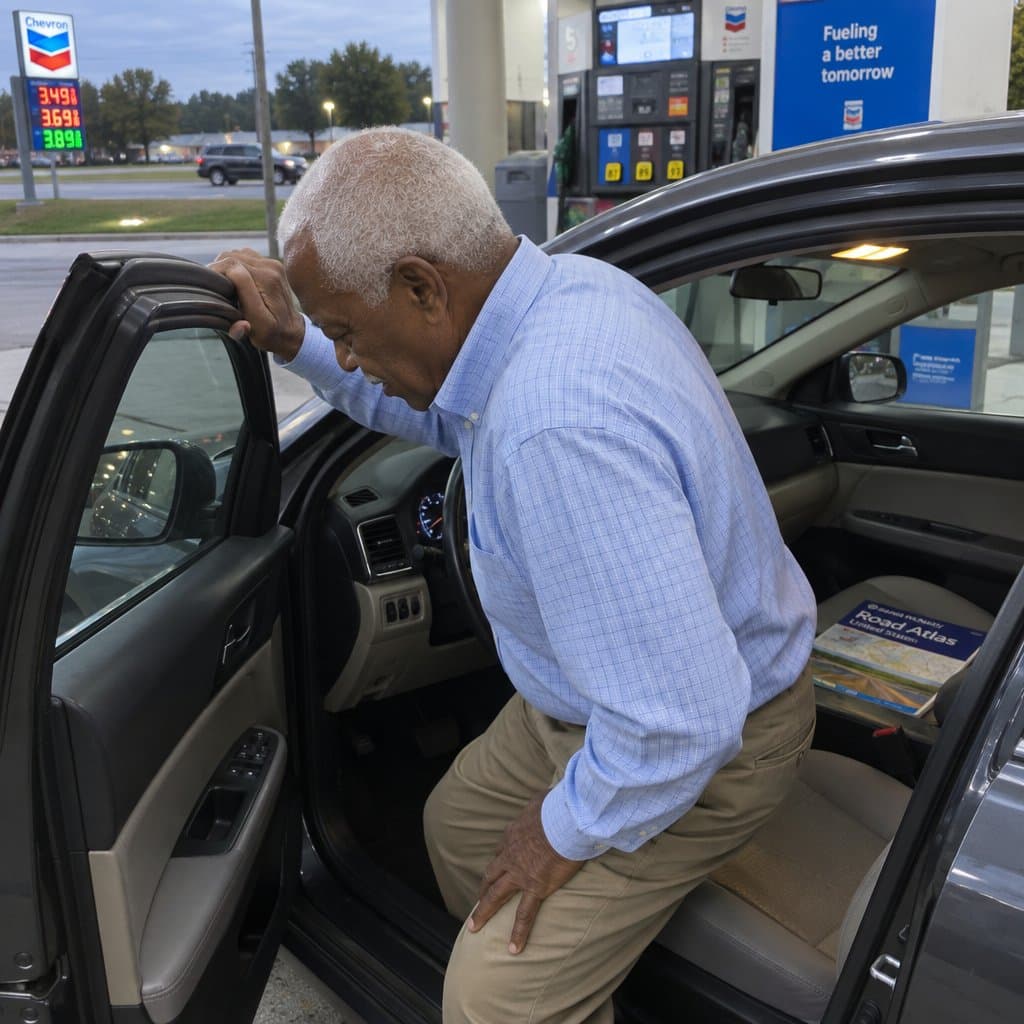
You’re two hours into a road trip you’ve been looking forward to for weeks. The scenery is good, the coffee’s still warm — and your lower back has already started complaining.
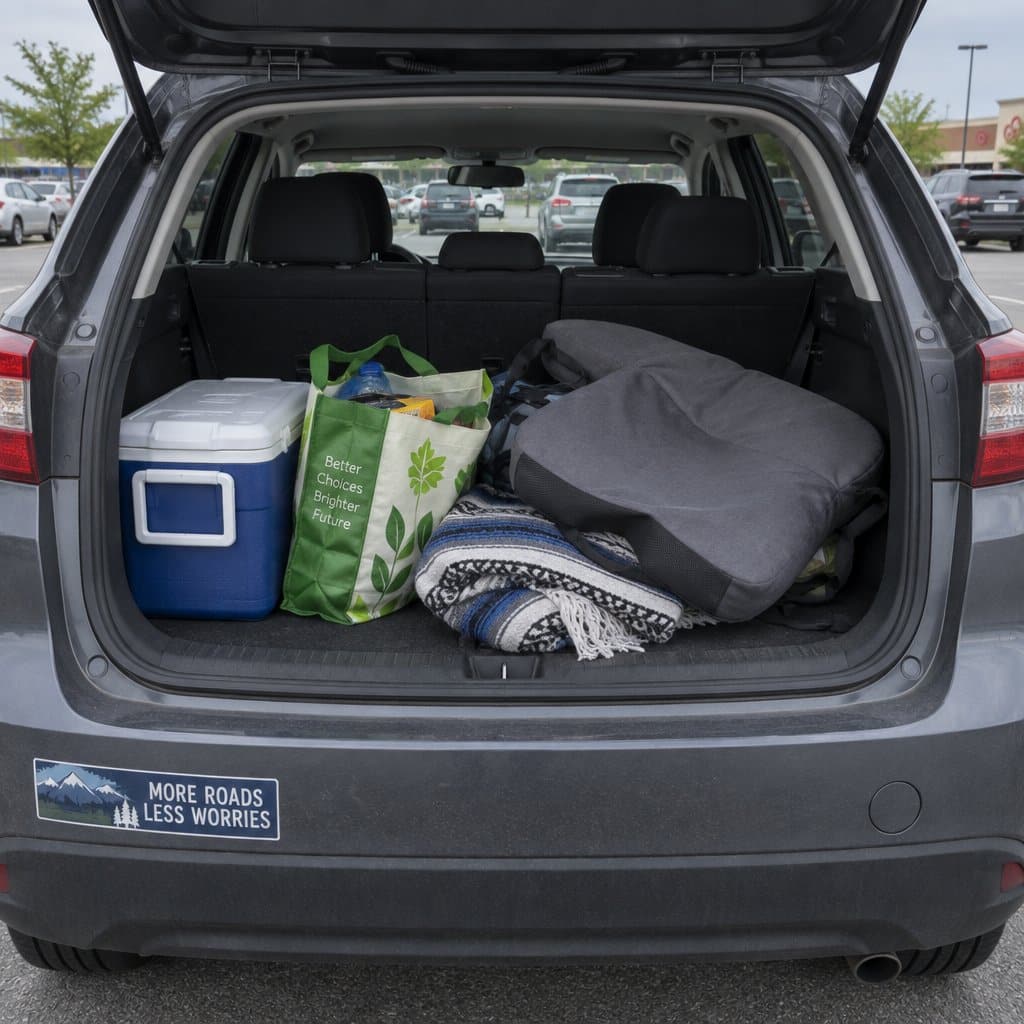
You reach behind you to reposition your lumbar pillow and realize it’s slid sideways again. You push it back, drive another 40 minutes, and reach back to find it’s migrated completely off the seat and is now somewhere behind your left shoulder.
For older adults who love road trips and long drives, back discomfort shouldn’t be the thing that cuts an adventure short — or makes driving feel like something to white-knuckle through.
This article cuts through the noise between one-piece L-shaped car seat cushions and the separate seat-pad-plus-lumbar-pillow setup, and gives you a straight answer on which type of seat cushion lumbar support actually holds its position across real driving conditions.
Car Seat Cushion Comparison Cheat Sheet for Long Drives
Download this free comparison cheat sheet to stop choosing the wrong car seat cushion—and finally understand why separate lumbar pillows slide out of position and which design actually stays put on long drives.
Why Long Drives Are Hard on Your Back — Even When You’re in Good Shape
Here’s something worth understanding before you spend money on any cushion: the problem isn’t your fitness level. It’s car seat geometry.
Most factory seats are designed for commutes, not sustained highway driving. They’re optimized for cost and average body proportions — not for the kind of hours-long driving you actually want to do in retirement.
What’s Physically Happening During a Long Drive
When you sit in a fixed position for extended periods, your lumbar discs compress gradually under load. Your hip flexors tighten. Road vibration compounds muscle fatigue faster than sitting still would — the constant micro-movements your muscles make to stabilize your spine add up over a 3-hour drive in ways they simply don’t on a couch.
Most production car seats offer minimal adjustable lumbar support, and what they do provide is rarely positioned correctly for older adults. The seat-to-back angle on a typical sedan also tends to push your pelvis into a posterior tilt, which flattens your lumbar curve and transfers load directly to the discs.
Why Hip and Lower Back Pain Often Travel Together
Hip pain sitting in a car for long periods and lower back pain while driving frequently share the same root cause: inadequate under-thigh support and a seat angle that closes the hip joint. When the angle between your torso and your thighs tightens, your pelvis rotates backward and your lumbar curve disappears. Both your hips and your lower back feel it.
This isn’t “your back giving out.” It’s sitting in a seat that was never optimized for the kind of driving you actually do. Once you understand what the seat is failing to provide, the difference between cushion types becomes much clearer.
The Two Main Options — And the Core Problem With One of Them
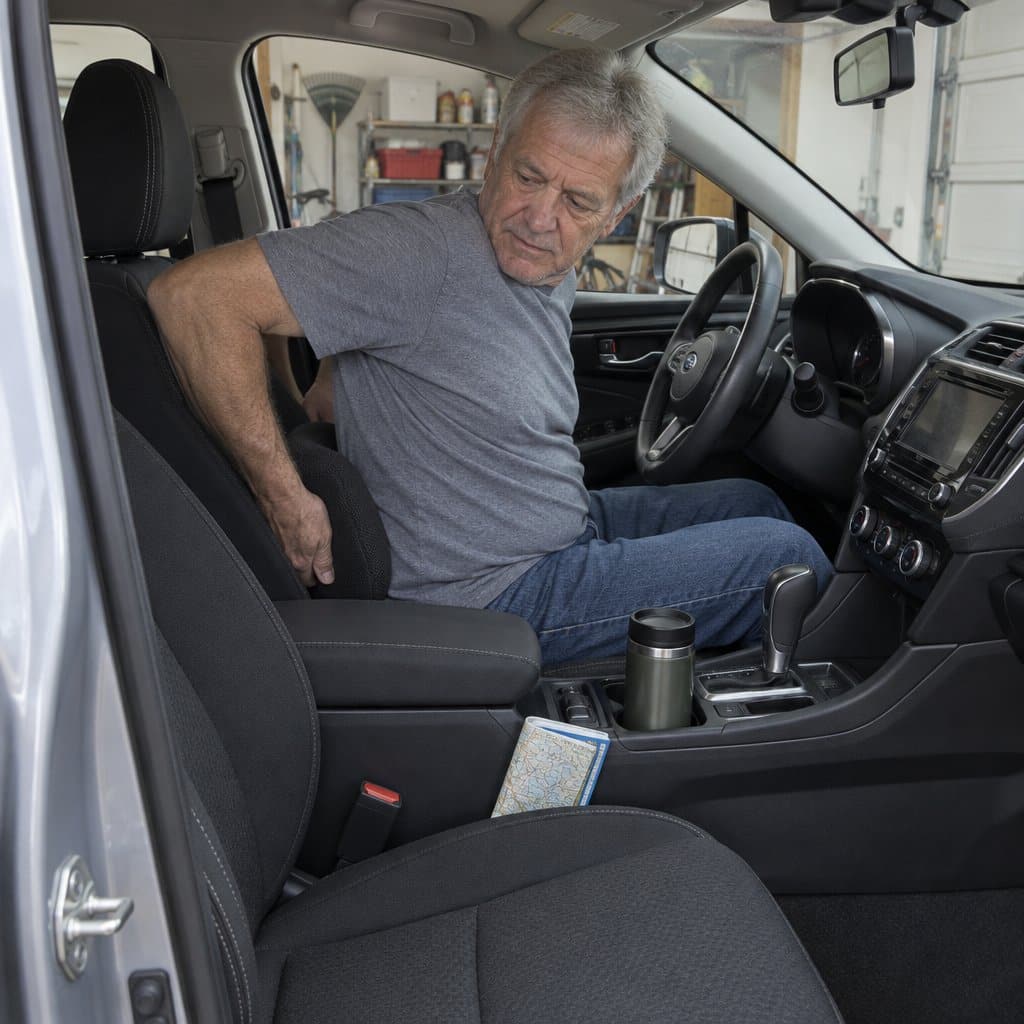
Separate seat cushions and lumbar pillows sound sensible in theory. In practice, they compete with each other for position — and neither one reliably stays put.
The Separate Setup: What Looks Good on Paper
The two-piece approach gives you a memory foam seat pad under your seat bones and a lumbar pillow strapped or tucked behind your lower back. The appeal is obvious: you can adjust each piece independently and customize the support for your body.
The real-world problem? Every time you shift your weight, brake hard, or reach for your coffee, one or both pieces moves. The lumbar pillow keeps sliding on the car seat — it’s one of the most consistent complaints you’ll find in reviews. “It ends up behind my shoulder by mile 50” is not an exaggeration.
Why the Sliding Problem Is Structural, Not Fixable With a Better Strap
Most separate lumbar pillows rely on a single strap looped around a headrest post. That strap prevents the pillow from falling forward — but it does almost nothing to prevent side-to-side drift or downward creep. Seat pads without serious non-slip backing migrate forward on leather and vinyl upholstery with the same frustrating consistency.
The physics of this are straightforward: your body doesn’t stay in one position during a long drive. You lean, turn, shift your weight on curves, and brace on decelerations. A two-piece system has twice as many surfaces that can move independently — and they will.
When a Separate Setup Actually Works
To be honest: for some people in certain car configurations, the two-piece approach is fine. If your car already has adjustable built-in lumbar support that positions correctly for you, and you just need extra cushioning under your seat bones, a pad-only solution may be exactly what you need.
If your primary issue is targeted lower-back support and you’re not dealing with seat cushioning problems, a standalone lumbar pillow positioned carefully against a supportive seat back can do the job — especially on shorter drives under 90 minutes.


For most older adults doing real road trips — two-plus hours, varied road conditions, solo driving — the one-piece design solves the problem the two-piece setup keeps creating.

What a One-Piece L-Shaped Cushion Actually Does Differently
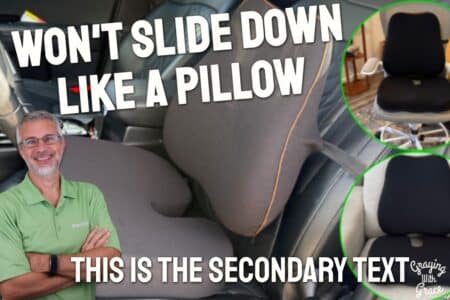
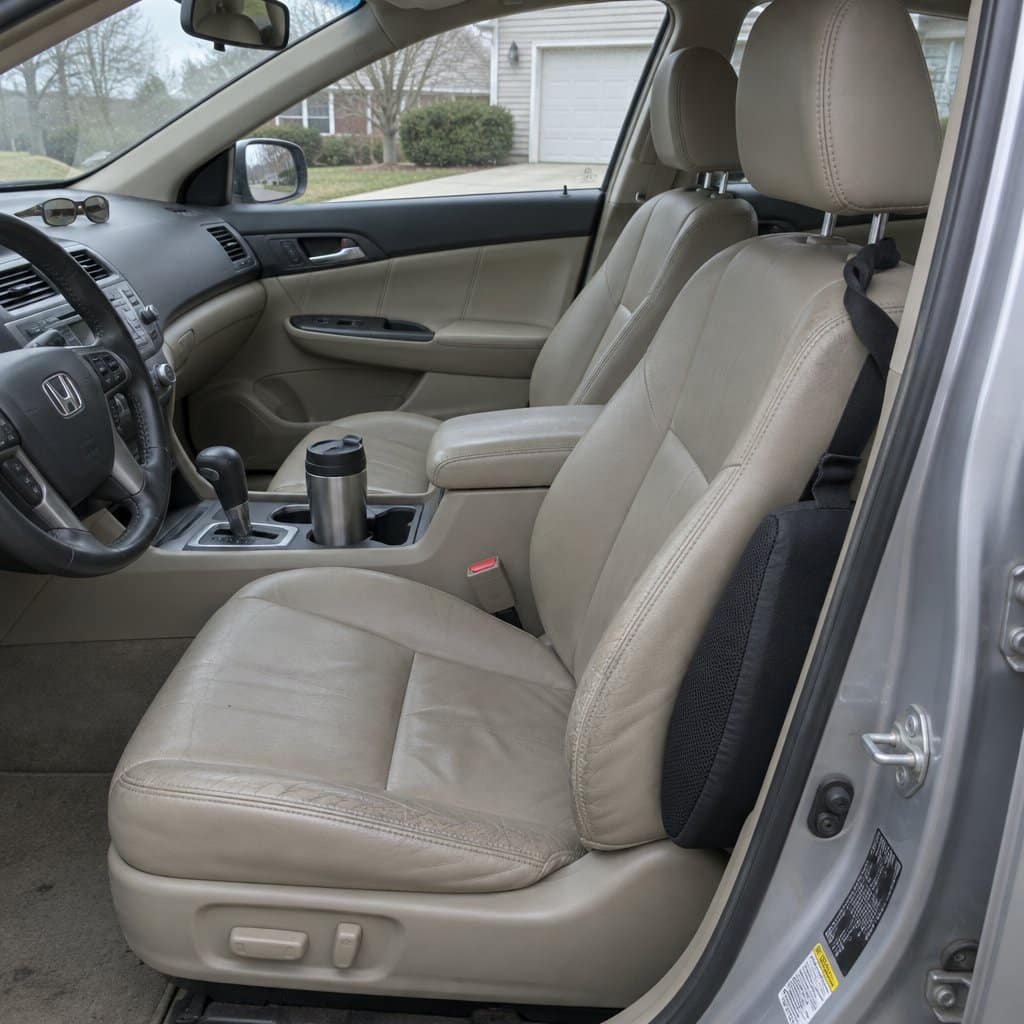
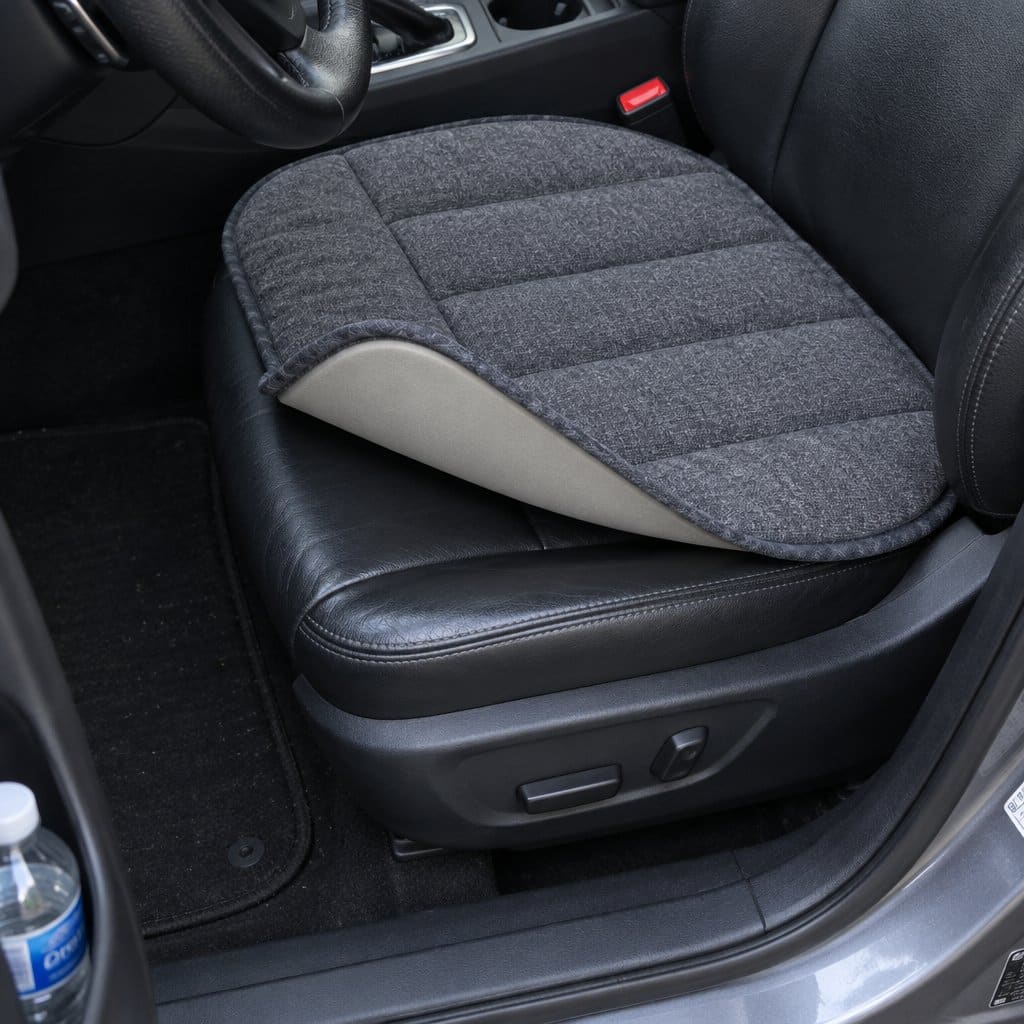
The L-shape isn’t a design gimmick. It’s a structural solution to the sliding problem, because the seat portion and the back support are a single connected unit that moves with you instead of around you.
How the L-Shape Works
The horizontal base sits under your seat bones. The vertical rise supports your lumbar region. Because they’re physically connected, neither portion can drift independently — when you shift right, the whole cushion shifts with you, then settles back into position. That’s the fundamental difference, and it’s why back support for road trips works meaningfully better with this format.
Non-Slip Backing: Functional vs. Decorative
The non-slip backing is the other half of the equation. On cloth seats, almost any textured backing provides enough grip. On leather and vinyl — which are genuinely harder surfaces for cushions to hold — you want ribbed or raised rubber backing, not smooth foam that relies on friction alone.
Before you order, check what the product listing actually shows for the backing material. “Non-slip” printed in the title doesn’t tell you whether it’s a thin foam layer or a serious rubber grid. The difference matters on a 4-hour highway drive with a leather seat.
Memory Foam vs. Higher-Density Foam for Long Drives
Memory foam contours to your body shape — which sounds like a clear win. The honest trade-off is that on long drives, memory foam can let you sink too deep over time, reducing the postural support you bought the cushion for in the first place. Higher-density foam holds its shape under sustained pressure better and keeps you positioned correctly for longer stretches.
The Seat Wedge Angle and Hip Relief
Many L-shaped cushions build a slight forward tilt into the seat portion. This wedge angle changes the geometry of how you sit: it tips your pelvis forward slightly, which restores the natural lumbar curve and opens the hip angle. That’s the mechanism behind reduced hip pain when sitting in a car for long periods — it’s not padding, it’s positioning.
What to Watch For Before You Buy
- Headroom: L-shaped cushions raise you 2–4 inches. In a sedan or coupe with limited ceiling clearance, that’s a real issue. Measure before ordering.
- Width: Many cushions are designed around average male proportions and feel narrow for broader frames or for users who sit wider.
- Vehicle type: SUVs and trucks generally give you more room to work with; lower-roofline cars may not accommodate a full-height cushion comfortably.

The Side-by-Side Comparison — Five Criteria That Actually Matter
Strip away the marketing language and five questions separate a cushion that helps from one that ends up in your trunk after two trips.
Ready to get more practical tips for staying comfortable and independent on the road and at home? Subscribe to our newsletter for expert-tested advice and gear recommendations designed specifically for older adults.
1. Does the Back Support Stay in Position on Its Own?
One-piece designs win here by design. Separate lumbar pillows require a functional strap system, a compatible seat back, and luck — and they still slide. This is the part most reviews skip over, but it’s the criterion that determines whether a product actually helps on hour three.
2. Does It Address Both the Seat and the Lumbar at the Same Time?
A seat cushion that stays in place is meaningless if your lower back still has no support. For back pain from long drives, you need both addressed simultaneously. The one-piece format is the only option that guarantees both are in the right position relative to each other throughout the drive.
3. Does the Non-Slip Backing Actually Work on Your Seat Material?
As noted above — leather and vinyl are genuinely harder surfaces. Look for ribbed or textured rubber backing. Run your hand across the bottom of any cushion you’re considering: if it feels like foam, it’s going to move.
4. Does It Fit Your Vehicle and Your Body?
Measure your seat depth from the seat back to the front edge before ordering. Check your headroom. A cushion that’s geometrically wrong for your car doesn’t matter how good the foam is.
5. Can You Install and Remove It Without a Struggle?
You’ll be taking this cushion in and out — for passengers, for other vehicles, for the occasional trip where you forget it in the house. The attachment system should be something you can manage in a parking lot without reading the instructions again.
If your primary issue is tailbone pressure rather than back support — if you feel like you’re sitting directly on the seat structure after an hour — a wedge cushion may address the root problem more directly than a full L-shaped setup.
Who Should Buy What — Matching the Cushion to Your Situation
There’s no single answer for every driver, but there is a clear answer for most older adults doing real road trips.
Go With the One-Piece L-Shaped Cushion If:
- You regularly drive 2-plus hours at a stretch, especially solo
- You’ve already tried a separate lumbar pillow and watched it slide out of position
- You experience both lower back pain and hip or tailbone discomfort during long drives
- You drive on varied road surfaces where vibration is a consistent factor
- You want a seat cushion that stays in place while driving without constant readjustment
A Separate Seat Cushion May Be Enough If:
- Your car has adjustable lumbar support that already positions correctly — you just need extra cushioning under your seat bones
- Your typical drives are under 90 minutes
- You share the car frequently and need a setup that’s easy to remove completely between drivers
A Wedge-Only Cushion May Be the Right Call If:
- Your primary complaint is tailbone pressure or hip flexor tightness rather than mid-back or lumbar pain
- You want something lightweight that moves easily between multiple vehicles
- Your car seat already provides good lumbar support and you just need the angle corrected
One Honest Limitation Worth Naming
No cushion replaces a rest stop. On drives over 3–4 hours, getting out and walking for 5 minutes every 90 minutes does more for your back than any product on this list. The cushion makes the driving portions more comfortable — it doesn’t eliminate the need to move.
If you’re planning longer road trips and want to think through the full picture of accessible, comfortable travel, the guide to stress-free vacations for seniors with limited mobility covers logistics beyond just the seat.

Car Seat Cushion Comparison Cheat Sheet for Long Drives
Download this free comparison cheat sheet to stop choosing the wrong car seat cushion—and finally understand why separate lumbar pillows slide out of position and which design actually stays put on long drives.
The Bottom Line
For most older adults who take real road trips, the one-piece L-shaped cushion solves the staying-in-place problem that consistently undermines the two-piece setup. It addresses seat comfort and lumbar support together, moves with you instead of independently, and doesn’t require you to reach behind your back every 40 minutes.
The caveats are real: check your headroom, check your seat depth, and verify the non-slip backing before you commit. A cushion that raises you into the ceiling or slides on your leather seat doesn’t help anyone.
But if you’ve been managing back discomfort on long drives by adjusting a wandering pillow and telling yourself it’s fine — it’s not fine, and it doesn’t have to be. The right seat cushion lumbar support is a straightforward fix that makes driving feel like the enjoyable part of the trip again, not something to get through.
You’ve put in the miles over the years. The next road trip should feel like one.
If you’re also thinking through where to take that next trip, or want to make sure your footwear is set up for wherever you’re walking once you arrive, those are good next reads. And if you’re dealing with hip or joint discomfort that extends beyond the car, the piece on adjustable beds and arthritic hip pain is worth your time.
What have you tried for back support on long drives? What’s worked, and what ended up in the back seat by mile 80? Share in the comments — practical road-trip experience from real drivers is always worth hearing.