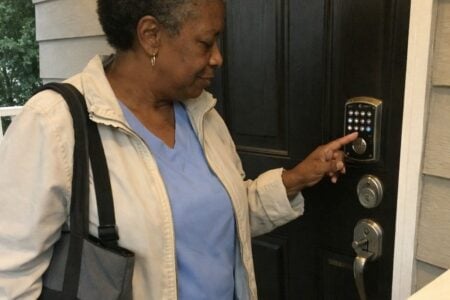
Blind cords and overhead reaching are two different hazards, and most guides blur them together.
This guide helps you match each window to the right fix, whether that’s cordless motorized blinds, a simple cordless blind, or a cord safety device.
One of those three costs under $15. You may not need to replace every blind.
Window Blind Safety Shopping Checklist
Download this free checklist to confidently choose the right window blinds for your home—eliminating safety hazards, measuring mistakes, and the frustration of returns by matching each window to the solution that actually fits your needs and abilities.
What to Look For in Cordless Motorized Blinds
Here are the checks that rule options in or out.
- Cord safety standard: In the US, the ANSI/WCMA A100.1 standard covers corded window covering safety. Blinds made after December 2018 for US sale must be cordless, have inaccessible cords, or use short cords. Many homes have older blinds, so check the manufacture date label or the head rail.
- Measure three times: Measure width and height at the top, middle and bottom. Use the narrowest width.
- Inside or outside mount: An inside mount needs roughly 1.5 to 2 inches of depth, so check the product page for the exact minimum. An outside mount needs about 2 to 3 inches of overlap per side for light and privacy.
- Operating force: Manufacturers rarely publish lift force. For arthritis or weak grip, look for terms like top-down/bottom-up, continuous lift or spring-assisted, and read reviews from people with limited grip.
- Height of reach: If you must lift your arms above shoulder height, step on a stool, or lean over furniture to work a blind, that window belongs in the motorized category, cord or no cord.
- Power for motorized: Choices are batteries (AA or rechargeable), solar panel, or hardwired. Most retrofit models run on batteries, so no wiring is needed. Manufacturers often quote 6 to 12 months or more per charge, but confirm for each product.
- Controls: Start with a physical remote with large buttons. Apps and voice control are optional extras.
- Fabric and light: Cellular (honeycomb) shades add insulation. Blackout suits bedrooms, and good lighting for reading and safety covers the rest. Heavier fabric needs a stronger motor, so check the maximum size the motor supports.
- Cleat height: Mount cleats and tension devices at least 60 inches (5 feet) above the floor.
- Approximate budgets: Cleats and winders run single dollars to low tens. Cordless blinds run roughly $20 to $150+ per window. Motorized runs from about $100 per window for a retrofit kit to several hundred for custom shades.
I haven’t handled the products below. My notes come from the manufacturers’ listed features and my 20+ years working with older adults and their families.
Cordless Blinds and Shades
These blinds remove the pull cord entirely, so there is nothing to dangle or tangle. They suit standard windows you can reach comfortably, with no remote, app or batteries.
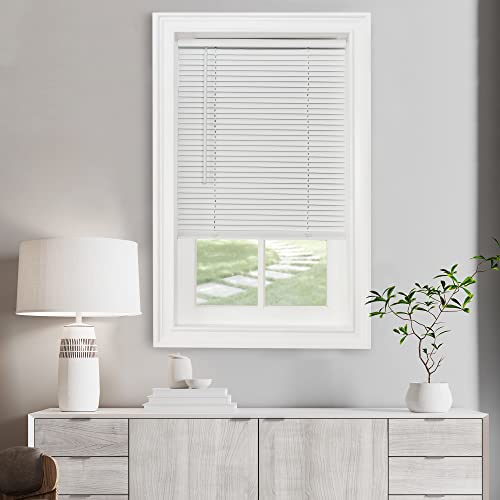


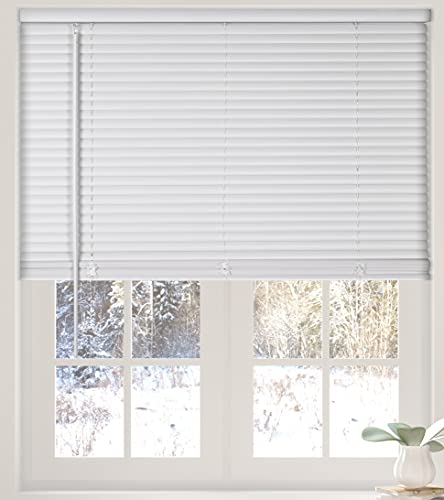
A cordless blind has no pull cord and no loop. You lift or lower it by the bottom rail or a handle.
That removes the cord completely, with no remote, app or batteries. It suits most living room, kitchen and bedroom windows where you can stand comfortably in front of the glass.
It’s the wrong choice for high or wide windows, or windows blocked by a sofa, bed, desk or sink. You still have to reach and lift.
For bedroom windows near beds and furniture, my fall prevention checklist shows what else to look at in that room.
ACHIM Cordless Light Filtering Mini Blind, 34 x 48 in
This is a stock-size, light-filtering mini blind, so it suits a standard window with no waiting on a custom order. It’s a budget way to remove the cord.
The catch is the size. If your window isn’t close to 34 x 48, you’ll need to trim it or pick another size, so measure first.
Maritown Cordless Clip-On Temporary Blind
The listing describes a no-drill, cut-to-size, self-adhesive blind. That makes it worth a look for rentals or anywhere you can’t make holes.
Because it’s described as temporary, I wouldn’t choose it for a window you open and close daily. Check how it holds before relying on it.
LOTUS & WINDOWARE 2″ Embossed Faux Wood Blind
This is a sturdier-looking option with 2-inch faux wood slats, in a 34.5 x 60 inch size. It suits a living area where you want a more finished look.
Wider slats and a longer drop mean more weight to lift. If your grip or shoulders are limited, check the lift reviews first.
Motorised and Remote Shades
Motorized shades solve the overhead reach and the lean across furniture by opening at the press of a button. They suit high, wide or blocked windows, and anyone with limited grip or shoulder movement.

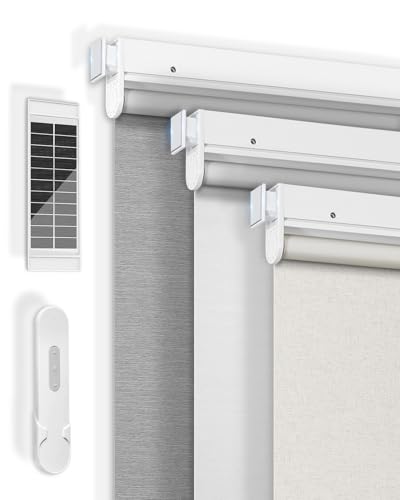


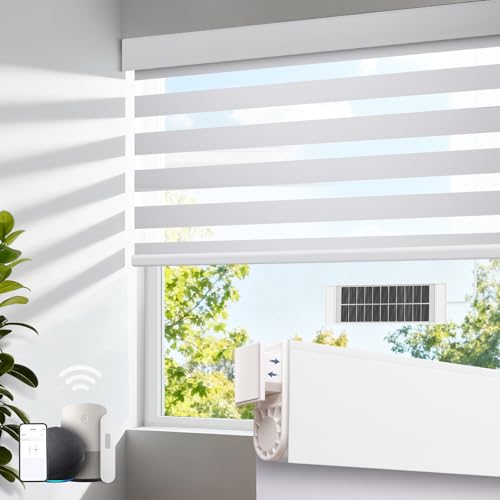
Motorized blinds use a small motor, run by remote, wall switch, app or voice. They suit high windows, wide windows, and any window where reaching or leaning is the hazard.
They also suit anyone with significant arthritis or shoulder limits, or who uses a wheelchair or walker. That’s practical, not a sign you can’t cope.
They’re the wrong choice for a small, easy-to-reach window, where a cordless blind costs far less. Rentals need battery, no-drill models.
If you’re a caregiver weighing which tech is worth it, start with my list of 16 must-have products for elderly people living alone.
LICHTDIM24 No-Drill Motorized Blinds with Remote
The listing describes a blackout roller shade with a remote and no drilling. That pairs well with a bedroom window you can’t easily reach.
Expect upkeep: a motor means batteries or charging, plus a remote that can be misplaced. Check the stated battery life and keep spares.
SwitchBot Blind Tilt Motorized Blinds
This is a retrofit motor for blinds you already own, which can save replacing them. It’s built around smart-home control, with app and voice options.
Check that it works with your blind type before buying. The app side is optional for some people, but it can be a hurdle if you prefer a simple remote.
Toperblinds No-Drill Electric Motorized Zebra Blinds
This is a full zebra shade in 34.5 x 72 inches, with no drilling. The longer drop suits a taller window.
It’s a complete shade, so it costs more than a retrofit. Zebra shades alternate sheer and solid bands, so check that privacy works for your room.
Blind Cord Safety Devices
Cleats and cord holders keep a corded blind’s cord up and out of reach until you can replace it. They are the fastest, lowest cost fix for blinds that have to stay for now.


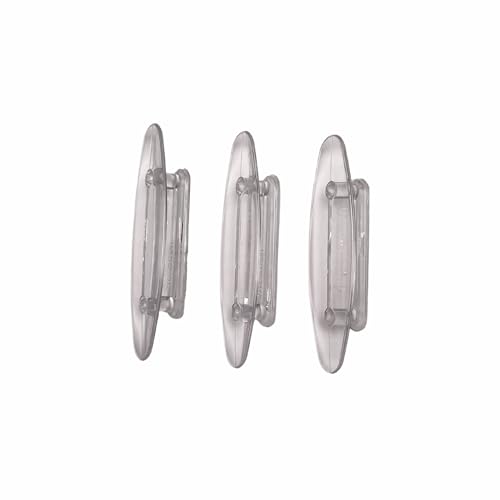


Cleats, tension devices and winders hold cords up and out of reach. They suit any corded blind that has to stay for now, such as in a rental or an expensive custom set.
Mount them at least 60 inches above the floor and wind the cord fully, so no loop hangs free.
They don’t fix a hard-to-reach window, since you still have to reach the blind. If a long loop can’t be fully secured, replace the blind.
Most cleats need screws. If you can’t drill or install them yourself, home repair help for seniors points to where assistance exists.
Cardinal Gates Window Blind Cord Holders, 3 Pack
A small pack suits a few windows, such as a living room and bedroom. Check the product page for how it mounts.
Like every cleat, it only works if you wrap the cord each time you use the blind.
Magicfour Zinc Alloy Blind Cord Cleat
The listing describes a metal (zinc alloy) cleat, which suggests a sturdier hold than plastic. It suits blinds you adjust often.
It’s a cleat, so it needs screwing into the wall or frame, and it controls the cord rather than removing it.
Jetec 12 Sets Blind Cord Cleats with Screws
This is a bulk pack of plastic cleats with screws, which suits a whole-house walkthrough on a small budget.
Plastic is less rugged than metal, and you still need to drill. Twelve sets is plenty for most homes.
Frequently Asked Questions
Are cordless blinds safe for older adults? They have no cord to tangle with and no pull mechanism. You still need to walk to the window.
Do motorized blinds need wiring? Many retrofit and battery models don’t. Hardwired models need an electrician.
How long do motorized blind batteries last? It varies by model, so check the manufacturer’s stated life and keep spares on hand.
Can you retrofit corded blinds to cordless? Sometimes, with manufacturer conversion kits for certain models. Otherwise, replace the blind or secure the cord.
Hacks and Advice
- Do the walkthrough first: Go room by room and note every window with an unsecured cord. It costs nothing and sets your priorities.
- Secure the cord today: Wind and cleat any cord you can’t replace yet, at least 60 inches off the floor.
- Start with bedrooms and living rooms: Beds, sofas and chairs sit near cords, and that’s where leaning and stretching happen most.
- Avoid the common mistake: Buying motorized for every window. Most windows only need cordless.
- Do an annual check: Test cleats for looseness, check remote batteries, and confirm the lift is still smooth. The same low-cost mindset works in the bathroom too, as in my guide to bathroom accessories for seniors.
Ready to discover more innovative strategies for healthy, comfortable aging? Subscribe to our newsletter for expert-tested tips and product recommendations designed specifically for older adults.
Window Blind Safety Shopping Checklist
Download this free checklist to confidently choose the right window blinds for your home—eliminating safety hazards, measuring mistakes, and the frustration of returns by matching each window to the solution that actually fits your needs and abilities.
Start With One Walkthrough
Here’s the three-way match. Cordless suits most windows, motorized suits the hard-to-reach ones, and cord safety devices suit blinds that are staying put.
Fixing the cord and fixing the reach are separate jobs. Cordless motorized blinds solve both, but you rarely need them everywhere.
My Home Safety and Independent Living Assessment can help you sort the windows. Better still, walk through every room today and note which windows still have unsecured cords. That costs nothing and shows you the highest-priority swaps before you buy anything.
Which window in your home do you reach for the most? Tell me in the comments.