You hand over a puzzle with real hope. Ten minutes later, the person you care for has pushed it aside, gone quiet, or started picking at the edge of the box.
Have you been there?
It stings. But in my experience, the problem is almost always the fit. It isn't you, and it isn't them.
Most of us shop by asking what will keep someone busy. The better question is what this person can finish and feel good about. The best puzzles and activities for someone with dementia are built to match what a person can do that day.
I filmed demos of several kinds so you can see what that looks like. One thing first: these are comforts and ways to spend time together, not treatments. Your doctor or care team should guide anything about safety or behavior.
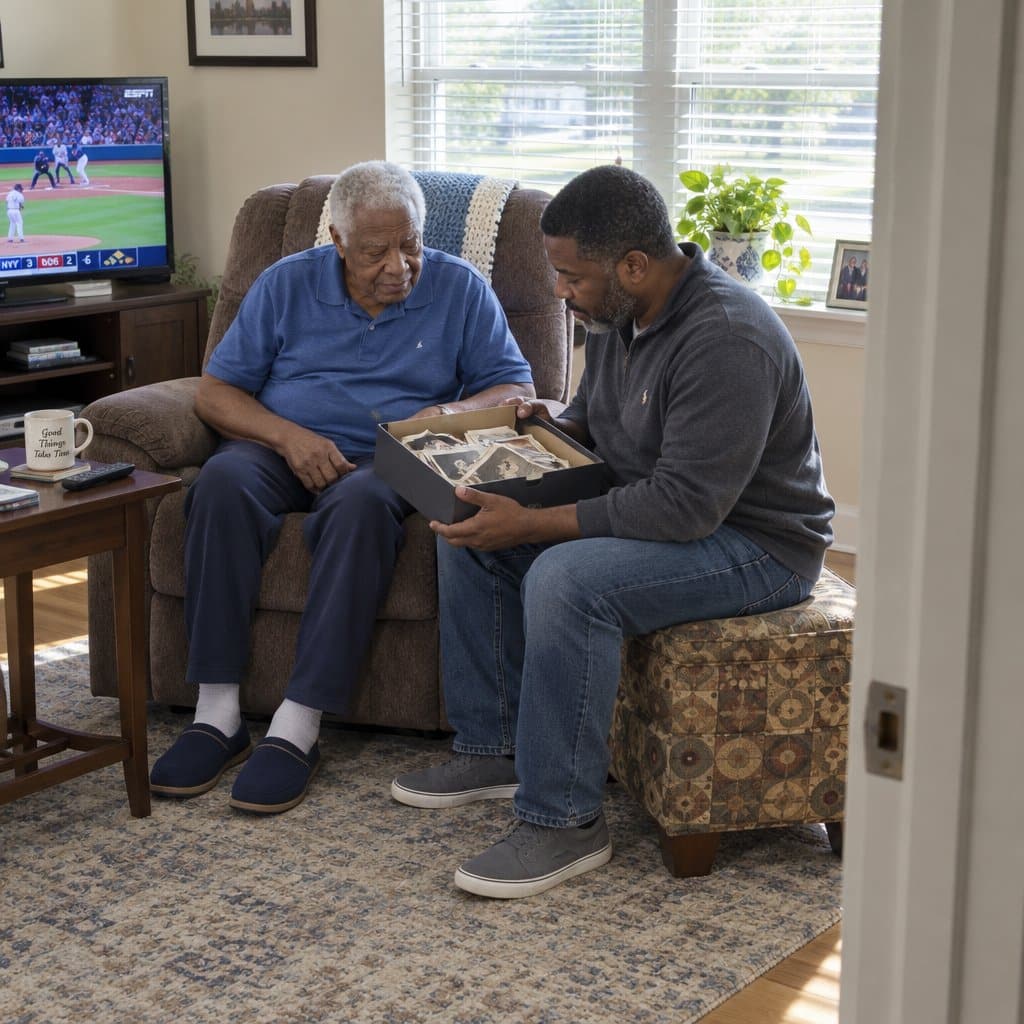
Dementia Activity Match Cheat Sheet
Four simple kinds of activity, matched to what your person can do today. No special training or supplies needed.
Why "Keeping Busy" Is the Wrong Goal
A puzzle that is too hard brings frustration. One that looks like a child's toy can bring embarrassment. A game with a right answer can feel like a test.
So I look for calm activities for someone with memory loss that end in a small win. Those are the memory loss activities that feel like success.
The Four Ways an Activity Is Built
If you've wondered what to do with a parent with dementia all day, start here. Each type asks something different of attention, hands, and mood:
- Fit together: jigsaw puzzles
- Match: tiles or cards
- Color or reveal: painting that needs no skill
- Hold: something soft and weighty, with no task at all
No single one suits every stage or every day. What works in the morning may fall flat after lunch. That's why I say buy small, keep a few kinds on hand, and expect to swap.
Dignity matters too. Look for puzzles that are not childish for adults with dementia, with artwork a grown adult would be happy to have on the table. Many of these also make a good anchor for time together, and I wrote about making visits more than TV time.
Do These Activities Actually Help?
They can make an afternoon calmer and give you something to share. I can't promise more than that, and I won't. If you're asking about memory or mood, that's a question for the care team.
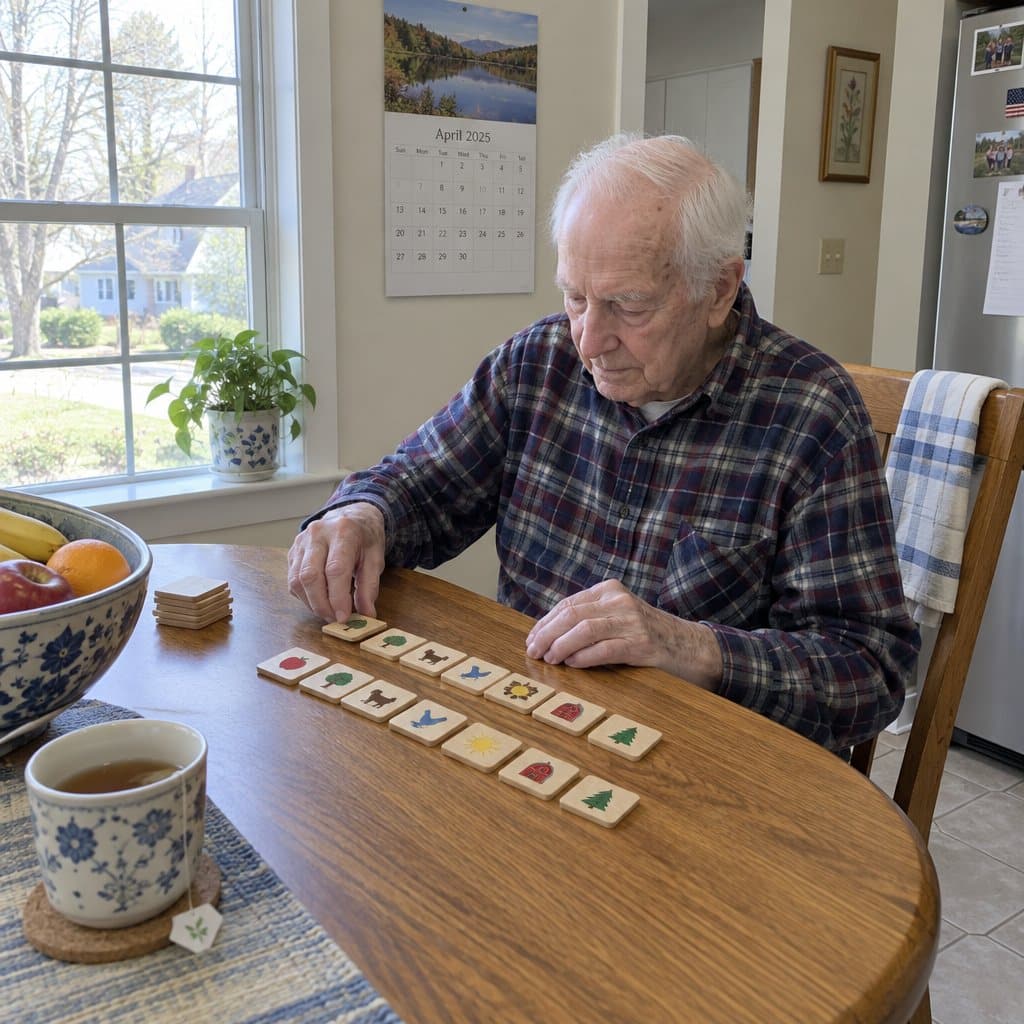
Large-Piece Jigsaw Puzzles: For Fitting Things Together


What I Saw in My Demos
I filmed four large-piece sets. Here's what stood out in each:
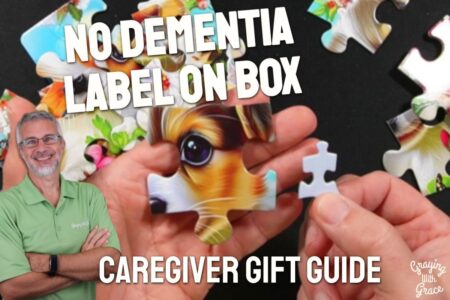
- snspolt 25-piece six-pack: Each piece is about 2¾ by 1¾ inches, with a thick edge that let me lift it off the table with one finger. Five of the six pictures are grown-up scenes like a lighthouse farm and a fall fruit basket, and the unicorn is the only one I'd call childish.
- Yigney 48-piece six-pack: The pieces are about 2¼ by 1½ inches of three-layer cardboard, and they held their shape even when I picked one up by a tab. The six pictures, from puppies to swans on a lake, have bright colors without tiny details, and each comes with a same-size picture to match pieces against.
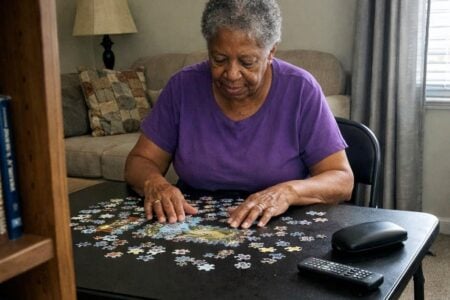
- snspolt 20-piece six-pack: These have the biggest pieces of the four, about 3 by 2½ inches, with a finish that slides easily on the table but isn't slick to pick up. The six bright pictures include puppies, cats, hummingbirds and a lake scene.
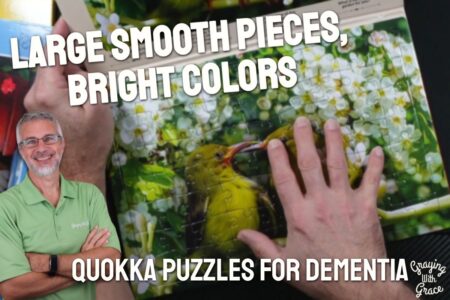
- QUOKKA three-puzzle set: Each puzzle comes in its own hard case with a magnetic closure, so you can work it right inside the case on a lap. The pictures are a watermill, a kitten and birds in a spring garden, and the birds were the hardest because so many pieces look alike.
Side by side, the 20-piece snspolt set has the biggest pieces and the fewest of them, so it's where I'd start for someone who tires quickly. The 25-piece and 48-piece sets both finish at about the size of a sheet of letter paper, and the QUOKKA set asks the most with its busier pictures.
You can read more in my snspolt 25-piece review and my QUOKKA review.
Who They Suit
Large-piece puzzles suit someone who still enjoys fitting things together and likes seeing a finished picture. The Yigney and snspolt multipacks make it easy to keep a few sizes on hand. For help picking a count, see how many puzzle pieces is right. For buying tips, read what to look for before you buy.
The Trade-Offs
- Even the right count can be too much on a hard day or too easy on a good one.
- Loose pieces get lost.
- If someone puts things in their mouth, stay with them. Pieces need supervision.
How to Introduce One
- Sit beside the person instead of across from them.
- Start with a few pieces already placed.
- Stop while it's still pleasant, even if the picture isn't done.
That's not a failure. It's information.
If you're shopping for large piece puzzles for someone who likes a finished picture, adult artwork and a few piece counts are what I'd look for first.


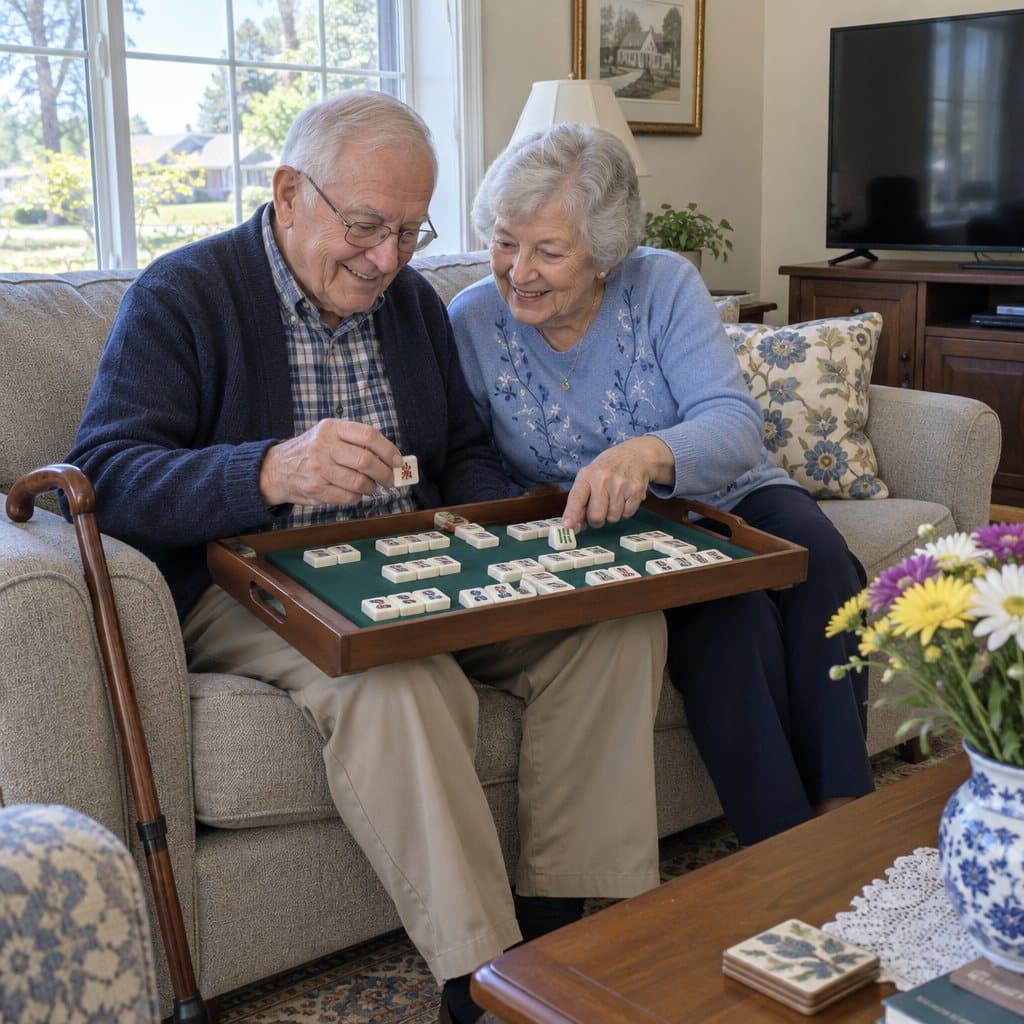
Water-Reveal Painting: For Color Without Pressure
The QUOKKA Water Painting kit is a good example of the type: a book of farm scenes you paint with plain water, with one brush included.
Why It Lowers the Pressure
There's no blank page and no wrong answer. You brush on water and color appears. Later the page dries and can be used again.
It's also a clean choice if you want dementia activities without mess, and it can give restless hands something gentle to do.
The Trade-Offs
- The result doesn't stay, so there's nothing to keep or show off.
- Someone needs to set it up and watch the water.
- Some adults may feel it's too much like a child's activity. Offer it as something to do together, and watch their reaction.
For someone who enjoys color and the motion of painting but not mess or getting it right, a water painting kit is a calm option to keep in the cupboard.

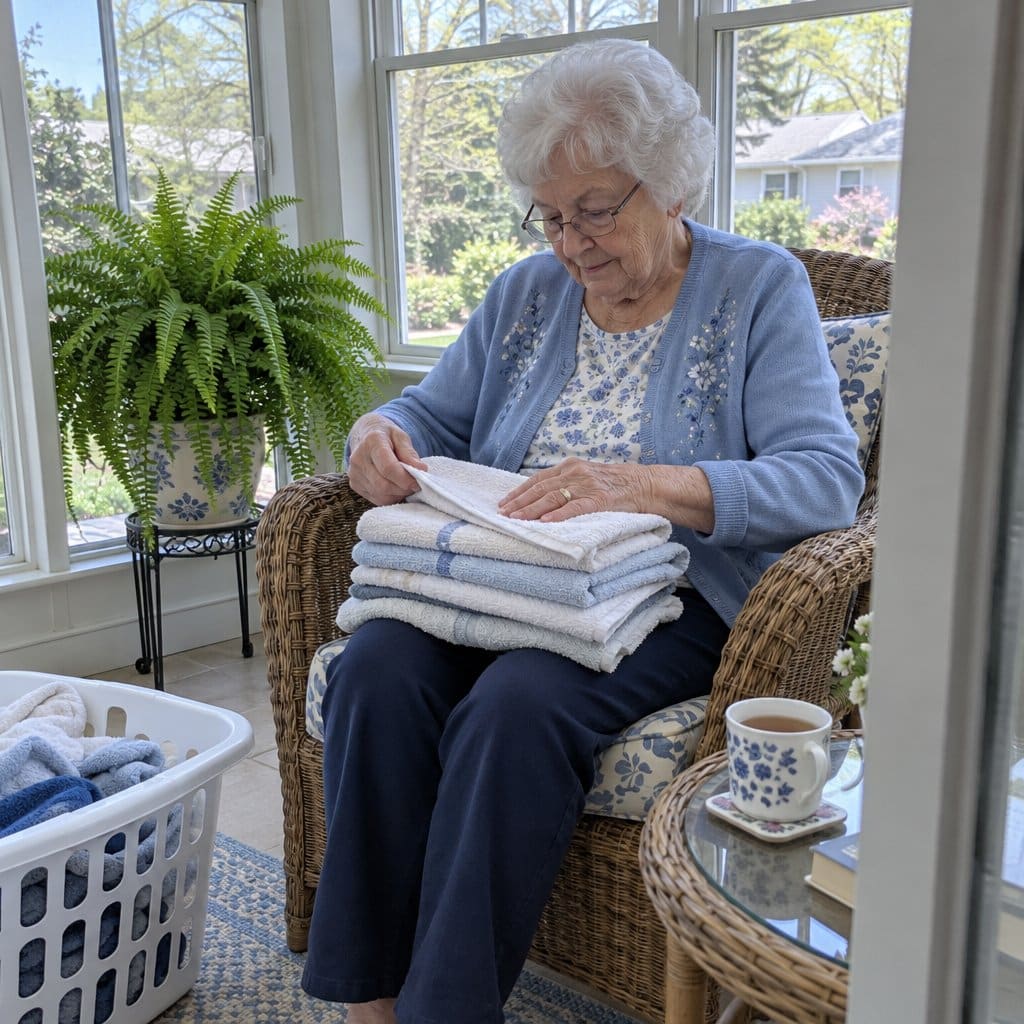
Sorting and Matching Games: For a Clear Goal
What I Saw in My Demo
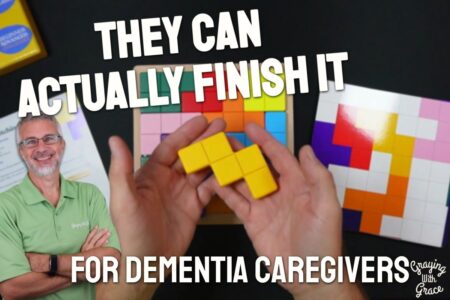
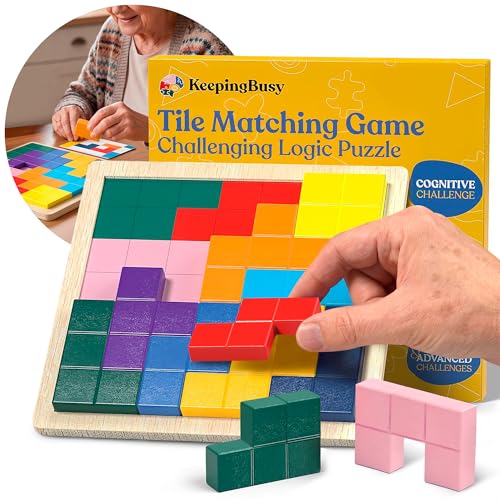
I filmed the Keeping Busy Tile Matching kit, and the tiles are solid painted wood, half an inch thick and easy to grip. They're shaped like the falling blocks from that '80s video game you're thinking of, and they fit an 8-inch board small enough for a wheelchair tray.
You set the difficulty with the template cards: a full card is simple matching, a partly filled card gives a few hints, and no card at all is the hardest. My full review has more.
Why a Clear Goal Helps
Some people like a task with a clear end. Matching gives them one. You can make it easier with fewer tiles, or harder by adding more.
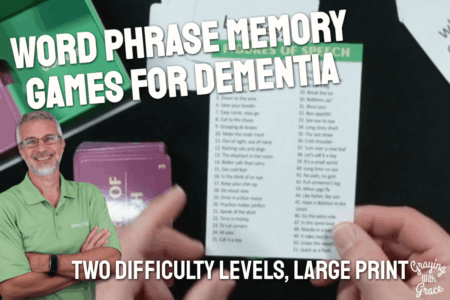
Some matching games use phrase cards instead of wooden tiles. They suit people who still read comfortably and know the sayings.
The Trade-Offs
- Right and wrong matches can feel like a test. Play along, keep it light, and stop before it becomes a struggle.
- Phrase cards depend on reading ability and familiarity with sayings, which may not hold at every stage.
Watch for sighing, pushing tiles away, or looking around the room. That's your sign to put it away and try again another day.
If you're looking for a tile matching game that lets you raise or lower the difficulty, it's a good one to keep on hand.

Weighted Comfort Plush: For Holding
What I Saw in My Demo
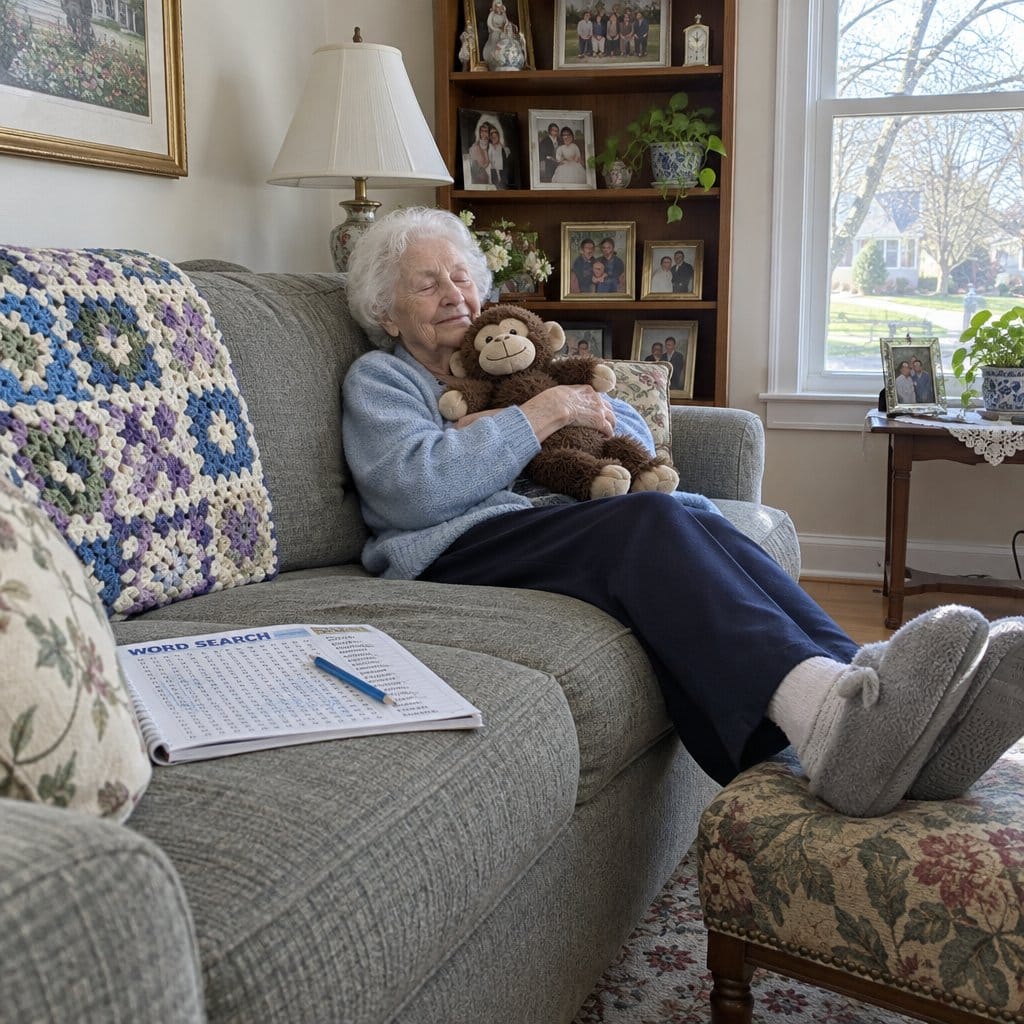
I filmed the Give Hugz Coco the Monkey Weighted Plush, and at 3.8 pounds you feel the weight the moment it rests against you, without it feeling heavy. The long arms end in weighted hands, so they drape over the shoulders and stay put.
They won't reach all the way around an adult, so think of it as a shoulder hug or something to hold in the lap. You can read my Coco review too.
Why It's the "Hold" Type
It asks nothing of attention or hands. For someone restless or anxious, a soft, heavy plush can be a comfort item for dementia anxiety, with no task to get wrong.
The Trade-Offs and Safety
- It's a comfort object, not an activity. It doesn't fill time.
- It's heavy, and it's heated in the microwave or chilled in the freezer. Follow the directions closely and check the temperature yourself before handing it over.
- Ask the doctor or care team whether weight on the lap or chest is right for this person.
- Watch for anyone who finds it frightening or confining, or who might mistake it for a real animal.
If someone is restless and might be soothed by holding something soft and heavy, a weighted plush is the type to look at.


Dementia Activity Match Cheat Sheet
Four simple kinds of activity, matched to what your person can do today. No special training or supplies needed.
Buy Small, Keep a Few, Swap Freely
So what can this person finish and feel good about today? Some days it's a puzzle. Some days it's a plush and a quiet hour.
There are four kinds of activity, and each has a limit. None works for every stage or every day. A hard afternoon isn't your fault.
You don't need the one perfect thing. A few small options on a shelf are enough. These puzzles and activities for someone with dementia are comforts and shared time, not treatments, and your care team can guide anything about safety or behavior.
If you're thinking about small pieces, heated items, or how your home is set up, my Home Safety and Independent Living Assessment is a good next step. And my free newsletter shares more practical caregiving ideas.
Which of these do you think would work best for your person? Share what's worked for you in the comments.