
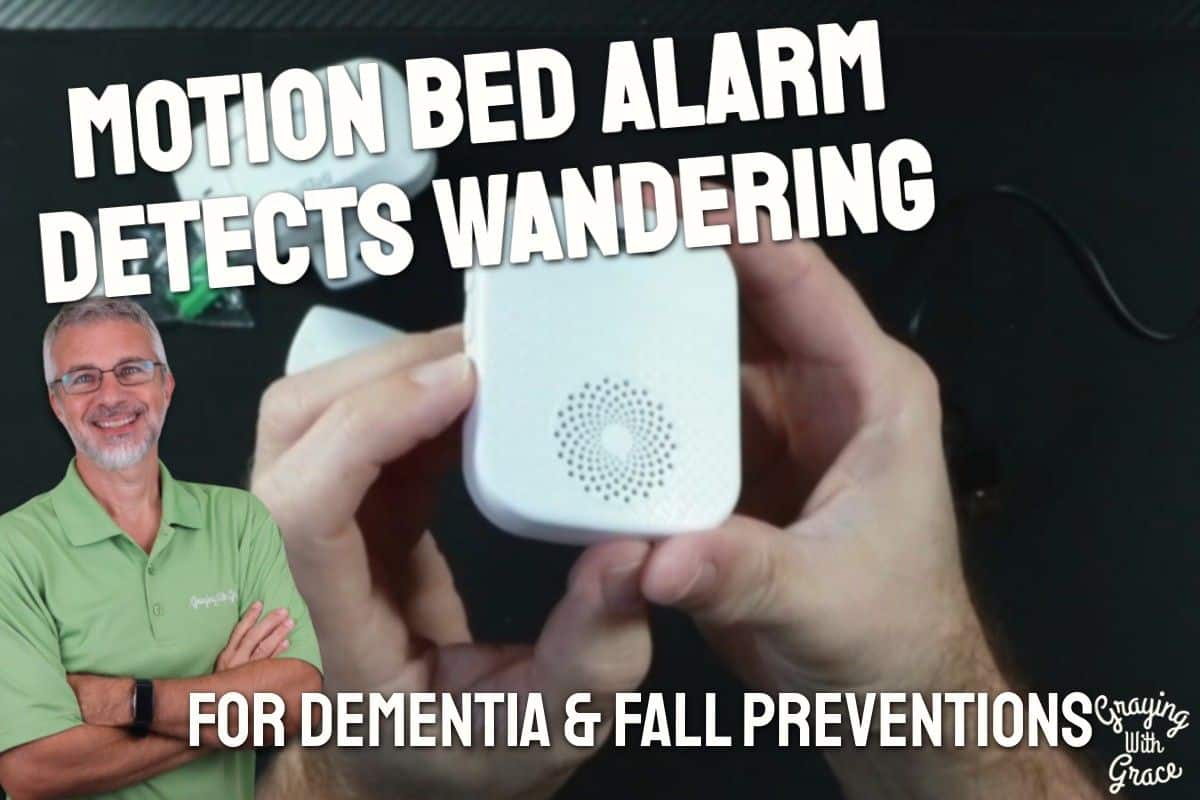
Falls are the leading cause of injury among adults 65 and older. And for caregivers watching over a loved one with dementia or limited mobility, the fear of a nighttime fall can feel paralyzing. You cannot be in two places at once, and you cannot stay awake forever.
That is the exact problem the CallToU Bed Alarm System is designed to solve. It is a wireless motion sensor and portable pager that alerts you the moment your loved one gets out of bed, giving you those critical seconds to respond before a fall happens.
As a Certified Senior Advisor (CSA) and Senior Home Safety Specialist (SHSS) at Graying With Grace, I personally evaluated this system hands-on and walked through the full setup and demo on video. In this review, I will cover how it works, who it helps most, what I liked, what gave me pause, and whether it is worth adding to your home safety plan.


Quick Takeaways
- Solves: Nighttime fall risk, wandering in dementia patients, caregiver exhaustion from constant bedside monitoring
- Benefits most: Family caregivers, overnight care staff, and households managing dementia or post-surgical recovery
- Worth the investment: Yes, especially compared to the ongoing cost of disposable bed mat replacements
- Best feature for older adults: Non-wearable design means no device resistance and no discomfort
- Biggest limitation: Each receiver pairs with one sensor by default, so monitoring multiple rooms requires purchasing additional units
How This Could Help You
Imagine this scenario. It is 2 a.m. and your mother, who has mid-stage dementia, gets up to use the bathroom. She does not turn on the light. The hallway is dark. You are asleep in the next room and have no idea she is up until you hear a thud.
That scenario plays out in households across the country every single night. And it is not because caregivers do not care. It is because no human being can stay vigilant every minute of every night without collapsing from exhaustion.
This is where the CallToU Bed Alarm steps in. The moment your loved one shifts their weight and begins to stand, the infrared sensor detects that intentional movement and sends an alert directly to the portable pager you are carrying. You have seconds to respond, which can mean the difference between a safe redirect and a trip to the emergency room.
Could this system give you back a full night of sleep? For many caregivers, the answer is yes. And that matters not just for you, but for the quality of care you are able to provide the next day.
For the older adult living in the home, this system offers something equally important: dignity. There is no wearable device strapped to their wrist. No sensor pad they can feel beneath them. They simply go to bed and live their normal routine, with safety infrastructure quietly working in the background.
Important Details You Should Know
The CallToU system has two main components: a compact infrared motion sensor and a portable pager receiver. Both are lightweight and unobtrusive. The sensor is small enough to mount on a wall, sit on a shelf, or attach to a surface using the included double-sided foam tape or screws.
The pager receiver is about the size of a small walkie-talkie. It has a belt clip, so you can keep it on your person throughout the day and night without fumbling to find it when an alert comes through. It charges via a standard USB-C cable, which is included in the box.
The sensor runs on three AAA batteries, which are also included. Build quality feels solid and practical, nothing flashy, but clearly designed for real caregiving environments rather than a tech showroom. The adjustable mounting bracket gives you enough flexibility to angle the sensor exactly where you need it, which turns out to be more important than it sounds.
Getting Started
When you open the box, you will find the motion sensor, the pager receiver, a USB-C charging cable, a mounting bracket, wall anchors and screws, double-sided foam tape, and the AAA batteries for the sensor.
As I demonstrated in the video, setup takes only a few minutes. You install the batteries in the back of the motion sensor, snap it onto the adjustable mounting bracket, and position it about one to three feet from the edge of the bed. Then you charge the pager, power it on by holding the button until the light activates, and adjust your volume and alert preferences.
No professional installation is needed. No wiring. No apps to download. If you can replace a battery and press a button, you can get this system running. The double-sided tape option is particularly helpful if you want a clean setup without putting holes in the wall.
One thing worth knowing: you will want to spend a few minutes testing placement before you rely on it. I will cover that more in the real-life experience section below.
Ready to discover more innovative strategies for healthy, comfortable aging? Subscribe to our newsletter for expert-tested tips and product recommendations designed specifically for older adults.
Features That Matter to You
Smart Motion Detection That Ignores Restless Sleep
The biggest frustration with traditional bed pad alarms is false alarms. Every time your loved one rolls over or shifts their legs, the alarm sounds. You jump up, rush in, and find them perfectly fine. Do that enough times and you stop responding as quickly, which defeats the whole purpose.
The CallToU sensor uses 360-degree infrared detection designed to distinguish between the gentle movements of restless sleep and the intentional, weight-shifting motion of someone actually getting up. When I evaluated this product, I noticed that slow, gentle movements did not trigger the alarm, but the upward momentum of standing did. That is exactly the behavior you want from a bed alarm.
Vibration-Only Mode for Nighttime Use
This feature alone may be worth the purchase for overnight caregivers. You can set the pager to vibrate silently on your nightstand or on your body, alerting only you without waking your loved one or disturbing the rest of the household. Five volume levels mean you can also dial in exactly how loud you need the audible alert to be during daytime hours.
18 Ringtones to Choose From
You might wonder why ringtones matter. Here is why: some sounds are easier to wake up to than others, and some alert tones are less startling or alarming to a person with dementia if they happen to hear it. Having 18 options gives you room to find what works best for your specific situation.
Portable Pager That Goes Where You Go
Most bed alarm systems alert only at the bedside unit, which means you have to stay nearby to hear it. The CallToU pager clips to your belt or sits in your pocket, so you can do laundry, prepare meals, shower, or work in another room without abandoning your monitoring responsibility.
Lifetime Warranty
CallToU backs this product with a lifetime warranty. That kind of commitment from a manufacturer signals genuine confidence in the product and provides real peace of mind that you are not throwing money at a disposable solution.
Real-Life Experience
When I evaluated this product, I noticed something important about sensor placement: getting it right takes a small amount of trial and adjustment, but it is absolutely worth doing. In the video, you can see that when I placed the sensor too close to where I was sitting, it triggered on even minor movements. Once I moved it back about three feet, it picked up the clear, intentional motion of standing but ignored smaller adjustments.
As I demonstrated in the video, you have real flexibility in how you position the sensor. You can aim it directly at the bed exit area, or you can point it toward the doorway so it captures your loved one when they are actually walking away from the bed rather than just shifting position. Some caregivers will find that doorway placement reduces false alarms significantly, especially for loved ones who are very restless sleepers.
In the video, you can see that once the sensor triggers, the pager continues alerting until you manually press the off button. That is actually a smart design choice. It ensures you did not miss the alert in a groggy state at 3 a.m.
Battery maintenance on the sensor is genuinely simple. As I demonstrated in the video, swapping out the three AAA batteries takes about thirty seconds. You can buy those batteries anywhere, and with a typical lifespan of six to twelve months depending on how frequently the alarm activates, this is not a burden. Setting a reminder to check batteries every six months is a good habit.
The pager holds its charge well and recharges quickly via the included USB-C cable. The belt clip keeps it secure whether you are moving around the house or sleeping with it on your nightstand. It is light enough that clipping it to pajama pocket or placing it under a pillow is a realistic option for very deep sleepers.
Always consult with your doctor or occupational therapist before making health-related product decisions, particularly if you are setting this up for someone with advanced dementia, significant fall history, or other complex medical needs.
Will You Be Able to Use It?
For the caregiver setting this up, you need basic comfort with installing batteries, pressing buttons to cycle through settings, and positioning a small device on a wall or surface. There is no app, no Wi-Fi pairing, no account to create. If technology has been a barrier with other products, this one is likely approachable.
For the older adult being monitored, there is nothing to do at all. No button to press, no device to wear, no routine to change. That is one of the strongest arguments for this system over wearable alert devices, particularly when dementia is involved.
If you have limited dexterity, the button operation on the pager is simple but does require holding the power button down for a couple of seconds to power on. Volume and ringtone cycling requires pressing side buttons. These are not difficult tasks, but worth knowing if fine motor control is a concern.
Important Considerations
This system is designed specifically to detect bed exit movement. It is not a comprehensive fall prevention system. If your loved one is at risk of falling while already standing or walking, this alarm will alert you to the fact they are up, but it cannot prevent a fall that happens mid-stride down the hallway. Pairing this with other fall prevention strategies, such as non-slip flooring, motion-activated nightlights, and grab bars, is the smarter approach.
The system relies on wireless signal between the sensor and pager. In very large homes or homes with thick concrete or metal walls, the signal range may be reduced. Scott specifically notes in the video that the manufacturer lists a range of up to 500 feet, but real-world range depends on your home’s layout and construction. Always test the full range of your home before relying on it overnight.
If you need to monitor more than one room simultaneously, each sensor pairs with one receiver by default. Monitoring two bedrooms means purchasing additional units. The system is expandable and can support up to 30 sensors pairing with a single receiver according to information shared in my video walkthrough, but that does require additional hardware investment.
This product is not a substitute for professional medical monitoring. If your loved one has a serious fall risk, wandering behaviors that put them in danger outside the home, or complex care needs, please work with a healthcare provider or home safety professional to build a comprehensive plan.
Help When You Need It
CallToU offers a lifetime warranty on this product, which covers defects and failures. For warranty service, you can reach the manufacturer through Amazon. Customer feedback consistently highlights positive experiences with their support team, which adds to the overall confidence in this purchase.
Replacement AAA batteries for the sensor are available everywhere and cost almost nothing. The USB-C charging cable is a standard format, so if you misplace the included cable, any USB-C cable will work. The sensor and pager are both durable enough for daily caregiving environments.
Understanding the Cost
Traditional disposable bed pad alarms need to be replaced regularly, whether because they wear out, become soiled, or simply stop working. Over a year or two, that replacement cost adds up in ways that are easy to overlook until you do the math.
The CallToU system uses a reusable sensor with replaceable AAA batteries. The pager recharges on USB-C. There is no recurring purchase required beyond a few dollars in batteries every six to twelve months. For a household managing long-term caregiving, that is a meaningful difference in total cost of ownership.
Beyond direct cost, there is the value of reduced caregiver exhaustion. A system that allows you to sleep, move freely through your home, and respond only when truly needed rather than jumping at every rustle is worth more than its price tag suggests. Caregiver burnout is real and costly in its own right.
Making It Work for You
Spend fifteen to twenty minutes testing sensor placement before committing to a permanent position. Try triggering it yourself by mimicking the motion your loved one uses to get out of bed, then try rolling over and adjusting without standing to confirm the sensor does not false-trigger. That small investment of time upfront will save you a lot of frustration later.
Use vibration-only mode at night and save the audible settings for daytime hours when you are farther from the room and need a louder alert. This single adjustment improves sleep quality for everyone in the household.
If the small indicator light on the sensor is visible to your loved one and you are worried it might signal to them that they are being monitored, a small piece of black electrical tape over the light solves the problem instantly. I mentioned this tip in the video and it is one of those simple, practical details that makes a real difference.
Pair this system with good nighttime lighting. Motion-activated nightlights along the path from the bedroom to the bathroom give your loved one a safer route to navigate in those seconds before you arrive. The alarm gives you the alert; the environment gives them the safety infrastructure while you are on your way.
Set a recurring calendar reminder every six months to check and replace the sensor batteries. Do not wait for the battery to die and the system to fail at 2 a.m.
Our Recommendation
The CallToU Bed Alarm System earns a strong recommendation from me for families and caregivers managing fall risk or wandering behaviors in older adults at home.
It is particularly well-suited for households where dementia is a factor, because the non-wearable design eliminates the device resistance that makes so many wearable solutions impractical. It is also an excellent choice for caregivers who are managing overnight monitoring on their own and desperately need the ability to sleep without abandoning safety.
The combination of smart infrared detection, portable alert delivery, silent vibration mode, and lifetime warranty makes this one of the more thoughtfully designed bed alarm solutions I have evaluated.
Where might you look elsewhere? If you need simultaneous multi-room coverage without purchasing additional units, or if your home is very large and wireless range is a concern, you will want to test carefully or explore systems with stronger range specifications. If your loved one’s fall risk extends beyond bed exit, this should be one layer of a broader safety plan rather than the only safeguard.
Where to Get It
The CallToU Bed Alarm System is available on Amazon. Use the button in the review box above to check current pricing and availability. Pricing can change, and Amazon occasionally offers promotions, so checking directly gives you the most accurate information.
Conclusion
Nighttime fall risk and wandering are two of the most stressful challenges in home caregiving. The CallToU Bed Alarm System directly addresses both with a solution that respects your loved one’s dignity, gives you the freedom to sleep and move through your home, and provides those critical seconds of early warning that can prevent a life-altering injury.
If you are currently white-knuckling your way through every night, straining to hear every movement from the next room, this system is worth your serious consideration. Take a look at the current pricing using the link above and see if it fits your situation.
Have questions about whether this system would work in your specific home setup? Or have you already tried a bed alarm system and want to share what worked or did not work for you? Leave a comment below. Your experience could be exactly what another caregiver needs to read today.


