
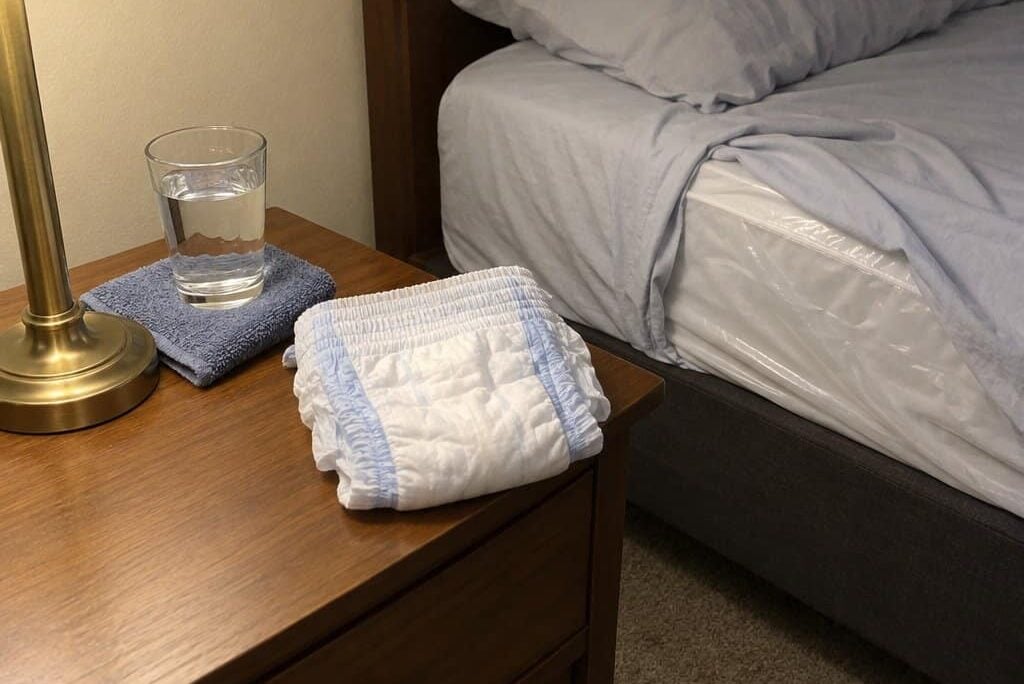
You wake up at 2 a.m. The sheets are wet. You’re wearing the same product you’ve used reliably for months, yet here you are, changing in the dark.
Or maybe it’s morning. You pull back the covers and find that the protection you went to bed trusting has been completely overwhelmed.
Most people’s first thought is that they did something wrong — chose the wrong size, put the product on incorrectly, or that things have suddenly gotten much worse.
Here’s what I want you to know right away: none of that is likely true.
Daytime and nighttime incontinence are genuinely different problems, and the same product often cannot solve both.
This guide maps out a clear, step-by-step ladder from regular daytime underwear to overnight-specific options — including a pad insert upgrade, pull-on overnight briefs, and tab-style briefs — so you can identify exactly where you are and what to try next. I’ll also cover the signs that tell you it’s time to move up a rung, and the signs that tell you you don’t need to.
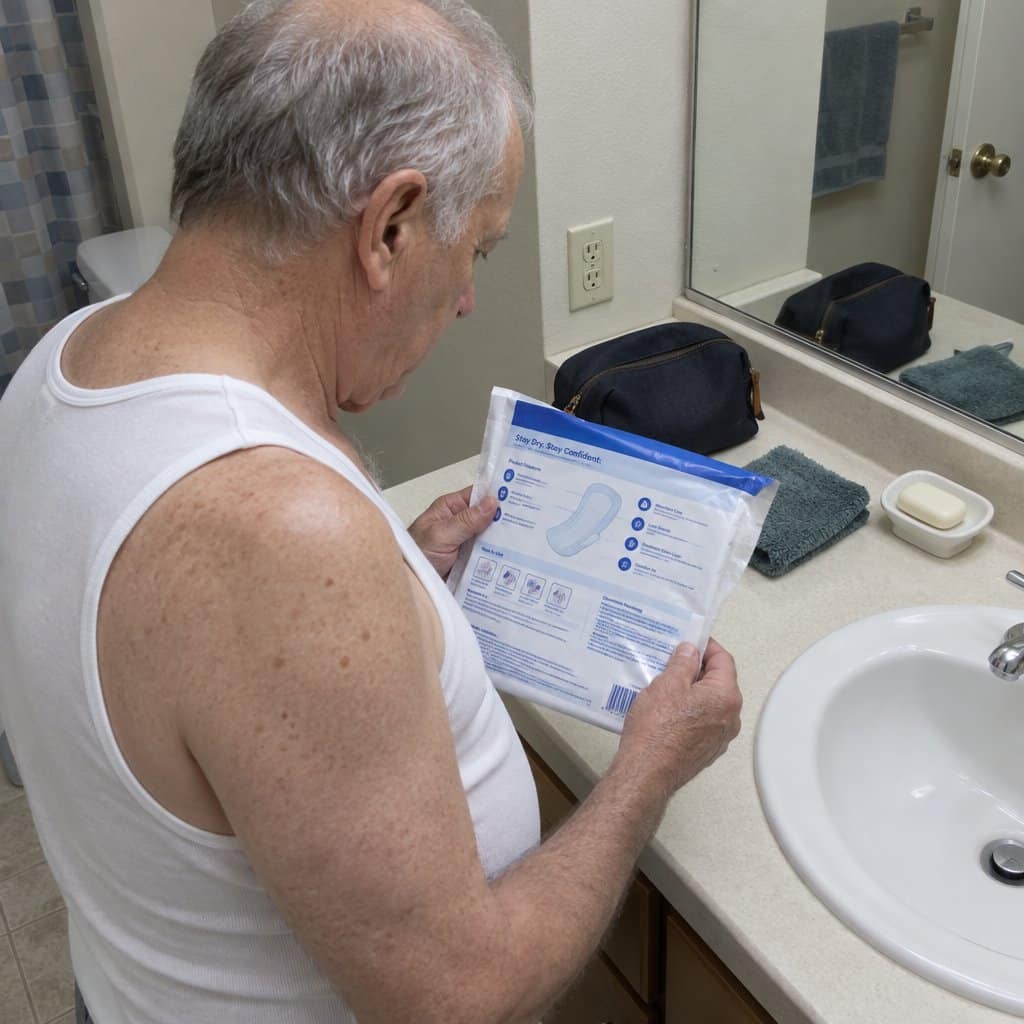
Overnight Incontinence Protection Checklist
Stop waking up wet and start sleeping through the night with this step-by-step checklist that matches you to the exact overnight protection product your body needs.
Why Your Daytime Incontinence Underwear Isn’t Built for Nighttime
The Horizontal Position Changes Everything
When you’re upright during the day, fluid flows downward toward the absorbent core of your underwear. That’s exactly how daytime products are engineered to work.
At night, you’re lying flat for six to nine hours. Fluid doesn’t move the same way, and the absorbent core that works perfectly when you’re standing or sitting is suddenly in the wrong position relative to where fluid needs to be captured.
No Chance to Respond and Change
During the day, if you feel dampness, you change. At night, that signal either doesn’t wake you, or it wakes you too late — after the product is already saturated and leaking.
Daytime products are designed for lighter, more frequent voids with dry periods in between. Overnight wear means a single heavier release over an uninterrupted stretch, with no reset in between.
It’s a Design Mismatch, Not a Personal One
Overnight incontinence underwear is built with higher total absorbency, a different distribution of absorbent material, and typically more coverage around the hips and seat precisely because those are the failure points when you’re lying down.
Nothing has gone wrong with your body or your technique. The product simply isn’t designed for the job you’re asking it to do. That’s fixable — and once you understand why nighttime is different, the solution ladder becomes obvious.

The Overnight Protection Ladder: Which Step Do You Actually Need?
There isn’t one overnight solution — there’s a progression, and most people need only one step up from where they are. Here’s how to think about it.
Rung 1: Add a Booster Pad Insert to Your Current Underwear
This is the right starting point if your current product is “almost” working — you wake up damp rather than soaked, or you leak only occasionally rather than every night.
A booster pad (also called an incontinence pad insert) drops directly into the product you’re already wearing and adds absorbency without requiring a full switch. It’s the smallest change you can make, and it solves the problem for a lot of people at this level.
Trying this first before committing to a completely new product type is smart, not indecisive. Start here if you’re on the fence.

Rung 2: Switch to Overnight Pull-On Briefs
If a booster pad isn’t enough — or if your current product is already fully saturated by morning — it’s time to step up to overnight incontinence underwear specifically designed for lying down.
These look and feel like regular underwear, but they’re built with significantly higher capacity and better hip and seat coverage for side-sleeping and extended wear. This is the rung where most readers will find the problem resolved. If you can change yourself independently at night, this is your best fit.

Rung 3: Tab-Style Adult Briefs
Tab-style briefs are designed for heavy leakage or situations where standing to change isn’t easy or safe. The fastening tabs allow a caregiver — or the wearer while lying down — to change without needing to stand up fully.
They offer the most coverage and the highest capacity of anything on the ladder. This isn’t the default next step for everyone — it’s the right tool for a specific situation, and the signs below will tell you clearly if this is where you are.
The Simple Way to Know You’re on the Right Rung
You wake up dry, or you wake up only once to change and stay dry until morning. That’s the goal, and whichever rung gets you there is the right one.
If you’re still waking up wet, changing more than once a night, or finding a saturated product every single morning, move up one rung and give it two to three nights.
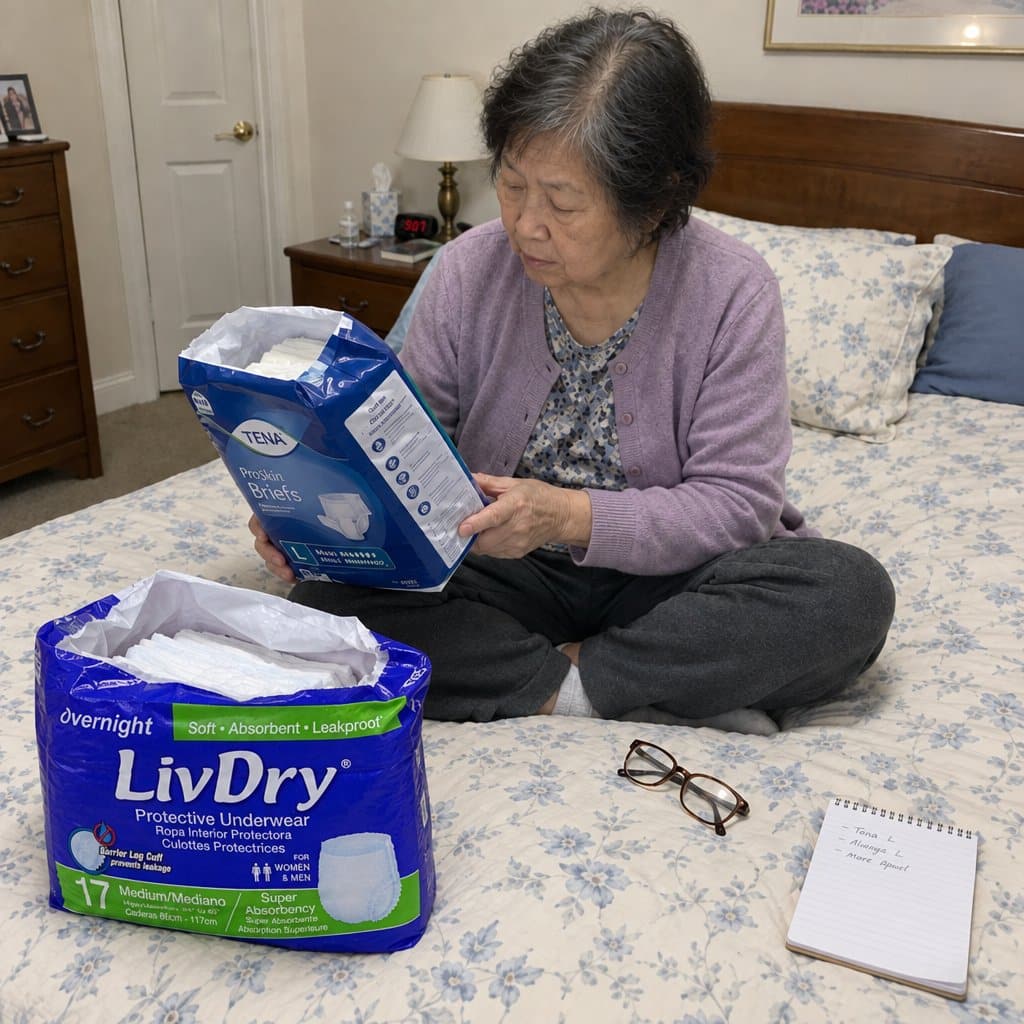
These Are the Signs Your Current Protection Isn’t Working at Night
There’s no need to guess. Your body and your morning routine will tell you clearly when it’s time to move up.
Signs It’s Time to Move Up a Rung
- Waking up wet despite wearing a product. The clearest signal of all. The product has been overwhelmed.
- Waking up to change more than once a night. The product saturates before morning, and you’re up more than once because of it.
- Finding a fully saturated product every morning with no capacity left. There’s no margin. One slightly heavier night and you’ll leak.
- Washing bedding more than once a week because of overnight leakage. Your laundry is telling you the protection isn’t holding.
- Skin irritation at the hips or seat area. Prolonged contact with moisture causes this, which means the product isn’t keeping you dry long enough.
- Feeling anxious about sleep, or reluctant to sleep away from home. When overnight protection uncertainty starts affecting how you live, that’s a sign the current setup needs to change.
Signs You Don’t Need to Move Up Yet
- You wake up dry or only slightly damp, and the product still has capacity remaining.
- You wake up once to change but stay completely dry until morning afterward.
- Your current product is occasionally challenged after certain foods or drinks, or during illness, but is generally reliable.
Checking this list isn’t about tracking decline. It’s about matching the right tool to the actual job. Switching to overnight pull-ons because the signs say so isn’t getting worse — it’s sleeping better. That’s the whole point.
If nighttime bathroom trips also mean navigating the bedroom safely in the dark, it’s worth reading through this fall prevention checklist — small changes to your nighttime path can make a big difference.
Subscribe to our newsletter for more tips: Join here
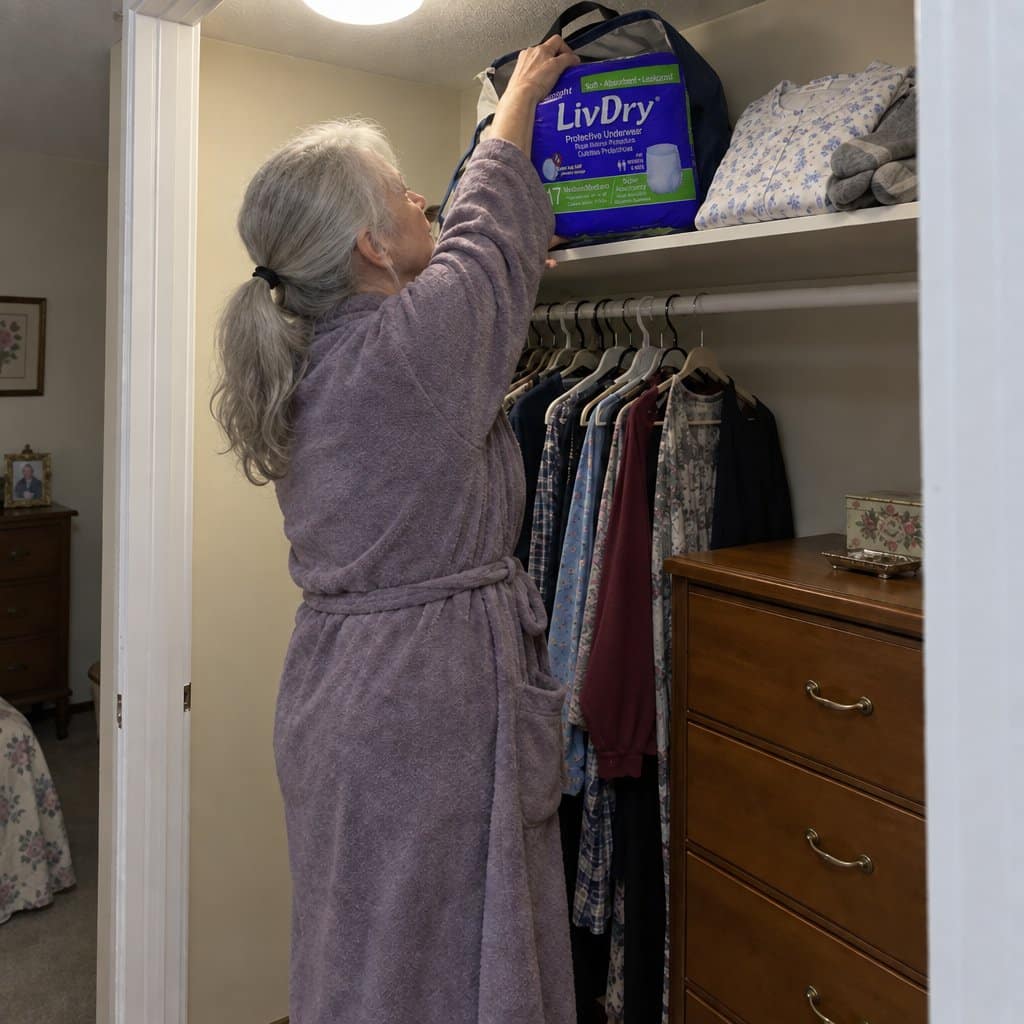
Overnight Incontinence Underwear: What to Look for Before You Buy
Not all overnight pull-ons are equal, and knowing what to look for before you buy prevents a frustrating round of trial and error.
Absorbency Rating
Look for products labeled “overnight,” “heavy,” or “maximum.” Skip anything labeled “moderate” or “daytime” — even if it seems more comfortable or familiar. Absorbency is sometimes measured in fluid ounces on the packaging, and overnight products should hold significantly more than their daytime counterparts.
Sizing: Fit Matters More Than You Think
The fit around your hip and waist matters more than waistband comfort alone. A product that gaps at the leg opening will leak regardless of how absorbent it is. If you’re between sizes, size up for overnight use — a snug-but-not-tight fit around the legs is what prevents leakage when you shift positions during the night.
Coverage at the Hips and Seat
Overnight products should offer higher coverage at the seat and hips than daytime versions. This is what prevents leakage when you’re sleeping on your side or rolling over — the zones where daytime products simply don’t extend far enough.
Odor Control and Breathability
Look for products with odor-neutralizing technology for overnight wear. Some overnight products sacrifice breathability for maximum absorbency. If skin irritation is already a concern for you, check the product description for moisture-wicking inner layers, which keep skin drier even when the product is working hard.
A Practical Note on Testing
In my experience helping families work through overnight protection questions, buying a single small package from two or three brands before committing to a full case almost always pays off. What works depends on body shape and sleep position, and there isn’t a universal winner. The cost of a small test round is almost always less than the cost of a case of the wrong product.
For caregivers helping a parent who has limited mobility at night, a guide to getting in and out of bed more safely can be a useful companion read alongside this one. Nighttime changes go more smoothly when the physical setup of the bed is already working in your favor.
If your parent is also managing dementia and nighttime wandering is part of the picture, bed alarms are worth knowing about — they alert caregivers when someone is getting up, which is relevant when nighttime incontinence care is involved.

Don’t Forget the Backup: Protecting Your Mattress During the Trial Period
While you’re testing overnight protection options, a simple barrier layer under the sheet removes the pressure of getting it perfect on the first try. It also protects a mattress that can cost hundreds or thousands of dollars to replace.
Waterproof Mattress Protectors
A waterproof mattress protector fits under your fitted sheet and catches anything that gets past your incontinence product. It’s quiet, washable, and for most people it stays in place permanently once installed — not because the incontinence product will keep failing, but because it protects against any spill or accident, not just this one.

Washable Bed Pads
A washable bed pad sits on top of the fitted sheet directly under the sleeper. It’s a targeted layer that’s easy to strip and wash without pulling the whole bed apart. For nightly use, washable pads are cost-effective and more environmentally sensible than disposable versions.
Disposable bed pads are worth keeping on hand for travel or short stays away from home, where you may not have access to a laundry setup.

Having this layer in place while you’re trialing products also means you can evaluate the product honestly — you’re not making decisions based on anxiety about the mattress. You’re just asking: did this keep me dry?
Pair this with a quality mattress that supports comfortable sleep and you’ve addressed the whole picture: the protection, the backup, and the foundation underneath it all.
Overnight Incontinence Protection Checklist
Stop waking up wet and start sleeping through the night with this step-by-step checklist that matches you to the exact overnight protection product your body needs.
You Now Have Everything You Need
Waking up wet at night isn’t a personal failure, and it isn’t a sign something has gone seriously wrong. It’s a product mismatch — and product mismatches are among the easiest problems to fix once you understand what’s actually happening.
Here’s what you now know:
- Why nighttime is a different physical situation than daytime, and why the same product can’t reliably handle both
- The three rungs on the overnight protection ladder, and what each one is designed to solve
- The concrete signs that tell you whether to move up a rung or stay where you are
- What to look for in overnight incontinence underwear before you buy
- How a mattress protector or washable bed pad takes the pressure off the trial process
Start with the lowest rung that matches your signs. If a booster pad insert sounds like it might be enough, try that first. If your current product is already overwhelmed every morning, go straight to overnight pull-ons. Give whatever you choose two to three nights before deciding whether to move up again.
Your sleep matters. So does your morning. And now you have a clear path to both.
If you’ve found something that works for overnight protection — or if you’re still working through the options — I’d genuinely love to hear about it in the comments. What you’ve learned is useful to someone else who’s searching for exactly the same thing right now.



![Older woman cane colorful plate divider[1]](https://www.grayingwithgrace.com/wp-content/uploads/2025/07/older_woman_cane_colorful_plate_divider1-e1752686358595-450x300.jpg)


