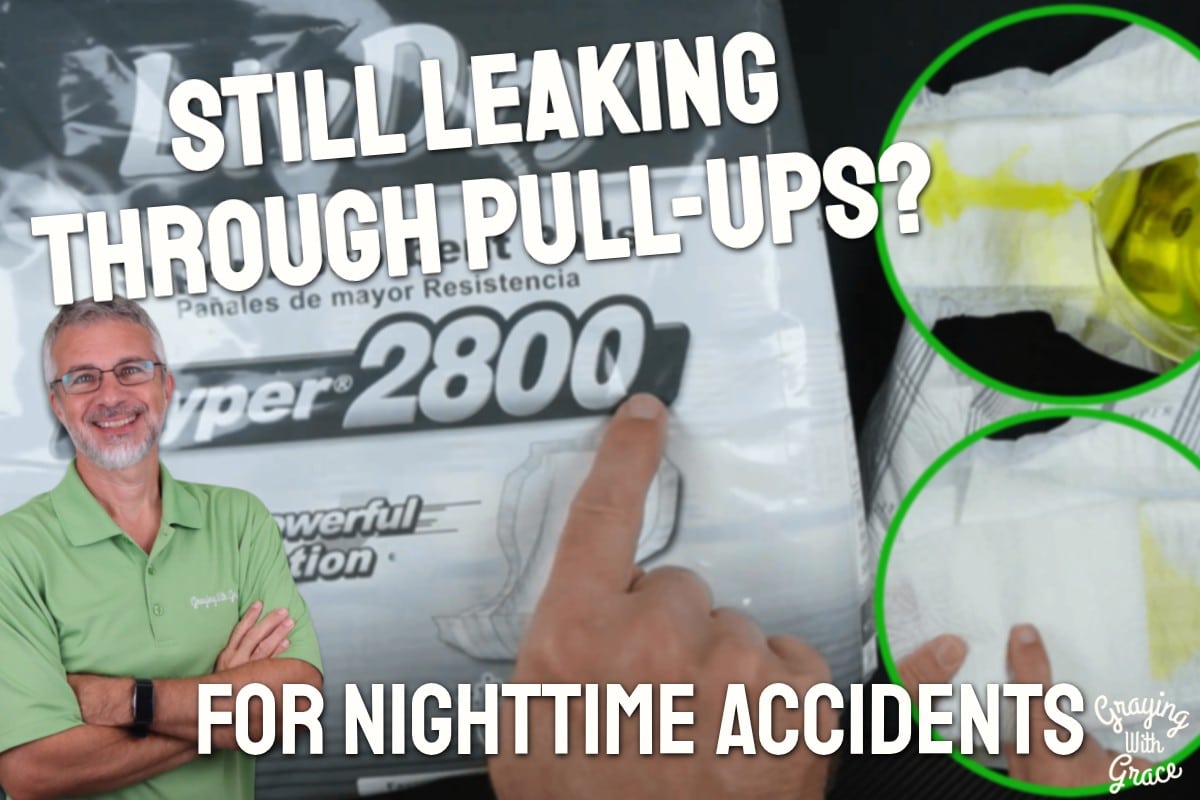
If you’ve been stripping wet sheets off the bed most mornings, or you’re the caregiver who’s up two or three times a night doing full changes, you already know how exhausting that cycle is. An incontinence pad insert for adults overnight protection is often the quiet fix nobody tells you about until the leaks get bad enough to ask.
The usual advice is to size up to a bigger pair of protective underwear. But a bulkier pull-up isn’t always the answer, especially when the leaking is happening at the legs or the absorbency just isn’t keeping pace with nighttime output.
I’m Scott Grant, a Certified Senior Advisor (CSA®) and Senior Home Safety Specialist (SHSS®) at Graying With Grace, and I spent real time with this product in hand, pouring fluid on it, tucking it into different types of underwear, and checking what actually reaches the skin.
This video is sponsored by LivDry, who paid me to show you how it works and sent the product at no cost. The opinions, and the downsides, are my own.
In this review, I’ll walk you through how the insert works, who it’s genuinely built for, where it falls short, and how it compares to a flow-through booster pad or a jump straight to a tab-style brief.


Quick Takeaways
- Problem it solves: leaking through pull-up underwear overnight and the repeated full changes that follow
- Who benefits most: people already using heavy absorbency pull-ups or briefs who need one more layer of capacity, and the caregivers managing their nighttime routine
- Worth the investment: yes, if your current protection is maxed out but you’re not ready for a tab-style brief
- Best feature: the plastic backing that lets you change just the pad, not the whole undergarment
- Biggest limitation: it adds bulk you’ll feel, and once it’s full, there’s no more room to catch overflow
If you’re someone who’s tried order leak protection pads online before and ended up disappointed, or you’re searching for pad insert vs pull-ups cost comparisons because you’re tired of replacing entire packages of briefs, this section is for you.
Picture this: you’re already wearing a heavy absorbency pull-up at night, but you’re still waking up to damp sheets. The LivDry Incontinence Pad Insert is designed to slide inside that existing pull-up and add capacity without you having to buy a bigger brand of underwear or move to something more clinical looking.
Or maybe you’re the caregiver handling a loved one who spends most of the day in bed, using tab-style briefs. For you, the appeal isn’t absorbency alone. It’s the ability to pull the brief down, swap the insert, and get it back into place without unfastening and refastening the whole brief in the middle of the night.
How This Could Help You
So how does this actually change your day-to-day? Let’s break it down.
First, fewer full changes. As I demonstrated in the video, the plastic backing on the LivDry Incontinence Pad Insert keeps whatever it catches contained inside the pad itself rather than letting it soak through to your underwear or sheets.
That matters for independence, too. If you or someone you’re caring for is managing incontinence but doesn’t want the daily reminder of wearing a full tab-style brief, this lets you keep the pull-on style you already know how to manage and simply add a layer underneath.
Is this a pad insert vs full brief decision you’re wrestling with? Here’s the honest answer: this product is a middle step. It adds capacity to what you’re already wearing. It is not designed to replace a brief or a pull-up entirely, and it’s not meant to turn occasional light leakage into a non-issue.
And if you’re comparing pad insert vs a flow-through booster pad, the difference comes down to that plastic backing. A booster pad with no plastic lets fluid pass through into your underwear’s absorbent core. This insert holds what it catches, which is what makes the “pull it and replace it” change possible.
Important Details You Should Know
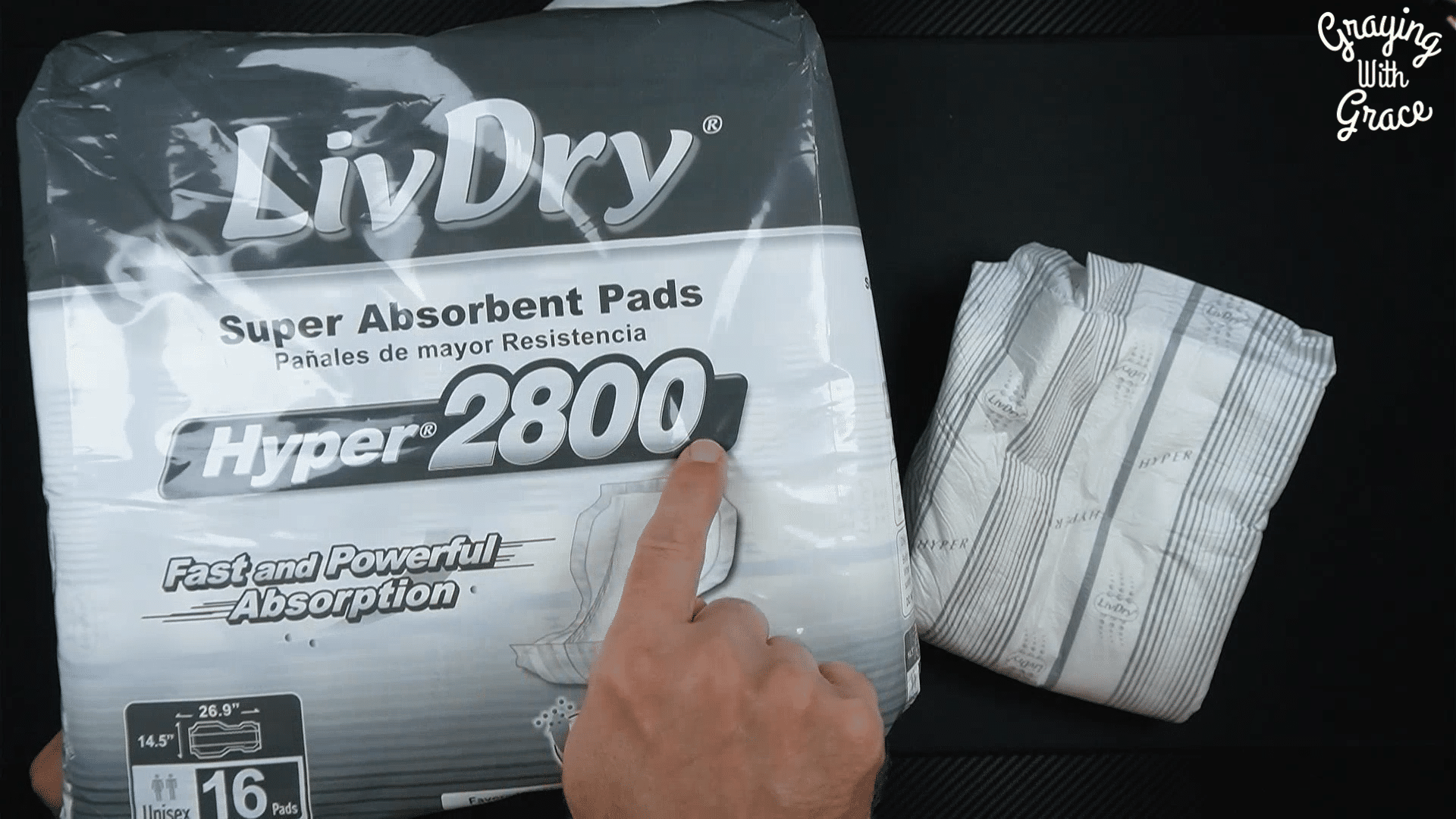
The insert comes in a package of 16, and LivDry offers multiple absorbency levels, with higher numbers meaning more absorbent material and more capacity. The version I tested was their highest capacity option, labeled 2800.
Shape-wise, it’s narrower in front and wider in back, mimicking the shape of a brief but with noticeably less bulk than a standalone brief would have.
The top sheet is soft to the touch, not scratchy, which matters if you or your loved one has sensitive skin or spends long hours in bed. Underneath that soft layer is the absorbent polymer core, and on the very bottom is the plastic backing that does the real work of containing fluid.
Build quality felt solid in hand. The leg cuffs along the sides are a separate barrier from whatever leg cuffs exist on your regular pull-up or brief, giving you two layers of protection at the point where leaks most often happen.
Getting Started
There’s no real setup here, which is part of the appeal. You open the bag, pull out a single pad, and you’re ready to go.
Placement is simple once you know the orientation: the wider end goes toward the back, the narrower end toward the front.
You can wear it three different ways: tucked inside your own regular underwear, slipped inside an existing pull-up style brief, or placed inside a tab-style brief for someone who is less mobile or spends more time in bed.
For a tab-style brief, the easiest method is to roll the person onto their side, place the back portion of the pad against the brief’s back, then roll them onto it before fastening as usual.
Ready to discover more innovative strategies for healthy, comfortable aging? Subscribe to our newsletter for expert-tested tips and product recommendations designed specifically for older adults.
Features That Matter to You
Let’s talk about what actually makes a difference when you’re the one wearing this, or caring for someone who is.
The plastic backing is the standout feature. It’s the reason you can change just the pad instead of the entire pull-up or brief, which for a caregiver doing this at 2am is a genuinely meaningful time and effort saver.
The dual leg cuff system (one set on the LivDry Incontinence Pad Insert itself, separate from whatever cuffs exist on your outer pull-up or brief) gives you a second line of defense right where leaks are most likely to escape.
Discreet packaging is a small thing, but for many people it’s not small at all. Nobody wants a delivery that broadcasts what’s inside.
Real Life Experience
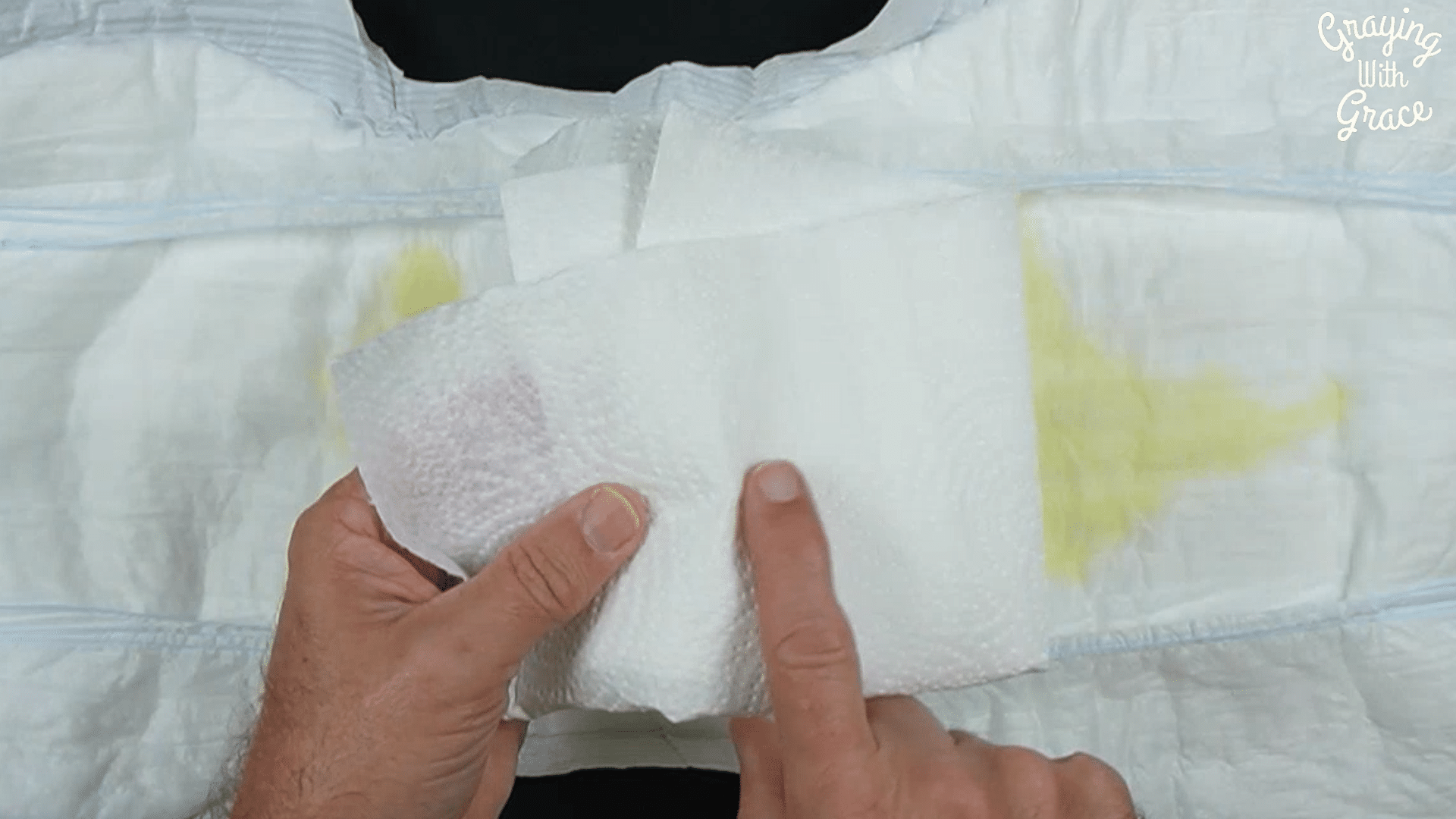
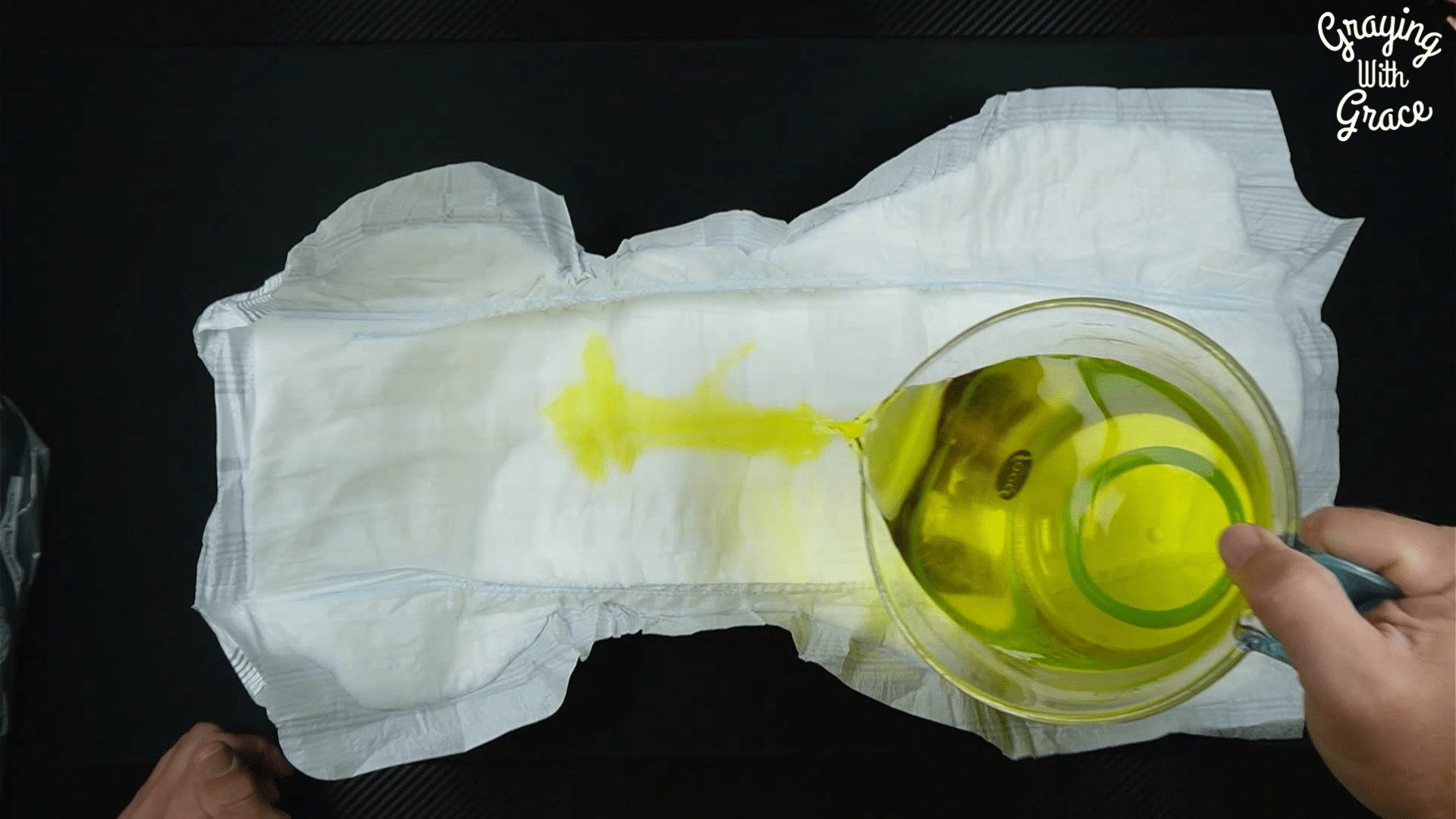
When I evaluated this product, I poured about half a cup of fluid directly onto the center of the pad to see how it actually performed, not just how the packaging described it.
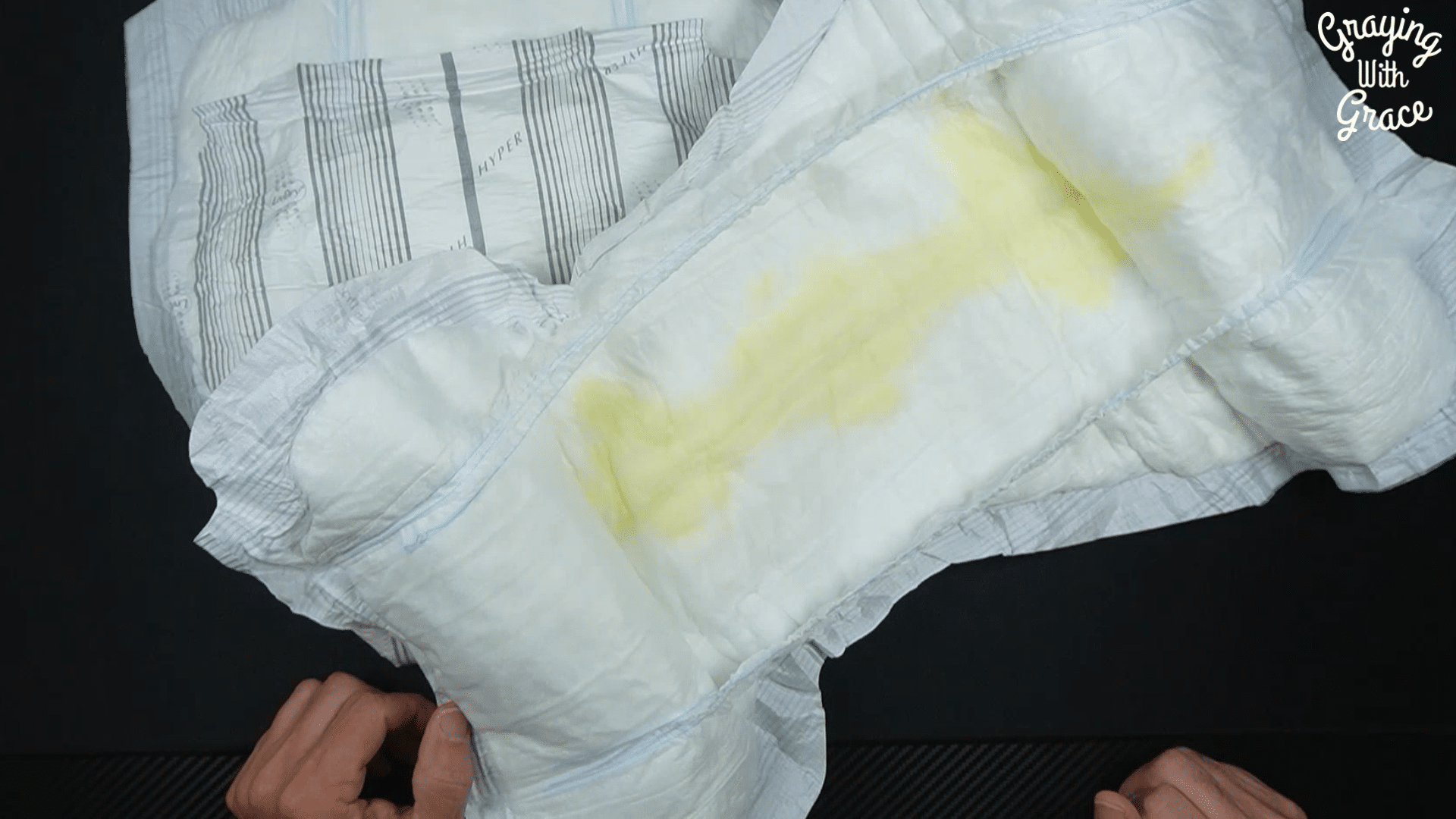
Within about 30 seconds, I watched the color shift from a darker yellow to white as the polymer pulled the fluid deeper into the pad’s core.
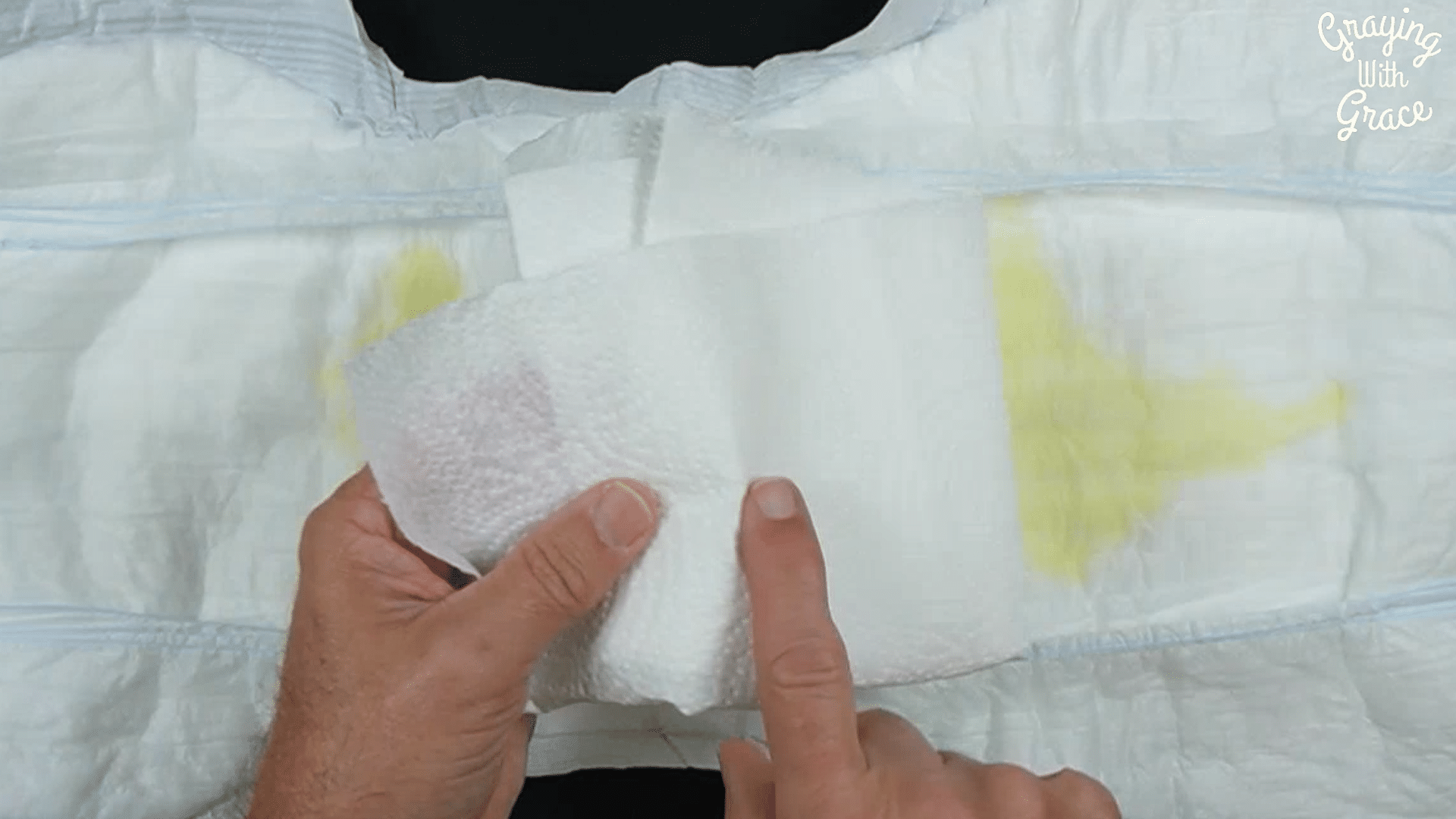
In the video, you can see that I then pressed a white paper towel against the top surface, and no fluid transferred through. No wetness. No staining. Just a trace of color left behind.
I also did a dab test on the inside surface after the fluid had been absorbed, and the top layer had only the faintest damp feel, nothing that would sit wet against skin.
As I demonstrated in the video, the pad does add a layer of bulk you’ll feel while sitting, though the top surface stays soft rather than scratchy. For overnight use, most people find that an easy trade for fewer wet sheets. For daytime wear under fitted pants, it’s something you may want to test before committing to all-day use.
Will You Be Able to Use It?
Placement doesn’t require any special dexterity. If you can put on a pair of underwear, you can position this pad insert correctly once you understand the front-narrow, back-wide orientation.
For someone managing their own incontinence independently, this is a task that stays firmly in your own hands, no caregiver required.
For caregivers assisting someone who is less mobile or bed-bound, the process of rolling the person to one side, placing the pad, and rolling back is a routine most caregivers are already comfortable with from brief changes in general.
Always consult with your doctor or occupational therapist before making health-related product decisions, especially if skin sensitivity, mobility limitations, or other health conditions are part of the picture.
Important Considerations
I want to be upfront here: this is not a product built for light or occasional leakage. If you’re dealing with minor dribbles now and then, a pad insert like this is likely more than you need.
Not everyone with incontinence needs the maximum absorbency version either. LivDry offers multiple absorbency levels, and starting with a lower number based on your actual needs makes more sense for many people.
The added bulk is real. If you’re wearing fitted clothing during the day, you or the person you’re caring for may notice the extra thickness, particularly while seated.
And once the pad reaches its capacity, there’s nowhere else for fluid to go until it works past the pad’s edges into your underwear. This is a capacity booster, not a guarantee against every possible leak, and no absorbency rating promises a specific number of leak-free hours for every wearer.
Help When You Need It
As with most consumable care products, standard return policies through your retailer apply if a package arrives damaged or isn’t what you expected.
Because this is a disposable product rather than a device, there are no replacement parts to track down or warranty claims to file. Reordering is simply a matter of purchasing another package when you run low.
Understanding the Cost
Thinking about pad insert vs pull-ups cost? The honest answer is that this product is meant to supplement what you’re already using, not replace it, so you’re adding a cost rather than swapping one out.
That said, for caregivers, the time and laundry savings from fewer full changes and fewer soaked sheets can offset some of that added cost in ways that aren’t always obvious until you’ve lived with it for a few weeks.
If you’re deciding between stepping up to a tab-style brief versus adding the LivDry Incontinence Pad Insert to your current pull-up, the insert is generally the more affordable middle step, and for many people, the more comfortable one too.
Making It Work for You
Start with the absorbency level that matches your actual nighttime output rather than jumping straight to the highest option. LivDry’s lineup is numbered by absorbency, and matching the number to your real needs will feel more comfortable and cost less over time.
If bulk during the day is a concern, consider reserving this for overnight use only and sticking with your regular pull-up or brief during waking hours.
For caregivers, keep a small stock on hand near the bed so a pad swap can happen quickly without a trip to another room in the middle of the night.
Our Recommendation
If you or someone you care for is already using a heavy absorbency pull-up or brief and still dealing with leaks, this is a sensible next step before moving to a full tab-style brief.
It’s especially worth considering for caregivers who want to simplify nighttime changes into a quick pad swap rather than a full undergarment change every time.
If you’re dealing with light or occasional leakage, look elsewhere first. This product is built for a specific gap: heavier nighttime needs that your current pull-up isn’t fully covering.
Where to Get It
Check the current listing for the LivDry Incontinence Pad Insert to see available absorbency levels, package sizes, and current availability.
Conclusion
At the end of the day, this pad insert does one job well: it adds a changeable layer of protection without forcing you into a bigger pull-up or a full tab-style brief before you’re ready for that step.
If nighttime leaks or repeated full changes have become part of your routine, this is worth a closer look.
Have questions about how this might fit your specific situation? Drop a comment below, I read every one, and I’m always glad to help point you in the right direction.