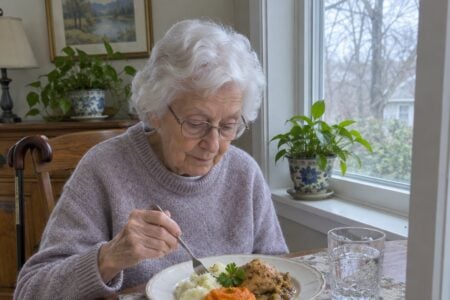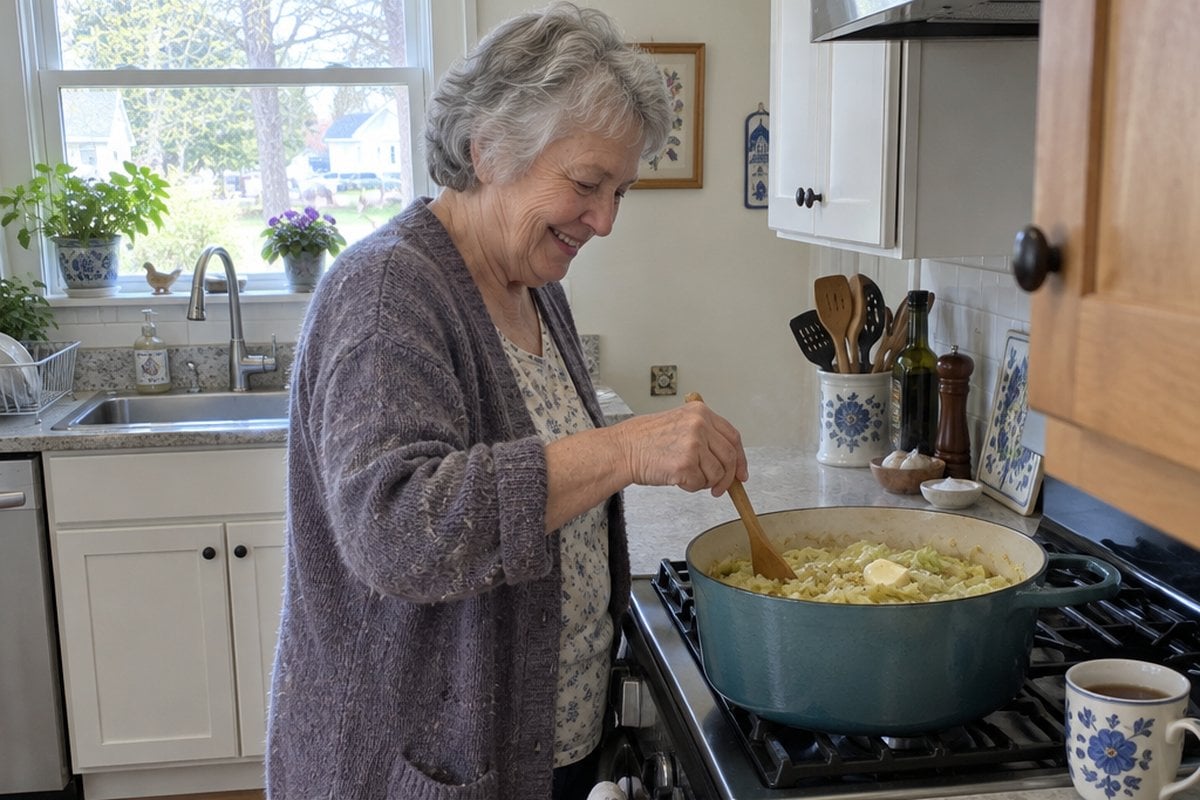
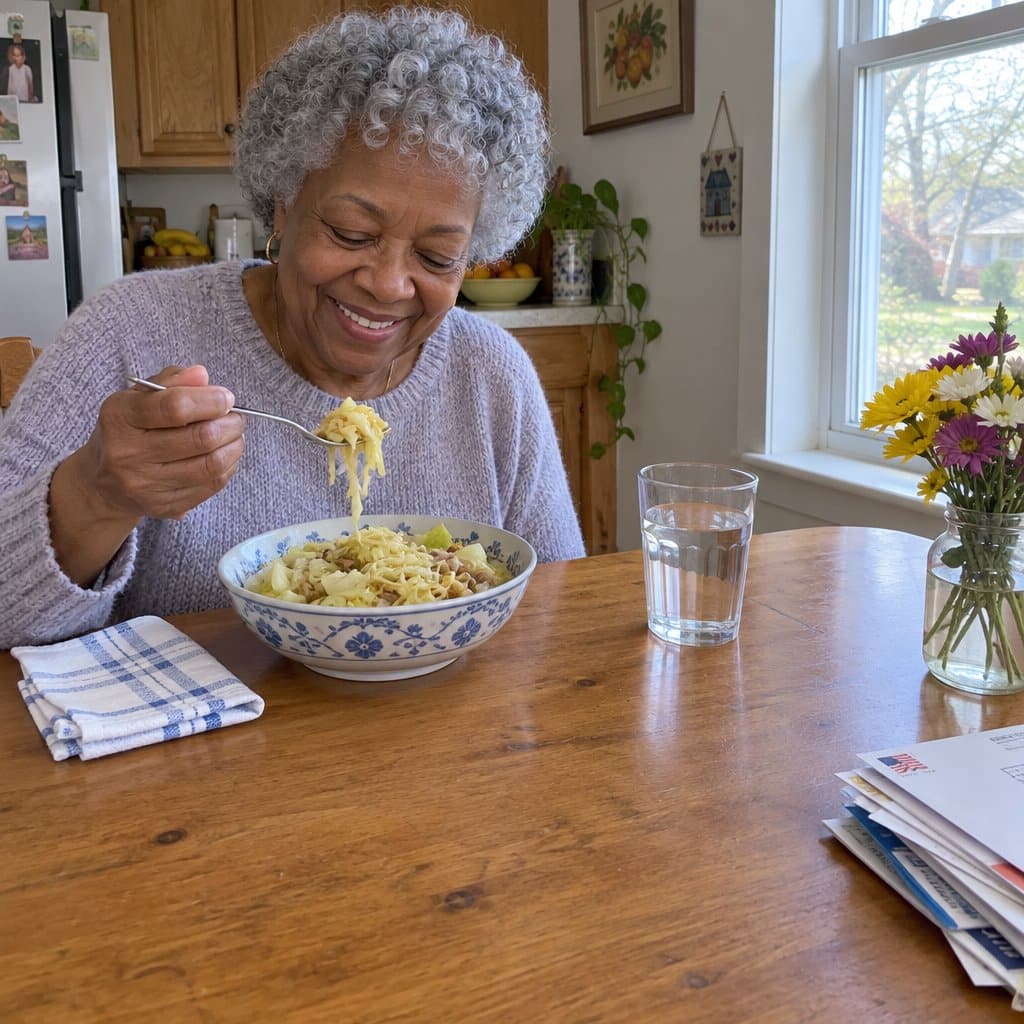
The dinner sits on the plate, and it’s gone cold. Chewing has become tiring, and if you’re the son or daughter watching, you feel that worry.
Here’s a humble idea: cabbage. It’s cheap, it’s familiar, and soft cabbage recipes can taste like the meals your family already knows.
The secret isn’t the recipe. It’s how long and how gently the cabbage cooks.
You’re in the right place. Familiar flavor matters just as much as soft texture, and below you’ll find easy to chew dinner ideas for a parent who finds chewing hard (or for yourself), texture options, and freezer tips.
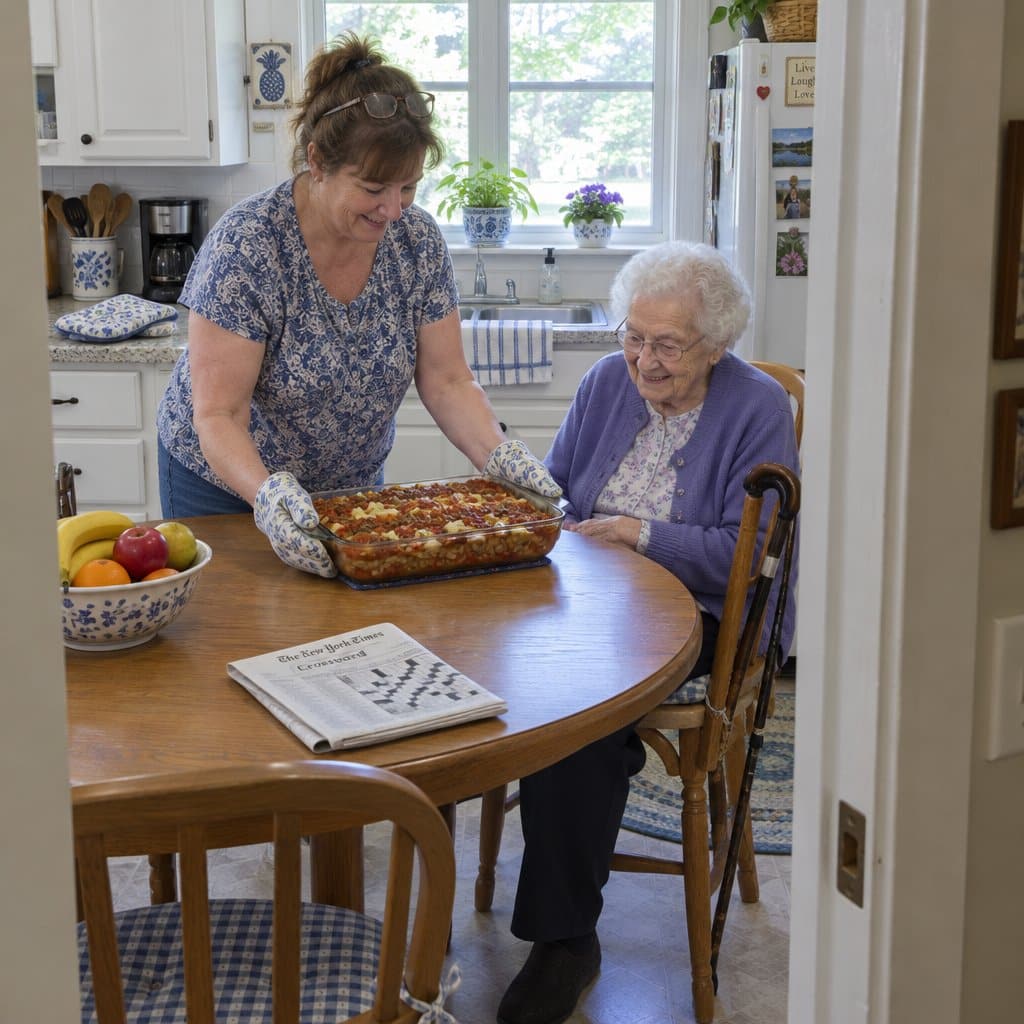
Soft Cabbage Texture and Cooking Cheat Sheet
Download this free cheat sheet and master five simple ways to cook cabbage until it’s easy to chew—no special ingredients, no complicated steps, just home-cooked meals that work for softer diets.
How to Cook Cabbage Until It Is Fork-Tender
Cabbage turns soft with time and moisture. Cooked long enough, the leaves relax into a tender texture that works for chewing trouble and for anyone wondering how to make cabbage tender for dentures.
Soft doesn’t mean flavorless. Slow, gentle cooking brings out cabbage’s natural sweetness.
Prep It for Easy Chewing
- Remove the tough core: It stays firm long after the leaves soften.
- Cut thin ribbons or small squares: Smaller pieces cook evenly and break down faster.
- Cook longer than you think you need to: Cabbage that’s “done” for most people is often not soft enough here.
Three Ways to Get There
- Braising: Put the cabbage in a covered pan with a little broth or water and a spoonful of butter. Cook on low for about 25 to 40 minutes.
- Slow cooker: Add chopped cabbage and liquid, then cook on low for roughly 4 to 6 hours.
- Soup: Simmer the cabbage in broth for about 20 to 30 minutes, until fully tender.
How long to cook cabbage until fork tender depends on how thick you cut it and how big your pot is. Treat those times as a starting range, then check.
The Fork Test
Press a fork against a piece of cabbage. It should cut through with almost no pressure.
If it resists, give it ten more minutes and test again.
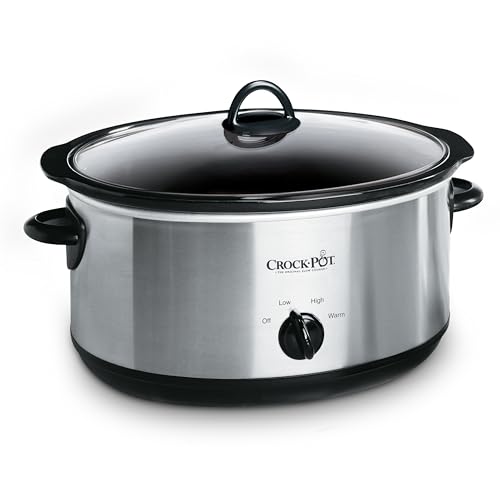
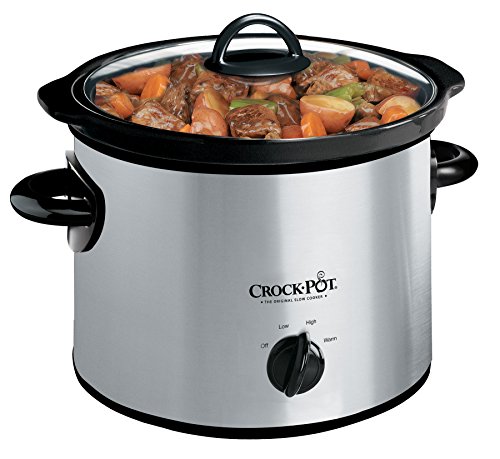
A slow cooker lets you start dinner in the morning and come home to cabbage that’s already fork-tender. It suits busy caregivers and anyone who’d rather not stand at the stove. The catch is that it takes hours, so you need to plan ahead.

Is cooked cabbage easy to digest? Cooking softens it, and many people tolerate it better cooked than raw. If you’re not sure how it sits with you or your parent, I’d start small (more on that below).
Start here: braise one small head of cabbage and use the fork test. That’s it.
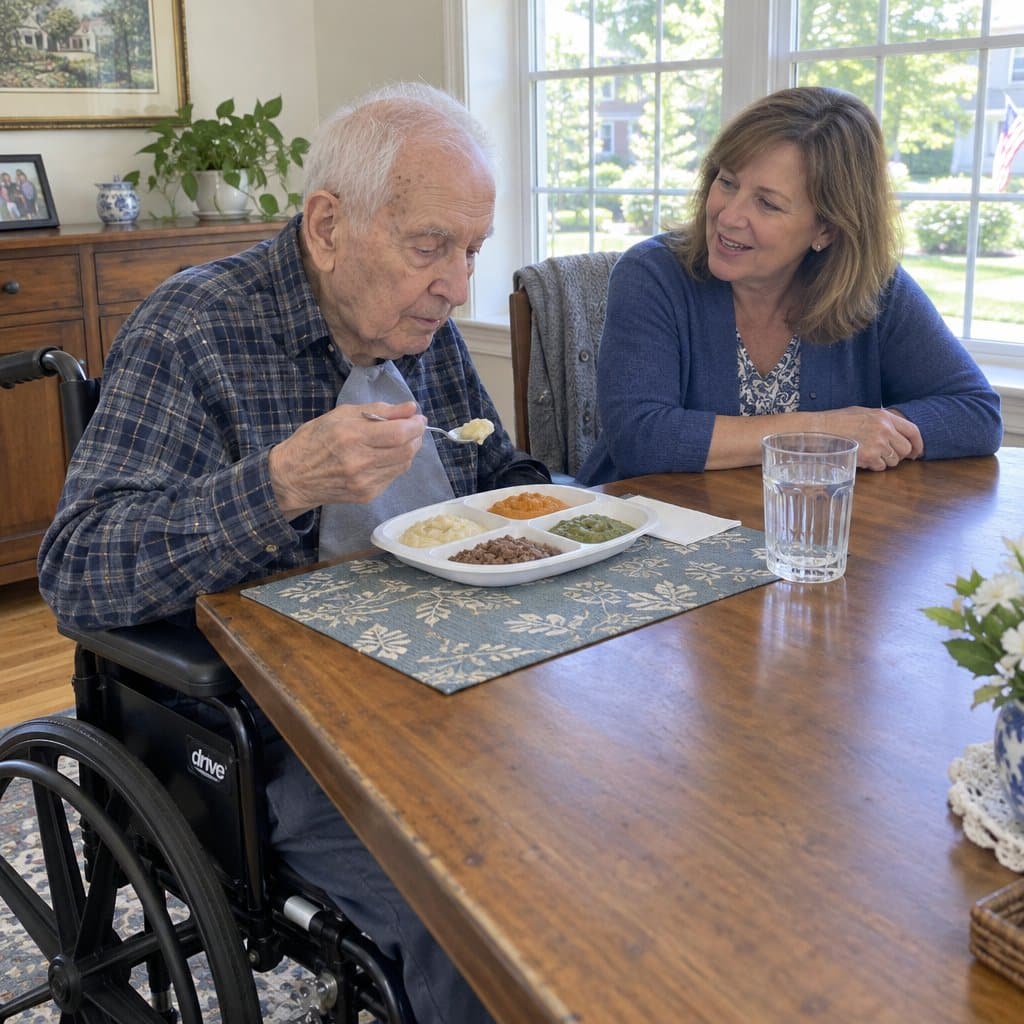
Five Soft Cabbage Recipes That Taste Like Home
These are family recipes first and soft-food recipes second. Nobody has to know the texture was planned.
If you want more ideas beyond cabbage, my caregiver’s guide to soft foods covers every meal of the day.
1. Braised Cabbage with Butter
This is the simplest option. Cook the cabbage low and slow until silky, then finish with butter, salt, and pepper. It works as a side or spooned over soft mashed potatoes.
2. Cabbage and Potato Soup
Both vegetables simmer until very soft in a gentle, filling soup. I’d reach for it on days when chewing feels tiring.
3. Unstuffed Cabbage Roll Casserole
You get all the flavor of cabbage rolls without the rolling. Layer tender cabbage, soft rice, and ground meat (or a soft meat alternative) in tomato sauce, then bake it covered so nothing dries out. It’s best for anyone who misses comfort-food dinners.
4. Creamy Cabbage and Noodles
Fold tender cabbage into soft egg noodles with butter or a little cream. It’s a familiar dish and easy to portion.
5. Pureed Cabbage Soup
This one is for anyone who needs a pureed texture. Simmer cabbage, onion, and broth until very soft, then blend. If you’re wondering how to puree cabbage soup without a mess, an immersion blender is the easy route.
An immersion blender lets you blend right in the pot, with no pouring hot soup into a countertop blender. It means fewer dishes, which helps on busy days.
Here’s the catch: let the soup cool for a few minutes and keep the blade fully under the surface to avoid hot splatter, and the cord needs an outlet near the stove.


Where to begin: pick the recipe closest to a meal you or your loved one already enjoys.
Making Each Recipe Softer, Minced, or Pureed
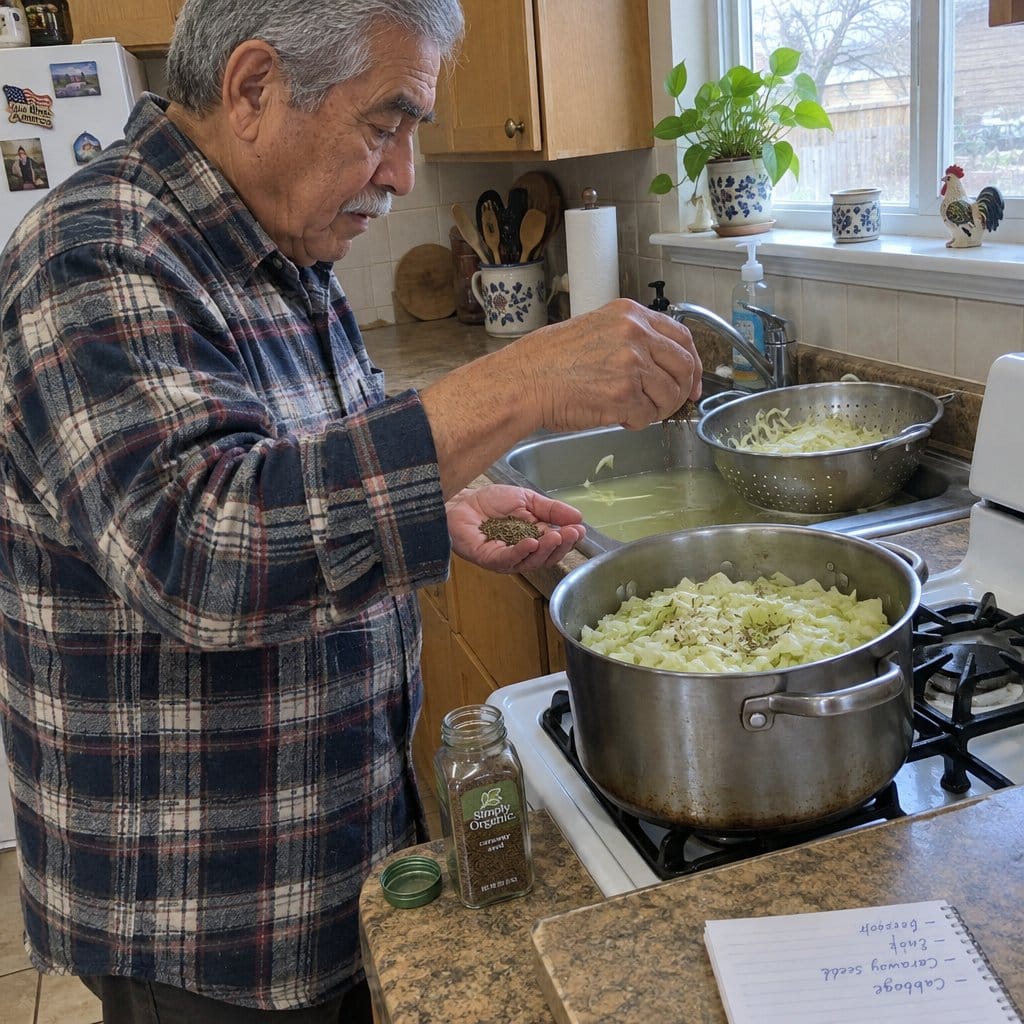
Chewing and swallowing needs differ from person to person. The good news is that one recipe can be adjusted three ways.
Softer
Cook longer, cut smaller, and add more broth or butter for moisture.
Minced
Chop finely after cooking so the pieces are small and uniform. Keep the mixture moist with sauce or broth.
Pureed
Blend until completely smooth, adding warm broth a little at a time. Strain it if any stringy bits remain. My pureed food guide with 27 recipes has plenty more to try.
In plain language, minced food is small, soft, moist pieces. Pureed food is smooth with no pieces at all. That’s the heart of minced vs pureed food texture for seniors.
A kind but important note: if there is any coughing, choking, or trouble swallowing, talk with a doctor or a speech-language pathologist about which texture is safe. Texture levels are individual, and that answer should come from a professional, not a blog.
Adjusting texture is a small, loving change that keeps a favorite meal on the table. I’d make one batch, then divide it into the textures you need.
A divided plate keeps textures separate, so a pureed side doesn’t run into minced food. That can make the meal look more appealing, and it suits caregivers serving mixed textures. The sections are small, though, so larger portions may not fit.


A scoop plate has a raised edge that helps food slide onto the fork or spoon. That can help anyone with limited hand strength or anyone eating one-handed. The downside is that the raised lip can make it harder to cut food on the plate.

Easing the Gas and Bloating Cabbage Is Known For
Many people avoid cabbage for fear of gas and bloating. The reputation is real, but a few kitchen habits can help.
Kitchen Habits That May Make It Gentler
- Cook it thoroughly: Well-cooked cabbage is often easier on the stomach than raw.
- Drain and replace the water: If the first batch smells or tastes very strong, pour off the cooking water and add fresh.
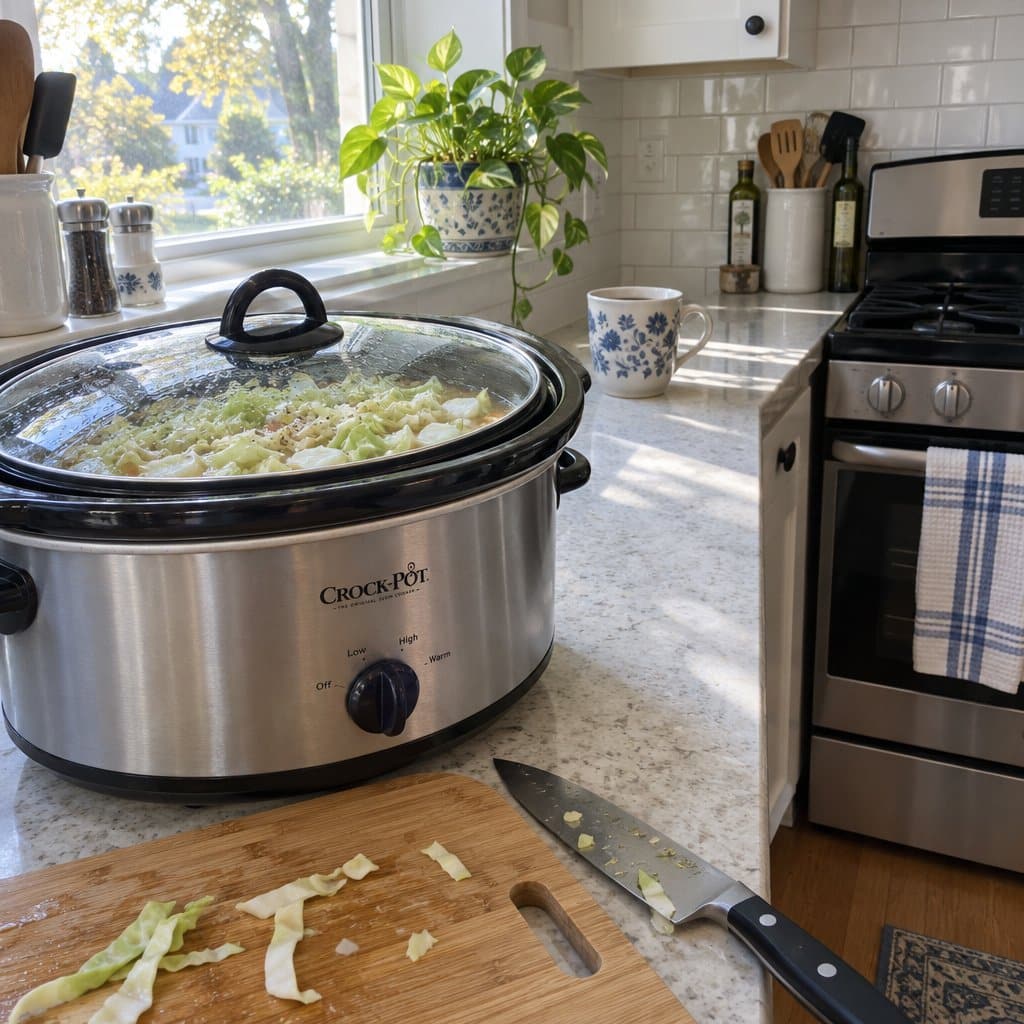
- Add caraway or fennel seed: Both have long been used in traditional cabbage dishes.
- Eat slowly: Pair it with other soft, mild foods.
These are the answers I’d give to how to reduce gas from cabbage and how to make cabbage easier to digest. They’re kitchen habits, not medical treatments.
Try a Small Bowl First
Start with a small portion and increase slowly. Jot down how it goes, and you’ll soon know what works. For more ways to build flavor without relying on cabbage alone, see my guide to soft foods that actually taste good.
If gas, pain, or bloating continues, or if you or your parent follows a restricted diet, check with a doctor or dietitian. A small adjustment can make a loved vegetable comfortable again, but personal advice should come from them.
Freezing Portions for One
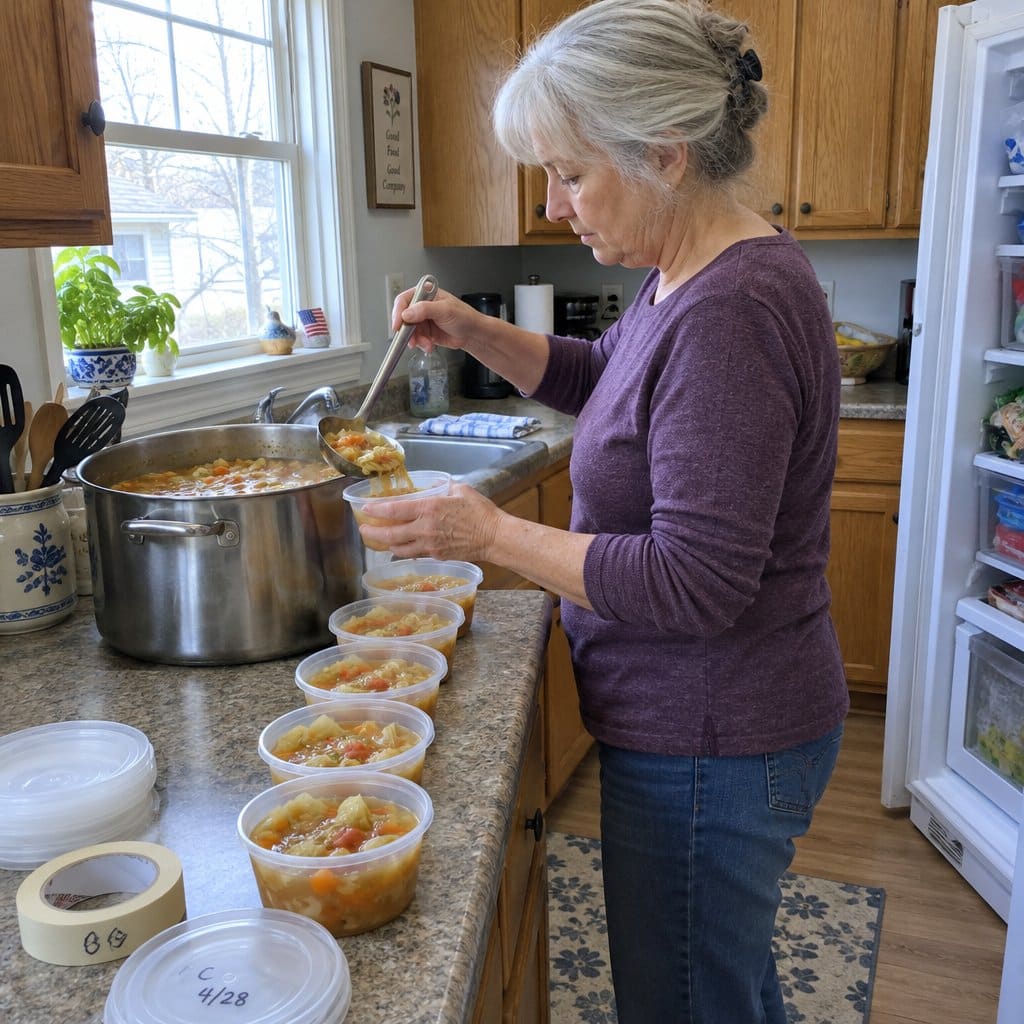
Portions for one mean less waste and no leftovers going stale. They also give you an easy meal for days when cooking is too much.
Can you freeze cooked cabbage? Yes. Soups, casseroles, and braised cabbage all freeze well, and the cabbage softens further, which suits this need nicely.
How to Freeze Cabbage Soup in Single Portions
- Cool the soup quickly, and get it into the fridge or freezer within two hours of cooking.
- Ladle it into single-serve containers, leaving room at the top for expansion.
- Label each one with the date and the texture: soft, minced, or pureed.
- If you use bags, freeze them flat.
Reheat gently on the stove or in the microwave with a splash of broth, stirring until hot throughout. I’d freeze a few of each recipe for variety.
Single-serve soup freezer containers with tight lids make portioning simple and stack neatly. They suit caregivers batch-cooking for a parent. The catch is that lids and shapes vary, so check that they’re microwave-safe and easy to open for anyone with stiff hands.


A freezer of labeled portions gives a caregiver peace of mind. It gives an older adult independence at mealtime. If you’re freezing pureed portions, my pureed food recipes are a good place to find more that freeze well.
Your challenge: freeze four portions from your next batch.
Soft Cabbage Texture and Cooking Cheat Sheet
Download this free cheat sheet and master five simple ways to cook cabbage until it’s easy to chew—no special ingredients, no complicated steps, just home-cooked meals that work for softer diets.
One Pot, a Few Days of Meals
Soft food can still taste like home. Cabbage is affordable, familiar, and, cooked patiently, easy to chew.
With a few soft cabbage recipes, some texture adjustments, and a freezer full of portions, mealtimes get easier. I know how much effort goes into every plate you serve. A warm bowl of something familiar says “I care” in a way few other things can.
Want more ideas? Browse more soft food ideas for caregivers next.
Which of the five recipes will you try first? What dish from your own family kitchen would you like to see made soft? Share it in the comments, and tag a friend or family member who’s cooking for someone with chewing trouble.