It’s the first cold morning of the season. You step outside to grab the mail, and the walkway looks exactly the same as it did in July.
But is it?
Here’s what most people don’t realize: the exterior hazards that send older adults to the emergency room rarely appear overnight. They’ve been there all along — a lifted slab edge, a wobbly handrail, a walkway lamp that burned out in September.
What changes in winter is the consequences.
A dry crack you’ve stepped over a hundred times becomes invisible under wet leaves. A handrail you’ve grabbed lightly for years finally gets tested the morning everything is covered in frost.
Most people think about indoor fall risks. Very few walk their own exterior with fresh eyes before winter arrives — not because they’re careless, but because no one ever showed them how or where to look.
This audit changes that. Walk through 10 specific spots in about 20 minutes, and you’ll know exactly where your risks are — and what to do about each one before temperatures drop and fixes become harder.
Home Exterior Fall Audit Checklist: 10 Spots Before Winter
Download this printable 10-spot home exterior checklist to identify fall hazards around your property in just 20 minutes—so you can make simple fixes now and age safely at home all winter long.
Start at the Front: Entry Steps and Handrails Are Your First Priority

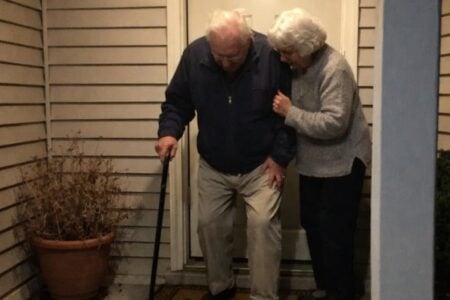
The front entry is the most-used exterior transition point on any property — and statistically, one of the most likely places for an outdoor fall.
Two quick tests will tell you whether yours is ready for winter.
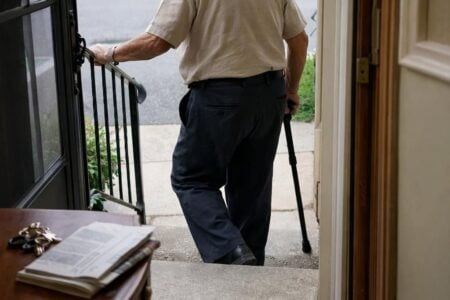
The full-body-weight handrail test: Don’t just touch the rail — grip it and lean your full body weight against it. If it shifts, wobbles, or feels uncertain at the wall mount, it needs reinforcement before the first frost. A rail you grab lightly every day may have been gradually loosening for months without you noticing.
The step height check: Steps higher than 7 inches create a meaningful trip hazard, especially when carrying groceries, mail, or packages — or when light is low in the early morning.
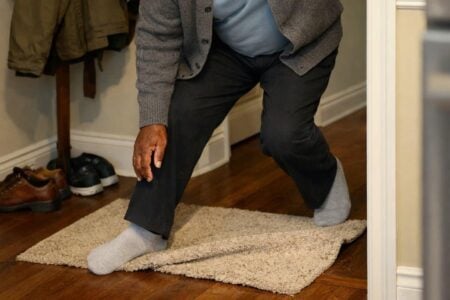
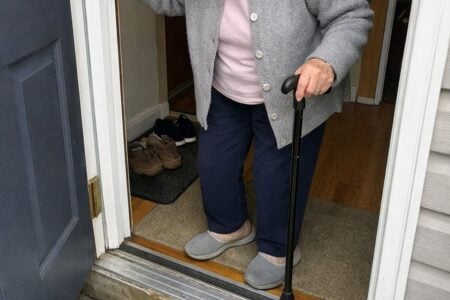
The threshold lip check: Look at the metal or wood strip where your front door meets the entry surface. A raised lip higher than ¾ inch is a common trip hazard that’s easy to miss because you’ve stepped over it thousands of times.
If the handrail fails the weight test, flag it for repair before the first freeze. Handrail kits designed for front step installation are an accessible DIY fix that takes an afternoon and costs a fraction of what a fall costs.


If you’re interested in how indoor transitions tie into your overall fall risk picture, this guide on bedroom fall prevention covers the same principle applied to nighttime movement — how familiarity hides hazards until conditions change.
Driveways and Walkways: How to Tell Which Cracks Are Actually Dangerous
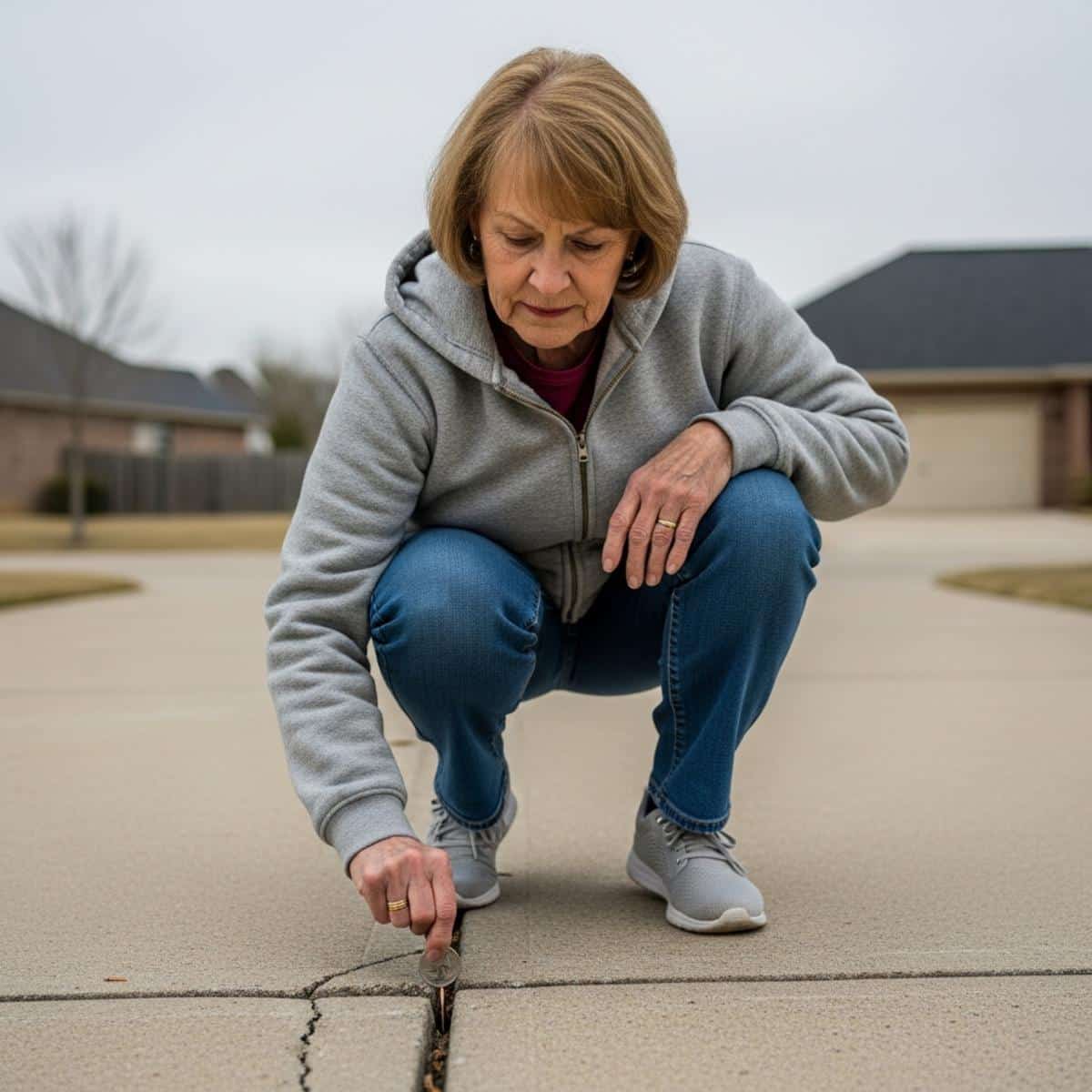
Not every crack in your driveway or walkway needs to be repaired. But knowing which ones are genuinely dangerous is a skill worth having before winter.
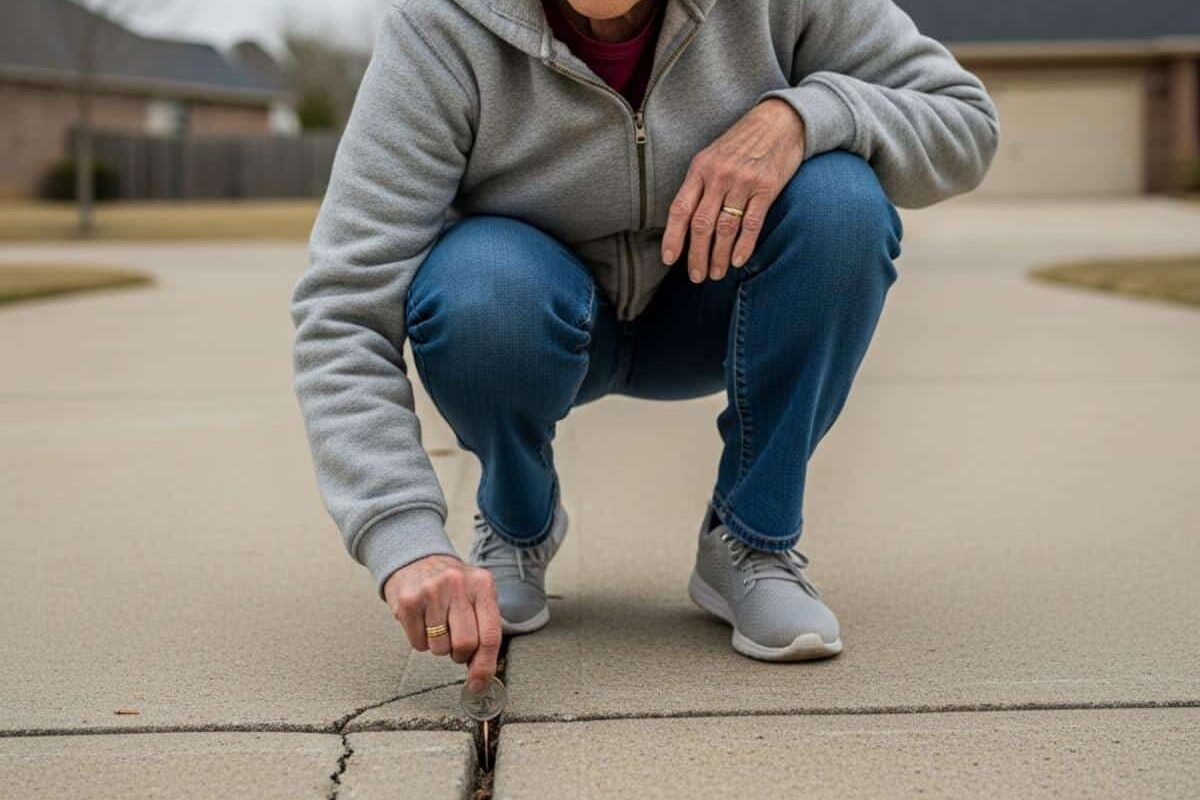
The coin test: Place a quarter upright in the crack or slide it beneath a raised pavement edge. If it fits, that crack or edge is a trip hazard — not just cosmetic. Raised slab edges where sections have shifted are often more dangerous than cracks themselves.
Walk the daily route deliberately: Identify the path from your car door to your home entry. This route is walked multiple times a day, often in a hurry or with hands full — exactly the conditions when a lifted edge catches a foot.
Mark problem areas now: Before leaves drop or light snow arrives, mark any hazard spots with bright tape or spray-painted rings. Hazards you can see clearly today will be invisible under wet foliage in October.
This kind of deliberate walkthrough is the same approach I recommend when helping families think through the full picture of how an unsafe home affects a senior’s brain and body over time — small chronic friction points compound in ways most people don’t connect until something happens.
Lighting the Path: The 4 Spots Where Darkness Creates the Most Risk
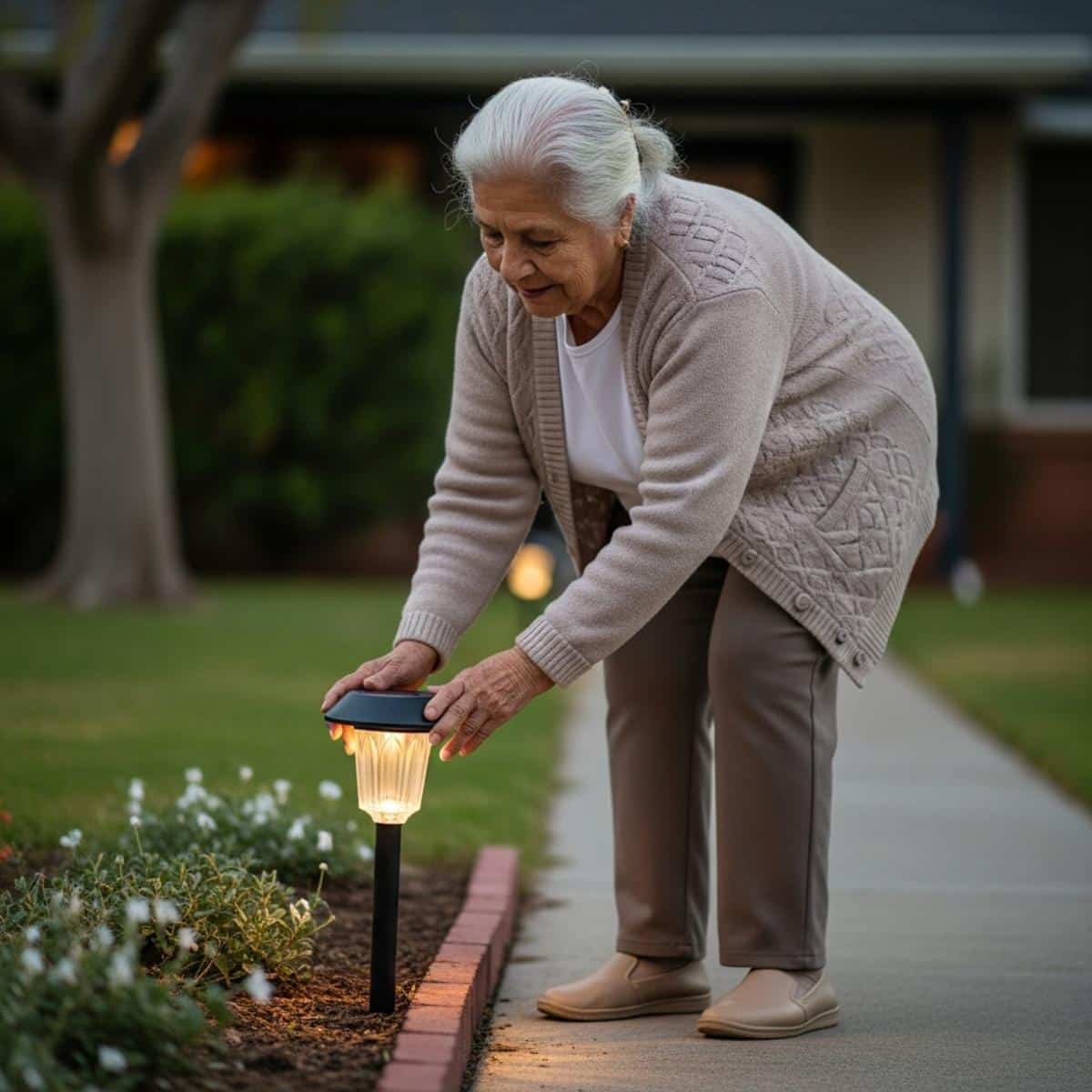
After-dusk trips outside don’t decrease in winter — they just happen in worse conditions. Darkness arrives earlier, surfaces are wetter, and the margin for error shrinks.
Four specific zones need reliable lighting before winter shortens the days:
- Front entry steps — the most-traveled transition, especially in early mornings and after dinner
- The path to the mailbox — a habit trip done quickly, often in light footwear
- The driveway apron or garage threshold — a brief transition that’s easy to rush
- Any side door used regularly — these are often the least-lit and most forgotten
Test existing fixtures this week: A bulb that was dim but “good enough” in July is a genuine hazard in December. Walk the four zones after dark and note anywhere the footing feels uncertain.
Solar-powered pathway lights are an easy, no-electrician solution that can be installed in an afternoon. Motion-activated options add the bonus of turning on exactly when someone approaches — no switches, no timers.


Want more practical home safety guidance delivered every week? Subscribe to the Graying With Grace newsletter for expert-tested tips on aging safely at home — written for older adults and the families who care about them.
If you’ve already addressed indoor lighting and want to understand how fall prevention fits into a broader daily routine, balance training for fall prevention is the piece I recommend most — because better balance is the underlying asset that makes every other safety measure more effective.
The Mailbox Trip and Garage Entry: Two Spots Most People Never Think to Check
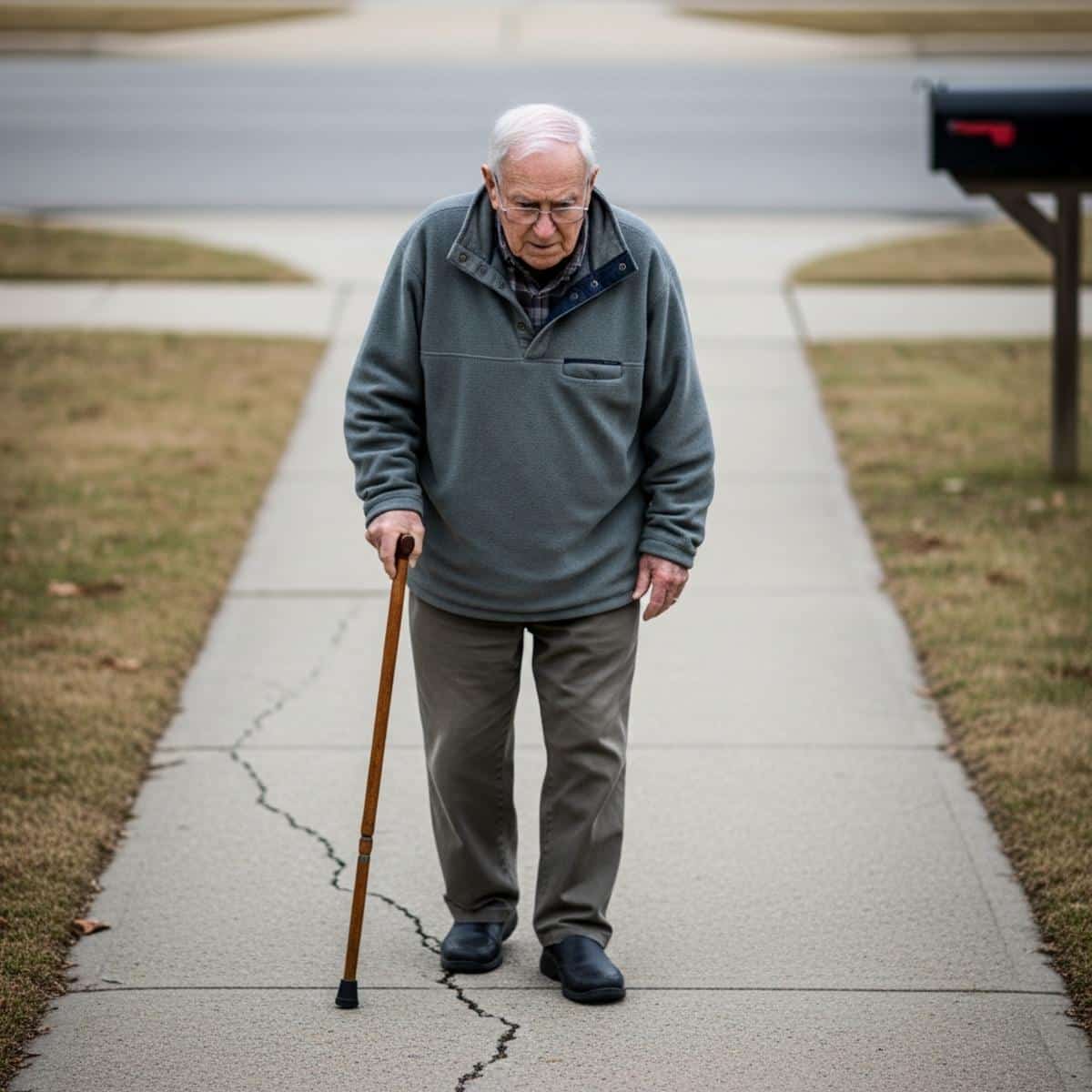
These two locations rarely show up on safety checklists — and that’s exactly why they matter.
The mailbox approach: This is a habit trip. Done quickly, often without full attention, frequently in cold weather or light footwear. Walk that path slowly and look for:
- Uneven pavers or cracked concrete
- Soft ground or grass edges that shift in freeze-thaw cycles
- Any surface change you’ve learned to step around without thinking
The garage-to-home threshold: Garage floors are often several inches lower than the interior floor, creating a raised lip at the step inside. This transition is used three or four times a day — often with arms full of groceries — and it’s so familiar it becomes invisible as a hazard.
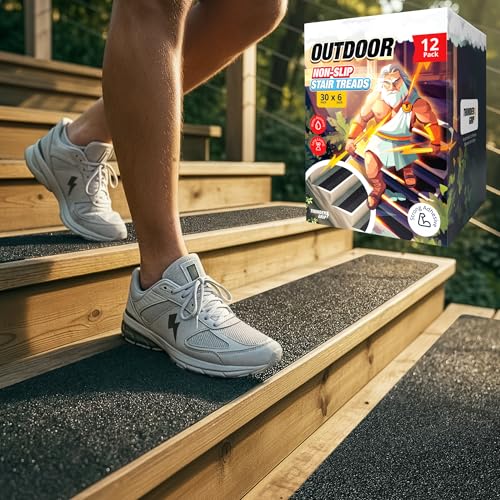
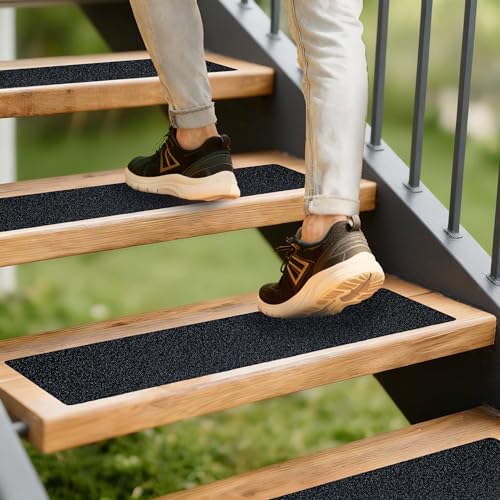
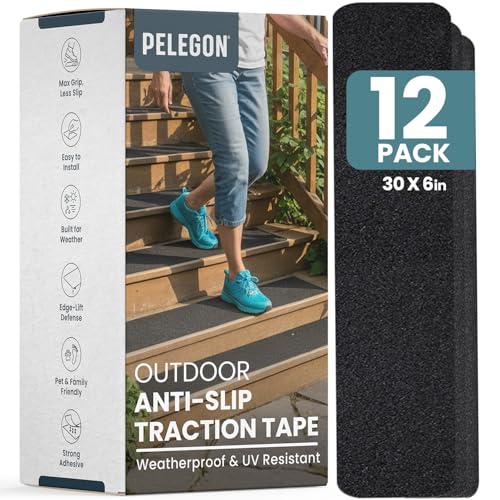
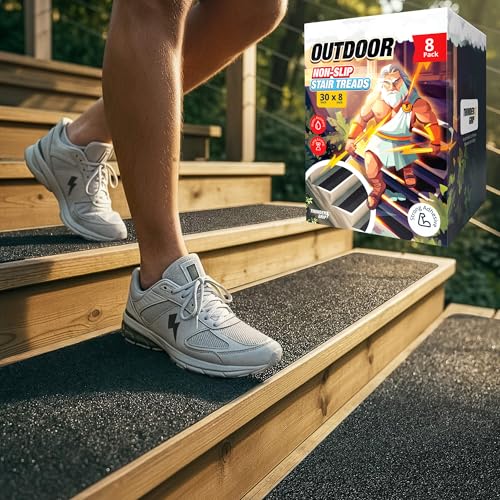
Check the step height and surface texture at your garage entry. If it’s smooth concrete with no grip, add outdoor non-slip stair treads before winter moisture arrives. A grit entry mat at the exterior garage door threshold adds a second layer of traction exactly where people track in water and debris.


For adult children building a complete picture of their parent’s home safety — the kind of detailed review that helps you decide what to address first — the 9-question checklist for assessing a parent’s living situation includes the kind of environmental factors that often get missed until they become urgent.
Before the First Freeze: What to Store, Stage, and Stockpile for a Safer Winter
The safest time to prepare for winter exterior hazards is right now — not the morning after the first ice event.
Stage ice melt at every exterior door: Storing a container near each door means it’s accessible without hunting for it in a rush. Pet-safe ice melt products formulated for residential walkways work on concrete, pavers, and asphalt without the corrosive damage of standard rock salt.
Deploy grit entry mats at every threshold: A high-traction mat at each exterior entry creates a transition zone that catches moisture and debris before it becomes a slip surface — inside or out.
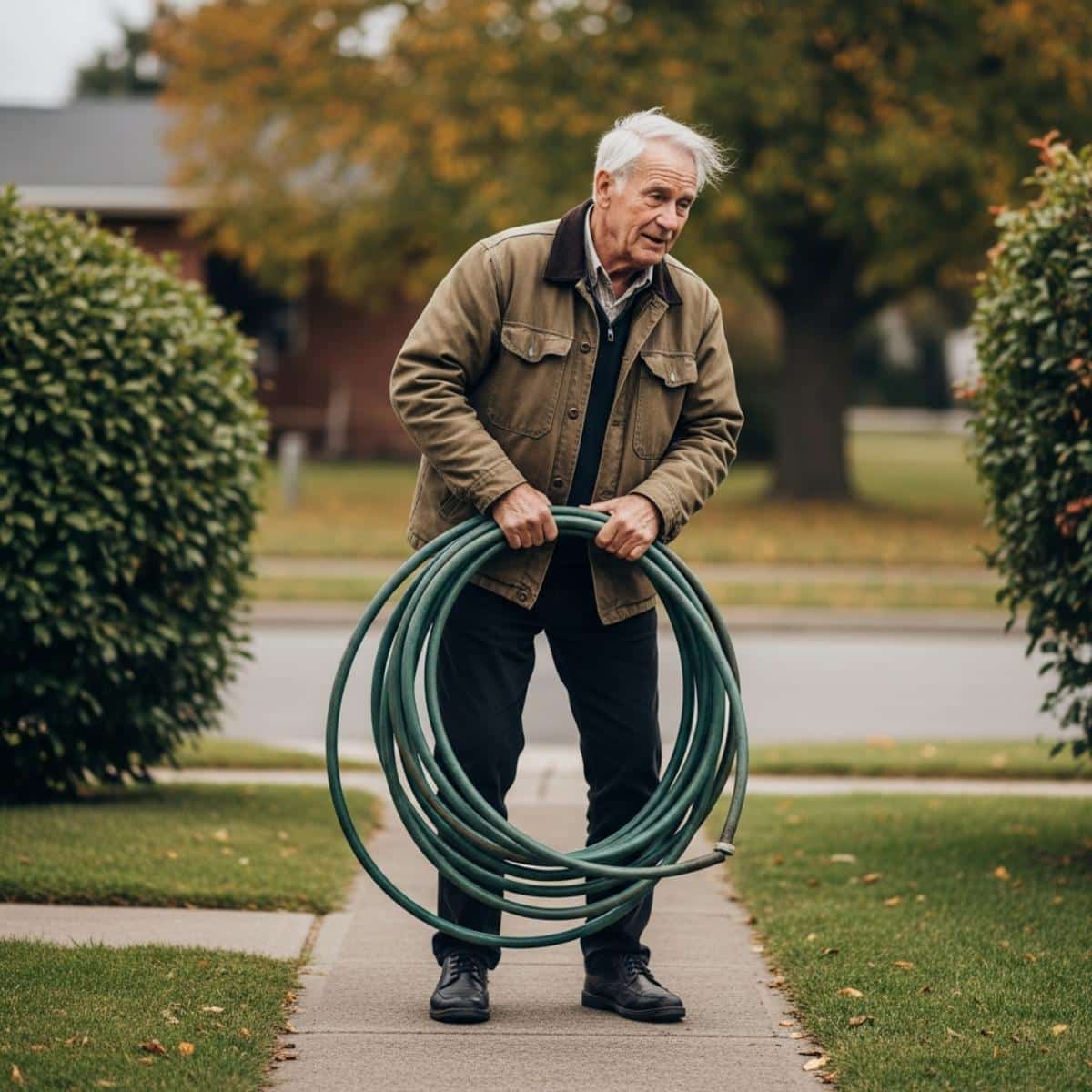
Clear seasonal clutter from walkways: Coiled hoses left near paths, lawn chairs close to entry areas, and decorative items near doors all become hidden trip hazards once obscured by fallen leaves or a light dusting of snow. Store them before the first freeze.
Do a perimeter walk with fresh eyes: Ask yourself: “Would I spot this at dusk, in the rain, or under a thin layer of snow?” That’s the standard that matters in winter.
Home Exterior Fall Audit Checklist: 10 Spots Before Winter
Download this printable 10-spot home exterior checklist to identify fall hazards around your property in just 20 minutes—so you can make simple fixes now and age safely at home all winter long.
Your 20-Minute Audit Is an Act of Independence
A complete home exterior safety audit for seniors doesn’t require a contractor, a full weekend, or a professional eye.
It requires 20 minutes, a willingness to look at familiar spaces deliberately, and a short list of affordable fixes — most of which you can handle yourself or ask a family member to help with in an afternoon.
Whether you’re doing this audit for yourself or walking through it with or for a parent, finishing it means you’ve done something genuinely protective. That’s not overreacting to aging — that’s living wisely and staying in control of your environment.
Do the walkthrough this week while conditions still allow easy fixes. And if you want to take the next step on fall prevention beyond the exterior, this guide on what to do immediately after a senior falls is one of the most practical pieces I’ve written — because preparation includes knowing what to do if something does happen.
Which spot surprised you most when you walked through? Share it in the comments — or tag an adult child who needs to see this before winter arrives.