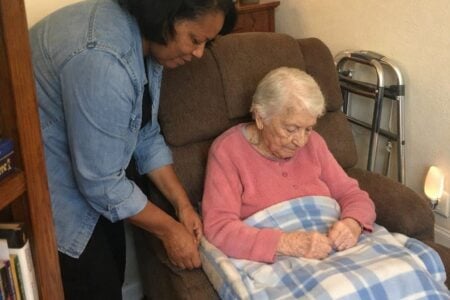
Something happens in caregiving that no one warns you about.
You show up every day, you do the work, you make sure your parent is safe and fed and comfortable – and somewhere in the middle of all that effort, the relationship quietly shifts. Not because you stopped caring. Because the routines took over.
Most caregivers I’ve worked with aren’t making dramatic mistakes. They’re making invisible ones – in the language they use, the choices they skip, the moments they move through too quickly. And those invisible moments are where dignity lives or disappears.
Here’s what I want you to know before we go any further: you’re not doing this wrong. You may just not have been shown how. And the shifts that preserve dignity are often simpler than you’d expect – small enough to try today, significant enough to change everything.
VIdeo: Preserving Your Parent’s Dignity While Providing Care
In this video, you’ll discover how small shifts in language, routine, and approach can maintain your parent’s sense of agency and self-worth—even as they need more help. Most dignity is lost unintentionally, through exhaustion and habit, but it can be preserved with practical changes that actually make caregiving easier, not harder.

Dignity-First Scripts for Everyday Caregiving Moments
Get six word-for-word scripts you can use immediately to transform everyday caregiving moments into respectful conversations that preserve your parent’s dignity and agency—without requiring difficult family dynamics or complicated training.
The Language Patterns That Quietly Strip Dignity
Language is where dignity is lost first – and where it can be restored first.
The patterns that cause the most damage aren’t intentional. They develop out of exhaustion, efficiency, and habits absorbed from watching other caregivers. But the impact lands the same way regardless of intent.
Common Language Patterns That Undermine Dignity
- Talking about your parent in the third person while they’re in the room. “She doesn’t like baths in the morning” – said directly to the doctor while your mother sits three feet away. She heard you. She just stopped reacting.
- Using diminutives or baby-talk. “Let’s get you all cleaned up, sweetie.” For someone who raised a family and navigated decades of life, this lands as a signal that they are no longer seen as an adult.
- Narrating tasks as if your parent can’t process information. “Now I’m going to help you stand up, okay? Here we go.” This strips the moment of any shared participation.
- Making decisions out loud that your parent should be part of. “I told the doctor she’s been more confused lately” – said while your parent is present and capable of speaking for themselves.
None of these patterns come from cruelty. They come from habit, stress, and the relentless pressure to move through tasks efficiently. But over time, they communicate something your parent hears clearly: you are no longer the expert on yourself.
Try these substitutions instead:
- Instead of “She doesn’t like that” – turn and ask: “Mom, do you want to tell Dr. Chen what’s been bothering you?”
- Instead of “Let’s get you cleaned up” – try “Would you like to get freshened up before we head out?”
- Instead of narrating tasks – offer one simple check-in: “Ready? I’ll follow your lead.”

How to Offer Help Without Removing Agency
There’s a meaningful difference between helping someone do something and doing it for them before they’ve asked.
The instinct to step in quickly is understandable. Watching a parent struggle with a button or a jar lid is genuinely hard. But that moment of struggle – when it’s safe and the task is manageable – is often a moment of competence your parent is still capable of claiming.
When you automatically take over, you solve the immediate problem and create a longer one: your parent learns that effort is pointless, because you’ll step in anyway.
Before/After Script Comparison
Before: You notice your parent having trouble buttoning their shirt. You step in, say “Here, let me do that,” and finish the task in ten seconds.
After: You pause, wait a moment, then ask: “Do you want a hand with that, or do you want to try first?”
That question takes five additional seconds. What it communicates takes far longer to build: I still see you as capable. I’m here if you need me, but this is still your task.
This concept – supported independence, being present without being controlling – is also where adaptive clothing from brands like Joe & Bella becomes genuinely useful. When dressing mechanics become easier through magnetic closures or elasticized waistbands, your parent can handle more of the task independently – which means fewer moments where you need to intervene at all.


For more on how maintaining small daily choices supports mental health and confidence, the connection between autonomy and aging in place runs deeper than most families realize.

When Caregiving Routines Cross From Help Into Control
Routines are how caregiving becomes sustainable. But they can calcify – quietly shifting from structures that serve your parent into patterns that serve your schedule.
You’ll know a routine has crossed that line when you notice these signs:
- Your parent no longer makes any choices within their own day
- You decide what they eat, when they bathe, what they wear – without checking in
- Your parent appears increasingly passive, withdrawn, or stopped offering preferences
- Any deviation from the routine is met with resistance or confusion – from you
The most efficient-seeming routines are often the most costly. When a caregiver moves through a morning sequence without pausing once to ask a preference question, they may save ten minutes. But over weeks, the message accumulates: your preferences don’t factor in here.
One Practical Audit You Can Do This Week
Pick your most consistent caregiving routine – morning care, medication, meals – and walk through it in your mind. Identify two or three moments where you currently make an assumption. Then swap one assumption for a question.
- “I’ll make oatmeal” becomes “Are you in the mood for something warm or cold this morning?”
- “Time for your bath” becomes “Would you rather shower now or after breakfast?”
These aren’t dramatic changes. But they tell your parent: you still get to have preferences. This is still your life.
This is also worth reading alongside the research on why seniors resist caregiving help – most resistance is a dignity signal, not stubbornness.
Ready to discover more practical strategies for compassionate, effective caregiving? Subscribe to our newsletter for trusted advice and product recommendations designed for family caregivers navigating every stage of the journey.
Dignity in Personal Care – The Conversations Most Families Avoid
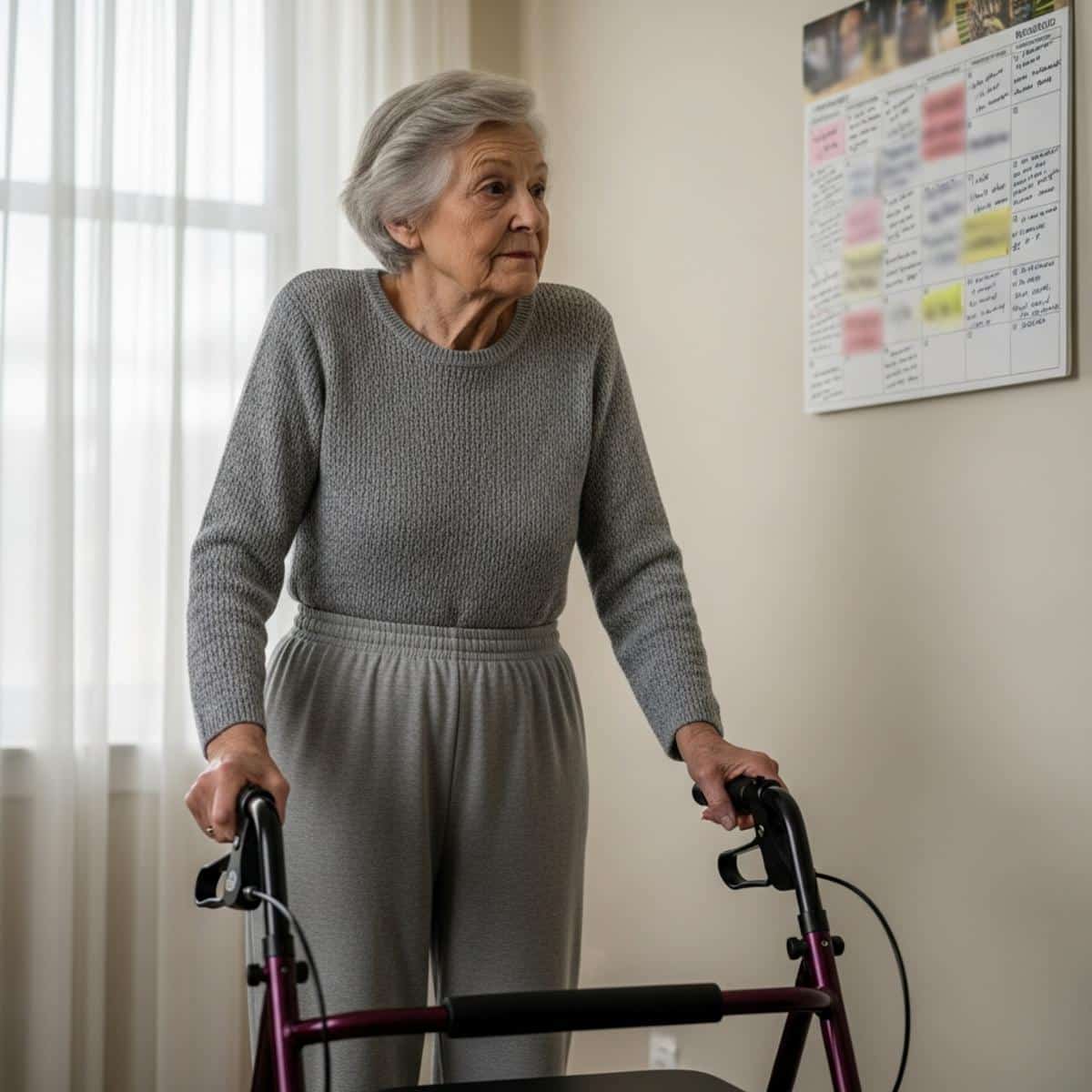
Bathing, dressing, and toileting are the highest-stakes dignity moments in caregiving – and most families navigate them for months or years without ever talking about how to do them respectfully.
These tasks carry enormous emotional weight for your parent. They involve physical vulnerability, loss of privacy, and the profound discomfort of a role reversal that no one prepares for. Moving through them quickly and efficiently – even with the best intentions – can feel like a violation of something that was never meant to be shared this way.
What Seniors Consistently Say They Want in Personal Care Moments
- To be spoken to as an adult, not managed as a task
- To have their preferences honored when they’re expressed
- To maintain as much physical privacy as possible
- To know what’s happening before it happens
Contrast two approaches to a bathing routine:
Approach A: You move efficiently – filling the basin, setting out towels, beginning the process with minimal conversation because it’s faster that way.
Approach B: You take thirty seconds before you begin. You say: “I’m going to help you with your bath now. I’ll check the water temperature – let me know if you’d like it warmer. Do you want to handle the washcloth yourself where you can reach?”
Approach B takes longer by less than a minute. The emotional experience is entirely different.
Digity-preserving bath aids – like a handheld showerhead attachment, a shower chair with modesty draping, or no-rinse bathing products like adult bathing wipes – can also reduce how much physical assistance is needed in the first place. When your parent can bathe with more independence, the intimacy burden on both of you decreases significantly.


Before the next personal care routine, consider having one short conversation: “I want to make sure we’re doing this in a way that feels okay for you. Is there anything you’d want me to do differently?” You may be surprised what your parent has been waiting to say.

What Dignity-Centered Care Actually Changes – and Why It Makes Caregiving Easier
Here’s the part most caregivers don’t expect: preserving dignity isn’t just the right thing to do. It measurably makes your role easier.
Most resistance in caregiving – the arguments about baths, the refusals at medication time, the pushback on basic tasks – isn’t stubbornness. It isn’t cognitive decline. It’s a dignity signal. Your parent is communicating, in the only way left available to them, that something about how help is being offered doesn’t feel okay.
When caregivers shift their language and their routines – even slightly – the friction drops. Not because the parent changed. Because the communication changed.
What Shifts When Dignity Is Protected
- Less resistance during care tasks – seniors who feel respected are more cooperative, not less
- More willingness to ask for help – when asking doesn’t feel like surrendering control, people ask sooner
- Stronger relationship – the caregiving relationship stops being something your parent endures and starts being something they participate in
- Less caregiver burnout – fewer daily battles means more emotional reserve for connection
For families navigating how to talk to aging parents about difficult changes, the same principles apply – conversations built on respect land differently than conversations that feel like announcements.
Tools like Memoryboard also support this dynamic in a practical way. When a senior can see their schedule, their reminders, and family messages on a dedicated screen in their home, they retain a sense of voice and visibility within their own day – which reduces the passive helplessness that caregiving routines can accidentally create.


The caregiver I’ve watched do this work most sustainably share one consistent habit: they treat every interaction as a two-way exchange, not a task to complete. That mindset shift – more than any single technique – is what changes the relationship over time.
Dignity-First Scripts for Everyday Caregiving Moments
Get six word-for-word scripts you can use immediately to transform everyday caregiving moments into respectful conversations that preserve your parent’s dignity and agency—without requiring difficult family dynamics or complicated training.

Your Parent Is Still In There – Start There
Dignity in caregiving isn’t a grand gesture. It doesn’t require a difficult conversation or a complete overhaul of your routine.
It lives in small, repeated choices:
- The moment you turn to include your parent in a conversation instead of speaking over them
- The question you ask instead of the assumption you make
- The pause before you step in to help
- The thirty seconds before a personal care task where you say what’s about to happen and ask one preference
You don’t need to have done everything perfectly to start doing this better. Every caregiver has moments they’d handle differently. The ones who stay connected – whose parents remain willing partners rather than passive recipients – are the ones who keep adjusting.
Pick one pattern from this article. One phrase to retire. One assumption to swap for a question. One routine to audit for a preference checkpoint.
Try it this week and notice what changes – in your parent’s response, and in how the interaction feels for you.
For more on the specific dynamics of how family connection affects senior health outcomes – and why the quality of that connection matters as much as the frequency – that piece is worth reading alongside this one.
If you found something here worth trying, share it in the comments. What’s the one thing you’re going to adjust? Or what do you wish someone had told you earlier in your caregiving journey? I read every response.