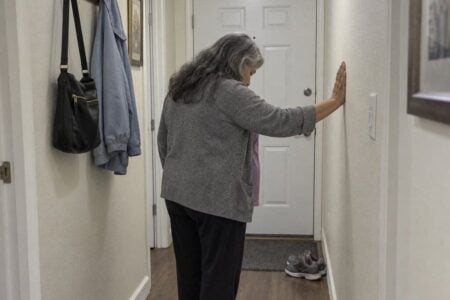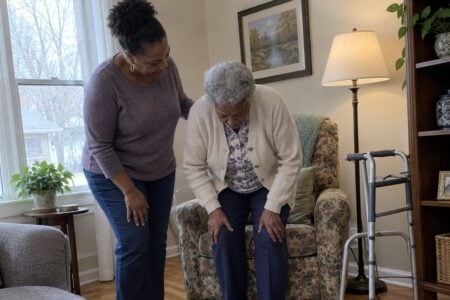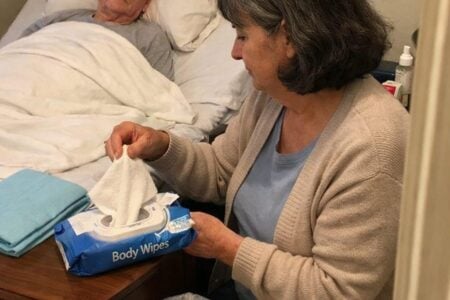
One night you’re helping your mom to the bathroom, and you realize you need better tools for the job. Most of us start caregiving with no manual and adjust after a close call.
This article covers the best home safety products for family caregivers: a gait belt, a non-slip bath mat, grab bars, a bed rail, and a fall detection alert. We’ll go through the riskiest moments of the day, what each product does, and where it falls short, so care is safer for both of you.


The Family Caregiver’s Home Safety Checklist: 5 Essential Tools That Protect You Both
Download this checklist to identify and fix the five most critical fall risks in your home, the same safety tools professional caregivers use every day to protect the people they serve.
Why the Right Tools Change Everything
Caregiving without the proper equipment creates risk on both sides of the equation.
Falls and transfer injuries are among the most common home caregiving accidents, and they don’t just affect the person being cared for. Back strain, shoulder injuries, and caregiver falls during transfers are serious, preventable problems that too many family caregivers experience firsthand.
Improvised Approaches Often Backfire
Grabbing a loved one by the arm, using furniture as a pivot point, or leaning on a towel bar for support might feel natural in the moment, but they’re unreliable in ways that matter.
The right equipment isn’t a sign that things have gotten worse. It’s a sign that you’re thinking clearly about how to protect both of you over the long haul.
Think of this list as a practical home safety checklist for family caregivers. It’s not a clinical prescription, but a starting point built around the moments where accidents are most likely to happen.
Let’s start with one of the most overlooked but most impactful tools on this list.
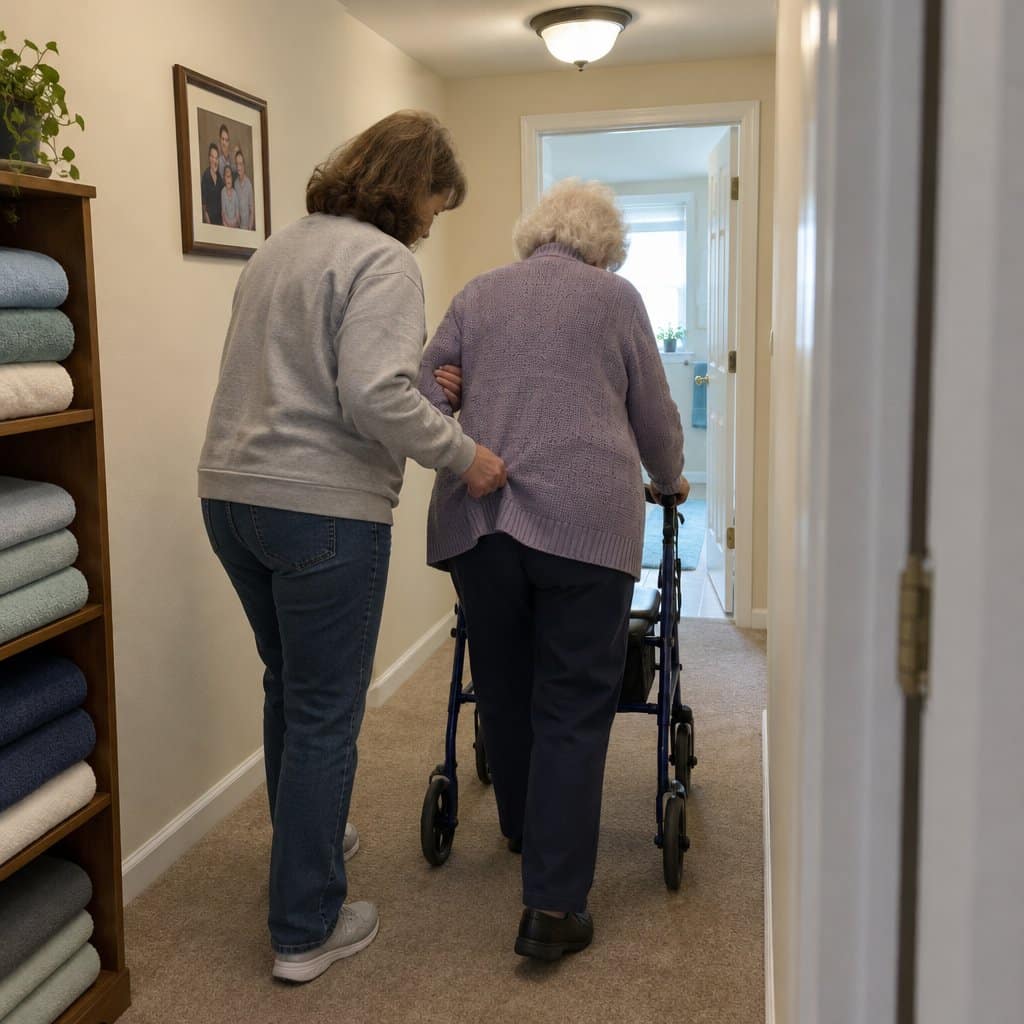
Product #1: A Gait Belt for Safe Transfers and Mobility Assistance
Rhino Valley Gait Belt


If you’ve never heard of a gait belt, you’re not alone. It’s one of the most underused tools in family caregiving, and one of the most valuable.
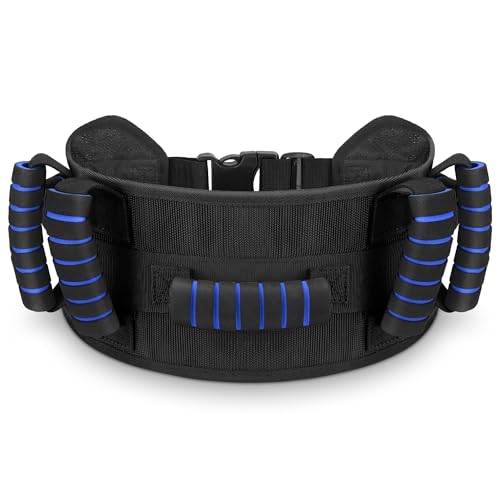
Silimore Gait Belt
The Silimore Gait Belt has seven padded handles spaced around it. That gives you a choice of where to grip, so you can keep your wrists straight while helping someone stand up. It beats grabbing a plain strap or a handful of shirt.
It fits waists from 32 to 55 inches and goes on over everyday clothing. The quick-release buckle holds under load and opens with one press, so taking it off takes a moment.
It suits a family caregiver who helps with sit-to-stand moves and wants a better hold on the person they are helping. The handles are also easier on your own hands during a transfer.
The trade-off is that it is bulkier than a plain belt. A therapist used to standard hospital-style belts may find it unfamiliar, so ask them to show you how they want it used. No weight rating is given on the product or packaging, so it is not the right pick if you need a stated weight limit.
Vive Health Transfer Belt

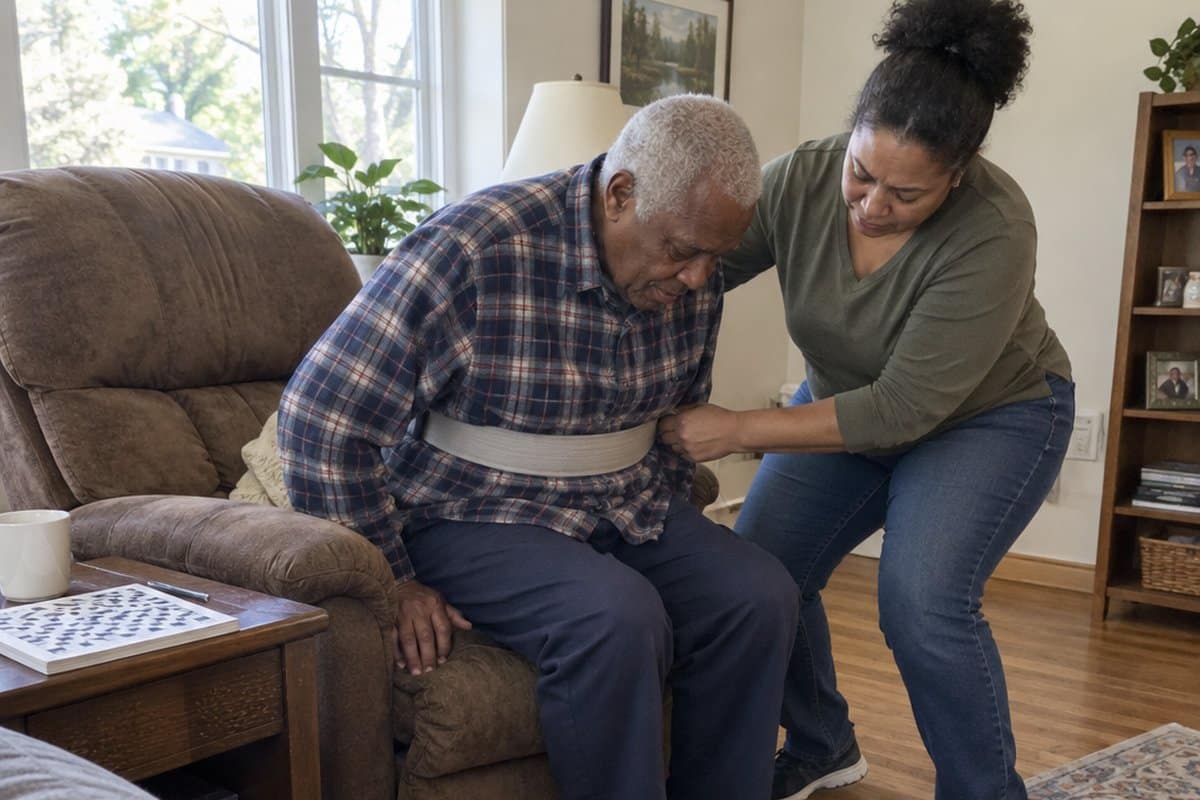
This is the Vive Health transfer belt, another name for a gait belt. It’s a strap that goes around the waist of the person you’re helping, so you have something solid to hold when they stand, sit, or move from bed to chair.
The strap is 2-inch cotton, soft against the skin, and latex-free, which matters if the person you care for has sensitive skin. The metal buckle has locking teeth so it doesn’t slip while you’re moving, and it releases quickly when you’re done. It supports up to 500 lbs.
It suits family caregivers helping someone who can bear some of their own weight but needs a steady hand. A belt gives you a better grip than grabbing an arm or clothing, which can hurt the person and strain your back.
The trade-off: it’s an aid for guiding and steadying, not a lift. If the person can’t bear any weight, you need a different kind of equipment. Ask a doctor or physical therapist to show you how to use the belt properly before you rely on it.
What It Is and How It Works
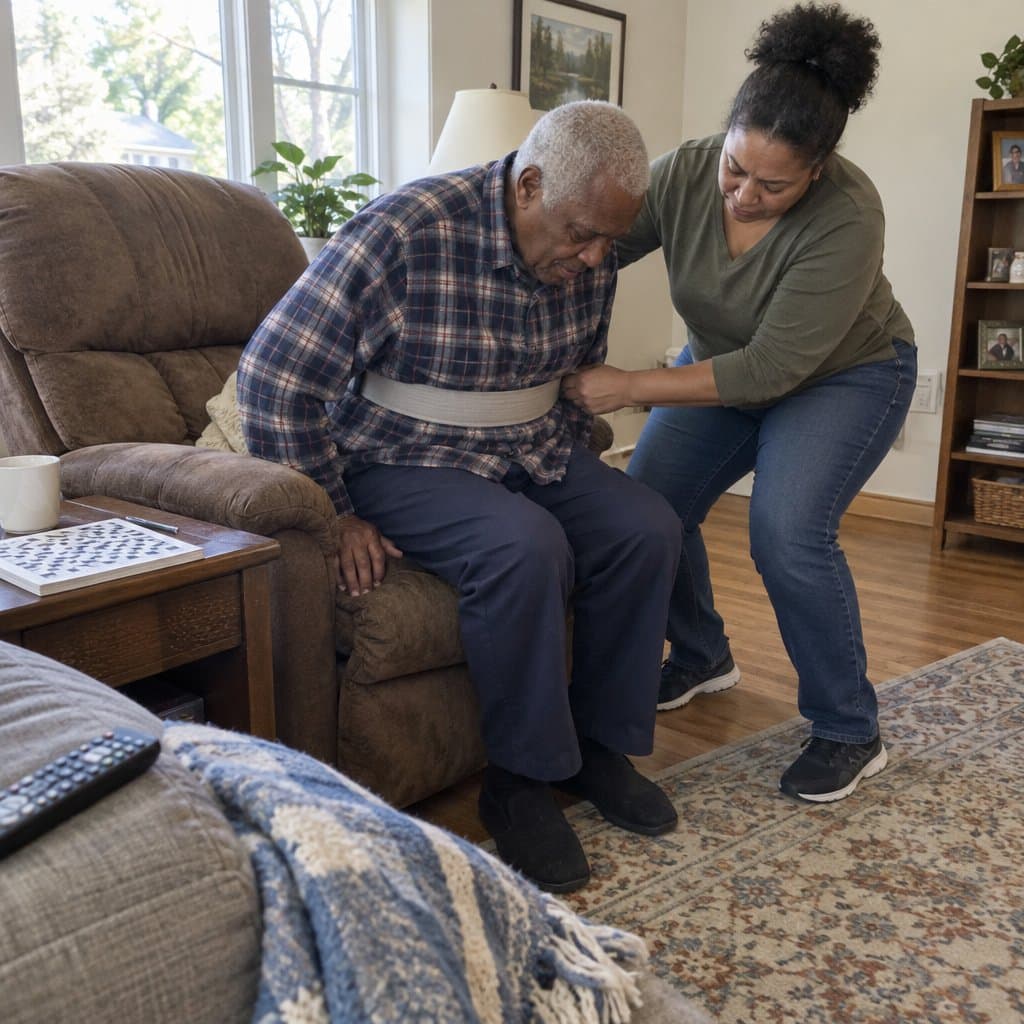
A gait belt is a sturdy, adjustable belt that fastens around the care recipient’s waist. It gives you a secure, controlled grip point during transfers: sitting to standing, standing to walking, moving from bed to chair, or helping someone to the toilet.
If you want to see what a good one looks like, here is my look at a transfer belt with seven handles for family caregivers.
Instead of grabbing clothing (which can slip, tear, or pull awkwardly) or holding someone’s arm (which strains their shoulder and yours), you hold the belt. It keeps both of you stable and in control.
Why Family Caregivers Need One
The most common transfer-related injuries happen when a caregiver improvises, and those moments add up daily. A gait belt isn’t a sign of decline; it’s a tool for staying mobile safely. If you want a closer look at one option, here is my look at a transfer belt with seven handles.


Your loved one may feel more confident knowing there’s a reliable handhold available. It can reduce the fear of falling during the transfer, which often makes movement easier and more cooperative.
How to Use It Correctly
Fit the belt snugly around the waist, over clothing and not against skin. You should be able to slide two fingers underneath, but no more. Grip the belt from underneath with both hands, bending your knees rather than your back when supporting movement.
Before first use, practice the fit while your loved one is seated and stable. Make sure they understand what you’re doing and feel comfortable before you begin any assisted movement.
For more guidance on how to keep your loved one moving safely at home, the fall prevention checklist covers complementary strategies worth building into your routine.
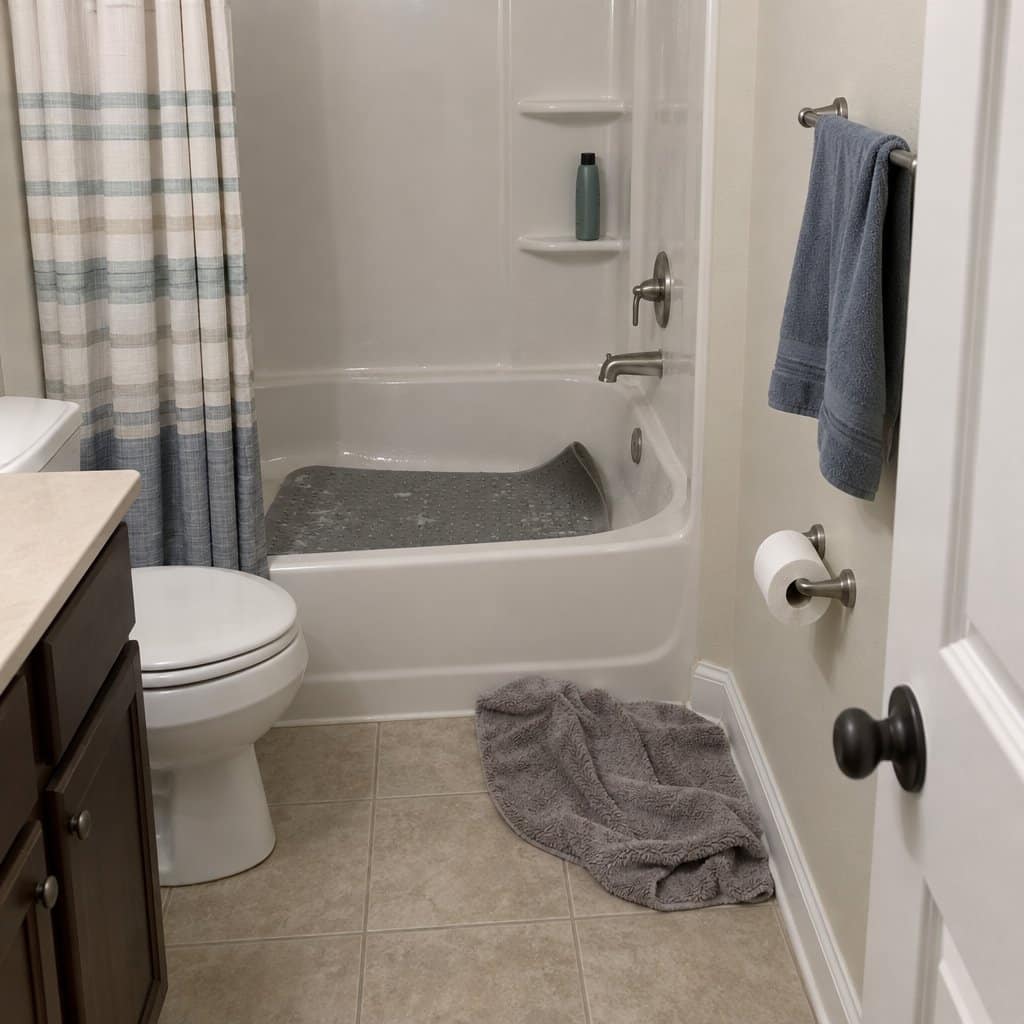
Product #2: A Non-Slip Bath Mat for Bathroom Fall Prevention
SlipX Solutions Weighted Non-Slip Bath Mat

The bathroom is one of the riskiest rooms in the home. Wet surfaces, tight spaces, and the awkward movements required to step in and out of a tub or shower create a perfect storm for slips.
What Makes This a First-Line Defense
A non-slip bath mat addresses the most common entry-point fall scenario, and it does it for $15 to $30.


Look for these features when choosing one:
- Suction cup backing: keeps the mat firmly anchored to the tub or shower floor
- Textured surface: provides grip even when wet
- Appropriate sizing: should cover the standing area fully without bunching at the edges
Double Your Coverage
Place one mat inside the tub or shower, and a second outside for the step-out moment. That second mat is often forgotten, and it’s frequently where the slip actually happens.
A quick bathroom walk-through right now can help you identify every wet-floor transition point in your home. Each one is a candidate for a mat.
For a broader look at bathroom safety upgrades that make a real difference, the bathroom safety products guide is a practical place to continue.
Caring for a loved one is a journey filled with dedication, challenges, and meaningful moments. But even the smallest tips and tools can ease the load. Each week, I share trusted advice and helpful resources to make your caregiving role a little lighter. Subscribe to our newsletter for more tips: Join here
Product #3: Grab Bars for Bathroom and Hallway Support
Carex Bathtub Rail


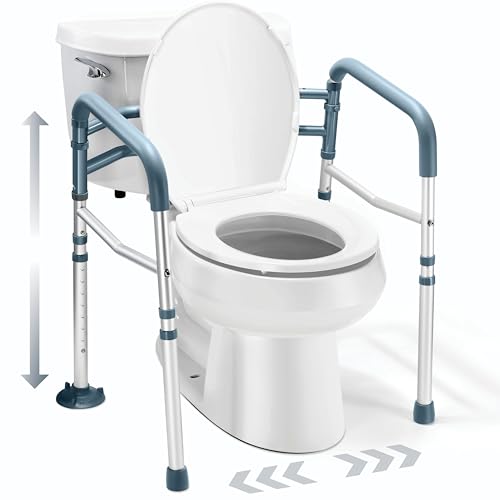


Here’s something worth knowing: towel bars and toilet paper holders are not designed to hold a person’s weight. But many people grab them anyway, because there’s nothing else within reach.
Why Grab Bars Belong in More Than Just the Shower
Grab bars for bathroom safety provide the kind of structural, reliable support that furniture was never built to offer.


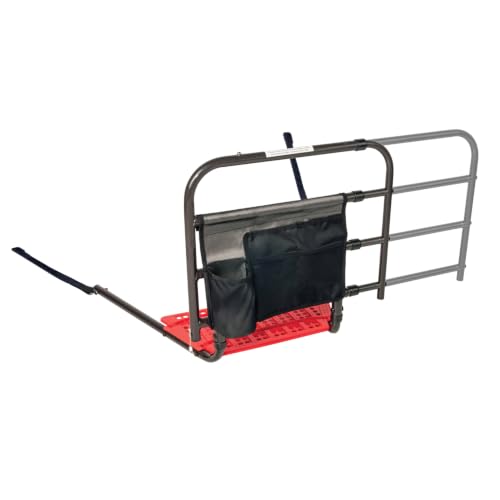


The highest-impact placement locations are:
- Beside the toilet: for sitting down and standing up
- Inside the shower: for balance during washing
- At the tub entry point: for stepping over the threshold
- In hallways: for longer stretches between support points
Installation Doesn’t Have to Be Complicated
For renters or those not ready to drill into tile, tension-mounted grab bars offer a tool-free option. For permanent installation, hardware-mounted bars anchored into wall studs provide the most reliable support.
Modern grab bars are also available in brushed nickel, chrome, and matte black. These finishes blend with standard bathroom fixtures rather than signaling “medical equipment.”
Walk through the home with your loved one and note every transition point where a grab bar would provide meaningful support. You may find more spots than you expect.
The shower safety tips guide offers additional bathroom modification ideas worth reviewing alongside grab bar placement.
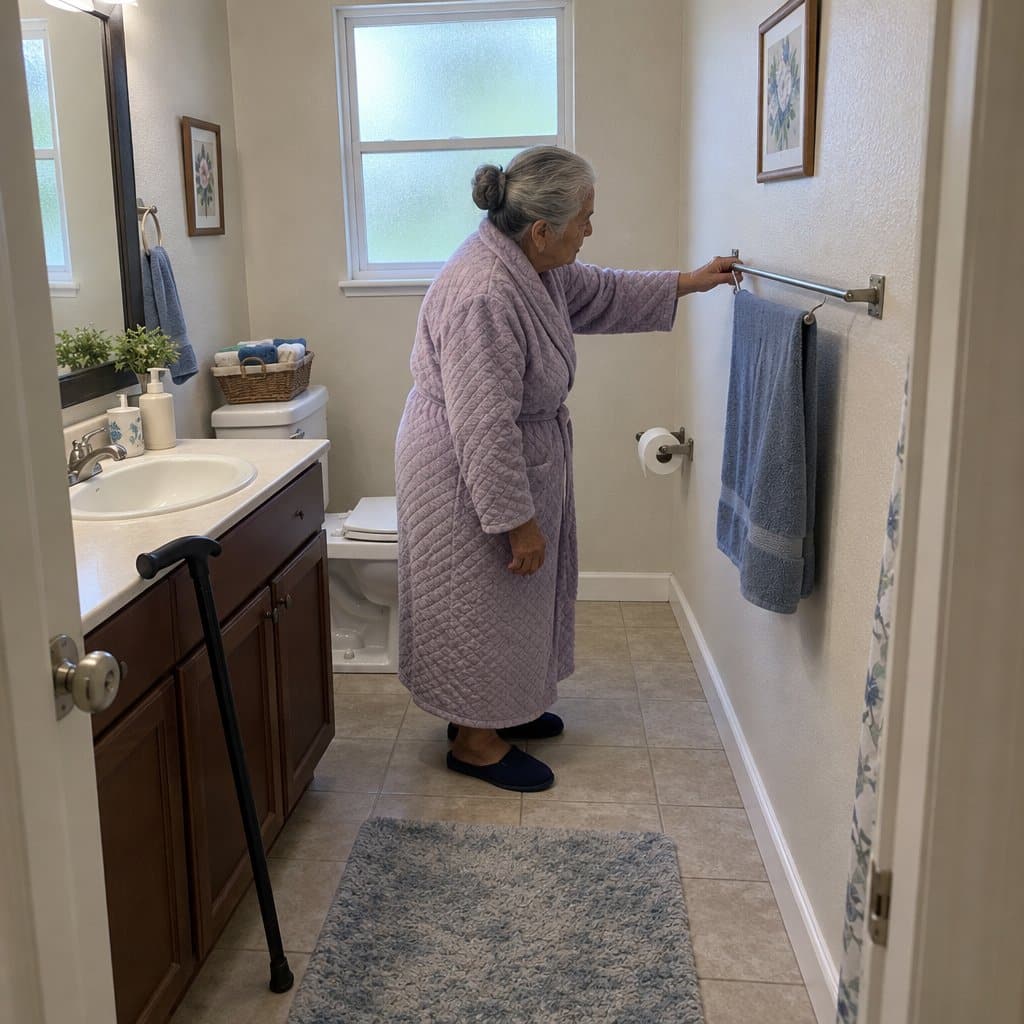
Product #4: A Bed Rail for Nighttime Safety and Independent Repositioning
HONEYBULL Bed Rail


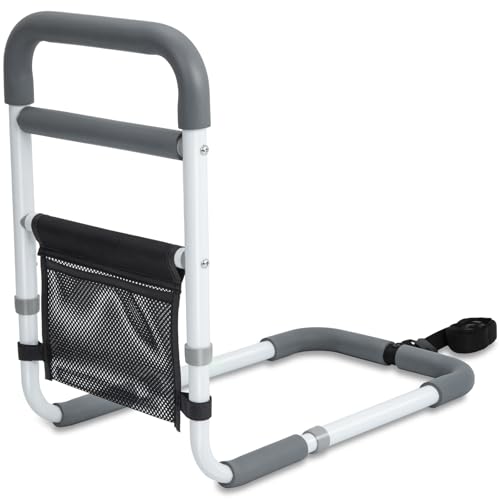

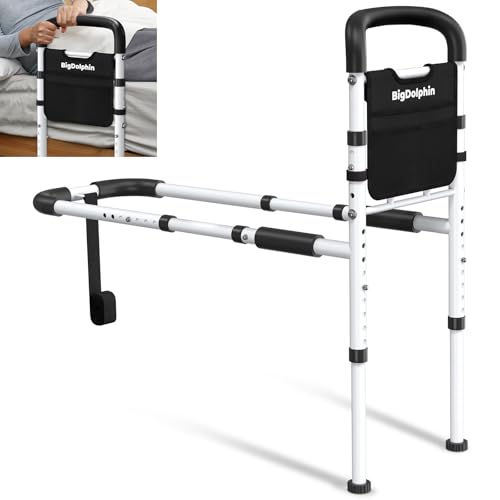

Getting in and out of bed is a moment of vulnerability, and it happens multiple times a day, often without calling for help.
Step2Bed Bed Rail with LED Light


The Step2Bed puts grab bars, an adjustable-height step, and an LED light in one bedside unit. Those are the three things that make getting out of bed at night risky: nothing to hold, a long drop to the floor, and not enough light to see where your feet are going.
What stands out is that it is a single piece. You don’t have to match a separate rail, step stool, and night light and hope they work together. The step height adjusts, so it can fit different bed setups, from platform frames to pillow-top mattresses. The light shines on the step surface, which helps at 3 a.m.
It is built to work alongside your existing bed frame. It is not a full-length bed rail, so it won’t keep someone from rolling out in their sleep. If that is the worry, this is the wrong product.
Check the weight capacity and height range before you buy, and make sure they fit the person using it and the height of the bed. Those numbers matter more than anything else here.
The Dual Function That Makes This Essential
A bed rail at home serves two purposes: it supports independent sitting up in bed, and it provides a stable handhold during the stand-to-sit transfer.


At night, this matters most. Someone who wakes up disoriented or needing the bathroom may not want to wake a family member. A bed rail lets them sit up and stabilize themselves without calling out, which restores a small but meaningful piece of independence.
Choosing the Right Type
For home caregiving, a half rail (typically positioned at the upper half of the mattress) is generally more appropriate than a full-length side rail. It supports transfers without creating a barrier that restricts movement.
Key safety considerations:
- Ensure proper fit to the mattress depth: gaps between the rail and mattress create entrapment risk
- Check the weight rating before purchasing
- Measure the bed frame and mattress thickness before ordering
For more on making the bed itself easier and safer to use, the guide on getting in and out of bed more easily covers complementary adjustments worth considering alongside a rail.
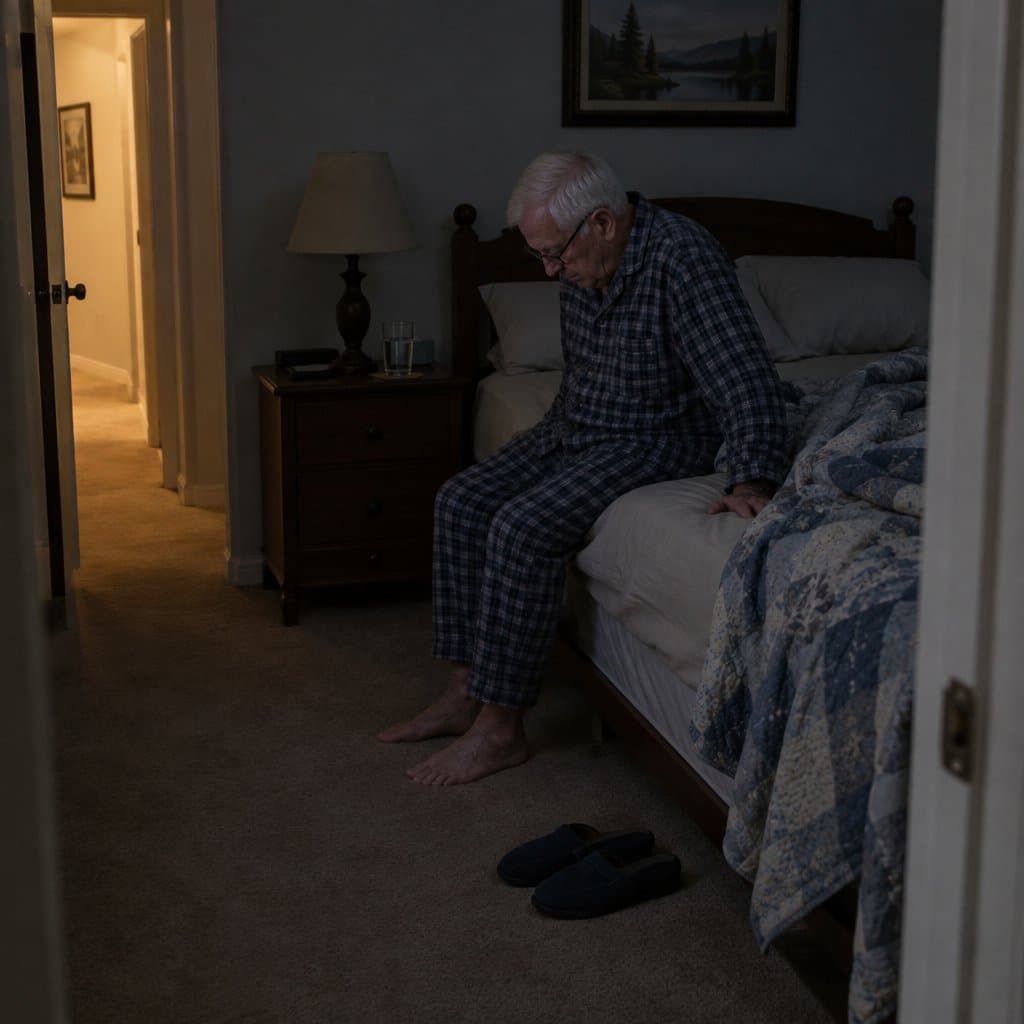
Product #5: A Fall Detection Alert for Independent Monitoring
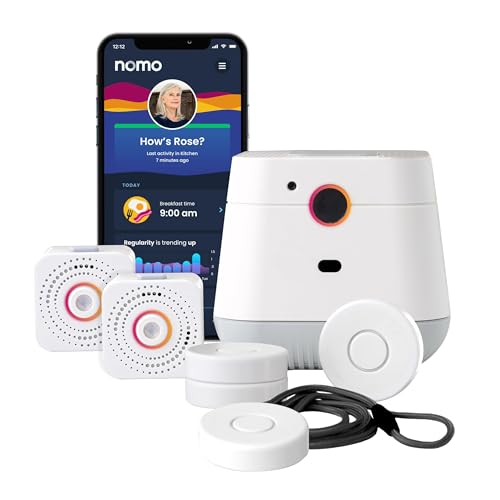
NOMO Smart Care Fall Detection System


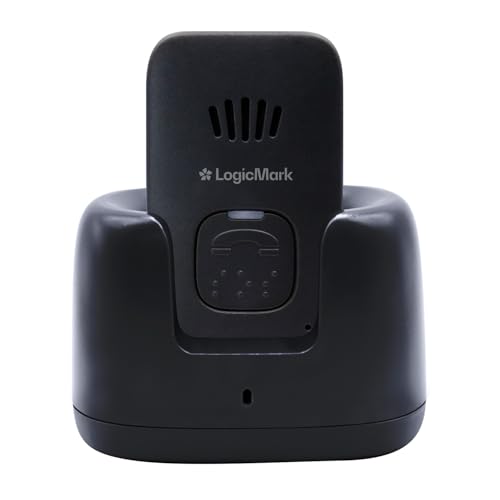


Even in a well-prepared home, falls can still happen. No amount of safety equipment eliminates all risk, especially during unsupervised moments when you’re at work, in another room, or asleep.
CallToU Bed Alarm


The CallToU bed alarm is a sensor that tells you when someone at risk of falling gets out of bed. It is not worn, so there is nothing for the person to put on or forget. When they stand, the sensor sends a silent vibration to a portable pager you keep with you.
That suits a caregiver who sleeps lightly out of worry, or who is busy in the kitchen or laundry room. The pager works 50 to 100 feet away, and the vibration-only mode means no loud alarm startles the person in bed or wakes the rest of the house. It is made with dementia and wandering in mind.
The sensor is built to tell standing up on purpose from ordinary restless sleep, which should mean fewer false alarms. Fewer needless wake-ups matter when you are already worn out.
There are two trade-offs. One sensor goes with one pager, so watching more than one room means buying more units. And placement matters: it has to sit within 1 to 3 feet of the bed edge to detect reliably. Plan to test it in place before you count on it.
Why Detection Matters as Much as Prevention
A fall detection alert for seniors goes beyond a standard medical alert button by detecting a fall automatically, without requiring the person to press anything.


That distinction matters enormously. If a fall leaves someone disoriented, unable to reach the button, or simply too stunned to act, automatic detection is the difference between a quick response and a dangerous delay.
What to Look For
When researching options, prioritize these features:
- Automatic fall detection: not just a manual SOS button
- Two-way communication: so the monitoring center can speak directly with your loved one
- 24/7 professional monitoring: device-to-phone alerts alone aren’t enough for overnight or away-from-home coverage
- GPS capability: for people who move between locations
This tool doesn’t replace hands-on care. It’s a safety net that can ease a caregiver’s worry without requiring you to be there every moment.
The medical alert watches review is a helpful companion resource for comparing options across different device styles and monitoring plans.
The Family Caregiver’s Home Safety Checklist: 5 Essential Tools That Protect You Both
Download this checklist to identify and fix the five most critical fall risks in your home, the same safety tools professional caregivers use every day to protect the people they serve.
You’re Already Doing the Hard Part
These five tools don’t transform caregiving. They support it. They address the highest-risk moments in daily home care and reduce the chance that a manageable situation becomes a serious injury.
Equipping your home thoughtfully is one of the most useful things you can do for your loved one’s safety and your own.
Knowing what tools to reach for, and how to use them, is a skill. You’re already building it.
Start with just one item from this list this week. Choose whichever feels most urgent based on what’s happening in your home right now. Then come back for the next one.
Your five-product home safety checklist:
- ✅ Gait belt: for safe transfers and mobility assistance
- ✅ Non-slip bath mat: for bathroom fall prevention at entry and exit points
- ✅ Grab bars: for structural support in the bathroom and hallway
- ✅ Bed rail: for nighttime safety and independent repositioning
- ✅ Fall detection alert: for monitoring coverage when you can’t be present
Which of these is most relevant to your situation right now? Share in the comments. Your experience might be exactly what another caregiver needs to hear today.