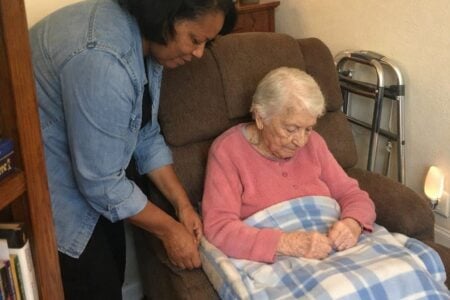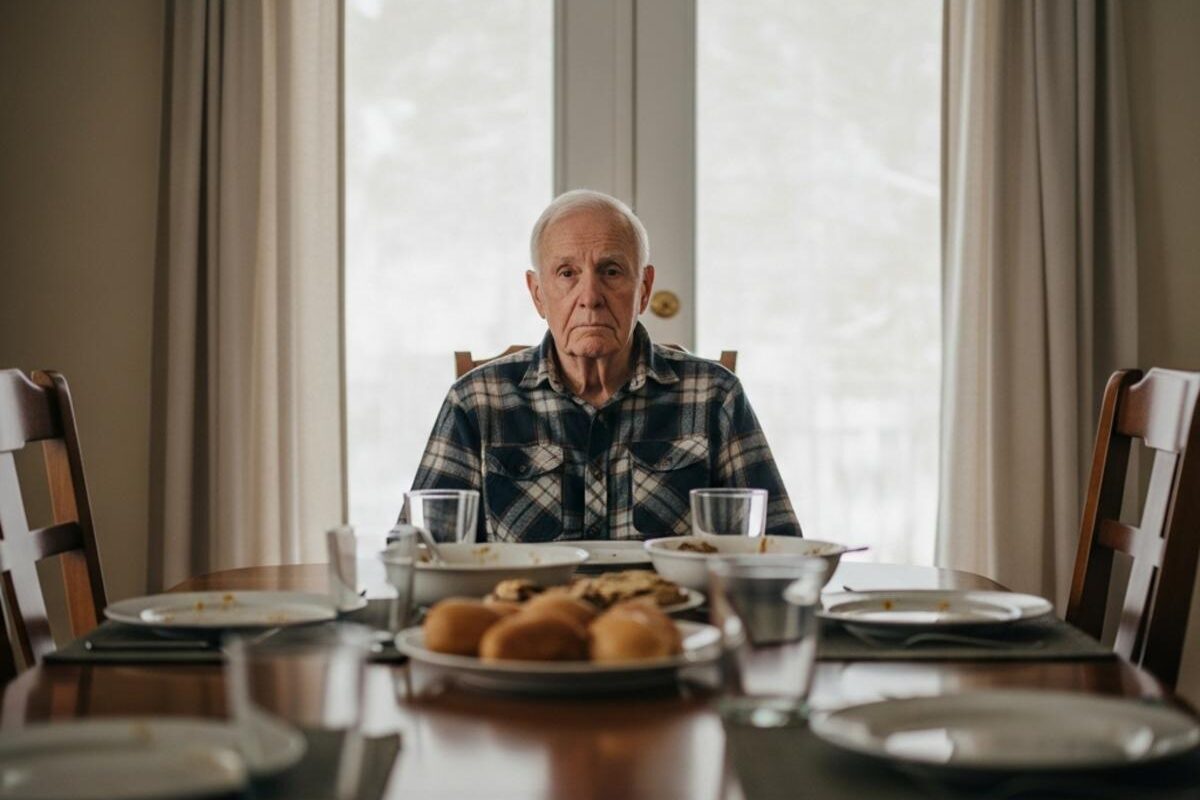
Your parent used to call every Sunday. Now the phone sits silent. They’ve stopped tending the garden they loved for decades. At the last family dinner, they seemed confused — struggling to follow the conversation, withdrawing before dessert was even served.
You’ve been quietly bracing yourself for the word nobody wants to hear. Dementia.
But what if that assumption — as natural as it is — is pointing everyone in the wrong direction?
Is It Depression or Dementia? A Caregiver’s Checklist
Get this step-by-step checklist that helps you document behavioral changes, identify risk factors, and ask the right questions at your loved one’s next medical appointment—so you can confidently distinguish between depression and dementia instead of guessing.

Depression in Older Adults Doesn’t Look Like What You Expect
Most people picture depression as visible sadness — tearful, withdrawn, openly struggling. In older adults, it almost never looks that way.
Instead, depression in older adults often shows up as:
- Quietness and disengagement from people and activities they once loved
- A flat, emotionless affect — not sad, just… absent
- Confusion, forgetfulness, and difficulty tracking conversations
- Increased irritability or agitation that seems to come from nowhere
- Physical complaints — fatigue, pain — without a clear medical cause
Clinicians call this masked depression, and it’s more common in seniors than most families realize.
A generation raised to push through hardship doesn’t easily say “I’m not okay.” Cultural stoicism, reluctance to burden family, and a lifetime of dismissing emotional struggle all make self-reporting unlikely.
So what you see instead is a parent who seems like a different person — less engaged, harder to reach, more confused — and no clear explanation for why.
If your parent seems like a shadow of themselves, that observation matters. It doesn’t automatically point to dementia. It points to something worth investigating carefully.

Why the Overlap With Dementia Makes This So Easy to Miss
Here’s what makes this genuinely difficult: depression and early dementia share many of the same visible symptoms.
Both can cause:
- Memory lapses and difficulty concentrating
- Slowed thinking and processing
- Social withdrawal and loss of interest in activities
- Reduced ability to manage daily tasks
There’s even a clinical term for this — pseudodementia — which describes severe depression that produces dementia-like cognitive symptoms. The critical distinction: those symptoms are reversible when the depression is properly treated.
A standard cognitive screening conducted during a short appointment, without accounting for a patient’s recent history, can result in a dementia label being applied when depression is the underlying cause.
This isn’t about blaming any individual physician. It’s a documented, recognized gap in how senior mental health is evaluated — and understanding it is what allows you to help close it for your loved one.
The risk factors that make older adults especially vulnerable to depression are worth knowing:
- Loss events: death of a spouse or close friends, loss of independence, loss of a pet
- Major life transitions: retirement, relocation, moving to a care facility
- Chronic pain or illness: conditions that limit mobility or daily function
- Medication side effects: some blood pressure and sleep medications are associated with mood changes
- Isolation: reduced social contact compounds every other risk factor
A senior who recently lost their spouse, moved to a new home, and started a new medication might present with symptoms that look identical to early-stage dementia on a standard screening — without anyone connecting the contributing factors.
Raising those context points directly with the medical team — not just describing the symptoms — can change the direction of the evaluation entirely.
Understanding how senior isolation compounds these symptoms is part of seeing the full picture that a clinician may miss in a 15-minute appointment.
Want more trusted guidance on supporting your aging loved one’s health and wellbeing? Subscribe to our newsletter for expert-tested tips and practical resources designed specifically for family caregivers.

What to Watch For: A Practical Checklist for Caregivers
You don’t need a medical degree to notice these patterns. You need to trust what you’re observing and document it with enough specificity to be useful.
The following warning signs, when persistent rather than occasional, warrant a formal evaluation:
- Withdrawal from previously enjoyed activities or social relationships
- Increased irritability, agitation, or unexplained frustration
- Complaints of fatigue or physical pain without clear medical cause
- Neglecting personal hygiene or household routines
- Expressions of hopelessness, feeling like a burden, or worthlessness
- Significant changes in appetite or sleep patterns
- Forgetfulness or difficulty concentrating that is new or noticeably worsening
How long before it’s a concern? When these behaviors are consistent over two weeks or more — not an occasional rough day.
The most powerful thing you can bring to a doctor’s appointment is documentation, not just impressions. “She just seems off” is easy to overlook. “Over the past six weeks, she’s stopped calling her sister, lost 8 pounds, and mentioned twice that she feels like a burden” is clinical information.
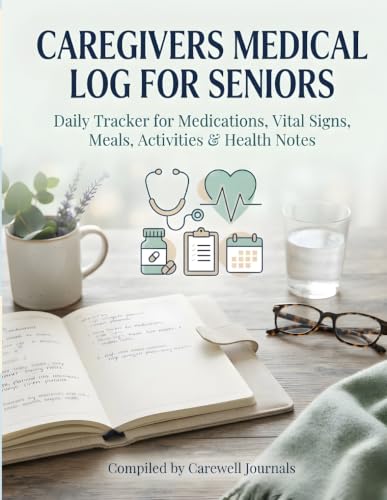
Some caregivers use a mood-tracking journal to log specific behaviors between appointments — noting what happened, how frequently, and when it started. Tools like the MemoryBoard daily reminder and communication system can also help families track behavioral patterns and flag changes that might otherwise blur together across weeks of caregiving.



For more on how consistent family connection affects a senior’s mood and cognitive health, the research is clear: the relational environment matters.

How to Raise This With a Doctor Without Being Dismissed
Saying “I think my mom is depressed” is often less effective than you’d hope. It invites quick reassurance and a short conversation.
Here’s what works better:
Describe specific, observable behavior changes with timeline and context.
Instead of: “She seems sad and confused.”
Try: “Over the past six weeks, she has stopped calling her sister, lost interest in her garden, and mentioned twice that she feels like a burden. These are new behaviors that started after her medication change in March.”
Request a formal screening tool by name. Ask specifically for the Geriatric Depression Scale (GDS) — a validated tool designed for older adults that accounts for how depression presents differently in this age group.
Name the contributing risk factors explicitly. Don’t assume the doctor has connected the dots between the recent move, the medication change, and the behavioral shift. Lay it out directly.
If your concern is minimized too quickly, ask for a referral to a geriatrician or geriatric psychiatrist. “It’s just her age” is not a complete evaluation — and you have every right to say so.
You are not overreacting. Asking for a thorough evaluation is a reasonable, appropriate request. It may change everything.
For additional language and strategies, understanding how to talk to aging parents and their care teams respectfully can help you advocate effectively without creating defensiveness.
Is It Depression or Dementia? A Caregiver’s Checklist
Get this step-by-step checklist that helps you document behavioral changes, identify risk factors, and ask the right questions at your loved one’s next medical appointment—so you can confidently distinguish between depression and dementia instead of guessing.
Non-Pharmacological Approaches That Can Support Recovery
Medication is one important tool — but it isn’t the only one, and it doesn’t have to be the first conversation.
There are meaningful, caregiver-accessible strategies that can support senior mental health alongside whatever treatment path the doctor recommends:
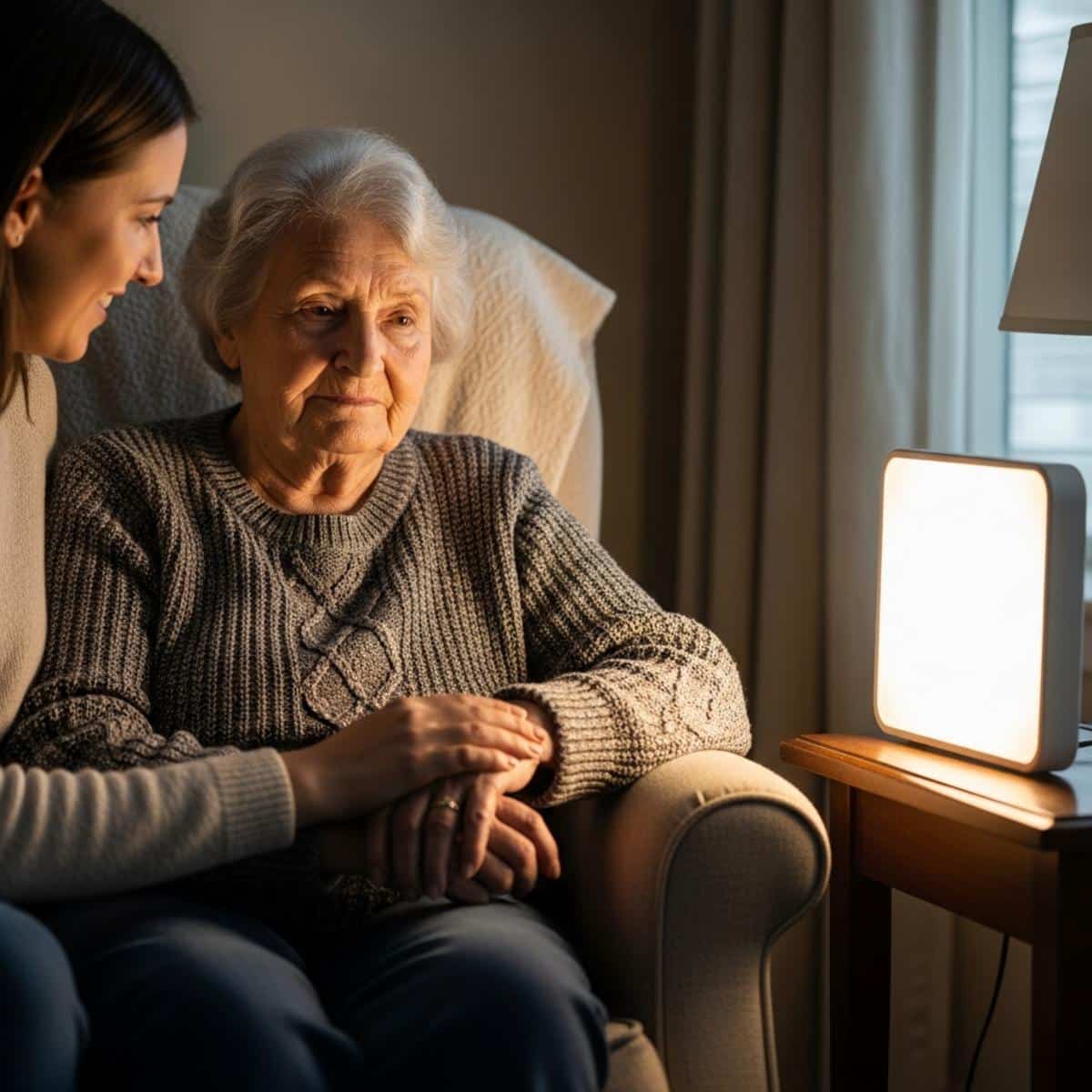
Social engagement is one of the most evidence-backed interventions available. Even brief, consistent contact reduces isolation’s compounding effect on mood. A weekly video call, a regular shared activity, or structured family visits that prioritize genuine connection over task-checking can make a measurable difference.
Light exposure matters more than most people realize. Many seniors spend the majority of their time indoors, and reduced light exposure is directly linked to mood dysregulation. Some families incorporate a light therapy lamp into a morning routine — particularly for seniors who don’t get outside regularly — as a low-effort, well-documented mood support strategy.



Sleep quality and depression are tightly linked. Poor sleep worsens cognitive symptoms and compounds emotional flatness. Addressing circadian disruption and sleep problems can support mental health in ways that are often underestimated. Some caregivers add a white-noise machine or sound conditioner to a loved one’s bedroom as a simple, non-pharmacological sleep support.







Structured daily routine provides purpose and predictability. A consistent schedule — even a loose one — reduces the ambient anxiety that comes with unstructured days and the loss of former roles.
Encouraging autonomy is essential. Supporting recovery doesn’t mean taking over. Preserving your loved one’s independence in daily decisions, even small ones, directly supports their sense of identity and agency — both of which are protective against depression.
You don’t have to wait for the perfect treatment plan to start helping. Small, consistent environmental and relational changes can make a real difference right now.
You Are the Most Important Part of This Evaluation
Depression in older adults is real, common, and — critically — treatable. Withdrawal, confusion, and memory lapses don’t always point where we assume they do.
I’ve seen this pattern repeatedly in my work with older adults and their families: a caregiver notices something is wrong, assumes the worst, and the actual cause gets missed because no one asked the right questions. The caregiver’s observations were accurate. The direction of the investigation just needed adjusting.
You are your loved one’s best advocate. You see the patterns that a clinician sees for 15 minutes. Trusting those observations, documenting what you notice, and asking the right questions at the next appointment is not overstepping — it is exactly what good caregiving looks like.
This week, use the checklist from Section 4. Write down two or three specific behaviors you want to raise at the next appointment — with dates, context, and frequency. That one step can change the entire direction of your loved one’s care.
Have you noticed changes in a parent that felt like more than normal aging? Share what you’ve seen in the comments. Your experience may help another caregiver recognize the signs before more time passes.