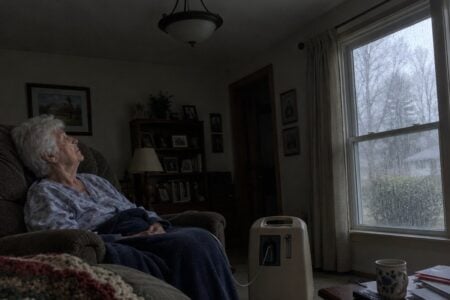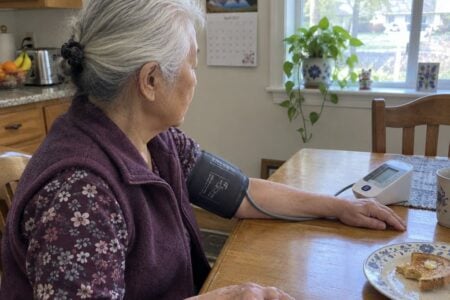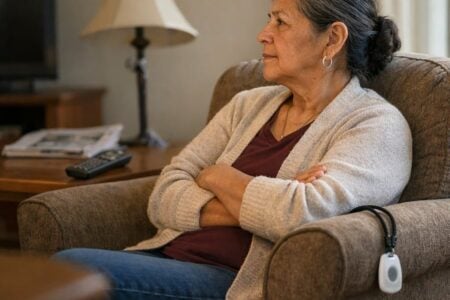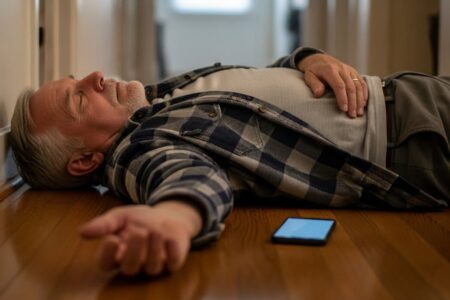
Picture a grocery store parking lot, and someone who can’t answer a paramedic’s questions. Nobody knows her medications, her allergies, or what she wants done. This article covers emergency medical information for seniors: what first responders look for, and where to put it so they find it.
We also cover why the first few minutes matter, medical alert bracelet vs. wallet card, how to set up a wallet card today even if your parent lives far away, and why a card matters even more with memory loss and dementia.
Emergency Medical Information Checklist for Seniors: What First Responders Need to Find, and Where to Put It
Get a complete, step-by-step system to organize your critical medical information exactly where first responders will find it, so you’re prepared for any emergency, whether you’re at home or away.
A Brief Note on How EMS Actually Works
Here is something most articles won’t tell you plainly: there is no single national protocol for where first responders look for medical information. What a paramedic is trained to check (the fridge, the wallet, a medical ID bracelet) varies by state, county, and individual agency.
That variation is exactly why redundancy matters more than finding the one “right” system. If one channel is missed, another may be found.
The One Step That Makes Everything Else Local
Before you buy anything or set up any system, do this: call the non-emergency line for your local fire department or EMS agency. Ask them two questions:
- Do you recognize the File of Life or a similar fridge-door system?
- What do you look for when a patient is unresponsive and alone?
The answer will vary, and that’s the point. Some agencies actively look for fridge-door envelopes and recognize the decals. Others focus primarily on wallet and jewelry. Some do both. You cannot know without asking, and asking takes five minutes.
A Note on Advance Directives and DNR Paperwork
Advance directives and DNR paperwork have real legal requirements that differ significantly by state. This article is about making information findable, not about treatment decisions or legal documents. For guidance on those, contact your state’s health department or your primary care physician directly.
Preparing this information is not morbid. It is the clearest possible expression of wanting to stay in control of your own care, even when you cannot speak for yourself.
Why the First Few Minutes Matter
When someone is unresponsive, disoriented, or unable to speak clearly, responders have to make fast decisions with very little to go on. They want to know what medications the person takes, whether there are allergies, whether there is a heart condition, diabetes, or dementia, and who to call right now.
Without those answers, treatment can be delayed while someone tracks down records or waits for a family member to arrive. For a person managing several prescriptions or a complex health condition, that gap can have real consequences.
Memory loss makes the gap harder to see. Say your mother has early-stage dementia and is found wandering. She may seem calm and talk easily. Ask her which medications she takes or who her doctor is, and she may give answers that are wrong or incomplete, without knowing it.
Appearing okay and accurately reporting medical information in a crisis are two very different things. Written information does not depend on anyone’s memory in the moment.
If you or your parent has a dementia diagnosis or significant memory difficulties, consider adding one short line to the card, such as “I have memory difficulties. Please contact my daughter at (phone number) immediately.” It helps responders adjust their approach and treats the person with patience. If your parent manages their own pills, automatic pill dispensers are another tool worth considering alongside the card.
One caution: a card is only found if it is on the person, and it may be missed if they are separated from their bag. Medical alert watches with fall detection are worth a look as a complement to it.
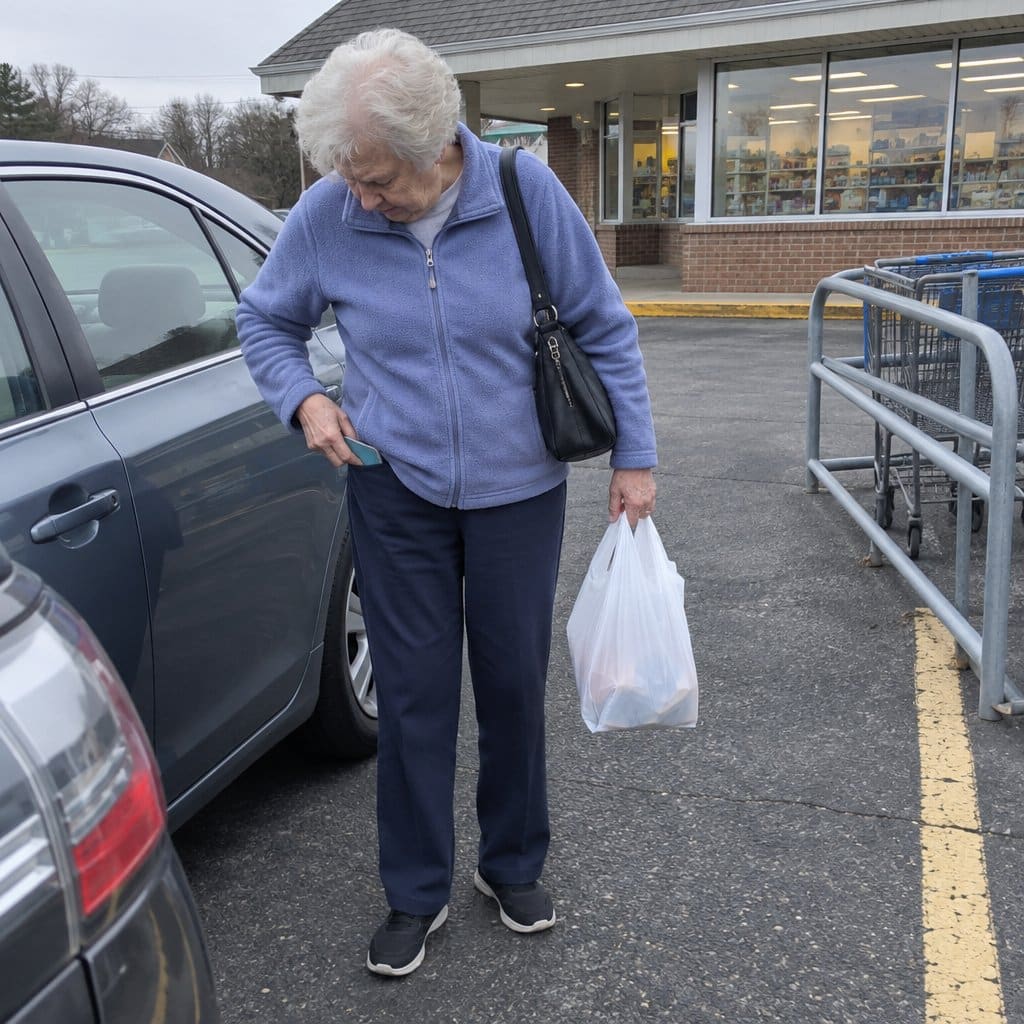
Away from Home: It Has to Be on Your Body




When something happens outside your home (at a pharmacy, on a walk, in a parking lot), paramedics learn what they can from what you are physically carrying or wearing. A purse set down in a store aisle is not on your person. A card in a bag left in a car is not on your person. Only what is attached to your body or in your immediate possession will reliably be found.
Medical ID Wallet Cards
A medical ID wallet card is one of the most practical tools in this system, but only when it’s actually in your pocket or clipped to your person, not tucked in a bag you might set down.
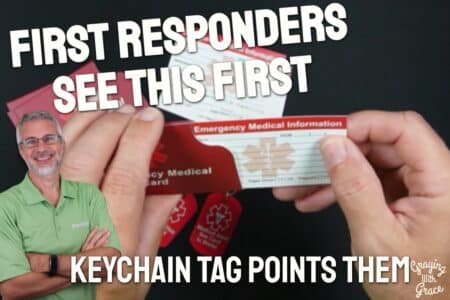
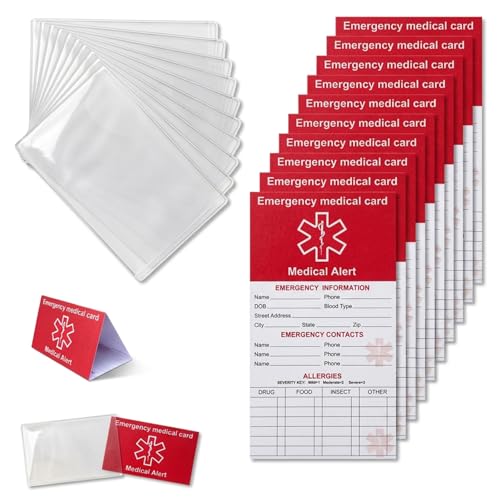
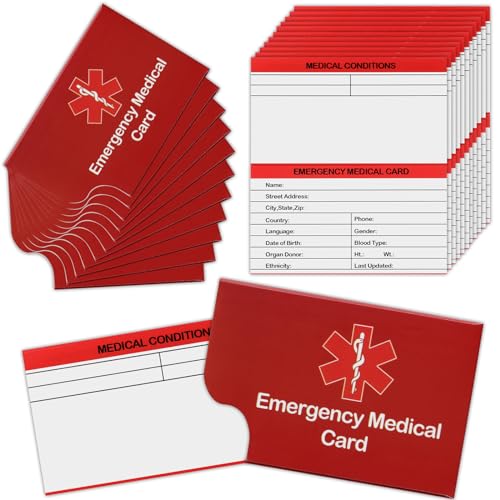
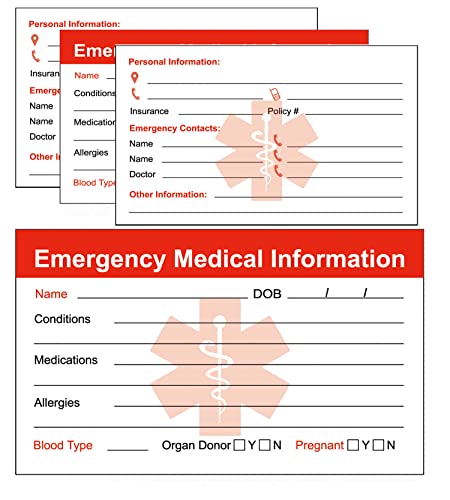
A good wallet card has room for your full medication list, known conditions, allergies, emergency contact, and advance directive status. Look for cards with a durable, laminated design and enough space to fit a real list, not just a name and phone number. Front pocket, badge clip, or lanyard are the most reliable carry options.
A wallet card specifically designed as a medical ID (like a structured card with clear labeled fields) makes it easier for a responder to scan quickly and find what they need without guessing what they’re looking at.



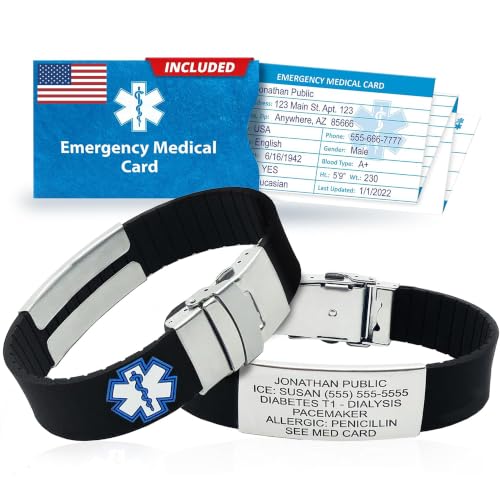
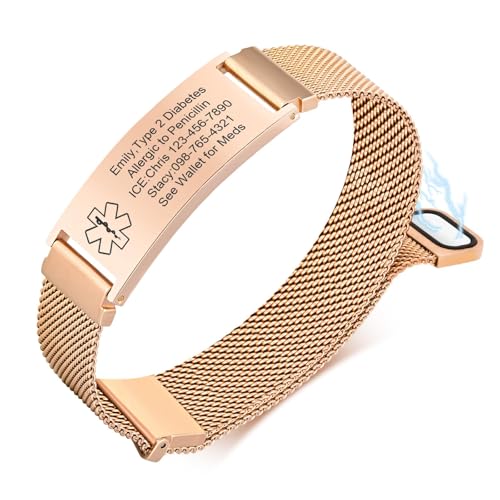
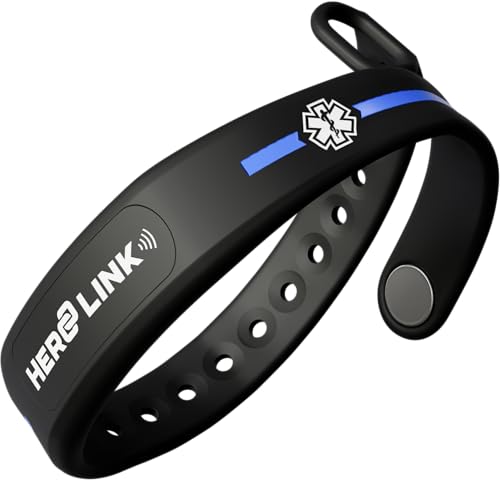
Medical ID Jewelry: Bracelets, Necklaces, Dog Tags
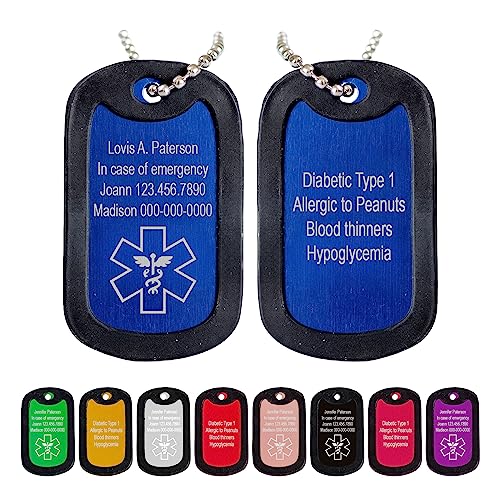
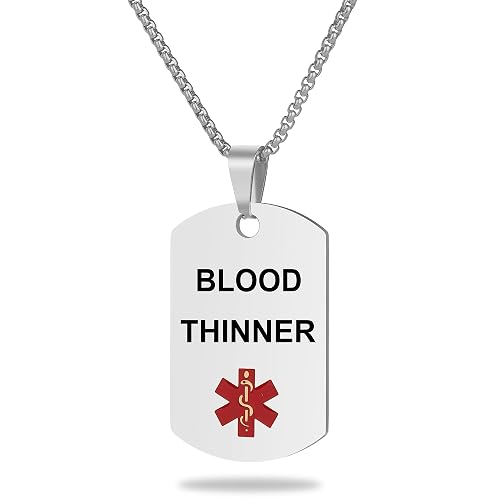
The advantage of medical ID jewelry is physical attachment to the body. It does not get set down, left in a car, or dropped in a bag. The constraint is limited space, which means jewelry must carry only what immediately changes treatment.
Think: severe allergy, pacemaker, blood thinner use, or insulin-dependent diabetes. Those are the details that alter how a responder acts in the first minutes. Everything else belongs on the wallet card.
A well-engraved medical alert bracelet or necklace works as a pair with your wallet card, not as an alternative. The jewelry carries the critical few. The card carries the full list. Together, they cover situations the other can’t.


Phone Lock-Screen Medical ID
Both iPhone and Android devices have a Medical ID feature that is viewable without a passcode, but only if it has actually been set up. Many people have this feature available and have never activated it.
If you want step-by-step setup instructions, that’s a separate topic worth its own full guide, and it connects naturally to broader conversations about must-have products and tools for older adults living alone. For now, know that the phone lock screen is a third layer, useful when the phone is in your hand or pocket, but not a substitute for jewelry or a wallet card.
Your Action Point for This Section
Identify which of these three channels you currently have set up: wallet card, ID jewelry, phone lock screen. If the answer is zero or one, choose the next easiest to add this week, not next month.
Want more practical guidance for living safely and independently? Subscribe to the Graying With Grace newsletter for practical tips and product recommendations.
Medical Alert Bracelet vs. Wallet Card: Which Does Your Parent Need?
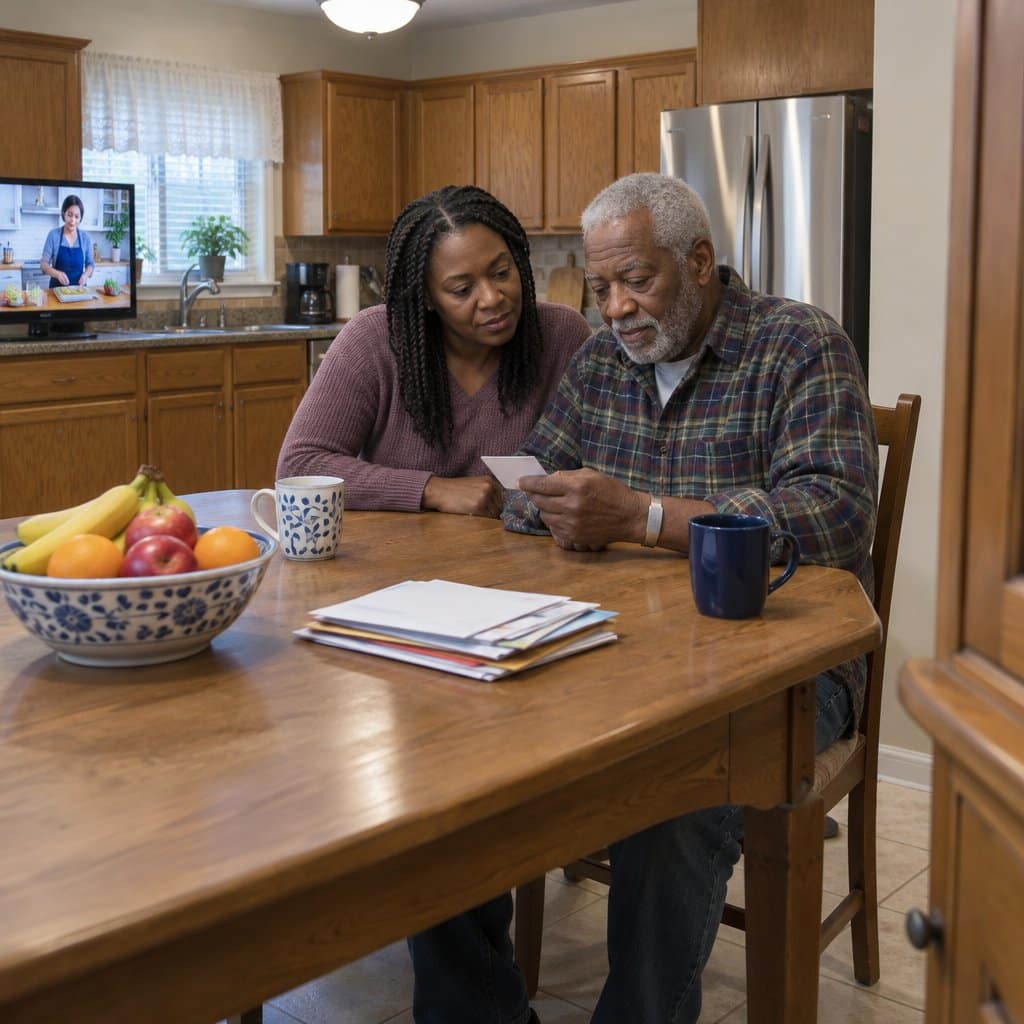
Adult children often ask: bracelet or card? The two do different jobs, and they work best together.
A medical alert bracelet signals. At a glance, it tells a responder that this person has a condition that needs special attention. It usually lists one or two key facts, such as a main diagnosis, a critical allergy, or a note to look for more information.
If a bracelet isn’t something you’d wear, I also looked at the Custom4U laser-engraved medical alert necklace, which puts the same kind of key facts on a pendant.
A wallet card informs. It holds the full picture: every medication, every contact, and the diagnosis details a responder needs to make decisions.
A bracelet alone often can’t carry enough detail for a complicated medical situation. A card alone might be missed if your parent is separated from their bag or wearing unfamiliar clothing.
So the bracelet flags the emergency and tells responders to look further. The card gives them everything they find when they do.
If you are starting from scratch, the card is the easiest first step, and it works well on its own while you think about adding a bracelet. If you are looking at wearable options too, medical alert watches are worth a look alongside the card.
One trade-off: a bracelet only has room for a line or two, so it can’t replace the card.
At Home: It Has to Be Where Someone Will Look



At home, you have more room to store detailed information, but only if it is in a location a responder would actually check. Responders do not search a house. They check a small number of conventional spots quickly. Being in one of those spots is the entire strategy.
Fridge-Door Systems: File of Life and Vial of Life
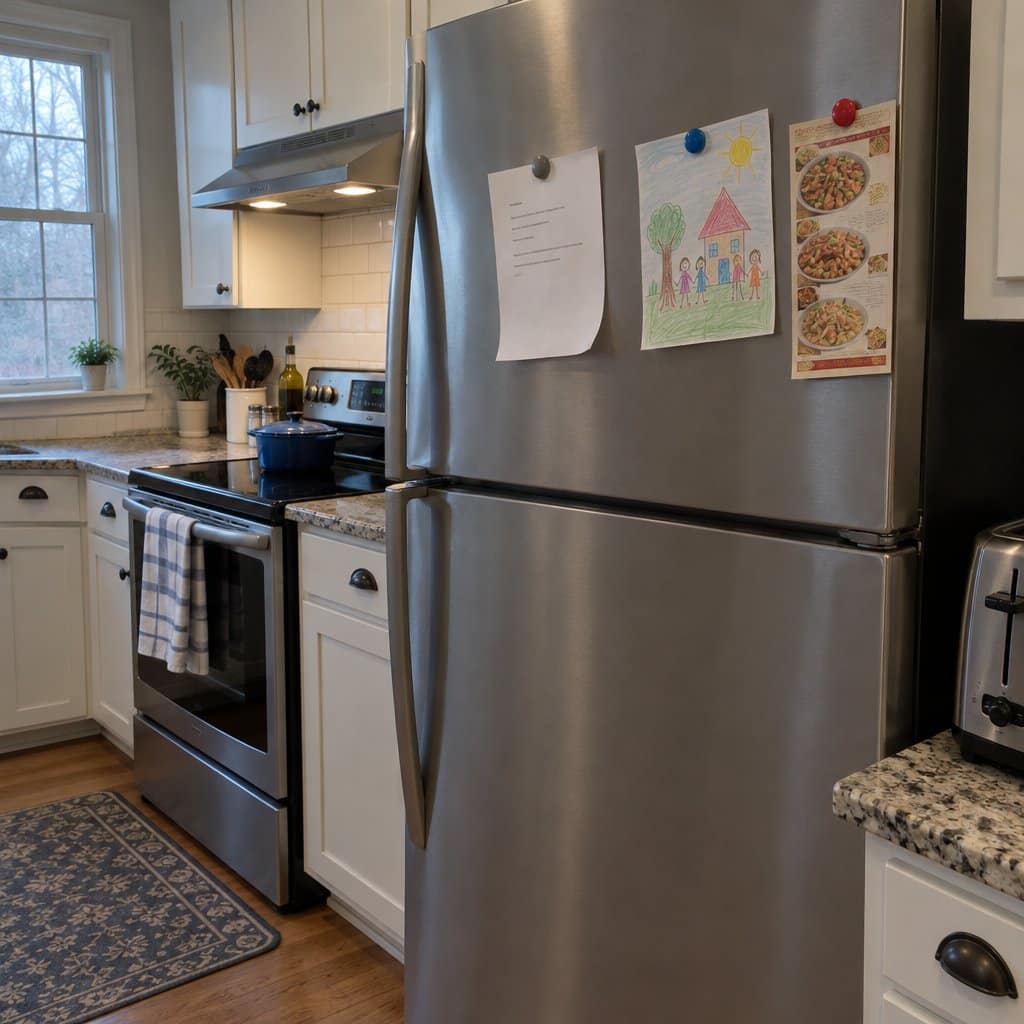
The fridge-door system is one of the most widely recognized tools for storing emergency medical information at home. The concept: a standardized envelope, pouch, or magnetic sleeve attached to the outside of the refrigerator door, containing your full medication list, medical history, emergency contacts, and copies of relevant paperwork.
The File of Life and Vial of Life are two of the most common versions. Some local fire and EMS agencies actively distribute these kits and train responders to look for them. Others don’t, which is exactly why that local phone call matters before you buy.
A File of Life kit typically includes the magnetic pouch, information cards to fill out, and often a window decal. The decal signals to arriving responders that a medical information packet is inside and where to find it, but a decal is only useful if the information it points to is current and actually present.



A Current Printed Medication List
The word “current” is doing real work here. A medication list from two years ago with three drugs added since may cause confusion at a critical moment. Your list needs to reflect what you are taking today, including over-the-counter medications you take daily.
The right location: the fridge door, or inside the front cover of a clearly labeled folder kept in the same spot every time. Consistency matters because a responder is looking quickly, not searching.
A dedicated medication list holder, something with a clear sleeve or labeled pocket, keeps the document visible and protected rather than folded in a junk drawer or buried under mail.



Key Lockboxes
A key lockbox solves the entry problem, which is a different problem from the information problem. A responder who cannot get inside cannot help. A responder who gets inside but finds no medical information is only halfway there. Both matter, and neither substitutes for the other.
If a family member or neighbor doesn’t have a spare key, a mounted lockbox near the front door allows emergency responders (given the code) to gain access without breaking in. For a full look at what to consider when choosing one, the guide to key safes for elderly people covers the options in detail. If you are weighing where to mount one, this look at where to place a lockbox so strangers can’t spot the key walks through it.
Your Action Point for This Section
This week, tape a piece of paper to the fridge with your current medication list, your primary care physician’s name, and one emergency contact. That is a starting point, not a finished system, but it is far better than nothing. Update it every time a medication changes.
What to Actually Put in Your Medical Information
A medical information system is only as useful as what is in it. The content matters as much as the location.
The Core Items That Belong in Every Channel
Whether you’re filling out a wallet card, a fridge envelope, or a phone lock screen, these are the items that belong in every version:
- Full name and date of birth
- Current medications with dosages: this is the single most important item
- Known allergies and the reaction type: not just “penicillin” but “penicillin: anaphylaxis”
- Active medical conditions relevant to emergency treatment: diabetes, heart condition, seizure disorder
- Name and phone number of primary care physician
- Emergency contact name and relationship
- Advance directive or DNR status: indicate whether one exists and where it is filed; for the legal specifics, consult your state health department or physician
What Does NOT Need to Be Everywhere
Complete medical history, insurance information, and surgical history from twenty years ago are less immediately critical to first-responder decisions. Keep those in your home file rather than on a bracelet or wallet card.
Space on jewelry is limited. Use it for what changes treatment in the first minutes. Everything else lives on the card or in the fridge envelope.
Your Action Point for This Section
Pull out a piece of paper right now and write down every current medication you take, including daily over-the-counter medications. That list is the foundation of everything else in this article.
If you’re thinking about the broader picture of safety and independence at home, the 16 must-have products for elderly people living alone is worth a look. It covers a range of tools that work alongside a medical information system, not instead of it.
And if fall prevention is part of your thinking, the ultimate fall prevention checklist is a natural companion to the work you’re doing here. Preparing for emergencies and reducing the likelihood of them are two sides of the same coin.
Memory Loss and Dementia: Why a Card Matters Even More
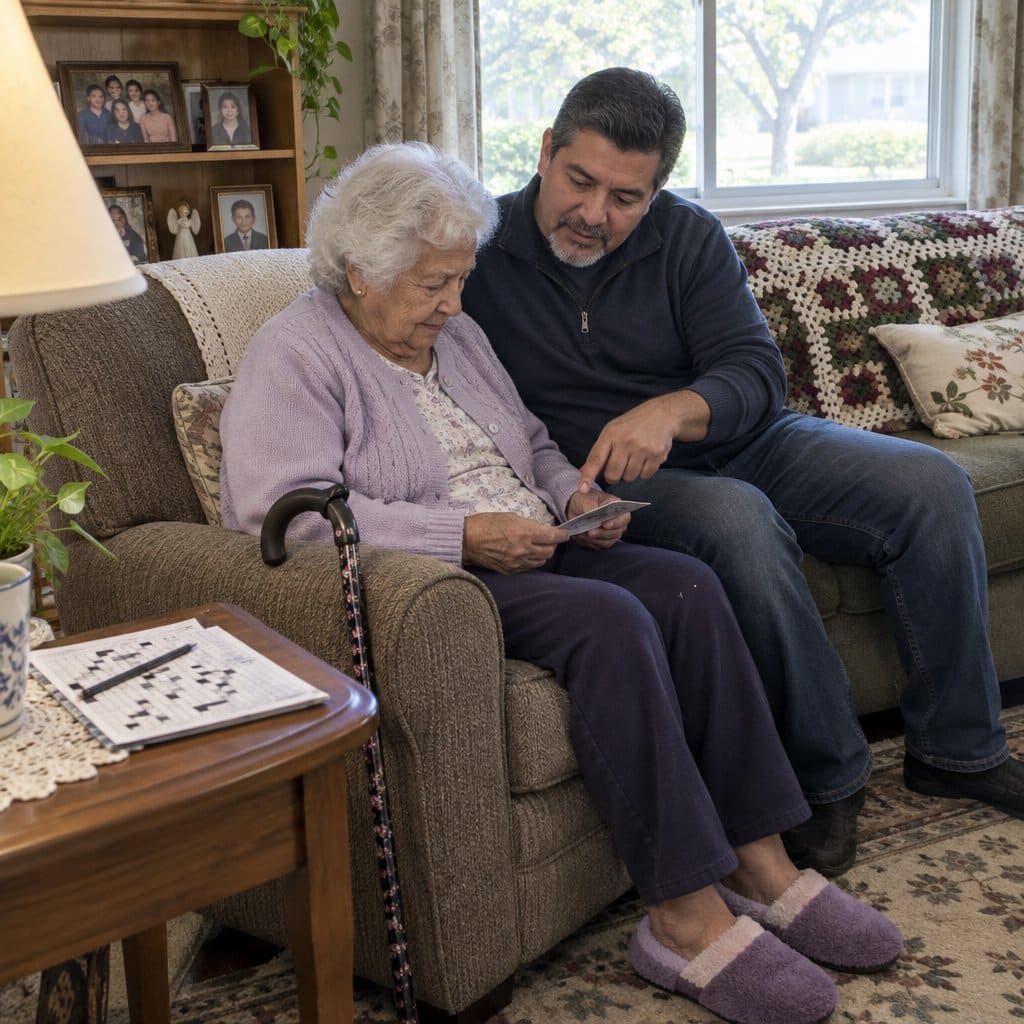
For a person with memory loss or dementia, a wallet card does more than back up memory. In an emergency, it can stand in for information the person can no longer share reliably.
That matters because someone with early dementia can look fine. They may be calm and chat easily, yet give wrong or partial answers about their medications or their doctor, and not know they have done so.
A card closes that gap right away. A responder can read it quickly, without waiting for a family member to be reached or for a hospital to pull old records.
If you or someone you love has a dementia diagnosis or real memory difficulties, add one short line to the card. Something like: “I have memory difficulties. Please contact my daughter at (phone number) immediately.”
That one sentence helps a responder adjust how they talk and what they expect. It also makes sure the person is treated with patience and respect.
If medications are part of the picture, pill dispensers for dementia can sit alongside the card. And if the person wears or might wear a device, medical alert watches are worth a look as a complement to the card.
If you’re weighing a device, it’s worth reading about medical alert systems that actually get worn, because one that stays in a drawer can’t help anyone.
One trade-off: the memory line only helps if the card is actually found and the phone number on it is right, so check both whenever anything changes.
Setting Up a Wallet Card Today, Even if Your Parent Lives Far Away
Making an emergency wallet card for your parent is about a one-hour project. Distance does not have to get in the way.
Here are the steps, in order:
- Gather the medication list. Call your parent, check a recent prescription bag, or contact their pharmacy. You need drug names, dosages, and how often each is taken.
- Collect emergency contacts. Confirm phone numbers for at least two people, yourself and one backup.
- Confirm allergies. Ask your parent or their physician if you are unsure.
- Note key diagnoses. Think about what a responder would need to know, such as a heart condition, diabetes, dementia, a pacemaker, or blood thinner use.
- Order or print the card. Cards come as printable templates and as professionally printed, laminated ones, and some can be personalized.
If You Are Not Nearby
Order a personalized card online and have it shipped straight to your parent. Or email a fillable template to a local sibling, neighbor, or home health aide to print and laminate.
Your parent’s in-home care provider can also help. Professional caregivers are often good at introducing the card in a natural, calm way.
How to Introduce It
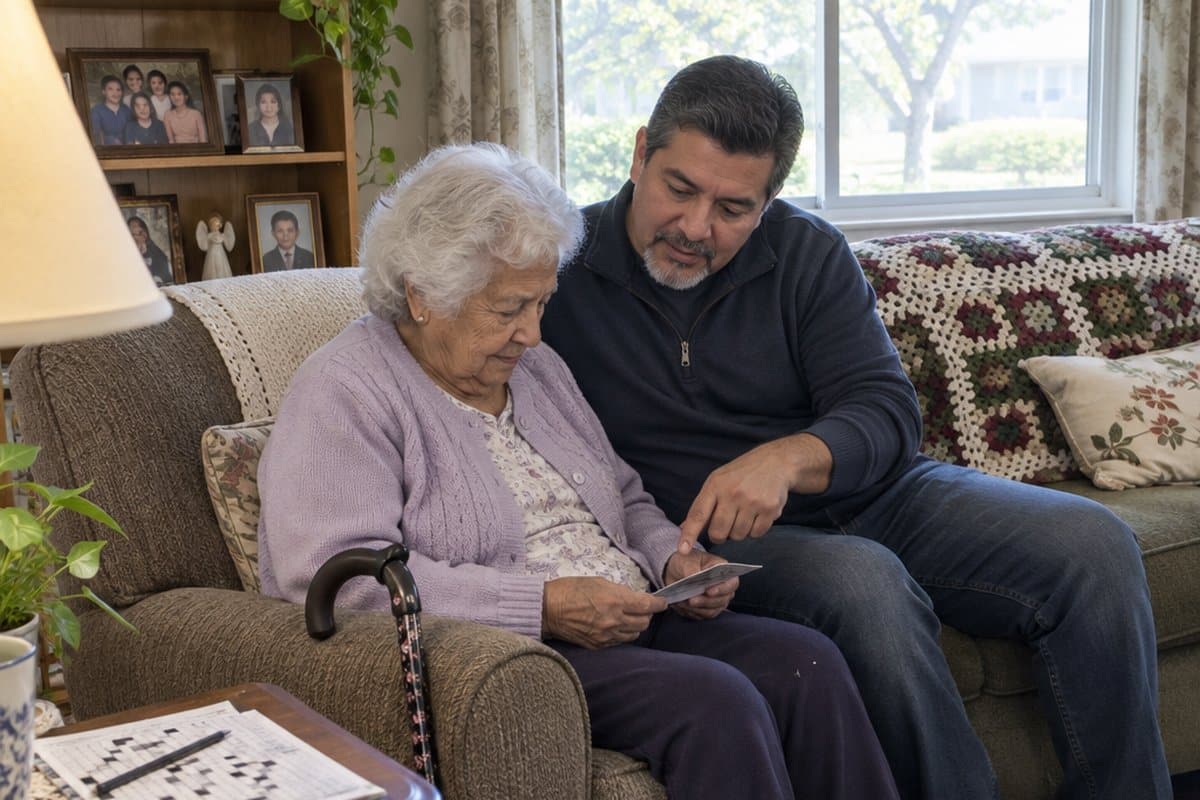
Frame it as a gift, because that is what it is. You might say, “Mom, I put together a little card with your important information on it. I’d feel a lot better knowing it’s in your wallet, just in case.”
That wording is warm and does not make the card sound like a comment on decline. Most parents respond well when they know it comes from love.
Keeping It Current
Set a reminder to review the card once a year, and tie it to your parent’s annual wellness visit so it is easy to remember. Update it any time a medication changes or a new provider is added.
You might also save the same information in your own phone contacts. If you ever need to share your parent’s medical history quickly from a waiting room, you will have it on hand.
If your parent manages their own medications, pill dispensers for dementia can sit alongside the card. For more on keeping them safe at home, see the fall prevention checklist and these products for elderly people living alone. Medical alert watches are another option to pair with the card.
One trade-off: a card is only as good as its last update, so a card with an old medication list can mislead a responder.
The One Step That Makes the Rest of This Work


Everything in this article is more effective once you know what your local EMS agency actually checks.
Make the Call
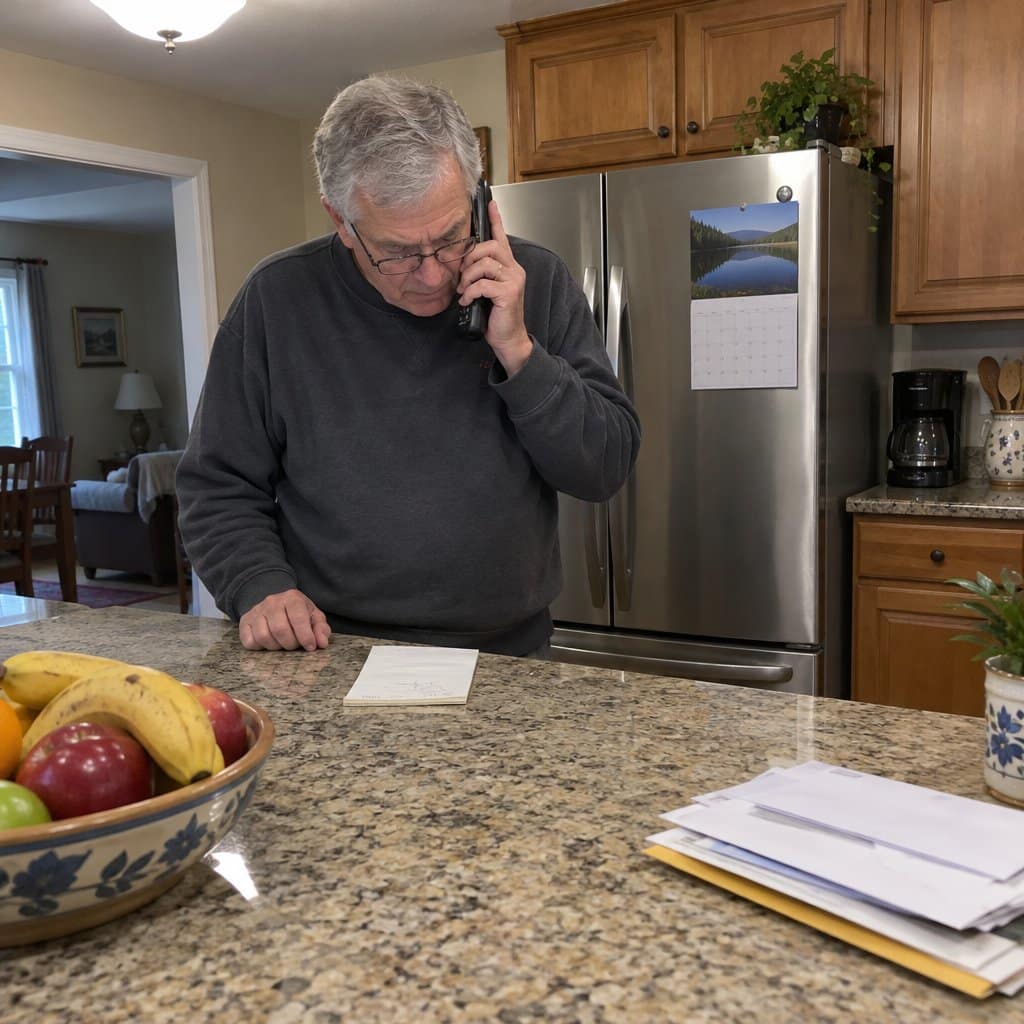
Call the non-emergency line for your local fire department or EMS agency. Ask two questions:
- Do you recognize the File of Life or a similar fridge-door system?
- What do you look for when a patient is unresponsive and alone?
The answer will vary. Some agencies actively look for fridge-door envelopes and recognize the window decals. Others focus primarily on wallet and jewelry. Some do both. You cannot know without asking, and asking takes five minutes.
Why This Call Changes Everything
This is not optional context. It is the step that turns general preparation into local preparation, and local is what counts when seconds matter. If your agency doesn’t recognize the File of Life, you know to lean harder on the wallet card and jewelry. If they do, you know the fridge envelope is worth maintaining carefully.
This is not a task that requires expertise. It is a single phone call that makes every other step in this article more targeted and more likely to actually matter.
Emergency Medical Information Checklist for Seniors: What First Responders Need to Find, and Where to Put It
Get a complete, step-by-step system to organize your critical medical information exactly where first responders will find it, so you’re prepared for any emergency, whether you’re at home or away.
Putting It All Together
The organizing idea here is simple: the answer is different depending on where something happens. Away from home, information must be on your body. At home, it must be where someone will look. Neither section replaces the other. Together, they cover the full picture.
Getting this in place is a sensible, self-respecting thing to do. It is not giving in to fear. It is making sure that if something happens, the people trying to help you will have what they need to do it well.
If you use mobility aids, technology, or other assistive tools as part of daily life, the same principle applies: the right tools in the right places preserve independence rather than limit it. The guide to mobility aids for seniors and the best medical alert watches for seniors are both worth bookmarking as you think through your broader safety plan.
And for caregivers supporting an older adult from a distance, the technology options for monitoring elderly parents remotely offers a practical look at how to stay connected and informed without being intrusive.
Choose one thing from this article to do today, not next month. Tape a medication list to the fridge. Order a wallet card. Set up the phone lock-screen Medical ID. Make the call to your local EMS non-emergency line.
One step is enough to start. Which one are you taking first? Share it in the comments. Your answer may be exactly what another reader needs to hear.