

You’ve already bought two or three different products. You’ve read the labels carefully. You’ve followed the instructions. And the underwear still leaks overnight.
The frustrating part? Both products you tried looked almost identical in the packaging photos. “Booster pad,” “pad insert,” “booster liner,” “incontinence liner” — brands use these terms almost interchangeably, and that lack of clarity costs real money and costs your loved one real dignity.
Here’s the thing: there is one functional difference that explains everything. Whether or not a pad has a plastic backing. Once you understand what that backing does — and what it prevents — the right choice becomes clear.
This article explains how each design works, which situation each one fits, and how to match the product to the routine: day use, overnight, or both.
Booster Pad vs. Pad Insert Decision Cheat Sheet
Stop wasting money on the wrong incontinence products—download this simple decision guide that shows you exactly which product (booster pad or pad insert) solves your specific leaking problem based on just two key questions.
Why the Same Problem Keeps Happening
It’s not the underwear’s fault — and it’s not yours
Incontinence underwear has a built-in absorbent core, but that core has limits. When output increases — whether because of a change in medication, a change in routine, or simply more time between changes overnight — caregivers naturally reach for a supplemental pad to add capacity without sizing up to a bulkier product.
That’s a smart instinct. The problem is that two very different products are sold side by side for exactly this purpose, and they work in opposite ways.
The single variable that separates them
One pad is designed to pass moisture through itself and into the underwear’s absorbent core. The other is designed to hold everything it absorbs entirely within itself, never passing any moisture outward.
The difference is the plastic backing. And once you know which one you’re holding, the right situation for it becomes obvious.
This isn’t a product failure. It’s a matching problem — and matching problems have matching solutions.

How a Flow-Through Booster Pad Works
A teamwork product, not a standalone one
A booster pad without a plastic backing is built around a simple idea: it works with the underwear, not instead of it.
Here’s the mechanism in plain language. Liquid passes through the booster’s soft top layer, moves into the booster’s own absorbent material briefly, and then passes through a permeable bottom layer down into the underwear’s absorbent core. The underwear does the heavy lifting. The booster pad extends how much total capacity the system has.
When this design works well
Flow-through booster pads shine in these situations:
- Daytime use with moderate output
- Active users who move around, sit, stand, and reposition throughout the day
- Situations where the underwear’s core still has room to absorb more
Think about a parent who needs a bit more capacity during a busy afternoon outing. The underwear’s core isn’t maxed out. The booster pad extends the window before a change is needed — seamlessly and comfortably.
The limitation you need to know
If the underwear’s core is already saturated — as often happens after eight hours overnight — there’s nowhere for the moisture to go. The flow-through design sends liquid downward into a core that can’t accept any more. Leaking follows.
A flow-through booster isn’t a weaker product. It’s a product designed for a specific partnership with the underwear. In the right context, it works extremely well.
For caregivers looking to extend daytime capacity without switching to a heavier underwear product, this is exactly where incontinence booster pads earn their place.



How a Plastic-Backed Pad Insert Works
A self-contained solution for when the underwear can’t do more
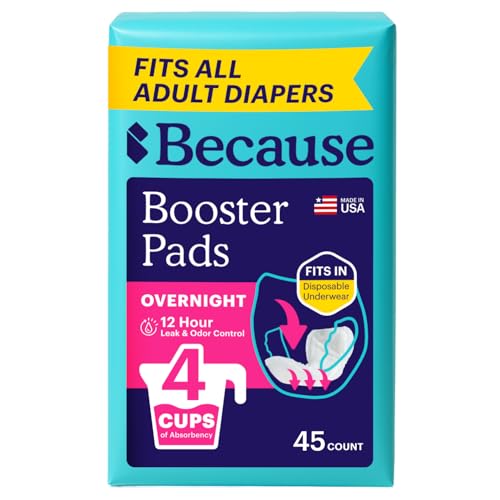
A pad insert with a plastic backing operates on a completely different principle. The waterproof layer on the bottom prevents any moisture from passing through into the underwear. Everything the insert absorbs stays inside the insert.
That makes it a standalone absorbency unit — one that doesn’t rely on the underwear’s core at all.
When this design works well
Pad inserts with plastic backing are built for these situations:
- Overnight protection, when hours pass between repositioning or changes
- Extended periods between changes, where the underwear’s core may already be at or near capacity
- Situations where leaking through to clothing or bedding is the specific problem being solved
Picture a parent who stays in bed overnight for eight hours. The underwear’s built-in core may be compromised or saturated by hour three. The pad insert, holding everything within itself, continues protecting independently — because it never depended on the underwear’s core to begin with.
The limitation you need to know
Because the plastic backing blocks flow entirely, a pad insert doesn’t team up with the underwear’s core. It operates instead of it. That means fit matters more — the insert needs to sit correctly and stay flat throughout the night to work as designed.
During high-activity daytime hours, a plastic-backed insert can also feel bulkier than a flow-through booster, since it holds its absorbed liquid internally rather than dispersing it into the underwear.
The plastic backing isn’t a flaw — it’s a feature that turns the insert into exactly the right tool for overnight and extended-wear situations. Caregivers managing overnight leaks specifically often find this design resolves the problem when booster pads haven’t.

Subscribe to our newsletter for more tips: Join here

Matching the Right Product to the Right Situation


Two questions that make the decision straightforward
Neither product type is universally better. The right choice comes down entirely to when and how the product will be used. Start here:
- Is this for overnight use or daytime use?
- Is the leaking happening because there isn’t enough total absorbency, or because the existing absorbency is already maxed out?
How to read your answers
- Daytime use and more capacity needed: A flow-through booster pad is the right fit. It adds to the underwear’s existing absorbency without unnecessary bulk.
- Overnight use and leaking through despite a good underwear fit: A plastic-backed pad insert is the right fit. It holds everything within itself when the underwear’s core can no longer help.
- Both daytime and overnight leaking: Solve them separately. These are genuinely different problems with different solutions.
Using both products as separate tools
Many caregivers find that a lighter booster pad during the day and a pad insert overnight works better than any single product ever did. That’s not a workaround — that’s a complete incontinence management approach matched to how the day actually unfolds.
For lower-output daytime moments, adult incontinence liners offer a lighter option that keeps things comfortable without unnecessary bulk between changes.


Getting the match right once makes it easy to repeat. This isn’t an either/or decision for life — it’s a situation-by-situation match that gets simpler with each use.
What to Check Before You Buy
Reading product listings when the label doesn’t help
Knowing the difference between booster pads and pad inserts is only useful if you can tell which one you’re actually looking at — and product labels aren’t always honest about this.
Here’s what to look for in a product description or spec sheet:
- Flow-through booster pad signals: The words “flow-through,” “permeable backing,” or “works with existing underwear” tell you the pad is designed to pass moisture into the underwear’s core.
- Plastic-backed insert signals: The words “plastic backing,” “waterproof backing,” or “standalone protection” tell you the pad holds everything internally.
When the listing doesn’t specify
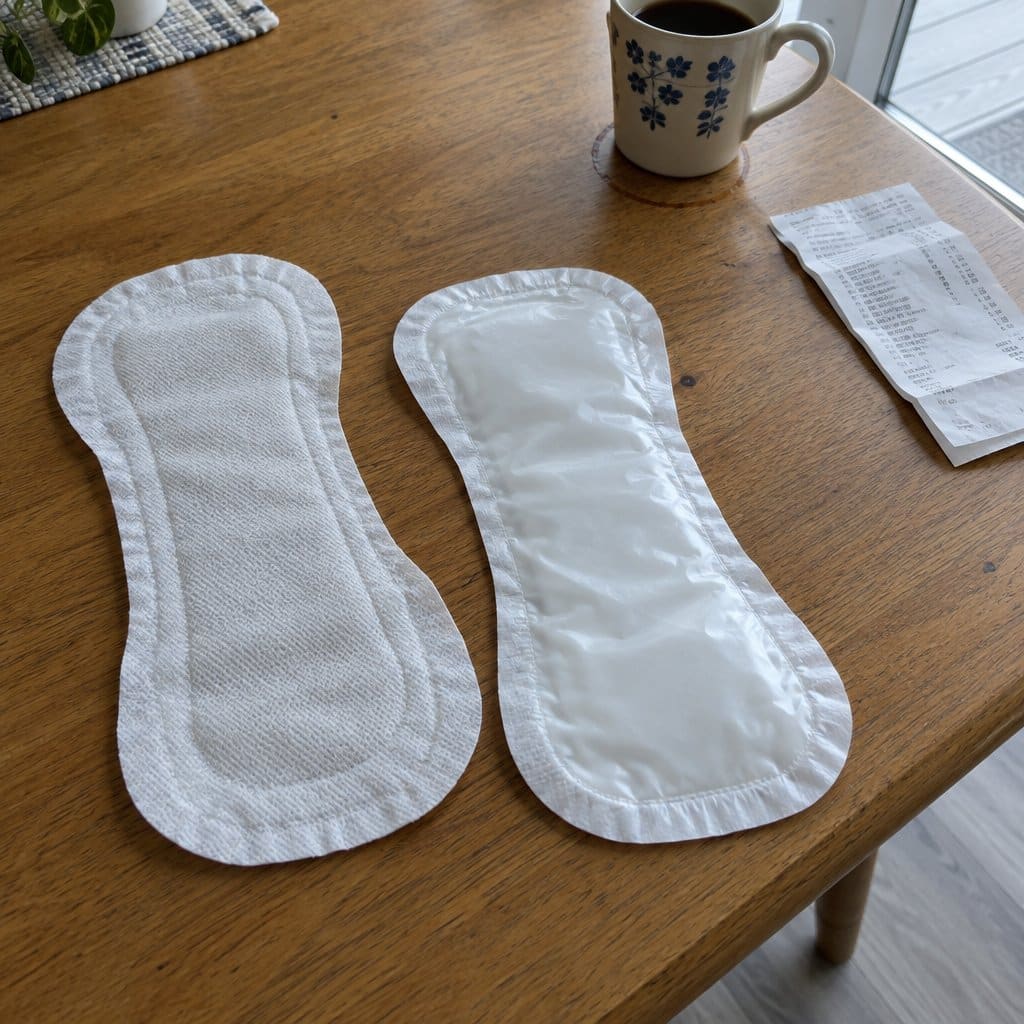
If the product description doesn’t clarify the backing type, check the photos. The underside of the product is sometimes shown — a shiny or smooth surface typically indicates a plastic backing. A fabric-like or textured underside usually signals a permeable, flow-through design.
In my experience working with caregivers navigating these purchases, if a listing genuinely doesn’t clarify the backing type, it’s worth checking the Q&A section on the product page or contacting the brand directly before buying a bulk quantity. That one step saves the cost and frustration of a full box that doesn’t match the situation.
A note on sizing
Pad inserts in particular need to fit inside the underwear without folding at the edges. Folding defeats the design entirely. Check the length dimensions against the underwear before ordering — and if you’re managing overnight leaks, getting the fit right matters as much as getting the product type right. For additional guidance on keeping your loved one safe during nighttime routines, the fall prevention checklist covers nighttime bathroom safety alongside other practical safeguards worth reviewing.
Booster Pad vs. Pad Insert Decision Cheat Sheet
Stop wasting money on the wrong incontinence products—download this simple decision guide that shows you exactly which product (booster pad or pad insert) solves your specific leaking problem based on just two key questions.
The One Thing to Remember
The plastic backing is the whole story
The plastic backing determines whether a pad works with the underwear’s core or instead of it. That single mechanical reality is all you need to understand to make a confident purchasing decision.
Incontinence management doesn’t have to be a cycle of expensive trial and error. Understanding how these two products actually work is the shortcut that saves money, saves time, and preserves dignity for the person being cared for.
If you’re exploring other home care tools to support a loved one’s comfort and independence, the must-have products for seniors living alone and the automatic pill dispensers guide are worth a look as you build out a practical caregiving toolkit. For nighttime safety specifically, choosing the right night lights is one of those small changes that makes overnight routines meaningfully safer.
Share in the comments which situation you’re trying to solve — overnight leaking, daytime capacity, or both. I’m happy to point you toward the right product type for what you’re dealing with specifically.


![Older woman cane colorful plate divider[1]](https://www.grayingwithgrace.com/wp-content/uploads/2025/07/older_woman_cane_colorful_plate_divider1-e1752686358595-450x300.jpg)


