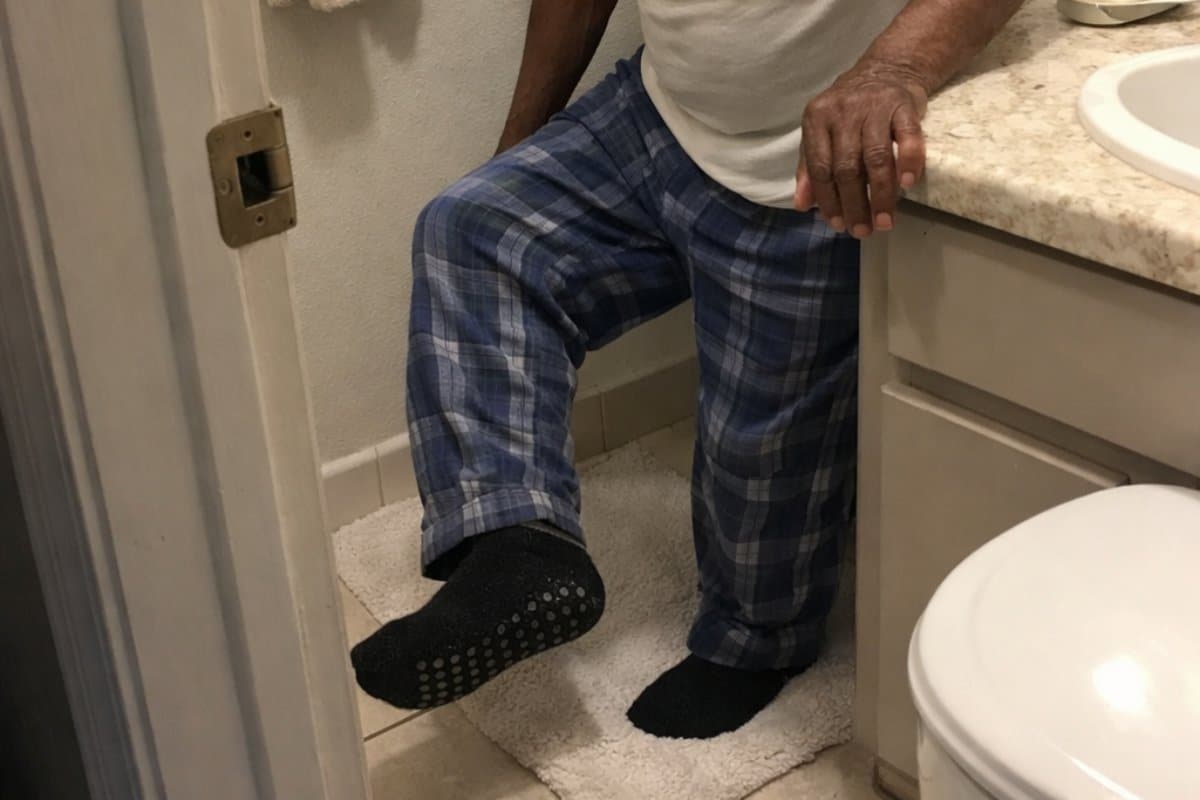
It's 2 a.m. You get up to use the bathroom. The floor is cool and hard. You slide your foot into the backless slipper you've worn for three years — and on the very first step, the heel pivots off your foot. That pivot is the hazard. Not the dark floor. Not the hour. The footwear.
Here's the uncomfortable truth: the most dangerous feature in this product category isn't a slippery sole. It's a backless design that can't stay on your foot long enough for grip to do its job. That single insight changes the entire buying decision — from "how much grip does this have?" to "does it stay on my foot, and does it match the situation I'm in?"
Three things drive the right choice: the surface you're on and the time of day, how long you'll be wearing the footwear, and whether you have any foot condition — neuropathy, swelling, or balance impairment — that narrows your options further.
This article covers three distinct product types: grip-soled slippers with closed backs, hospital-style non-slip socks, and indoor shoes with arch support. If you're also thinking about the bedroom itself, the changes that reduce nighttime fall risk go well beyond what's on your feet — these four bedroom modifications address 80% of senior nighttime fall risk. But footwear is where we start, because it's where most indoor falls begin.
Indoor Footwear Safety Shopping Guide: Grip & Fall Prevention
Download this practical shopping guide and learn exactly what to look for in grip slippers, non-slip socks, and supportive indoor shoes—so you can confidently choose footwear that actually prevents falls and suits your unique foot needs and daily routine.
What to Look For
Not all "non-slip" labels mean the same thing. Here are the specific criteria that separate genuinely safe indoor footwear from products that look safe on packaging but fail in use.
Heel enclosure and fit This is the single most important structural feature. A closed back is non-negotiable for anyone with balance concerns. The heel counter — the firm cup at the rear of the slipper — should hold your foot without requiring you to curl your toes to keep the shoe on. When you grip with your toes to hold a slipper in place, your gait changes, your balance degrades, and your fall risk increases even on a grippy surface. Look for adjustable closures — hook-and-loop straps or elasticized backs — that can accommodate foot swelling.
Outsole grip pattern and material The outsole should cover at least 70–80% of the bottom surface with traction elements — not just a ring of dots around the perimeter. Rubber outsoles outperform EVA foam on wet and hard surfaces. For socks, grip elements should cover the ball of the foot, the heel, and the toe pad — the three contact points during a typical walking step.
Sole thickness and flexibility Thick, rigid soles reduce ground-feel, which your brain uses for balance. An outsole between 8mm and 15mm thick provides cushioning without eliminating proprioceptive feedback. For indoor shoes with arch support, a removable insole that can accept a custom orthotic is worth looking for if you already use one.
Arch support level For grip slippers worn briefly — under 30 minutes — minimal arch support is acceptable. For anything worn during extended standing, look for a contoured footbed with defined support. A flat insole worn during two or more hours of cooking or housekeeping creates fatigue that translates directly into stumbles. A slight heel elevation of 10–15mm heel-to-toe drop makes a meaningful difference.
Upper material and breathability Memory foam and fleece-lined interiors feel comfortable but can allow the foot to slide forward inside the slipper if the fit isn't snug — recreating the same hazard as a backless design. For people with neuropathy or diabetes, a seamless interior reduces irritation. For swelling, look for stretch panels or wide-width sizing (often marked 4E or EE).
Weight Heavier indoor shoes create trip risk for people with reduced foot clearance during walking. Aim for indoor shoes under 12 oz (340g) per shoe. Grip slippers should stay under 8 oz per slipper. Non-slip socks add essentially no meaningful weight.
Machine washability Footwear that can't be laundered regularly accumulates bacteria and odor — and many people simply stop wearing or replacing it. Socks should be machine washable with grip intact after at least 30 washes. Slippers should specify whether grip elements hold after machine washing or require hand-washing only.
Grip-Soled Slippers With Backs
Most indoor falls are not caused by slippery floors — they are caused by footwear that cannot stay on the foot long enough for grip to do its job. Grip-soled slippers with closed backs solve that problem by holding the heel in place through the natural mechanics of walking, eliminating the toe-gripping compensation gait that backless scuffs create.


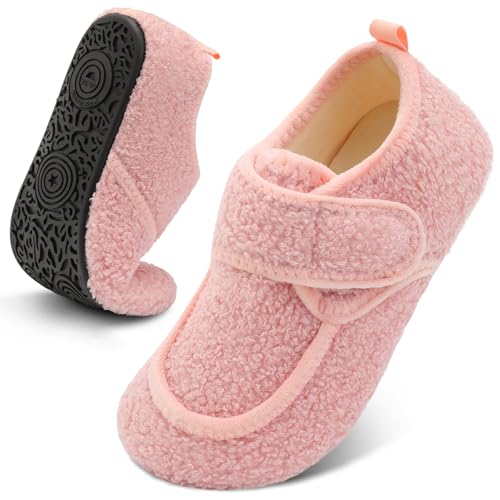

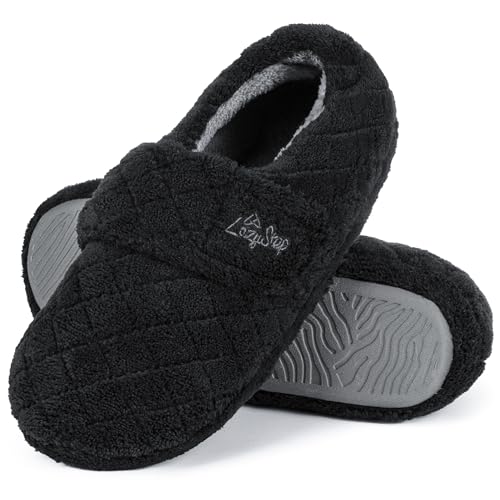
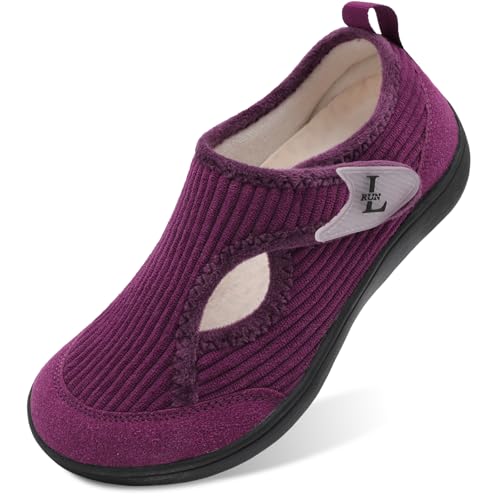

Grip-soled slippers with closed backs are the primary all-day, all-surface indoor footwear for older adults who move freely through the home. Unlike backless scuffs that require you to grip with your toes to hold the shoe in place, a closed-back slipper stays on your foot through the natural mechanics of walking. This is the foundational product type in fall prevention footwear — the one most people should own before any other type.
They work on hardwood floors, tile, laminate, linoleum, and low-pile carpet. They're appropriate for kitchen time, living room movement, hallway walking, and all daytime household activity. If you're spending time in the bathroom and want to know where surface-level risks are highest, these bathroom danger zones are worth reviewing before you shop.
They are the wrong choice for the first groggy steps out of bed — the moment when hospital-style grip socks serve better because they're already on your foot. And they're the wrong choice for anyone standing for more than 90 continuous minutes, where the structured indoor shoe in the next section offers meaningful additional support.
Grip slippers with backs offer more protection than hospital socks — they won't shift, slip off, or bunch — but less structural support than indoor shoes. They are the practical middle layer: more appropriate than socks for daytime use, less medicalized than an indoor shoe, and the type most readers can adopt without it feeling like a health product.
Within this category, the key differences are: the quality of the heel counter, the outsole material and grip coverage, width options for swollen or wide feet, and interior lining. A hook-and-loop closure that can be managed with one hand or limited dexterity is worth more than a marginally better grip rating on a product that's hard to put on.
Zizor Women's Adjustable House Shoes Indoor Outdoor
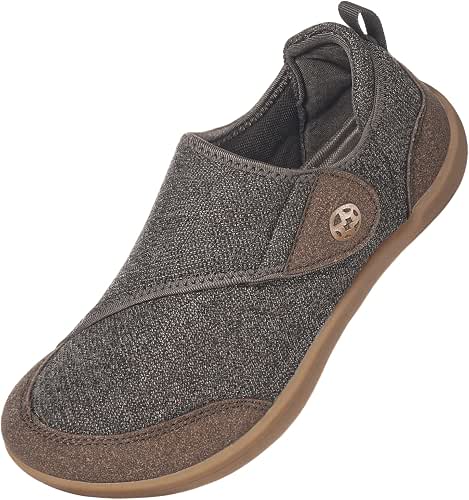
The Zizor's defining feature is its adjustable hook-and-loop strap across the top of the foot, which allows someone with swelling, a wide foot, or limited hand strength to get a secure fit without wrestling with a tight opening. That adjustability also means the shoe can be loosened for afternoon swelling and re-secured — something fixed-width slippers don't offer.
The outsole is rated for both indoor and outdoor surfaces, which makes it a reasonable choice for someone who steps onto a porch or walks briefly on a smooth driveway. The closed back provides the heel counter this category requires.
The limitation is that the indoor-outdoor construction can make the sole slightly stiffer than a pure indoor slipper. Anyone who prioritizes maximum ground-feel underfoot may find a softer sole more comfortable for all-day wear.
Dearfoams Women's Rebecca Velour Closed Back
The Dearfoams Rebecca is a closed-back velour slipper built around a memory foam footbed and a rubber outsole. Dearfoams has a long track record in this category, and the Rebecca's construction reflects that — the back enclosure is firm enough to hold the heel without requiring a strap adjustment.
The velour upper is soft and warm, making this a reasonable choice for someone who finds cooler floors uncomfortable and wants a cozy feel without sacrificing the closed-back structure that makes it meaningfully safer than a scuff. The rubber outsole provides traction on smooth surfaces.
The trade-off here is width. The Rebecca is cut in standard sizing, and anyone with swollen or wide feet may find the fit tight by evening. If swelling is a regular concern, the wider options in this section will serve better.
BARERUN Diabetic Slippers Indoor Closed Back Lightweight
The BARERUN is designed specifically with diabetic foot needs in mind — a seamless interior that eliminates pressure points and irritation, combined with a lightweight construction that reduces fatigue during extended wear. For anyone managing neuropathy, the seamless lining matters more than almost any other single feature.
The closed-back design holds the foot in place without requiring toe-gripping. The faux furry lining keeps feet warm while staying soft against sensitive skin. This is a practical option for someone whose foot care provider has flagged the need to avoid pressure points.
The limitation is that the soft, flexible construction offers less lateral stability than a firmer-soled slipper. For someone with significant balance impairment, the added structure of a rigid heel counter may be worth prioritizing over the diabetic-specific interior features.
ULTRAIDEAS Women's Memory Foam Slippers Non-Slip Closed Back
The ULTRAIDEAS slipper pairs a memory foam footbed with a rubber outsole and a closed-back design. Memory foam adapts to the shape of the foot over time, which makes this a comfortable long-wear option — but the important caveat is that memory foam should conform snugly. If there's room for the foot to slide forward inside the slipper, the foam comfort becomes a grip liability.
The rubber outsole grip covers the underside meaningfully, which is an improvement over slippers that place traction elements only around the perimeter. This is appropriate for hardwood, tile, and laminate.
This is a solid daily-wear option for someone whose foot size is stable and who doesn't need wide-width accommodation. It is not the first choice for someone with afternoon swelling, as the memory foam fit may become too snug as the day progresses.
LazyStep Women's Wide Adjustable Slippers, Soft Memory Foam Closed Back
The LazyStep addresses two common problems at once: adjustable fit and wide-width accommodation. The hook-and-loop closure allows the upper to open wide for easier entry — meaningful for anyone whose morning stiffness makes it hard to slip into a fixed opening — and to be resecured at whatever tension the foot needs at that moment.
The memory foam footbed and closed-back construction are appropriate for all-day wear across household surfaces. The wide sizing makes this a better fit for anyone whose standard-width slippers feel tight by late afternoon.
The trade-off, as with most wide-width adjustable slippers, is that the aesthetic is functional rather than stylish. For someone who prioritizes fit and safety over appearance, this is not a limitation. For someone who wants to feel good in their footwear as well as safe, the RockDove or Dearfoams options may feel more like a personal choice and less like a medical decision.
L-RUN Extra Wide Diabetic Shoes for Women Winter House Slippers
The L-RUN is built for maximum accommodation — extra-wide construction, a seamless interior, and a design that addresses both diabetic foot sensitivity and the kind of swelling that makes standard slippers uncomfortable or unwearable by evening. For someone managing both neuropathy and edema, this combination of features in a single product is genuinely useful.
The closed-back design holds the foot. The winter house slipper construction adds warmth without significant weight. The outsole provides grip on smooth interior surfaces.
The honest limitation is that extra-wide construction can feel loose on a foot that doesn't need it. The fit works best when the foot genuinely requires the additional width — otherwise, the slipper may feel less secure than a properly fitted standard-width option.
RockDove Women's Teddy Fleece Closed Back Slipper
The RockDove Teddy Fleece stands out in this category because it combines the closed-back safety requirement with a design that actually looks and feels like something you'd choose for comfort rather than necessity. The teddy fleece lining is warm and soft. The rubber outsole grips smooth surfaces reliably.
For Grace Turner — someone who values independence and doesn't want her home to feel like a medical environment — this is the kind of product that bridges function and personal preference. It satisfies the structural requirement without announcing itself as a fall-prevention device.
The limitation is standard-width sizing. Swelling is common in the late afternoon and evening, which is also when most nighttime bathroom trips begin. If foot width is a recurring issue, the adjustable options in this section will provide a more reliable fit across the full day.
Non-Slip Hospital-Style Socks
The highest-risk moment during a nighttime bathroom trip is the first step out of bed — before coordination is fully engaged and before a slipper has been located and put on. Hospital-style grip socks are designed to already be on the foot at that moment, providing traction on smooth floors during the exact window when falls are most likely to happen.


Hospital-style grip socks are designed for a single, specific, high-risk moment: the transition from lying down to standing, particularly during nighttime bathroom trips. Their primary advantage over slippers is that they're already on your foot when you wake up. You don't have to find them. You don't have to put them on in the dark with impaired coordination.
For the first 30–90 seconds after waking — when blood pressure is adjusting, balance is not fully engaged, and the floor is hard — grip socks provide a surface transition you can stand on without hunting for footwear. That window matters. If you're putting socks on after you've already stood up in the dark, you've missed it. This is worth pairing with the broader picture of what makes nighttime hours safer: the full checklist for preventing elderly falls covers the bedroom environment these socks work within.
They suit overnight wear, the immediate post-wake period, in-bed repositioning, and short walks to the bathroom on dry, smooth floors — tile, hardwood, and laminate. The rubber or silicone tread pattern makes full contact with smooth surfaces when the sock is correctly fitted.
They are the wrong choice for daytime use as a substitute for slippers or shoes. Grip socks offer no heel counter, no arch support, and no lateral stability. On a sloped surface, a wet floor, or during any activity that requires pivoting, they cannot substitute for a properly closed-back slipper. They are also the wrong choice for anyone with neuropathy who cannot reliably feel the difference between a secure grip and the beginning of a slip.
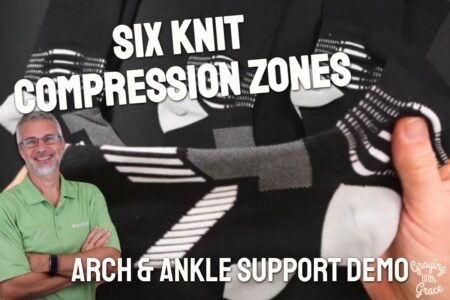
The key differentiators within this type: grip coverage (full-foot tread vs. heel-and-ball-only), fabric weight, ankle height, and grip durability through washing. A sock that looks intact may have lost 40–50% of its traction effectiveness after 30–40 washes. Check by pressing the sole flat against a dry tile surface — if it slides rather than grips, replace the pair.
WANZHIHUI Grip Socks for Women & Men — Non Slip Grippy Sticky Anti Skid Slipper Sock
The WANZHIHUI grip sock uses silicone tread elements across the sole, targeting the contact points that matter most during a walking step: the ball, heel, and toe pad. The design is unisex, which makes it a practical choice for households where more than one person needs nighttime footwear without tracking two separate product lines.
The sock construction is appropriate for smooth, dry indoor surfaces — tile and hardwood primarily. As with all hospital-style grip socks, the protection it provides is specific to the nighttime bathroom-trip window, not a substitute for daytime slipper use.
The practical limitation of any grip sock is grip durability over repeated washing. Machine washing is convenient, but silicone tread wears with use. Replace this type of sock every three to four months if worn nightly, regardless of how the fabric looks.
Horuru Non Slip Grip Socks for Men Women Crew Grippy Socks for Hospital Elderly
The Horuru comes in a crew height, which provides more ankle coverage than a low-cut sock. For someone who finds their feet and lower ankles cold at night — a common complaint, and one that causes people to skip grip socks in favor of warmer but less safe alternatives — the additional fabric coverage is genuinely useful.
The non-slip tread covers the underside of the sock at the key contact points. The crew construction also means the sock is less likely to slip down during sleep, which matters because a bunched or partially-off sock at 2 a.m. is its own hazard.
This is a reasonable choice for colder bedrooms or for someone who has abandoned grip socks in the past because their feet got cold overnight.
WANZHIHUI 12 Pairs Grip Socks for Women & Men — Non Slip Pilates Yoga Hospital & Elderly Grip
The 12-pair pack is the practical solution to one of the most commonly ignored maintenance issues in this category: grip socks need to be replaced regularly, and buying a multi-pack makes it possible to rotate pairs, launder them properly, and replace worn pairs without a separate purchasing decision every few months.
The grip pattern and construction are consistent with the single-pair WANZHIHUI option above. The volume purchase simply removes the friction of reordering — which, in practice, means the footwear actually gets replaced when it should be rather than worn past its useful traction life.
For a caregiver purchasing on behalf of an older parent, a 12-pair pack also reduces the need for ongoing monitoring of grip sock inventory. The cost-per-pair is lower, and the rotation window is more forgiving.
AURUZA Pilates Grip Socks for Women Men Non Slip Yoga Hospital Elderly
The AURUZA is sized 9–11, which covers a broad range of adult foot sizes and makes it a low-effort purchase decision for most users. The grip elements are distributed across the sole with a pattern marketed toward both athletic use and hospital/elderly use — the overlap means this is a reasonably versatile option.
The sock is constructed for smooth-surface traction, which is the relevant performance environment for nighttime indoor use. The sizing range reduces the need for precise measurement, which matters when purchasing for someone else or when foot size has shifted slightly with age.
The honest trade-off: a one-size-covers-most design means the fit may be slightly loose on smaller feet or slightly snug on larger ones. A sock that fits loosely can bunch during sleep, reducing both traction and comfort. If the foot size falls near the edges of the stated range, a more specifically sized option may fit more reliably.
CaiDieNu Non Slip Socks for Women: Hospital Grip Diabetic Socks for Elderly
The CaiDieNu is designed with diabetic foot needs in mind — non-binding construction that doesn't constrict the ankle or lower leg, combined with non-slip grip on the sole. For anyone managing circulatory issues or lower-leg swelling, the non-binding cuff is a meaningful feature that standard grip socks don't always offer.
The grip elements are positioned for smooth-surface traction. The diabetic-specific construction also means a softer, lower-irritation interior — relevant for anyone with sensitive skin or reduced sensation who needs to avoid pressure points overnight.
This is a thoughtful choice for someone who needs both the traction benefit of a hospital grip sock and the accommodation features of a diabetic sock. It handles both requirements in a single product rather than requiring a compromise between them.
Toes Home Pilates Socks for Women with Grippers, Non Slip Yoga Crew Socks for Barre Hospital
The Toes Home sock comes in a crew cut with grip elements suited for both smooth floors and light-activity use. The crew height provides warmth and coverage, and the grip pattern is distributed across the contact zones of the sole.
The athletic-adjacent branding (pilates, yoga, barre) reflects a sock construction that's built to stay on the foot during movement — which translates to a sock that's less likely to slip or bunch during the repositioning and first steps that define nighttime use.
This is a practical everyday option for someone who needs grip socks as part of a consistent bedtime routine and wants a product that stays in place reliably through the night.
Indoor Shoes With Arch Support
After 60 to 90 minutes of continuous standing or walking at home, foot fatigue changes gait mechanics in ways that increase stumble risk — reduced foot clearance, shifted weight distribution, and less controlled movement. Indoor shoes with arch support and a slight heel elevation counteract that fatigue pattern, making them the right choice for anyone spending long stretches in the kitchen, doing household tasks, or caregiving at home.



Indoor shoes with arch support are the right product when you're spending long stretches on your feet at home — cooking, doing laundry, hosting family, or providing care for a spouse. After 60 to 90 minutes of continuous standing or slow walking, fatigue accumulates in the foot and lower leg. A grip slipper with a flat insole does nothing to slow this process.
When the foot fatigues, gait mechanics change: foot clearance decreases, weight distribution shifts, and small stumbles become more likely. An indoor shoe with a contoured arch support, a slight heel elevation (10–15mm heel-to-toe drop), and a cushioned midsole directly counteracts this pattern. For anyone with existing plantar fasciitis, flat feet, or a history of ankle instability, this is the product type that addresses those conditions rather than working around them. If your kitchen floors are tile or smooth vinyl, it's also worth knowing that surface-level interventions on those floors can complement what good footwear does for traction and stability.
Indoor shoes with arch support suit kitchens, long caregiving shifts at home, and any situation where you'll be standing or walking for 90 minutes or more. They're appropriate on all household surfaces and are the most versatile of the three types covered here.
They are the wrong choice for overnight wear — too much structure to put on and take off in the dark. They're also overbuilt for a two-minute trip to the kitchen. And they're the wrong choice for anyone who finds lace-up or strap closures difficult to operate due to limited hand strength or dexterity — in that case, a hook-and-loop closure is the specification to look for.
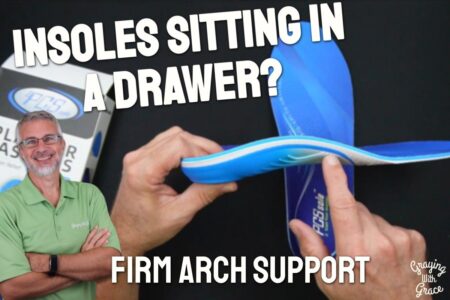
The distinguishing factors within this type: closure system, width sizing, whether the insole is removable to accommodate a custom orthotic, the heel-to-toe drop measurement, and whether the outsole is rated for smooth indoor surfaces specifically. Where arch support is mild, moderate, or firm, that level should match the wearer's actual need — someone with significant plantar fasciitis needs firm support; someone with no existing foot condition may find firm support uncomfortable for casual home wear.
LongBay Men's Slippers with Removable Supportive Insole Slip on Casual House Shoes
The LongBay's defining feature is the removable supportive insole — which means someone who already uses a custom orthotic can pull the stock insole and insert their own. This is a meaningful specification for anyone whose foot care provider has prescribed an orthotic, because it allows the therapeutic benefit of the prescribed insert to work inside an indoor shoe rather than being confined to outdoor footwear.
The slip-on construction is appropriate for someone who wants easy entry without managing a closure system. The indoor sole provides traction on household surfaces.
The limitation for someone with significant balance or stability concerns is that a slip-on without a strap or hook-and-loop closure relies on fit to keep the shoe secure. If the foot swells during the day or if the sizing runs slightly large, the shoe may feel less anchored than a strapped alternative.
Zizor Women's Adjustable House Shoes Indoor Outdoor
The Zizor appears in this section as well because its adjustable hook-and-loop strap and firm sole construction make it a legitimate candidate for extended indoor wear, not only for brief trips through the house. The adjustability accommodates the swelling that increases after long periods of standing, and the structured sole provides more ground stability than a memory foam slipper.
This is a product that bridges the grip slipper and indoor shoe categories rather than fitting neatly into one. For someone who doesn't want to manage two separate product types — one for brief trips and one for long kitchen sessions — the Zizor's construction is durable enough to handle extended wear while remaining easy to put on and take off.
The trade-off is that the arch support in the Zizor is more moderate than what a dedicated orthopedic indoor shoe offers. For someone managing significant plantar fasciitis or flat-foot pain, the ERGOfoot or L-RUN options below provide more targeted support.
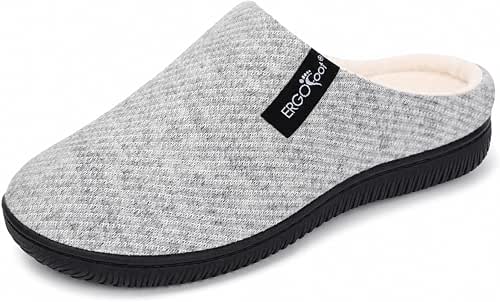
ERGOfoot Arch Support Slippers for Plantar Fasciitis, Soft Knit Orthopedic Slip On Clogs
The ERGOfoot is built specifically around plantar fasciitis relief — a condition that affects a significant portion of older adults and that worsens predictably with prolonged barefoot time or flat-insole footwear at home. The orthopedic construction provides defined arch support and a heel cup that positions the foot correctly rather than allowing it to pronate under load.
The soft knit upper is comfortable and breathable, and the clog-style construction keeps entry easy. For someone who experiences heel pain in the morning — a hallmark symptom of plantar fasciitis — the arch and heel cup in this design provide relief from the first steps of the day.
The slip-on construction without an adjustable closure means the fit relies on sizing accuracy. For someone with variable foot swelling, a size up from the standard recommendation may be appropriate to ensure the shoe stays comfortable through the afternoon.
L-RUN Women's Adjustable Diabetic Slippers House Shoes Cozy Arch Support Orthotic Arthritis
The L-RUN combines adjustable hook-and-loop closure with arch support and a diabetic-friendly interior — seamless construction that eliminates pressure points and irritation for sensitive or neuropathic feet. This combination is unusual in a single product and addresses a real problem: many arch-support indoor shoes have interior seams or structured toe boxes that create pressure points for diabetic feet.
The adjustable closure accommodates swelling and allows the shoe to be resecured comfortably at any point during the day. The orthotic-friendly construction suggests the insole may be removable or accommodating enough for a custom insert.
This is a strong choice for someone managing both foot pain and diabetic foot sensitivity — two conditions that frequently co-occur and that often require separate product compromises. The L-RUN attempts to address both in a single, wearable design.
Sisttke Diabetic Shoes for Women Wide Width
The Sisttke is built for wide-width accommodation with diabetic foot construction — a combination that addresses one of the most underserved needs in indoor footwear. Wide-width diabetic shoes are harder to find than either wide-width slippers or standard diabetic shoes, and the Sisttke fills that gap.
The interior construction prioritizes pressure-point elimination. The wide-width fit accommodates swelling without requiring a closure adjustment — the shoe is built wide from the start rather than relying on straps to compensate for a narrow last.
The honest limitation is that wide-width sizing, by definition, may feel loose on a foot that doesn't need the extra room. If the foot is a standard width, a snugger fit will provide better lateral stability than a wide-width option worn in standard sizing.
LeIsfIt Women's Slippers Wide Diabetic Shoes Adjustable Arthritis Edema House Shoes Indoor
The LeIsfIt addresses three overlapping conditions — arthritis, edema, and wide-width accommodation — in a single indoor shoe design. The adjustable closure allows the upper to open wide for entry, which matters for anyone whose hand strength or morning stiffness makes it difficult to push a swollen foot into a fixed opening. Once secured, the hook-and-loop strap holds the foot without constriction.
The edema-specific construction provides extra volume in the forefoot and midfoot, which is where fluid accumulation is most common. For someone whose swelling is significant enough that standard wide-width options still feel tight by late afternoon, this design provides additional room without requiring the wearer to go up multiple sizes.
The trade-off is that maximum accommodation prioritizes volume over snugness, which means the lateral stability of the shoe depends heavily on getting the closure tension right. A caregiver assisting with footwear should verify the strap is resecured firmly — not just fastened — before the person stands.
Frequently Asked Questions
Are grip socks actually safer than slippers for nighttime bathroom trips?
Grip socks win in one specific window: the first 60 seconds after waking. Because they're already on your foot, there's no searching in the dark, no bending down, no putting something on before you stand. That first step is where most nighttime falls occur. For any walk longer than a bathroom trip — down a hallway, into the kitchen — a closed-back grip slipper provides more structural stability, lateral support, and consistent traction. The honest answer is that both belong in the bedroom: grip socks for sleep, slippers for anything that involves more than two minutes of walking.
Why are backless slippers considered dangerous for older adults?
When a backless slipper begins to pivot off the heel, the foot instinctively curls its toes to hold the shoe in place. That toe-gripping action shortens the stride, shifts the center of gravity forward, and alters the entire gait pattern. Grip on the outsole cannot compensate for a shoe that isn't staying on the foot — by the time the outsole is flat on the floor and making contact, the damage to gait has already occurred. The heel pivot happens before grip can engage. A closed back prevents the pivot entirely. That structural difference, not the grip rating, is what separates a safe slipper from an unsafe one.
Do non-slip socks work on tile and hardwood, or only carpet?
Silicone and rubber tread performs best on smooth, hard surfaces — tile, hardwood, and laminate — where it can make direct contact with the floor. On carpet, the fibers absorb some of that contact, making the tread slightly less effective. The critical requirement for smooth-surface performance is coverage: grip elements must cover the ball of the foot, the heel, and the toe pad — the three contact points during a normal walking step. A sock with dots only around the perimeter leaves the center of the sole ungripped, which on tile means the foot can still slide laterally even when the edge contact seems secure.
How much arch support do indoor slippers actually need?
For slippers worn 30 minutes or less — brief trips through the house — minimal arch support is acceptable. For anything worn during 90 or more minutes of continuous standing or slow walking, look for a contoured footbed with defined arch support and a heel-to-toe drop of 10–15mm. A flat insole during prolonged standing creates cumulative fatigue in the foot and lower leg. As that fatigue builds, foot clearance decreases and gait becomes less controlled. The arch support requirement isn't about comfort preference — it's about how the foot functions after an hour of use, not just how it feels in the first five minutes.
What should someone with neuropathy look for in indoor footwear?
Three things matter most. First, a seamless interior — neuropathy reduces the ability to feel irritation points before they become wounds, so eliminating seams and pressure points from the start is non-negotiable. Second, a snug but non-constricting fit — the shoe should hold the foot firmly enough to provide the structural guidance that reduced sensation can no longer provide, without restricting circulation. Third, a firm enough sole to provide stability the foot can no longer sense its way around — a very flexible or thin-soled slipper requires constant proprioceptive feedback to navigate safely; a more structured sole compensates for that reduced feedback. For anyone with neuropathy, wearing only socks — grip or otherwise — is not sufficient. A shoe with structure and a closed back is the minimum.
Hacks and Practical Advice
Do the floor audit before you buy anything. Walk every room you use after dark — bedroom, hallway, bathroom, kitchen — in whatever you currently wear on your feet. Note every place where you feel uncertain underfoot. That list tells you which product type you need and where. Buying grip socks when your main risk is a tile kitchen during morning coffee prep is the wrong purchase. Buy the product that matches your actual problem surface, not the one with the most stars.
Non-slip socks go on before bed, not when you get up. The highest-risk moment during a nighttime bathroom trip is the first step — not the third. If you're pulling on socks after you've already stood up in the dark, you've missed the window. Make it a habit: grip socks on as part of the bedtime routine, the same way you'd set a glass of water on the nightstand. The protection only works if the sock is already there.
Replace grip socks every three to four months if worn nightly. Silicone and rubber tread wears down faster than the sock fabric shows it. A sock that looks fine may have lost 40–50% of its grip effectiveness after 30 or 40 washes. The test is simple: press the sole flat against a dry tile surface. If it slides rather than grips, replace the pair. The visual condition of the sock is not a reliable indicator of traction performance.
Don't keep slippers by the bed if you can't reliably find them in the dark. A slipper that requires searching is useless at 3 a.m. Attach a small strip of reflective tape to the back of each slipper, or use a nightstand hook that holds them at the exact height they can be stepped into without bending down. The best slipper in the world offers no protection if it's under the bed when you need it.
Check wide-width sizing before you fall in love with a style. Foot swelling is common after 65, particularly in the afternoon and evening — exactly when many nighttime bathroom trips begin. A slipper that fits at 10 a.m. may feel uncomfortably tight by 9 p.m., causing the wearer to take it off and reach for the backless scuff instead. Wide (2E) and extra-wide (4E) sizing is available across most categories covered in this article. Check for it before purchasing, not after the product arrives.
Indoor shoes are only useful if someone actually wears them. If the shoe requires two hands and precise fine motor control to put on, a person managing arthritis or limited dexterity won't wear it — they'll wear the backless scuff instead. A hook-and-loop closure that can be managed one-handed is worth more than a better-rated sole on a shoe that stays by the door. The best specification on paper means nothing if the product doesn't get worn. For more on how kitchen utensils and household tools can be adapted for arthritic hands, the same principle applies: ease of use determines whether the product gets used at all.
Rotate between product types rather than relying on one. No single product handles every situation in this category. Hospital grip socks belong on your feet at night. Closed-back grip slippers belong on your feet during the day. Indoor shoes with arch support belong on your feet during long stretches in the kitchen or while hosting. Treating any one of these as the complete solution leaves gaps — and those gaps are where falls happen.
Indoor Footwear Safety Shopping Guide: Grip & Fall Prevention
Download this practical shopping guide and learn exactly what to look for in grip slippers, non-slip socks, and supportive indoor shoes—so you can confidently choose footwear that actually prevents falls and suits your unique foot needs and daily routine.
The Starting Point Is Simpler Than It Sounds
The three-type framework is straightforward once you understand the logic. Hospital socks handle the overnight window — they're already on your foot when it matters most. Closed-back grip slippers handle all-day movement through the home. Indoor shoes with arch support handle extended standing that fatigues the foot and changes how you walk.
The single most common mistake in this category is buying one product and treating it as the answer for every surface, every time of day, and every duration of wear. That's what leads to grip socks being worn as daytime slippers, or to one pair of backless scuffs serving as nighttime, daytime, and kitchen footwear.
Before you order anything, walk every room you use after dark in what you currently wear on your feet. Note every surface where you're not in footwear with a closed back and a grippy sole. That list is your starting point — and it will tell you exactly which type to buy first.
If you want a guided, room-by-room framework that goes beyond footwear — covering lighting, furniture placement, bathroom safety, and every other surface-level risk in the home — the fall prevention checklist for older adults walks through exactly that.
Safe indoor footwear isn't a concession to age. It's the kind of practical intelligence that keeps you in your home, on your own terms, for as long as possible.