Do you walk the neighborhood loop every morning, swim laps at the Y, or hop on your bike most weekends, all without a single thing on your wrist to tell someone what to do if you went down? That’s the exact gap a good medical ID bracelet for athletes is supposed to fill, and it’s a bigger deal than most people realize.
The problem I hear about most from active older adults is simple: they want an ID that stays on during exercise, doesn’t feel like a hospital bracelet, and can handle sweat, pool water, or a sudden rain shower on a walk. I’m Scott Grant, Certified Senior Advisor (CSA®) and Senior Home Safety Specialist (SHSS®) at Graying With Grace, and I got my hands on the Divoti Silicone Medical ID Bracelet to see if it actually holds up to that kind of real life use.
Divoti sent me this product at no cost so I could test it out and show you how it works.
In this review I’ll walk you through how it fits, how it feels on the wrist, how legible the engraving really is, and whether it’s tough enough for the pool, the trail, or just a brisk walk around the block.


Quick Takeaways
- Problem it solves: Getting critical medical information onto first responders quickly, without relying on phone apps or QR codes that need a signal or battery.
- Who benefits most: Active older adults who walk, swim, hike, or cycle regularly and need an ID that can keep up with a sweaty or wet workout.
- Worth the investment: Yes, for anyone who spends time outdoors or exercising alone and wants peace of mind on their wrist, not buried in a wallet.
- Best feature for seniors: The trim to fit silicone band, which means no bulky links or resizing tools, just scissors and a few minutes.
- Biggest limitation: The standard clasp is easy to open with one hand, which is great for independence but not ideal if someone has dementia and tends to remove things.
Who This Is For
If you’re the kind of person who walks or runs alone most mornings and you’ve started wondering “what if something happened and nobody knew”, the Divoti Silicone Medical ID Bracelet gives first responders instant access to your conditions, medications, and emergency contacts without needing your phone unlocked.
If you swim laps, hit the pool for water aerobics, or just sweat through a lot of workouts, you’ve probably worried that a traditional metal ID chain will corrode or that engraving will wear off. This silicone and stainless steel combination is built as an all weather band, so getting wet during normal activity isn’t going to damage it.
If you’re a caregiver shopping for a parent who still cycles, gardens for hours, or takes long hikes with friends, you want something they’ll actually wear, not something that sits in a drawer because it’s uncomfortable or looks too clinical. This band is lightweight and sporty looking, which matters more than people expect for daily compliance.
How This Could Help You
Think about the last time you went for a walk, bike ride, or swim completely alone. If you fell, had a cardiac event, or a diabetic low, would anyone nearby know what to do in those first critical minutes?
A bracelet tells responders about you, but it can’t call for help, so carry a phone or a call button when you’re out alone.
That’s really the whole point of the Divoti Silicone Medical ID Bracelet. It puts your name, conditions, medications, and emergency contacts right on your wrist, a place responders commonly check for medical ID.
Can you swim with a medical ID bracelet like this one? Yes, within reason. It’s rated for all weather wear and getting splashed or dunked during normal swimming or sweating won’t hurt it, though I wouldn’t recommend leaving it submerged for extended periods as a daily habit.
Is a silicone medical ID bracelet comfortable? In my hands on evaluation, I found it genuinely lightweight at just 1.3 ounces, and the silicone band has a soft, flexible feel that doesn’t dig in or chafe the way some rigid metal bands can during exercise.
Important Details You Should Know
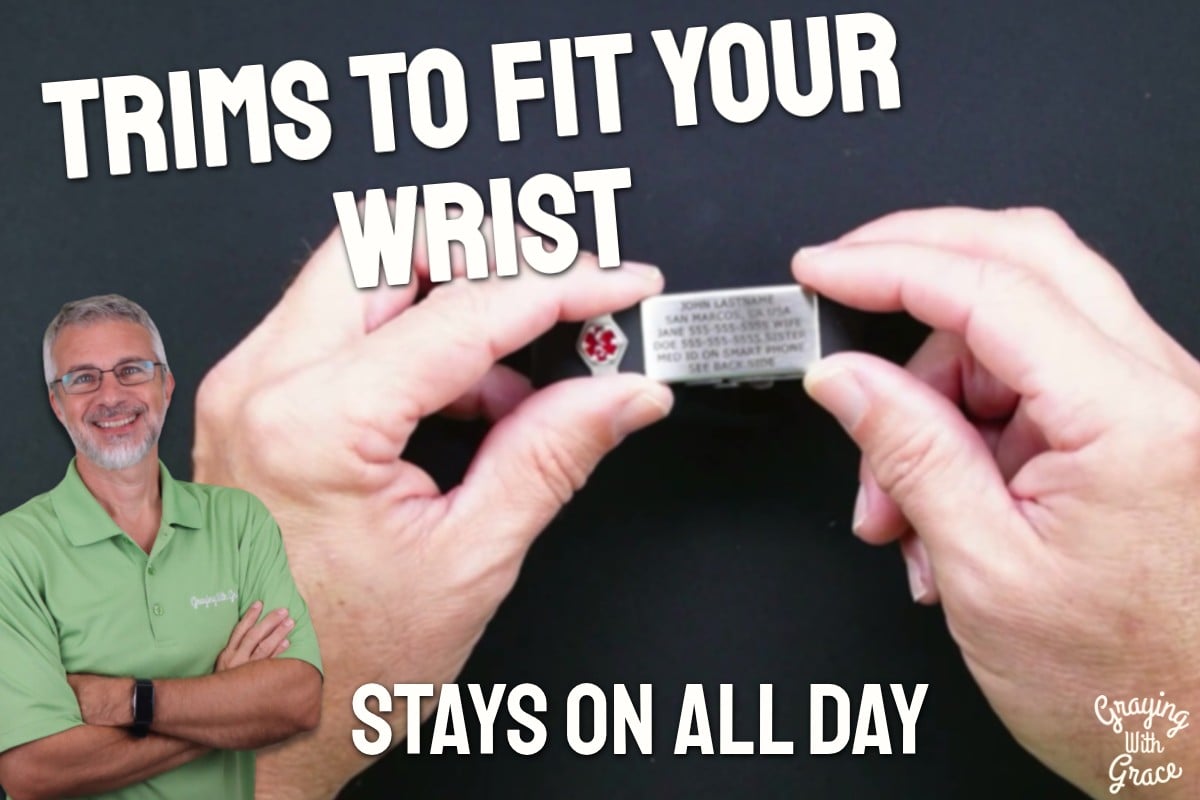
This band comes in two width options: 13mm and 19mm. It does not come in different lengths, only widths, and both are then trimmed to fit your individual wrist size, anywhere from 5.5 to 8 inches.
The wider 19mm version gives you more room for engraving, up to 10 total lines of text split across the front and back of the stainless steel plate. The 13mm width is more compact and discreet, but limits you to about 8 total lines.
As I demonstrated in the video, the plate itself is genuine laser engraved stainless steel, not a printed or painted surface. That matters for durability, because printed text can wear away with repeated hand washing or sun exposure, while engraving holds up for years.
The clasp is stainless steel as well, described by Divoti as a security deployment clasp, and it uses a locking mechanism with two side buttons you squeeze to release.
Features That Matter to You
One of the features I appreciate most about the Divoti Silicone Medical ID Bracelet is the two sided engraving. The front can carry your name and most urgent conditions, while the back holds additional details like specific medications or allergies, which keeps sensitive health information a little more private from casual glances.
For those who have already set up their smartphone’s built in Medical ID feature, you can simply engrave “See Phone Med ID” on the plate, pointing EMTs to the health details you saved there, which they can view from the lock screen without your passcode. If you haven’t set that feature up yet, it’s worth doing, and I’ve written a full guide on setting up emergency features on your smartphone that pairs nicely with a bracelet like this.
The included emergency wallet card is a nice backup touch too. It lets you list out more comprehensive health details, a full medication list, and contacts that simply won’t fit on even the largest engraved plate.
Real Life Experience
When I evaluated this product, the first thing I did was size it to my own wrist, and the process was refreshingly simple. You flip the band over, line your wrist up against it, note which notch lines up with the clasp teeth, and trim there with scissors.
In the video, you can see that locking the trimmed end into the clasp takes just a push until it clicks, and from there the fit felt secure with zero wobble or play.
As I demonstrated in the video, the clasp opens with a small lock tab plus two side buttons you squeeze simultaneously, top and bottom, which released smoothly every time without feeling flimsy.
When I looked closely at the engraving under bright light, even with glare hitting the stainless plate, the black filled lettering stayed easy to read on both the front and back surfaces.
I also ran my finger over the lettering, and as I noted in the video, you can genuinely feel the engraving grooves, confirming this is real laser engraving and not a surface print that could fade or scratch off over time.
Will You Be Able to Use It?
If you have decent hand strength and some fine motor control, sizing and wearing this bracelet should be entirely manageable on your own. The trim to fit process does require scissors and a steady hand, so if arthritis makes small cutting tasks difficult, a caregiver or family member might need to help with that one time setup step.
Once it’s trimmed and the clasp is locked in place, day to day wear is simple. The squeeze button release is easy enough that most older adults with decent grip strength can put it on and take it off independently.
That independence is actually worth pausing on. If you’re shopping for someone with cognitive decline who might remove and misplace a bracelet, this easy on off design works against you rather than for you.
Important Considerations
I want to be upfront here: this bracelet is not designed with dementia or memory care in mind. The clasp is intentionally easy to open with one hand, which is great for an active, independent senior but risky for someone who might remove it and wander off without identification.
If you’re caring for someone with dementia, I’d point you instead to a bracelet with a two hand removal clasp. I wrote a dedicated article on why the clasp matters more than the engraving for dementia medical ID bracelets that explains exactly what to look for.
Also worth noting: while the bracelet handles sweat, rain, and splashing well, Divoti doesn’t recommend submerging it in water for extended periods, so it’s not meant for serious scuba diving or hours spent fully underwater.
Always consult with your doctor or occupational therapist before making health-related product decisions, especially regarding what conditions and medications to list on any medical ID.
Help When You Need It
Divoti is an established medical ID maker, and medical ID bracelets are often FSA and HSA eligible. Check the current listing and your plan administrator to confirm before you count on it.
Customer support and returns run through the standard Amazon marketplace channels.
Understanding the Cost
I won’t talk specific pricing here, but in terms of value, this bracelet sits in a reasonable middle ground. You’re getting genuine laser engraving, medical grade stainless steel, and a durable silicone band, plus a free wallet card, which collectively offer more long term durability than cheaper printed vinyl IDs.
If you’re deciding between a bracelet and a necklace style ID, it’s worth comparing options. I reviewed the Custom4U Medical Alert Necklace as another solid alternative if wrist wear isn’t your preference.
Long term, the biggest cost consideration is simply making sure the information engraved stays current. If your medications or conditions change, you may eventually want a newly engraved bracelet, so keep that in mind as an ongoing, not one time, expense.
Making It Work for You
My top tip: don’t cram every medical detail onto the plate itself. Use the front for your most urgent, life threatening information, like major allergies or heart conditions, and let the back or the included wallet card handle the rest.
If you’ve already set up your phone’s Medical ID feature, pair it with the bracelet by engraving “See Phone Med ID,” which directs responders to a deeper, continuously updatable record. For more on that setup, revisit my guide on setting up emergency features on your smartphone.
For active folks, check the clasp fit every so often. Exercise and sweat can loosen things slightly over months of wear, so a quick monthly check keeps it snug and reliable.
Our Recommendation
If you’re an active older adult who walks, hikes, swims, or bikes regularly and wants a comfortable, water friendly medical ID that won’t fade or peel, the Divoti Silicone Medical ID Bracelet earns a solid recommendation from me.
It solves the real problem active seniors face: needing an ID that survives sweat, water, and daily wear without becoming uncomfortable or unreadable over time. The trim to fit sizing, genuine stainless steel engraving, and lightweight feel all support that.
Where I’d steer you elsewhere is for anyone concerned about a loved one with dementia removing their ID, since this clasp is intentionally easy to open. In that case, look toward a two hand release clasp design instead.
Where to Get It
Check the current listing for the Divoti Silicone Medical ID Bracelet to see pricing, available width options, and current availability before you order.
Conclusion
At the end of the day, a medical ID only helps you if you’re actually wearing it, and this bracelet makes that easy with its comfortable, sporty design and genuine, lasting engraving. It’s a smart, practical safety step for anyone who spends time active and alone, whether that’s on a trail, in a pool, or just around the neighborhood.
If you’ve tried this bracelet or have questions about sizing it yourself, drop a comment below, I’d love to hear how it’s working for you.