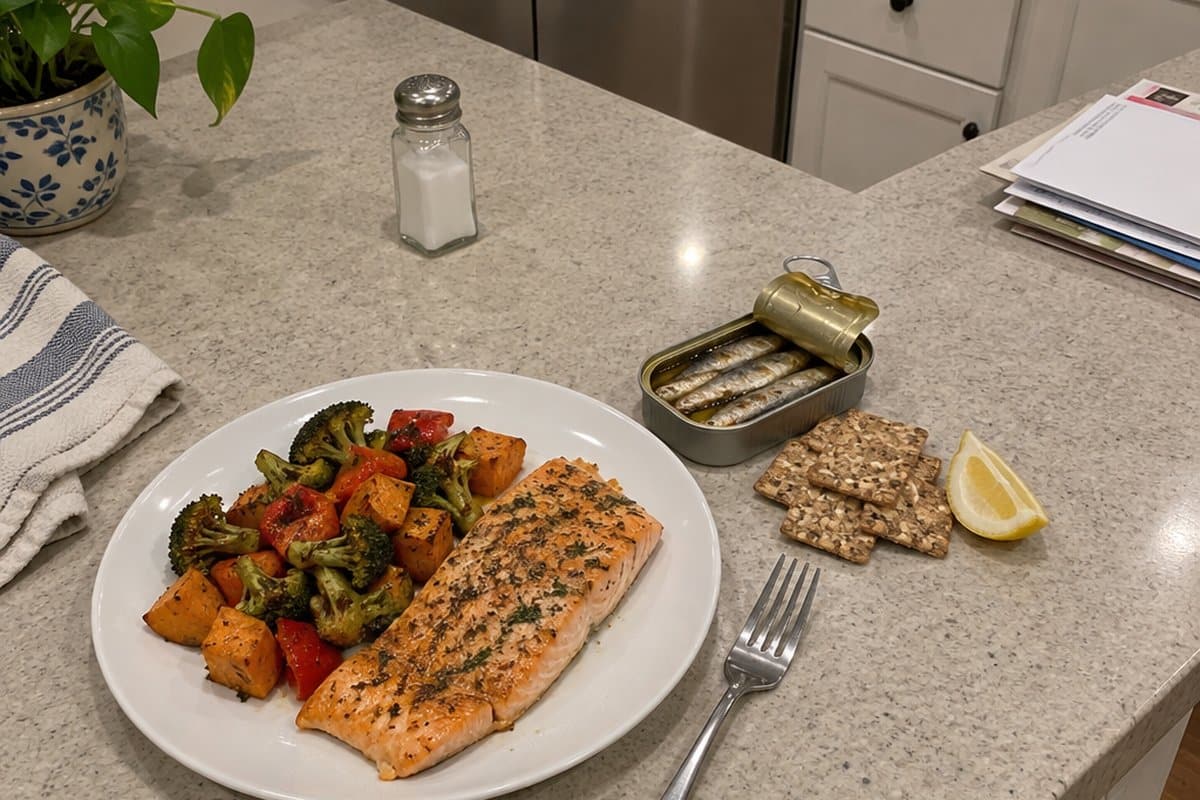
You stand in the kitchen wondering what to make for dinner, and you also wonder whether it matters for your memory. It can.
This guide to the Mediterranean memory diet covers the best foods to help protect your brain from cognitive decline.
We will look at the top foods for brain health, including olive oil, berries, and fatty fish with DHA. You will also find shopping tips, budget swaps, simple meal ideas, and ways to make it work in real life.
The Science Behind Your Brain’s Favorite Foods
The Mediterranean diet isn’t just trendy. It has years of research behind it.
The MIND diet (Mediterranean-DASH Intervention for Neurodegenerative Delay) combines the best brain-protective elements from Mediterranean and DASH eating patterns. Studies following large groups of older adults over several years linked it to better memory.
What the research suggests: People who followed the MIND diet most closely did better on memory tests. Even those who followed it only moderately may have gained some brain protection. These studies observe eating habits, so they do not prove food prevents memory loss.
Here’s what makes these foods so powerful for your brain: they’re packed with antioxidants that fight inflammation, healthy fats that support brain cell membranes, and nutrients that improve blood flow to your most important organ.
Your brain uses a good share of your daily calories, so the quality of those calories really matters.
Your Brain’s Top 10 Protective Foods
These foods keep showing up in research on brain health.
Leafy Greens: Your Daily Brain Boost
Target: 6+ servings per week
Spinach, kale, arugula, and lettuce are loaded with folate, vitamin K, and lutein. Eating them most days is linked with better memory in some studies.
Berries: Nature’s Memory Pills
Target: 2+ servings per week
Blueberries and strawberries contain anthocyanins that improve communication between brain cells. Frozen berries work just as well and are often more budget-friendly.
Nuts: Your Portable Brain Food
Target: 5+ servings per week
Walnuts are especially rich in DHA, an omega-3 fat that’s crucial for brain health. An ounce a day (about 14 walnut halves) is a good habit.
Olive Oil: Liquid Gold for Your Mind
Target: Use as your primary cooking oil
Extra virgin olive oil contains compounds that may help clear harmful proteins from the brain. Use it for cooking and drizzling on salads.
Whole Grains: Steady Fuel for Sharp Thinking
Target: 3+ servings daily
Oats, quinoa, brown rice, and whole wheat provide steady glucose to keep your brain running smoothly all day long.
Fish: The Ultimate Brain Food
Target: 1+ serving per week
Salmon, sardines, and other fatty fish deliver omega-3s directly to your brain. Canned fish counts and is often more affordable. If you’re interested in other ways to look after your health, learn about the benefits of fitness trackers for monitoring your overall wellness.
Beans: The Overlooked Brain Protectors
Target: 3+ servings per week
Lentils, chickpeas, and black beans provide steady energy and B-vitamins that support neurotransmitter production.
Poultry: Clean Protein for Cognitive Function
Target: 2+ servings per week
Chicken and turkey provide high-quality protein and choline, which your brain needs to make the memory neurotransmitter acetylcholine.
Wine: The Surprising Brain Defender
Target: Optional, and check with your doctor first
Red wine contains resveratrol, which may protect brain cells. You do not need to drink alcohol to eat this way, and purple grape juice is an option. Ask your doctor whether alcohol is right for you.
Dark Chocolate: A Sweet Brain Booster
Target: Small amounts several times per week
Choose chocolate with 70% or higher cacao content for maximum flavonoids, which improve blood flow to the brain.
Ready to discover more ideas for healthy, comfortable aging? Subscribe to our newsletter for tips and product recommendations.

Extra Virgin Olive Oil and Alzheimer's Risk
Extra virgin olive oil contains a compound called oleocanthal. You won’t find it in vegetable oil, canola oil, or margarine.
Researchers who study oleocanthal have found that it appears to support the clearance of amyloid plaques. These are protein buildups in the brain that are strongly linked to Alzheimer’s disease.
It is one reason Mediterranean eating patterns keep showing up in brain health research.
Both the Mediterranean diet and the MIND diet connect regular olive oil to lower rates of cognitive decline in older adults. The amount that shows up most often is one to two tablespoons a day, which fits into normal cooking.
You don’t need new recipes. Olive oil works as a swap for what you already use:
- Use it in place of vegetable oil for sautéing and roasting
- Mix a drizzle with lemon and a pinch of salt for a salad dressing
- Put a small pour on bread instead of margarine or butter
- Drizzle it over cooked vegetables before serving
Not every bottle labeled “olive oil” has the same polyphenol content. Look for these on the label:
- “Extra virgin” specifically, not “pure” or “light”
- “Cold-pressed”
- A harvest date within the past 12 to 18 months, since fresher oil has more polyphenols
- A certified origin, when possible
Oil is one part of caring for your memory. Staying connected to other people matters too, and hobby communities are one way retirees find that connection.
The catch is that bottles vary a great deal, so a little label reading is worth the time. A “light” olive oil won’t give you the same thing.

Blueberries and Dark Berries: Small Fruit, Real Help for Memory
Blueberries get their deep blue-purple color from compounds called polyphenols. The type they are rich in is called anthocyanins.
Most compounds can’t cross the blood-brain barrier, but anthocyanins can. Once inside, they appear to help the brain form new connections, reduce oxidative stress, and support memory.
Researchers have studied blueberries and found improvements in memory and processing speed in older adults who ate them regularly.
Across MIND diet research and blueberry studies, the pattern is similar. Older adults who eat dark berries several times a week tend to show slower memory decline.
The amount is modest: roughly half a cup, three to four times a week. Not pounds of berries.
Fresh, frozen, and freeze-dried all work. Frozen blueberries are just as nutrient-dense as fresh, and the polyphenols hold up well through freezing and drying.
Keep a bag of frozen blueberries in the freezer and add a handful to oatmeal, yogurt, or a smoothie. It takes under 30 seconds. Blackberries, strawberries, and purple grapes offer similar benefits, so variety is fine.
Food is only part of the picture. Staying socially connected matters for your brain as much as what you eat, and hobbies that bring people together are one good way to do that.
If you travel a lot or can’t keep up with berries, blueberry extract and polyphenol supplements are out there. Look for standardized anthocyanin content on the label. Still, the research is about eating the berries regularly, so the habit is what counts.
Why Fatty Fish and DHA Deserve a Spot on Your Plate
Plenty of people stopped eating fish years ago because of cholesterol worries or low-fat advice. If that was you, you were following the guidance of the day, and there is nothing to regret.
The research now points back toward fish, because of an omega-3 fat called DHA. Your brain is largely made of fat, and DHA is a structural part of brain cell membranes. It helps maintain the protective coating around nerve fibers, which lets signals travel quickly and clearly. It also helps reduce chronic, low-grade inflammation in the brain and supports the process that turns short-term experiences into long-term memories.
When DHA stays low for a long time, research suggests it can contribute to slower processing speed, brain fog, and faster memory decline.
You may have heard that flaxseed gives you omega-3s too. That is true, but flaxseed contains ALA, a plant omega-3 that the body has to convert into DHA before the brain can use it. That conversion is not very efficient.
Fatty fish such as salmon, sardines, mackerel, and herring deliver DHA directly, with no conversion needed. That is why the MIND diet emphasizes fish rather than flaxseed oil.
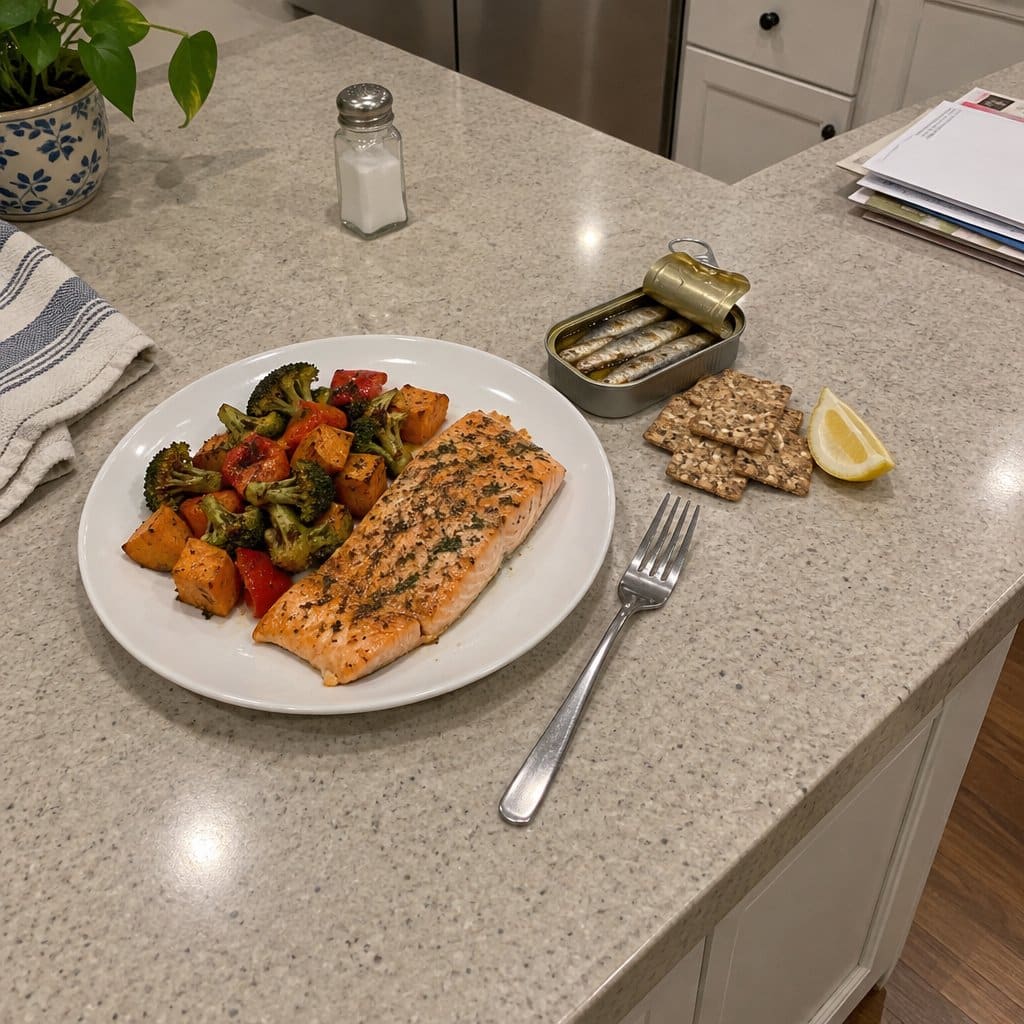
The target that shows up most often in the studies is two servings of fatty fish a week. It does not need to be a fancy dinner:
- A salmon fillet with roasted vegetables
- Sardines on whole-grain crackers with a squeeze of lemon
- Canned mackerel stirred into a simple pasta
- Smoked herring on a salad
If two servings feels like a lot, one a week is a meaningful start.
If you dislike fish or have dietary restrictions that make it hard to eat, omega-3 fish oil supplements are a common option. Algae-based DHA supplements suit people who avoid fish entirely. Quality varies, so look for third-party testing and a clear DHA amount on the label.
Still, food comes first when you can manage it. The research behind fish is about the food itself, not isolated capsules, and a supplement may not give you the same result.

Your Weekly Brain-Healthy Shopping Strategy
Smart shopping makes brain-healthy eating affordable and sustainable.
Fresh vs. Frozen: What Really Matters
The truth: Frozen berries, vegetables, and fish are often more nutritious than fresh options that have traveled long distances. They’re also more budget-friendly and won’t spoil as quickly.
Pro tip: Buy fresh leafy greens weekly, but stock up on frozen berries, broccoli, and fish to always have brain foods available.
Budget-Friendly Brain Food Swaps
- Instead of expensive salmon: Try canned sardines or mackerel
- Instead of fresh berries year-round: Use frozen berries in smoothies
- Instead of imported olive oil: Look for domestic extra virgin options
- Instead of specialty nuts: Buy walnuts in bulk and store in the freezer
Your Memory-Protecting Shopping List
Produce Section: Spinach, blueberries, broccoli, avocados
Pantry Staples: Extra virgin olive oil, walnuts, oats, canned salmon
Proteins: Chicken breast, dried lentils, eggs
Extras: Dark chocolate (70% cacao), green tea
Shop the perimeter of the store first for fresh foods, then fill in with pantry staples.
Simple Meal Ideas That Love Your Brain Back
You don’t need to be a chef to eat for cognitive health.
Breakfast: Start Your Brain Right
Mediterranean Scramble: Scrambled eggs with spinach, tomatoes, and a drizzle of olive oil
Berry Brain Bowl: Oatmeal topped with blueberries, chopped walnuts, and a touch of honey
Quick Option: Greek yogurt with berries and a small handful of nuts
Lunch: Midday Mind Fuel
Brain-Boosting Salad: Mixed greens with chickpeas, olive oil dressing, and a sprinkle of nuts
Simple Sardine Toast: Whole grain bread with mashed avocado and canned sardines
Leftovers Strategy: Make extra dinner portions for easy, brain-healthy lunches
Dinner: Evening Nourishment
One-Pan Wonder: Baked salmon with roasted vegetables drizzled in olive oil
Comfort Food: Lentil soup with whole grain bread and a side salad
Simple Pasta: Whole wheat pasta with olive oil, garlic, spinach, and walnuts
The 15-minute rule: Keep meals simple. If it takes longer than 15 minutes to prepare, save it for weekends.
Modifying for Dietary Restrictions
For diabetes: Focus on portion sizes and pair carbs with protein or healthy fats
For heart disease: Use herbs instead of salt, choose lean proteins
For digestive issues: Start with small portions of beans and gradually increase
For medication interactions: Check with your pharmacist about foods like leafy greens if you take blood thinners

Making It Work in Real Life
The best diet is the one you’ll actually follow consistently.
Start Small, Think Big
You don’t need to overhaul your entire diet overnight. Pick just two or three brain foods to add this week.
Week 1: Add a handful of berries to your breakfast
Week 2: Switch to olive oil for cooking
Week 3: Include a serving of leafy greens daily
Week 4: Add nuts as an afternoon snack
Meal Prep for Brain Health
Sunday Strategy: Wash and prep leafy greens, portion out nuts, cook a big batch of whole grains
Freezer Friends: Pre-portion smoothie ingredients, cook large batches of bean-based soups
Emergency Options: Keep canned salmon, frozen berries, and pre-cooked whole grains on hand
Social Eating Solutions
Restaurant Strategy: Look for Mediterranean-style restaurants, or choose grilled fish with vegetables anywhere
Family Dinners: These foods appeal to all ages, so make brain-healthy meals everyone will enjoy
Potluck Contributions: Bring a colorful salad or berry dessert to share the brain benefits
Want more ideas for healthy, comfortable living? Subscribe to our newsletter for tips and product recommendations.
Your Memory-Protecting Journey Starts Today
Eating for brain health doesn’t have to be complicated or expensive.
The Mediterranean approach to eating celebrates food as both nourishment and pleasure. You’re not just feeding your body. You’re giving your brain good food with every bite.
Remember, consistency matters more than perfection. Small changes add up over time. Observational studies link Mediterranean-style eating with a lower risk of memory decline, but they do not prove food prevents it. Check with your doctor about any memory concerns.
Start with just one brain-healthy food today. Add berries to your breakfast, drizzle olive oil on your salad, or enjoy a small handful of walnuts as a snack.
Your brain and your taste buds will thank you for it.
What’s the first brain-healthy food you’re excited to try? Share your memory-protecting meal ideas in the comments below!