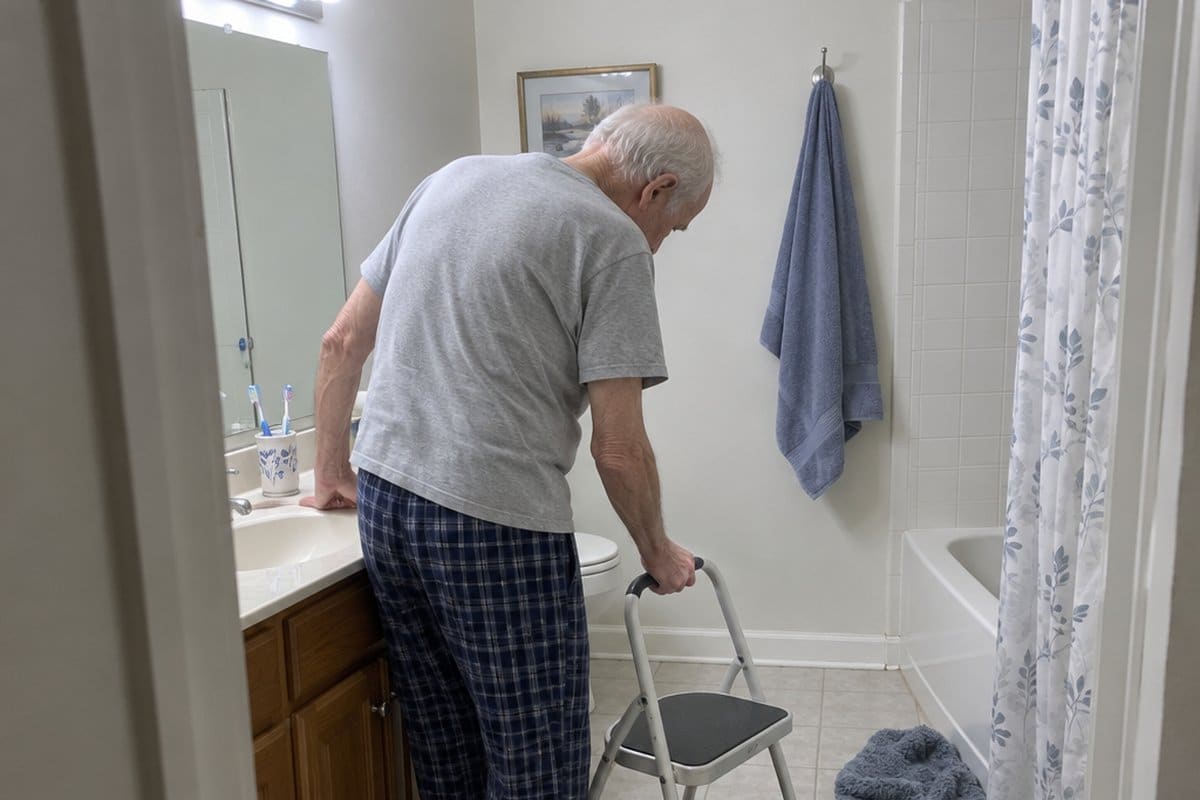
You need something from a high shelf, and the stool in the closet is the riskiest way to get it.
This guide compares a gripped ascent (a step stool with handrail for seniors) with staying on the ground. I'll give you the specs to check and one rule for deciding.
If you’re in a hurry, my top picks are right here, and the details on each one are further down the page.


Step Stool With Handrail Buying Checklist
Download this printable step stool checklist to confidently choose the right tool for your home—no more guessing what’s safe, and no more taking unnecessary risks on unstable stools or chairs.
What to Look For
Here is the key point: the handrail is the safety feature, not the height or the brand.
Without one, you step up, shift your weight, reach overhead and step back down with nothing stable to hold. That chain of movements comes before many household falls.
- Handrail: Look for a rail you can grip at waist to chest height while standing on the top step, ideally on both sides. It should be part of the frame, not a removable accessory.
- Load rating: Many handrail stools are rated around 300 lb. Choose a rating comfortably above your body weight plus anything you carry.
- Platform depth: Read the listed platform dimensions and confirm your whole foot fits. A deep, wide top is steadier.
- Base width: The base should be wider than the platform. Compare the listed footprint with the top step.
- Tread and feet: Look for non-skid or rubberized treads and rubber feet. Hard floors and tile need grippy feet.
- Locking frame (folding stools): The legs should click into place and stay open. Friction alone is not enough.
- Step height: Low rise per step is easier on the knees. Measure your comfortable step height and the shelf you need to reach.
- Weight and storage: Lighter stools are easier to carry but can feel less planted. Check fold thickness if closet space is tight.
- Reach tool basics: Most run roughly 26 to 32 inches. Look for a firm jaw grip, an easy trigger, light weight and a lock or rotating head. My guide to reachers and grabbers goes deeper.
A Quick Balance Check
Before any stool, try two simple checks at home. Stand on one foot beside a counter for a few seconds, then rise from a chair without using your hands.
This is a screening habit, not a medical test. If either feels shaky, talk with a healthcare professional or physical therapist.
If balance is already a concern, a reach tool removes the risk rather than managing it.
Ready to discover more innovative strategies for healthy, comfortable aging? Subscribe to our newsletter for expert-tested tips and product recommendations designed specifically for older adults.
Step Stools With Handrails
Reaching high cabinets and shelves is a daily need, and a fixed rail gives you something stable to hold while you climb and reach. These stools suit older adults who are steady on their feet.
This is a one-piece or folding stool with a fixed rail you can hold while you climb and while you reach.
Who a Step Stool With Handrail for Seniors Suits
It suits older adults who are steady on their feet and need heights a reach tool can't handle reliably. Think upper kitchen cabinets, pantry shelves, closet shelves and light fixtures at a modest height.
It is the wrong choice for anyone already cautious on stairs. It should not be the default for that person.
Compared with a two-step folding stool, you get more stability from the rail and usually a bigger platform. The trade-off is weight and bulk when you store it.
A handrail steadies the climb. It does not replace good balance.
If kitchen cabinets are your main reach, the hidden kitchen fall risks are worth a read first.
Leekpai Step Stool with Handle (350 lb)
This one is built around a 350 lb rating, which leaves a generous margin if you carry a pot or a box up with you. That suits someone who wants a step stool 300 lb capacity with handrail and then some.
The catch is that a rating this high usually points to a sturdier frame. Check the carry weight and your closet space before you commit.
Josmimic 2 Step Stool with Handle
This stool is designed with an adjustable handrail, which can help if more than one person in the household uses it. The step stool with handle for elderly adults is also listed as heavy duty.
The catch is that an adjustable rail is one more part to check. Make sure it is locked at the right height every single time, and confirm the listed capacity.
Two-Step Folding Stools
Occasional low reaches call for a stool that stores flat and stays out of the way. These two-step folding stools suit households that want something light and compact for the occasional job.
This is a compact two-step stool that folds flat for storage.
It suits households that need occasional low reaches. A lower cabinet, a closet shelf or a smoke detector battery at a modest height are good examples (with a helper nearby).
Three specs are non-negotiable: a wide base, non-skid treads and a locking frame. A folding step stool wide base matters most. If a stool is missing any of the three, skip it.
It is the wrong choice if you are cautious on stairs, would leave it out for daily use, or plan to reach overhead with both hands full.
Against handrail stools, it is easier to store and carry. But two steps up raises the stakes, and many designs give you little to hold. Look for a 2 step folding stool with handrail.
This is an occasional tool, not one to keep out every day. Tight bathrooms and wet floors are a special case, and the bathroom danger zones show why.
STOODER Folding Step Stool, 2-Step, 300 lb
The listing highlights non-slip treads and a 300 lb capacity, which covers two of the three must-haves for a non slip step stool for seniors. It also quotes 8 and 17 inch measurements, so check which is which against your own step height.
The catch is that the listing does not mention a handrail. If there is none, you have nothing to hold, so confirm before you buy.
KINGRACK Folding Step Ladder with Handle
This folding stool is designed with a handle, so you get something to grip that many two-step designs lack. That makes it a lightweight step stool with rail option for occasional use.
The catch is that a folding frame depends on its lock. Confirm the locking mechanism and listed capacity, and a fixed-height handle may not suit shorter users.
Subscribe to our newsletter for more tips: Join here
Frequently Asked Questions
Is a step stool safe for an elderly person? Only if they are steady on their feet and the stool has a handrail. If balance is a concern, a reach tool is safer.
Do handrails on step stools make them safer? Yes, they give you something stable to hold. They do not replace balance.
When should I stop using a step stool? When you feel unsteady stepping up or down, or need to hold onto something else to feel safe. Consider asking a healthcare professional.
How do I choose a reacher grabber? Pick a length that matches your reach, a light trigger and a firm grip on the item you pick up most.
Hacks and Advice
- Move items first: Relocate everyday items to waist-to-shoulder height so you stop reaching overhead. It costs nothing.
- Never stand on a chair: Chairs, boxes and furniture are the most common wrong choice. For ceiling fans, an extended pole such as this ladder-free fan duster keeps your feet on the floor.
- Have someone nearby: Ask someone to be in the house or on the phone. Keep a phone or medical alert within reach.
- Check the stool every year: Look for loose rails, worn treads, wobbly legs and a lock that no longer clicks firmly. Retire it if anything is off.
- Clear the floor and wear good shoes: Move rugs and clutter away. Wear closed, non-slip shoes, and see my guide to shoes that prevent falls.
Caregivers can find more ideas in this plain-language guide to assistive devices.
Step Stool With Handrail Buying Checklist
Download this printable step stool checklist to confidently choose the right tool for your home—no more guessing what’s safe, and no more taking unnecessary risks on unstable stools or chairs.
Choosing What Keeps You Independent
The handrail matters more than the height. If balance is already a concern, a reach tool removes the risk rather than managing it.
Staying on the ground is a smart, independent choice. The right step stool with handrail for seniors is still there for those who are steady.
Before you buy, try my Home Safety and Independent Living Assessment. Walk through each room where you reach overhead and note which tasks a reach tool could handle from the ground.
That list tells you whether a stool is the right solution or a workaround for a habit worth changing.
Which shelf in your home do you reach for most often? Tell me in the comments, and share this with a family member who could use it.