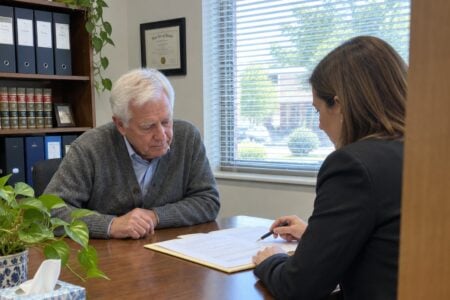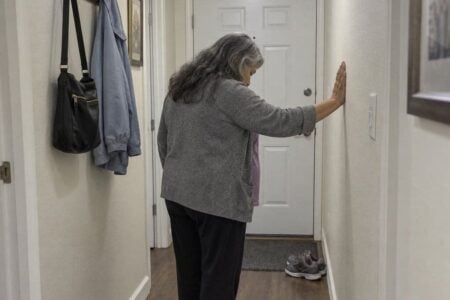

You’re looking at the monthly bill for your dad’s care, and the number keeps you up at night. He served in the military, yet nobody at the doctor’s office or the care agency ever mentioned that the VA might help.
What if there’s a benefit that families rarely hear about until years later, if at all? It’s called VA Aid and Attendance, and it’s easy to miss.
This is a general overview. I’ll cover who may qualify, what the paperwork looks like, and how to get help applying at no cost, plus one warning about paid advisors.

VA Aid and Attendance Application Roadmap
Download this step-by-step application roadmap to navigate the VA Aid and Attendance benefit without confusion, hidden fees, or predatory advisors—so you can access financial help for care costs without costly delays or mistakes.
What Aid and Attendance Is, and Why So Many Families Miss It
Aid and Attendance is an added amount that may be paid on top of a VA pension. It goes to a wartime veteran or a surviving spouse who needs help with daily activities.
It isn’t a separate program with its own front door. It’s tucked inside the pension program, which is a big reason it stays hidden.
Why Nobody Mentioned It
The name doesn’t explain itself. The rules look confusing. And no one at a hospital or care agency is required to bring it up.
Picture a family that pays for a parent’s care for months. Then a social worker or a friend mentions the VA, and they wonder why no one said so sooner.
If you’ve never heard of it, you’re in good company. Not knowing isn’t a failure. The system is hard to see from the outside.
Pension vs. Disability Compensation
These two get mixed up often. Disability compensation is for conditions connected to military service. A VA pension is a needs-based benefit for wartime veterans and surviving spouses.
Please keep an open mind and read on before deciding whether this fits your family.

Who May Qualify: Service, Daily Needs, and Surviving Spouses
Qualification generally rests on a few broad ideas. The final decision belongs to the VA, so treat this as a starting picture, not an answer.
The Broad Strokes
- Wartime service: The veteran generally must have served during a recognized wartime period. The VA defines those periods, so confirm them on VA.gov.
- Help with daily activities: This means things like bathing, dressing, eating, or moving safely. A doctor’s input is part of showing the need.
- Surviving spouses: A surviving spouse may also be eligible. Many families don’t realize that.
- Financial limits: The pension has them, but they change. I won’t quote figures here. Current numbers are listed on VA.gov.
Rules vary and change, so no article can say for certain who qualifies. That includes this one.
Check Before You Assume
Here’s a pattern I’d hate to see. A family says, “Dad’s service wasn’t in a war, so we’re out,” and stops looking. Another family checks the VA’s official definitions first and finds out where they stand.
Checking costs nothing. Assuming you don’t qualify can cost a family real money.
Try this quick check:
- Did the veteran serve during a wartime period?
- Does the person need regular help with daily tasks?
- Is there a surviving spouse?
If any answer is “maybe,” ask an accredited representative. I’ll explain who that is below.

What It Can Help Pay For
The benefit is money paid to the veteran or surviving spouse. The pension is the base, and Aid and Attendance may increase it when daily help is needed. Current rates are posted on VA.gov, and that’s where to check them.
Where the Money May Go
It may go toward help at home, assisted living, or nursing home care. If you’re weighing those choices, my 9-question checklist for moving a parent to assisted living can help. If home is the plan, finding a live-in caregiver is worth a read.
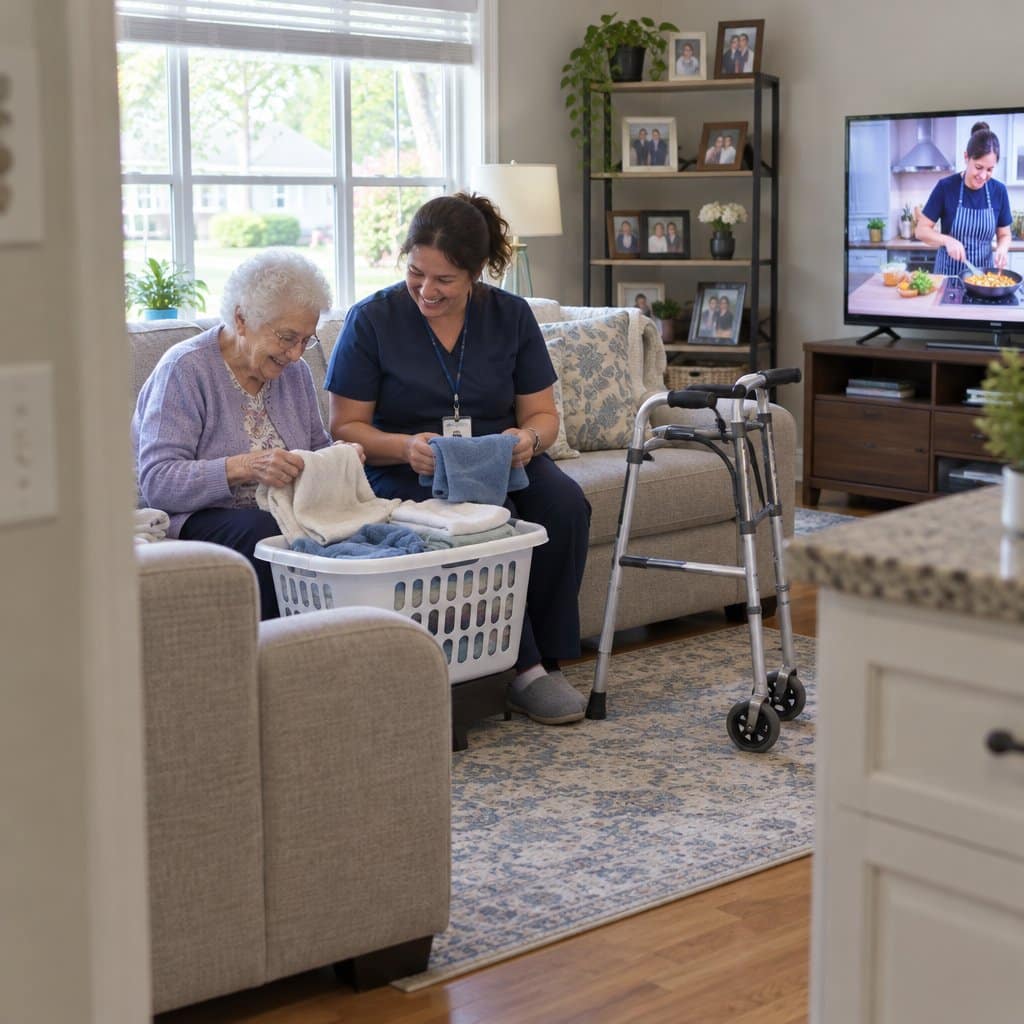
A family might use the extra money for a few more hours of in-home help each week. That’s time a caregiver gets back.
The money isn’t tied to a list of approved items, so it can also cover everyday care supplies. No-rinse bathing wipes are one I’ve demoed, for the days a shower is too much.


The Limits to Know
It may not cover the full cost of care, so you’ll still want to plan around the gap. Approval isn’t guaranteed. And it isn’t instant, so it can’t replace a care budget.
Still, even a partial benefit can ease the strain on a caregiver’s wallet and calendar.
Your first step: write down what care your parent receives now and what it costs per month. You’ll be ready when you talk with a representative.
The Paperwork: Forms, the Doctor’s Statement, and Records to Gather
The paperwork is the part that scares families off. Breaking it into three piles makes it manageable.
The application goes to the VA. An accredited representative can tell you which current forms apply, so please don’t guess at form numbers. Confirm them on VA.gov or with a representative.
The Three Piles
- Service papers: The veteran’s discharge papers. For a surviving spouse, add marriage and death records.
- Medical papers: Health information and the doctor’s statement. That’s a physician describing the person’s need for help with daily activities. Ask the doctor’s office early, because they’re busy.
- Money papers: Financial records, since the pension looks at finances.
Incomplete paperwork slows things down. How long approval takes varies, so the VA’s site or a representative can give you current information.
Paperwork is a task, not a test. Spread it over a few weeks and it gets much lighter.
Start a Folder Today
- Get a folder or large envelope and label it.
- Find the discharge papers, or note who might know where they are.
- Call the doctor’s office and ask how they handle requests for a statement.
- Gather recent bank and benefit statements.
One caution. Please don’t rush to move or transfer money to try to qualify. I’m not an attorney, so talk with a qualified professional first.

Free Help Applying, and the Paid Advisors to Avoid
Here’s what I want you to know before you make the call: help is available at no cost.
Where Free Help Lives
VA-accredited representatives can walk you through it. They include people from veterans service organizations and county or state veterans service offices. You can find accredited representatives through VA.gov.
Filing the claim itself doesn’t require paying anyone. Some professionals do offer legitimate services, such as elder law planning, and you’re free to hire an attorney. That’s a choice, not a requirement.
Warning Signs of a Paid Advisor to Avoid
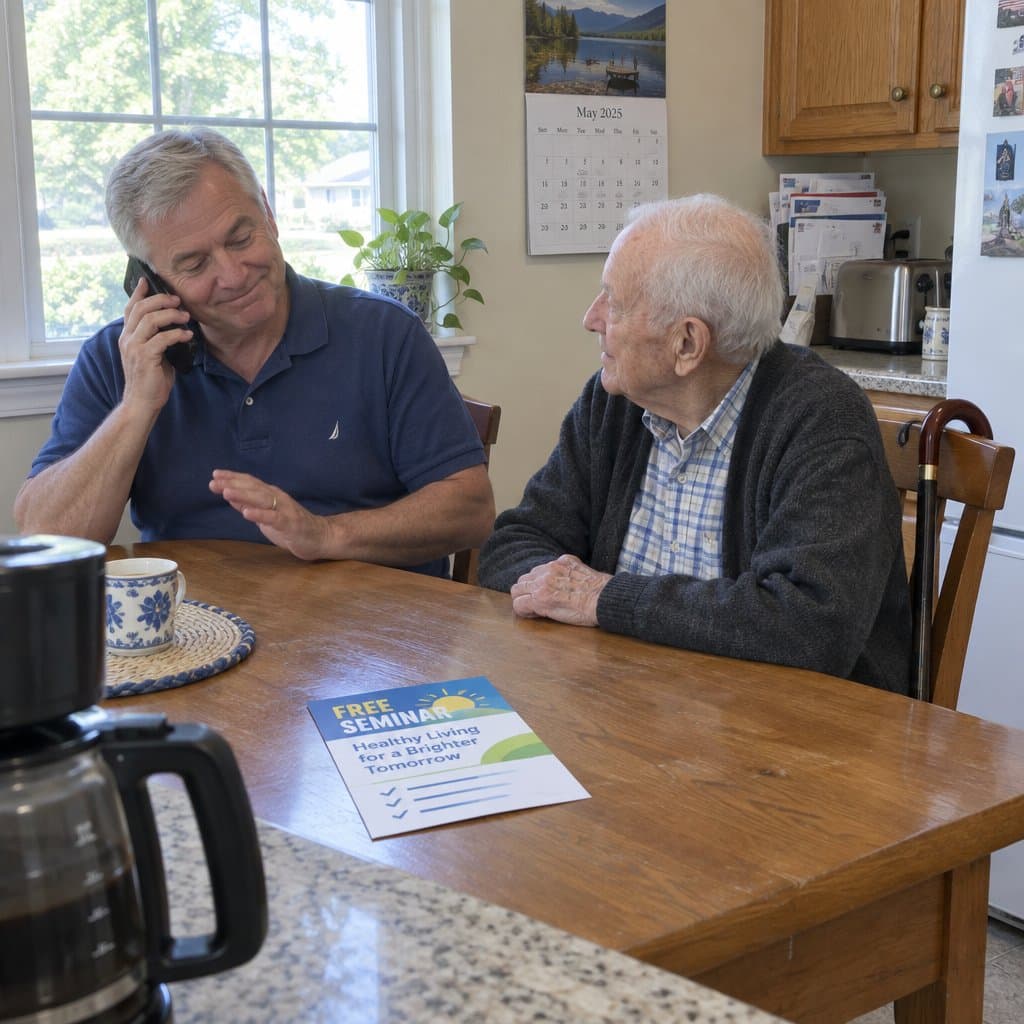
A typical pitch is a free seminar that ends with a sales conversation about “getting your dad qualified.” Watch for an advisor who:
- Charges a fee to prepare or file the application
- Promises approval or guarantees a result
- Pressures you to move or restructure money before you’ve checked with a qualified professional
- Isn’t VA-accredited, or avoids saying whether they are
- Pushes a product, such as an annuity or insurance policy, as part of “qualifying”
The same high-pressure tactics show up elsewhere. I describe them in my piece on home repair scams that target older homeowners.
Two Questions to Ask First
- “Are you VA-accredited?”
- “Do you charge to file?”
Ask them before you share a single document. It’s a smart, protective question, not a rude one.
VA Aid and Attendance Application Roadmap
Download this step-by-step application roadmap to navigate the VA Aid and Attendance benefit without confusion, hidden fees, or predatory advisors—so you can access financial help for care costs without costly delays or mistakes.
One Call Is Manageable
Aid and Attendance may help a wartime veteran or surviving spouse pay for care. The paperwork is doable in small steps. And help applying is free.
I know the weight you’re carrying, and the guilt about money that often comes with it. Looking into this is a caring act. If you’re also stretched thin, a neighbor check-in system can lighten the daily load, and rethinking whether staying at home is working may help too. For other ways to trim costs, see cutting utility bills.
I’m a Certified Senior Advisor, not an attorney or benefits counselor. Rules change, so please confirm current details on VA.gov and with an accredited representative for your family’s situation.
Can you make one call this week to a VA-accredited representative or a veterans service organization? It costs nothing to ask.
Did you know about Aid and Attendance before today? Tell me in the comments, and pass this along to a friend with a veteran parent.