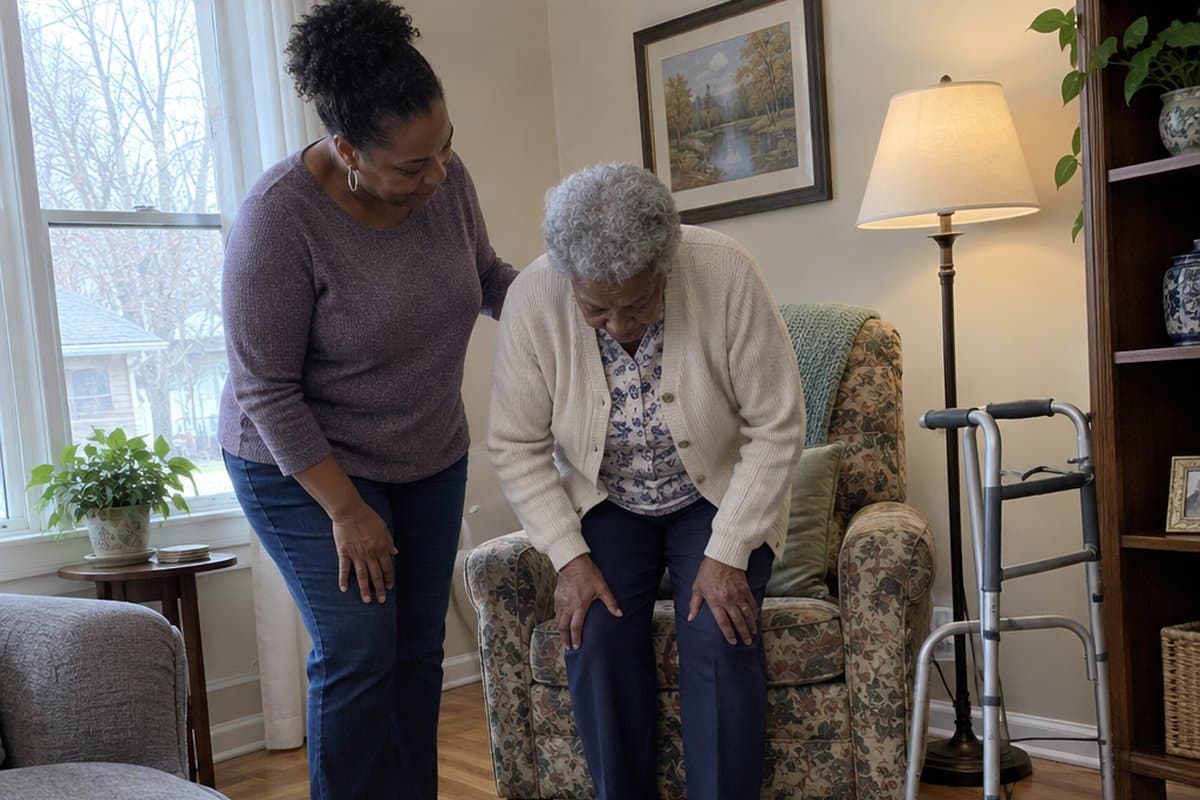
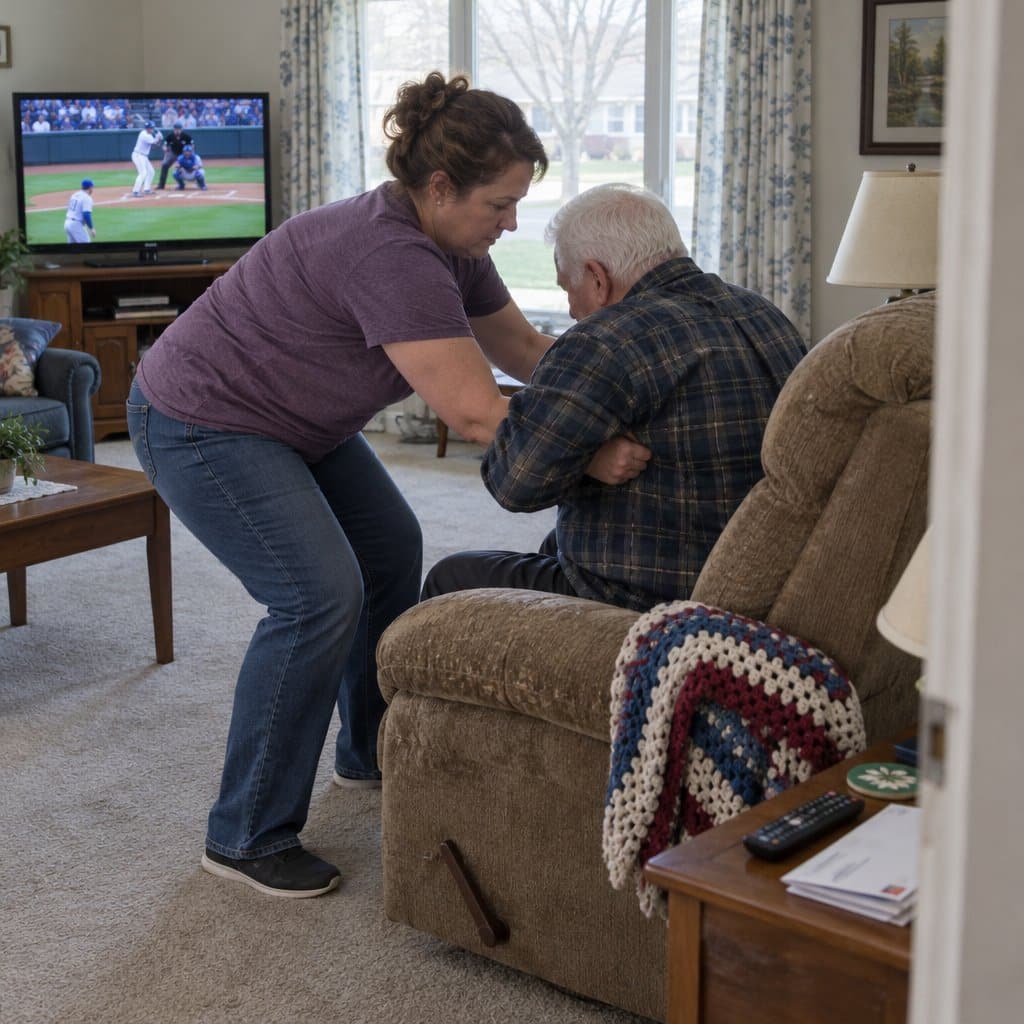
You reach under your dad’s arms to help him out of the recliner, he slides forward, and your lower back lets you know about it. If you want to know how to help a parent stand up without hurting your back, you are in the right place.
This article covers why the underarm grab strains you, a safe sit-to-stand routine, and how to choose a gait belt, match one to your situation, and size it. It also covers when a belt or sling is not the right tool, and when to ask a therapist for help.
The Safe Transfer Checklist: A Family Caregiver’s Guide to Helping a Parent Stand Without Hurting Your Back
Download this step-by-step transfer checklist to protect your back from caregiver injury while helping your parent stand safely, no special equipment or strength required, just the right technique every single time.
Why Your Body Isn’t Built for the Way You’ve Been Helping Your Parent
The most common way family caregivers help an older adult stand is completely instinctive: you reach under their arms, brace yourself, and pull forward while they push up. It feels like the natural thing to do. And it is hard on your spine.
The Problem with the “Underarm Grab”
When you grab under someone’s arms and pull, the load is out in front of your center of gravity. Your spine bends forward under strain with no leverage to manage the weight. That can lead to disc strain, muscle tears, and lasting lower back problems.
Caregivers rarely throw their backs out in one dramatic moment. It’s the daily repetition (three transfers in the morning, two in the afternoon, one at night) that wears on the spine over weeks and months. By the time something gives, the strain has been building for a long time.
The Risk Doesn’t Stop With You
When a caregiver loses control mid-transfer, the older adult often absorbs the fall or gets pulled in an unsafe direction. This is especially dangerous for someone recovering from a hip replacement, stroke, or dealing with bone density loss.
And here’s what makes this problem grow over time: as your parent’s mobility declines, their ability to help with the transfer decreases. That means you take on more of the load as the months go by.
This isn’t a strength problem. It’s a mechanics problem. And mechanics can be fixed with the right tool.
What Safe Patient Handling at Home Actually Looks Like
A safe transfer from seated to standing isn’t about being stronger. It’s about being smarter with how force moves through the bodies involved. The caregiver should function as a guide and stabilizer, not a crane.
The Three Elements of a Safe Sit-to-Stand Transfer
- A stable grip point on the older adult: something that stays in place and gives you real control
- A controlled path of movement: the parent leans forward first, then rises, rather than being pulled straight up
- Caregiver positioning to guide, not lift: you’re beside them, not in front of them, bearing minimal load
Why Gait Belts Help, But Have Limits
Gait belts are a step in the right direction. They give you something to grip instead of grabbing under the arms. But they require you to clutch tightly around the waist and still absorb significant force, especially if your parent is heavier or only partially weight-bearing. Grip fatigue sets in fast.
Where a Transfer Sling Lift Aid Comes In
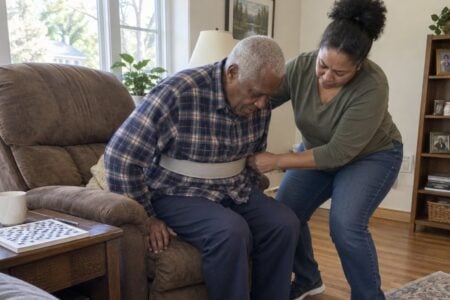
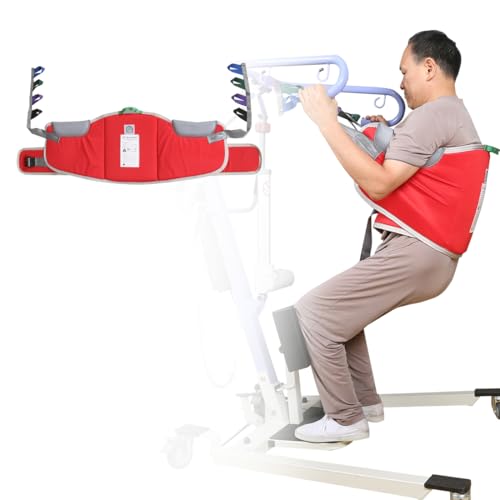
A transfer sling lift aid has built-in handles at multiple positions along the sling. This spreads the load across your hands and posture, and it gives your parent something to grip and push against as they assist their own movement. The result is a transfer that feels more like teamwork.
Transfer slings are often suggested for older adults recovering from stroke, hip surgery, or general deconditioning, anyone who can still partially bear weight but needs steady support through the movement. For someone who cannot bear any weight at all, a mechanical Hoyer lift may be the more appropriate tool, and that’s worth a conversation with their care team.
A quality transfer sling uses non-slip material, multiple handle positions for different transfer types, and positioning loops that keep the sling stable on the torso during movement.

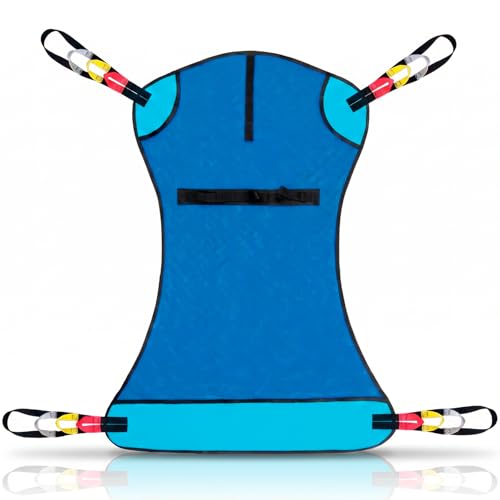
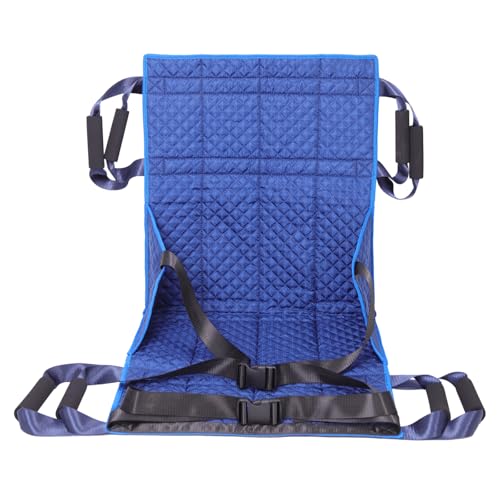


The goal isn’t to do less. It’s to let the tool do what your lower back was never designed to do.
How to Use a Transfer Sling Correctly


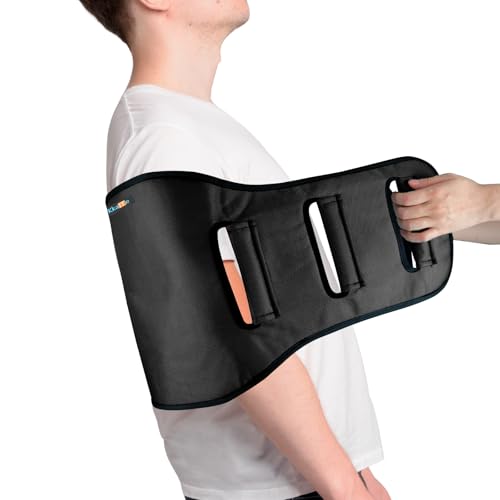
A transfer sling is only as effective as the positioning behind it. Before your first transfer, ask their doctor or a physical or occupational therapist to show you how to place and use it.
Step-by-Step: Sit-to-Stand Transfer with a Sling
- Position the sling before the transfer begins. Place it the way their doctor or therapist showed you. Don’t wait until they’re mid-movement to adjust it.
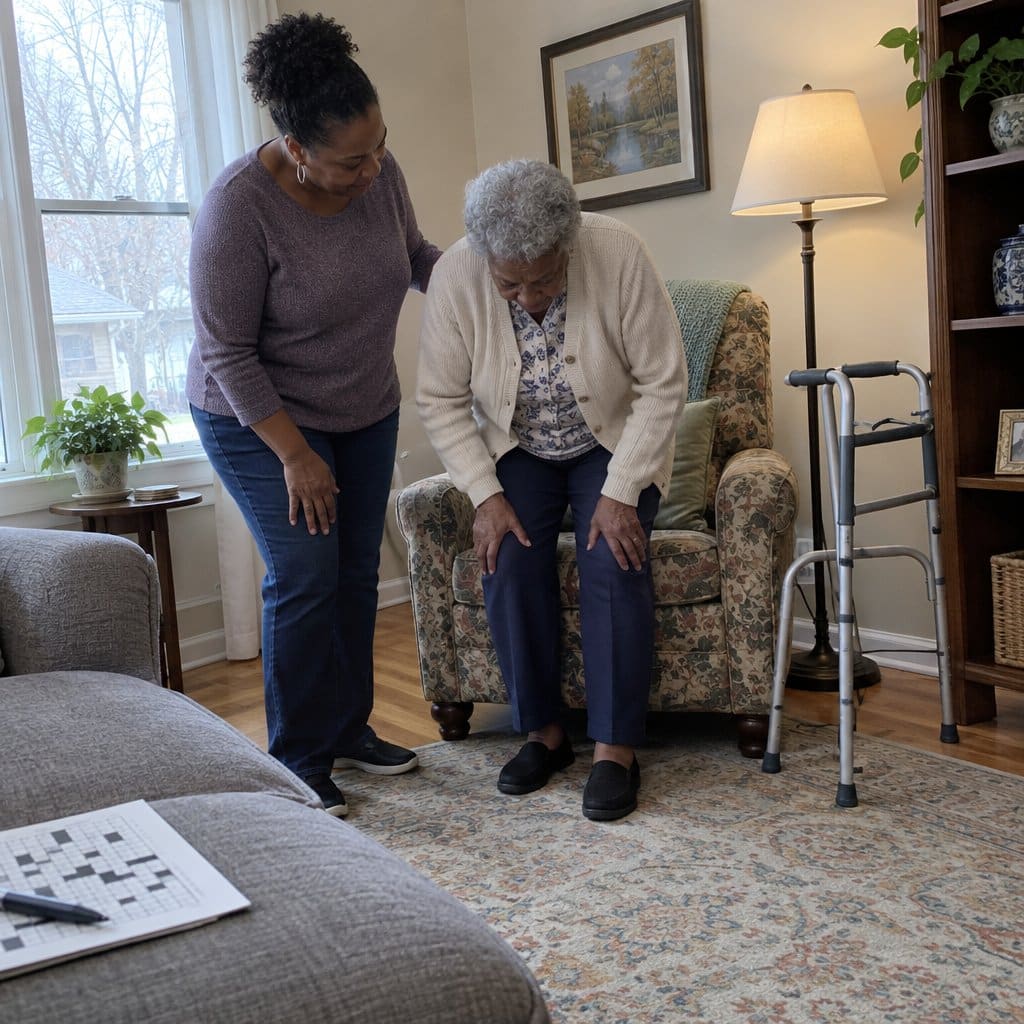
- Stand to the side and slightly in front, never directly in front. Standing directly in front blocks the natural forward path of movement and forces you to absorb impact if they lurch forward.
- Cue the forward lean first. Ask your parent to lean their chest toward their knees before they try to stand. This shifts their weight over their feet and sets them up to push with their legs, not fall back.
- Use the sling handles to guide, not lift. As they push up, you guide the movement using the handle nearest their torso, supporting the arc of motion rather than yanking upward.
- Let them do the leg work. Your job is stabilization. Their job is the push. If they’re doing all the work from the arms up, something is off.
Common Mistakes to Avoid
- Pulling straight up instead of guiding the forward-and-upward arc
- Using only one handle, which creates uneven torque on your wrist and their torso
- Positioning the sling somewhere other than where your therapist showed you
- Rushing the cue: your parent needs a moment to prepare their legs before the push
Using a Transfer Sling for Bed Repositioning
The same sling may work for repositioning in bed, such as sliding a parent up toward the headboard or turning them to one side. Ask their therapist to show you first. The technique is slightly different (you’re pulling sideways rather than guiding vertical movement), but the same principle applies: you’re using the handles to spread the load and protect your spine from twisting.
Want more practical tools and techniques for home caregiving? Subscribe to the Graying With Grace newsletter for trusted recommendations and caregiver strategies delivered straight to your inbox.

Transfer Sling, Gait Belt, or Standing Assist Belt: Which One Does Your Parent Actually Need?

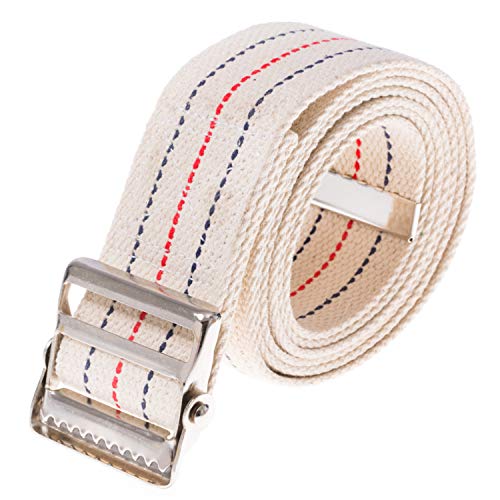


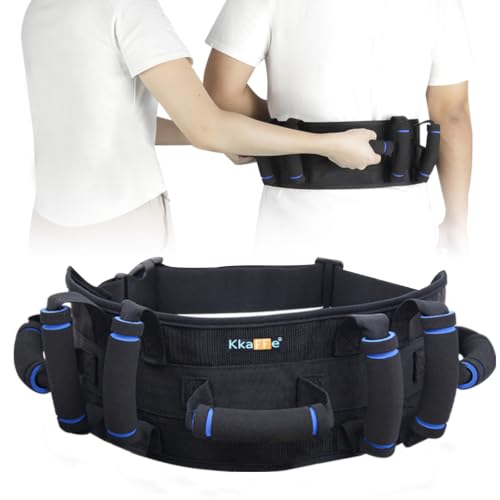


Not every caregiver needs the same tool. The right choice depends on how much your parent can participate in the transfer and which movements you’re doing most often.
Transfer Sling Lift Aid
This is the right tool for caregivers helping a partially weight-bearing parent move between surfaces: chair to bed, bed to toilet, car seat to wheelchair. It’s especially useful after stroke recovery, hip surgery, or any period of significant deconditioning where the older adult can still push with their legs but needs steady guidance through the arc of movement.

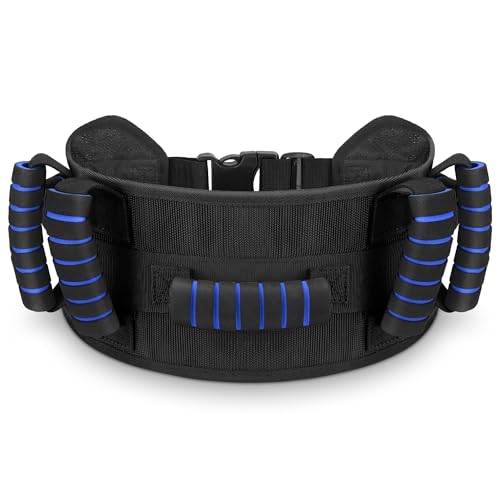


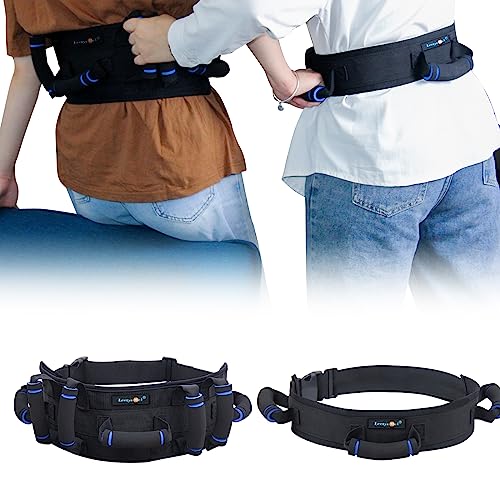

Gait Belt with Handles
A gait belt is most useful for older adults who can walk and need steadying from room to room. It’s less effective for sit-to-stand transitions because it gives you less control of the movement path and requires more grip strength over time.


Standing Assist Belt (Sit-to-Stand Aid)
If your parent can bear most of their own weight but needs something firm to grip and pull against to start the stand, a standing assist belt may be the better fit. Think of it as the midpoint between a gait belt and a full transfer sling.


Transfer Board
Transfer boards are designed for sideways transfers (bed to wheelchair, wheelchair to car seat) rather than vertical sit-to-stand movements. If your challenge is getting your parent from one seated surface to another without standing them up completely, a transfer board is worth considering.




Quick Decision Framework
If your parent can push up with their legs at all, a transfer sling or standing assist belt is usually the right starting point. If they cannot bear any weight, a consultation about mechanical lift options is the next step. You don’t need the most expensive tool. You need the one that fits where your parent is right now, with room to adapt as things change.
If you’re also thinking about fall prevention more broadly, the transfer tool is just one piece of that picture. The environment around the transfer matters just as much.
Gait Belt Buying Guide: Sizing, Material, Handles, and Shared Use
A screen full of gait belts can look like one belt in ten colors. Words like “buckle type,” “weight rating,” and “transfer belt” make it harder. Here is what they mean and what to check before you pay for one.
A gait belt and a transfer belt are essentially the same tool, and many products do both jobs. “Gait belt” usually points to walking and balance help. “Transfer belt” usually points to moving from bed to chair or from chair to standing.
Start with sizing, because it is the step most often skipped. Measure your parent’s waist, add about 20 to 24 inches, and use that as your starting length. Buying a standard length without measuring can leave you with a belt too short to fasten or too loose to control.
Next, choose the material. Cotton is soft, breathable, and machine washable. Nylon or vinyl-coated nylon is more durable and wipes clean between uses. If several people help, or incontinence is a concern, wipeable nylon is worth the switch.
Then look at handles. Multi-handle belts are not only for bariatric care. They give any caregiver more places to hold when your parent’s walking is uneven after a fall, surgery, or stroke.
If the caregiving is shared, buy for the smallest or least experienced person in the rotation. Pick a simple buckle and a wipeable surface so everyone can use it the same way. The belt should work for the whole team, not only for the person who helps most.
Finally, check that the belt lists a weight rating, and do not buy on price alone. The lowest-priced option may have no published rating or hardware that wears out quickly.
If you are also learning what else is out there, my overview of mobility aids for seniors is a good place to start. If your parent is coming home after a hospital stay, this fall prevention checklist goes well with a new belt.
Caregiving is easier when you are not doing it alone. These caregiving blogs are a reminder that other people are in the same spot.
One trade-off: nylon is easier to keep clean, but it can feel stiffer than cotton at first.
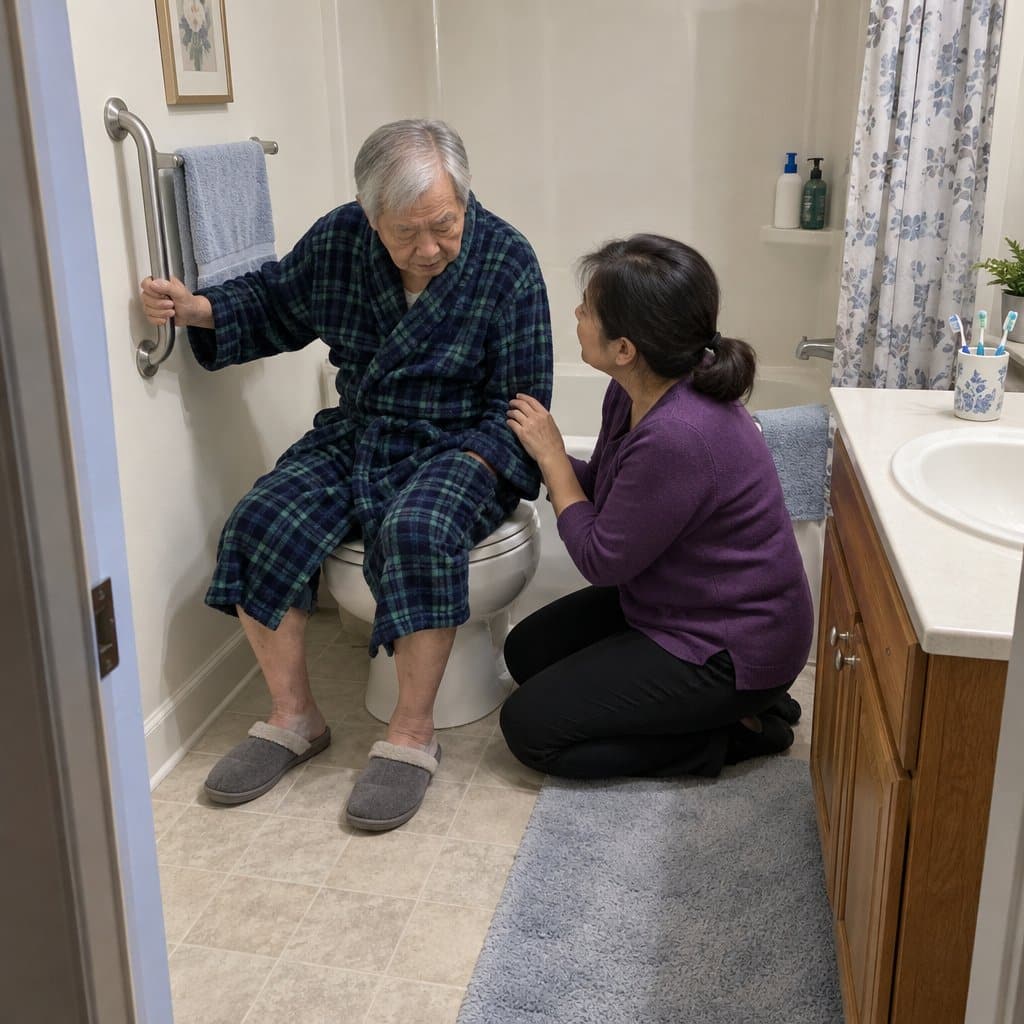
When a Belt or Sling Is Not the Right Tool
A belt or sling is not right for every parent. Before you use one, check with a healthcare provider if your parent has any of these:
- Open wounds or skin breakdown at the waist
- Recent abdominal surgery
- Fragile skin
- Osteoporosis affecting the spine or torso
A belt is also meant for someone who can bear at least some weight. If your parent cannot bear any, a different kind of lift or transfer aid may be needed, and a physical therapist can help you work out which one.
The belt should go over clothing, never against bare skin. It should be snug but not tight, and you should be able to slip two fingers underneath. Hold it from underneath with your palms facing up, and never grab it overhand or take hold of clothing or arms instead.
An occupational therapist or physical therapist can show you the right technique in person. Asking for that help is a smart move, not a sign that you are doing it wrong.
Some weeks are heavy ones. If you are caring for a parent while carrying a lot of other responsibilities, these caregiving blogs are good company and a reminder that you are not alone.
One trade-off: getting a therapist’s guidance takes time and an appointment, but it is the surest way to know a belt suits your parent’s body before you start using it.
How to Match a Gait Belt to Your Situation
There is no single best belt. There is the right belt for your household, and four questions help you find it.
How mobile is your parent? Someone who can walk with light help needs something different from someone moving out of a wheelchair.
What is their body size? Weight rating and belt width matter more as size goes up.
How many people help? If several family members take turns, a wipeable material and a simple buckle make sharing easier.
How strong and tall is the main caregiver? Handle placement matters, so choose for the smallest or least experienced person in the rotation.
If your parent also uses a cane, my guide to walking canes for seniors shows how the two work together.
A few buying mistakes are easy to avoid. Choosing on price alone can leave you with a belt that has no published weight rating or hardware that wears out. Buying a standard length without measuring can leave you with a belt too short to fasten or too loose to control.
Multi-handle belts are not only for bariatric care. They give any caregiver more options when your parent’s walking is uneven after a fall, surgery, or stroke. And if you are caring for someone while juggling a full schedule, these caregiver blogs remind you that you are not alone, and an automatic pill dispenser can take one more task off your list.
One trade-off: a belt chosen for the smallest caregiver may have more features than you use on an ordinary day.
What to Look for if You Choose a Gait Belt
If a gait belt is the right fit for your parent, five features decide whether it works well: length, width, buckle type, material, and weight rating.
Length comes first. Belts run from about 24 to 72 inches, and the right one depends on your parent’s waist. Measure the waist and add about 20 to 24 inches for a starting point. The belt should fit snugly, with roughly 4 to 6 inches of slack after it is fastened, so you have something secure to hold.
Width affects comfort and grip. Standard belts are 4 inches wide. Wider ones, typically 6 inches, spread the pressure more evenly across the waist, which helps with repeated use. A narrow belt can dig into the skin during a transfer.
If you want to see a very wide belt in action, I tried an extra-wide gait belt with padded handles that gives a caregiver plenty of places to hold.
Buckles come in two kinds. Metal buckles are more durable and very secure. Plastic quick-release buckles are faster to put on and take off, which many people find handier at home.
For material, cotton is softer, breathable, and machine washable. Nylon or coated nylon lasts longer and can be wiped clean. If more than one person helps your parent, or incontinence is a concern, wipeable nylon is worth considering.
Last is the weight rating. Every belt should list one, so check it before you buy. Standard belts typically hold up to 250 to 300 pounds, and bariatric belts go higher. If you are between sizes, go up.
One trade-off to know: cotton feels gentler, but it is harder to keep clean than nylon, and nylon can feel stiffer at first.
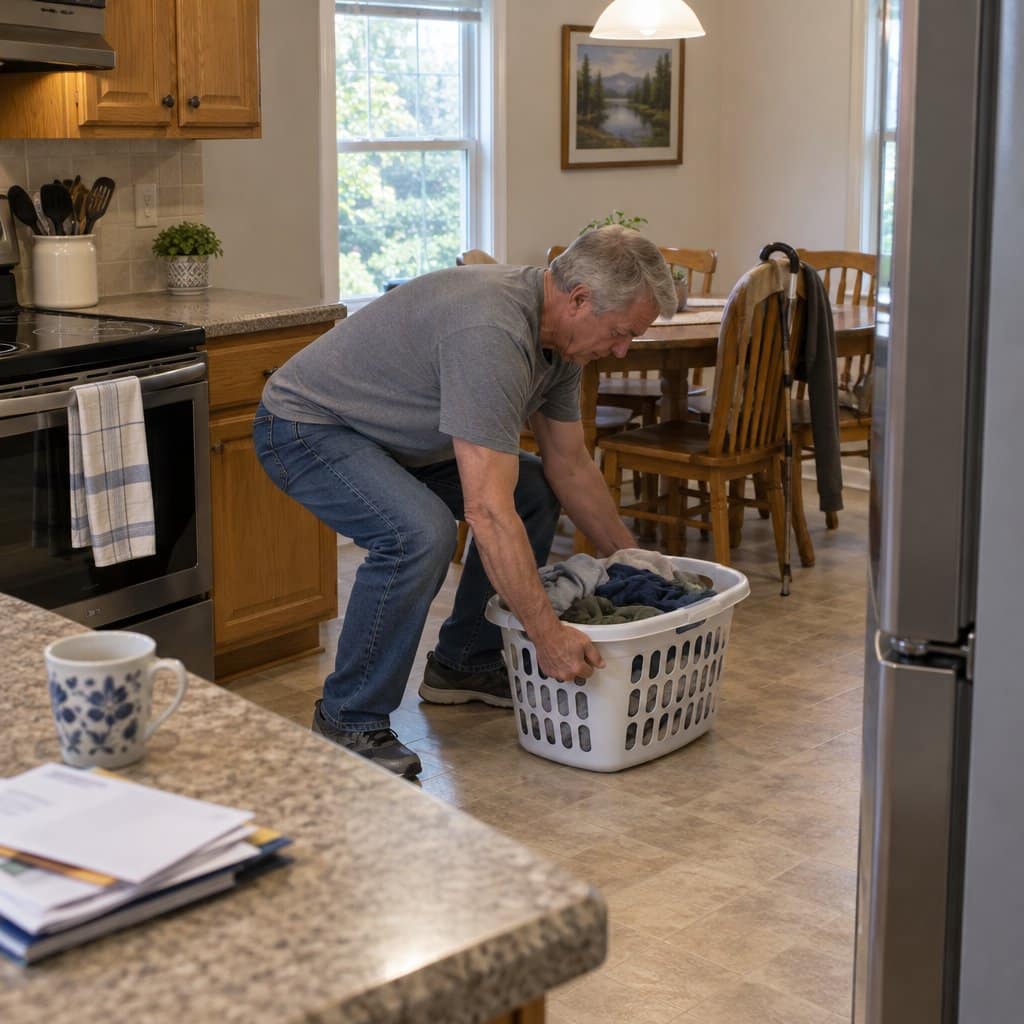
How to Protect Your Back So You Can Keep Showing Up for Your Parent




Here’s a story that plays out too often: a caregiver throws their back out, needs two weeks to recover, and the entire caregiving arrangement falls apart. The parent ends up in a facility not because their needs changed, but because the caregiver’s body gave out. Protecting yourself isn’t selfish. It is the caregiving plan.
Daily Habits That Compound Your Protection
- Bend at the knees, not the waist: every single time, even when you’re tired
- Keep the load close to your body: the farther it is from your center of gravity, the more force lands on your spine
- Never twist while bearing weight: if you need to change direction, pivot your feet, not your torso
- Use the sling even for “easy” transfers: the days when your parent feels lighter are often the days your guard is lowest. Ask their doctor or a physical or occupational therapist to show you how to place and use the sling before the first transfer.
The Emotional Reframe That Matters Most
Using assistive tools and protecting your body isn’t taking shortcuts. It’s how you stay available for the months and years ahead. Professional in-home caregivers use transfer slings, not because they’re not strong enough to lift without one, but because they understand that sustainability in caregiving comes from working smarter, not harder.
Taking the mechanics seriously from the start is what keeps you going. You don’t have to wait for a near-miss or an ER visit to make this change.
And if you’re navigating the emotional weight of this role alongside the physical demands, know that you’re not alone in finding it exhausting. Looking into additional support options is always worth considering as needs intensify.
The Safe Transfer Checklist: A Family Caregiver’s Guide to Helping a Parent Stand Without Hurting Your Back
Download this step-by-step transfer checklist to protect your back from caregiver injury while helping your parent stand safely, no special equipment or strength required, just the right technique every single time.
You Have Everything You Need to Do This Safely
Helping your parent stand safely does not need a medical degree, a home renovation, or installation of expensive equipment. It does help to have a physical or occupational therapist show you the right technique first. It also requires understanding why the instinctive approach quietly strains the body, and choosing a tool that was actually designed for the job.
A transfer sling lift aid is one of the most practical, loving things you can add to your caregiving routine. It protects your parent’s dignity during every transfer. It protects your spine through every repetition. And it gives both of you the confidence to move through those moments without fear.
Take a look at your current transfer routine this week. If there’s any strain, any hesitation, or any near-misses, this is the right time to change the approach. Not after something goes wrong.
What transfers have been most challenging for you? Share in the comments. Your experience might be exactly what another caregiver needs to hear today.