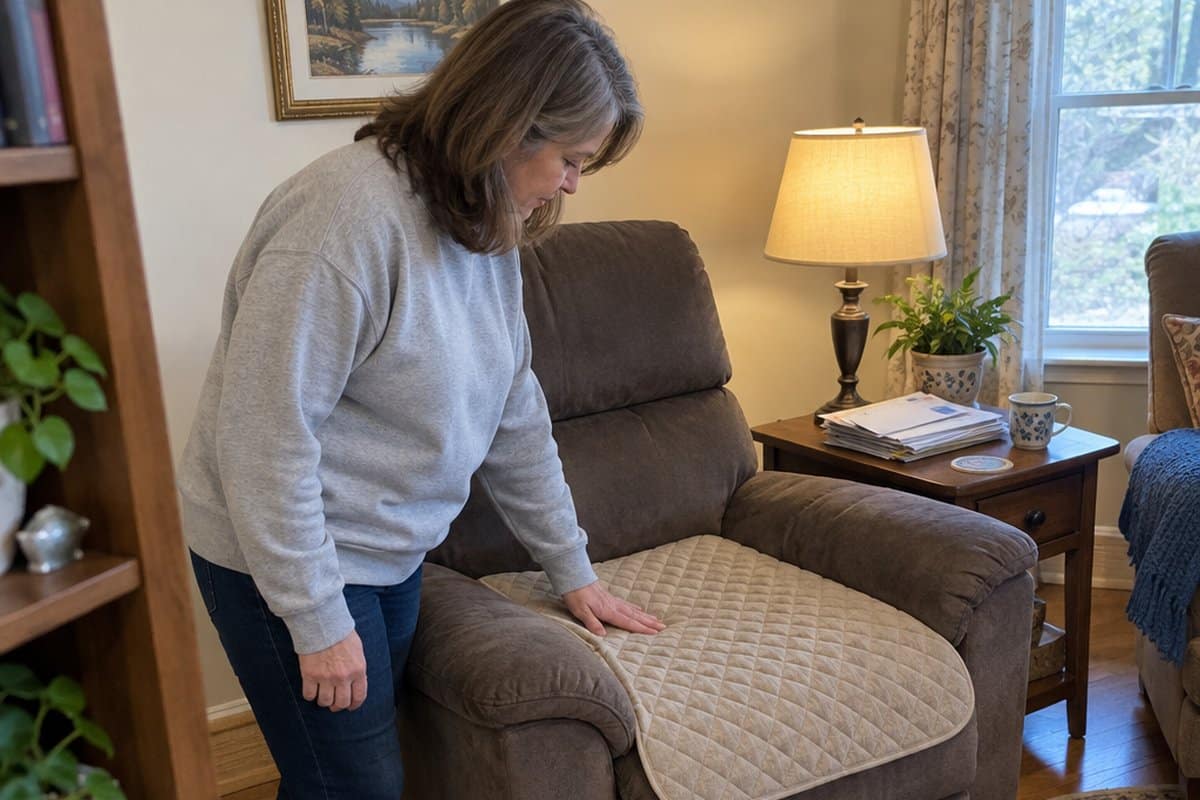
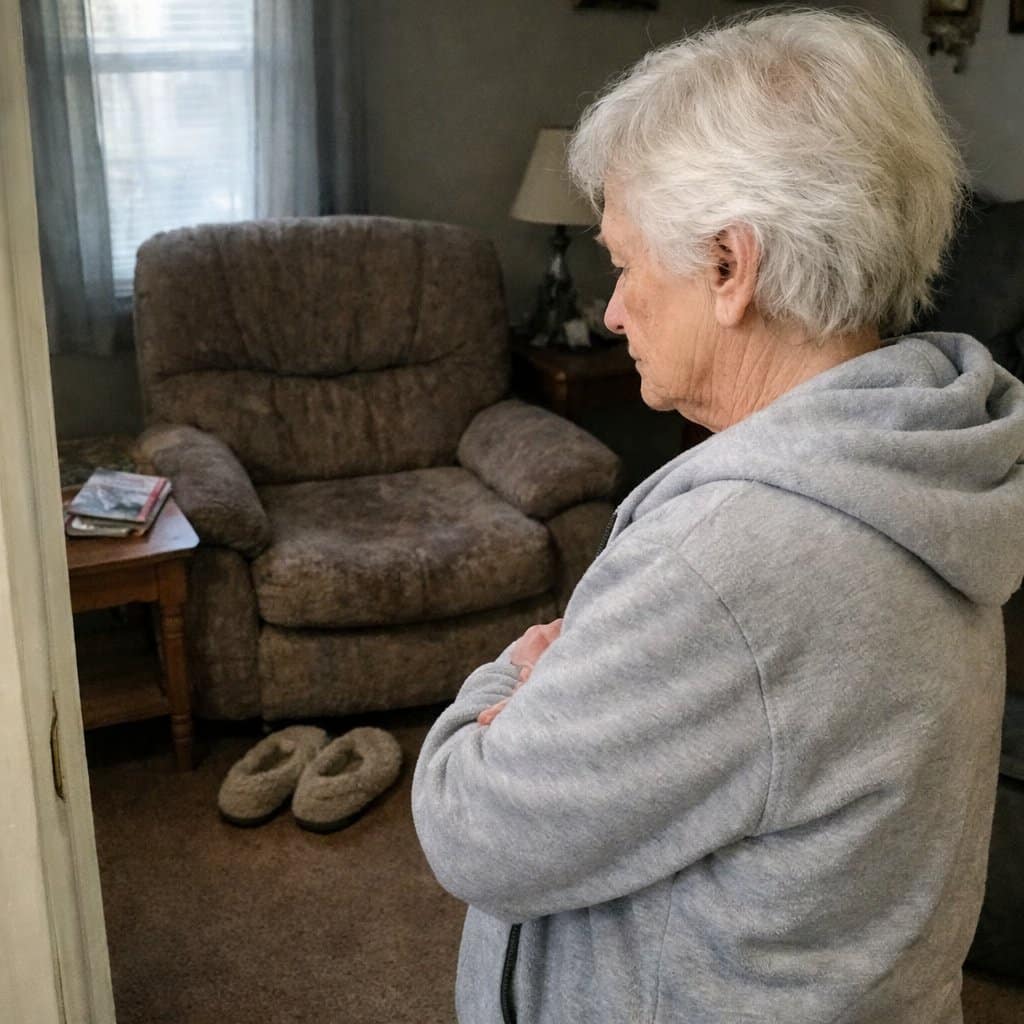
You catch a smell from the recliner, or spot a stain on the sofa cushion, and you wonder how to deal with it without making your parent feel awful. Knowing how to protect furniture when a parent has incontinence is a quiet worry for many families.
This guide covers what to look for in furniture protection, which products suit each piece of furniture, how to bring it up without hurting their dignity, and how to get urine smell out of furniture that has already been affected.



What to Say (and What to Skip): A Caregiver’s Script for Introducing Furniture Protection Without Hurting Your Parent’s Dignity
Get the exact words to introduce waterproof furniture protection to your aging parent without triggering shame, resistance, or feelings of being managed, so you protect both their dignity and your furniture with confidence.
Why Furniture Protection Matters More Than Most Caregivers Realize
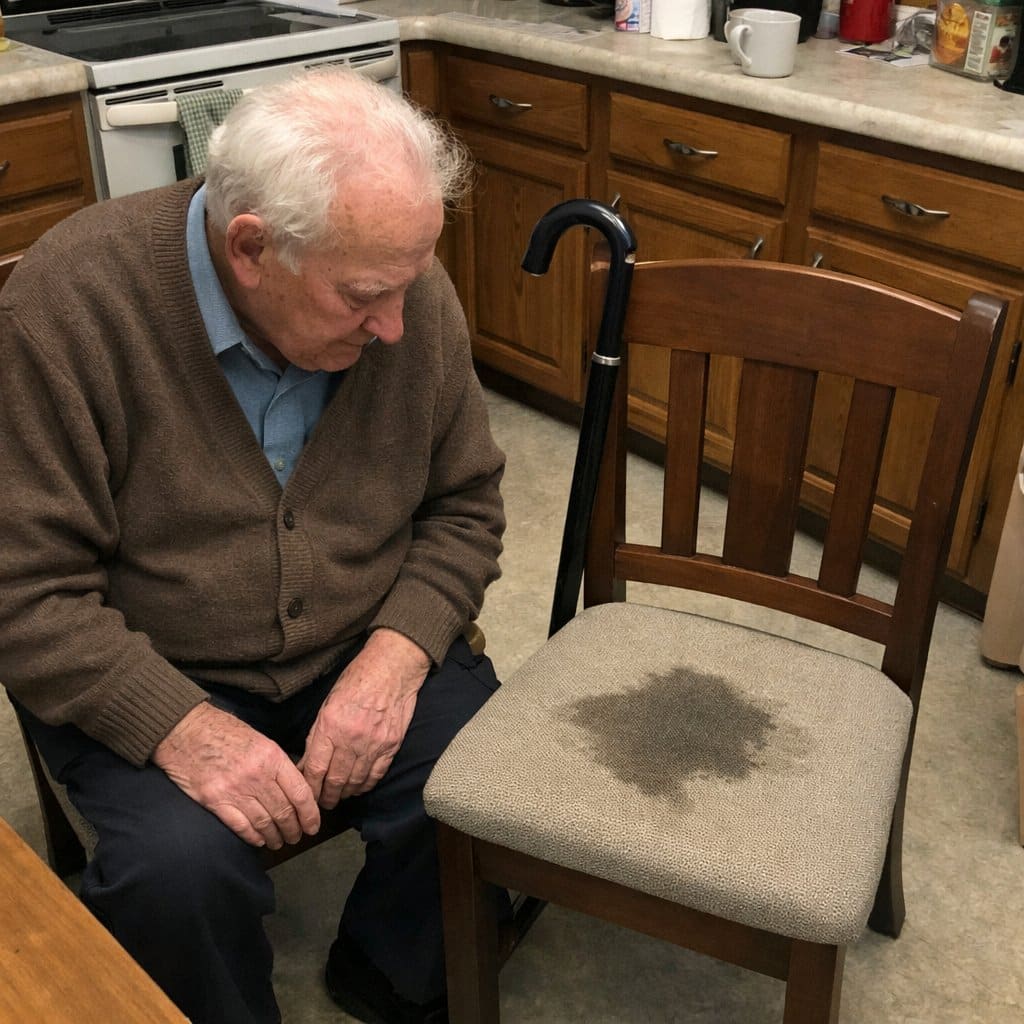
It might be tempting to handle this reactively: clean it up when it happens and deal with it then. But upholstered furniture is uniquely vulnerable in ways that make that approach costly over time.
Fabric Traps What Hard Surfaces Don’t
Moisture and bacteria absorb deep into upholstery foam and padding, well beyond what surface cleaning reaches. Even after a spot looks clean, the source of odor often remains embedded in the layers underneath.
Odor Compounds Quickly
Urine breaks down into ammonia over time, and once it’s settled into foam cushioning, standard cleaning products, including upholstery sprays and baking soda, don’t fully neutralize it. The smell becomes harder to address with each repeated exposure.
The Cost of Waiting Adds Up
A quality recliner or sofa represents a significant investment. Replacing furniture that could have been protected with a well-placed waterproof pad is an entirely avoidable expense. Starting protection early, before damage accumulates, is both easier and less expensive than restoring furniture after the fact.
Reframe this mentally: addressing this proactively isn’t overreacting. It’s responsible home management, the same instinct that puts a rug pad under a carpet or a cover on a mattress.
What to Look for in Furniture Protection for Incontinence
Not every product marketed as “waterproof” delivers what caregivers actually need. Understanding the key features before you shop saves time, money, and frustration.
You Need Both Layers: Absorbent and Waterproof
A waterproof-only layer repels moisture but doesn’t contain it, so it can pool or run off the edge. An absorbent-only layer soaks up liquid but lets it pass through to the furniture beneath. The right product combines both: an absorbent top layer that wicks moisture away, and a waterproof backing that stops it from reaching the furniture.
Washable Beats Disposable for Regular Use
Disposable incontinence pads work in a pinch, but for daily furniture protection, washable options are far more practical. They’re less expensive over time, generate less waste, and tend to be more comfortable, which matters for a parent who may be sitting on one for hours at a time.
If bedtime is where the leaks happen, I also made a video showing overnight protective underwear for leaks at night and how it’s built to keep you dry.
Coverage Area Matters More Than You’d Think
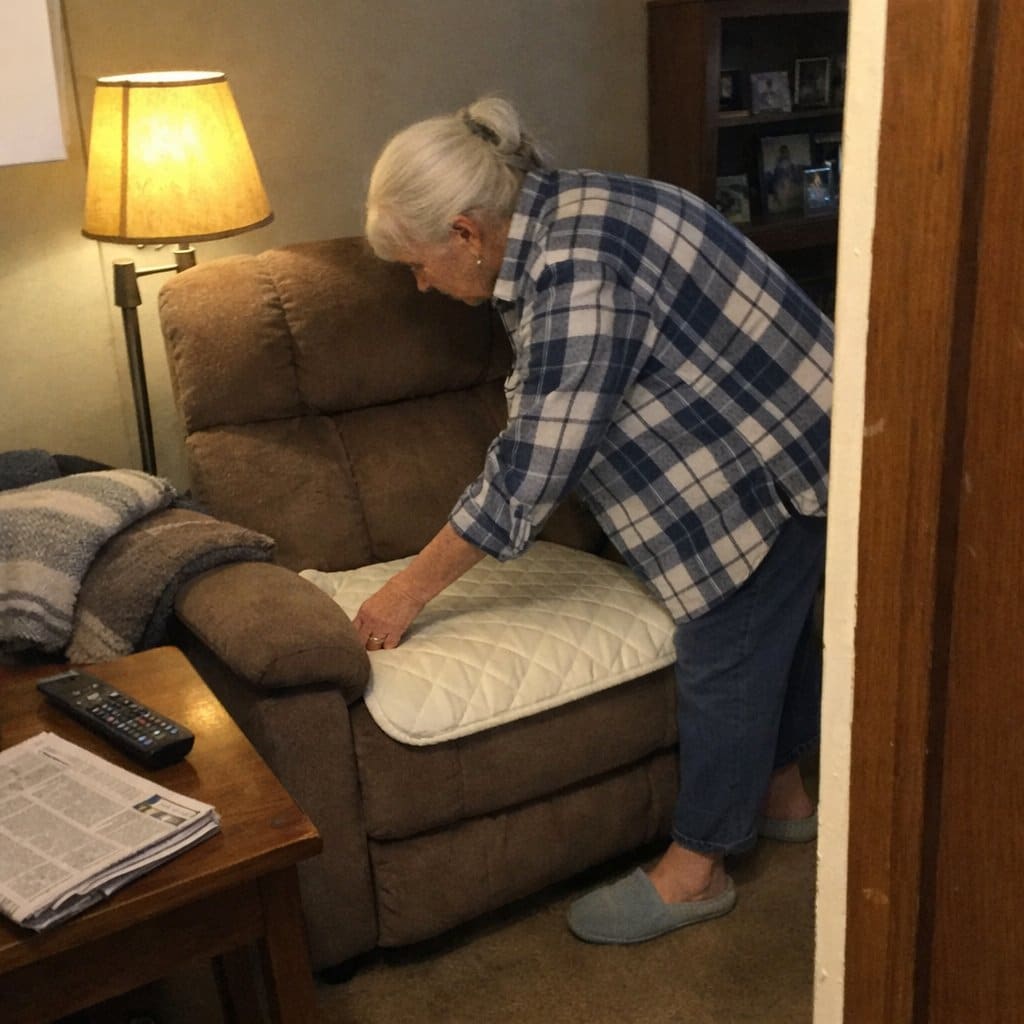
A pad that’s too small defeats the purpose entirely. Look for dimensions that cover the full seat surface of the chair or recliner your parent uses most. For a standard recliner, that typically means a pad that extends from the lower back down through the seat cushion.
Discreet Appearance Reduces Resistance
Products that look like medical equipment create friction, both with the person using the furniture and with the general feel of the room. Look for chair pads and covers in neutral colors and fabric-like textures that blend in with normal home furnishings.
Grip and Stability Are Non-Negotiable
A pad that slides around when your parent shifts position isn’t protecting anything. Non-slip backing or anchor straps that secure the pad to the chair frame are essential, especially on recliners that shift during use.
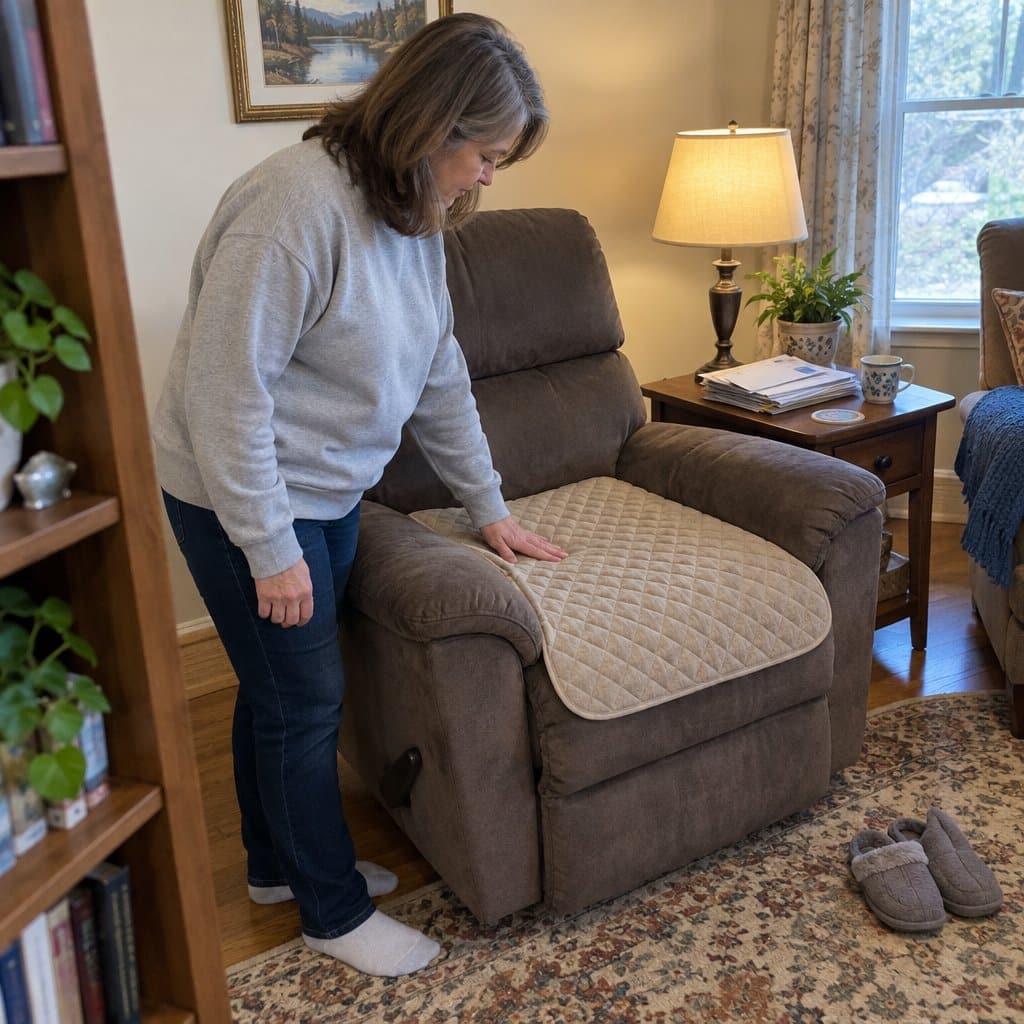
When you’re ready to act on that framework, washable waterproof chair pads designed specifically for recliners and standard chairs are the foundational solution. Look for options with a quilted absorbent top layer, a fully sealed waterproof backing, and non-slip grips or ties that keep the pad anchored to the seat. If you want to compare options, we looked at the features that matter, including size, backing and washing, in our review of waterproof chair pads for elderly people.


The Best Ways to Protect Different Types of Furniture
Sures Waterproof Chair Pads


Different furniture presents different challenges. A one-size-fits-all approach tends to leave gaps, in more ways than one.
Bed Pads For Incontinence

This is a two-pack of reusable, waterproof bed pads, each 36 by 34 inches, with four reinforced handles built in. The handles let a caregiver grip the pad to help shift someone in bed or assist with a partial transfer, which takes some strain off the caregiver’s back and joints.
The top is soft and quilted, and it stays quiet. There is no crinkly plastic sound to announce what the pad is for, which matters to a parent who is already self-conscious about it.
Having two means one can be on the bed while the other is washed and dried. That makes it easier to change things quickly after an accident without stripping the whole bed.
The trade-offs: at 36 by 34 inches, each pad covers the main sleeping area, but a king-size bed may need both pads layered to cover enough. The handles also help with repositioning and partial transfers only. They are not rated for lifting a person’s full weight, so if that is what you need, you will want a mechanical lift.
Inspire XL Super Absorbent Bed Pads
The Inspire XL Super Absorbent Bed Pads are large disposable pads made for chronic incontinence. Each one is 30 x 36 inches, which covers more of the mattress than a standard underpad and leaves fewer gaps at the edges.
The core is a gelling polymer. It pulls liquid away from the skin and locks in odor, which matters most overnight, when a pad may sit for hours. It comes in a 50-count pack, and a 25-count option is available if you would like to try one first.
Because they are disposable, there is nothing to wash and dry. That also means you keep buying them, and with daily use the supply goes quickly.
One more thing to watch: nothing here mentions adhesive strips or tabs. The pad may slide around on the mattress, so check it now and then and straighten it as needed.
Recliners and Armchairs
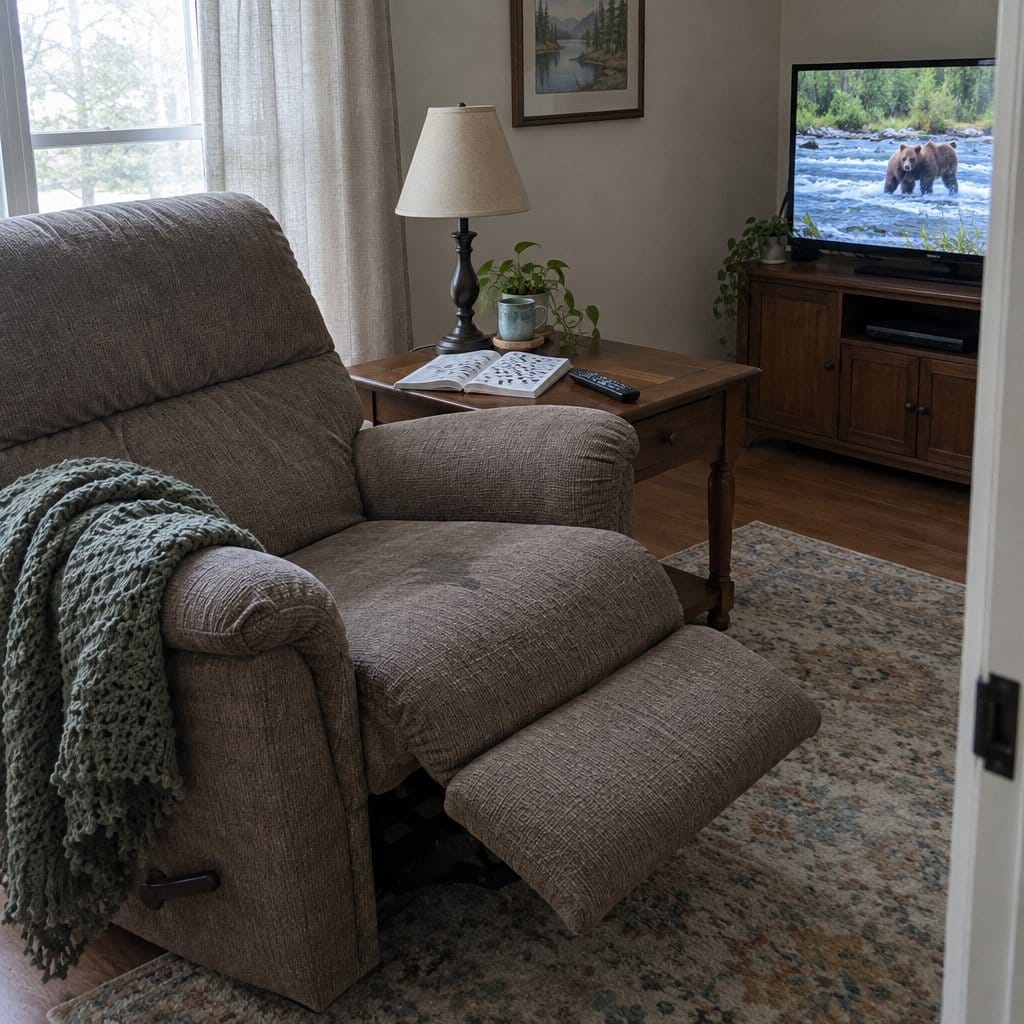
Recliners are the highest-risk piece of furniture in most caregiving households. They’re used for long stretches, their cushioning is thick and absorbent, and the crevices around the seat are nearly impossible to clean thoroughly once moisture reaches them.
A waterproof chair pad positioned to cover both the seat and the lower back area addresses the zones most at risk. Look for a pad long enough to tuck slightly behind the seat cushion for added security. If your parent’s recliner has a lever mechanism on the side, make sure the pad doesn’t interfere with it. Comfort and usability keep the protection in place.
Sofas and Couches
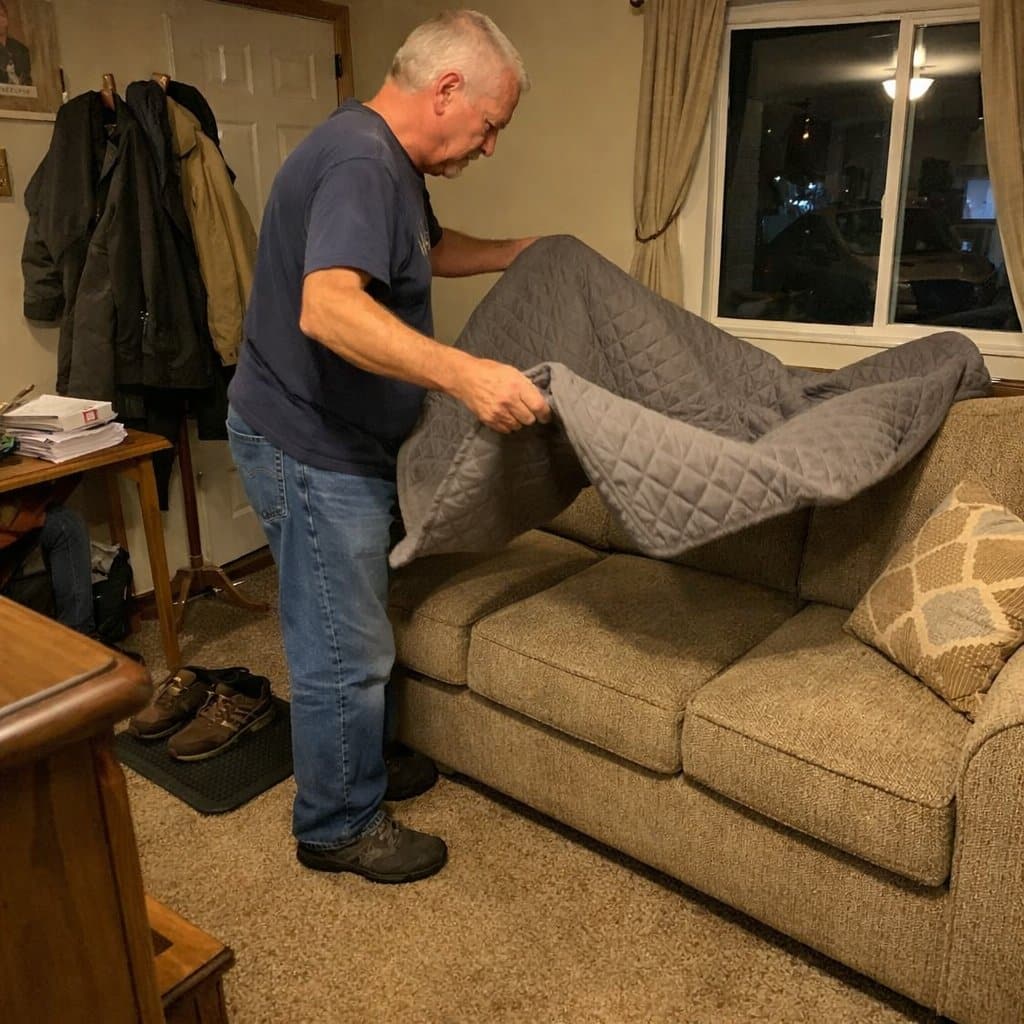
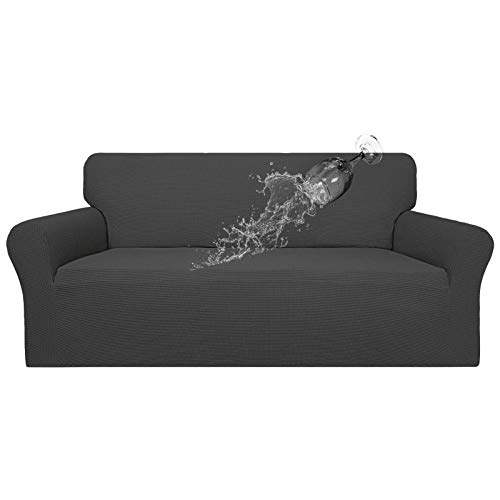
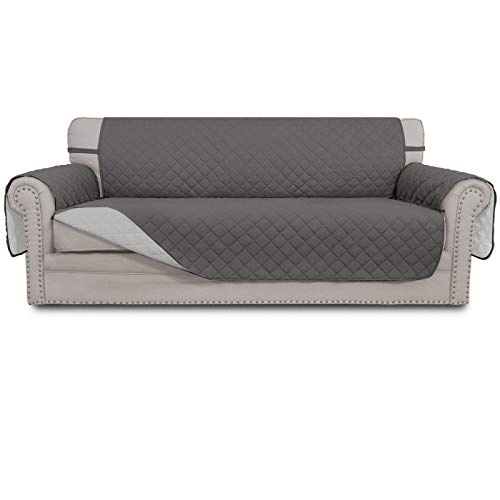
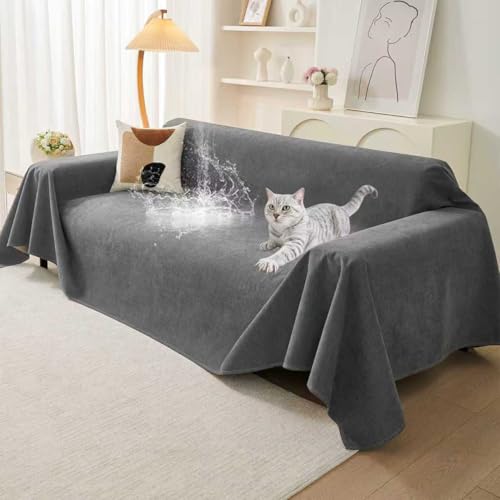
If your parent regularly sits or naps on the couch, a single chair pad won’t provide enough coverage. A full waterproof couch cover, one designed to drape over the full seat and back, offers broader protection without requiring precise placement each time.
For L-shaped or sectional sofas, you may need overlapping covers to ensure the full seating area is protected. Prioritize the section your parent uses most, then extend coverage from there.
Full-coverage waterproof couch covers designed for incontinence protection are the right tool here. They create a complete barrier across the entire sitting surface while looking like a slipcover rather than a medical supply.


Dining Chairs and Hard-Surface Seats
Hard dining chairs are easier to clean than upholstered furniture, but they still benefit from a waterproof pad, particularly if the seat has any cushioning or fabric. Look for pads with a thin, waterproof base and enough surface absorbency to handle light leakage without pooling.
The Layering Strategy for High-Use Furniture
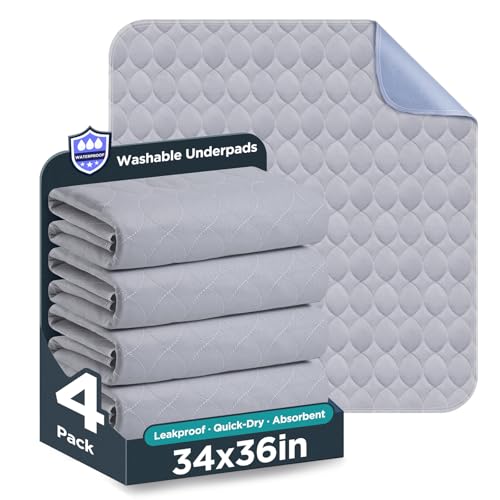
For chairs your parent uses most throughout the day, consider combining a waterproof base cover with a washable incontinence pad on top. The base cover protects the furniture structure from any deeper penetration, while the top pad handles the day-to-day absorption and launders easily, sometimes without needing to disturb the base cover at all.
Washable incontinence pads used as a top layer on high-use chairs are one of the most practical solutions for this. They launder quickly, dry fast, and can be swapped out mid-day without a production.



Caring for a loved one is a journey filled with dedication, challenges, and meaningful moments. But even the smallest tips and tools can ease the load. Each week, I share trusted advice and helpful resources to make your caregiving role a little lighter. Subscribe to our newsletter for more tips: Join here
How to Introduce Protection Without Embarrassing Your Parent
The most effective furniture protection in the world doesn’t help if your parent refuses to sit on it, removes it when you’re not looking, or feels humiliated every time they see it. How you introduce these changes matters as much as which products you choose.
Frame It as a Comfort Upgrade, Not a Medical Intervention
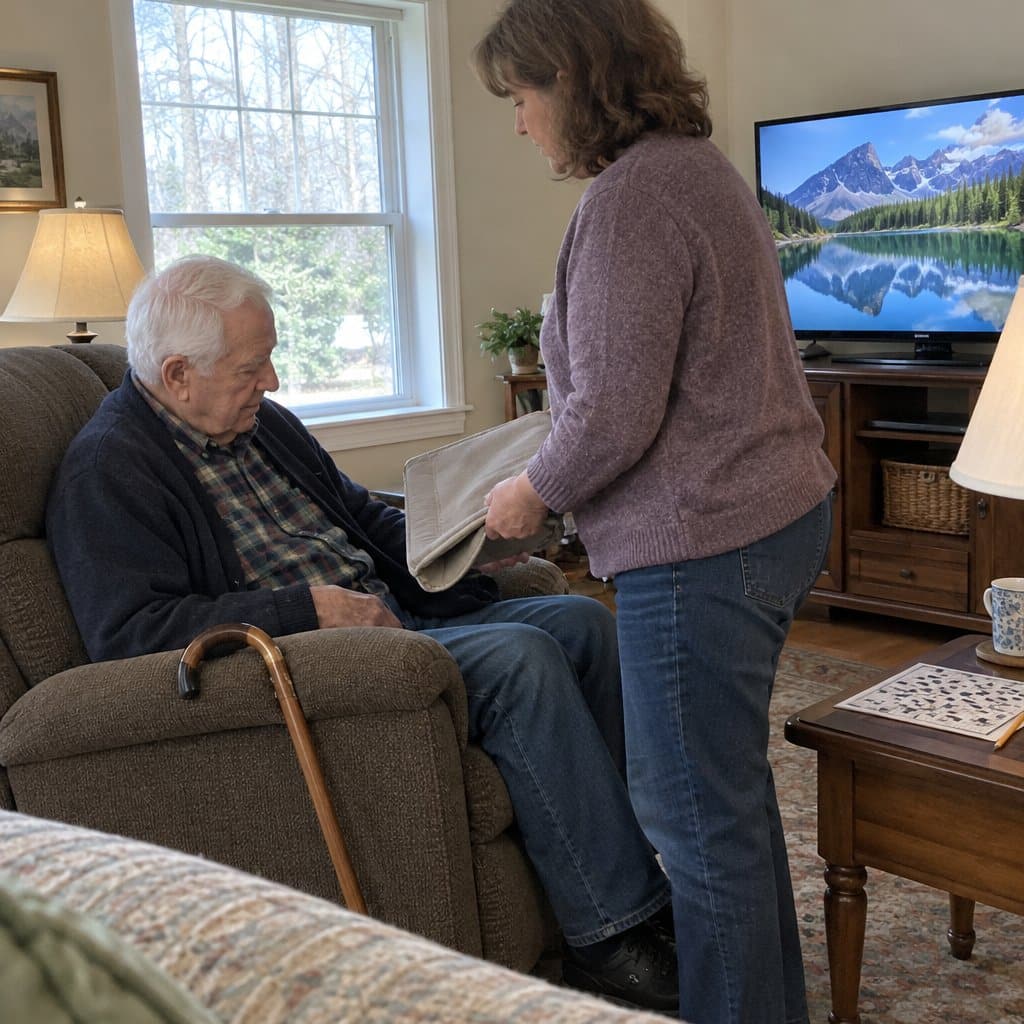
The language you use at introduction sets the tone for everything that follows. There’s a meaningful difference between “I got this pad because of your accidents” and “I picked up this cushion cover. It’s supposed to be softer and it’s easy to wash.”
Position the change around comfort, convenience, or easy maintenance, all of which are genuinely true of quality washable pads and covers, rather than their protective function.
Choose Products That Look Like Normal Home Accessories
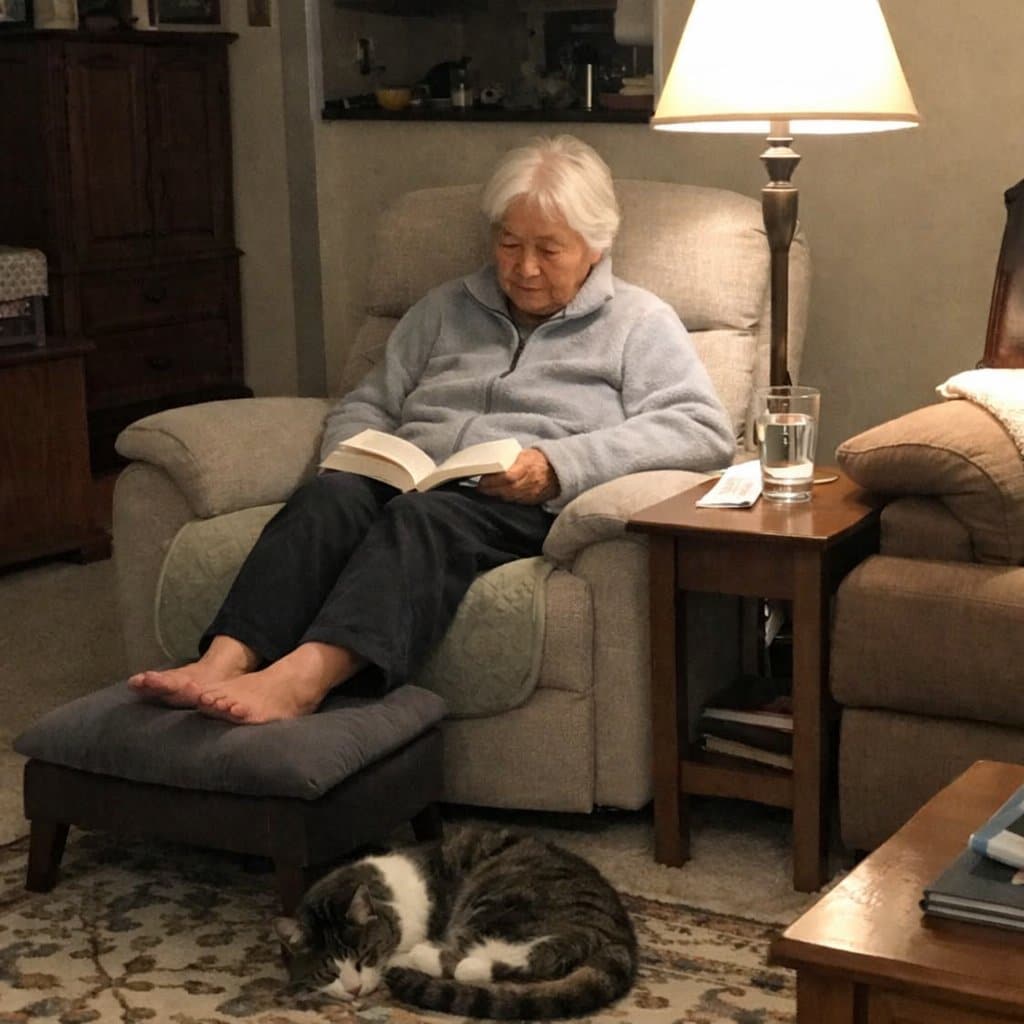
This is why aesthetics matter in product selection. A quilted chair pad in a neutral color reads as a home comfort item. A crinkly plastic-backed pad in clinical white reads as a medical supply. The former doesn’t announce itself, but the latter does.
Let Your Parent Be Involved in the Choice
If the situation allows, let your parent have input on color, style, or placement. “Which of these do you think would look better in the living room?” gives them agency and makes the item feel like their choice rather than something imposed on them. That small shift in ownership makes a meaningful difference in whether they accept it.
What to Say and What to Avoid
Say: “I thought this would make the chair more comfortable.” / “It’s machine washable, which is nice.” / “A lot of people use these, so I thought it might be useful.”
Avoid: Any reference to accidents, leaks, or smell. Avoid framing it as something you’ve been “needing to do.” Don’t make it a big moment. The more casually you introduce it, the more casually it’s received.
If Your Parent Resists
Resistance is often about the acknowledgment of the underlying issue, not the pad itself. Give it time. Sometimes revisiting the idea after a few weeks, or after your parent notices the pad on their own terms, works better than pressing the point. The goal is to solve the problem without making it the problem.
For more guidance on navigating sensitive conversations with parents, the principles behind proactive home safety planning apply here too. Gradual, dignity-centered changes tend to land better than sudden interventions.
How to Stop Urine Smell in Furniture That’s Already Been Affected
Washing Machine Cleaner Tablets
If damage has already occurred before you got protective measures in place, start by addressing the existing odor. Protection works best when it’s layered over a clean baseline.
Why Standard Cleaning Products Fall Short
Most household cleaners and upholstery sprays mask odor temporarily. They don’t break down the uric acid crystals that are the actual source of the persistent smell. Once moisture has reached the foam inside a cushion, surface treatments can’t fully reach it.
Enzymatic Cleaners Are the Right Tool
Enzymatic cleaners work differently. They contain biological enzymes that break down the organic compounds in urine at a molecular level, eliminating the odor source rather than covering it. They’re widely available at pet supply retailers and online, often marketed for pet accidents (which involve the same chemistry).
The Right Sequence Matters
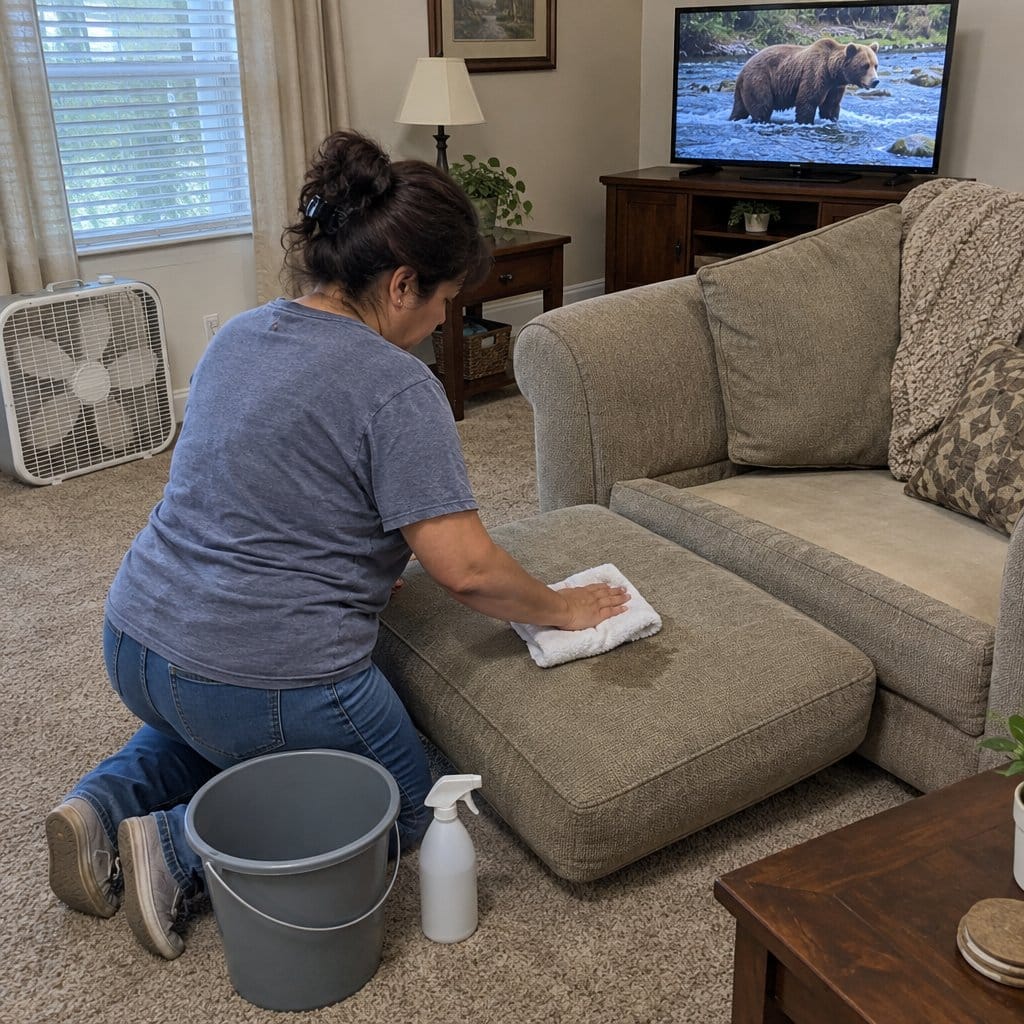
- Blot up as much moisture as possible immediately. Don’t rub, which pushes the liquid deeper
- Apply enzymatic cleaner generously, following the product’s instructions for dwell time
- Allow the area to dry completely. This can take 24 hours or more for thick upholstery
- Repeat if odor persists before placing any protective cover
When to Call a Professional
If the odor is deep-set and multiple enzymatic treatments haven’t resolved it, professional upholstery cleaning, using extraction equipment that reaches foam layers, may be worth the cost, particularly for a piece of furniture worth keeping.
When Replacement Is the More Practical Answer
Some furniture, after repeated exposure over a long period, is genuinely beyond restoration. If that’s where you are, there’s no shame in replacing it and starting fresh with proper protection in place from day one.
Once the underlying furniture is clean, full-coverage waterproof furniture protectors create a sealed barrier that prevents future moisture from reaching the upholstery at all. That makes them the most effective long-term strategy when combined with an enzymatic cleaning approach.



What to Say (and What to Skip): A Caregiver’s Script for Introducing Furniture Protection Without Hurting Your Parent’s Dignity
Get the exact words to introduce waterproof furniture protection to your aging parent without triggering shame, resistance, or feelings of being managed, so you protect both their dignity and your furniture with confidence.
A Quiet Problem With a Practical Solution
Protecting furniture from incontinence isn’t about hiding a problem or managing a difficult parent. It’s about removing one daily stressor from a caregiving role that already demands a great deal, quietly, practically, and without making your loved one feel like the problem.
A well-chosen waterproof chair pad, introduced casually and positioned thoughtfully, can eliminate an anxiety that was taking up far more mental energy than it deserved. That’s a small change with a real payoff.
You’re not overreacting by addressing this. You’re being resourceful, and that’s exactly what good caregiving looks like. If you want more practical guidance on making home life easier for an aging parent, the right products for seniors living at home and tips on bathroom safety are worth exploring next.
Have you found a product or approach that worked well for your family? Share it in the comments. What helped you navigate this might be exactly what someone else needs to hear today.