If sciatica or chronic back pain has been slowing you down during everyday activities like gardening, grocery shopping, or just getting up from your favorite chair, you’ve probably looked into a wireless TENS unit for sciatica back pain relief at some point.
Maybe you tried a TENS unit years ago and gave up on it because of the tangle of wires running up your shirt.
That was my first thought too when I unboxed this one.
I’m Scott Grant, a Certified Senior Advisor (CSA®) and Senior Home Safety Specialist (SHSS®), and I evaluate products like this hands-on before I ever recommend them to you.
KingPavonini sent me this product at no cost so I could test it out and show you how it works.
In this review, I’ll walk you through what I found when I actually used it, who it’s genuinely good for, and a few things you should know before you buy.


Quick Takeaways
- Problems it solves: Sciatica, chronic back pain, muscle soreness after yard work or exercise, and arthritis-related aches without adding medication
- Best for: Older adults who want drug-free pain relief they can use at home or while traveling
- Worth the investment: Yes, especially if you’ve been told by your doctor or physical therapist to try TENS therapy
- Best feature for seniors: No wires means no fumbling with cords or worrying about them catching on furniture or door handles
- Biggest limitation: Adhesive pads wear out over time and need replacing, and the unit is not appropriate for anyone with a pacemaker
Who This Is For
If sciatica pain has been affecting your daily activities like walking the dog, sitting through a meal, or getting a full night’s sleep, the KingPavonini Wireless TENS Unit gives you a way to target that nerve pain right where it lives, without cords getting in your way.
If you’re trying to manage chronic back pain without medication because you’d rather not add another pill to your routine, this device lets you dial in a mode and intensity level that works specifically for your back, and you can do it from the comfort of your recliner.
If muscle soreness after gardening, yard work, or a long walk tends to catch up with you the next day, having a dual-channel unit means you can treat your lower back and your knee at the same time, each at its own intensity, instead of choosing just one spot to focus on.
Ready to discover more innovative strategies for healthy, comfortable aging? Subscribe to our newsletter for expert-tested tips and product recommendations designed specifically for older adults.
How This Could Help You
Let’s talk about what this actually does for your day. Does a wireless TENS unit beat physical therapy? It doesn’t replace it, but it can complement what your therapist recommends between sessions.
The KingPavonini TENS Unit sends a small electrical pulse through your skin at the pad site, and what you feel is a buzz or tingle that builds as you increase intensity. That sensation is the mechanism, but what it does for your specific ache is a conversation to have with your doctor or physical therapist.
Is a dual-channel unit really better than a single-channel one for multiple pain areas? In my experience testing it, yes, especially if you carry tension in more than one spot, like your lower back and a knee, since you can set each pod independently.
Can you use it while doing chores or running errands? Absolutely. Because there are no wires running to a clipped-on box, you can wear your shirt normally over the pods and go about your day.
Important Details You Should Know
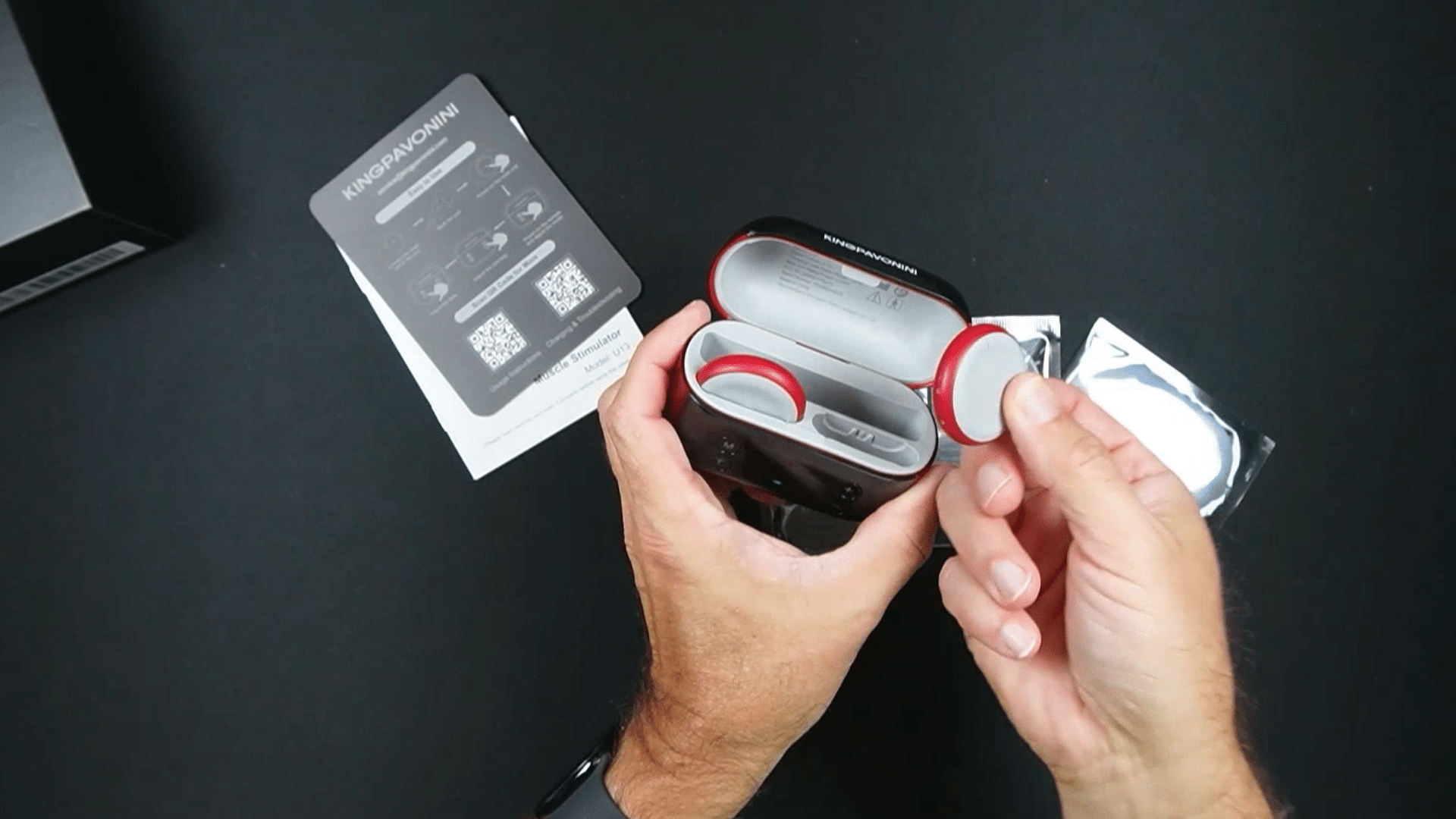
This unit is genuinely pocket-sized. The charging case holds both wireless pods and all your electrode pads, so nothing gets lost in a drawer somewhere.
As I demonstrated in the video, the case itself is solidly built, and the pods have a nice, sturdy feel with no obvious weak points where they might come apart.
The magnetic gel pads measure about 3.23 inches by 1.86 inches, made from latex-free gel and PU leather, which keeps things breathable against your skin.
One thing worth noting: the pads are a consumable item. You’ll get repeated use out of them, up to about 50 washes according to the manufacturer, but eventually you’ll need to buy replacements.
Getting Started
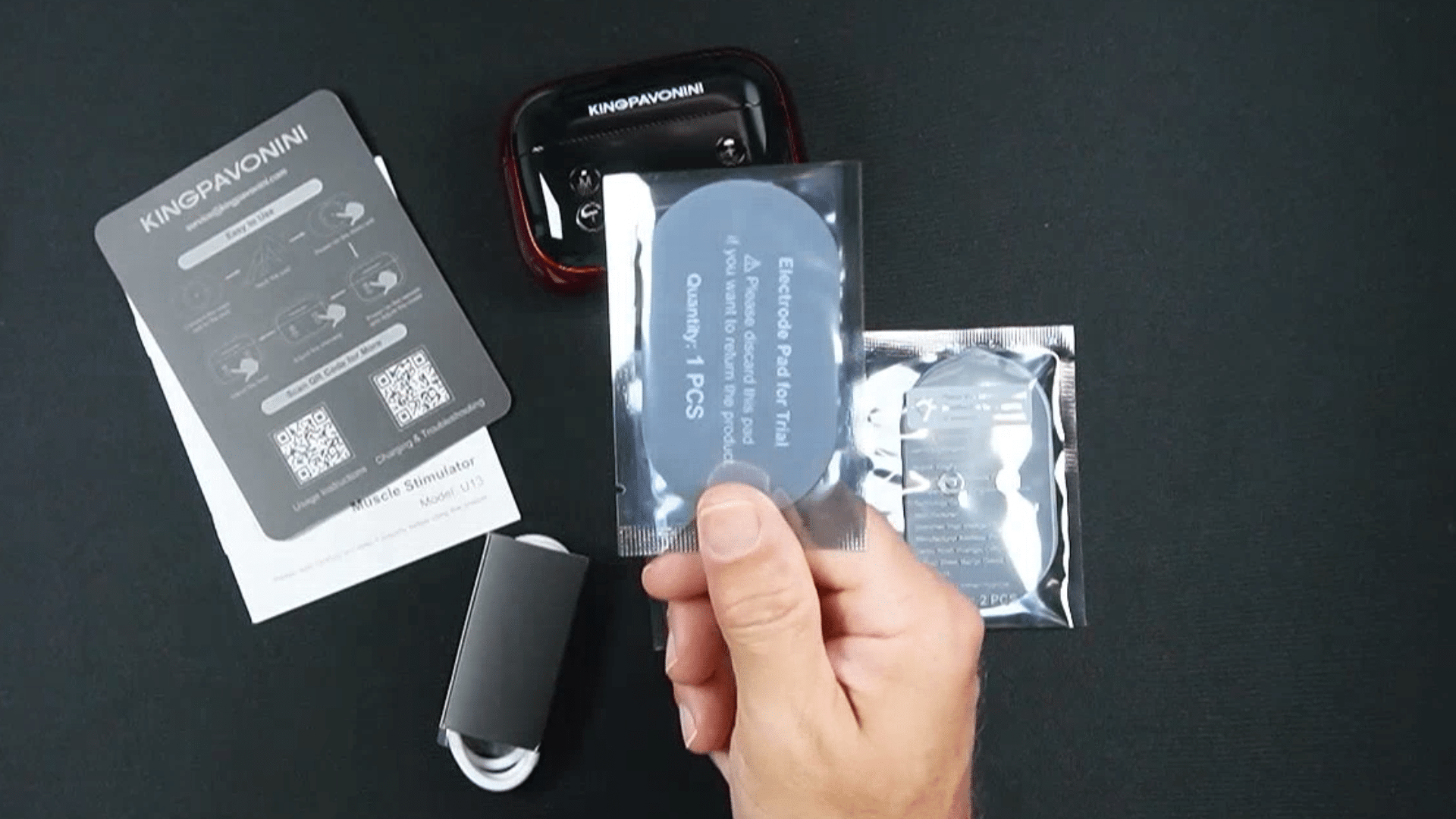
Inside the box, you’ll find the main charging case and unit, two wireless pods, a set of electrode pads, a USB-C charging cable, a quick start guide, and a full instruction manual.
When I evaluated this product, I noticed there’s also a designated “test pad” clearly labeled for trying the device out before committing, which is smart if you think you might need to return it.
Important note: once you open the regular electrode pad packaging, the product can no longer be returned, so use that test pad first if you’re on the fence.
Setup is straightforward: charge the case using the included USB-C cable (you’ll need your own charging block or a USB port), snap a pod onto a pad, power it on by holding the button, and place it where you need relief.
There’s no app to download and no complicated pairing process, which is a relief if you’d rather not wrestle with technology just to ease a sore back.
Features That Matter to You
Safety is worth addressing head-on. If you have a pacemaker or an implanted defibrillator, a TENS unit is not for you, and that’s something you should discuss directly with your doctor before considering this or any similar product.
The magnetic snap design on the KingPavonini device means attaching the pod to the pad takes seconds, no squinting at tiny connectors required.
Ease of use stands out here. You’ve got a plus and minus button for intensity, a mode button to cycle through settings like auto, relaxed, beat, press, need, and scrape, and a simple timer that runs from 10 to 60 minutes.
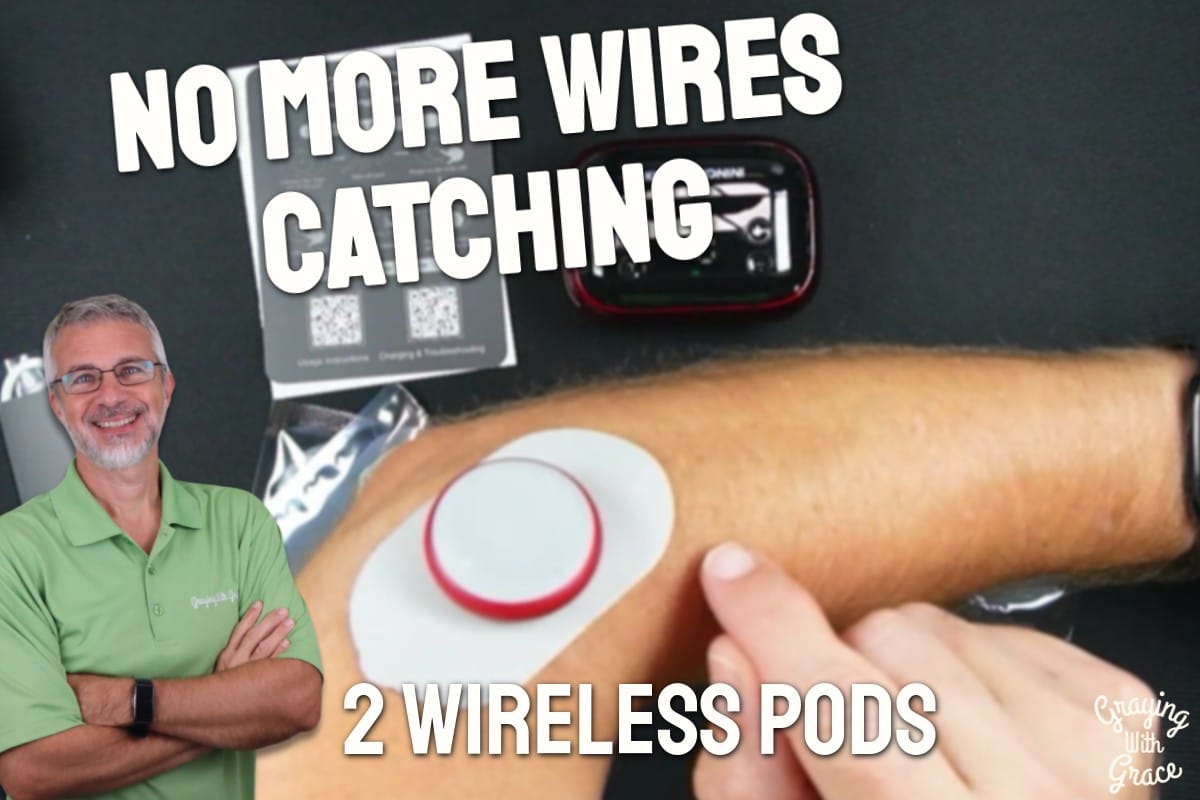
The wireless design is really the standout feature for accessibility. There’s nothing to catch on a door handle, no cord to accidentally yank out mid-stride, and no visible wires under your clothing.
Real Life Experience
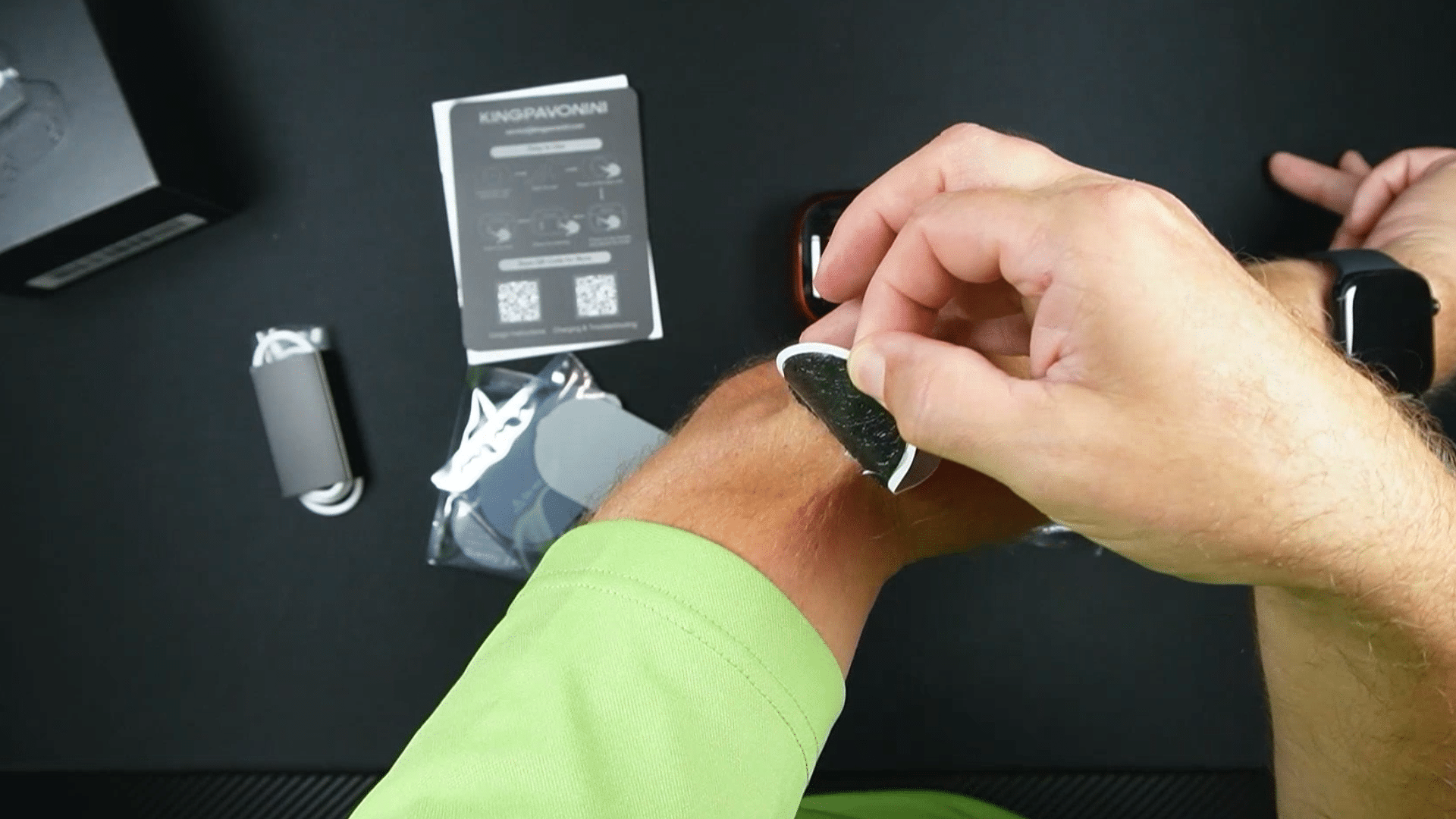
In the video, you can see that attaching the pod to the pad is genuinely a snap, literally, thanks to the magnetic connection and a small clicking mechanism that confirms it’s secure.
As I demonstrated when testing intensity levels, level one feels quite calm, but by the time you get to six, seven, or eight, you can really feel it pulsing against your skin. I even noticed a small muscle twitch on camera at higher intensity, which tells you it’s doing something.
When I evaluated the adhesive quality, I found it held well without pulling at arm hair when removed, and it was easy to reapply for a second use before needing replacement.
As for battery life, based on my testing and the manufacturer’s guidance, if you’re running 15 to 20 minute sessions once a day, you can expect the charge to last roughly seven to ten days before you need to dock the pods back in the case.
Daily maintenance is simple: after each session, slide the plastic cover back over the pad’s adhesive gel, pop the pods back into the case to charge, and store your pads inside the case until next time.
Will You Be Able to Use It?
If you have reasonable hand dexterity, you’ll find this device easy to manage independently. The buttons are large enough to press without struggling, and the magnetic pods make attachment far less fiddly than older, wired TENS designs.
If arthritis in your hands makes small buttons difficult, you may want a caregiver or family member to help you get the pods positioned the first few times until you’re comfortable with the process.
Positioning the pads on your own back can be tricky no matter how easy the buttons are, simply because of the location. This is one spot where having a spouse, adult child, or caregiver lend a hand the first time is genuinely useful.
Important Considerations
This is not the right product for anyone with a pacemaker or implanted defibrillator. Full stop. Please talk to your doctor before use if you have any doubt about whether TENS therapy is appropriate for your situation.
If you have significant memory challenges, remembering to charge the unit, replace pads, and follow session timing might require caregiver support rather than fully independent use.
Reviews on adhesive strength have been mixed, and in my own testing it held reasonably well but wasn’t aggressive on removal. If you have particularly sensitive or fragile skin, keep an eye on how your skin responds.
Always consult with your doctor or occupational therapist before making health-related product decisions, especially if you’re managing a chronic condition alongside your pain.
Help When You Need It
KingPavonini backs this device with ongoing customer service, which matters if you run into questions about settings or charging down the road.
Because the pads themselves are consumable, replacement pads are something you’ll want to plan on purchasing periodically rather than a one-time cost.
Keep in mind the return policy: once you open the standard electrode pad packaging, the item is no longer eligible for return, so use the included test pad if you’re still deciding.
Understanding the Cost
I won’t quote specific numbers here, but I will say that compared to ongoing professional treatments, a home TENS unit like the KingPavonini Wireless TENS Unit can be a reasonable long-term investment if your doctor has cleared you to use one regularly.
The main ongoing cost to plan for is replacement electrode pads, since those wear out with repeated use, typically after about 50 washes according to the manufacturer.
If you’re comparing wireless versus wired TENS units, the wireless design here does tend to come at a bit of a premium over basic corded models, but the convenience factor is significant for anyone who’s given up on a wired unit in the past.
Making It Work for You
Start with the test pad before committing to your regular pads, especially if there’s any chance you’ll want to return the unit.
Use the dual-channel feature to your advantage. If your back needs a gentler touch and your knee needs something stronger, set each pod independently rather than settling for one intensity across both.
Get in the habit of returning the pods to the charging case every time you finish a session. This keeps you from ever being caught with a dead unit when you need relief most.
Always cover the adhesive gel with its protective backing after use to extend the life of your pads between replacements.
Our Recommendation
If your doctor or physical therapist has already suggested you try a TENS unit, and you’ve been avoiding it because of bad memories of tangled wires, the KingPavonini Wireless TENS Unit is worth serious consideration.
It’s best suited for older adults dealing with sciatica, chronic back pain, or general muscle soreness who want an easy, cordless option they can wear discreetly under their clothes.
If you have a pacemaker or implanted defibrillator, this isn’t the product for you, and you should look into other pain management options with your doctor’s guidance instead.
For everyone else looking for a well-built, genuinely wireless TENS experience, this one earned its place in my recommendations.
Where to Get It
Check the current listing for the KingPavonini Wireless TENS Unit for up-to-date pricing and availability before you decide.
Conclusion
This wireless TENS unit solves the exact problem that’s kept a lot of older adults from sticking with TENS therapy in the past: the wires. With a solid dual-channel design, an easy-to-use charging case, and enough intensity range to fit a wide variety of needs, it’s a practical, drug-free option worth discussing with your doctor.
If you’ve tried it or are thinking about giving it a shot, I’d love to hear from you in the comments. Do you prefer a wireless option like this one, even with the charging routine, or would you rather stick with a corded unit?
Thanks for reading, and I’ll see you in the next review.