If you want the short list, these are my top whiteboard picks for seniors, and you’ll find the details on each one further down.


What to Know:
Seniors can benefit tremendously from having a dry erase whiteboard in their lives.
1) Look for a lightweight board that offers enough space to include all necessary data, which could save you time and energy!
2) Make sure the board comes with all the essentials like markers and erasers and is the right size and shape for your needs.
3) This helpful tool allows seniors to monitor details, reminders, and notes easily and effectively, making life more organized and stress-free.
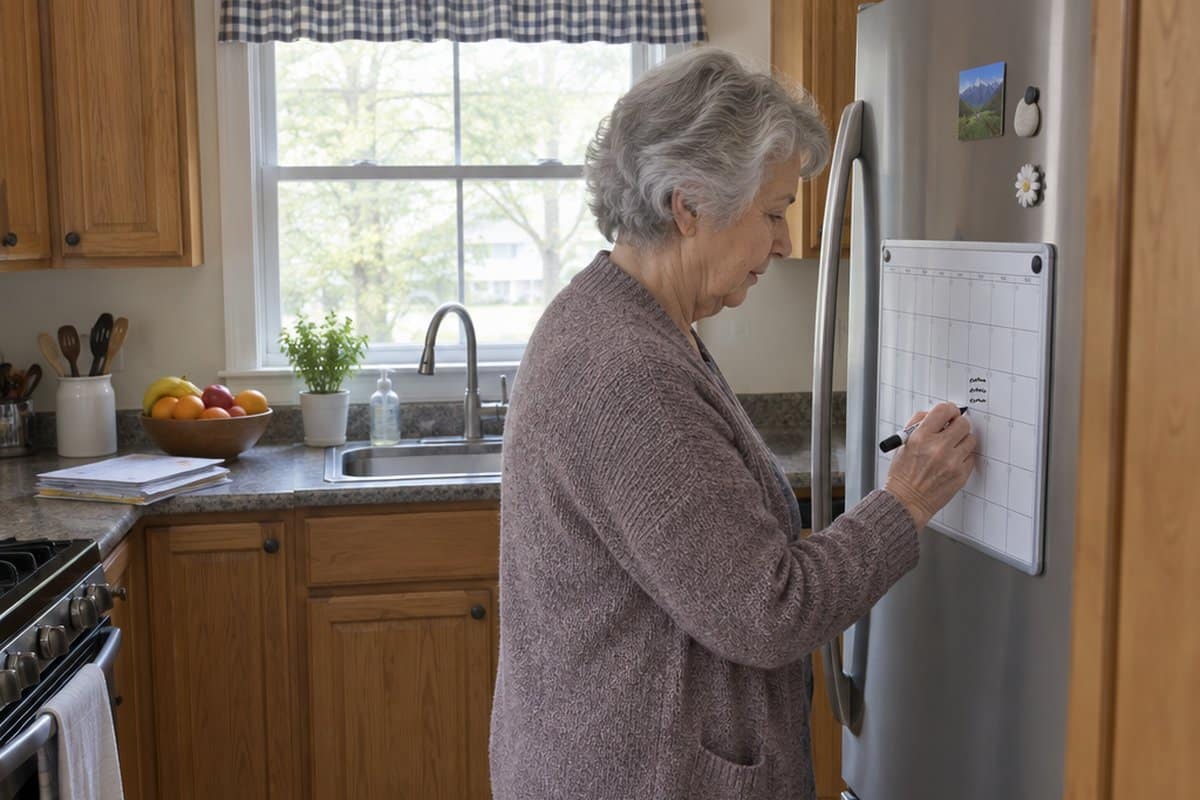
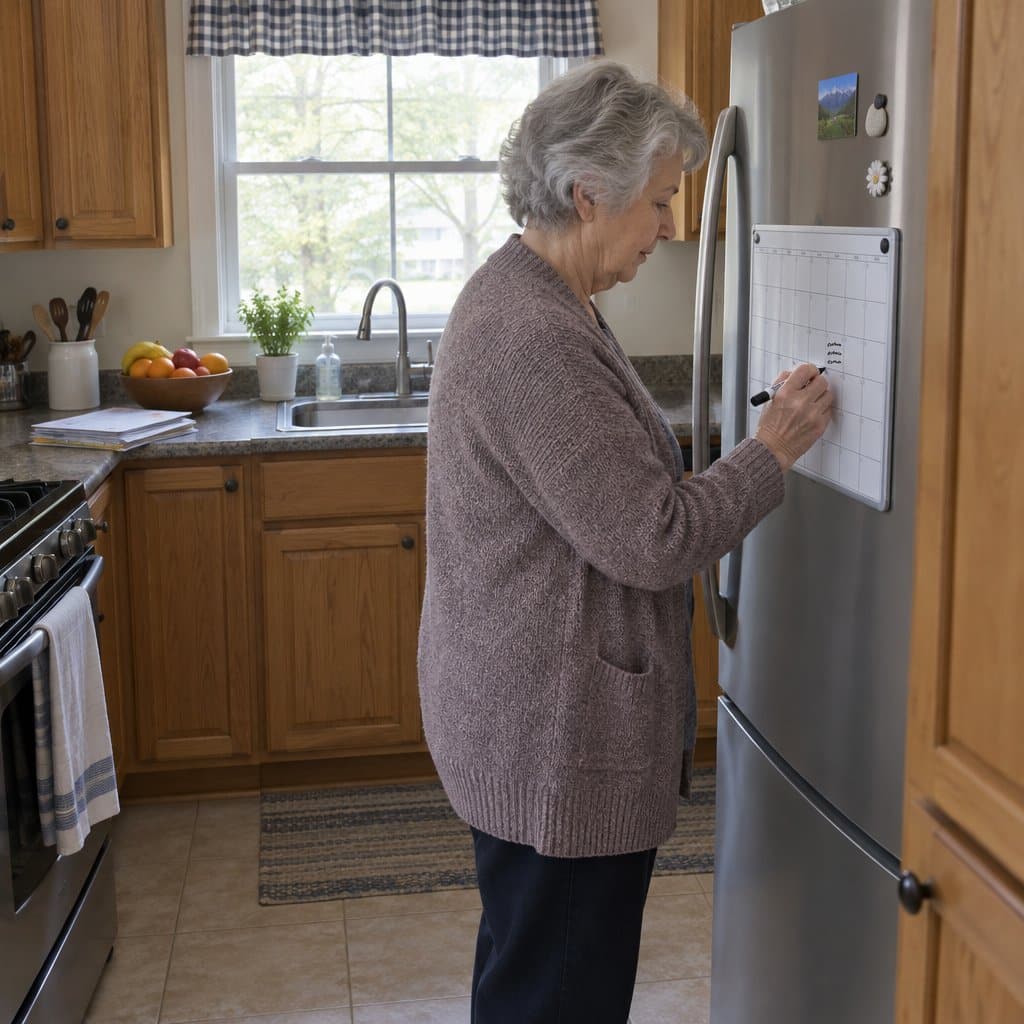
You walk into the kitchen and can’t remember if the doctor’s appointment is Tuesday or Thursday. A whiteboard for the elderly keeps appointments and reminders right where you can see them.
This article covers the best whiteboards for seniors, how to choose one, and the different types. It also covers using a board to talk with caregivers, friends, or family, popular uses, privacy, safety, using one with someone who has dementia, and how to install it.
The Best Whiteboards for the Elderly
Secret Whiteboard

If you want a whiteboard that doesn’t look like an office supply, the Secret Whiteboard Small from Sable Flow is worth a look. From the outside, it is a hanging print frame with art in it.
The frame opens to reveal a magnetic whiteboard behind the art. That means your reminders and notes can stay out of sight when you have company or just want a tidy wall.
It comes with the art shown in the main image and magnetic accessories. The frame is made of FSC sourced wood and comes with sturdy hardware for hanging.
Because the art is a print, you can swap it for a different one when you want a change. Here is my full review of the Sable Flow Secret Whiteboard if you want more detail on the design.
Who it suits: someone who wants a calendar, medication reminders, or a grocery list in a living room or hallway without a bare board on the wall.
Who it is not for: anyone who needs the whole board visible at a glance all day. The frame has to be opened each time, which is one extra step. It is also the small size, so it won’t hold a full month of detailed notes.
Tankee Portable Dry Erase Board
The Tankee Dry Erase Board is a 16 by 12 inch whiteboard that stands up on a tabletop. It is double sided, so you get two writing surfaces, and the surface is smooth enough to write on and wipe clean without staining.
The aluminum alloy stand folds out and can be set at different angles. That lets you tilt the board to a comfortable position for writing or reading, and it stands up securely once set.
It is magnetic, so notes, reminders, or a weekly schedule can be held in place with magnets. There is also a handle on top, which makes it easy to carry from the kitchen table to another room.
The trade-off is size. At 16 by 12 inches, it holds a short list or a few lines of big writing, not a full month’s calendar. If you want a lot of room to write or draw, a larger board will suit you better.
Double-Sided Magnetic Whiteboard
The WALGLASS Double-Sided Magnetic Whiteboard is a 24×18 inch board with a silver aluminum frame. It hangs on the wall rather than sitting on a stand.
The surface is smooth and scratch-resistant, so writing wipes off without leaving stains. A magnetic eraser is included, and magnets let you pin up notes and pictures.
Both sides can be used. You might keep a weekly schedule on one side and a running grocery list or message for a visitor on the other.
It comes with 4 movable hanging hooks, so you can mount it sideways or upright, whichever suits the wall. The frame is described as lightweight enough to be held up by tacks.
A board like this works best where you pass it every day, such as the kitchen or by the front door. Appointments, medication times and phone numbers stay in plain view, and you don’t have to remember where you put a notepad.
The trade-off is that it needs a wall. If you want a board for a desk or bedside table, this is not the one. Someone will also need to hang it, and a board only helps if somebody keeps the writing up to date.
Here are some pros and cons:
iNenya Portable Whiteboard With Stand

If you are an older adult looking for a convenient way to jot down notes, keep track of tasks or even teach others in one-on-one settings, the iNenya Portable Small Notebook-Style Whiteboard is a great choice.
It has a stylish black PU leather cover, and its ultra-thin and ultra-light design makes it easy to carry wherever you go. The whiteboard material has a super-smooth coating surface, making it easy to write on and wipe clean without stains or scratches.
This product comes with a 12′ X 9′ whiteboard and dry erase marker, so you can use it immediately.
You will appreciate how this device keeps your tasks visible on your desk and lets you update them easily. Its portability means you don’t have to worry about lugging around a large whiteboard.
Pros:
- Stylish black PU leather cover
- Ultra-thin and ultra-light design
- Super-smooth coating surface
- Easy to write and wipe clean
- Visible on your desk
- Portable, no need to lug around a large whiteboard
Cons:
- Letters partially rub off due to repeated closing and opening of the cover
- May need to complete tasks faster as letters tend to fade over time
- Better holder for the dry erase marker would be beneficial
Magnetic Dry Erase Fridge Calendar
Are you a senior looking for an easy and efficient way to stay organized? Look no further than the Home & Me Magnetic Dry Erase Calendar Bundle for Fridge!
This bundle comes with three magnetic dry erase planners, ideal for seniors who need plenty of space to write on. It includes six fine-tip markers and one board eraser, so you’ll have everything you need to keep track of your life in one central location.
The large size of these boards means you won’t be cramming writing into too small of spaces. Plus, all items are magnetic, making it easier to find what you need without rummaging through drawers or looking under piles of mail.
The bundle also features tip erasers on each individual pen so mistakes can be easily corrected. And the boards leave no ink stains behind even after erasing them 90 days later!
Pros:
- Magnetic: all items stick to the fridge
- Durable and bright markers included
- Plenty of room to write
- Tip erasers on each pen
- No ink stains or ghosting
Cons:
- Magnets may not adhere to stainless steel fridges if they are older models
- Pens/erasers may fall off due to cheap glue
- Does not include a 3-month calendar
Overall, this is a nice whiteboard for seniors who want to organize their lives easily. With its magnetic backing and durable markers, this bundle will help you get and stay organized.
TSJ Office Portable Whiteboard
The TSJ OFFICE Portable Dry Erase White Board is the perfect companion for seniors or elderly users looking for a reliable whiteboard that can be taken on the go.
This 16” X 12” mini magnetic whiteboard comes with a smooth and scratch-resistant writing surface making it ideal for those who want to write, draw, or make notes without worrying about smudging or fading away.
It also has a sturdy frame and reinforced corners, so you don’t have to worry about it being damaged in transit.
The portable design of this magnet dry erase board makes it easy to carry anywhere due to its lightweight build and handle, allowing you to hang it as a bulletin board wherever you need it.
This whiteboard set includes a presentation board, two magnets, one eraser, and two black markers with a magnetic dry eraser cap, meaning you get all the tools needed right out of the box!
Its flexible multi-use feature makes this board great for small group learning, homeschooling, office use, school activities, game rooms, and more.
It’s an essential tool for managers, teachers, students, and kids alike, providing help for guided reading, presentation, drawing education, and score counting.
Overall, the TSJ OFFICE Portable Dry Erase White Board is a quality whiteboard made especially for seniors or the elderly.
Here are some pros and cons to consider before buying:
Pros:
- Smooth and scratch-resistant writing surface
- Sturdy frame and reinforced corners
- Lightweight and portable design
- Includes necessary accessories
- Flexible multi-use
Cons:
- Mountable but wobbly when writing
- Non-recyclable packaging materials
Tips for Choosing the Best Whiteboard for an Older Adult
Seniors and the elderly can enhance communication, organization, or entertainment by using a dry-erase whiteboard. With so many options available, it’s important to consider which features best suit their needs.
- For instance, whiteboards come in various sizes, so make sure to get one that is big enough for your senior family member to see what has been written clearly.
- Additionally, look for boards with ergonomic designs that are easy to hold onto and light enough for seniors to transport easily.
- The simplicity of use should also be considered; some whiteboards have extra features like built-in magnets or coatings that help keep notes organized, but these may not be necessary for older adults.
- Finally, when selecting markers for the board, think about size and color. Large markers will be easier to grip, while yellow, orange, or green colors stand out more than traditional black or blue.
By considering all these factors, seniors and the elderly will be able to find the perfect whiteboard to meet their needs, allowing them to express themselves better and stay engaged!
Comparing Mobile, Handheld, Wall-Mounted, and Desktop Whiteboards
Are you searching for the perfect whiteboard solution for seniors or the elderly? Look no further! We’ve broken down the pros and cons of mobile, handheld, and wall-mounted models to help you find the best fit:
1. Mobile Whiteboards
Mobile whiteboards are a great option for those who need to move around while writing or sketching. They can be easily wheeled from room to room, allowing seniors to do their work wherever they feel comfortable.
Plus, they come in various sizes and shapes, so you can find one that fits your needs. On the downside, these whiteboards require more maintenance than other types since they must be moved regularly. Some models are subject to tipping over as well.
2. Handheld Whiteboards
Handheld whiteboards offer an easy way for seniors to take notes or draw without taking up space on a desk or table.
They also allow creative expression by allowing users to draw directly on the board. The only drawback is that holding onto them properly requires some practice and dexterity.
3. Wall Mounted Models
Wall-mounted whiteboards are a great choice for seniors who want to organize their workspace. This option allows seniors to easily jot down reminders and stay on top of tasks without worrying about a cluttered desk.
However, wall-mounted whiteboards can be difficult to install and may not be suitable for all homes. Plus, some older adults won’t want to stand while using them.
4. Desktop Whiteboards With Stands
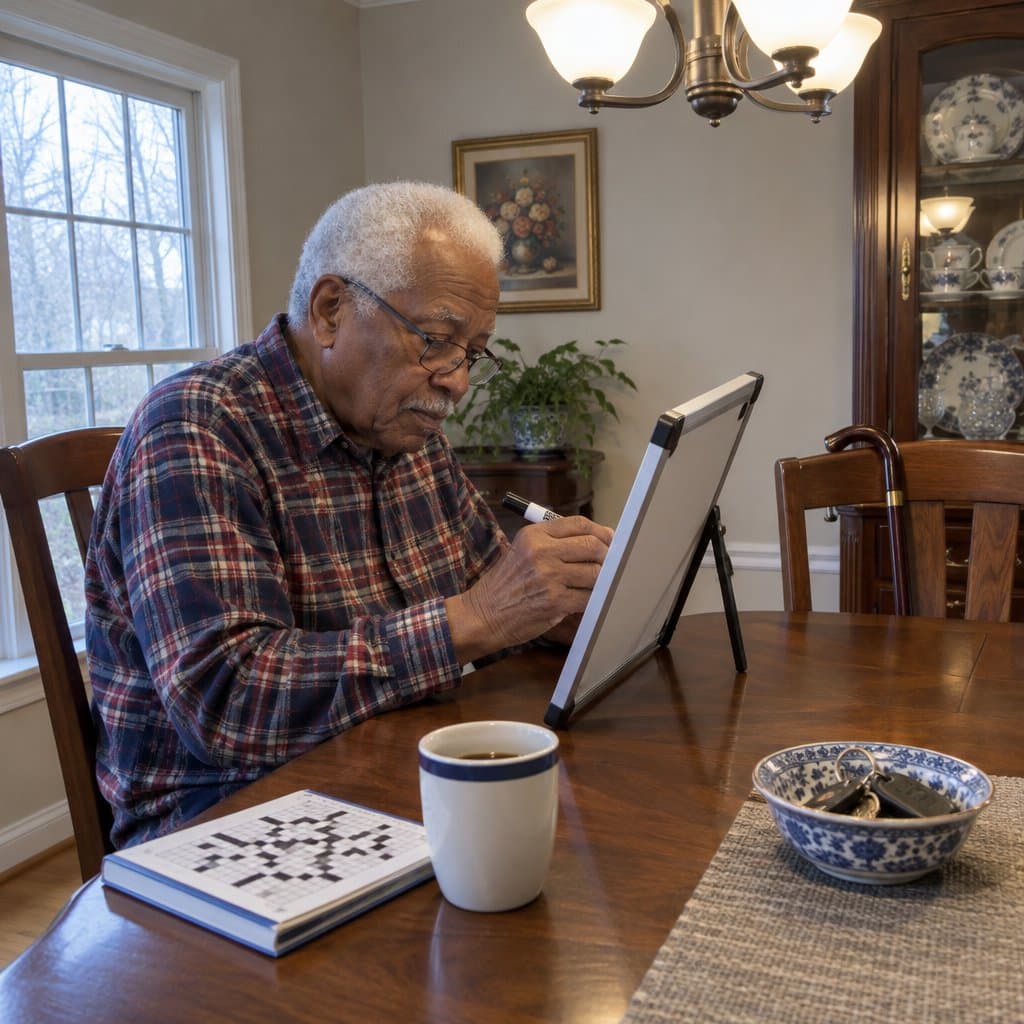
Desktop whiteboards with stands are great for elderly folks, offering ease and stability. These helpful tools make writing easier, thanks to their sturdy base that won’t wobble or move as they write.
Plus, the stand ensures that seniors don’t have to reach up or down to access the board, making it much more accessible and comfortable.
In addition, these boards can be adjusted for height or angle, so finding a comfortable position is simple. For elderly people who want to stay active without strain, desktop whiteboards with stands are ideal!
No matter which type of whiteboard you choose, seniors can benefit from its use.
From keeping track of day-to-day tasks to exercising creativity, whiteboards can revolutionize how seniors organize and live.
So don’t wait. Pick the one that fits and give your loved one the gift of convenience.
Privacy Concerns With Whiteboards
There are some potential privacy concerns when using whiteboards with private and medical information that is out in the open. To ensure everyone’s safety and security, there are a few steps you can take:
- Make sure to cover your whiteboard when not in use.
- Keep personal information off of public-facing boards.
- Use whiteboards in private rooms or areas of the home.
The Sable Flow Secret Whiteboard is an excellent solution for protecting private and medical information. Not only does it easily close up to keep sensitive data secure, but it can also be quickly opened back up when you need to use it again.
It’s a great way to ensure your privacy and the safety of your loved one’s data. Plus, using this board offers peace of mind that you won’t have to worry about anyone else accessing confidential material.
Benefits And Advantages Of Whiteboards For The Elderly
Whiteboards are beneficial tools for elderly individuals.
A whiteboard can help with daily routines and reminders, and it can be a way to enjoy time together and share memories. It is not a treatment for any condition, so ask their doctor what helps.
Here are some of the benefits and advantages of whiteboards for elderly people:
Cognitive Function Improvement
A board can help with daily routines and reminders, and it can be one of the ways you keep minds engaged. It is not a treatment for dementia or Alzheimer’s disease. Ask their doctor about what helps.
Engaging Social Activities
Elderly individuals can use whiteboards to interact with other people fun and engagingly by playing games such as bingo or word puzzles. They also allow family members to stay connected despite physical distance when used during online video calls.
Memory Preservation
Photos and notes on a board can prompt conversation about past events, and they are easy to share with loved ones.
Physical Exercise Benefits
Using a whiteboard requires physical activity like standing up and writing/drawing on it.
Writing on a wall board means a little standing and arm movement. Ask their doctor or therapist what activity suits them.
These creative activities also exercise gross and fine motor movements keeping the muscles and tendons of the hands loose and exercised.
Whiteboards have many uses, and they can make daily life easier in a practical way.
They also offer recreation through games and drawing, and they give you a place to keep reminders and share memories.
Popular Uses Of Whiteboards For The Elderly
With their versatile nature, whiteboards for the elderly can be used in various ways to help improve their quality of life.
From communication and memory-jogging activities to reminders and more, it’s easy to see why they are such an important tool for those living in long-term care facilities and other senior settings.
Communication Aids
One popular use is as a communication aid. Whiteboards allow seniors with limited verbal or physical abilities to express themselves quickly and easily.
By writing out words, phrases, or sentences on the board, staff members or family members can learn what the individual needs without them having to speak aloud. It also helps caregivers understand how that person may feel about certain topics at any time.
Activities and Entertainment
Elderly people can unlock a world of possibilities with dry-erase whiteboards! These boards offer endless opportunities, whether for entertainment, activity, or mental stimulation.
From educational games and puzzles to drawing, the options are wide open.
And whiteboards are an excellent tool for playing games with seniors because they are low-mess and reusable!
Organization and Practical Uses
Finally, there are plenty of practical uses as well: providing medication reminders throughout the day; helping jog memories by listing daily tasks and appointments; tracking goals related to dieting or exercise regimens; recording achievements in simple journal entries; and much more.
Whiteboards can help dementia patients with daily routines and reminders.
Safety Points to Check Before You Hang a Board
Fitting a board into a daily routine takes some thought from family caregivers and medical professionals. It is wise to have a healthcare professional or a relative supervising, so any risks stay small.
Start with the size and weight of the board. If the person has trouble reaching high places, a smaller board is easier to get to. If they need room for instructions or reminders, a larger one may suit them better.
Shape can matter too. A circular board may work better than a rectangular one for someone who struggles to write in straight lines. An oval board may help someone who finds it easier to focus on one area at a time.
Think about movement as well. Say your dad has Parkinson’s disease and has trouble controlling his movements. He could damage property or hurt himself while using a board, so weight and mobility are worth a look before you buy.
Lighting is easy to overlook. Check how the light falls on the board where you plan to put it, because poor lighting could add to disorientation in someone already dealing with memory problems.
If you want help from others, local groups for people with memory issues are a good place to start. Many host events about therapies related to dementia care. Group leaders may also know other caregivers in the same spot who can share advice.
One trade-off: there is no single right answer on size, shape or how often to use a board. Expect some trial and error before you find the balance that works for the person you care for.
Using a Whiteboard to Talk With a Loved One in Home Care
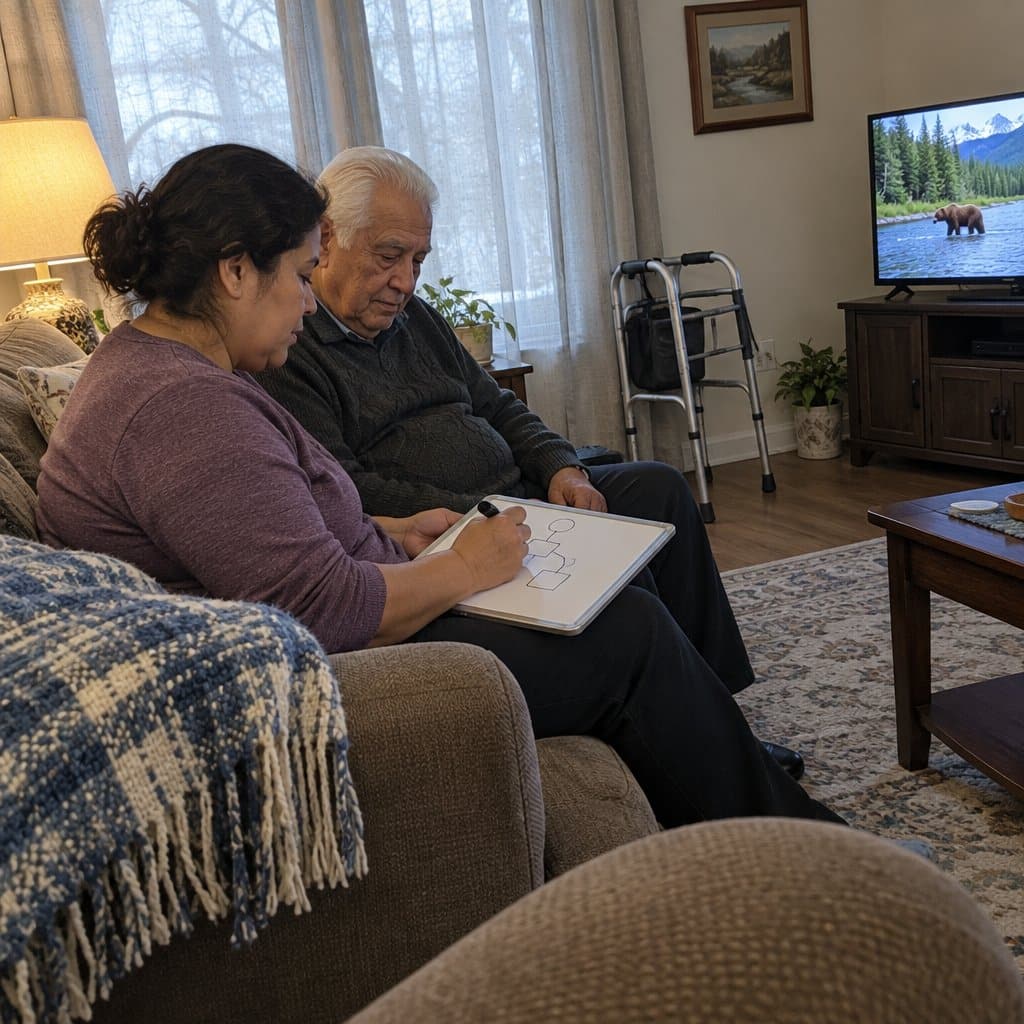
A whiteboard can make home care conversations clearer for everyone in the room. You can draw a diagram or a simple chart, and the person can see what you mean instead of trying to follow words alone.
That helps when you are explaining a condition or a treatment. You can draw it out together, and writing notes with the person gives them a chance to ask questions and understand their care plan.
Several people can also read or write on the board at once. Content is easy to change, so nothing has to be reprinted when instructions are updated.
Before you start, plan your message. Think about the person’s education level, culture and language, and shape what you put on the board to fit. Keep it to a few clear points, and leave time for questions and follow-up so everyone feels heard.
If the person has never used a board this way, show them how it works. Give clear expectations about where it lives and how often to look at it. Mixing in spoken instructions and written notes keeps the board from carrying everything.
If you are part of a home care team, a few ground rules help:
- Keep the board clean, neat and up to date.
- Check it regularly for damage.
- Make sure everyone knows who writes what.
- Take a photo of what was discussed so you can look back at progress later.
Mistakes matter here. If wrong information gets written down, it could lead to a medical error, so double-check before you post anything.
Privacy needs thought too, since health details do not belong where visitors can read them. A small portable board can be put away when company comes, or you can drape a sheet or pillowcase over it. A hidden board like the Sable Flow Secret Whiteboard looks like artwork when closed and opens into two magnetic boards.
One trade-off: a board only helps when everyone knows how to use it. Take a little time up front to teach it, or it may sit unused.
Using a Whiteboard With Someone Who Has Dementia
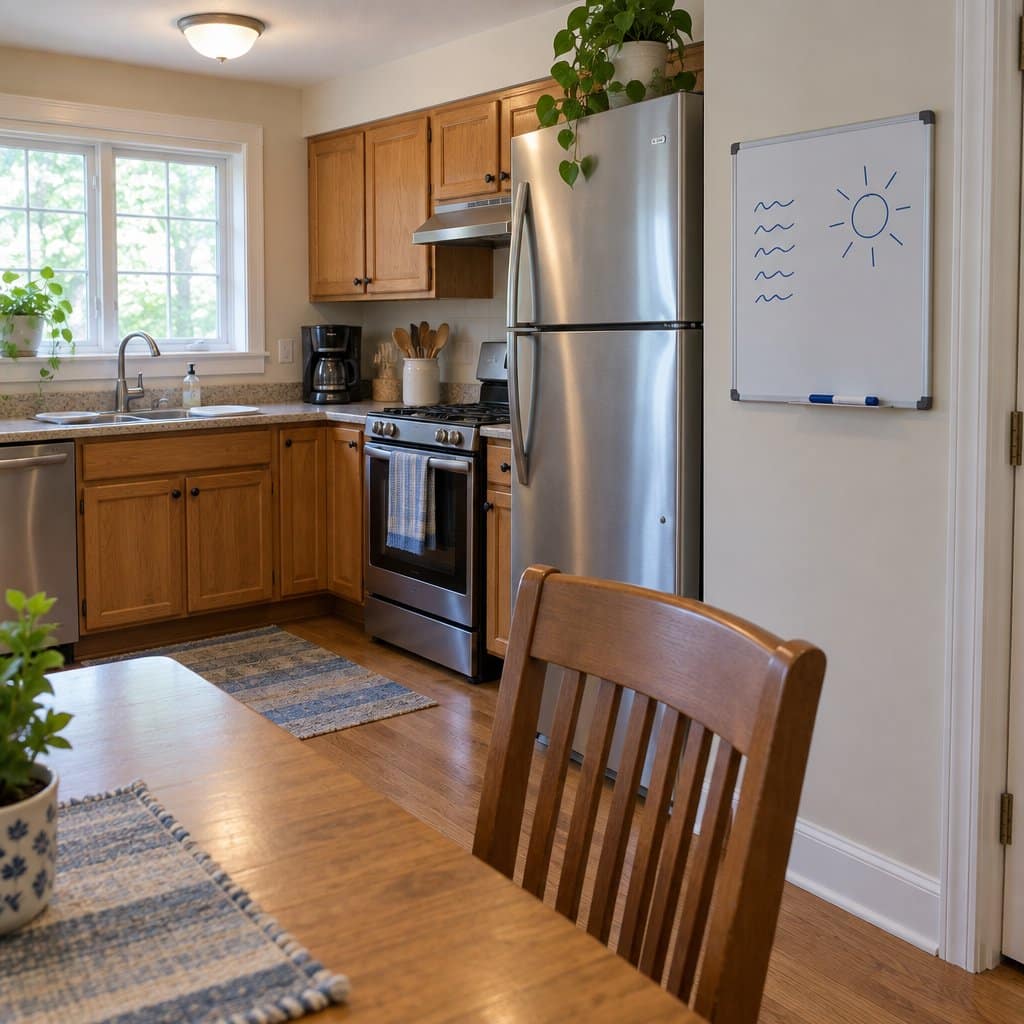
Talking can get hard for a person with dementia. A dry erase board gives them another way to say what is on their mind, through writing or drawing, and that can be easier than finding the words out loud.
The board can also be a gentle activity. Writing familiar words may make it enjoyable. Ask their doctor or therapist what works.
Connecting related items, such as countries and their capitals, works the same way. If you want ideas to start with, there is a list of whiteboard games for seniors.
As dementia progresses, the exercises may need to get simpler. Try breaking a task into smaller steps so the information is easier to take in and remember.
Shape the activity around the person’s abilities, interests and limitations, and change it as those change.
The board is also useful for daily structure. You can post bathing times, meal schedules and exercise routines. For medication, copy the instructions exactly from the pharmacy label or the doctor’s list, check them with the pharmacist, and keep a permanent written list too.
Keep blood pressure logs in a notebook the doctor can review. If you note them on the board, follow the doctor’s instructions. Short, kind notes can also support self-care habits.
Family members can leave messages of love and encouragement as well. That keeps a sense of connection going, even when visiting in person is not possible.
Because a board like this often holds sensitive information, privacy matters. One option is a wall-hung board that looks like artwork and opens to reveal two magnetic dry erase boards, so visitors do not see everything.
One trade-off: a board that is too busy can cause confusion or agitation. Keep messages simple and include only the essentials.
If the person gets overwhelmed easily, shorter and less frequent sessions may work better. Milder dementia may suit more frequent use, so watch how the person responds and adjust.
Installing a Whiteboard for Elderly Users
Setting up a whiteboard is a simple way to make daily life easier. You may worry about how tricky it could be, but installing a whiteboard doesn’t have to be hard or take forever.
Manufacturers provide clear instructions on proper installation, so even those not tech-savvy can understand what needs to be done.
You don’t need fancy tools; basic hand tools are generally enough for most tasks. Better yet, if you have questions during setup, many companies offering these boards have customer service teams ready to help.
In short, setting up a whiteboard for the elderly isn’t too tough.
The right materials, some patience, and a helpful customer service team make this process simple, and you can start using the board almost right away.
Wrapping Up
A dry erase whiteboard keeps appointments and reminders where you can see them, like medication times and doctor appointments, along with your daily tasks.
Look for a board that is lightweight but has enough space for everything you need to write down. A board can save you time and stress. For medications, copy the instructions exactly from the pharmacy label or the doctor’s list, check them with the pharmacist, and keep a permanent written list too, since anyone can wipe a board clean.
A whiteboard makes it easy to keep track of important details, reminders, and notes. These boards are simple to use, portable, and come in many colors and designs.
When shopping for a board, be sure to find one that’s sturdy, has the right size and shape for your needs, and comes with all the essentials, such as markers and erasers.
With this advice, seniors can find the ideal dry erase whiteboard to make their lives easier and more organized.
Infographic: Whiteboards for Seniors and the Elderly