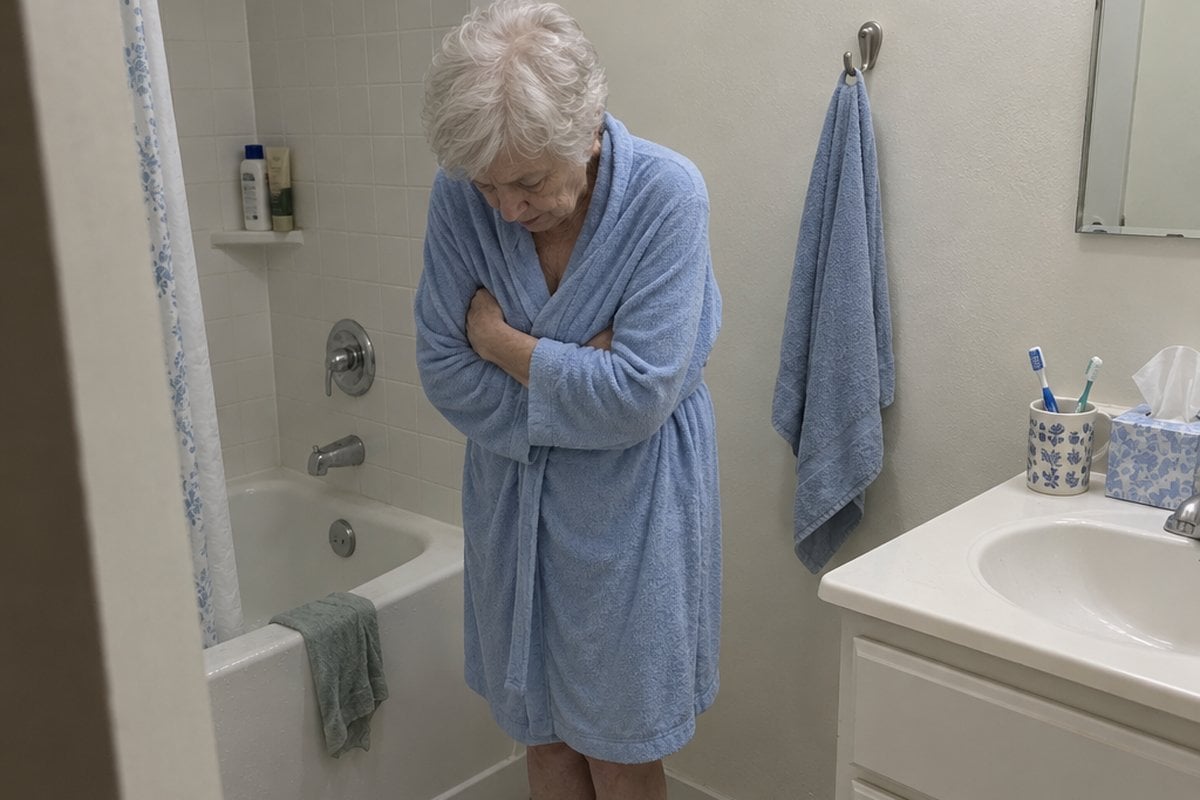
A cold bathroom can quietly turn bathing into something an older adult avoids. Bathroom heating for seniors is the fix, but the most common version, a portable plug-in heater, is the riskiest thing you can add to a wet room.
This guide covers the safer options, from towel warmers to heaters made for bathrooms, and tells you which one fits.
Bathroom Heating Buying Checklist for Seniors
Download this printable checklist and confidently choose the right bathroom heater for your needs—no more guessing whether a product is safe, practical, or actually solves the cold moment that bothers you most.
What to Look For in Bathroom Heating for Seniors
Skipped baths are the symptom. Cold is often the cause, and avoiding a cold bathroom is a sensible reaction, not a failing.
The right product depends on when the person feels cold: before and during bathing, or after stepping out.
- Which cold moment are you solving? Cold on undressing and during the shower points to a ceiling unit or a bathroom-rated wall heater. Cold on stepping out points to a towel warmer. Some homes end up wanting both.
- Skip the portable heater: A cord, tip-over risk and splashing water make it a poor match for a bathroom. I cover the wider picture in electric blanket vs space heater safety for seniors.
- Safety listing: Look for a UL, ETL or equivalent mark on any electrical product. Ceiling units should be rated for bathroom use, and any unit directly over a tub or shower must be marked suitable for wet or damp locations. Check the product listing.
- GFCI protection: Bathroom circuits in the US are generally required to be GFCI protected. Confirm the outlet for a plug-in towel warmer, and that a hardwired unit sits on a GFCI circuit. An electrician can check this quickly.
- Auto shut-off: Look for a timer or auto shut-off on towel warmers and thermal overheat cutoff on ceiling units. This matters most where memory is a concern.
- Surface temperature: Ask how hot the towel warmer surface gets and whether it is touchable. Thinner skin or reduced sensation makes this a skin-safety question.
- Wattage and airflow: A common rule of thumb is about 10 watts per square foot, so a 5 x 8 ft (40 sq ft) bathroom suits roughly 400 to 500 watts. Round up for cold climates or exterior walls. For moisture, aim for about 1 CFM per square foot, with a 50 CFM minimum. Check the sone rating if quiet matters.
- Electrical load: Higher-wattage ceiling units can draw 12 to 15 amps (1,500 W is about 12.5 amps at 120 V), so a dedicated circuit may be needed.
- Installation: Towel warmers plug in or mount to a wall. Ceiling units need a licensed electrician, possibly a permit, and possibly ceiling access or ductwork.
- Fit and reach: Check loading height and bending for towel warmers. For ceiling units, a wall switch is easier on arthritic hands than a pull cord.
Wet floors and cold often show up together. My guide to bathroom danger zones and the $20 fixes covers the rest.
Ready to discover more innovative strategies for healthy, comfortable aging? Subscribe to our newsletter for expert-tested tips and product recommendations designed specifically for older adults.
Towel Warmers
Warm towels waiting the moment you step out remove the coldest part of bathing for many older adults. These plug-in or hardwired racks need no ceiling work.
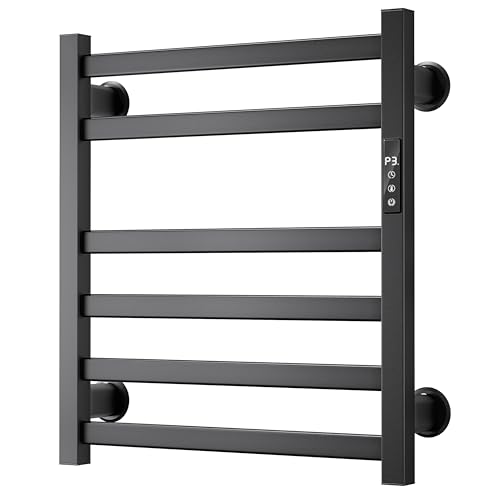


A towel warmer holds towels warm and ready, so the cold moment after stepping out disappears. Bucket-style models enclose the towels, while rack styles hold them on heated bars. The ones in this section are racks; buckets that need no installation are in the next section.
Suits: Someone who is open to bathing but dreads getting out. It also suits renters and anyone who won't touch wiring, since a plug-in model needs only a GFCI outlet and some wall space. Mounting a rack takes a few screws, so ask a landlord first.
Wrong choice for: Someone who avoids bathing because undressing in a cold room feels awful. A towel warmer heats the towel, not the room. It's also wrong if no GFCI outlet is within safe reach.
The trade-off: It's cheap and quick, with no electrician. The catch is that it does nothing for ambient cold.
Placed well, it keeps electricity away from water. Keep it clear of tub and sink splash, with the cord off the floor.
For dementia, auto shut-off matters more than heating speed. The same reasoning is in my electric blanket vs space heater guide.
APORDROUCA Electric Towel Warmer
This wall-mounted rack is built around an intelligent timer and adjustable temperature. That pairing suits a household where someone might forget to switch it off.
The catch is that rack bars can run hot to the touch. Check the listing for surface temperature and place it where no one will lean on it.
NORTTA 8-Bar Wall-Mounted Towel Warmer
This model offers eight bars and three timers, and it can be plugged in or hardwired. Plugging in avoids an electrician, while hardwiring gives a cleaner look with no cord.
The eight bars add up to a large, wall-hungry unit. Measure your space, and remember hardwiring is a job for a licensed electrician.
Pursonic TW300 Towel Warmer Rack
This is a 6-bar wall-mounted electric rack, a more compact option for a smaller bathroom or a tighter budget.
The listing doesn't point to the timer features of the models above, so check for an auto shut-off before buying. Without one, you'll rely on remembering to switch it off.
Towel Warmer Buckets (No Installation)
A towel warmer bucket looks like a small hamper with a lid. You drop the towels in, close it, press a button, and they come out warm. Nothing goes on the wall, so there is no drilling and no electrician.
Suits: Renters, anyone who doesn't want holes in the tile, and someone who wants a warm robe or pajamas as well as a towel. It also moves easily, so it can go to the bedroom in winter.
Wrong choice for: Someone who is cold while undressing. Like a rack, a bucket warms the towel, not the room. It also needs a dry spot of floor or counter near an outlet.
The trade-off: It needs no installation, but it has to be started ahead of time and it sits low. Set it on a sturdy, dry surface at a comfortable height, away from the tub and sink, so no one has to bend low or reach across water to load it.
VEVOR Towel Warmer Bucket with Child Lock
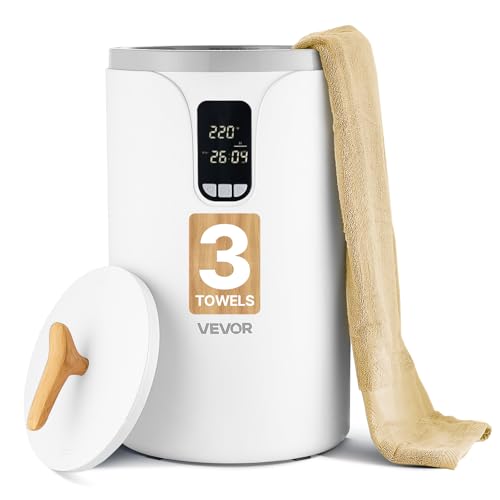
The delay timer is the reason to pick this one. Set it once and the towels are warm when the bath is done, which helps anyone who forgets to start it. The child lock also keeps a curious grandchild from changing the settings.
The catch is the number of settings. If buttons and menus are a struggle, set it up once for them and leave it.
Keenray CL1Plus Towel Warmer Bucket

This one holds two oversized bath towels or a robe and a blanket, and the timer choices cover a quick warm-up or a long soak.
The touch screen looks tidy, but it can be harder to use with stiff or numb fingertips than a button you can feel.
SereneLife Freestanding Towel Warmer on Legs
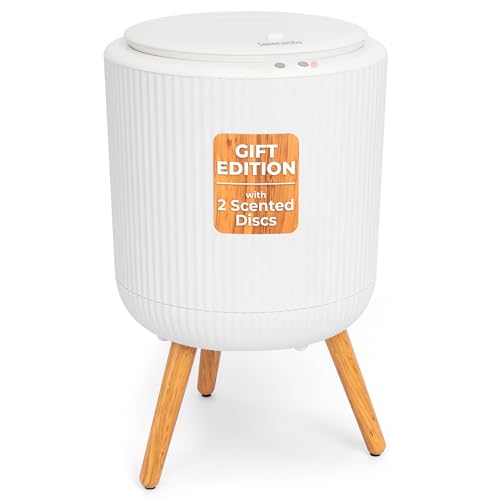
This is the smallest of the three, and it looks more like a piece of bathroom furniture than an appliance. It suits one person who wants one warm towel after a bath.
The trade-off is capacity. It holds a single large towel or robe, so a couple sharing a bathroom may want one of the bigger buckets.
Hamper- and Cabinet-Style Towel Warmers (No Installation)
These do the same job as a bucket but look like a piece of bathroom furniture: a fabric hamper on legs, or a lidded wooden box. Nothing is mounted, so there is no drilling and no electrician. You load the towels, press a button, and they are warm when the bath is done.
Suits: Someone who wants a warm towel and doesn't want an appliance on display, or a bathroom where a round bucket looks out of place. The tall hamper style also means less bending to load it.
Wrong choice for: Someone who is cold while undressing. Like a rack or a bucket, these warm the towel, not the room.
The trade-off: The fabric hampers fold flat for storage, which is handy in summer, but a fabric box is softer and easier to knock over than a hard bucket. Pick one that shuts itself off if it tips. Keep it on a dry floor near an outlet, away from the tub and sink.
One thing to skip: the “hot towel cabinets” sold for spas and barbershops. They are built to steam damp washcloths to about 180°F for facials, not to warm a dry bath towel, and they hold small towels only.
VIPBATH 35L Foldable Towel Warmer with Viewing Window

This is the one that looks most like an ordinary hamper. The window in the lid is a small thing that helps: you can see the towels are in there without opening it and letting the warm air out.
It also turns itself off if it is knocked over, which matters with a fabric body. The listing doesn't spell out the timer choices, so check the product page for how long it runs before you order.
SereneLife Rectangle Towel Warmer in Natural Wood

If buttons and menus are a struggle, this is the simplest one here: one button, three timer choices, and it shuts itself off. The lid stays cool to the touch, so no one gets a surprise when they reach for the towel.
It holds two large towels, which is enough for one or two people but not a whole family's worth of robes.
ERABAY 38L Foldable Towel Warmer

This is the pick for a couple who both want warm towels, or anyone who likes a warm robe and blanket too. The fabric is waterproof and wipes clean.
Watch the temperature settings. The highest one is much hotter than a towel needs, and thin skin burns more easily with age, so start it on the lowest setting and leave it there.
Bathroom Fan-Heater-Light Units
A hardwired ceiling unit warms the whole bathroom before bathing begins, replacing risky portable heaters. It also adds ventilation and brighter lighting in one fixture.


This is a hardwired ceiling unit combining an exhaust fan, heater and light. It replaces the portable heater and warms the room before bathing starts.
Suits: Households ready for a permanent fix, especially when cold hits on undressing and during the shower. It works best in small to medium bathrooms in owned homes, or where a landlord agrees. Swapping an existing exhaust fan is the easiest case.
Wrong choice for: Renters, tight budgets or timelines, and ceilings that are hard to reach. It also won't fix a cold towel and floor after the shower.
The trade-off: It warms the whole room, but a licensed electrician is required and a permit may be too. Installation cost varies by region and by whether new wiring or ducting is needed, so get a quote before you buy. Ask the electrician whether a permit applies where you live.
Practical tips:
- Turn it on 10 to 15 minutes before bathing. A timer or wall switch makes that easier.
- Choose a large paddle wall switch over a pull cord.
- Confirm the location rating, especially directly over a shower or tub.
- Vent outside, not into the attic.
Heat lamp styles use bulbs that get very hot and can be a burn or glass risk. Enclosed ceramic or PTC elements are the gentler choice.
Panasonic FV-0511VHL1 WhisperWarm
This unit is built around adjustable airflow (50, 80 or 110 CFM) and a quiet-running design. It suits small to medium bathrooms where noise is a concern.
The catch is the usual one. It needs hardwiring, and it only helps if it's switched on ahead of time.
Broan-NuTone BHFLED110 PowerHeat
This combines fan, heater and LED light in one fixture. Good lighting is a quiet fall-prevention bonus in a wet room.
Check the listing for wattage and the wet or damp rating. If it's near the top of the range, a dedicated circuit may be needed, which adds to the electrician's job.
VIVOHOME 1800W PTC Exhaust Fan with Light and Heater
This is a high-output option, with a PTC heating element, 160 CFM airflow and adjustable light color. It suits a larger bathroom or a cold-climate home.
At 1,800 W, it draws about 15 amps at 120 V, so a dedicated circuit is likely. For a small bathroom it's more heater than you need.
Wall-Mounted Bathroom Heaters
A wall-mounted heater warms the room, like a ceiling unit, but most plug in and hang from a few screws, so there is no electrician and no ceiling work. It stays off the floor, which takes away the tip-over and cord-on-the-floor problems of a portable heater.
Only buy one the maker says is meant for a bathroom. Look for two things on the listing: an ALCI or GFCI safety plug, which cuts the power if it senses electricity leaking toward water, and a splash rating such as IP24. Mount it where the instructions say, well away from the tub, shower and sink, so no one can touch it from the water.
Suits: Someone who is cold while undressing and during the bath, in a home where a ceiling unit isn't possible or isn't worth the cost. It suits renters too, with the landlord's okay for the screws.
Wrong choice for: A small bathroom with no wall space well away from water, or a bathroom with no GFCI outlet within reach of the cord.
The trade-off: It warms the whole room without an electrician, but it still has a cord running to an outlet, and a 1,500 W model can trip a breaker if a hair dryer is on the same circuit.
DREO Smart Electric Wall Heater

The thermostat is the useful part. Set it to a comfortable temperature and it holds there, and the remote means no one has to reach for the wall with wet hands.
The catch is the cord. Plan where the outlet is before you drill, so the cord doesn't cross a walkway or hang near the sink.
GiveBest Smart Wall Heater

This one does the same job as the DREO, with an ECO mode that lets the thermostat ease off once the room is warm.
At full power it draws about 12.5 amps, so check what else is on that bathroom circuit before you rely on it.
Brightown Wall Heater with ALCI Plug

The lowest setting, 600 W, is a good match for a small bathroom, and it is gentler on a circuit the hair dryer also uses. The 12-hour timer means it can't be left running all day by mistake.
The maker lists it for bathrooms and it has the ALCI plug, but the listing gives no splash rating like the IP24 on the DREO and GiveBest. Mount it on a wall well away from the tub, shower and sink.
DREO Oscillating Wall Heater with ALCI Plug

This is the one for a larger bathroom, where a fixed heater warms one corner and leaves the rest cold. The app can warm the room on a schedule, so it is comfortable before the morning bath without anyone touching it.
Like the Brightown, the listing has no splash rating, so the same rule applies: a wall well away from water.
Subscribe to our newsletter for more tips: Join here
Frequently Asked Questions
Is a space heater safe in the bathroom? Generally no. A portable plug-in heater near water, with a cord and tip-over risk, is the riskiest option for a wet room.
Do towel warmers heat a room? No. They warm the towel so it's ready when you step out, but they won't change the room's temperature.
Does a bathroom heater need a licensed electrician? A hardwired ceiling unit does, and a permit may also be required depending on where you live.
How do I know if my parent is skipping baths because of cold? Gently ask, and notice whether they rush, avoid bathing or shiver afterward. My guide on why older adults stop bathing can help you read the signs.
Hacks and Advice
- Start with a conversation, not a product. Ask which moment feels worst: undressing, the shower or stepping out. That tells you which type to consider, and this guide to the bathing conversation can help you ask kindly.
- Warm the room with what you already have. Run the hot shower for a few minutes with the door closed before getting in.
- Warm the floor. A washable, non-slip bath mat takes the chill off bare feet. See 5 bathroom aids that help seniors stay independent.
- Remove any portable heater from the bathroom today. Move it out, even if the replacement isn't bought yet.
- Check annually. Press the GFCI outlet's test and reset buttons, clean the fan grille of dust, and look for frayed cords or heat damage.
Bathroom Heating Buying Checklist for Seniors
Download this printable checklist and confidently choose the right bathroom heater for your needs—no more guessing whether a product is safe, practical, or actually solves the cold moment that bothers you most.
Conclusion
Cold is a fixable cause of a real safety problem. Choose the product that solves the moment that's actually unpleasant: a towel warmer for the cold after, a ceiling unit or bathroom-rated wall heater for the cold before and during.
Wanting a warm bathroom isn't fussy. It's a sensible way to protect bathing, skin health and independence.
Walk through the bathroom today and note whether cold is part of why bathing has become less frequent. Bring that observation to my Home Safety and Independent Living Assessment.
Which part of bathing feels coldest in your home, or for your loved one? Share it in the comments.