
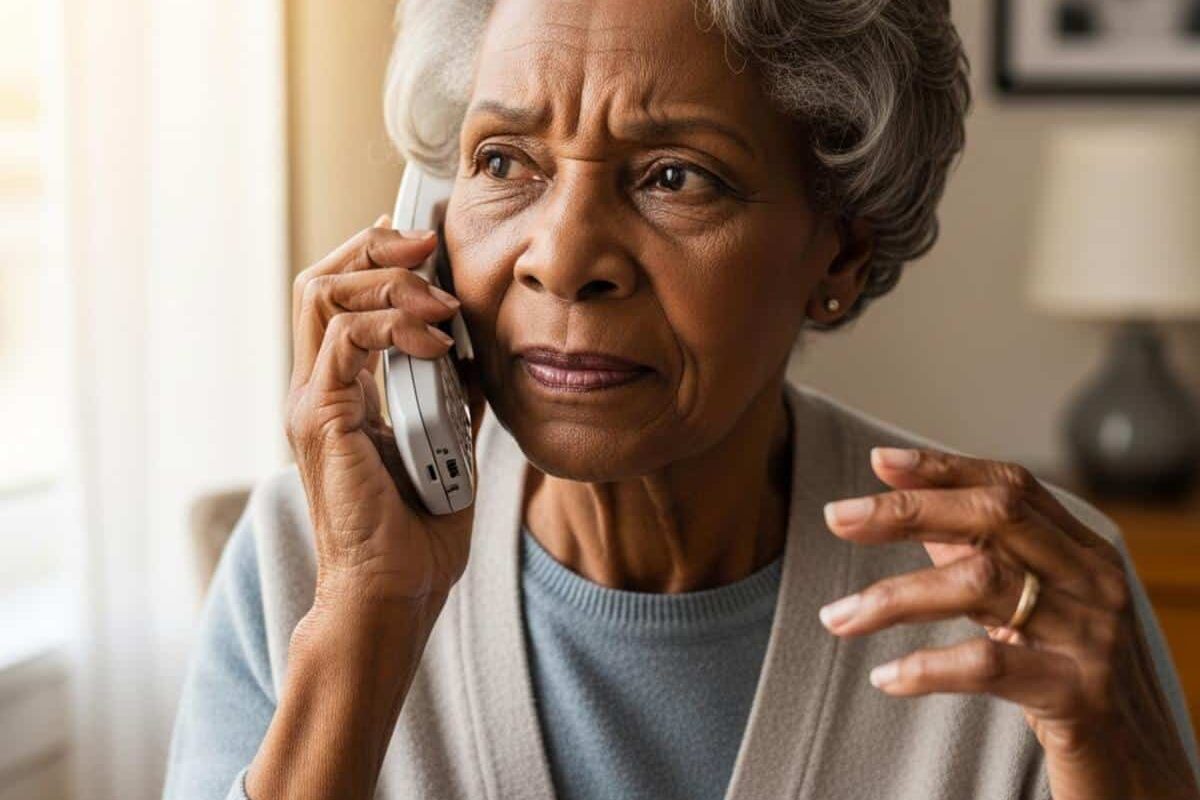
The phone rings. The voice on the other end sounds exactly like your grandchild — panicked, scared, asking for help. In the thirty seconds before doubt sets in, you’re already reaching for your wallet.
That’s not foolishness. That’s love. And fraudsters know it.
Phone scams targeting older adults have evolved far beyond robocalls and obvious con artists. The newest versions are engineered by professional criminal networks using technology most people have never heard of — and they’re designed specifically to fool people who trust their own instincts.
I’ve seen this firsthand through my work with older adults and caregiving families, and what’s happening right now is unlike anything we’ve seen before.
This article will explain exactly how these scams work, why they bypass even the sharpest defenses, and give you four specific tools you can put in place today — before you ever need them.
This Isn’t About Being Gullible — It’s About How These Scams Are Designed

The people being targeted by these calls are not naive. They are experienced, intelligent, and fully capable of managing their own lives.
That matters — because the scams work precisely because of that intelligence, not in spite of it.
Modern phone fraud is operated by organized criminal networks that invest in psychology research, social engineering, and now artificial intelligence. The newest version of what’s known as the “Grandparent Scam” uses AI voice cloning technology that can replicate a real person’s voice from just a few seconds of audio — pulled from a voicemail, a social media video, or a family post.
When you hear what sounds exactly like your grandchild’s voice — their specific tone, their accent, the way they say your name — your brain responds to that as real. That’s a biological response, not a failure of judgment.
Fraudsters are professionals who have studied exactly which human responses to trigger and in what order. Recognizing that this is a deliberate, engineered system is the first step toward dismantling it — and it starts by removing any shame from the conversation entirely.
Just as protecting yourself from financial exploitation requires knowing who is behind the theft, protecting yourself from phone fraud requires understanding who is behind the call.
Why Your Brain Says “Yes” Before Your Gut Says “Wait”

Fraudsters don’t rely on luck. They follow a precise psychological playbook that targets four specific human responses — every single time.
Knowing these four triggers is one of the most powerful defenses you have.
The Four Triggers Every Phone Scammer Uses
Authority — The caller poses as a government official, law enforcement officer, bank representative, or attorney. We are conditioned from childhood to respond to authority figures, and that conditioning doesn’t disappear with age or education. It’s a feature of being human, not a flaw.
Urgency — A deadline is created: ‘You must act within the next hour or your account will be frozen.’ Urgency deliberately shuts down the brain’s slower, deliberate reasoning and pushes it into reactive mode. This is intentional and effective — even on people who know about it.
Isolation — ‘Don’t tell your family about this — it could make the situation worse for your grandchild.’ Cutting the target off from a trusted second opinion removes the single most effective defense available. If a caller tells you to keep a conversation secret, that instruction itself is the warning sign.
Trust — Either a cloned familiar voice, personal details scraped from social media profiles, or an appeal to family loyalty. Trust bypasses skepticism entirely — and it’s the reason AI voice cloning has made these scams so much more dangerous.
- Write these four words down: Authority. Urgency. Isolation. Trust.
If any call uses even two of these tactics at the same time, pause immediately. The combination is the signal.
Call-blocking devices — dedicated landline blockers like CPR Call Blocker, or smartphone screening apps like Nomorobo — can prevent many of these calls from reaching you at all, reducing your exposure before the psychological pressure even begins. Think of call-blocking as your first layer of defense.


The 24-Hour Pause Rule — The Simplest Defense That Works Every Time

Here is the single most important thing I can tell you: no legitimate organization will ever require you to act so quickly that you cannot wait 24 hours.
Not a bank. Not a government agency. Not a grandchild in genuine distress. Not a law firm. No one with a real, valid request will insist that you act before speaking to a trusted family member.
The urgency itself is the scam. Remove urgency and the entire mechanism collapses.
How the 24-Hour Pause Rule Works
Before you:
- Send any money
- Purchase gift cards of any denomination
- Share any account or personal information
- Make any financial decision prompted by a phone call
…wait 24 hours and tell one trusted person first.
If a caller becomes angry, threatening, or more insistent when you say ‘I need 24 hours to think this over,’ they have just identified themselves. A legitimate caller will accept a reasonable request for time without escalating.
You are not being rude. You are being wise. Those are two very different things.
Action step: Write “24 HOURS” on a sticky note and place it near your phone today. In a moment of pressure, that visual reminder interrupts the urgency cycle before it takes hold.



Maintaining your independence and safety at home means building habits that protect you consistently — not just in moments when you’re already on high alert.
Want more practical tips for staying safe, independent, and informed? Subscribe to our newsletter for trusted, expert-tested guidance designed specifically for older adults and the families who love them.
If You Can’t Trust a Voice Anymore, Trust a Word Instead

AI voice cloning has changed the rules. Because technology can now replicate the sound of a real family member’s voice with disturbing accuracy, the most reliable verification tool is something technology cannot clone: a private word only your family knows.
This is called a family safe word — and it takes about five minutes to set up.
How to Set Up Your Family Safe Word System
Choose a word together. Pick something specific and memorable — not a common word, but something your family would recognize immediately. An inside reference, a meaningful place name, or an unusual phrase works well.
Share it privately. Tell every immediate family member in person or by a method you trust. Do not text it to everyone in a group thread.
Agree on the rule. Anyone calling you in a claimed emergency who cannot provide the safe word when asked has not verified their identity.
Practice using it. The safe word only works if everyone knows to expect it — and if you feel comfortable asking for it under pressure.
Families who stay connected and communicate proactively are far harder to scam. The research on how meaningful family connection protects older adults applies directly here — the closer your communication lines, the faster a fraud attempt gets exposed.
Three Scripts for Ending Suspicious Calls Without Feeling Rude
- ‘I need to verify your identity with our family safe word before we continue.’
- ‘I never make financial decisions on a phone call. I’ll need to call you back at a verified number.’
- ‘I’m going to hang up now and speak with a family member. If this is real, they can reach you directly.’
You are not obligated to stay on a call that makes you uncomfortable. Hanging up is always the right choice.
Post These Three Questions Near Your Phone Today

The best time to decide what to say to a suspicious caller is before the call ever comes — not in the middle of it, when pressure is highest.
Create what I call a Scam Safety Card: a simple index card or printed sheet posted near every phone in your home. If you’re a caregiver reading this, print one and offer to laminate it for your loved one’s phone area.




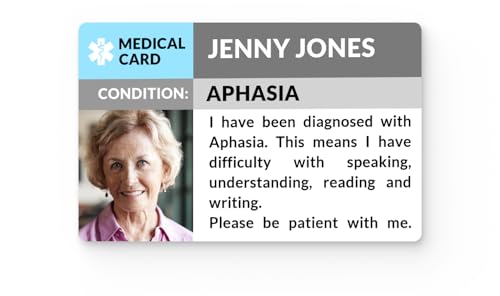
Your Three Questions for Any Suspicious Caller
- ‘Can you give me a callback number so I can verify this with your organization directly?’
- ‘Can you give me 24 hours to discuss this with a family member?’
- ‘What is our family safe word?’
What honest answers sound like: A legitimate caller will provide a verifiable number, accept a 24-hour delay without escalating, and understand that you are being careful.
What dishonest answers sound like: Resistance, anger, increased urgency, refusal to provide a callback number, or pressure to keep the call secret.
Asking these questions out loud also does something important: it disrupts the psychological pressure the caller is deliberately creating. The moment you shift from reactive to questioning, the script they’re following stops working.
Protecting your personal information in every context — whether online or on the phone — starts with the same principle: pause, question, and verify before you act.
You’ve Handled Every Challenge Life Brought You — This One Is No Different
Phone scams targeting older adults have evolved into sophisticated, professionally engineered systems. But that sophistication is also their weakness.
Once you know the four triggers, the 24-hour rule, the safe word system, and the three questions, you have a defense that works regardless of how convincing a caller sounds — or how real a voice seems.
Protecting yourself from these scams isn’t about distrust or living in fear. It’s about being the same sharp, prepared person you’ve always been — just updated for a new kind of threat.
Your Action Steps for This Week
- ☐ Write “24 HOURS” on a sticky note and place it near your phone
- ☐ Write down the four triggers: Authority, Urgency, Isolation, Trust
- ☐ Set up your family safe word in a conversation this week
- ☐ Create your Scam Safety Card and post it near your phone
- ☐ Look into a call-blocking app or device for your home phone
- ☐ Share this article with someone you want to protect
The warning signs that someone you love may need additional support often include increased vulnerability to outside pressure. Staying connected and having honest conversations with family is one of the most effective protective measures available — for phone fraud and for overall wellbeing.
Have you or someone you know encountered one of these calls? Share what happened in the comments — your experience could protect someone else from making a costly mistake.



![Keep feat elderly woman walker family living room conversation[1]](https://www.grayingwithgrace.com/wp-content/uploads/2026/05/KEEP-FEAT-elderly_woman_walker_family_living_room_conversation1-e1779544485375-450x300.jpg)
![Keep older woman video call tablet kitchen warm smile[1]](https://www.grayingwithgrace.com/wp-content/uploads/2026/05/KEEP-older_woman_video_call_tablet_kitchen_warm_smile1-e1778624028172-450x300.jpg)
![Keep older couple computer woman cane protective[1]](https://www.grayingwithgrace.com/wp-content/uploads/2026/05/KEEP-older_couple_computer_woman_cane_protective1-e1778616055742-450x300.jpg)
![Group of seniors sharing simple grocery saving tips[1]](https://www.grayingwithgrace.com/wp-content/uploads/2026/01/group_of_seniors_sharing_simple_grocery_saving_tips1-e1769521429158-450x300.jpg)
![Elderly man with cane looking up recurring charge[1]](https://www.grayingwithgrace.com/wp-content/uploads/2026/01/elderly_man_with_cane_looking_up_recurring_charge1-e1769520115610-450x300.jpg)


