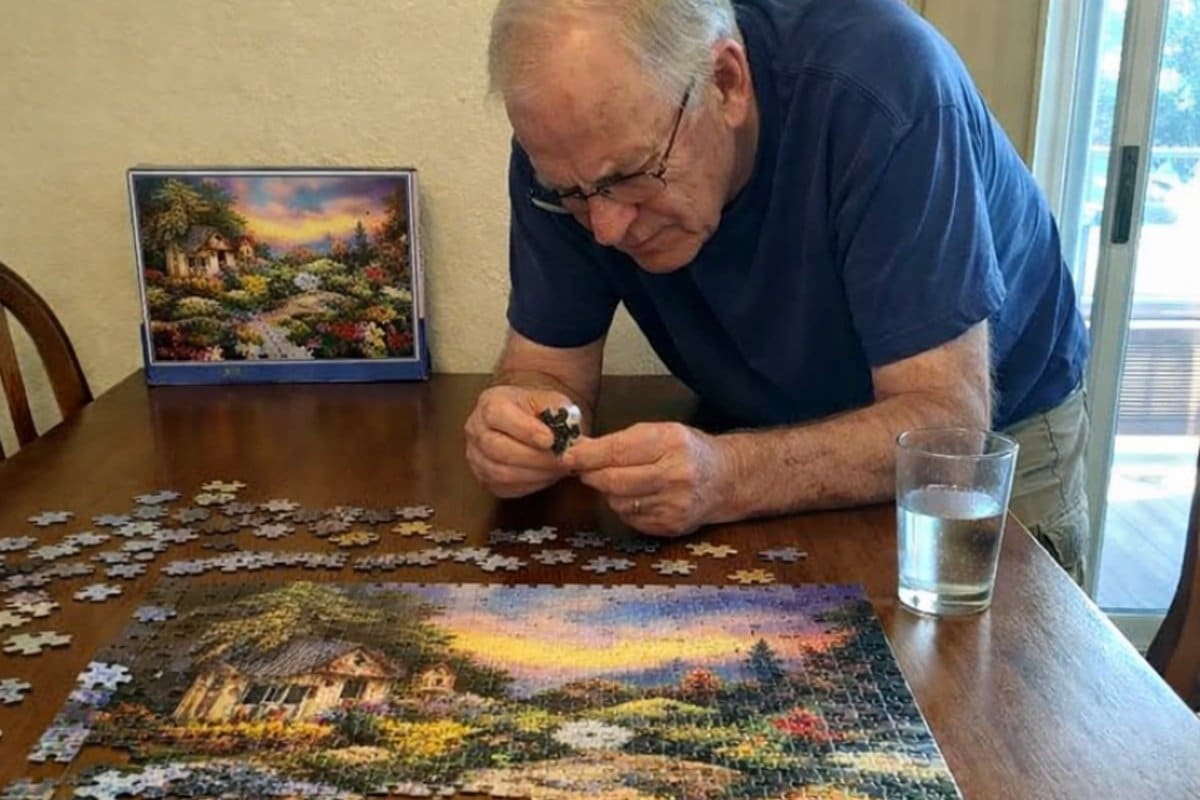
The puzzle is still on the table. It’s been there for three weeks, pushed to the edge, the box lid resting nearby. You sat down twice last week. Both times, you got up without touching a piece.
Or maybe it’s the card game. You used to be the one shuffling the deck before anyone else sat down. Now you find reasons to skip game night, and nobody has quite asked why.
This kind of loss doesn’t come with a conversation. It doesn’t come with a diagnosis or a moment you can point to. It just quietly happens — and you notice it every time you sit down at the table and decide not to start.
What’s actually happening isn’t that you’ve lost interest. In most cases, it’s that your hands have changed, and the equipment hasn’t caught up. The hobby is still there. The grip that made it effortless isn’t. And that’s a very different problem — one that has real, concrete solutions.
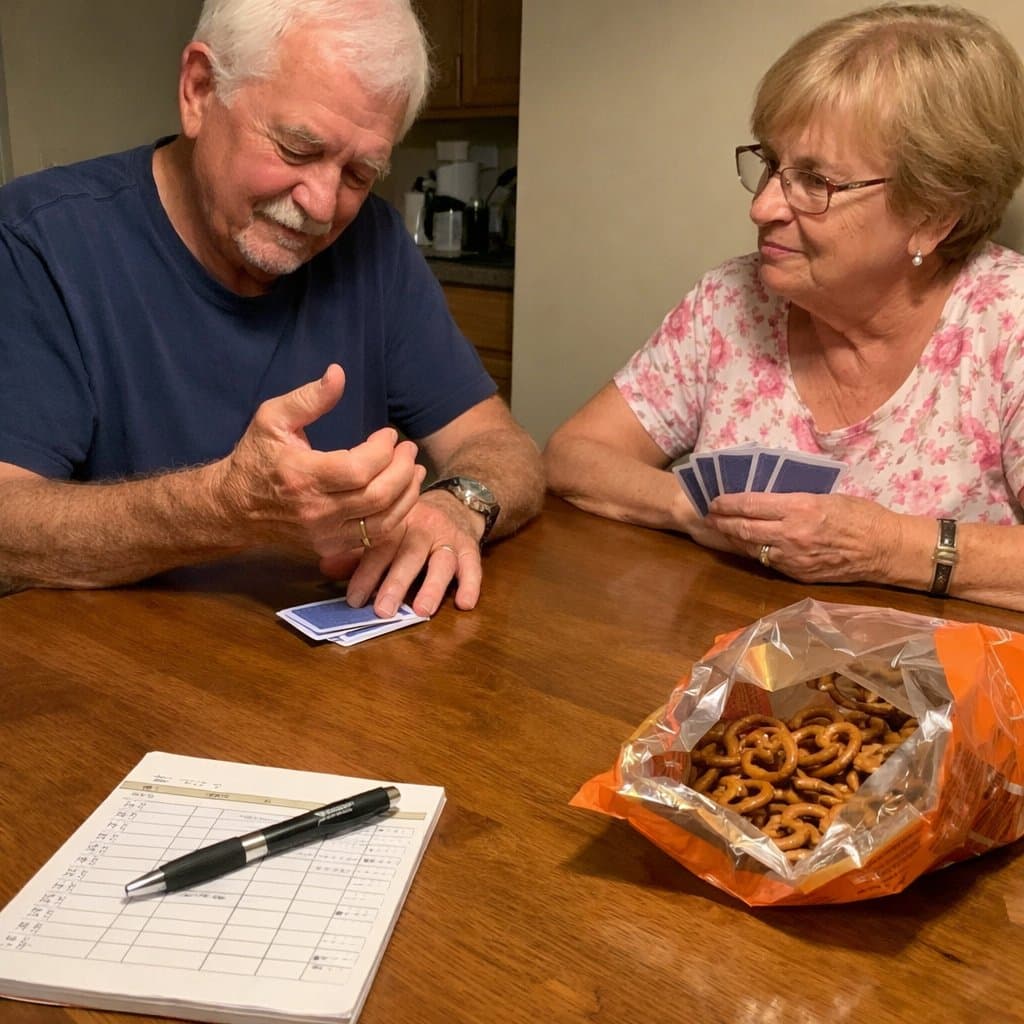
The Hobby Hand Helper: A Quick-Reference Guide to Adaptive Tools for Puzzles, Cards, and Knitting
Discover the exact adaptive tools that let you keep puzzling, playing cards, and knitting without pain—so you can stay at the table doing what you love instead of quietly stepping away.
What’s Really Happening When Your Favorite Hobbies Start Feeling Impossible
It’s Not Boredom. It’s Your Hands.
Arthritis and the grip changes that come with aging affect fine motor control in very specific ways. The pinch grip — the one you use to pick up a small object between your thumb and fingers — weakens and becomes painful before most other hand movements do.
That’s important, because puzzles, card games, and knitting all depend on exactly that grip. Sustained pinching. Maintaining pressure on small objects. Precise repositioning without dropping.
Why These Hobbies Go First
Walking doesn’t require a pinch grip. Gardening, in most forms, doesn’t either. But holding a hand of cards for twenty minutes? Picking up a puzzle piece and guiding it into a tight space? Threading yarn through needles with consistent tension? Those are all fine motor tasks that arthritis quietly makes painful before anyone names it as a mobility issue.
I’ve seen this pattern repeatedly in my work with older adults. Someone stops doing their favorite activity and tells themselves — or others — that they’re just not as interested as they used to be. But watch closely and you’ll see something else: they miss it. They just can’t do it the way they used to, and nobody has told them there’s another way.
The Stakes Are Higher Than People Realize
These hobbies aren’t just pastimes. Puzzles keep your mind working through spatial reasoning and pattern recognition. Card games are often where social bonds happen — the weekly game night, the table at the senior center, the kitchen table with grandchildren. Knitting carries identity and legacy in a way few other activities do.
Losing them isn’t a minor inconvenience. It’s losing part of the structure that gives days meaning. And it doesn’t have to happen.
The reframe that matters most: this isn’t about aging out of your hobbies. It’s about your equipment not keeping up with what your hands need right now. Let’s go through each hobby and look at what actually helps.
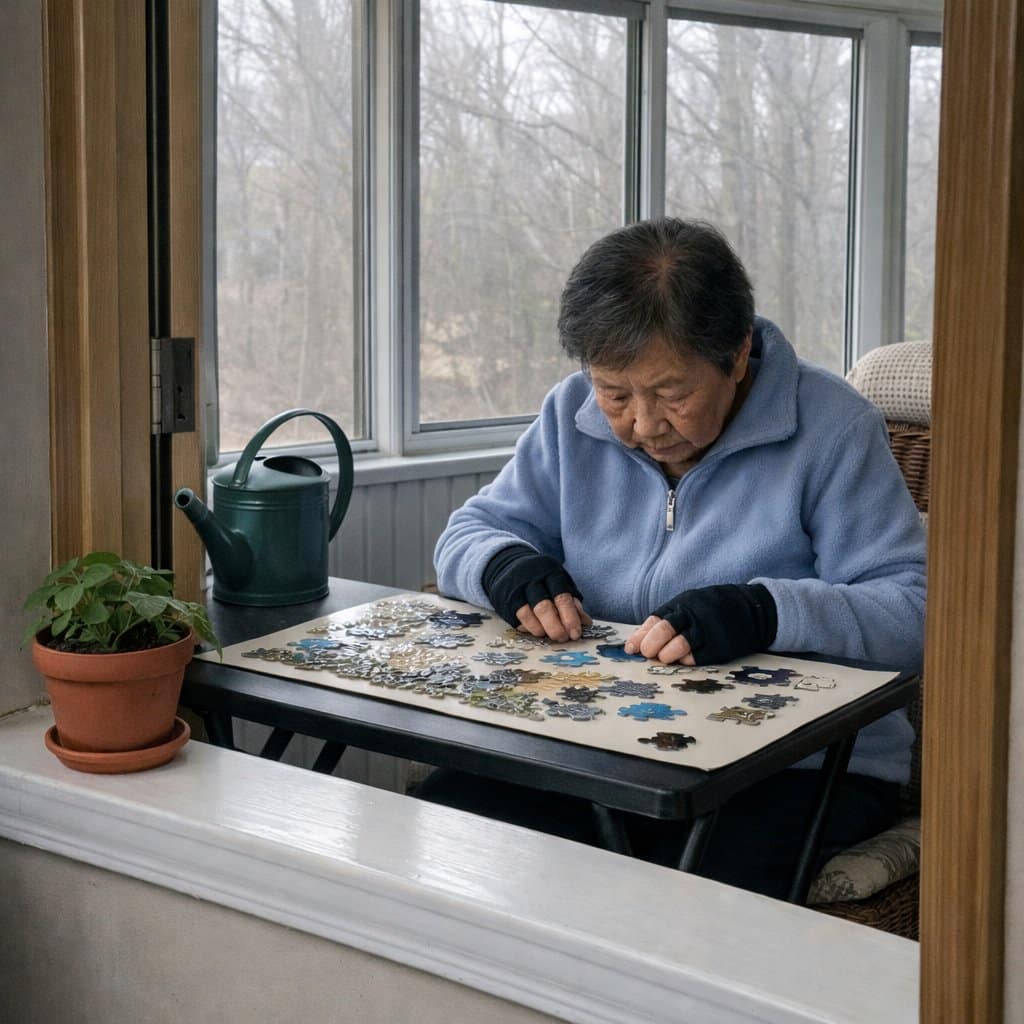
Puzzles — When the Pieces Are the Problem, Not Your Patience


Why Standard Puzzles Become Genuinely Difficult
A standard 500-piece puzzle has pieces roughly the size of a postage stamp. Picking one up requires a tight pinch grip. Repositioning it without dropping it requires sustained pressure through inflamed joints. Doing that hundreds of times in a single session is — for hands affected by arthritis — genuinely painful, not just mildly inconvenient.
And when it’s painful, the brain starts associating the activity with discomfort. You stop before you consciously decide to stop.
What “Large Piece” Actually Means
Large piece jigsaw puzzles for seniors use fewer, bigger pieces — typically 300 or fewer, with each piece large enough to pick up without a precision pinch. The image stays the same. The mental engagement stays the same. The spatial reasoning, the satisfaction of the fit, the quiet pleasure of watching the picture emerge — all of it remains. If you are shopping for one, here is what to look for in large piece jigsaw puzzles before you buy: what to look for in large piece jigsaw puzzles.


The only thing that changes is the piece size. And that one change is enough to make the hobby accessible again.
What to Look For When Choosing
- Piece count: 300 or fewer is a strong starting point for hands with arthritis
- Piece thickness: Thicker pieces are easier to grip and less likely to flex when you pick them up
- Image contrast: High-contrast images are easier to work with if vision changes are a factor alongside grip changes
- Piece surface: Matte finishes reduce glare and make pieces easier to see individually
Start with a 300-piece large format puzzle before committing to a larger set. One session is usually enough to know whether the size change makes a real difference.
Large piece jigsaw puzzles designed specifically for arthritic hands give you the full puzzle experience — the challenge, the calm, the satisfaction — without the grip demands that were making you push the box aside.


Don’t Overlook Puzzle Sorting Trays
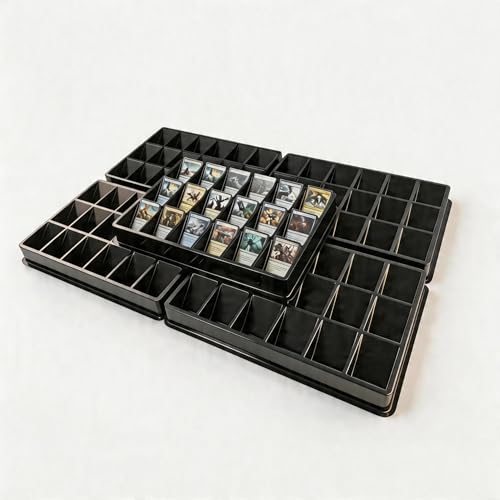
Rifling through a pile of loose pieces requires repeated pinching and lifting — exactly the motion that causes fatigue fastest. Puzzle sorting trays let you pre-sort by color or shape, so each reach is intentional and your hands rest between them.
Puzzle sorting trays are a small addition that meaningfully extends how long a session stays comfortable.


Card Games — The Grip Problem Nobody at the Table Mentions

What Card Games Actually Ask of Your Hands
Holding a fan of cards in one hand — sometimes for twenty minutes at a stretch — requires sustained grip pressure through exactly the joints that arthritis affects first. It’s not a dramatic demand. It’s a quiet one. But it accumulates, and eventually it makes the game more about managing discomfort than playing.
Most people don’t say this out loud. They start declining invitations. They say they’re tired, or not feeling up to it. The real reason — that their hands hurt — never quite gets said.
Card Holders Change Who Gets to Keep Playing
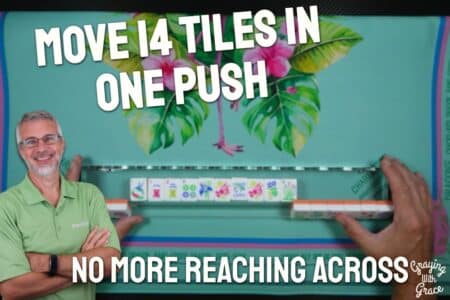
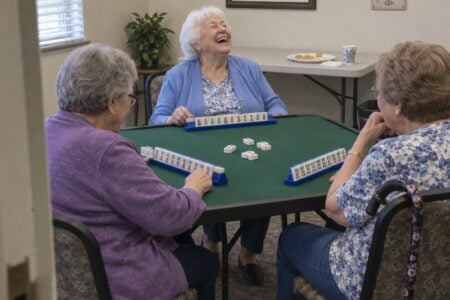
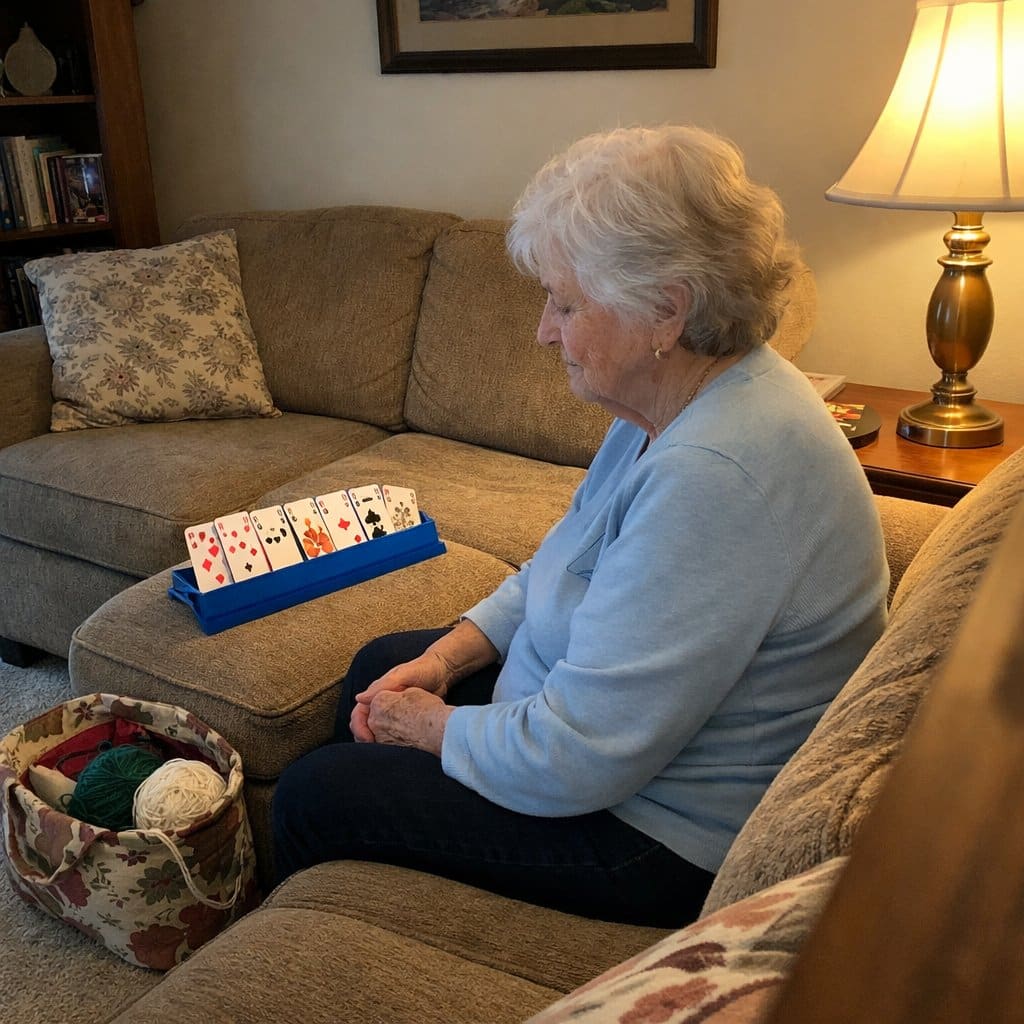
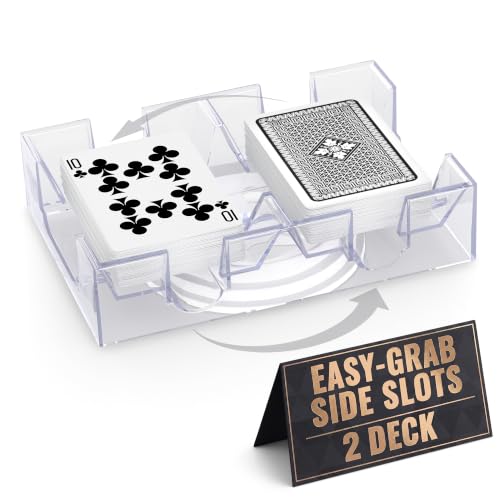
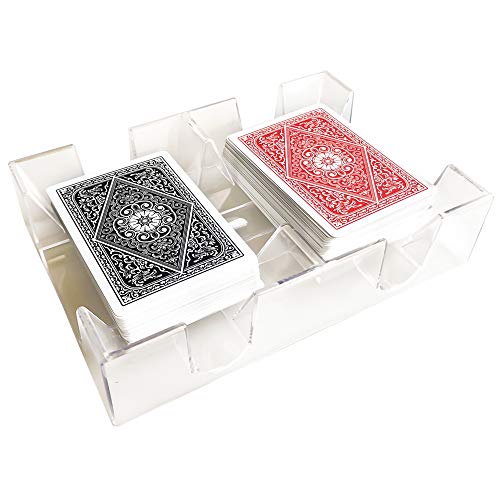
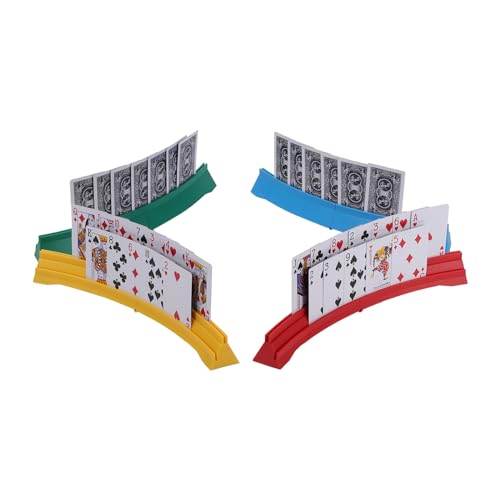
Playing card holders are simple stands that hold your hand of cards upright so you don’t have to. You see your cards, you play your hand, you stay fully in the game. Your hands rest between turns instead of gripping the whole time.
The game doesn’t change. The social ritual doesn’t change. What changes is that you can stay at the table for the whole game instead of quietly calculating how much longer your hands will cooperate.


Playing card holders are one of the most underknown adaptive tools for this exact problem — and one of the most immediately effective.


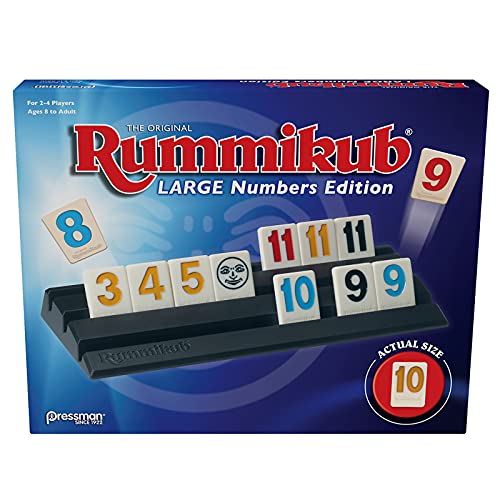
Large Print Card Games Help When Vision and Grip Both Shift
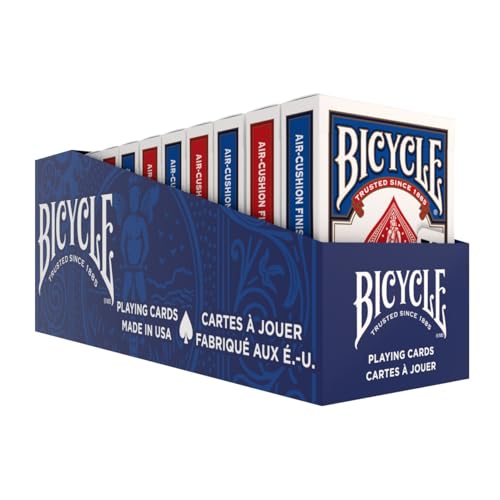
If vision changes have arrived alongside grip changes — which is common — large print card games reduce the visual strain at the same time the card holder reduces the grip strain. Both problems get addressed at once, and the game stays enjoyable instead of exhausting.
Large print playing cards with bold, high-contrast faces make the game readable at a glance, so your focus stays on strategy rather than squinting.



Subscribe to our newsletter for more tips: Join here
Knitting and Needlework — When the Needles Start Fighting Back


Why Knitting Is Particularly Vulnerable to Grip Changes
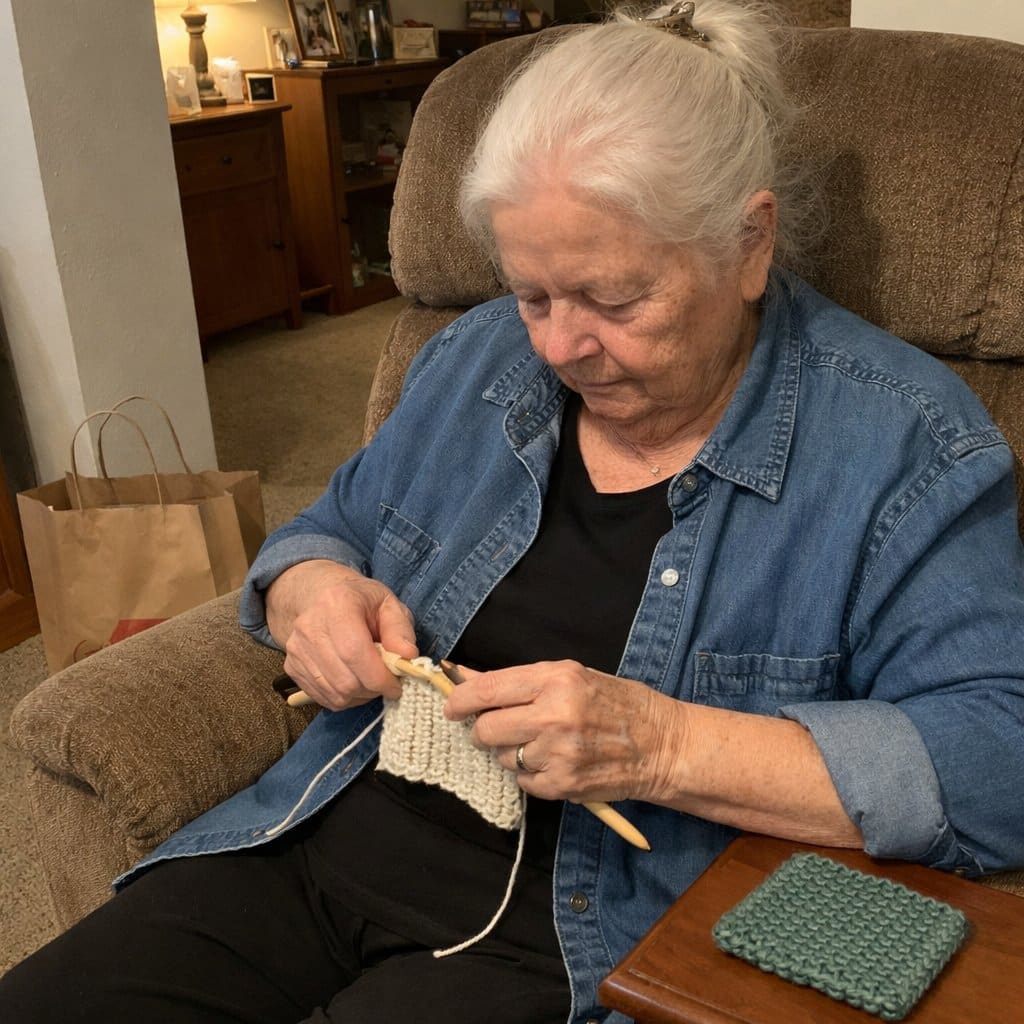
Knitting asks a lot of your hands in a very specific way. You’re maintaining tension in the yarn, controlling two needles simultaneously, and making small precise movements repeatedly — for an hour, sometimes more.
When joints are inflamed, each of those movements carries a cost. The craft that used to be meditative starts requiring concentration just to manage the pain, and the peace of it disappears.
The Weight This Hobby Carries
For many older women, knitting isn’t just a hobby. It’s identity. It’s the blanket made for a grandchild, the sweater finished during a hard winter, the scarf given to someone who needed it. Losing access to it isn’t just losing an activity — it’s losing a way of making and giving that feels irreplaceable.
That loss deserves to be named before we move to solutions. It’s real. And it doesn’t have to be permanent.
Adaptive Knitting Needles Are a Real Thing
Adaptive knitting needles have larger diameter handles, ergonomic grips, and softer materials that cushion the joints during use. The needle still does the same work. The yarn still becomes the same thing. But the physical demand on your hands is significantly reduced.
Some knitters also switch to a larger needle size paired with chunkier yarn, which naturally requires less tension and precision to work with. It’s a change in materials, not in craft.
Adaptive knitting needles designed for arthritis-affected hands make the sustained grip of knitting genuinely possible again — and the same hands can still make the same things for the same people.


Grip Aids Can Stabilize Joints During Use
Some knitters find that finger supports or grip aids — worn during the session — help stabilize the joints that take the most strain. Think of them the way you’d think of a wrist brace during a long project: not because something is broken, but because support makes sustained activity possible.
Arthritis grip aids used during knitting provide joint stability that lets you stay with a project longer without paying for it afterward.


Try one adaptive needle set with a low-stakes project — a dishcloth, a simple rectangle — before deciding the craft is behind you. That’s the only commitment this requires.
Grip Aids — The Category Most People Don’t Know Exists


What Grip Aids Actually Are
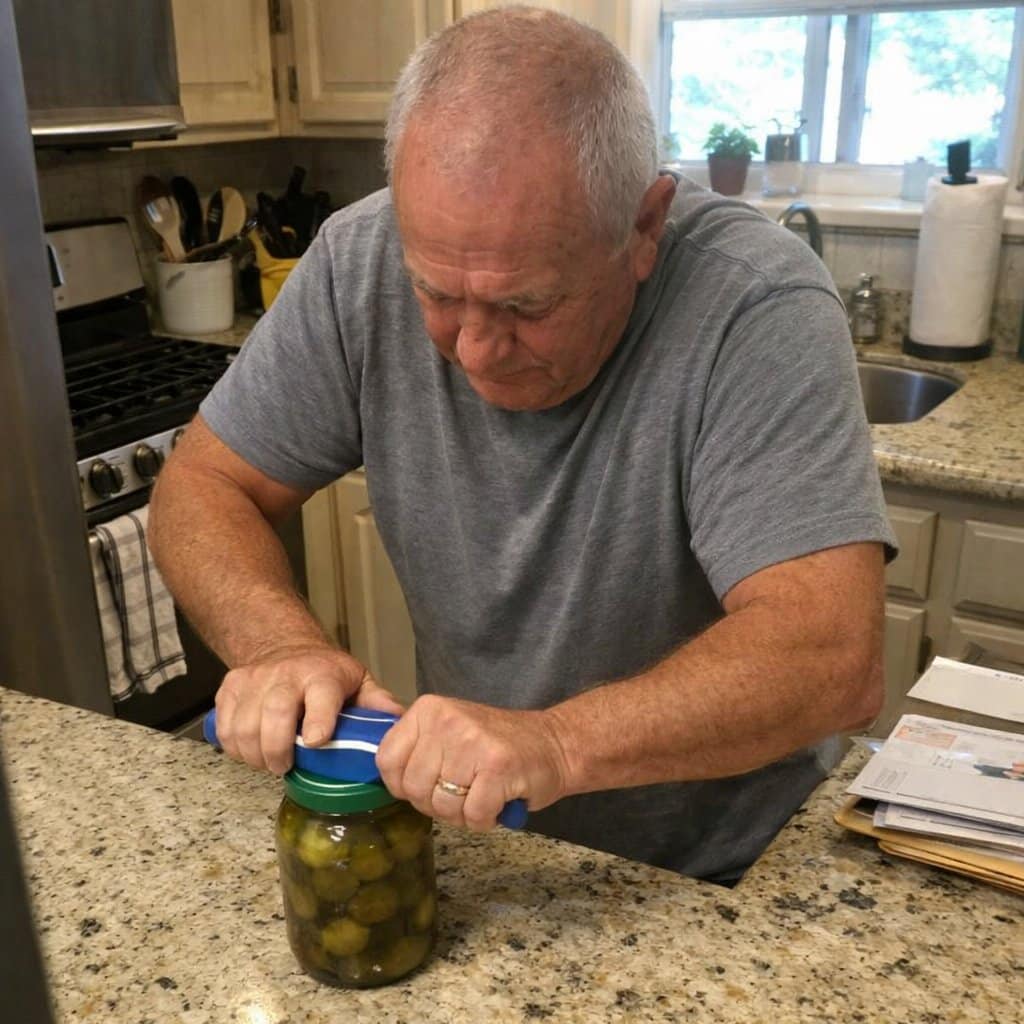
Most people associate grip aids with medical recovery or jar-opening. And while jar openers for arthritic hands are genuinely useful, grip aids as a category goes well beyond the kitchen.
Grip aids include products that build hand strength when hands are doing reasonably well, and products that support and cushion joints during activity when hands need protection. Both categories apply directly to hobby use.
How They Work Across Multiple Hobbies
The same grip aid that helps you pick up a puzzle piece more confidently can help you hold a knitting needle with less strain. The same finger support that makes card-holding less painful works during any fine motor task.
This is a lifestyle maintenance category, not a medical recovery category. The distinction matters, because people who think of grip aids as something for after an injury never reach for them when they’re simply trying to keep doing what they love.
When to Ask for Professional Guidance
An occupational therapist can provide personalized recommendations for adaptive tools based on your specific hand anatomy and the activities you want to keep doing. If you’re finding that multiple hobbies are affected and you’re not sure where to start, that consultation can save a lot of trial and error.
Grip aids are tools — the same way reading glasses are tools. Nobody apologizes for reading glasses, and there’s no reason to frame these differently.
Arthritis grip aids and grip strengthening tools give your hands the support they need to stay in the activities that matter most to you — without requiring you to give those activities up.


For more on keeping your home and daily routines accessible, the fall prevention checklist covers grip and balance considerations that connect directly to daily safety. And if you’re exploring other ways to stay mentally and socially engaged, the guide to best hobbies for seniors covers a wide range of options worth knowing about.
The Hobby Hand Helper: A Quick-Reference Guide to Adaptive Tools for Puzzles, Cards, and Knitting
Discover the exact adaptive tools that let you keep puzzling, playing cards, and knitting without pain—so you can stay at the table doing what you love instead of quietly stepping away.
The Hobby Isn’t Gone
Go back to that puzzle on the edge of the table for a moment. The one you’ve been walking past.
That moment — the one where you sat down and decided not to start — wasn’t the end of the hobby. It was the moment the equipment stopped working. The interest is still there. The patience is still there. What wasn’t there were puzzle pieces your hands could actually manage.
You’ve spent decades learning what works and adjusting when it doesn’t. Adapting your tools is exactly that same skill, applied to the things that bring you joy. It’s not a lesser version of the hobby. It’s the experienced version — the one where you know enough to get out of your own way and use what actually helps.
I’d love to know: which hobby have you been quietly setting aside? Share it in the comments. And if you’re ready to try one thing, just one — whether it’s a large piece puzzle, a card holder, or an adaptive knitting needle — start there. See what comes back.
For caregivers reading this: if there’s a family game night coming up, or a birthday to plan for, the specific product types in each section above are worth a closer look. Sometimes the most meaningful gift isn’t a new activity. It’s the tool that brings the old one back.
You might also find it helpful to explore adaptive kitchen utensils for arthritic hands — the same design thinking that applies to hobby tools applies there too. And for anyone managing both grip challenges and staying socially connected, the guide on large print games for elderly adults is worth bookmarking before the next gathering.
If painting is one of the hobbies you want to keep, a rotating paint brush holder for artists keeps every brush in view so you aren’t digging through a cup.