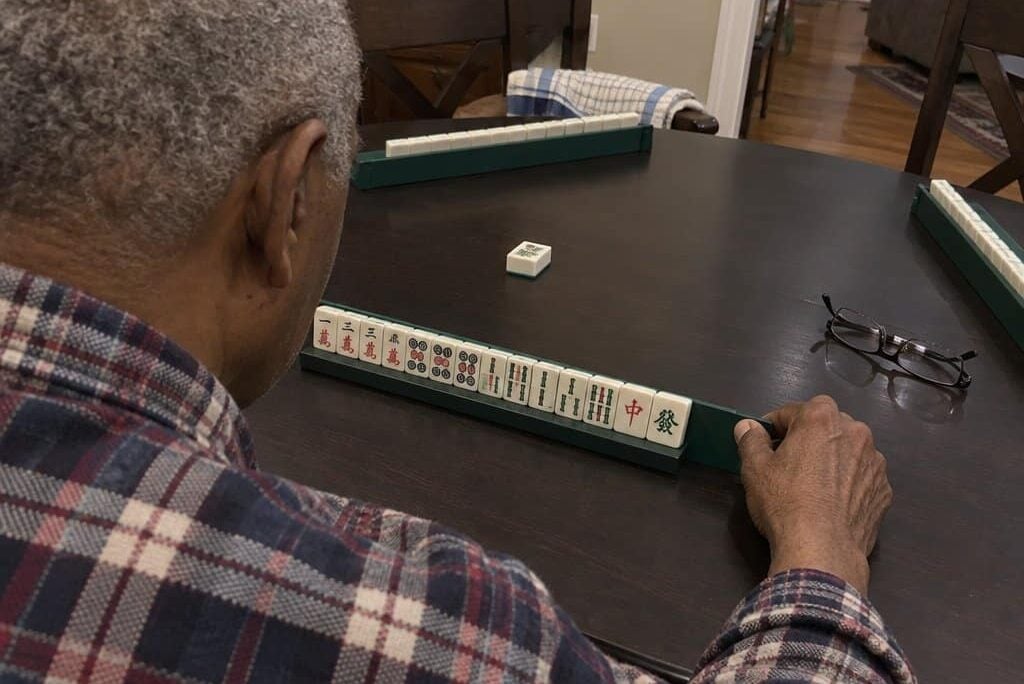
Picture this: you’ve got your group together, the tea is poured, and everyone’s ready to play. You start sorting tiles — and they drift across the table every time someone reaches for the wall. Then a rack tips forward mid-draw. Then the pusher snaps off. Again.
Mahjong is more than a game. For a lot of people, it’s a weekly ritual, a social anchor, a way to stay sharp and connected. When the setup keeps fighting you, it doesn’t just slow things down — it quietly takes the joy out of the whole experience.
Here’s the thing: these problems aren’t bad luck, and they’re not your fault. They have specific causes. Once you know what to look for, fixing them is straightforward. Let’s walk through the five most common mahjong setup frustrations — and exactly what to do about each one.
Mahjong Table Setup Checklist
Download this five-point setup checklist and eliminate the most common mahjong equipment problems—so your next game night starts smoothly and tiles stay exactly where you place them.
Why Your Mahjong Setup Keeps Fighting You
It’s almost always a mismatch, not a mistake
Consumer mahjong equipment varies enormously in quality and design — and most of it isn’t built with a specific tile size, table surface, or playing style in mind. That inconsistency creates predictable friction.
The three main culprits are surface type (smooth tables offer almost no grip for tiles), rack design (lightweight or narrow bases that shift under pressure), and tile size mismatch (American-size tiles are larger than standard sets and need wider, deeper racks to match).
What’s worth noticing is that problems that seem unrelated — tiles sliding and a wobbly rack — often share the same root cause. You’re not doing anything wrong. You’ve just been working with equipment that wasn’t designed for your specific setup.
Problem #1 — Your Tiles Are Sliding All Over the Table


Why smooth surfaces make sorting a nightmare
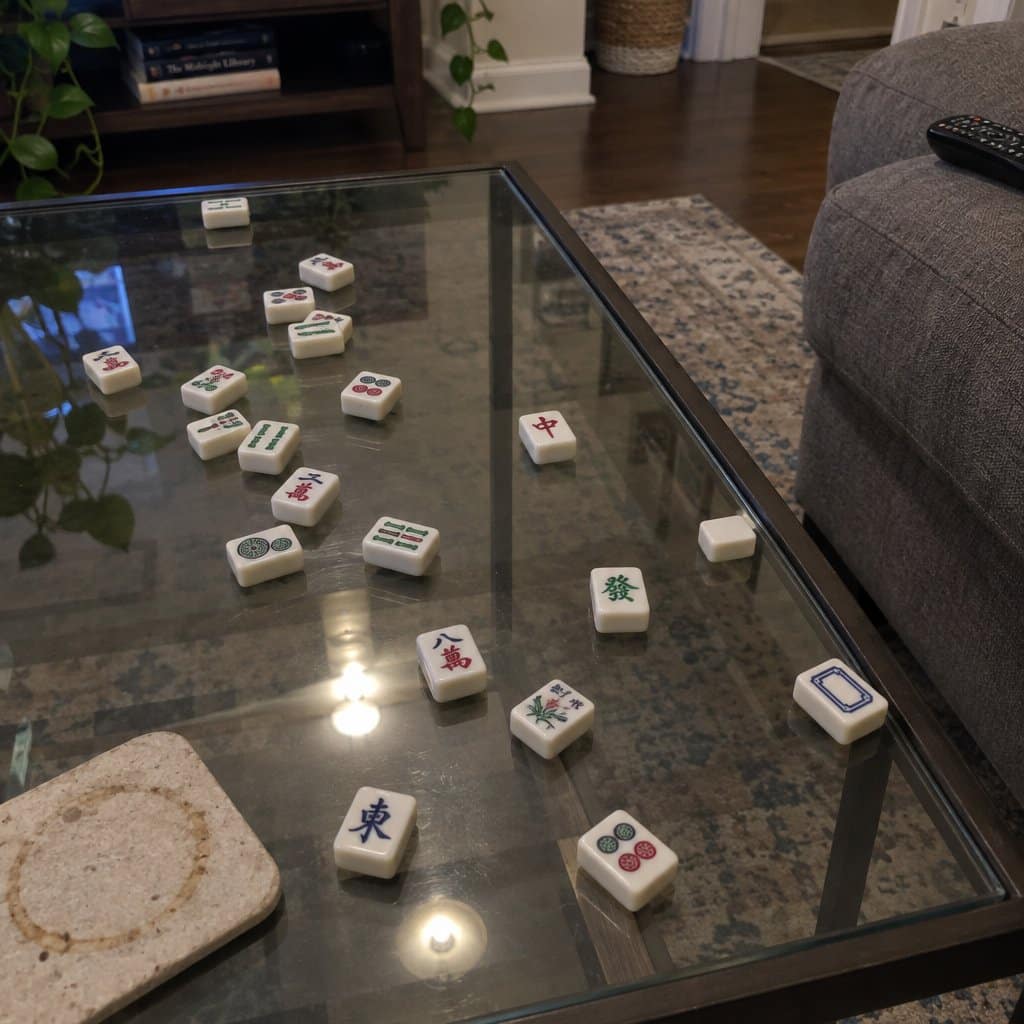
Bare glass, lacquered wood, and laminate tabletops are beautiful — and they’re terrible for mahjong. They offer almost no friction, so tiles drift the moment someone reaches across the table, shifts in their seat, or pushes a discard.
The problem compounds as the game progresses. More tiles in play means more chances for things to shift, and by the middle of a hand, the wall can be creeping toward one player while discards scatter toward another.
The surface solution that changes everything
Contrast that with a game played on a surface that has grip — even a modest amount of resistance makes tiles stay exactly where they’re placed. Sorting becomes calmer. Drawing feels deliberate. The game flows.
This isn’t a tile problem or a player problem. It’s a surface problem, and it’s one of the easiest fixes on this list.
When evaluating a surface solution, look for:
- Grip texture that resists tile movement without being abrasive
- A felt-like resistance that keeps tiles stable under light contact
- Coverage large enough for four players, including wall space and discard areas
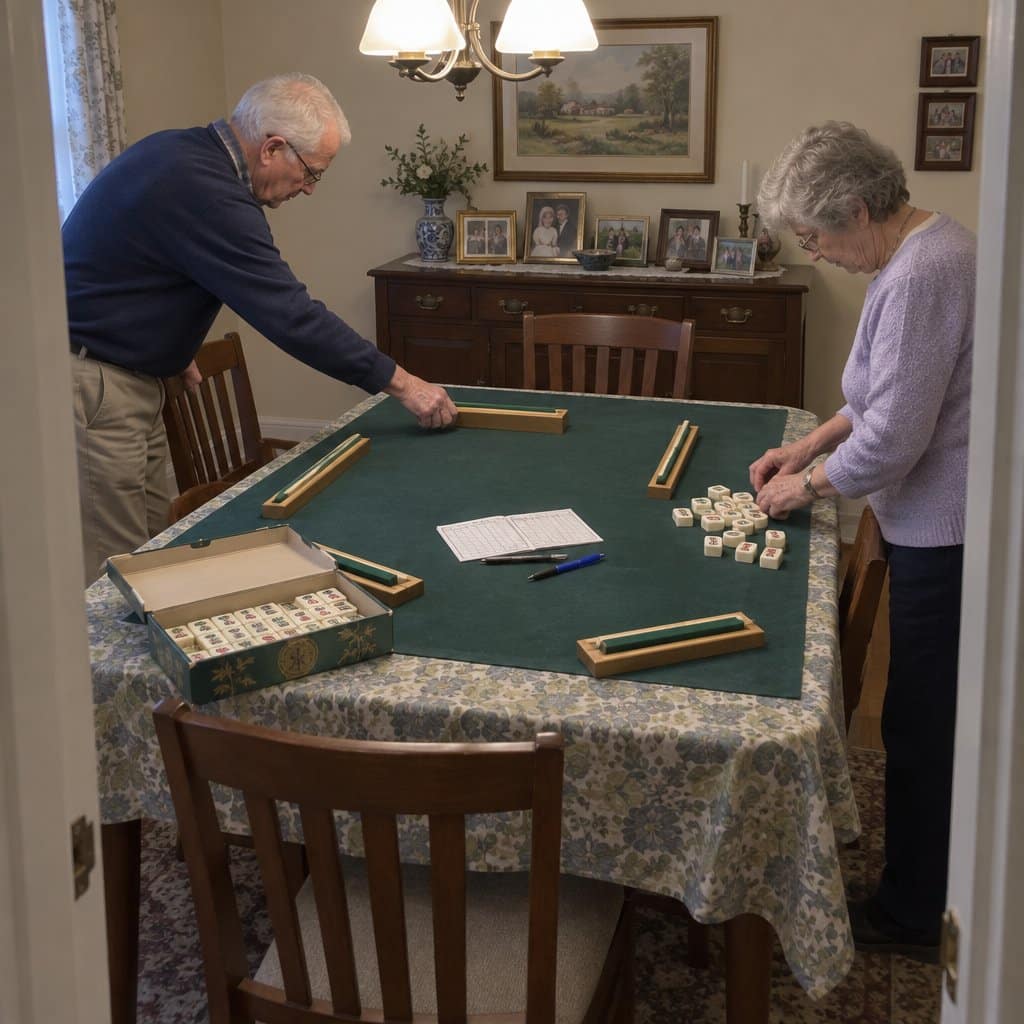
Many players solve this immediately with a dedicated mahjong table cover — it adds grip and defines each player’s space without replacing the table they already have.



Problem #2 — Your Rack Keeps Tipping, Wobbling, or Sliding Toward You

Why lightweight racks can’t hold their ground
A lightweight mahjong tile holder tips forward for a simple reason: when tiles are pushed against the front face, the rack doesn’t have enough base weight or width to resist. The heavier your tiles, the worse this gets — and American-size tiles are significantly heavier than standard sets.
Rack height matters here too. A rack that sits too low creates an awkward viewing angle over a long game, which means players lean in, apply pressure, and the rack moves again.
What separates a stable rack from a frustrating one
Think about the difference between a narrow, featherlight rack that shifts position every few moves — versus a well-weighted rack with a wide base that stays put even when tiles are pushed against it firmly. One disappears into the background of the game. The other becomes a recurring distraction.
A wobbly rack isn’t something to work around. It’s a signal that the rack isn’t matched to your tiles or your table. The right rack should feel invisible during play.
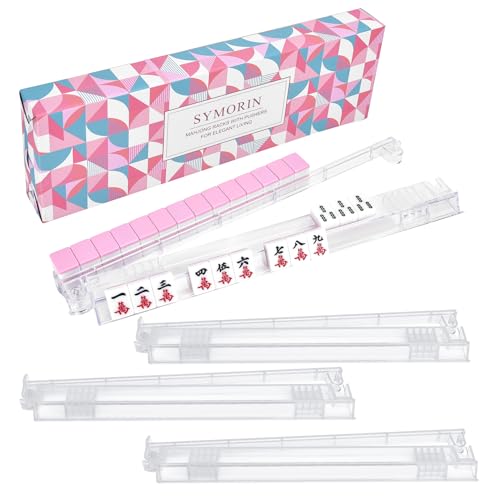
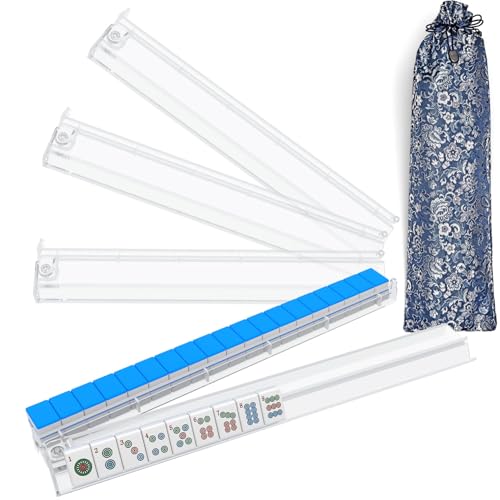
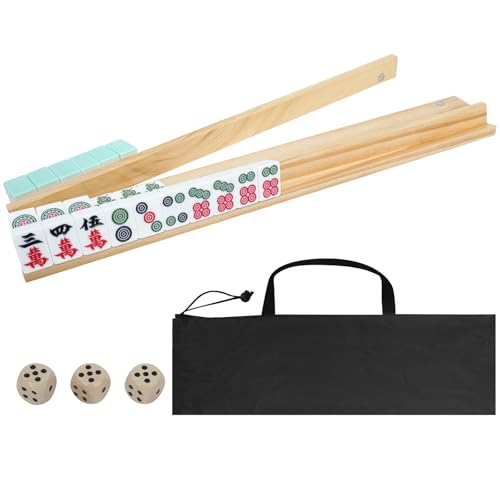
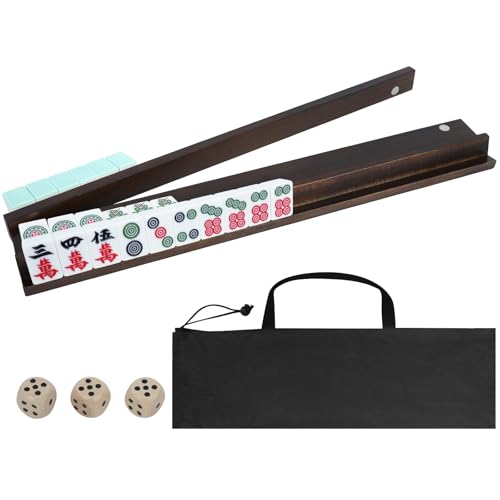
When evaluating mahjong tile racks, look for these four features:
- Base width — wider bases resist tipping; narrow ones don’t
- Rubber or grip feet — these prevent the rack from sliding on the table surface
- Material density — heavier materials provide inherent stability
- Front-facing tile lip depth — deeper lips keep tiles from falling forward when the rack is nudged
Well-designed mahjong tile racks address all four of these — and the difference between a flimsy alternative and a properly constructed rack is noticeable from the first hand.

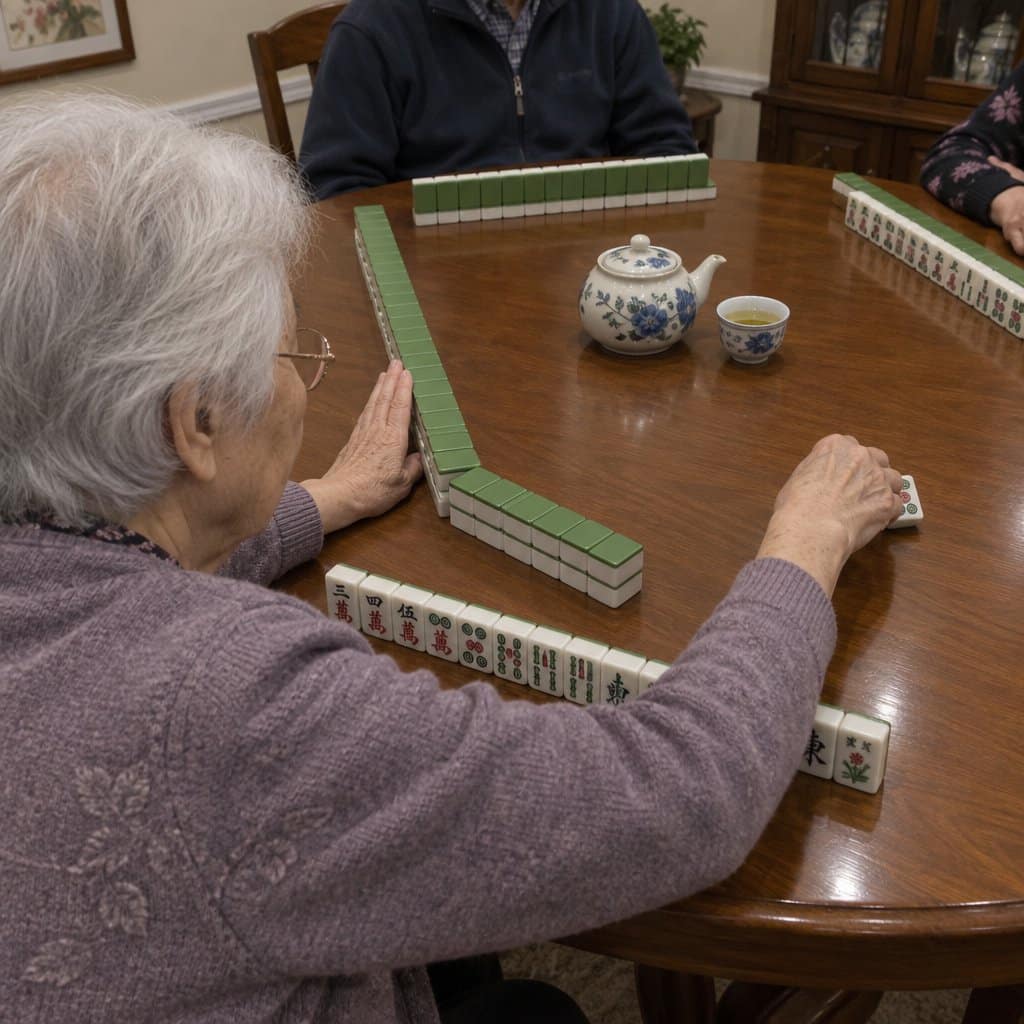
Problem #3 — Your Pusher Keeps Popping Off the Rack
Why this happens more than it should
A pusher that snaps off mid-game is one of the most annoying interruptions in mahjong — especially because it happens at the worst possible moments. And in almost every case, it’s a compatibility problem, not a defective part.
Pushers pop off when the rail width of the rack doesn’t match the channel the pusher was designed to ride. Worn grooves make this worse over time. And when someone is using American-size tiles on a rack built for standard tiles, the whole system is already working against itself.
The compatibility check that prevents the problem
Contrast someone who repeatedly snaps their pusher back into place mid-game versus someone whose pusher glides smoothly from one end of the rack to the other, hand after hand. The difference is almost entirely about whether the pusher and rack were designed to work together.
Here’s a simple compatibility check before your next purchase:
- Measure your tiles — American-size tiles are wider than standard, and your rack needs to match
- Compare your tile width to the rack’s published specifications
- Confirm the pusher’s rail channel width matches the rack’s rail before buying them separately
A popping pusher is almost never a player error. Once you know what to match, the problem disappears entirely. For players who need a replacement without buying a full new rack, mahjong pushers are available as a standalone purchase — just confirm compatibility with your existing rack before ordering.


Ready to discover more practical solutions for staying active, engaged, and comfortable? Subscribe to our newsletter for more tips: Join here
Problem #4 — Your Tiles and Racks Don’t Match Your Game Style


American mahjong has different equipment needs
If you play American mahjong, your tiles are larger than the standard sets most racks are built for. That size difference is small enough to overlook when you’re buying — and significant enough to cause real problems once you’re playing.
Racks designed for standard tiles have shallower front lips and narrower slots. American tiles in those racks sit too high, fall forward more easily, and don’t hold securely under the pusher. It’s not that the rack is broken — it’s just built for a different game.
What actually fits your setup
Imagine playing with undersized racks and American tiles: tiles leaning forward, slots overcrowded, the pusher grinding instead of gliding. Now contrast that with a properly matched setup — everything seats cleanly, the rack holds its full hand comfortably, and play moves naturally from one draw to the next.
Getting the right equipment isn’t about spending more. It’s about knowing what fits your specific game. A well-matched setup costs less in frustration and replacement parts over time than a series of mismatched purchases.
Before buying replacement racks, take one measurement: how wide is your tile? Compare that to the rack’s slot depth specification. If your current rack isn’t sized for your tile set, that’s the answer to most of your setup problems right there.
Some players find it worthwhile to invest in a complete mahjong set — tiles, racks, and pushers designed to work together from the start — rather than mixing and matching components that were never intended to be paired.


Problem #5 — Your Setup Takes Too Long and Feels Like Work
When setup friction quietly discourages play
There’s a less obvious setup problem that doesn’t show up during the game — it shows up before it starts. When getting everything ready feels like a project, spontaneous games stop happening. The equipment sits in a bag, the impulse passes, and the next session gets pushed to next week.
Setup friction matters because mahjong’s real value — the social connection, the mental engagement, the shared ritual — only happens when the game actually gets played. Staying engaged with meaningful hobbies is one of the most important things older adults can do for long-term wellbeing, and the easier a hobby is to start, the more often it happens.
One habit that makes setup effortless
A few small organizational changes can reduce pre-game setup from fifteen minutes to five:
- Store tiles already sorted by suit and honor so the wall builds faster
- Keep racks assembled and stored together rather than disassembled in a bag
- Designate a consistent spot — a shelf, a cabinet, a dedicated basket — so nothing needs to be hunted down before play
A smooth setup isn’t a luxury. It’s what makes the difference between a game that happens regularly and one that keeps getting postponed. Before your next game night, try this: sort your tiles by category when you put them away. That one step alone cuts the next setup time significantly — and it signals to everyone, including yourself, that another game is already halfway ready to go.
Mahjong Table Setup Checklist
Download this five-point setup checklist and eliminate the most common mahjong equipment problems—so your next game night starts smoothly and tiles stay exactly where you place them.
A Table That Works for the Game, Not Against It
Each of these five problems has a specific fix — none of them require significant expense, technical knowledge, or starting over from scratch.
Tiles sliding on a bare table? A surface with grip changes everything. Racks tipping forward? A well-weighted rack with a wide base stays put. Pushers popping off? A compatibility check before purchasing solves it permanently. Tiles and racks that don’t match? One measurement tells you what you actually need. Setup that feels like work? One organizational habit changes the whole rhythm.
The goal is a table that stays put, racks that hold steady, and pushers that glide — so the game itself takes center stage. These games matter. The mental sharpness they support, the social connection they create, the weekly ritual they anchor — all of that is worth protecting with a setup that actually works.
Start with the one problem that bothers you most. Fix that first. In my experience, solving the biggest frustration makes the others feel much more manageable — and sometimes fixes them entirely.
Which of these setup problems sounds most familiar to you? Share your experience in the comments — your fix might be exactly what another player needs to hear. And if you know someone whose mahjong nights keep getting derailed by setup headaches, send this their way. The game is too good to let the equipment get in the way.