
You catch yourself in the bathroom mirror, and there it is: a quarter inch of silver at the part. The salon appointment you keep pushing back is still on your mind.
Have you ever looked at your roots and wondered whether you could actually stop? The gray isn’t the real fear. It’s the grow-out, that stretch of two colors and a hard line that nobody explains.
A going gray transition has more than one route, and some never show a harsh line at all. “Quiet silver,” which means blending gray in instead of covering it, is the look many stylists are talking about this year, so you’re not doing this alone.
The first step you choose changes how the next several months feel. It’s easier than most people expect.

Going Gray Route Cheat Sheet
Download this free cheat sheet to compare three proven routes for going gray and choose the one that matches your timeline, budget, and style—so you can transition with confidence instead of uncertainty.
The Three Ways to Go Gray (and How to Pick One)
There’s no single right way. The best route depends on how much gray you already have, how long your hair is, and how much of the in-between you can live with.
Grow It Out
You stop coloring and let it come in. It’s the cheapest and simplest route, and also the slowest. The root line shows most against dark dyed hair, so this is the one that asks for patience.
Cut Away the Dyed Length
A shorter cut removes the colored hair faster, so less of it is left to grow out. It’s the quickest path to fully gray. The trade-off is that you’re committing to a shorter style, and not everyone wants that.
Blend With Highlights and Lowlights
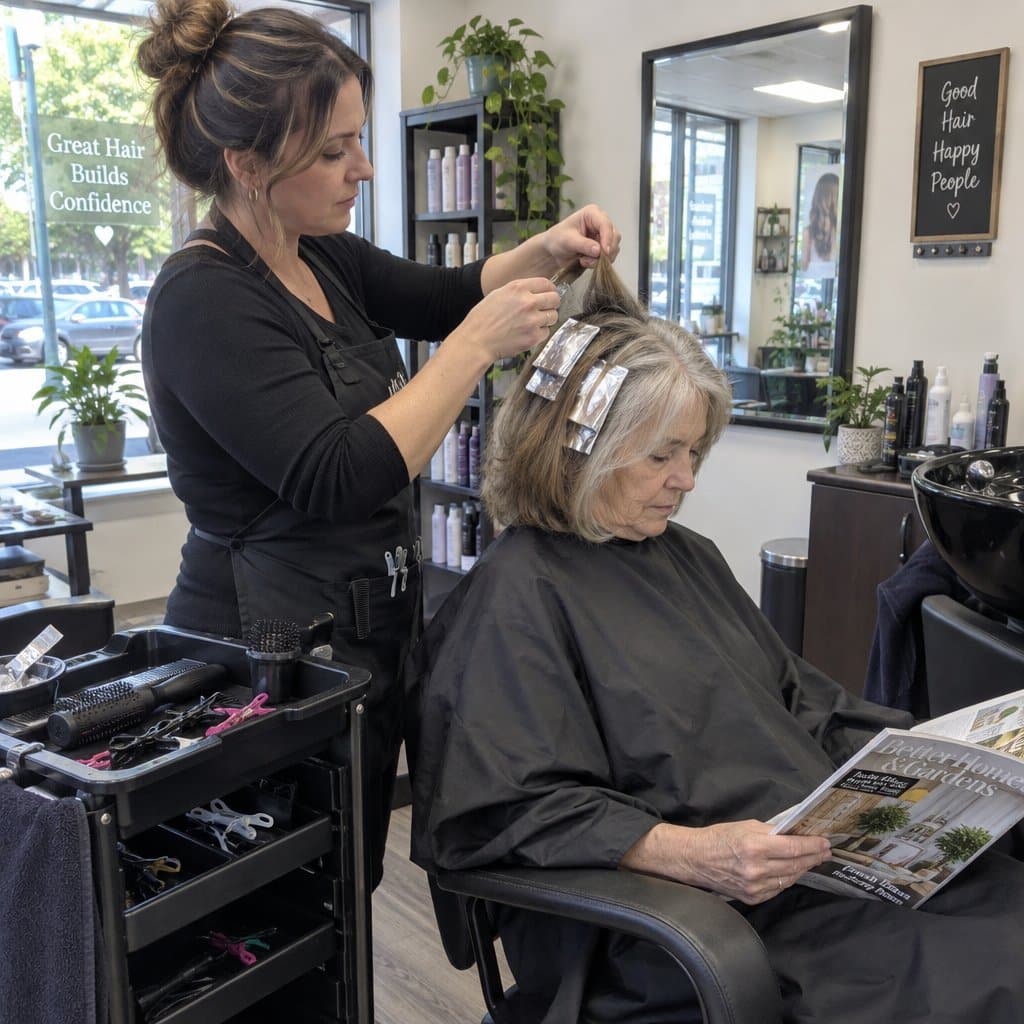
A stylist weaves in tones so the gray and your old color meet softly. There’s no hard line. It takes salon visits and costs more, but the in-between months look the most polished.
Should you cut your hair short to go gray? It’s an option, not a requirement. Plenty of people keep their length and choose blending or patience instead.
Which One Sounds Like You?
- Mostly gray already and happy with short hair: consider the cut.
- Want no visible line and have a salon budget: consider blending.
- Patient and watching costs: grow it out.
You can also combine them, and you can switch if the first one isn’t working. Choosing a route is a style decision, not a surrender. You set the pace.
Pick the route that fits your patience and budget before you read on.

Gray Blending and the “Silver Money Piece”: What to Ask Your Stylist For
Walking in with the right words gets you the result you want. It also helps you avoid sliding back into the six-week color routine.
The Plain-English Version
Gray blending places highlights and lowlights to match your natural gray, so the root line fades instead of showing. Highlights add lighter strands that mimic gray. Lowlights add depth where you want the gray to look softer. Many people end up with a mix of both.
A silver money piece is a set of face-framing strands, usually at the front, lightened to silver. It brightens the face and makes the gray look deliberate. “Quiet silver” is the phrase a stylist may use for the whole effect.
Words to Bring With You
- “I’m growing out my color and want to blend my gray in, not cover it.”
- “Can we plan this so I’m not on a six-week touch-up schedule?”
- “What will the maintenance schedule and total cost be?”
Here’s the downside. Blending often takes more than one visit, and not every stylist is comfortable working with gray. Ask whether they do it regularly. You’re hiring them to carry out your plan, so questions are welcome.
Your screenshot checklist:
- Bring two or three photos of gray styles you like.
- Bring a photo of your hair as it is now.
- Say the words “blend” and “not cover.”
- Ask for a photo-based plan, a visit schedule and a cost estimate.
Between visits, a root touch up powder can soften a visible line for a special occasion, and it washes out. I’d treat it as a bridge, not a requirement. The catch is that it can look flat or powdery if you use too much, so start light.


How Long It Takes and What the In-Between Months Really Look Like
Knowing the timeline takes most of the dread away. The awkward stage has an end date, and you can manage how it looks.
A Rough Timeline
Hair grows about half an inch a month, according to the American Academy of Dermatology, though your own pace and length will change the math. Typical ranges look like this:
- First month or two: a thin line at the part.
- Months three to six: the line is visible and the contrast is strongest.
- Later months: clearly two-toned until the dyed ends are trimmed or blended away.
A short cut can be fully gray in a few months. Blending can look finished from the first appointment. Growing out a long style can take a year or more.
Making the Middle Easier
Change your part. Try a headband or scarf. Keep up regular trims to remove dyed ends. The stage when you feel least sure is often when it looks most intentional to everyone else.
A hair toner, applied at the salon or at home, is one way people take the brassy edge off the blended stage. It adds a subtle tone to neutralize warmth. Follow the directions and patch test first, and know that results vary with your starting color.


Your action step: mark a trim on the calendar every six to eight weeks, and take a photo each month. The photos show progress when the mirror doesn’t.
Caring for New Gray: Why It Turns Yellow or Wiry, and What Helps
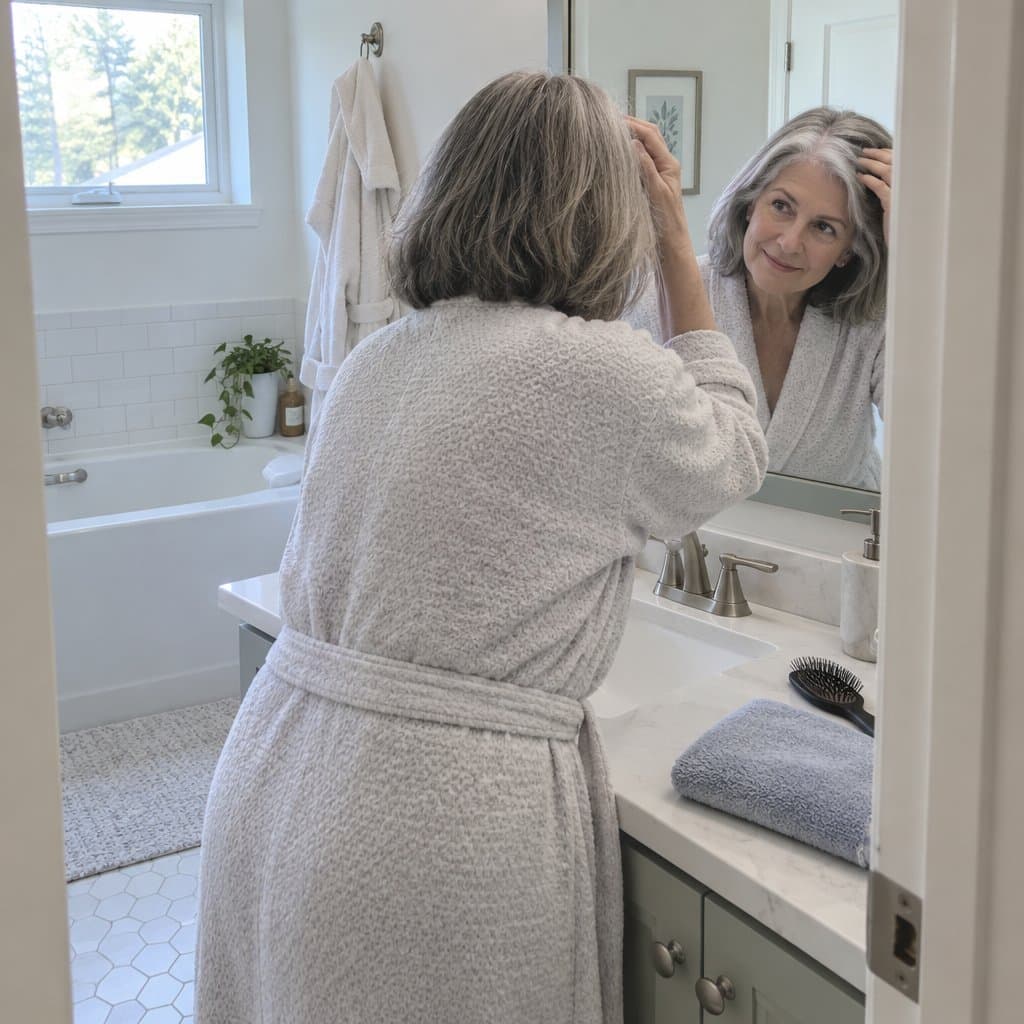
Gray hair isn’t difficult. It just needs a different routine, and the routine is short.
Why Gray Looks Yellow
Gray has no pigment to hide discoloration. Sun, hard water, smoke and some styling products show up more easily. Many people also find gray feels wiry or coarse, because it often seems drier and wants more moisture.
Purple Shampoo
A purple or color-depositing shampoo counters yellow tones. It suits anyone whose silver has turned brassy. Use it about once a week to start, leave it on briefly, then rinse. Too much can leave a dull or lavender cast. My guide to color depositing shampoo for gray hair shows what to look for.

Gray Hair Conditioner
A rich, hydrating conditioner or mask softens the texture. I’d look for words like moisturizing and sulfate-free. The shampoos and conditioners for dry gray hair are a good place to start. For extra shine, there’s also my list of oil-based products for dry gray hair. The downside is that rich formulas can weigh down fine hair, so use less at the roots.


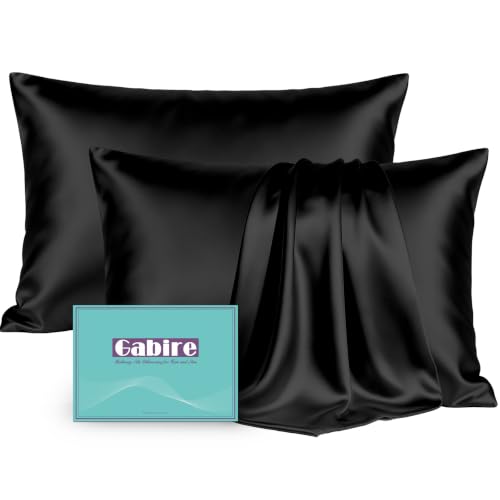
Silk Pillowcase
A silk pillowcase reduces friction overnight, so hair tangles and frizzes less. It suits anyone who wakes up with rough, flyaway hair. The catch is that it needs gentler washing and costs more than cotton.


The Four-Step Routine
- Use purple shampoo about once a week.
- Follow every wash with a moisturizing conditioner.
- Keep heat gentle.
- Protect your hair from the sun with a hat or scarf.
Colors, Glasses and Brows That Flatter Gray (and What to Say When People Comment)
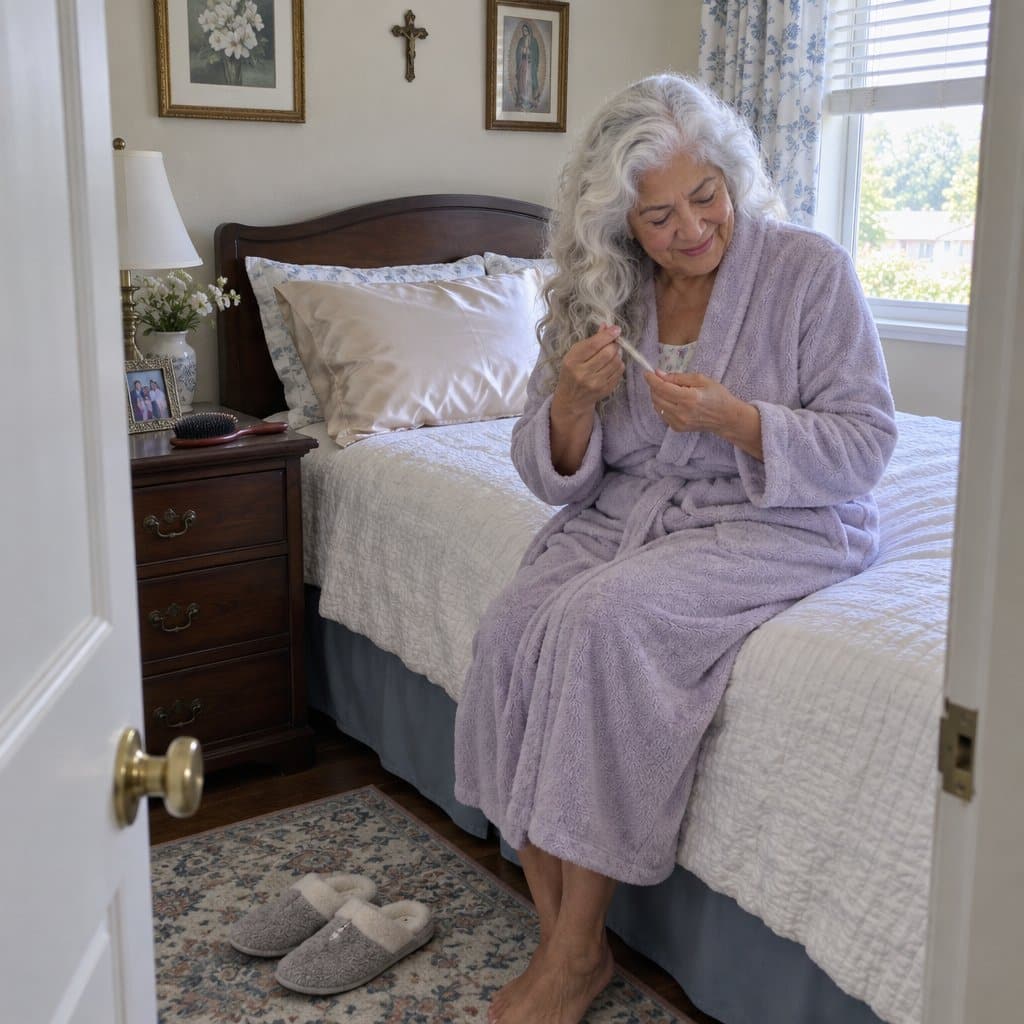
A few small choices make gray look sharp and deliberate. A few ready answers make the comments easier.
Clothing Colors
Many people find clear, cool tones or rich jewel tones make silver stand out, while very washed-out shades can flatten it. Hold fabric up to your face in daylight and see. My post on the best colors to wear with gray hair goes deeper.
Glasses and Brows
Frames with a bit of definition or color can balance silver hair. Very thin or pale frames can disappear, and I cover options in the best glasses for gray hair.
Brows can look sparse or mismatched as your hair lightens. I’d look for an eyebrow pencil in soft taupe or ash with a fine tip and a matte finish, and pick a shade slightly lighter than you think. Too dark looks harsh against silver. There’s more in my guide to eyebrow pencils for gray hair.


When People Comment
Some comments come from affection, and some from surprise. You don’t owe anyone a long explanation. Short and calm works:
- “I’m trying it, and I’m enjoying the change.”
- “I’ve decided to stop coloring, and I’m happy with it.”
Wondering whether you’re ready? Are you tired of the salon schedule? Are you curious about your natural color? Your answer to those questions counts. Nobody else’s opinion does.
Pick one small change, like a new frame, a brow pencil or a color you’ve wanted to wear, and try it alongside your hair.

Going Gray Route Cheat Sheet
Download this free cheat sheet to compare three proven routes for going gray and choose the one that matches your timeline, budget, and style—so you can transition with confidence instead of uncertainty.
Your Hair, Your Decision
You now have three routes, a realistic timeline, a short care routine and a few scripts for the comments. The awkward stage is real, but it’s manageable, and it ends.
Whether you go all the way gray, blend, or keep coloring, you can choose with confidence. This week, take one first step: book a consultation, gather photos for your stylist, or skip the next touch-up and snap a photo of your part.
Which route are you leaning toward, and what’s the biggest worry you still have? Share it in the comments, and tag a friend who has been thinking about making the switch.