You start a 1,000-piece puzzle after breakfast, look up three hours later, and your neck feels like it's been holding a bowling ball. Does that sound familiar?
You're in the right place, and the fix isn't doing fewer puzzles. It comes down to one thing about the angle that most kitchen tables get wrong.
Puzzles are calming, good for the mind, and often the best part of the afternoon. I'll start with the free fixes, then walk you through the boards and tables worth a look.
Puzzle Setup Comfort Cheat Sheet
Get a proven setup checklist that eliminates neck and back pain during puzzles—no expensive equipment needed, just practical fixes you can try in minutes.
Why a Flat Table Is Hard on Your Neck and Back
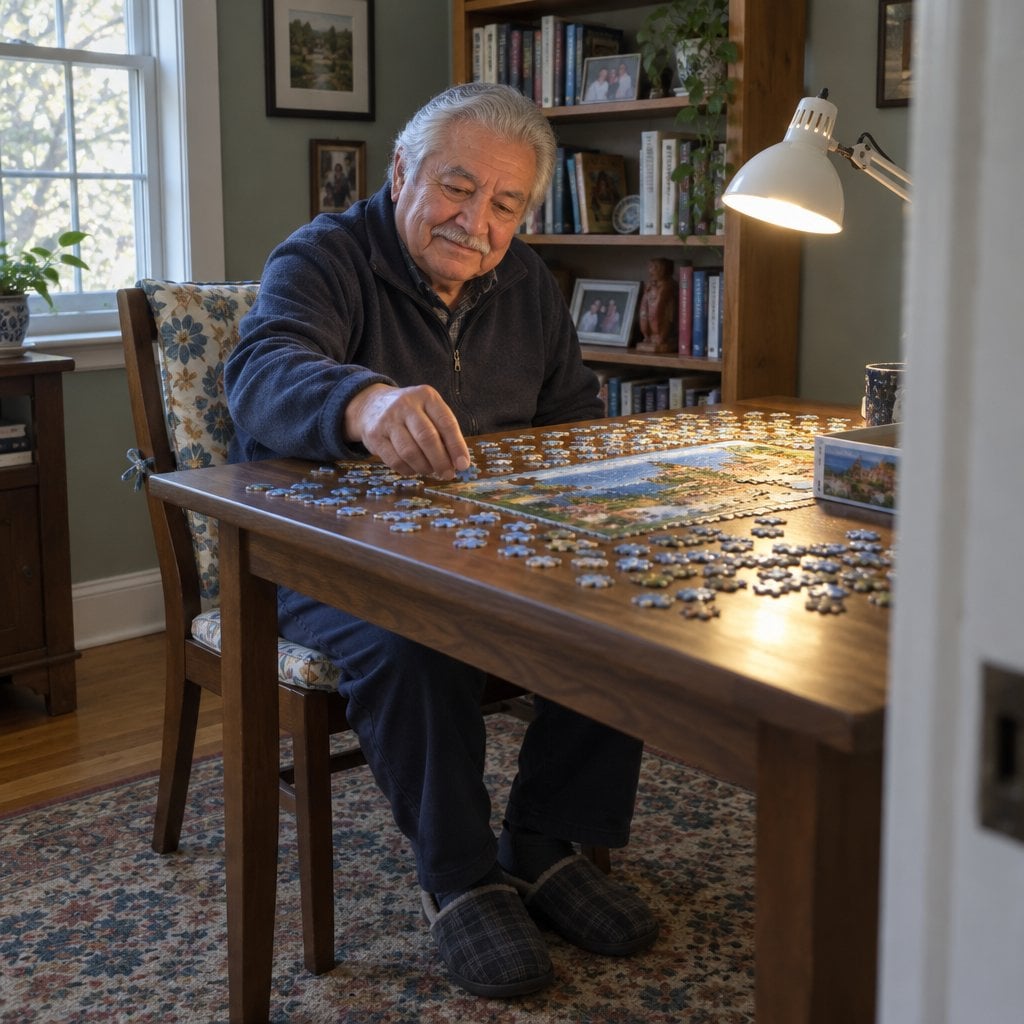
If you've ever looked up after a long puzzle session and felt your neck complain, the table is usually the culprit. A flat surface asks you to tip your head down and round your shoulders, and then hold that position.
Puzzles make it worse. The pieces are small, the focus is close, and you stop noticing time.
An hour or more in one posture puts steady load on the neck and upper back, which is why so many people feel stiff after a long puzzle session.
It's the position held for hours, not the hobby itself.
Picture it: elbows propped on the table, nose a foot from the pieces, one more edge piece to find. Then you finally sit back and everything feels stiff.
That stiffness is useful information about your setup, and setups can be changed.
A Quick Self-Check
Sit down to puzzle as you normally would. After 20 minutes, notice where your head is tilted.
If you're looking steeply down, the angle is the problem to solve. If you have sharp or lingering pain, please mention it to your doctor or a physical therapist.
How a Tilted Surface Changes the Angle
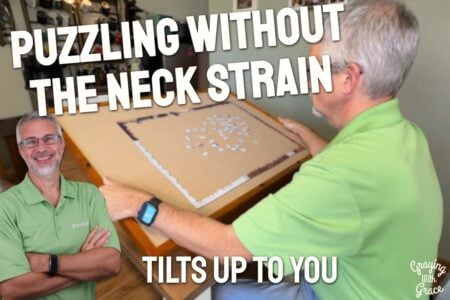
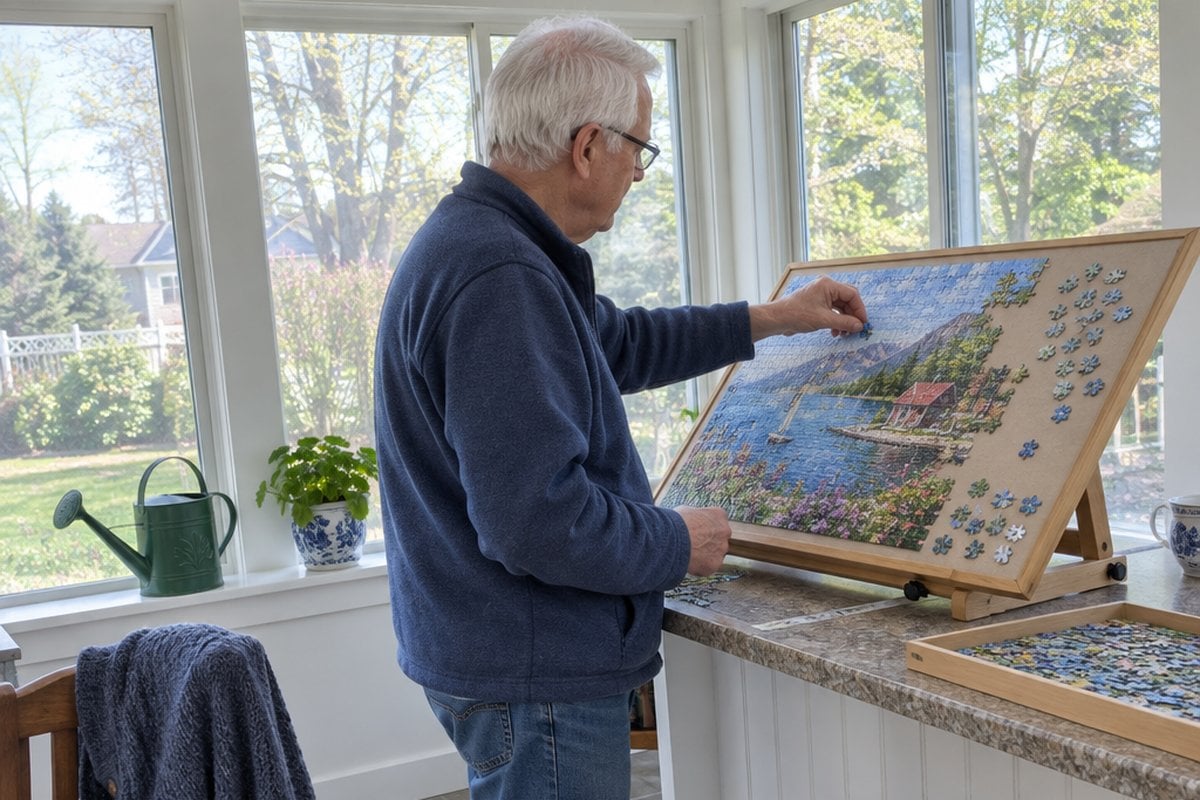
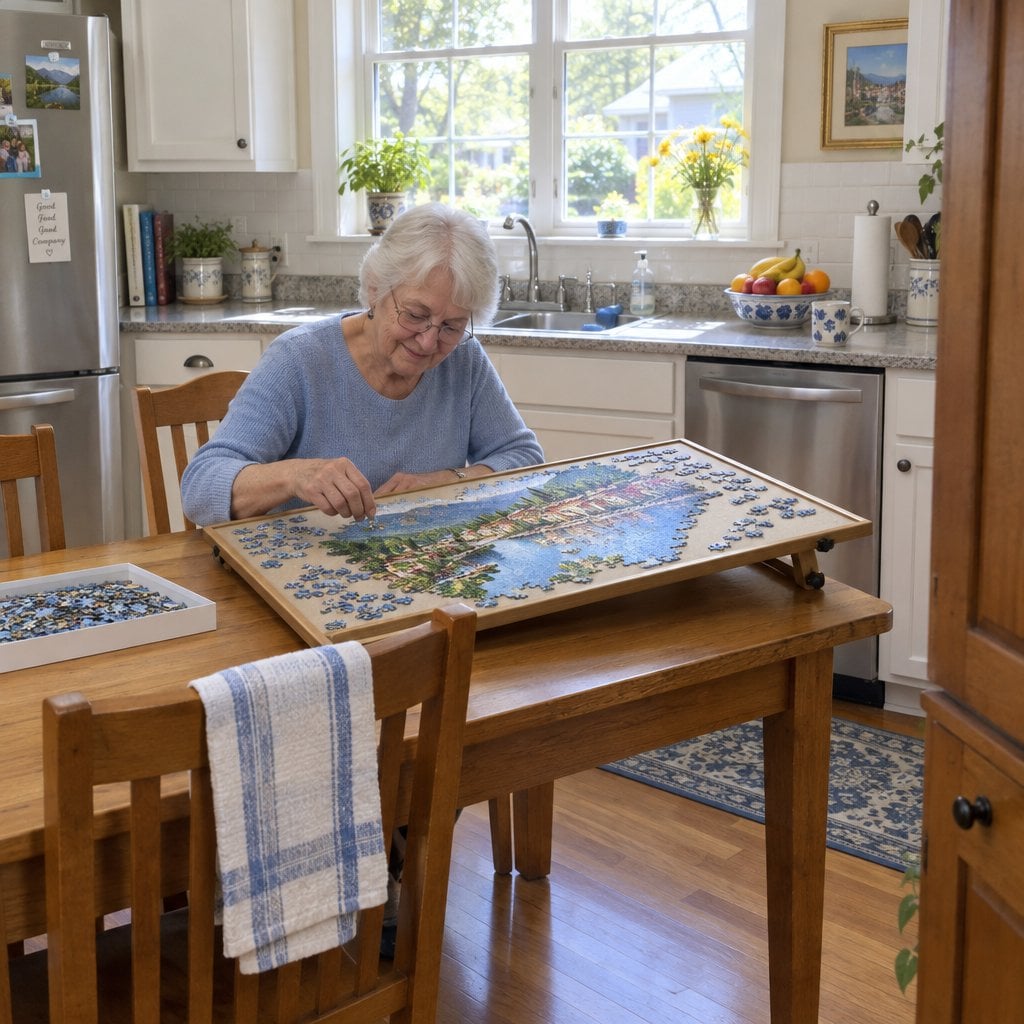
A gentle slope raises the far edge of the puzzle toward you. Your eyes meet the pieces more directly, so your neck doesn't bend as far.
Think of a reading stand or a drafting table. Bring the puzzle up to you instead of bending down to it.
Do Tilted Puzzle Boards Work?
They reduce how far you bend, and that's a real help. The catch is that they won't fix poor seating or poor lighting on their own.
A tilted puzzle surface is also an ergonomic puzzle board only when the rest of your setup cooperates. The next sections cover that.
Three Common Forms
- Tilting puzzle boards: A portable board with an adjustable angle.
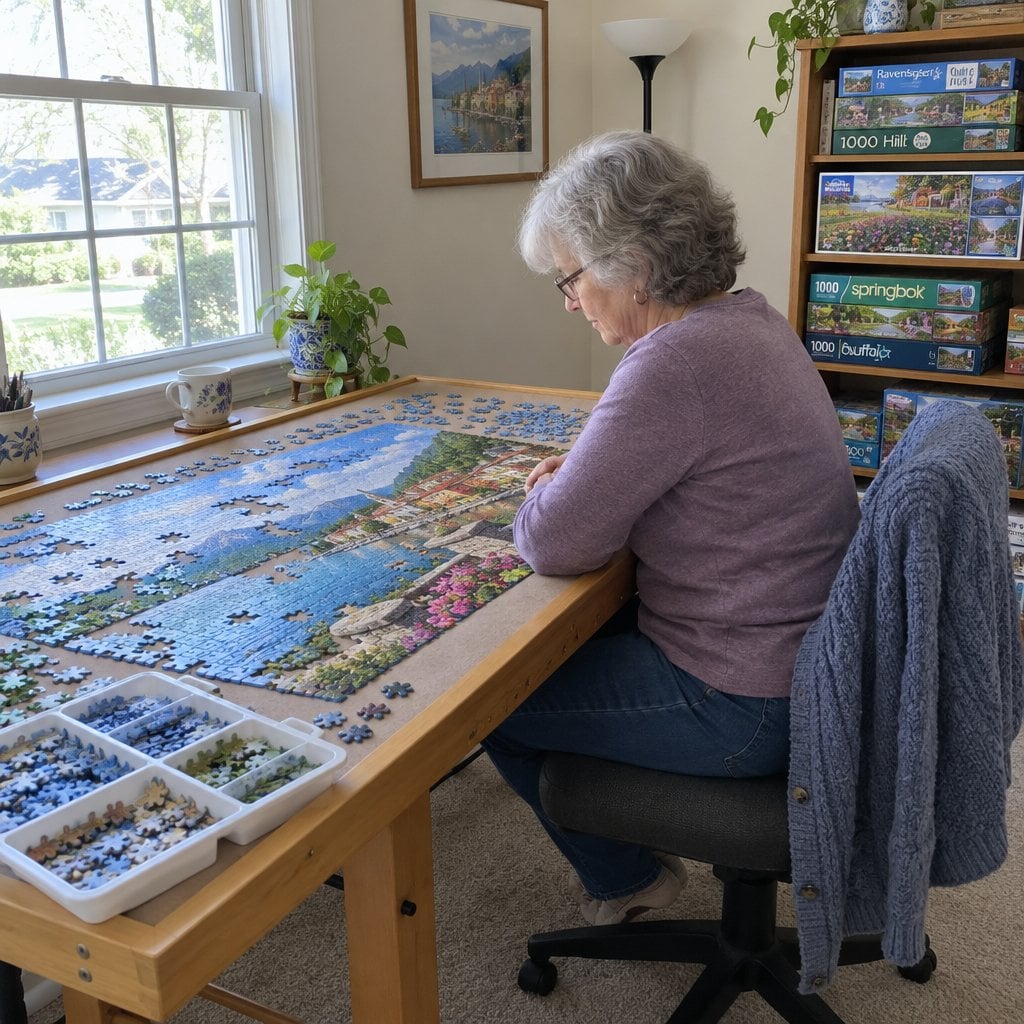
- Puzzle tables with an adjustable top: A dedicated piece of furniture.
- Puzzle easels: Upright surfaces for working at eye level.
The Trade-Off With Sliding
On a steep tilt, pieces can slide. A felt or fabric surface, or a lip around the edge, helps a lot.
Start with a modest angle and adjust until your head can stay mostly level.
A jigsaw puzzle board with a tilt adjustment can sit on a kitchen table and be lifted off when you need the table back. Some boards are big and heavy, though, so check the size and weight first if you have to clear the table every evening.
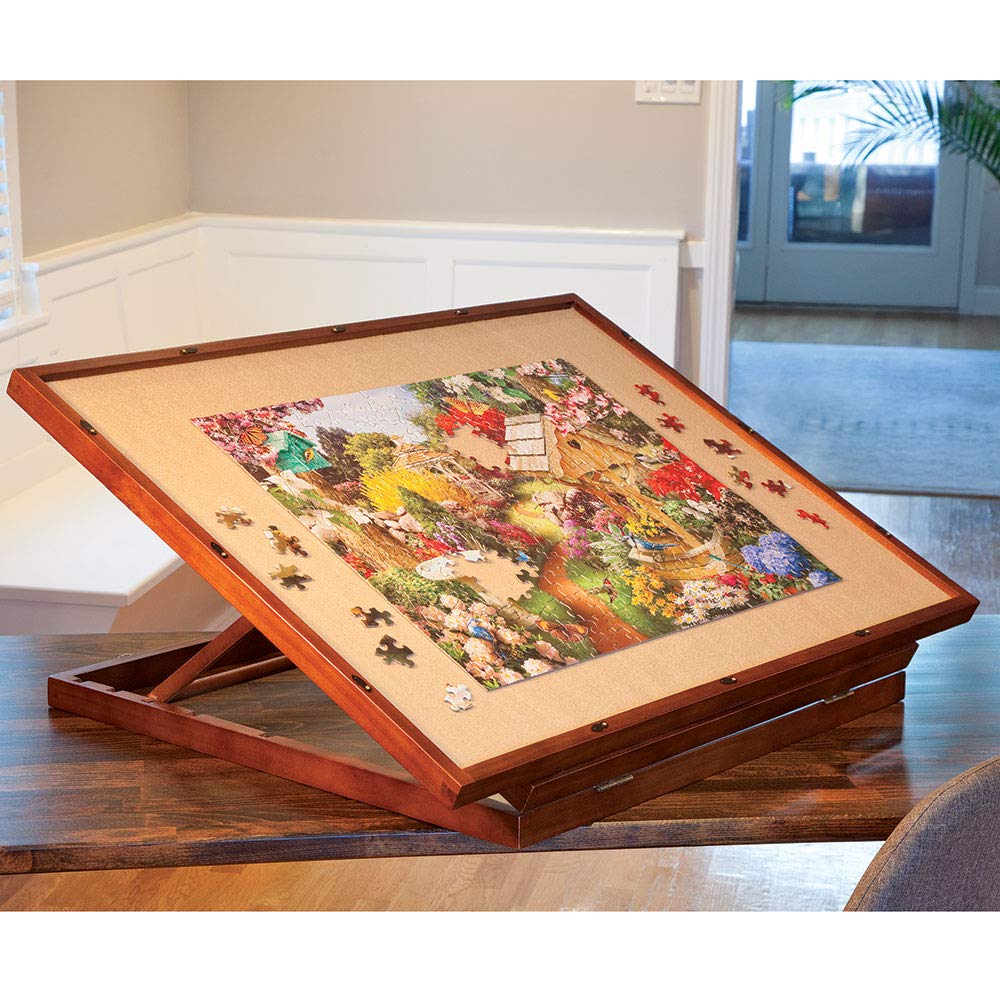

The downside is that portable boards take up shelf space when stored, and some models need a stable table underneath.
Get the Height and Seating Right


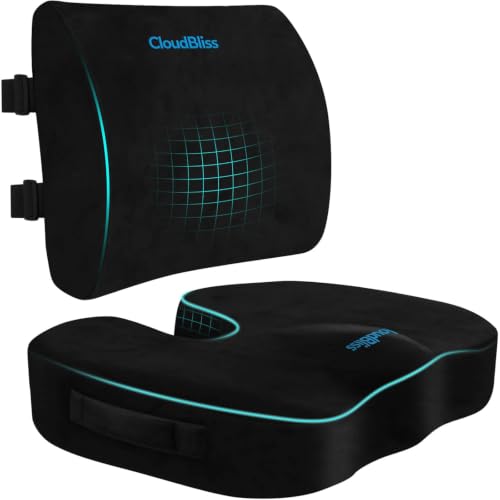


Even a tilted surface won't help if the table and chair aren't working together. Small adjustments beat expensive equipment, and they make any board work better.
A One-Minute Check
- Shoulders down: They should be relaxed, not hiked up.
- Elbows bent comfortably: Your forearms rest on the surface without a long reach.
- Feet flat: On the floor or on a footrest.
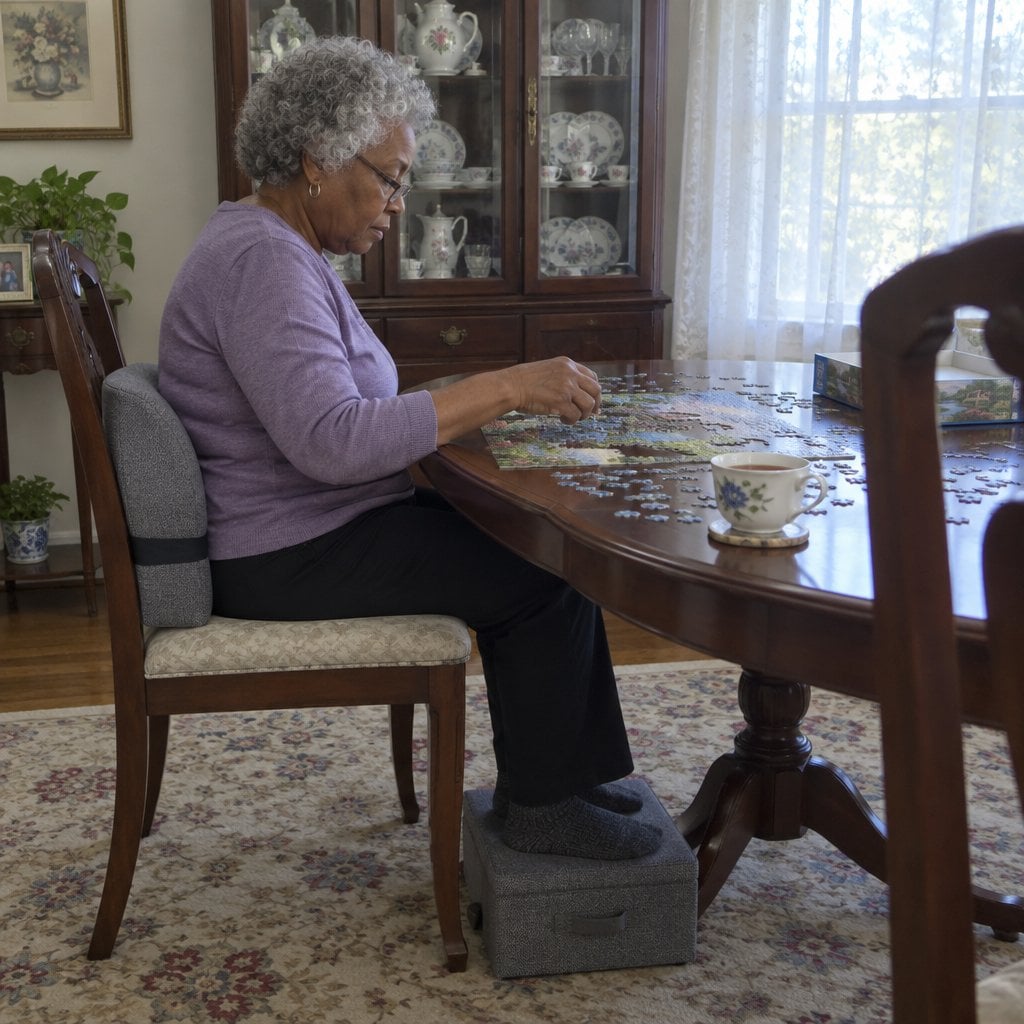
Here's the contrast I see often. A kitchen chair with no back support and a table that's too high pulls you forward all afternoon. The same chair with a firm cushion, a footrest and a scoot closer to the table feels like a different seat.
Free and Low-Cost Fixes
I'd start with the free fixes first: a firm cushion behind your lower back, a sturdy box as a footrest, and sitting closer. If you decide a footrest is worth buying, here's a look at an ergonomic footrest. If your chair is the weak link, this guide to good chairs for long sitting explains what to look for.
If sitting gets uncomfortable, try a standing option. A counter-height surface with an easel or board lets you stand for a stretch, then sit again.
For smaller puzzles from an armchair or couch, an adjustable lap desk gives you a tilted, portable surface. It's handy when you want a change of scenery.
The limit is size. A lap desk suits smaller puzzles, not a full 1,000-piece spread.
Light, Sorting, and Small Helpers That Cut Strain
Poor light makes you lean in to see piece edges and color differences. Better light means less squinting and less bending.
Best Lighting for Jigsaw Puzzles
- Light from the side: Place a lamp so it doesn't cast your own shadow over the pieces.
- Daylight-style bulbs: They make similar colors easier to tell apart.
- Watch the glare: A glossy surface or box lid can bounce light into your eyes.
A clip-on or desk puzzle light can do the job if your room lamp doesn't reach. This guide to setting up a screen corner covers lamp placement and glare in more detail, and the same ideas apply to a puzzle table.
Sort Before You Start
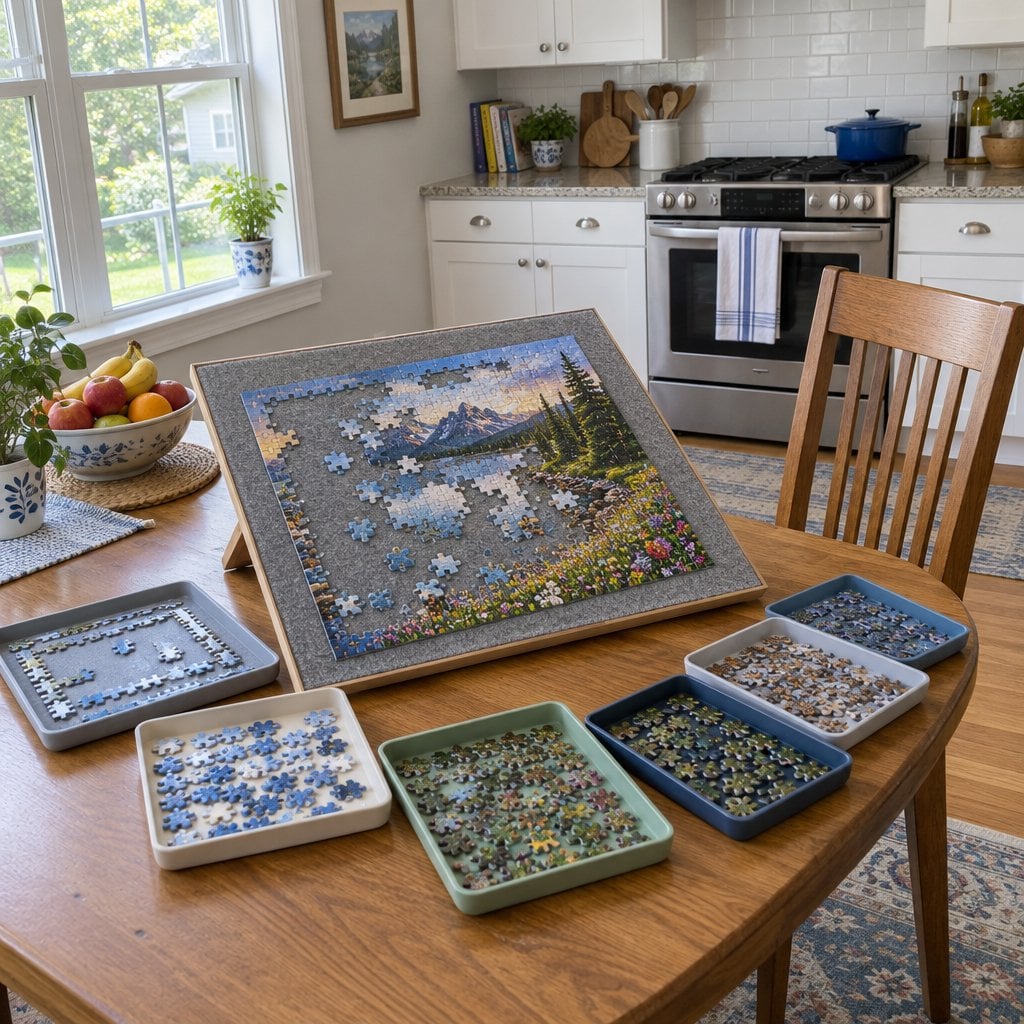
Picture a table with pieces scattered everywhere, so you reach and bend all session. Now picture sorted trays within arm's length.
Puzzle sorting trays keep edge pieces and color groups organized and within easy reach. Many of them stack for storage.


The downside is that trays take extra table space, which matters on a smaller tilted board.
A puzzle mat or felt surface also keeps pieces from sliding and makes the whole setup easier to move. If small pieces are hard on your hands, this piece on grip strength and hobbies has adaptive ideas.
You don't need to overhaul everything. Move your lamp to the side and sort into trays before your next puzzle.
How to Choose the Right Setup for You
The best setup matches your puzzle size, your space, and how you like to work. There's no single right answer. The right setup is the one you'll actually use.
Match the Board to the Puzzle
Wondering what size puzzle board you need? Check the board's listed puzzle size against the finished dimensions printed on the puzzle box. That's the way to pick a puzzle board for 1000 piece puzzles without guessing.
If you'd like fewer pieces on a smaller surface, large piece jigsaw puzzles are worth a look.
Portable Board or Dedicated Table?
Imagine a small apartment where everything has to slide under a bed. A portable board makes sense there. Now imagine a spare room where a puzzle can stay out for weeks. A dedicated table is a better fit.
A puzzle table or a tabletop puzzle easel suits readers who want a dedicated spot or prefer to work upright. A table needs permanent space and costs more, and an easel suits smaller puzzles better.


If you're thinking about a whole room, these hobby room setups may give you ideas.
Storage and Transport Tips
- Slide a flat board or a sheet of sturdy cardboard under an unfinished puzzle to move it.
- Cover the puzzle with a second board or a cloth before carrying it.
- Keep leftover pieces in a labeled tray or bag.
Budget and Real Limits
A board costs far less than a dedicated table, and a lamp or cushion costs almost nothing. Still, tilted boards add a little cost and need storage space. They won't suit someone who prefers a perfectly flat puzzle or has very limited space.
Before you buy, write down your usual puzzle size, your available space, and where you'll put it away. Then match the board to that list.
Puzzle Setup Comfort Cheat Sheet
Get a proven setup checklist that eliminates neck and back pain during puzzles—no expensive equipment needed, just practical fixes you can try in minutes.
Your Next Puzzle Can Feel Good
A sore neck doesn't mean the end of puzzling. A tilted surface, a comfortable seat, better light and a few small helpers can make hours at the puzzle feel good again.
Pick one change to try this week: move the lamp, add a cushion, or tilt the surface a little. Small steps are enough to start. If you like keeping your mind busy in other ways, crosswords and Sudoku pair nicely with puzzle time.
What's your favorite puzzle, and what's the one thing that would make your spot more comfortable? Share it in the comments, and tag a friend who's always up late finishing a puzzle.