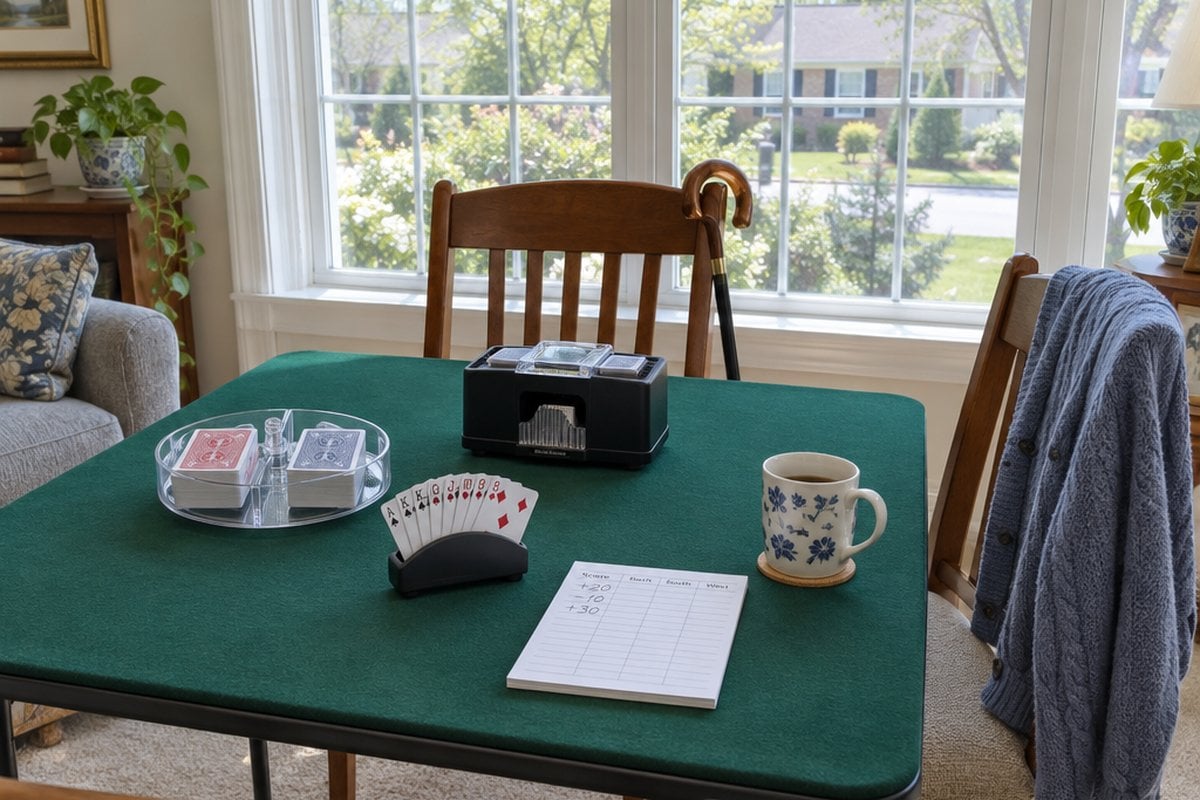
The deck comes out, the cards slip, and a few land on the floor. Someone says, “Let’s just skip it tonight,” and the cards go back in the drawer.
If you can’t shuffle cards with arthritis, or you’re searching for how to keep playing cards with sore hands, you’re in the right place. Most people hope one gadget will fix everything, but it rarely does.
So which part makes you put the game away? Let’s find out, then match each trouble to a fix, including what it won’t solve.
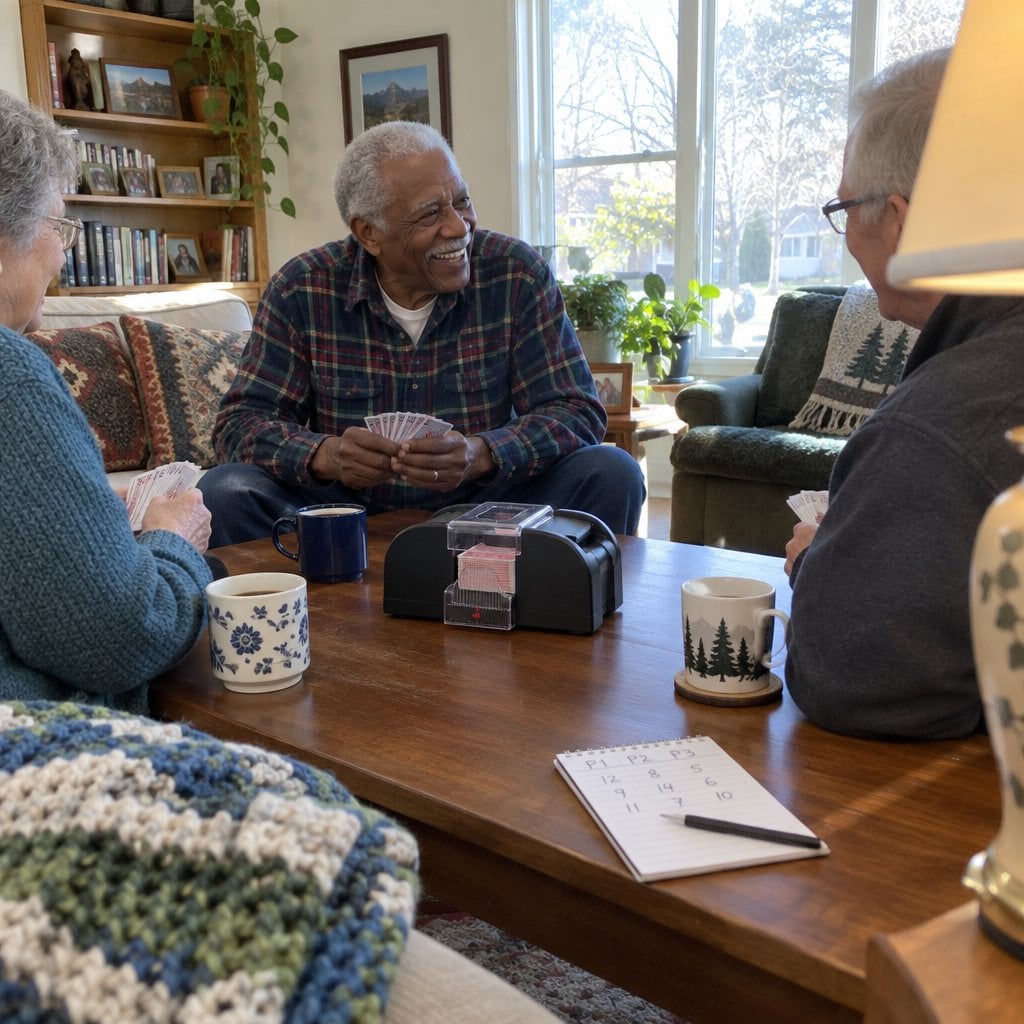
Card Game Hand Trouble Cheat Sheet
Discover the specific gadget or solution that solves your hand trouble at the card table—no more guessing, no more buying fixes that don’t work, just the right tool for your exact problem.
Which Part of the Game Is Hard for Your Hands?
Think about what your hand has to do, then match the fix to that task.
- Pinch and riffle: you want a shuffler.
- Grip and fan out cards for an hour: you want a holder.
- Pick up and place small pieces on a surface that moves: you want a different game design, magnetic or curved.
If you’re buying for a parent, watch which part they avoid. That tells you which section to read.
These are games for seniors with limited hand mobility, and the right match matters more than the price. Every fix costs money or table space. The payoff is playing without asking anyone to deal for you.
One plain note: if you can’t press a button or hold even a lightweight tray, nothing here will help, and a playing partner or helper is the real fix.
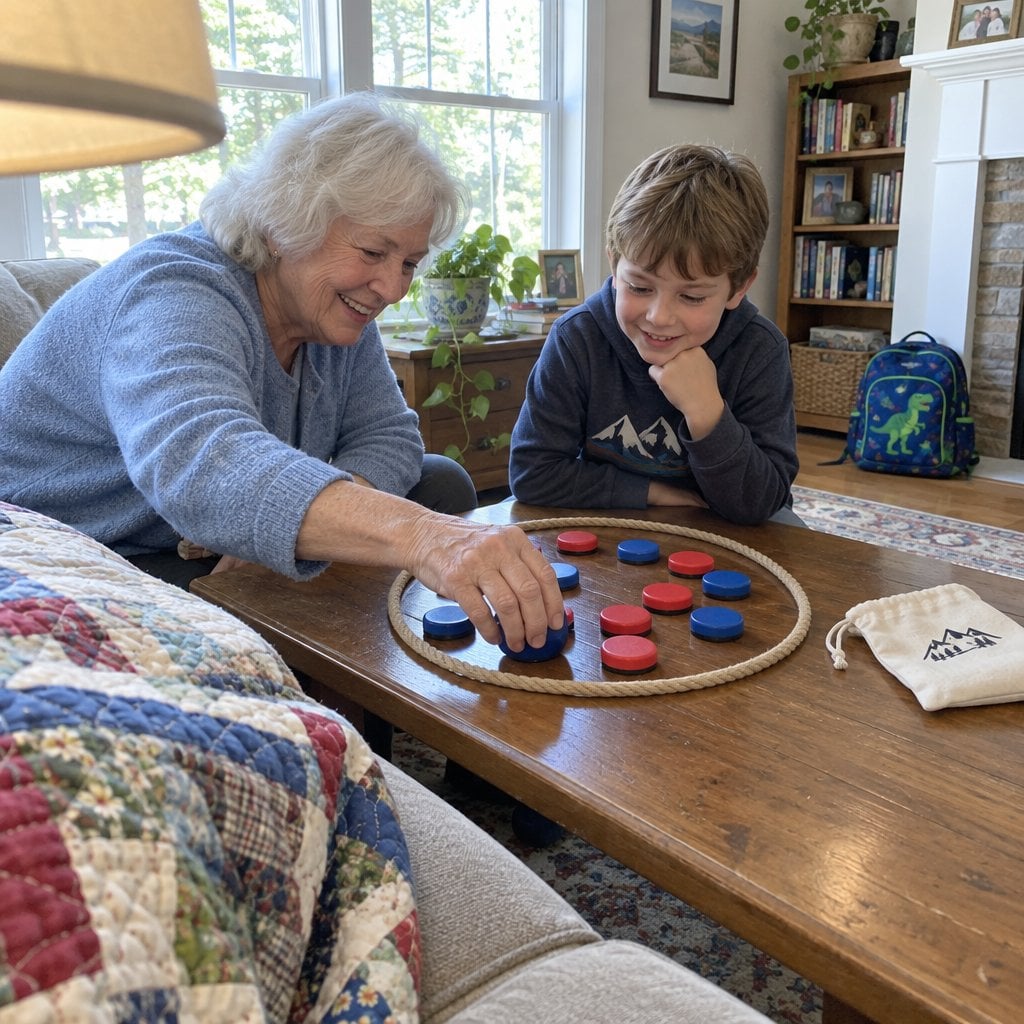
Automatic Card Shufflers for Sore, Stiff Hands
Card shufflers for stiff hands do the riffle for you. They suit anyone who can rest a finger or press a button, and they shine for shuffle-heavy games like canasta or rummy.


ShuffleBox S1: Press Auto and Go
I filmed a demo of the ShuffleBox S1. On auto it shuffled a single deck in about two seconds, then stopped by itself, and I ran a double deck through in a few seconds. Put half the cards on each side and press Auto. Manual mode is for partial decks or more control.
A pin keeps the stack even, and a window shows the shuffle. A wing lifts up for jumbo cards, and a double deck of UNO cards nearly fills the space.
It’s cordless, with a 2000 mAh battery that charges over USB-C in about 1.5 to 2 hours and lasts several games. You may need your own USB charging box. At about 75 decibels it’s quieter than a vacuum or blender, so you can still talk. It’s compact enough for a backpack or suitcase.
I’d also say its alternating shuffle is fairer than a human’s, close to one-to-one. It suits arthritis, hand fatigue or limited hand mobility. More detail is in my ShuffleBox S1 review.
Lotus: Rest Any Finger on the Sensor
Lotus sent me the samples, and I use an affiliate link. In the box are a fold-out case, a deck of cards and a 9-volt battery. Pull a tab to activate the battery. The battery door is easy to open.
There are no buttons. You drop the whole deck in the middle, and resting any finger, even a pinky or knuckle, on a small touch sensor starts it. A second sensor detects one deck or two.
In my hands, a used Phase 10 deck, 10 to 15 years old, shuffled fine in 4.16 seconds. Three passes took about 25 seconds including restacking. Seven passes gets one deck near random, and you still pick up the two piles and restack between passes.
It’s quiet enough to talk over. It works with poker-size decks like Bicycle cards and with UNO. Super slick cards may slip. Sleeved cards, tarot and giant UNO cards don’t fit the opening, which is about 2.5 by 3.5 inches.
It weighs about 279 grams, just under 10 ounces, and folds shut with the cards inside. It’s rated for 500-plus shuffles, roughly 160 to 170 hands at three passes each. It suits arthritis or sore hands and makes a good gift. For a closer look, read my Lotus V2 review for sore hands and canasta nights.
USB-C Rechargeable or 9V Battery?
The ShuffleBox has no cord in use but needs a charge, so it fits you if you’ll remember to plug it in. Lotus has nothing to charge, just a replaceable battery. It still needs that restack between passes, which asks a little more of your hands than the ShuffleBox’s single run.
What Shufflers Won’t Fix
- They cost more than a deck of cards.
- They need batteries or charging, make some noise, and take up some storage space.
- They can jam on bent, sticky or worn cards, so use fairly new standard-size cards. My used Phase 10 deck is not a guarantee for every worn deck.
- Check how many decks it takes, and whether it handles jumbo or sleeved cards, before you buy.
- They don’t help if you can’t rest a finger on a sensor or press a button.
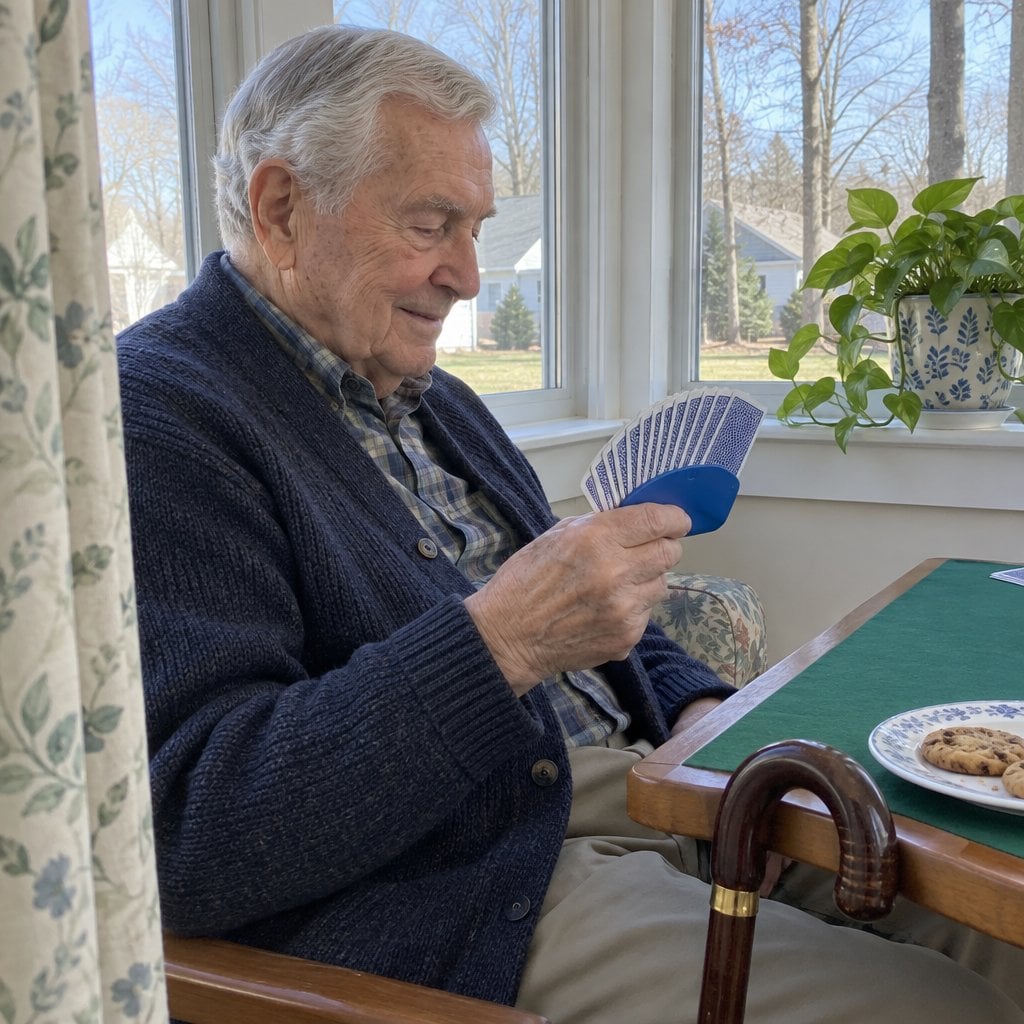
Card Holders and Rotating Trays for a Weak Grip
If you can’t hold playing cards with arthritis, a hand-held fan holder takes the weight off your fingers. A rotating tray does a different job: it brings the draw and discard piles to you.
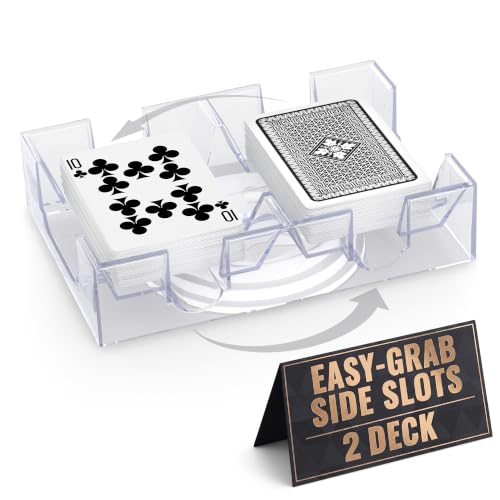

My filmed demo was of the VIKROM Playing Cards Holder Rotating 360°, a clear plastic rotating tray. It spins a full 360 degrees smoothly and holds two full decks, with two slots and a divider. It’s well made with no flex, and just over 7 by 5 inches, about like a paperback book.
It held standard decks and UNO DOS cards, poker or bridge size. Two canasta decks fit easily for draw and discard piles. Rubber feet keep it from sliding when spun, and it arrives fully assembled.
You can slide off the top card, and indents let you reach the last card from underneath. It saves reaching across the table and keeps piles in place, which suits arthritis, stiff joints or limited dexterity. I wrote it up in my VIKROM review.
Here’s what it won’t fix:
- It only helps with holding and reaching, not shuffling or dealing.
- It takes table space and needs a clear spot and a steady table.
- With very limited grip, you may still need help sliding cards in and out.
A holder and a shuffler solve different problems. Plenty of players end up wanting both.
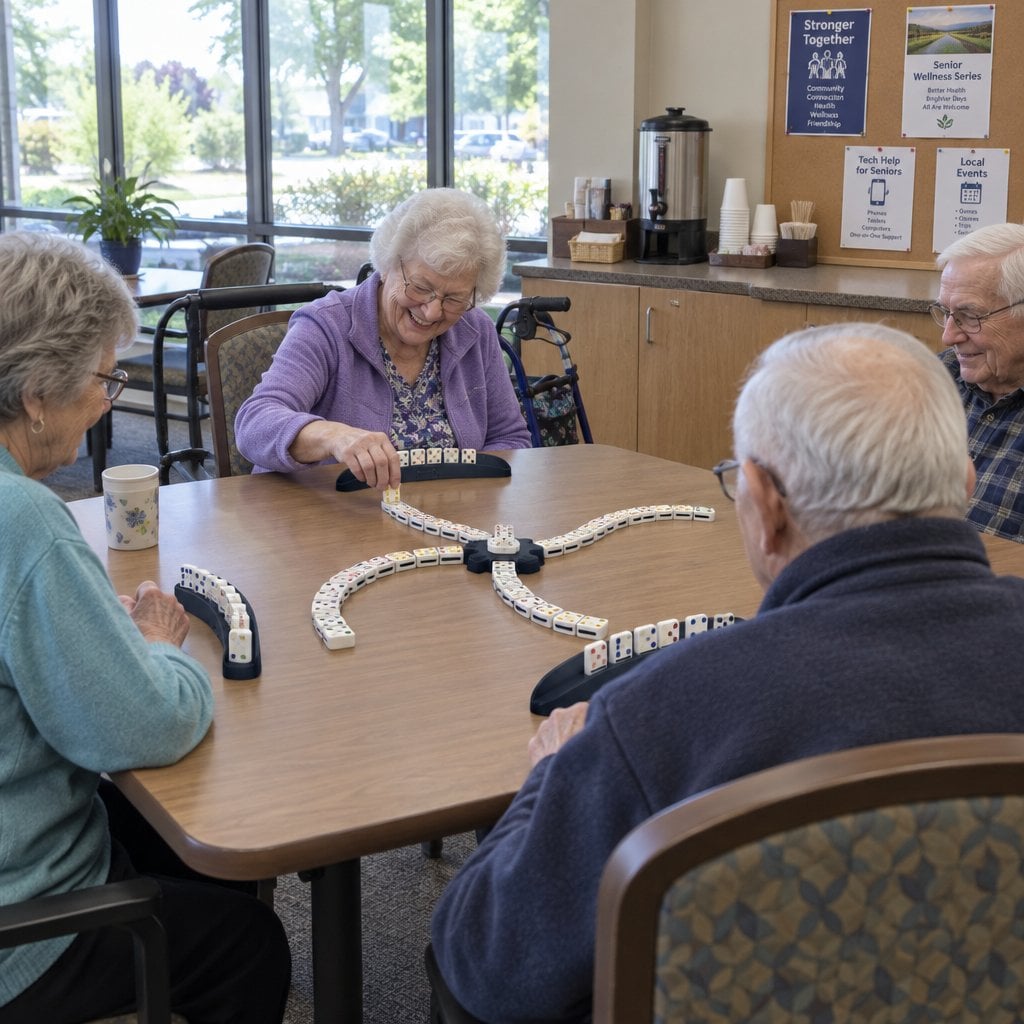
Magnetic Board Games with Large Pieces
When board game pieces are too small to pick up, or they slide and tip, a magnetic game keeps them where you put them. Do magnetic games work for weak hands? Partly, and I’ll show you where.


I bought the Faigcoy Magnetic Strategy Game myself. The box has a storage pouch, an instruction sheet, several ropes that mark the play area, and 24 magnetic pieces. The listing calls it magnetic chess, but it isn’t chess in the traditional sense.
It’s rated 9+, but I think 6 or 7 year olds could play. I’d suggest 2 to 3 players: 12 pieces each for two, 8 each for three. Four players with 6 each is harder.
- Place a piece in the rope area without attracting the others.
- If one snaps on, you take those pieces back.
- First to empty their hand wins.
In my hands the magnets were strong, and pieces pushed each other away. One piece shifted as I placed another, and pieces snapped together on a couple of turns.
It suits grandparents playing with grandkids, strategy fans, and anyone who enjoys a little thinking and hand practice.
The magnets help pieces stay put on a lap tray, in the car or in a waiting room, though they can nudge nearby pieces. For more on this set, read my Faigcoy magnetic game review.
Here’s what it won’t fix:
- Magnets keep pieces put, but they don’t make them easier to pick up if your grip is weak.
- It’s a different game from classic chess or checkers.
- Small magnets and pieces can be swallowed. Supervise play around grandchildren or someone with dementia, and store the pieces in the pouch afterward.
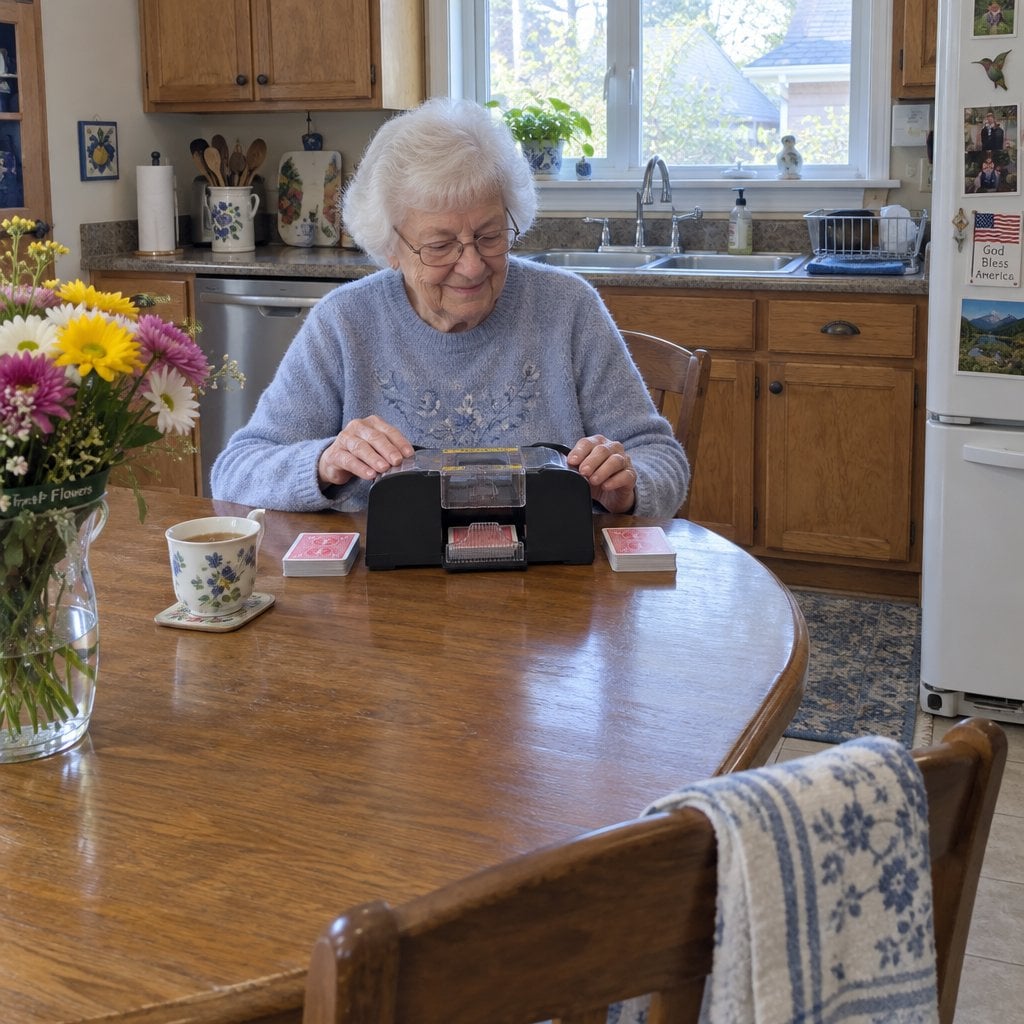
Curved-Tile Dominoes and Mexican Train
I filmed a demo of the Queensell Dominoes Set for Kids and Adults. It swaps straight domino tiles for precision-curved ones, which opens up circular patterns and blocking tactics at any age around the table.


I also filmed the Queensell Mexican Train dominoes, a Double 12 set with curved tiles that let players build arcs and circles. It’s a visual twist that adds a strategic layer to a familiar game. If you’re wondering how to play Mexican Train dominoes, you still build trains of matching tiles off a center double. My Queensell Loomino Mexican Train review has more.


Either set suits people who already love dominoes and want a new way to play with family.
Here’s what they won’t fix:
- The curved tiles are a twist on the classic game, so your family has to learn new rules, and the table has to agree.
- Are curved dominoes easier to hold? No. They aren’t lighter or easier to grip than regular tiles.
- Arcs and circles take more table space.
- Standing the tiles up is still fiddly. Laying them flat is easier.
- If your dominoes keep sliding on the table, lay tiles flat and play on a non-slip surface.
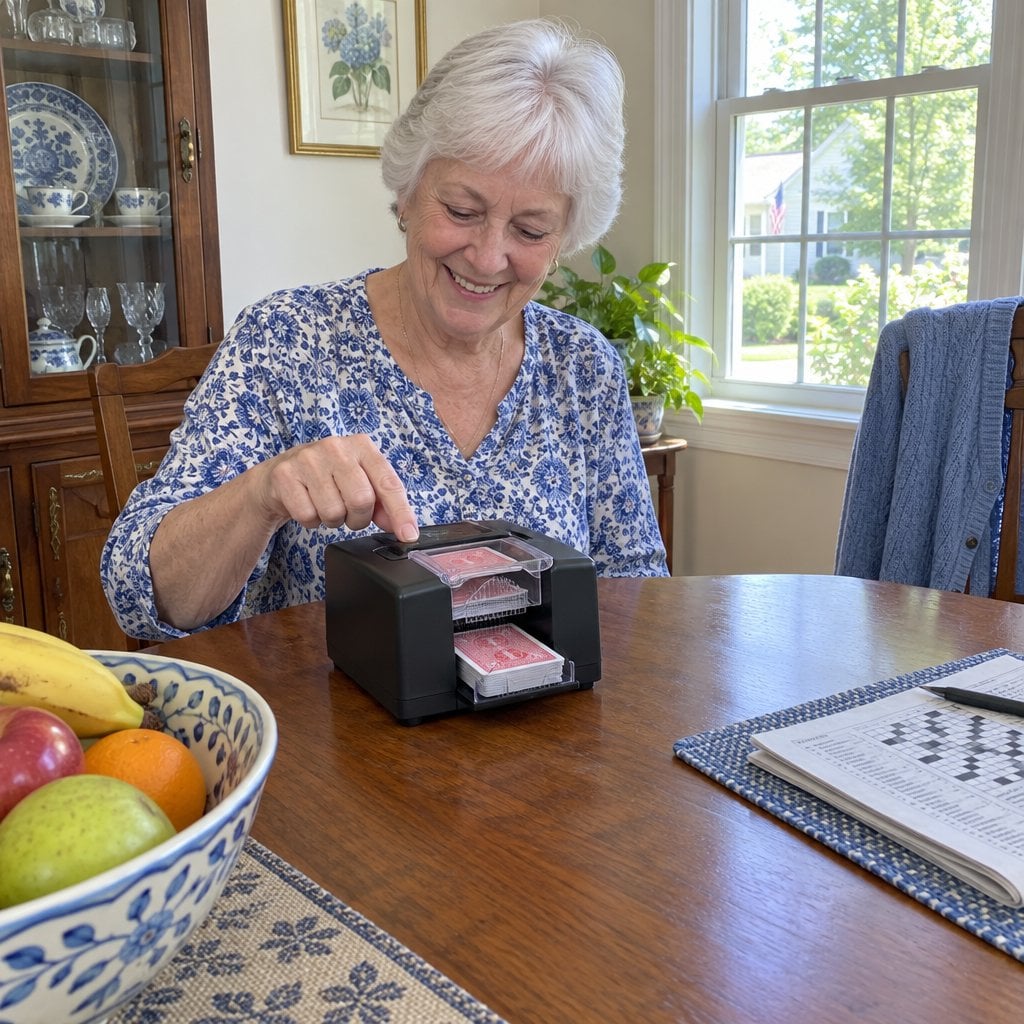
Quick Reference: Match the Trouble to the Fix
- Can’t riffle or bridge the deck: automatic card shuffler
- Can’t hold or reach the cards: holder or rotating tray
- Pieces slide, tip or are too small: magnetic game
- Love dominoes, want something new: curved-tile set
If you can’t press a button or lift a light tray, the fix is a playing partner, not a gadget.
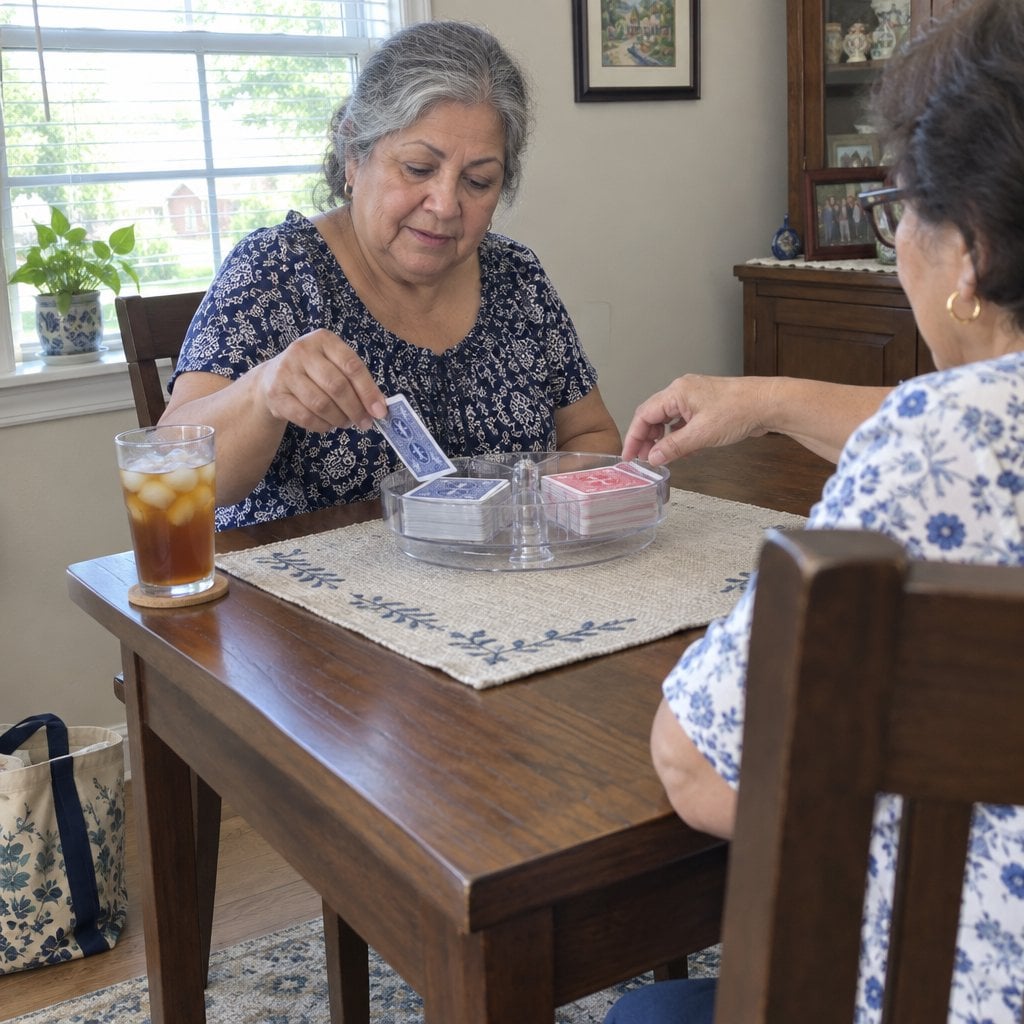
Card Game Hand Trouble Cheat Sheet
Discover the specific gadget or solution that solves your hand trouble at the card table—no more guessing, no more buying fixes that don’t work, just the right tool for your exact problem.
Keep the Game, Keep the Table
The game didn’t get harder to love. One part of it got harder to do. Name the part, pick the fix, and know what it won’t solve.
Choosing a tool that keeps you at the table is a smart move. A gift that gets used says, “I want you at the game.” Need ideas for what to play next? Browse Best Card Games for Seniors & Elderly.
I share more ideas like these in my free newsletter. And if you’d like to look at the rest of the house, not just the card table, ask about the Home Safety and Independent Living Assessment.
Which part of the game makes you put the cards away: the shuffling, the holding, or the pieces? Tell me in the comments, and share this with a family member who’s gone quiet about game night.