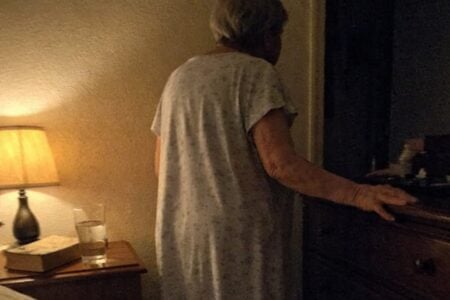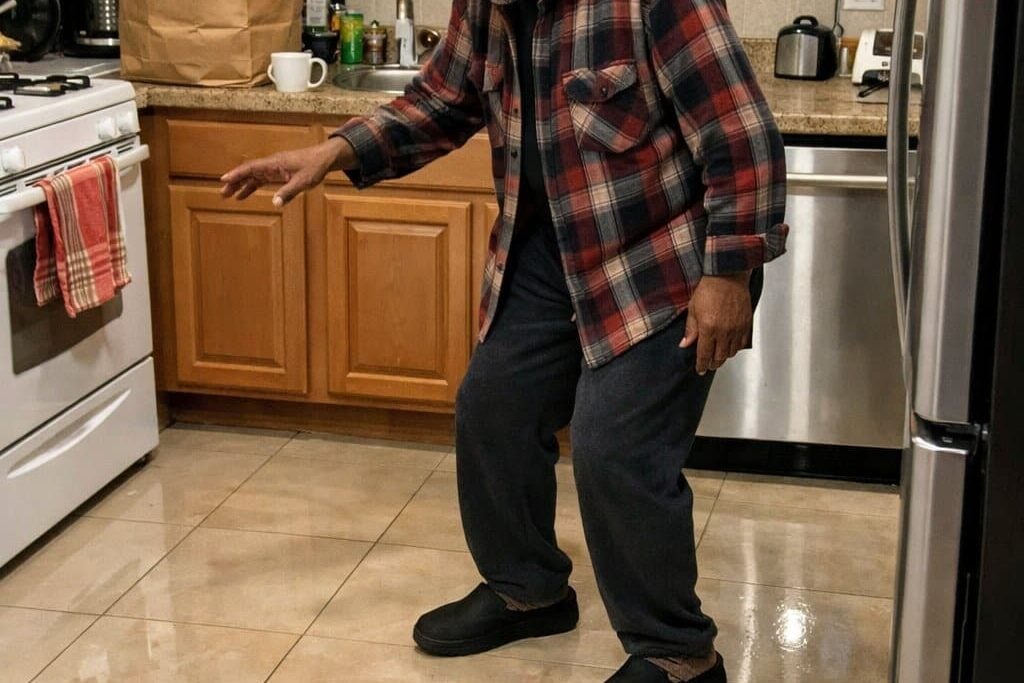
Your floor looked beautiful when it was installed. It still does. But the moment it gets wet — after mopping, after a shower splash, after someone tracks in a puddle — it becomes a different floor entirely. A dangerous one.
The CDC reports that more than 800,000 people are hospitalized each year after a fall. Bathroom and kitchen floors account for a disproportionate share of those incidents. You already know your floor is slippery. You’re here because you want to fix it without tearing it up.
Here’s what most people get wrong: the problem is not the floor material. It’s the surface glazing or finish — and that means the fix must address wet traction specifically.
One more thing to know before we go further: adding rugs to a slippery floor doesn’t solve the problem. It trades one hazard for another. A rug that moves, bunches, or curls at the edge creates a trip risk that can be just as dangerous as the slick floor underneath it. The right fix treats the surface itself.
What to Look For
Before you buy anything, you need four numbers and one decision. Here’s how to read them.
Wet Coefficient of Friction (WCOF)
This is the most important specification in this article. The tile industry standard, ANSI A326.3, sets a minimum DCOF (dynamic coefficient of friction) of 0.42 for interior floors expected to be walked on while wet. Treat 0.42 as the floor rather than the target — in a bathroom you want to be comfortably above it. Most polished tile and sealed hardwood falls below 0.40 when wet, which is why they feel fine dry and treacherous wet. You will also see 0.60 quoted as an ADA requirement; that figure comes from an advisory appendix to the 1991 accessibility guidelines and is not part of the current ADA standards, so treat a product that cites it as using dated language rather than a stricter test.
If the packaging lists only a dry COF, treat that as a red flag. Dry traction is nearly irrelevant to fall prevention. The number that matters is the wet one.
Surface Compatibility
This is where most buyers make their mistake. Chemical treatments work by micro-etching the glazed surface — they are designed specifically for glazed ceramic, porcelain, and natural stone. They will not work on vinyl, laminate, or sealed hardwood. There is no glazing for the chemistry to act on.
Tapes and coatings are surface-applied and more broadly compatible, but they have their own adhesion limits. Applying the wrong product to the wrong surface is the single most common buyer error in this category. Know your floor type before you select a product type.
Durability Window
- Chemical treatments: 1–3 years with normal foot traffic before reapplication
- Tape and tread strips: 6–18 months in wet zones
- Roll-on coatings (outdoor-rated): 2–5 year warranties typical
High-traffic zones — thresholds, the kitchen floor in front of the sink, the tub exit — wear faster than open areas. Plan your reapplication schedule accordingly.
Application Requirements
Chemical treatments require a clean, degreased surface and a precise dwell time of 5–15 minutes before rinsing. Get the timing wrong in either direction and you either under-etch (no improvement) or over-etch (surface damage).
Roll-on coatings require dry conditions — above 50°F during application and curing — and a minimum cure time of 24–72 hours before foot traffic. Tape requires clean, dry surfaces and firm edge pressure to prevent early lifting.
Appearance Change
Be honest with yourself about this before you buy. Chemical treatments are designed to be invisible once dry — you should not see or feel any difference. Roll-on coatings add visible texture. Tape adds a visible strip. If appearance matters to you, chemical treatment is the only option that leaves the floor looking the same.
For a broader look at flooring options if you’re considering more than a surface treatment, this guide to fall prevention at home covers the full picture.
Chemical Anti-Slip Treatments
Glazed tile and polished stone can become dangerously slick when wet, and chemical anti-slip treatments solve that problem invisibly by micro-etching the surface to improve wet grip without changing how the floor looks or feels. These products are the right choice for ceramic, porcelain, and natural stone floors in bathrooms, kitchens, and entryways where appearance matters and a permanent solution is preferred.

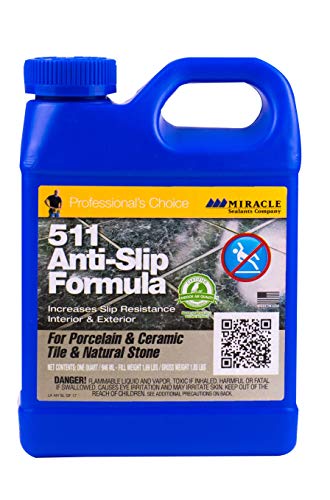


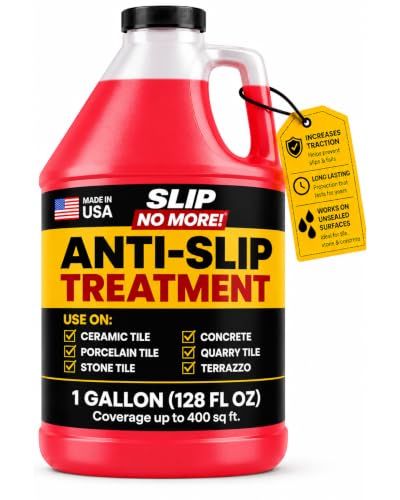

Chemical anti-slip treatments are the strongest recommendation in this article for anyone with glazed tile, porcelain, or natural stone floors — because they are the only option that improves wet traction without changing the floor’s appearance at all.
Here’s how they work: a mild acid or chelating agent creates microscopic pores in the glazed surface, increasing the contact area between the foot and the floor when wet. The floor looks and feels exactly the same to the touch. It just doesn’t slide.
Where this type works: Glazed ceramic tile, porcelain tile, natural stone (granite, marble, travertine, slate). Bathroom floors, shower pans, kitchen floors, entryways — any glazed mineral surface.
Where this is the wrong choice: Vinyl plank, luxury vinyl tile, laminate, sealed hardwood, or any floor with a topcoat polymer finish. The chemistry has nothing to bond to. Also wrong for unglazed or already-matte tile — applying to a surface that doesn’t need etching can dull an already-matte finish.
One honest limitation that applies to all chemical treatments: No treatment will make a floor with a standing-water or drainage problem safe. If water pools and doesn’t run off, the floor needs a drainage fix, not a traction treatment.
Slip Doctors Stone Grip Industrial (Gallon)
Stone Grip Industrial is a concentrate formulated for high-traffic commercial and residential applications on natural stone and glazed tile. The gallon format covers large areas — typically 500–800 square feet depending on surface porosity — which makes it the practical choice if you’re treating a kitchen floor, a bathroom, and an entryway in a single project rather than buying multiple smaller bottles.
The industrial-strength formula is designed for surfaces that have seen years of sealer buildup or heavy use, where a lighter residential product may not penetrate adequately. Application requires careful timing: the product should dwell on the surface for the manufacturer’s specified window, then be thoroughly rinsed. Over-dwell is the most common application error with any chemical treatment, and Stone Grip’s industrial concentration makes precision more important, not less.
This is the right choice for a large-scale project or a caregiver who wants to treat a parent’s entire home in one visit. For a single bathroom, the gallon format is more product than most people need — consider the quart-size alternative in that case.
Miracle Sealants 511 Anti-Slip Floor Treatment
Miracle Sealants 511 is a well-established product in the stone-care category, and it is one of the few in this group that is explicitly formulated to be safe on colored grout. That matters more than it might seem — some chemical treatments lighten grout lines noticeably, which is a problem in bathrooms with darker or patterned grout.
The 511 formula is a ready-to-use product, which removes the concentration-calculation step that trips up first-time users of industrial concentrates. It is rated for glazed ceramic, porcelain, and natural stone, and it carries a reputation for consistency across different tile types. Coverage per bottle is appropriate for a standard bathroom application of 40–60 square feet.
One thing to set expectations on: ready-to-use formulas at this size cost more per square foot than gallon concentrates. If you’re treating a single bathroom, the cost is reasonable and the convenience is real. If you’re treating multiple rooms, compare the per-square-foot math before you buy.
Slip No More! Anti Slip Tile Treatment (Quart)
Slip No More’s quart format is sized for the reader who has one bathroom to treat and wants a straightforward, single-purchase solution. The formula is designed for stone, porcelain, and ceramic tile and is marketed specifically for residential applications — the instructions are written for a homeowner rather than a professional applicator.
The quart covers approximately 100–150 square feet, which handles a bathroom with room to spare, or a smaller kitchen floor. The application process follows the standard chemical treatment protocol: clean and degrease the surface, apply the product, allow the specified dwell time, rinse thoroughly, and allow to dry before foot traffic.
For someone treating their own home for the first time, the smaller format also means a lower financial commitment if the product turns out to be more than they need. The trade-off is that the per-square-foot cost is higher than the gallon format — the math favors the gallon version for larger projects.
JEM MFG SlipFree Anti-Slip Floor Treatment (1 Gallon)
SlipFree is a gallon-format chemical treatment positioned for both residential and light commercial use. The formula is rated for ceramic, porcelain, and natural stone, and the gallon size makes it appropriate for projects that cover more than a single room.
What distinguishes this product in the category is the manufacturer’s stated compatibility with a wider range of stone types, including some porous natural stones that can be sensitive to acid-based treatments. If you’re working with travertine, slate, or a less common stone surface, it’s worth confirming compatibility before applying any chemical treatment — and SlipFree’s documentation addresses this more directly than some competitors.
Application follows the same protocol as other chemical treatments in this section: clean surface, apply, dwell, rinse, dry. The gallon format covers significant square footage, making it the better value for a whole-home project. As with any concentrate or large-format product, proper storage between applications matters — keep it sealed and away from extreme temperatures.
Slip No More! Anti Slip Tile Treatment (Gallon)
This is the gallon version of the Slip No More formula reviewed in quart size above. The formula is the same — the difference is scale and cost-per-square-foot. If you’ve used the quart and liked the results, or if you’re starting with a project that covers multiple bathrooms or a larger kitchen, this is the format to buy.
A gallon of this product covers 400–600 square feet, depending on surface porosity and how the product is applied. That’s enough to treat a bathroom, a kitchen, and an entryway in a single application session — which is the most efficient way to work if you’re doing a whole-home safety project.
The honest note: buying in gallon quantities means planning for proper storage if you don’t use it all at once. The product has a shelf life, and storing it improperly shortens it. Check the manufacturer’s guidance on storage conditions before you commit to the larger size.
SlipDoctors Polish Grip Non-Slip Floor Coating and Sealant
Polish Grip is a different animal from the other products in this section. Rather than a pure chemical etch treatment, it is a coating-and-sealant hybrid specifically designed for highly polished marble, granite, and similar high-gloss stone surfaces. It adds a micro-textured sealant layer while preserving the floor’s reflective finish — which addresses a real gap, because standard chemical treatments can reduce the sheen on some high-polish marble applications.
This product is the right choice when the floor in question is a highly polished natural stone — the kind found in formal entryways or master bathrooms — and aesthetics are a priority alongside safety. It is not a substitute for a pure chemical treatment on standard glazed tile or porcelain.
The sealant component also adds a layer of stain protection, which is a secondary benefit worth noting. Application is similar to other products in this category, but the sealant chemistry means drying and curing time before foot traffic is more important to observe precisely. Do not rush the dry time on a product that is simultaneously treating and sealing the surface.
Anti-Slip Tapes and Tread Strips
Stair edges, tub exits, and room thresholds are where directional changes happen and falls are most likely to occur, and anti-slip tapes deliver high-grip traction to those precise zones quickly and affordably. These abrasive adhesive strips are the fastest way to add meaningful traction to a high-risk transition point without any special tools or surface preparation beyond cleaning.


Anti-slip tapes and tread strips are the highest-grip-per-dollar option in this article, and they are the right first answer for stairs, tub exits, thresholds, and any transition zone where a person makes a directional change. They work by adding an abrasive or high-friction surface layer directly to the floor — they do not alter the floor itself.
Where this type works: Stair treads (particularly the leading edge), shower curbs, tub-to-floor transitions, ramps, thresholds between rooms, pool deck steps. Any surface where a precise, narrow zone needs traction.
Where this is the wrong choice: Open floor areas — tape is not a practical solution for a 100-square-foot kitchen. Also wrong for delicate floor finishes where adhesive removal would cause damage. Pressure-sensitive adhesive tape bonds strongly and can pull finish coatings off high-gloss hardwood or luxury vinyl when removed. If you’re not certain you can commit to tape staying in place, a rubber-backed runner is a lower-risk option.
On visibility: Tape is visible. On a light-colored tile, black tape stands out. But this visibility also functions as a visual cue for step edges — and that has genuine safety value for anyone with low vision or depth-perception changes. It’s not a cosmetic product. Readers should know that going in.
One tip that extends tape life significantly: In wet zones, sealing the tape edges with a bead of waterproof caulk prevents the lifting that happens when adhesive meets repeated water exposure. One pass with a caulk gun when you install the tape is worth the effort.
LifeGrip Anti Slip Traction Tape, 4 Inch x 38 Foot
This is a 4-inch-wide roll at 38 feet — a format that works well for a project covering several stair treads or a longer threshold run. The 4-inch width provides meaningful coverage on a full stair tread leading edge without requiring multiple overlapping strips.
LifeGrip’s tape uses an abrasive grit surface combined with a pressure-sensitive adhesive rated for both indoor and outdoor use. The wider format makes application faster on stairs and ramps, where you’re working across a horizontal surface rather than a narrow strip. Cut to length with a utility knife, press firmly from center to edge, and edge-seal with waterproof caulk in wet zones.
For stair applications specifically, the 4-inch width lands in a useful middle range — wide enough to cover the area where a foot actually lands, narrow enough that it doesn’t dominate the visual appearance of the step. This tape is rated for outdoor exposure, making it usable on exterior steps and decking as well.
LifeGrip Anti Slip Tape, 4 Inch x 60 Foot (Waterproof)
The 60-foot roll is the right choice when the project scope goes beyond a handful of stair treads. If you’re treating stairs from a lower level to an upper level, adding tape to outdoor steps, and covering several thresholds, the 60-foot format means one purchase rather than multiple rolls mid-project.
This version carries an explicit waterproof rating, which distinguishes it from standard indoor-rated tapes. Waterproof adhesive formulation matters in tub exits, exterior steps, and any application that will see repeated water contact — the adhesive needs to hold through wet-dry cycles without lifting at the edges.
At 4 inches wide, this tape is suited for stair treads and ramp surfaces. For narrower applications like a tub ledge or a single threshold, you may find the width more than you need and prefer cutting it down — or choosing a 2-inch format for precision.
LifeGrip Anti Slip Traction Treads Black, 2″ x 12″ (12-Pack)
Pre-cut tread strips solve the most common DIY tape problem: getting a clean, straight cut at consistent lengths. Each strip in this 12-pack is 2 inches wide and 12 inches long, which is sized for stair tread leading-edge application. The 80-grit abrasive surface is on the higher end of coarseness — this is aggressive traction, appropriate for stairs and ramps where grip is the priority over underfoot comfort.
For a stair application, two strips per tread placed parallel — one at the leading edge and one set back 2 inches — provides solid coverage for a normal foot strike pattern. The pre-cut format makes installation consistent from step to step without measuring and cutting each piece.
The 80-grit surface is not the gentler choice for bare-feet applications like a shower floor. If the primary application is a bathroom context where bare feet are involved, a finer grit would be more comfortable. This format is best suited for stairs, ramps, and shod-foot applications.
LifeGrip Anti Slip Transparent Tape, 4 Inch x 30 Foot
Clear anti-slip tape is the right format when visibility is a concern — when the floor surface has a pattern, decorative tile, or a finish that the homeowner doesn’t want to obscure with a black strip. At 4 inches wide and 30 feet long, this roll is sized for a mid-scale project.
Clear tape does come with a practical trade-off: it shows grime and discoloration more readily than black tape. On a bathroom floor or tub exit that gets daily use, a clear strip will require periodic cleaning to maintain its appearance. This is worth knowing before choosing clear over colored.
The transparent formulation is particularly useful on decorative entryway tile or a shower floor with a patterned surface — it adds traction without visually dominating the surface. Application and edge-sealing follow the same protocol as other tapes in this section.
MTNZXZ Anti-Slip Traction Tape with Glow-in-the-Dark Design
This tape adds one feature that no other product in this section offers: glow-in-the-dark visibility. The tape charges with ambient light and emits a visible glow in darkness — which provides a visual reference for step edges during nighttime trips to the bathroom, one of the highest-risk moments for a fall.
That feature has real safety value for anyone who wakes during the night, because it addresses two hazards at once: wet-surface slip risk and low-light navigation. Pairing glow tape on stair edges with standard safety measures covers more of the fall-risk picture than traction alone.
The glow feature does not affect the traction performance — the surface is still abrasive grit. The trade-off is that glow-in-the-dark tapes typically use a different backing formulation than standard black or clear tapes, so verify the adhesive rating for your specific surface type before applying in a wet zone. For a dry stair or hallway application, this is a strong choice. For a wet shower application, confirm the waterproof rating matches the use.
For more on nighttime navigation safety at home, this guide to choosing the right night lights covers the lighting side of the same problem.
LifeGrip Anti Slip Tape, 4 Inch x 15 Foot (Waterproof)
The 15-foot roll is the entry-level format for readers who have one specific problem to solve — a single tub exit, a back door threshold, a few stairs — and don’t want to buy more tape than they’ll use. The waterproof rating means it’s appropriate for wet-zone applications despite the smaller format.
This is also the right format for testing before committing to a larger purchase. If you’ve never installed anti-slip tape and want to get a feel for the application process, surface prep requirements, and how the product looks on your specific floor, a 15-foot roll lets you do that with minimal financial exposure.
For anyone whose project extends beyond a single application zone, the per-foot cost favors the larger rolls. But for a targeted fix on a single high-risk area, this format is practical and appropriately sized.
Roll-On Textured Coatings
Concrete ramps, exterior steps, garage floors, and wooden decks need a durable traction solution that holds up against weather, heavy foot traffic, and repeated moisture exposure. Roll-on textured coatings bond directly to the substrate and create a new slip-resistant surface layer rated for years of outdoor use.


Roll-on textured coatings are the durable, weather-resistant option for surfaces that take heavy or outdoor use: concrete garage floors, basement floors, wooden deck ramps, exterior steps, and pool surrounds. They work by bonding a grit-containing coating to the substrate, creating a new surface rather than modifying the existing one.
Where this type works: Bare or painted concrete, exterior wood decking, wooden ramps, garage and basement floors, pool deck surfaces, exterior steps. Any surface where durability and moisture resistance matter more than aesthetics.
Where this is the wrong choice: Interior living areas with finished floors. These coatings change the look and feel of a surface significantly — they are not invisible. They are also not appropriate for tile or polished stone, because adhesion to a glazed surface is poor. Not suitable for vinyl of any type.
The permanence trade-off: Roll-on coatings are the most durable products in this article — outdoor-rated formulas typically carry 2–5 year warranties — but they are also the most permanent. Removing a roll-on coating requires sanding or chemical stripping. Be certain you want this surface appearance before you apply.
One critical application note that applies to all products in this section: Wood surfaces must be dry, sound, and free of existing flaking paint or sealer. Applying a coating over a failing surface will cause the new coating to fail as well. Surface preparation is not optional.
Slip Doctors Tuff Grip Clear Non-Skid Paint
Tuff Grip is a clear roll-on coating designed for ramps, decks, floors, and stairs where the surface needs to retain its existing appearance while gaining traction. The clear formulation means the underlying concrete, wood, or painted surface shows through — making it a better aesthetic choice than pigmented coatings when the goal is traction without a dramatic visual change.
The product contains aluminum oxide grit, which is harder-wearing than polymer bead additives and holds up better under repetitive foot traffic. Application is by roller — standard 3/8-inch nap roller works well on most surfaces — and coverage is approximately 150–200 square feet per gallon depending on surface porosity.
This is a practical choice for a garage ramp, exterior steps, or a wooden deck that needs traction improvement without changing color. The clear finish does show grime and wear more visibly than pigmented coatings over time, so plan for periodic cleaning to maintain both appearance and performance.
Trip Guard Clear Anti Slip Floor Treatment (32 oz)
Trip Guard in the 32-ounce format is sized for targeted applications — a specific set of exterior steps, a section of basement floor, a workshop threshold — rather than a whole-room or whole-deck project. The clear formulation works on concrete, stairs, and tile surfaces, and the product is positioned for both indoor and outdoor use.
For a caregiver treating a specific hazard zone on a weekend visit, the 32-ounce format is practical: it’s enough to cover the area, it doesn’t leave a large quantity to store, and the application process is straightforward. Roll on, allow to cure per manufacturer specifications (typically 24 hours before light foot traffic), and the treated area gains meaningful traction improvement.
The concrete and tile compatibility rating covers the most common problem surfaces in a home exterior context. As with all roll-on coatings in this section, surface preparation — clean, dry, free of loose material — is the most important factor in how long the coating holds.
Trip Guard Clear Anti Slip Floor Treatment (1 Gallon)
The gallon format of Trip Guard is for larger projects: a full garage floor, a long exterior staircase, a deck surface, or a basement workshop floor. At approximately 150–200 square feet per gallon depending on surface porosity, a gallon covers meaningful area.
The same formula, the same surface compatibility, and the same application protocol as the 32-ounce version apply here. The decision between sizes is simply a project-scope question: if the area you’re treating requires more than 50–60 square feet of coverage, the gallon is the more economical choice.
One note on storage: if you don’t use the full gallon in a single application session, the remaining product must be sealed tightly and stored in conditions that avoid freezing or excessive heat. Water-based coatings are sensitive to freeze-thaw cycles, which can permanently alter the product’s performance.
Slip Doctors Premier Seal Non-Slip Concrete & Paver Sealer
Premier Seal is a sealer-and-traction-treatment hybrid specifically designed for pool decks, driveways, and paver surfaces that need both waterproofing and slip resistance in a single product. This addresses a real gap: pool deck surfaces are among the highest-risk surfaces in a senior’s home exterior, and applying a sealer that also improves wet traction eliminates a two-step process.
The product is rated for concrete and paver surfaces — not tile, not wood. The sealer component protects the underlying surface from water penetration and freeze-thaw damage while the coating’s texture adds wet-traction improvement. This dual function makes it the appropriate choice for an exterior concrete or paver area that hasn’t been sealed and needs traction improvement at the same time.
Application temperature range applies here: most concrete sealers require ambient temperatures above 50°F during application and for the initial cure period. Plan timing around weather forecasts for outdoor applications.
SlipDoctors GripX Non-Slip Coating and Sealant
GripX is rated for both indoor and outdoor use on tile and concrete, which gives it a slightly broader application range than some products in this section. The indoor compatibility means it’s an option for a basement floor, a utility room, or a garage floor that transitions to an interior space.
The coating provides a textured surface finish rather than a clear or near-invisible treatment — it will visually change the surface. On a concrete basement floor or a utility garage, that’s generally acceptable. In a living space with finished tile, the visual change would likely be unacceptable, and a chemical treatment would be the better choice.
The sealant component also provides protection against moisture penetration, which adds durability in wet environments like a basement or a garage floor that sees water intrusion. As with all roll-on coatings in this section, cure time before foot traffic must be observed — 24 hours minimum, 72 hours before heavy use.
Traction Mats and Runners
When a floor cannot be permanently altered — in a rental, on a historic surface, or in a high-standing-time work zone — a rubber-backed traction mat is the practical solution that delivers real grip without touching the floor underneath. The right mat also reduces fatigue during prolonged standing at a kitchen sink or laundry machine, making it a safety and comfort upgrade in one.

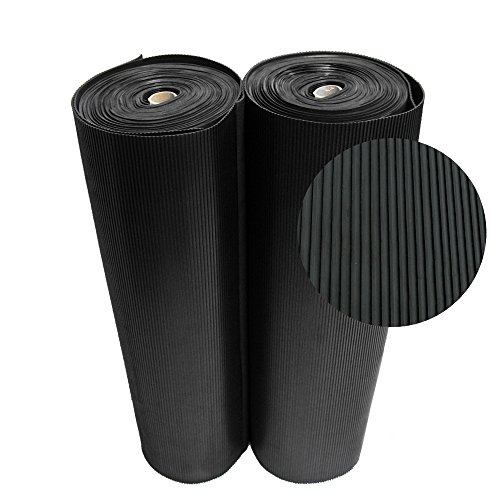


Traction mats and runners belong in this article for a specific reason: they are the right solution for floors that cannot be chemically or physically altered. Rental properties, leased apartments, historic floors, or any situation where the person treating the hazard doesn’t have authority to make a permanent change — these are mat territory.
They are also the right answer for kitchen sinks, laundry areas, and workspaces where prolonged standing on hard floors causes fatigue. A mat that is both anti-slip and anti-fatigue serves double duty in those zones.
Now is the right time to state the trade-off clearly: a mat with rubber backing that grips the floor is a traction solution. A mat with a felt or fabric backing on a polished floor is itself a slip hazard. This distinction matters more than any other specification in this section. Before you buy any mat, confirm the backing material.
Where this type works: Rentals and situations where permanent alteration is prohibited. In front of the kitchen sink, at laundry machines, in entry zones, at workbenches. Anywhere prolonged standing is done on hard floors.
Where this is the wrong choice: As a replacement for surface treatment in high-traffic thoroughfares, transition zones, or anywhere the mat’s own edge becomes a trip hazard. A mat placed in a narrow hallway creates a curling-edge risk. Do not place mats on stairs.
On maintenance: Mats are the only fully reversible solution here — they can be moved, washed, and replaced. But they require ongoing maintenance. Check the backing annually. Rubber degrades over time and can lose its grip — and natural rubber can stain light-colored floors after 3–5 years of contact. PVC backing can become brittle and crumble. Neither failure mode is obvious until it’s a problem.
For bathroom-specific mat guidance, this deep-dive on non-slip bath mats covers that application in detail.
Ottomanson Waterproof Runner Rug, 2′ x 6′
This 2-foot by 6-foot runner format is sized for entryways, hallways, and the area in front of a kitchen sink — the zones where a narrow runner makes practical sense. The waterproof construction means it handles tracked-in moisture and can be cleaned with a damp cloth or hosed down rather than requiring a full machine wash.
The rubber backing is the specification that makes this a traction solution rather than a decorative rug. On smooth tile or hardwood, rubber backing grips reliably where felt or fabric backing slides. The profile is thin enough to minimize the trip-edge risk that thicker mats create — runners thicker than 3/8 inch create a meaningful edge for someone using a cane or walker.
The 2-foot width is practical for narrow entry areas without blocking the path. For wider zones, this runner would need to be supplemented or replaced with a broader mat.
Rubber-Cal Ramp Cleat Non-Slip Outdoor Rubber Floor Mat (0.13″ thick x varied width)
Rubber-Cal’s Ramp Cleat mats are made from natural rubber with a ribbed cleat pattern on the top surface — a design that provides grip underfoot while also channeling water and debris away from the surface contact point. This makes them specifically well-suited for exterior ramps, threshold areas, and any surface that sees both foot traffic and moisture.
At 0.13 inches thick, this is one of the thinner profiles in this section — an advantage for any application where the mat’s own edge could become a trip hazard. Thin profiles with beveled or tapered edges are consistently safer for older adults, particularly those using mobility aids, than thick mats with square edges.
Natural rubber backing grips smooth and textured concrete reliably. The trade-off is that natural rubber can stain light-colored concrete or tile over time with prolonged contact — check the floor surface before committing. For dark concrete, exterior wood decking, or textured entry surfaces, this is a strong choice.
For mobility aid users who need additional fall prevention resources, this overview of mobility aids for seniors pairs well with home surface safety improvements.
Ottomanson Commercial Scrape Rib Entry Mat
The Scrape Rib Entry Mat is a heavy-duty format designed for high-traffic entry points — front doors, back doors, garage entries — where the mat must both scrape debris from shoes and provide a non-slip surface. The ribbed scraper surface removes dirt and moisture from footwear at the point of entry, which reduces the amount of tracked-in water that reaches interior floors.
This is a mat with a specific job: entry zone debris and moisture management. It is not an anti-fatigue mat and not a hallway runner. Its heavy-duty construction means it holds up under repeated use and weather exposure better than lighter residential mats.
The commercial-grade backing grips standard entry surfaces reliably. For a senior’s home where wet-floor tracking is a contributing hazard — particularly in rainy seasons — placing a mat that removes moisture at the door addresses part of the interior floor risk before it starts.
Rubber-Cal Ramp Cleat Non-Slip Outdoor Rubber Mat, 1/8″ x 3 ft x 8 ft
The 3-foot by 8-foot format of the Ramp Cleat mat covers a much larger area than the smaller format reviewed above — a full exterior ramp, a long threshold area, or a garage-to-house transition that spans several feet. The same ribbed cleat design, natural rubber construction, and thin 1/8-inch profile apply.
For a caregiver adding traction to a parent’s exterior ramp or a long concrete threshold, this larger format eliminates the need to tile multiple smaller mats together — which itself creates trip edges between mat sections. One continuous mat is always safer than two mats end-to-end.
The 8-foot length also makes this a practical option for a basement workshop area or a garage floor strip in front of the car door — a zone that sees wet-shoe traffic and benefits from both traction and a defined surface boundary.
CLIMATEX Indoor/Outdoor Rubber Runner Mat, 27″ x 10′
At 27 inches wide and 10 feet long, this runner covers a hallway or entryway run that smaller mats can’t address in a single piece. The indoor/outdoor rating means it handles both interior and exterior placement — a runner that starts inside a back door and extends into a hallway can be a single piece rather than two mats with a seam.
The rubber construction provides the grip that defines a traction solution rather than a decorative rug. The 27-inch width is enough to cover the walking path in a standard hallway while leaving clearance at the walls — important for someone using a walker or holding a handrail.
Longer runners at this width need to lie flat without bunching or curling. Check that the surface beneath is clean and free of debris before installation, and inspect the runner periodically at the ends where curling is most likely to begin.
koloko Runner Rug, 2ft x 8ft, Non-Slip Indoor/Outdoor
The koloko runner’s notable feature is custom-size availability — the format can be cut or ordered to match a specific length requirement that standard off-the-shelf sizes don’t cover. For a staircase landing, an unusually long hallway, or a threshold with non-standard dimensions, the ability to fit the mat precisely to the space eliminates the gap-and-overlap problems of using multiple mats.
At 2 feet wide, this runner is narrower than the CLIMATEX option above — better suited for a compact entryway or a space where the wider format would create its own navigation problem. The non-slip backing is rated for both indoor and outdoor surfaces.
Custom-cut runners do require attention to edge finishing — a cut edge on a rubber-backed mat that isn’t finished can begin to curl or fray over time. Confirm the manufacturer’s guidance on edge treatment for cut pieces before sizing your order.
Frequently Asked Questions
Do anti-slip chemical treatments work on vinyl plank or luxury vinyl tile?
No. Chemical treatments micro-etch glazed mineral surfaces — ceramic, porcelain, natural stone. Vinyl is a polymer surface with no glazing for the chemistry to act on. For vinyl, the right options are anti-slip tape on high-risk zones or a rubber-backed runner in areas that can’t be permanently altered. Some vinyl manufacturers offer a slip-resistant additive that can be applied at refinishing — check with your floor’s manufacturer before attempting any chemical treatment on vinyl.
Will an anti-slip treatment change how my tile looks?
A correctly applied chemical treatment should be invisible once the floor dries. You should not see any visual change, and the texture should feel the same underfoot. If the floor looks etched, cloudy, or uneven after treatment, the dwell time was too long or the product was not rinsed adequately. Roll-on coatings and tape will always change the floor’s appearance — they add a visible layer. If invisibility matters, chemical treatment is the only option that delivers it.
Is anti-slip tape safe to use on hardwood floors?
With significant caution. Pressure-sensitive adhesive tape bonds strongly to wood finish and can pull the finish off when removed. If you need traction on a hardwood stair or threshold, use a tread strip with a gentler adhesive specifically rated for wood, and test in an inconspicuous area first. A rubber-backed runner secured with a gripper pad is usually a lower-risk option on finished hardwood — it delivers traction without the adhesive-removal risk.
How long does an anti-slip floor coating last before reapplication?
It depends on the product type and traffic level. Chemical treatments typically last 1–3 years on residential floors. Anti-slip tape lasts 6–18 months in wet zones — shorter in tub exits and shower areas, longer in entryways. Roll-on outdoor coatings typically carry 2–5 year warranties. High-traffic zones wear faster than open areas. When the floor starts feeling slick again, that’s the signal to reapply.
Can I use a mat instead of treating the floor, or do I need to do both?
It depends on the situation. If you’re in a rental and cannot alter the floor, a rubber-backed mat is your only practical option — and it’s a legitimate one for specific zones. If you own the floor and the slippery area is a bathroom, threshold, or kitchen floor, surface treatment is more effective and eliminates the trip-edge risk that mats introduce. In many homes, the right answer is both: treat the open floor areas with a chemical treatment, and add a rubber-backed mat in front of the sink or tub exit for additional traction and anti-fatigue benefit.
What happens if I apply a chemical treatment to the wrong floor type?
On vinyl or laminate, the product will not etch the surface — it simply won’t work. On an already-matte or unglazed tile, the chemistry may dull the finish without providing meaningful traction improvement. On sealed hardwood, the product won’t penetrate and may leave a residue. None of these outcomes are dangerous, but they’re wasted product. Confirm your floor type before buying.
Hacks and Practical Advice
Test wet traction before you buy anything. Walk across your tile in wet bare feet, then do it again wearing socks. Where you feel the floor shift or slip is exactly where to treat. You don’t need to treat the whole floor — you need to treat the transitions, the high-risk zones, and the exit points. Starting with a small targeted area tells you whether the product works before you commit to a whole-room application.
Degrease before you apply anything. Soap residue, floor cleaner buildup, and tracked-in grease are invisible but they defeat adhesion and chemical treatments alike. Before any application — tape, chemical, or coating — clean with a degreasing cleaner and allow the floor to dry completely. This single step accounts for more application failures than the product itself.
In a bathroom, treat the tub exit first. The tub-to-floor transition is statistically the highest-risk moment in bathroom use. A person stepping out of a wet tub onto a cold tile floor in bare feet, mid-motion — this is where falls happen. If you only treat one zone, treat that one.
Check your bath mats for backing degradation annually. Turn the mat over and look at the rubber. If it’s sticky, crumbly, or has left a stain pattern on the floor beneath, the backing has degraded and the mat is no longer providing reliable grip. Replace it. A mat you trust that isn’t actually gripping is more dangerous than no mat, because it creates false confidence.
On stairs, tape the leading edge, not the full tread. The leading edge — the front 2 inches of each step — is where the foot makes contact and where slips initiate. Full-tread coverage looks more thorough but doesn’t add meaningful safety over precise leading-edge coverage. Use the tape width where it matters.
Pair traction treatment with good lighting. A slip-resistant floor that can’t be seen clearly in the dark is still dangerous. If you’re treating floors for nighttime safety, consider adding motion-activated night lighting along the path between the bedroom and bathroom. These two upgrades together address the two most common elements of nighttime fall scenarios. This guide to bathroom safety products covers the full picture of bathroom fall prevention.
For rental situations, document the floor condition before you place any mat. Natural rubber can stain light-colored tile or hardwood with extended contact. Photograph the floor before installation, check underneath the mat periodically, and consider placing a thin plastic barrier between the rubber backing and a light-colored floor if staining is a concern.
One Floor at a Time
You don’t have to solve every slippery surface in your home this week. Start with the highest-risk zone — the bathroom floor, the tub exit, the kitchen tile in front of the sink — and treat that one area well. See how the product performs. Build from there.
The right treatment for your floor depends on what your floor is made of, who will be walking on it, and whether you can make a permanent change. This guide gives you the information to make that decision confidently rather than guessing at a hardware store shelf.
If you found this helpful and want to go deeper on a related concern, the fall prevention checklist walks through the full home — room by room — with specific modifications that reduce fall risk at every transition point.
Have you tried any of these treatments in your home? What did you use, and what was your experience? Share in the comments — your firsthand knowledge helps someone else make a better decision.