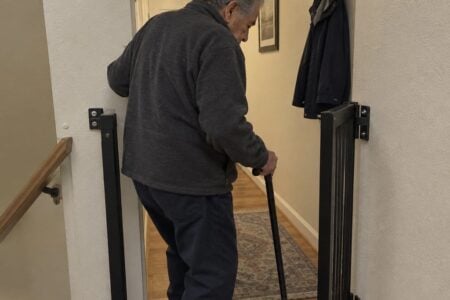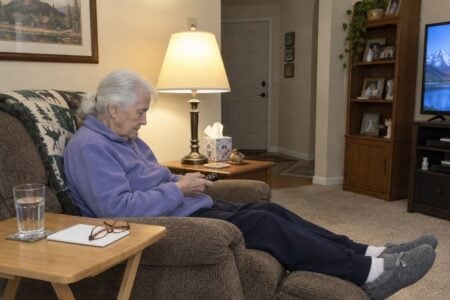
Falls at night account for a disproportionate share of serious senior injuries. A meaningful number of those happen in the seconds between waking and reaching a switch — in hallways, bathrooms, and on stairs where the light source is nowhere near the person who needs it.
Here's the premise of everything that follows: every product covered in this article installs exactly like a standard light bulb. No wiring. No electrician. No permit. The tools required — when any are needed at all — don't go beyond a step stool and a steady hand.
But here's the detail most families miss. Not all automatic bulbs work the same way. Picking the wrong type for a given room can create a new hazard rather than remove the existing one. A bulb that delays before switching on, or a photocell bulb that goes dark at sunrise while someone is still navigating the entry step, can be more dangerous than no automatic light at all.
This article covers four distinct product types. The room — not the price tag — determines the right choice.
Motion-Sensor Bulb Buying Guide: Take It Shopping
Download this fill-in-the-blanks shopping guide and take it with you to match motion-sensor bulbs, adapters, and switches perfectly to your home’s fixtures and safety needs—no guesswork, no returns, no wasted money.
What to Look For
Before you spend a dollar, these are the specifications that actually matter. Every claim below can be cross-referenced on any product page.
Bulb base type (E26 vs. E12) The overwhelming majority of standard US household sockets use an E26 (medium) base. Candelabra fixtures — chandeliers, some bathroom vanity bars, decorative lamps — use E12. Confirm base type before ordering. An E26 bulb will not fit an E12 socket. Adapters that resize the base add even more length to a fitting that may already protrude.
Lumen output Motion-sensor bulbs span roughly 400 to 1,100 lumens. For fall prevention, the relevant figure is whether the light is bright enough to reveal floor hazards — rugs, cords, wet tile — not merely whether it turns on. A 60W equivalent (800 lumens) is a reasonable floor for hallways and bathrooms. Pathway and closet applications can accept lower output.
Detection angle and range Passive infrared (PIR) sensors are the standard technology. Detection angle varies from 90° to 360° depending on product type. A bulb in a recessed can with a narrow opening will detect less than its rated angle suggests. Range is typically 10 to 26 feet; fixtures at the end of a long hallway need the higher end of that range.
Timeout (stay-on duration) This is the specification that trips up the most buyers. Timeout ranges from as short as 15 seconds to as long as 15 minutes depending on the model. Bathroom and laundry room applications need a minimum of 5 minutes — ideally adjustable to 10 — to avoid shutting off on a person who is standing still. Garage and porch applications can tolerate shorter timeouts because the user is in motion. Look for "adjustable timeout" in the product description if the application requires flexibility.
Enclosed fixture compatibility Heat dissipation matters for LED longevity. Products rated for enclosed fixtures carry that designation explicitly. A bulb not rated for an enclosed fixture in a covered porch lantern or recessed housing will shorten its own lifespan significantly — sometimes within months.
Photocell vs. PIR (dusk-to-dawn vs. motion) This is the fundamental decision point. Photocell bulbs react to ambient light levels and stay on continuously all night. PIR bulbs react to movement. These are not interchangeable, and the wrong choice for a given location is a genuine safety issue — covered in the individual sections below.
Load rating for adapter-style products Screw-in adapters that hold a separate bulb carry a maximum wattage rating, typically 100W or 150W equivalent. Exceeding it is a fire risk. Check the adapter's stated maximum before pairing it with a bulb.
Screw-In Motion-Sensor Bulb Adapters
Standard sockets in garages, basements, laundry rooms, and covered porches often need automatic lighting without any fixture replacement. Screw-in adapters add PIR motion sensing to any existing E26 socket, letting you pair them with a standard LED bulb you can replace for a few dollars when it burns out.
For hallways and stairs where you want light only when the power fails, take a look at automatic emergency lights for power outages.


A screw-in adapter is the right choice when an existing socket is already positioned correctly for the space — pointed down at the right angle, centrally placed, in an open or semi-open fixture. Garages, unfinished basements, covered porches, laundry rooms, and utility closets are the natural fits. The fixtures tend to be utilitarian, the socket is usually exposed or in a basic globe, and nobody minds a visible adapter.
The limitation is physical. When the adapter threads into the socket and a bulb threads into the adapter, the total assembly extends further from the ceiling than a standard bulb alone. In a recessed can with a shallow trim ring, the bulb face may sit below the rim and look wrong. In a decorative pendant or flush-mount globe, the adapter may prevent the globe from closing. Before ordering, measure the clearance from the socket to the bottom of the fixture opening — if it's less than 5 inches, the combination may not fit without modification.
There's a secondary advantage worth noting. The adapter occupies the socket, but you're still choosing and replacing standard bulbs. When a bulb burns out, you replace a $2 LED, not a $15–25 integrated unit. For buyers who want to separate the sensing hardware from the light source, this is genuinely useful.
Where it falls short:
- Shallow or decorative fixtures where length is a constraint
- Any fixture where protrusion below the rim would be a visual or physical problem
- Applications where a single, compact unit is preferred over an adapter-plus-bulb combination
eSenlite eLEDing Motion Sensor Retrofit Light Socket Adapter
The eSenlite uses radar motion detection rather than PIR, which is worth understanding before you install it. Radar-based sensors detect motion through walls and enclosures more readily than PIR, which means it can trigger from movement in adjacent spaces. In an open garage or utility room, that's rarely a problem. In a closet adjacent to a bedroom, it may cause nuisance activations overnight.
The trade-off for that sensitivity is consistent detection regardless of the sensor's orientation in the socket. Because radar doesn't depend on infrared heat differential, it works when a socket points in almost any direction. That flexibility is useful in fixtures where a PIR sensor's cone would miss room entry.
Check the total assembled length before ordering if the target fixture has limited clearance. This adapter, paired with a standard A19 bulb, adds meaningful depth below the socket. It suits open utility fixtures well; it requires measurement before use in anything with a globe or trim ring.
Hortsun Motion Sensor Light Socket (3-Pack)

The Hortsun comes in a three-pack, which makes the math straightforward for anyone outfitting a garage, basement, and laundry room in a single order. The E26/E27 compatibility covers the overwhelming majority of US household sockets, and the white finish is less industrial-looking than some competing adapters.
The sensor is PIR, which means detection depends on heat differential and movement. In a standard utility application — socket pointing down, room entry happening below it — performance is consistent. In an enclosed globe fixture, the rated detection angle will be significantly reduced by whatever housing surrounds it.
This is a practical, no-frills choice for buyers who need multiple locations covered without spending significantly on each one. The per-unit cost at three-pack pricing compares favorably to integrated motion-sensor bulbs for the same coverage.
LPHUMEX Motion Activated Light Sockets (2-Pack)

The LPHUMEX is a two-pack adapter with E26/E27 compatibility and a built-in daylight sensor that disables motion detection during daylight hours. That automatic shutoff during the day is a feature worth calling out — without it, a motion sensor in a bright utility space will still trigger on a sunny afternoon, wasting energy and shortening the LED's duty cycle.
The PIR sensor suits open or semi-open fixture applications. For a laundry room or garage where the socket is in a basic keyless lampholder, this adapter performs as expected. For any application where someone might stand still for extended periods — folding laundry, waiting for a cycle to finish — check whether the timeout is adjustable before committing, and compare it against the specific task's duration.
Load rating matters here: confirm the maximum wattage the adapter supports against the bulb you intend to pair with it before installation.
SZXJY E26/E27 Motion Sensor Light Socket Adapter
The SZXJY adapter offers PIR detection with a built-in photocell to suppress daytime triggering, which is the standard combination for utility applications. The design is compact relative to some adapters in this category, which helps in fixtures where total assembled length is a concern.
This adapter suits buyers who want a straightforward, single-purpose solution: screw it in, pair it with a bulb, and walk away. The absence of adjustable timeout settings — common in basic adapters — means it's better suited to garages, sheds, and covered porches than to laundry rooms where a longer stay-on duration matters.
If the target socket is inside a globe fixture, test the detection by walking the room entry path at installation. A PIR sensor inside an enclosure may read significantly less than its rated angle, and the entry path should fall clearly within the detection zone before the installation is considered final.
EVERSECU PIR Motion Sensor Light Socket

The EVERSECU adapter is compatible with E26/E27 sockets and integrates PIR motion sensing with a photocell for automatic daylight suppression. The build is designed for general utility applications — garage, basement, closet — where the socket is open and the detection zone aligns with room entry.
One consideration specific to this adapter: the load rating determines what bulbs can be paired with it. Before ordering a high-output LED to pair with this adapter, verify the adapter's stated maximum wattage accommodates that bulb. Most adapters in this category cap at 100W equivalent; some support higher loads.
For fall prevention across multiple entry points in a parent's home, a two-pack or three-pack adapter approach can cover garage, back entry, and basement stairs in a single order — making this category worth considering as a multi-room strategy rather than a single-fixture fix.
Toplimit Motion Sensor Light Socket
The Toplimit adapter screws into any standard E26/E27 socket and includes PIR detection with automatic daylight shutoff. It's a single-unit listing rather than a multi-pack, which suits buyers who need one specific socket covered before buying more.
The detection angle and range are typical for this category — suitable for open utility applications, reduced in enclosed fixtures. The total assembled depth (adapter plus bulb) makes it important to measure clearance in any fixture with a globe or trim ring before ordering.
This adapter is a reasonable choice for a laundry room utility socket or a garage pull-chain fixture where the existing socket is already correctly positioned. The straightforward design means there's nothing complex to configure after installation — screw it in, add a bulb, and the sensor handles the rest.
Generic 2-Pack Motion Sensor Light Sockets
The Generic two-pack covers two sockets at a lower per-unit price than most branded alternatives. The E26/E27 compatibility is standard, and the PIR sensing with adjustable timeout is the feature that distinguishes it from fixed-timeout options at a similar price point.
Adjustable timeout is meaningful for laundry room and basement stair applications, where a 30-second default shutoff creates exactly the kind of mid-task darkness that the product is meant to eliminate. If the description confirms timeout adjustment, verify the maximum setting covers the intended use before installation.
The honest limitation of any generic two-pack is that quality control variation is broader than with branded products. Test both units at installation and note whether sensor sensitivity and timeout behavior match between the two.
Motion-Sensor LED Bulbs
When the adapter-plus-bulb combination would protrude awkwardly from a fixture or look out of place, an integrated motion-sensor LED solves the problem by building the sensor directly into the bulb base. One unit screws in like any standard bulb and handles the sensing automatically.

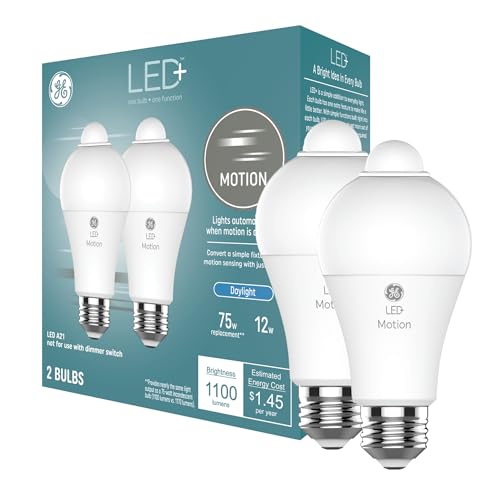

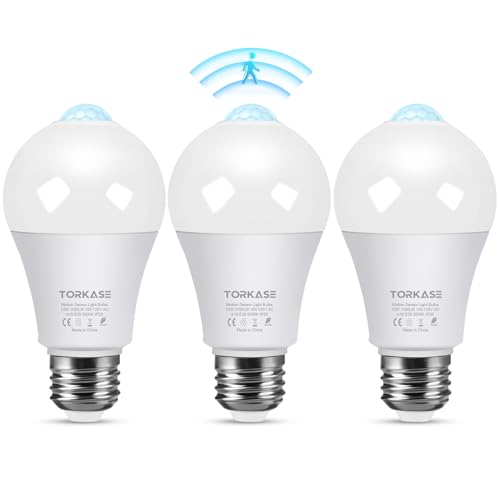
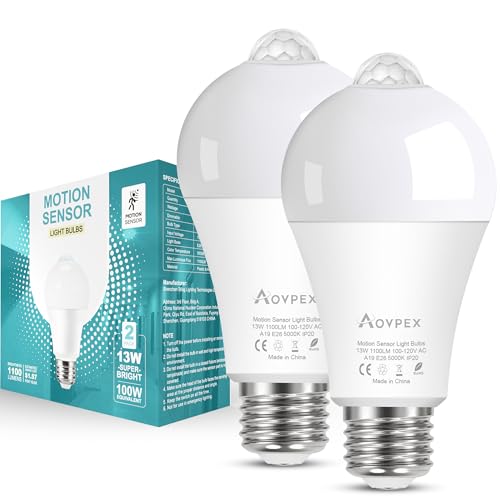

A motion-sensor LED bulb is the right choice when the adapter approach would create a length or appearance problem, and the socket is positioned to actually detect motion in the space. The sensor is built into the bulb's base, so the unit installs and looks like a normal bulb from any distance. In a bathroom vanity fixture, a covered porch lantern, or a bedroom lamp that benefits from automatic shutoff, the integrated design solves the aesthetic problem the adapter creates.
The limitation is sensor positioning. Because the sensor lives in the base of the bulb — not at the end of an adapter that can be oriented independently — it detects in whatever plane the socket places it. A socket pointing straight down concentrates detection in a cone directly below. Someone entering from the side may not trigger it until they're well into the room. For recessed cans in hallways, this geometry works well. For a socket on a wall sconce pointed horizontally, detection may be inconsistent.
Buyers should confirm the product is rated for enclosed fixtures before installing it in a covered lantern, recessed can with a closed trim, or any globe-style housing. The rating is stated in the product description; the absence of that rating is a meaningful warning.
Where it falls short:
- Sockets oriented so that the built-in sensor won't detect room entry reliably
- Enclosed fixtures, unless the product is explicitly rated for them
- Situations where the buyer wants to replace just the bulb when it burns out rather than the entire sensing unit
GE LED+ PAR38 Motion Sensor Outdoor Flood Light Bulbs (2-Pack)
The GE LED+ PAR38 is a flood-format bulb designed for outdoor applications — eaves fixtures, carriage lights, directional security lighting pointed at a driveway or entry path. The PAR38 format produces a focused beam, not a wide ambient wash, so placement matters more than with an A19 bulb.
At 15W, this bulb delivers meaningful output for exterior flood applications. The motion sensor is integrated into the base, and the PIR detection angle suits directional installations where motion approaches from a predictable direction — a driveway, a walkway, a back door.
Confirm the fixture is rated for outdoor use before installation. The GE LED+ line has a clear track record for weather resistance in covered outdoor applications, but the installation location determines long-term performance.
GE LED+ Motion Sensor Outdoor Security Light Bulbs, A21 (2-Pack)
The A21 format from GE LED+ Motion Sensor line produces a broader ambient light pattern than the PAR38, making it a better fit for covered porch lanterns, carport fixtures, and outdoor entry lights where area illumination matters more than directional throw.
At 12W and in the A21 form factor, this bulb suits standard E26 sockets in outdoor fixtures. The motion sensor is built into the base. For a porch lantern facing outward toward an approach path, the geometry works reliably — motion entering the beam triggers the sensor as expected.
For outdoor entry areas where nighttime fall prevention is the goal, the two-pack makes it practical to cover both front and back entry in one order. Confirm enclosed fixture compatibility before installing in any lantern with a closed housing.
GE LED+ Motion Sensor Light Bulbs, A21, Warm White (2-Pack)
This is the indoor-appropriate version of the GE LED+ Motion Sensor line — the A21 form factor with warm white output (2700K), designed for interior applications where color temperature matters for comfort. It suits bedside lamps, hallway fixtures, and stairwell lights where cold daylight output would feel harsh at 2 a.m.
The motion-sensor integration means the lamp turns on when someone enters the room and off after the timeout — no switch interaction required. For a bedside lamp in a senior's bedroom, this can eliminate the reach for the switch entirely, which is one of the micro-risks that accumulates over time.
The warm color temperature trades some hazard visibility (cooler light reveals floor detail more clearly) for comfort and sleep-friendliness. For a bedside application, that trade-off is the right one. For a hallway where hazard detection is primary, a cooler option may be preferable.
Torkase Motion Sensor Light Bulbs 13W, 3-Pack (A19 E26)
The Torkase offers 13W output — approximately 100W equivalent — in an A19 form factor, which puts it near the top of the output range for this category. At 800–1,100 lumens depending on the specific version, it meets the brightness threshold for hallway and bathroom applications where hazard visibility is the priority.
The built-in dusk-to-dawn feature means the motion sensor is only active after dark — the bulb won't trigger on movement during the day. For an indoor application like a hallway or stairwell, that suppression during daylight is useful behavior. The sensor activates at dusk and stands ready for nighttime movement.
A three-pack covers a hallway light, a stairwell, and a bathroom in a single order. Check the product description for timeout duration and whether it is adjustable before committing to a bathroom installation.
Aovpex Motion Sensor Light Bulbs, Dusk to Dawn (A19 E26)
The Aovpex combines PIR motion sensing with dusk-to-dawn photocell suppression in an A19 E26 format. Like the Torkase above, this means the sensor is inactive during daylight hours — a sensible default for indoor applications.
At 13W and 100W equivalent output, this bulb delivers brightness appropriate for hallway and entry applications where the goal is hazard illumination rather than mood lighting. The A19 form factor installs in any standard E26 socket without length or clearance concerns.
For a family caregiver setting up multiple locations during a single visit, the straightforward install — no configuration, no app, no pairing — is an advantage. Screw it in, verify the detection zone covers the entry path, and the installation is complete.
LEDVANCE Sylvania A19 Dusk to Dawn LED with Motion Sensor, 8.5W
The LEDVANCE Sylvania combines dusk-to-dawn photocell control with PIR motion sensing in a single A19 bulb. At 8.5W and 60W equivalent, it sits at the lower end of the output range for indoor motion-sensor bulbs — adequate for closets, pantries, and secondary hallways, but below the 800-lumen threshold for primary fall-prevention applications in bathrooms or main hallways.
The frosted finish produces a diffused light pattern that avoids harsh spots on the ceiling and walls — aesthetically appropriate for living spaces where the bulb is visible. The Sylvania brand carries a consistent reputation for LED longevity, which matters when the sensor and bulb are integrated into a single non-separable unit.
For bedroom or entry hallway applications where nighttime safety is the priority, compare the lumen output against the space's size before ordering. Larger hallways and bathrooms need more light than this bulb produces.
Dusk-to-Dawn Photocell Bulbs
Outdoor entry steps, driveways, and back door lanterns need light that comes on before anyone arrives and stays on all night without switches or motion triggers. Photocell bulbs handle that automatically by reading ambient light levels, switching on at dusk and off at sunrise every single night.
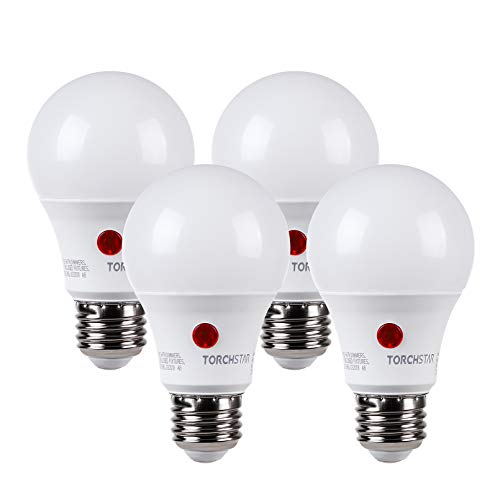


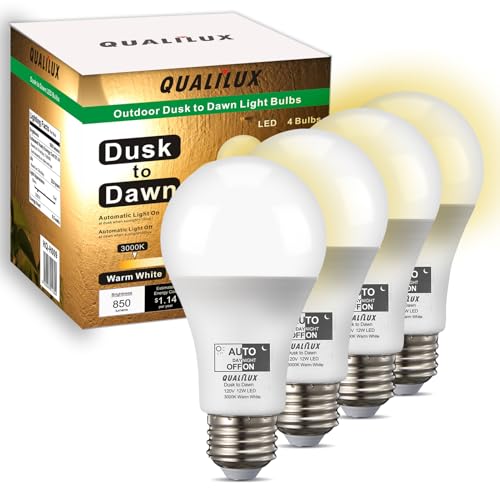
A dusk-to-dawn photocell bulb solves a specific problem: a location where light needs to be on continuously from sunset to sunrise, without any interaction required. Front entry steps, driveways, back door lanterns, and garage exterior fixtures are the natural fits. The light is on before someone arrives and stays on until they no longer need it — no fumbling for a switch, no motion trigger that might fail to activate.
The limitation is that this type of bulb does not distinguish between night and occupied. It stays on whether or not anyone is present. For outdoor applications this is generally fine — the energy cost is low and the safety benefit is continuous. For indoor applications, it is almost always the wrong choice. A photocell bulb in a bedroom fixture would wake someone; in a hallway it would never turn off during sleeping hours; in a bathroom it creates a privacy anomaly. This type belongs outside.
A secondary limitation for covered or recessed outdoor fixtures: the photocell reads the light level at its own location, not at the sky. A bulb in a deeply recessed soffit can may perceive darkness earlier than actual sunset because it's shaded. Test placement before committing to it permanently.
Where it falls short:
- Any indoor application where continuous nighttime light is intrusive or wasteful
- Covered fixtures where early triggering from shade becomes a nuisance
- Situations where on-demand (motion) activation is safer or more appropriate
TORCHSTAR 4-Pack Dusk to Dawn LED Light Bulb Outdoor, A19, 5000K
The TORCHSTAR 5000K version produces daylight-temperature output — cool, blue-white light that reveals ground hazards and landscaping detail clearly. For a driveway fixture, back door lantern, or carport light where security visibility matters, the 5000K temperature performs well. It is not appropriate for entry-adjacent indoor spaces where cooler light at night would be jarring.
The four-pack pricing makes it practical to outfit multiple exterior fixtures in a single order. At A19 form factor with E26 base, it installs in any standard outdoor lantern or globe fixture. Confirm enclosed fixture rating before installing in any covered housing.
At roughly 9W of actual draw running 12 hours per night, each bulb costs approximately $4–6 per year in electricity at average US rates. Four bulbs running simultaneously adds less than $25 per year to the electric bill.
GE LED+ A19 Dusk to Dawn Outdoor Security Light Bulbs, Soft White (2-Pack)
The GE LED+ soft white version (2700K) is the warmer counterpart to the 5000K options in this category. Soft white dusk-to-dawn output suits covered front porches, side entry lanterns, and decorative outdoor fixtures where the fixture is visible from living spaces and cooler light would look harsh.
The GE LED+ brand carries consistent quality in this application. Two-pack pricing is appropriate for buyers who need to cover two entry points — front and side door, for example — without committing to a four-pack across fixtures they haven't yet measured.
Confirm the fixture is rated for outdoor use and that the photocell has adequate exposure to read ambient light accurately. In a deep lantern with a small opening, test whether the bulb triggers at true dusk rather than mid-afternoon shade.
Amazon Basics A19 Dusk to Dawn Sensor LED Outdoor Light Bulbs
The Amazon Basics version is a single-listing option at a per-bulb price that suits buyers who need one specific fixture covered. A19 form factor, E26 base, standard photocell dusk-to-dawn operation — this is a no-configuration outdoor solution.
The Amazon Basics line in this category performs reliably for standard covered-porch and entry-lantern applications. For outdoor fixtures in extreme weather exposure — unprotected from rain or direct sun — confirm the IP rating or weather resistance specification before installation.
For a caregiver who needs a single reliable solution for a parent's front entry light and doesn't need to outfit multiple fixtures, this is a practical choice that doesn't require committing to a multi-pack.
Sunco 4-Pack Dusk to Dawn ST64 Outdoor Edison Bulbs LED, Vintage Style
The Sunco ST64 is a vintage Edison-style bulb with dusk-to-dawn photocell control. The decorative form factor makes it appropriate for outdoor string lights, exposed-socket fixtures, and open-base lanterns where the bulb itself is visible as a design element.
This is not a utility bulb. The ST64 format produces decorative-level output — adequate for ambiance, not adequate for hazard illumination on entry steps or a driveway. Use it where the goal is continuous nighttime presence and aesthetic warmth, not maximum fall-prevention visibility.
For entry steps that need genuine illumination, a higher-output A19 option in this category is a better fit. The Sunco ST64 suits a back patio string, a garden path lantern, or a decorative post fixture where ambiance is the primary goal.
TORCHSTAR 4-Pack Dusk to Dawn LED Light Bulb Outdoor, A19, 2700K
This is the warm-white (2700K) version of the TORCHSTAR four-pack. The output and specifications are otherwise similar to the 5000K version above; the distinction is color temperature. Warm white suits covered porches, side entries, and front lanterns visible from living spaces where cooler light would look out of place after dark.
For buyers outfitting a front porch fixture that family members see from inside the house, the 2700K output looks familiar and comfortable rather than clinical. The safety function — continuous nighttime illumination on entry steps — is the same regardless of color temperature.
Four-pack pricing at 2700K makes this a practical choice for outfitting matched fixtures across a home's exterior. Confirm all target fixtures are rated for the same base type before ordering.
GEPLAD 4-Pack Dusk to Dawn Light Bulbs Outdoor, 75W Equivalent
The GEPLAD four-pack operates at 75W equivalent output — higher than the standard 60W equivalent options in this category. The additional brightness is meaningful for applications where the fixture serves a larger area: a wide driveway, an open carport, or a back deck where the footprint to illuminate is broader than a standard entry step.
At higher output, actual LED wattage increases modestly, but the operating cost per year remains low. For applications where the standard 800-lumen threshold isn't sufficient, the 75W equivalent provides headroom.
Confirm enclosed fixture compatibility and weather resistance for the specific installation before ordering. Higher-output LEDs generate more heat; enclosed fixture rating becomes more important as output increases.
Qualilux Dusk to Dawn A19 LED Light Bulbs Outdoor, 60W Equivalent, Warm White
The Qualilux is a warm-white A19 at 60W equivalent — standard output, standard form factor, standard photocell operation. It covers the essential dusk-to-dawn function for a single outdoor fixture without the multi-pack commitment.
For buyers who want a single reliable bulb for one fixture — a side door lantern, a garage entry light, a back porch fixture — the single listing avoids paying for extras. Warm white output at 60W equivalent suits covered fixtures where the goal is comfortable continuous illumination rather than high-visibility security lighting.
Choosing the right outdoor lighting for entry steps and walkways is one of the lowest-cost fall prevention steps available. A single dusk-to-dawn bulb in the right fixture — correctly positioned, consistently on from sunset to sunrise — eliminates the entire category of "couldn't see the step" nighttime entry falls.
Motion-Sensor Wall Switches
Bathrooms and laundry rooms already have correctly positioned fixtures — the hazard is the switch itself, which must be found and operated in the dark. A motion-sensor wall switch replaces the existing switch plate and eliminates that task entirely, turning the light on automatically when someone enters the room.


A motion-sensor wall switch solves a different problem than any bulb-based option: it eliminates the switch task entirely for every light connected to that circuit, regardless of how many bulbs or what type of fixture is installed. This is the right solution for bathrooms and laundry rooms, where the existing fixture is already correctly positioned but the act of finding and operating the switch in the dark — often while getting up at night — is the hazard.
The installation is one step beyond screwing in a bulb. It requires turning off the breaker, removing the existing switch, matching three wires (hot, load, neutral or ground depending on the product), and attaching them to the new switch's terminals. For most people comfortable with basic household tasks this takes 15–30 minutes. A family member or handyman can complete it in under an hour. The reward is a permanent, invisible solution that works with existing fixtures and bulbs.
The honest limitation is neutral wire compatibility. Older homes — roughly pre-1985 — may not have a neutral wire run to the switch box. If you open the switch plate and find only two wires (black and white used as a switch leg, often both black-taped), you need a no-neutral-required model. Buying the wrong switch means a return trip. This distinction is called out clearly in the write-ups below.
Where it falls short:
- Buyers who are not comfortable with any electrical work, even with the breaker off — bulb-based options are a better fit
- Homes with complex 3-way switching where the product isn't rated for that wiring configuration
- Fixtures on dimmer circuits, unless the switch is explicitly rated for dimmer replacement
- Situations where the fixture placement itself is the problem, not the switch location
Lutron Motion Sensor Light Switch, 2A Single Pole
The Lutron is a single-pole motion-sensor switch rated for any bulb type — including LED, CFL, and incandescent. The 2A rating means it handles the load of most standard fixtures without concern about minimum load thresholds that cause flickering with single LED bulbs.
Lutron has a consistent reputation for switch quality and longevity. The occupancy-sensor design turns the light on automatically when someone enters and off after a set timeout — appropriate for bathrooms, laundry rooms, and hallways where the existing fixture is correctly positioned.
Confirm neutral wire availability before ordering this model. Like most standard occupancy switches, it requires a neutral wire at the switch box. For older homes without a neutral wire, the TOPGREENER no-neutral model below is a better fit. For a bathroom where nighttime safety is the specific concern, confirm the timeout is adjustable to at least 5 minutes before installation.
ECOELER Motion Sensor Light Switch, Occupancy & Vacancy Model
The ECOELER offers both occupancy mode (auto-on, auto-off) and vacancy mode (manual-on, auto-off). The occupancy mode is the relevant setting for fall prevention: the light comes on when motion is detected and goes off after the timeout without any switch interaction required.
Vacancy mode — where the user turns the light on manually but it shuts off automatically — is useful in rooms where automatic-on is undesirable. For a bedroom where an adult doesn't want the light triggered by a sleeping partner's movement, vacancy mode preserves manual control over activation while eliminating the task of remembering to turn the light off.
Check neutral wire requirements and single-pole vs. 3-way compatibility against the specific switch box before ordering. For a laundry room where the timeout matters, verify the adjustable range covers the time needed for a complete task cycle.
TOPGREENER In-Wall PIR Motion Sensor Light Switch, Single Pole
The TOPGREENER single-pole occupancy switch includes adjustable timeout, adjustable sensitivity, and a manual override — the three features that matter most for bathroom and laundry room applications. Manual override means that if someone stands still and the light begins to dim before shutoff, a single tap holds it on. That feature prevents the hazard of sudden darkness mid-task.
The sensitivity adjustment is useful in rooms where the detection range is wider than needed — a small bathroom where the sensor is mounted at the door can sometimes detect movement in an adjacent hallway through a gap. Reducing sensitivity limits the detection zone to the room itself.
This switch requires a neutral wire. Confirm availability at the switch box before ordering. For bathroom fall prevention specifically, adjustable timeout up to 10–15 minutes and manual override are the two specifications that matter most — and this switch provides both.
Leviton Motion Sensor Light Switch, Auto-On/Auto-Off or Manual-On, 2A
The Leviton offers a choice between automatic-on (occupancy) and manual-on with automatic-off (vacancy) modes, similar to the ECOELER above. At 2A with compatibility across bulb types, it handles mixed-load fixtures without the minimum-load flickering issues that affect some motion switches paired with single LED bulbs.
Leviton is a widely distributed brand with broad installer familiarity. For a caregiver who plans to have a local handyman complete the installation, the Leviton name often means the installer has worked with it before, which speeds the job.
Confirm neutral wire requirements and single-pole compatibility before ordering. For a bathroom application, verify the timeout range and whether it is adjustable to a duration appropriate for shower use — at least 5 minutes, ideally 10.
TOPGREENER PIR Motion Sensor Light Switch, No Neutral, No Ground Wire (2-Pack)
This is the no-neutral, no-ground-required version from TOPGREENER — specifically designed for older homes where the switch box contains only two conductors. If you open the switch plate and find no white neutral wire connected to the switch (only a hot and a load), this model works where standard occupancy switches do not.
The two-pack is appropriate for buyers who need to cover two locations in an older home — a bathroom and a hallway, for example — without two separate compatibility issues. Both installs use the same wiring approach.
For homes built before approximately 1985, this model deserves serious consideration before ordering any other switch in this category. The no-neutral design eliminates the most common installation failure point for older construction. Verify single-pole compatibility against the specific circuit before ordering.
TOPGREENER Occupancy/Vacancy PIR Motion Sensor Light Switch (1-Pack)
The TOPGREENER single-pack occupancy/vacancy switch covers the standard installation scenario — neutral wire present, single-pole circuit, E26 fixture load. It includes both occupancy and vacancy modes, adjustable timeout, and adjustable sensitivity.
For a buyer who needs a single bathroom or laundry room switch and has confirmed neutral wire availability, this model offers the full feature set in a single-unit purchase. The adjustable timeout range is the key specification for bathroom use — confirm it covers the 5–10 minute duration before ordering.
Combined with a non-slip bath mat and grab bars, a motion-sensor wall switch in the bathroom addresses three distinct fall risk points simultaneously: the entry in the dark, the act of reaching for the switch, and the return trip to the switch before leaving the room. The switch eliminates all three.
Frequently Asked Questions
Will a motion-sensor bulb work in a closed or globe-style fixture? Only if it's explicitly rated for enclosed fixtures. Heat that can't dissipate shortens LED lifespan significantly. Check the product page for "enclosed fixture rated" before installing in any covered lantern, recessed can with a closed trim, or globe housing. If the rating isn't stated, assume it isn't rated for enclosed use.
My motion-sensor bulb keeps shutting off while I'm in the bathroom. What's wrong? The timeout is too short for that application, or the sensor can't detect you when you're stationary. PIR sensors detect heat differential and movement — if you're sitting still, some sensors lose the signal within 30–90 seconds. The fix is either a product with a longer adjustable timeout (minimum 5 minutes for a bathroom, ideally 10) or a motion-sensor wall switch with manual override. The wall switch is the better long-term solution for bathrooms.
Can I use a dusk-to-dawn photocell bulb in my hallway or bathroom? No. A photocell bulb stays on from dusk to sunrise continuously. In an indoor hallway or bathroom, that means the light never turns off at night — it will interfere with sleep and waste energy. Photocell bulbs belong in outdoor applications: entry steps, driveways, exterior lanterns, where continuous nighttime illumination is the goal.
My house was built in the 1970s. Will a motion-sensor wall switch work? Possibly, but you need to check first. Older homes often lack a neutral wire at the switch box. Open the switch plate with the breaker off and look at the wires. If you see only two conductors — often both black, or one black-taped white — you need a no-neutral-required model. The TOPGREENER no-neutral, no-ground switch (B08R364D94) above is designed exactly for this situation.
How bright does a motion-sensor bulb need to be to actually prevent falls? Bright enough to reveal floor hazards: rugs, thresholds, wet tile, loose cords. For hallways and bathrooms, 800 lumens (60W equivalent) is a reasonable minimum. Lower outputs — 400–500 lumens — are adequate for closets, pantries, and accent applications where hazard visibility is less critical. When in doubt, go brighter. Overlighting is rarely a fall risk; underlighting is.
What happens if the power goes out — will the motion sensor remember its settings? For most screw-in adapters and integrated bulbs, the sensor resets to its default settings after a power interruption. For products with adjustable timeout, this may mean the timeout reverts to its factory default. If a specific timeout setting is critical — as it would be for a bathroom application — check whether the product retains settings after power loss, and re-test after any outage.
Hacks and Practical Advice
Walk the room before you buy anything. Before ordering, identify three things in each target location: the fixture type (open, globe, recessed can), the socket orientation (pointing down, sideways, or angled), and whether the existing switch controls one fixture or two locations. That 90-second audit eliminates most wrong purchases before they happen.
Test placement with a clip-on shop light first. If you're unsure whether a motion sensor in a given socket will detect entry from the right direction, use a cheap clip-on LED for a day before committing. Position it to shine from the same angle as the target socket. If someone entering from the hallway, waking from bed, or coming through the door doesn't land in that light — the socket isn't the right location regardless of which bulb type goes in it.
Timeout too short is more dangerous than no light at all. A light that shuts off mid-shower, mid-step, or mid-medication routine creates a new hazard. When in doubt about timeout length, choose the product with the longest adjustable timeout in the category. The few dollars difference between a fixed-timeout and adjustable-timeout option is not worth the risk.
Check annually. PIR sensors can accumulate dust on the lens and reduce sensitivity over time. Every year, wipe the sensor lens with a dry cloth. For outdoor applications, check that no spider webs, leaves, or debris have covered the sensor face. A 30-second annual check keeps the system performing as installed.
For caregivers installing from a distance. If you're setting this up in a parent's home during a visit, test every installed unit before you leave. Walk through the trigger zone slowly. Confirm the light responds. Time how long it stays on. Then write the timeout duration on a small piece of tape inside the fixture cover — so a follow-up caregiver or family member knows what to expect without having to troubleshoot from scratch.
Motion-Sensor Bulb Buying Guide: Take It Shopping
Download this fill-in-the-blanks shopping guide and take it with you to match motion-sensor bulbs, adapters, and switches perfectly to your home’s fixtures and safety needs—no guesswork, no returns, no wasted money.
The Safer Home Is One Installation Away
The room determines the product type, not the price. A buyer who picks the right type for the right location and installs it in 10 minutes has done more for fall prevention than one who buys the most expensive smart lighting system and installs it in the wrong fixture.
Every option covered here requires no wiring, no permit, and no tools beyond a step stool and a steady hand — and the motion-sensor wall switches require only the comfort of turning off a breaker and matching three labeled wires. The barrier to a safer home tonight is genuinely low.
If you'd like to go further than a single bulb, a structured room-by-room safety walk-through of the home identifies the specific risks and the lowest-cost fixes for each space. Start with one room tonight — garage, bathroom, or entry — and walk every socket in it. Identify the fixture type, the socket orientation, and the existing switch situation. That single walk-through gives you everything you need to choose the right product category before spending a dollar.
For the bathroom specifically, the motion-sensor wall switch paired with grab bars and a non-slip mat addresses three distinct fall risk points in a single afternoon. For nighttime hallway and bedroom safety, the right lighting paired with bedroom-specific fall prevention strategies compounds the protection. And for exterior entry — the step you can't see at 10 p.m. when you arrive home — a dusk-to-dawn bulb in the right lantern is a permanent fix that requires no ongoing action from anyone.
Pick one room. Walk the sockets. Install tonight.