
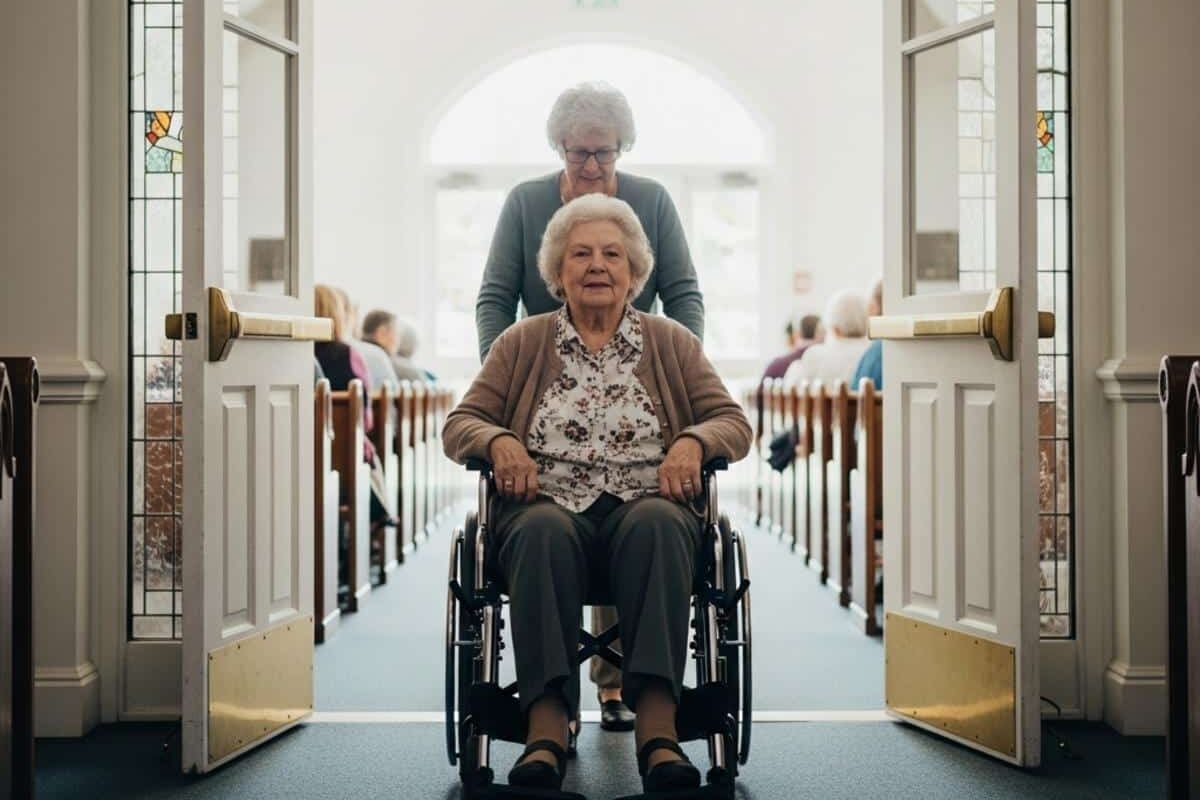
I’ve spent more than 20 years working with older adults, and I’ve noticed a pattern that doesn’t show up in most health conversations.
The most vibrant, sharp, socially alive people I meet in their 70s and 80s tend to share one quiet habit. It has nothing to do with their diet, their supplement routine, or how many steps they walk each day.
They show up somewhere every week. The same place. The same people. And someone notices when they don’t.
Here’s what might surprise you: researchers have found that regular attendance at faith community gatherings is one of the strongest predictors of longevity in older adults – and they’re clear that religion itself isn’t the reason why. Whether you’ve attended the same congregation for decades or haven’t walked through those doors in years, what follows is worth understanding.
Senior Community Belonging Checklist: Find and Keep Your People
Download this practical, printable checklist to evaluate whether you or your loved one has the kind of community belonging that supports longer, healthier life—plus specific action steps to find it, fix barriers like transportation, and keep the connection strong.
The Research Is Clearer Than You’d Expect – And It Has Nothing to Do With Prayer
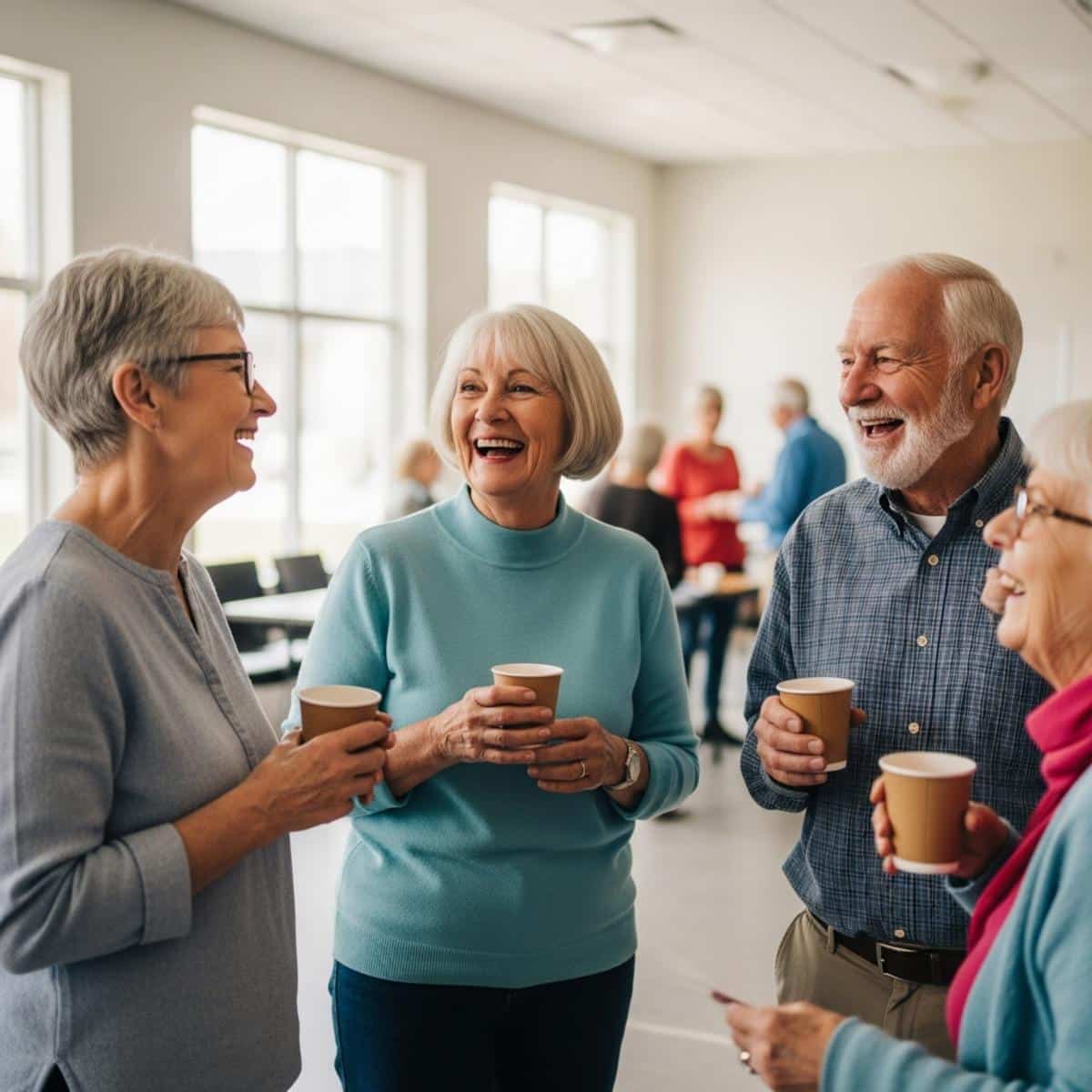
What researchers keep finding is that regular, structured social gathering with a consistent group of people dramatically reduces mortality risk in older adults.
The mechanism isn’t spiritual. It’s social and structural.
Older adults benefit more from this kind of community than younger people do because isolation compounds with age. The risks aren’t abstract – the health effects of loneliness on seniors are measurable and serious, comparable in documented risk to heavy smoking.
There’s also a critical distinction researchers make between passive social exposure and active community belonging. Being around people is not the same as being known by them.
Active belonging means a specific group expects you to show up. It means someone calls when you’re absent. It means you have a name in that room, not just a face.
Faith communities happen to create this kind of belonging more reliably than almost any other social structure available to older adults. That’s not a theological claim – it’s an observation about how these communities are organized.
The combination of weekly ritual, genuine belonging, and a built-in social safety net is what makes the difference. That combination is the active ingredient.
Why the Weekly Ritual Matters More Than You Think
Routine is doing more cognitive work than most people realize.
When you have somewhere to be every week at the same time – a reason to know what day it is, what to wear, who you’ll see – you’re giving your brain consistent temporal anchors. That structure becomes increasingly valuable as people age.
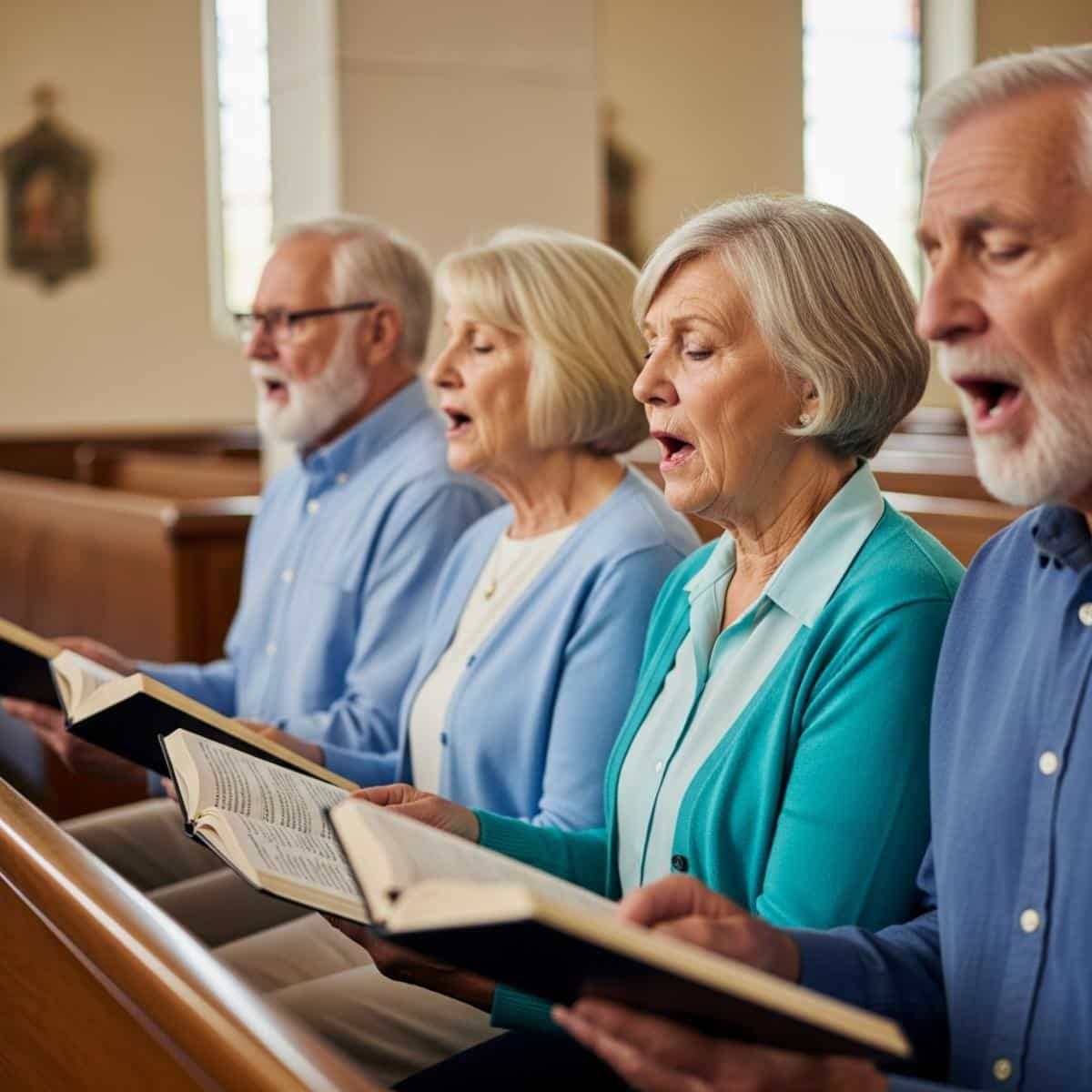
The ritual elements of communal gatherings – familiar music, call-and-response patterns, memorized text – activate long-term memory and create positive emotional associations that support mood and cognitive health. Music in particular reaches the brain in ways that other social activities don’t, and congregational singing or familiar hymns tap directly into that pathway.
Having a role matters just as much as showing up. Whether someone greets at the door, sings in the choir, serves on a committee, or simply knows they’re the person who always brings the coffee – that role provides ongoing purpose. Purpose is one of the most consistent predictors of protection against depression in older adults and cognitive decline.
Here’s a contrast worth sitting with: an older adult who attends services weekly and has a standing coffee date with two friends afterward is receiving something qualitatively different from someone who watches the same service online alone. Both receive the content. Only one receives the community.
The walk from the parking lot. The handshake at the door. The conversation about someone’s grandchild in the fellowship hall afterward. Those moments are doing as much work as anything that happens during the service itself.
The ritual isn’t incidental to the health benefit. In many ways, it is the health benefit.
Finding a Senior-Friendly Congregation That Actually Fits
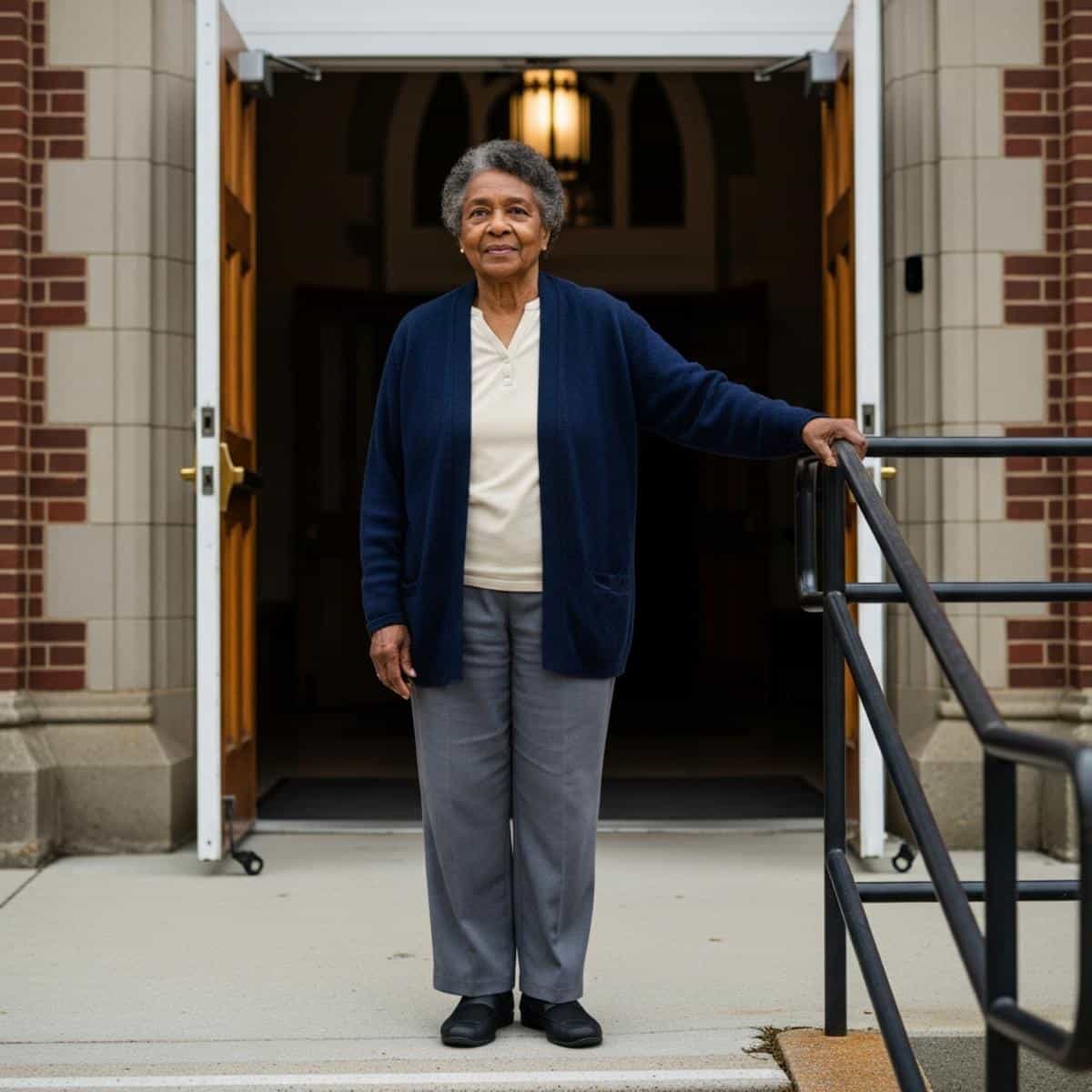
Not all congregations are equally accessible or welcoming to older adults. Knowing what to look for makes the difference between a sustaining community and a discouraging one.
What to look for in a senior-friendly congregation:
- Accessible parking close to the entrance, with clear paths that don’t require navigating stairs or uneven ground
- Seating options that accommodate mobility aids and don’t require squeezing into tight rows
- Hearing loop systems or assistive listening devices – being unable to follow along is one of the most common reasons older adults quietly stop attending
- A dedicated senior fellowship group that creates built-in peer connection beyond the service itself
- A visitation or wellness program that checks in on members who miss attendance – this is the feature that creates the “safety net” effect researchers consistently observe
For those managing hearing challenges in group listening environments, personal hearing amplifiers designed for group settings can restore full participation when assistive systems aren’t available at every seat.



I’d encourage readers to visit two or three congregations as a researcher rather than a seeker. Evaluate fit the same way you would any important community investment – not just on the content of the service, but on whether older adults are visible, active, and genuinely integrated into the life of that community.
A congregation where the majority of active members are already in their 60s and 70s offers something particularly valuable: a built-in peer community that understands your season of life.
Want more practical strategies for aging well and staying connected? Subscribe to the Graying With Grace newsletter for expert-tested advice delivered weekly – designed specifically for older adults and the families who care about them.
When Getting There Becomes the Obstacle
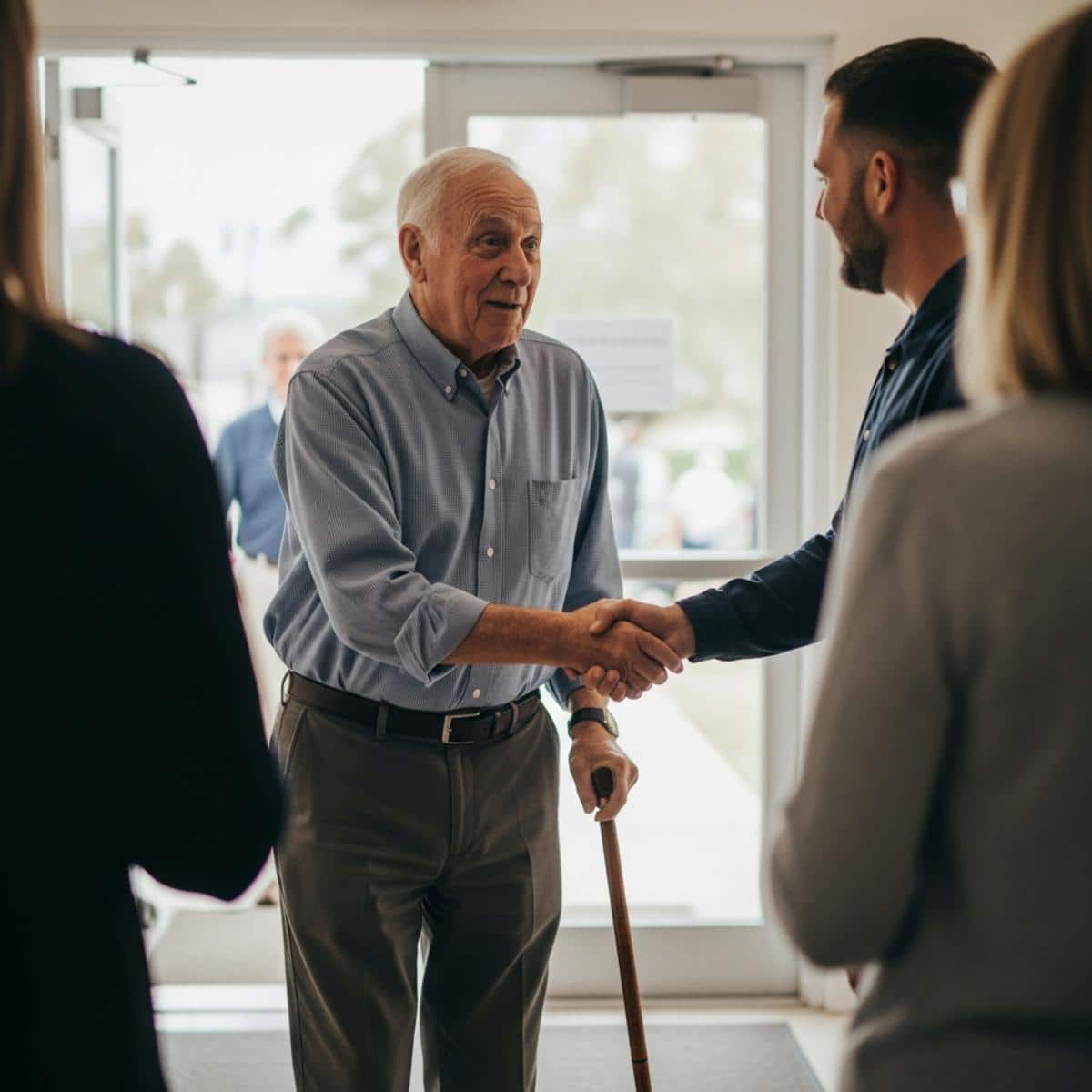
Transportation is the most common reason older adults drift away from faith communities – and it’s more solvable than most people realize.
There’s a well-documented pattern: when an older adult stops driving, faith community attendance often drops sharply within months. That withdrawal compounds isolation risk quickly because it removes one of the last remaining structures providing regular, reliable social connection.
Before assuming transportation is an insurmountable barrier, consider what’s already available:
- Congregation-organized ride programs – most established congregations have informal or formal networks of members willing to drive; the pastoral care team almost always knows who to call
- Volunteer driver networks – many communities have senior transportation services through local Area Agencies on Aging that specifically serve this kind of recurring trip
- Ride-share services – for older adults open to trying them, ride-share guides designed specifically for seniors can walk through using Uber or Lyft step by step, restoring access to community without requiring family coordination for every trip
Understanding the broader connection between social isolation and cognitive decline makes it easier to treat transportation as the health issue it actually is – not just a logistical inconvenience.
For caregivers reading this: One phone call to your parent’s congregation – asking specifically whether they have a transportation assistance program – is often the only step required to restore regular attendance. Most communities want to help. They just don’t always know who needs it.
When You Can’t Be There in Person – Preserving the Connection That Matters
Senior Community Belonging Checklist: Find and Keep Your People
Download this practical, printable checklist to evaluate whether you or your loved one has the kind of community belonging that supports longer, healthier life—plus specific action steps to find it, fix barriers like transportation, and keep the connection strong.
For older adults who are temporarily or permanently unable to attend in person, digital and home-based alternatives can preserve meaningful community connection – but only when they’re set up intentionally to maintain the relational dimension, not just the content delivery.
I want to be honest about what online attendance preserves and what it doesn’t. Watching a service online delivers the spiritual content. It does not deliver the handshake, the familiar face, or the sense of being expected and missed. Those are the elements driving the health benefit.
What actually helps during periods of absence:
- Scheduled phone calls with two or three specific people from the congregation – not the general weekly service, but individual connection with people who know you
- Receiving congregation newsletters and bulletins to maintain a sense of belonging to something ongoing
- Participating in small group video calls when available – the relational quality is closer to in-person than passive streaming
- Family members sending photos and updates through a MemoryBoard-style digital display that appears passively on a screen – no scrolling, no login, no complexity – so congregation friends and family can stay visually present without requiring the older adult to navigate technology independently
For older adults managing periods when attendance isn’t possible, large-print devotionals provide a daily ritual anchor that preserves the reflective structure of faith community engagement. The routine itself – a consistent time, a familiar format, a quiet moment of reflection – carries measurable benefit for mood and cognitive stability.
The goal isn’t to replicate in-person attendance digitally. It’s to preserve the sense of being known, expected, and connected. That kind of consistent family and community connection functions as genuine medicine for older adults – and it can be maintained through multiple channels when the right tools and intentions are in place.





The Bottom Line: Belonging Is the Active Ingredient
The longevity benefit of faith community attendance is real, well-documented, and available to anyone willing to invest in regular, structured communal belonging.
Theology is not the mechanism. Belonging is. Being known, expected, and noticed when you’re absent – that’s what the research keeps pointing to.
Whether you’re already sitting in a favorite pew every Sunday or you’re an adult child looking for a way to help a parent rebuild a connection they’ve let slip, the path forward is simpler than it might seem. One conversation, one visit, one phone call can reopen a door that delivers more health value than most people realize.
The science of reminiscence and community connection reinforces this consistently – older adults who feel known and valued by a consistent community are sharper, more emotionally resilient, and more physically healthy than those who don’t.
If you’re already part of a faith community, I’d love to hear what it means to your daily life. And if you’re a caregiver reading this, what’s one step you could take this week to help facilitate that connection for someone you love? Share your thoughts in the comments – your experience might be exactly what someone else needs to hear today.


![Feat older man standing at window quiet melancholy[1]](https://www.grayingwithgrace.com/wp-content/uploads/2026/05/FEAT-older_man_standing_at_window_quiet_melancholy1-e1779546240849-450x300.jpg)

![Keep older woman tea family photos kitchen[1]](https://www.grayingwithgrace.com/wp-content/uploads/2026/05/KEEP-older_woman_tea_family_photos_kitchen1-e1778623664732-450x300.jpg)

![Older woman receiving meal dignity[1]](https://www.grayingwithgrace.com/wp-content/uploads/2026/02/older_woman_receiving_meal_dignity1-e1771334664816-450x300.jpg)


