

Think back to the last family gathering where someone asked an older relative about their past. Maybe it was a grandchild asking a simple question – and suddenly the room went quiet, everyone leaning in, because what came next was something no one had ever heard.
Those moments are rare. And without intention, they stay rare.
The truth is, every older adult in your family carries decades of hard-won lessons, family history, and perspective that exists nowhere else on earth. That wisdom doesn’t have to wait for a eulogy to be celebrated. And starting an elder wisdom tradition is simpler than it sounds.
Start Your Family Wisdom Tradition This Week
Get a complete step-by-step checklist to capture and share family wisdom in just one week—with conversation starters, simple recording tips, and a weekly ritual that requires nothing but a smartphone and genuine listening.

The Stories You’re Carrying Are More Valuable Than You Realize
Here’s something I’ve noticed in over twenty years of working with older adults: most people dramatically underestimate how much their life experience means to the people around them.
What feels ordinary to you – the way your family navigated hard times, the lessons you learned from a failed business or a difficult marriage, the small daily rituals your parents kept – feels extraordinary to your grandchildren.
Younger generations have more access to information than any generation in history. What they don’t have is wisdom. You can’t Google what it actually feels like to start over at 45. You can’t find a YouTube video that explains how your grandmother kept the family together during a crisis. That kind of knowledge only comes from living – and it only reaches the next generation if someone decides to share it.
Families who maintain elder wisdom traditions report stronger identity and resilience across generations. Children and grandchildren who know their family’s story are better equipped to handle adversity, because they understand they come from people who navigated hard things and came through.
Your stories aren’t just memories. They’re the foundation your family stands on.
And you don’t need special equipment, technical skills, or hours of preparation to start sharing them. You just need intention – and a place to begin.
If you’re looking for meaningful ways to stay connected and feel valued within your family, sharing your story is one of the most powerful places to start.

Start With Simple Prompts That Unlock Real Stories
The hardest part of sharing wisdom isn’t the telling – it’s knowing where to begin.
Vague questions like “tell me about your life” rarely go anywhere. But a specific, emotionally resonant question? That opens everything.
Here are prompts that consistently spark meaningful conversations:
- “What’s the best advice you were ever given – and did you actually take it?”
- “What’s something you know now that you wish you’d known at 30?”
- “What family tradition from your childhood do you wish we still practiced?”
- “What’s the hardest decision you ever made – and do you still think it was right?”
- “What’s one thing you want your grandchildren to know about how you grew up?”
You don’t need to sit down for a formal interview. One good question over Sunday dinner is enough to start.
Try introducing a weekly “wisdom question” – something a family member can bring to any gathering, phone call, or group chat. The question doesn’t need an audience of twenty. It just needs one good listener.
For families who want a more lasting record of these answers, a prompted memory journal for grandparents is a beautiful way to write down reflections over time – a keepsake that families return to for generations.
Your action step this week: Choose one prompt from the list above. Use it at the next meal, phone call, or family visit. Just one question. That’s all it takes to begin.
This same approach is at the heart of legacy journaling for seniors – a practice that helps families preserve stories before they fade.




How to Record an Oral History With Nothing But Your Phone
Preserving elder wisdom doesn’t require a film crew, a fancy microphone, or a technical background. The phone in your pocket is genuinely all you need.
Here’s how to make it feel natural rather than like a production:
Choose a comfortable, quiet setting. After a family meal. During a slow Sunday afternoon. Anywhere the person feels relaxed and unhurried.
Let the conversation wander. The detours are often the best parts. If a question about a job leads to a story about a cross-country move, follow it.
Ask follow-up questions instead of moving down a list. “What happened next?” and “How did that make you feel?” unlock more than any prepared question.
Just press record. Most smartphones have a built-in voice memo app. You can also use the video camera. Either works. An imperfect recording is infinitely more valuable than no recording at all.
Once you have a recording, save it to a shared folder, send it to a family group chat, or upload it somewhere the whole family can access it. The format matters far less than the fact that it exists.
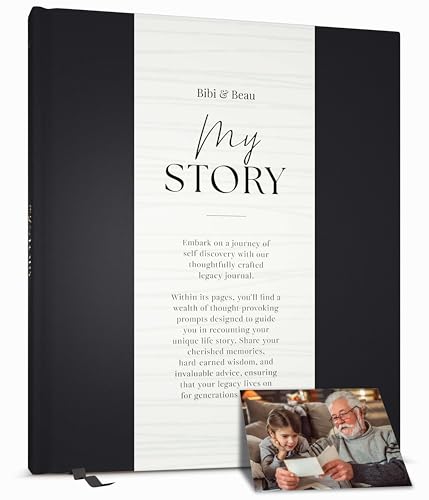
For families who want something more tangible, recordable storybook gifts for seniors offer a meaningful alternative – books that let older adults record their voice reading a message or sharing a story that grandchildren can replay whenever they want.


Want more ideas for staying connected and leaving a lasting legacy? Subscribe to our newsletter for practical, uplifting ideas designed specifically for older adults and their families.
The research on why talking about the past makes seniors happier and sharper is compelling – this isn’t just about legacy. It’s genuinely good for you.

Create a “Wisdom Sunday” Ritual Your Family Will Look Forward To
The most powerful family traditions aren’t elaborate. They’re consistent.
“Wisdom Sunday” is a simple, low-effort weekly touchpoint: once a week, an older adult in the family shares a brief reflection, memory, or lesson with everyone.
It doesn’t require anyone to be in the same room. Here’s how it can work across distance:
- A short voice message dropped into a family group chat
- A 60-second video filmed on a phone
- A handwritten note photographed and shared
- A brief email or text with a memory or piece of advice
What might a Wisdom Sunday message include?
- A memory sparked by the current season or a recent news story
- A hard lesson learned early in life
- A family recipe with the story behind why it mattered
- A piece of advice for a grandchild facing something specific
- A story about a family member the younger generation never knew
You don’t need to be a writer, a storyteller, or a tech expert. You just need to show up once a week with something real.
For families spread across distance, a digital message board like Memoryboard gives older adults a dedicated, distraction-free way to share daily reflections, photos, and voice messages directly with the people they love – without navigating social media.
Families who struggle with meaningful connection between visits often find that a simple weekly ritual like this changes the entire texture of family communication.
Your action step this week: Send one message to your family – a text, a voice note, anything – that says: “I’m going to start sharing something with you every Sunday. Watch for it.”
That announcement is the tradition beginning.

Start Your Family Wisdom Tradition This Week
Get a complete step-by-step checklist to capture and share family wisdom in just one week—with conversation starters, simple recording tips, and a weekly ritual that requires nothing but a smartphone and genuine listening.
Turn Your Wisdom Into a Keepsake That Outlasts the Moment
Shared conversations are precious. But giving them a lasting form turns a moment into a legacy.
Here are simple ways to make your wisdom more permanent:
A dedicated memory journal. Prompted memory journals for grandparents walk you through specific questions over time, building a complete picture of your life, values, and lessons. No blank page paralysis – just one prompt at a time.
A printed family history book. Recorded conversations can be transcribed and assembled into a bound book. Services that do this work are widely available and surprisingly affordable.
A shared family wisdom document. A simple document in a shared folder, added to over time, that anyone in the family can contribute to and access. Low-tech and deeply meaningful.
The act of documenting your story isn’t about facing mortality – it’s about celebrating a life well-lived. Many older adults find it genuinely affirming, not somber, because it draws attention to how much they’ve actually experienced and learned.
Grandchildren and adult children can participate in creating these keepsakes too. Some of the most moving family documents I’ve encountered were built collaboratively – questions from the grandchildren, answers from the grandparents, assembled into something the whole family contributed to.
For a structured starting point, keepsake books for family history and legacy give older adults a guided format that makes the whole process feel manageable rather than overwhelming.


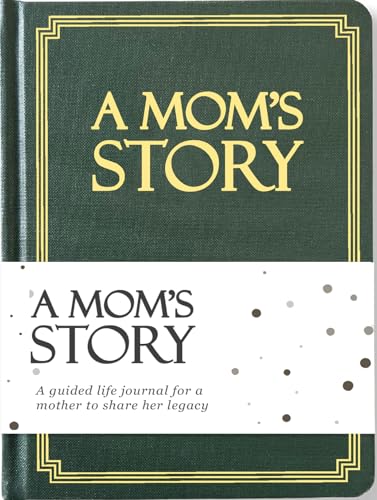
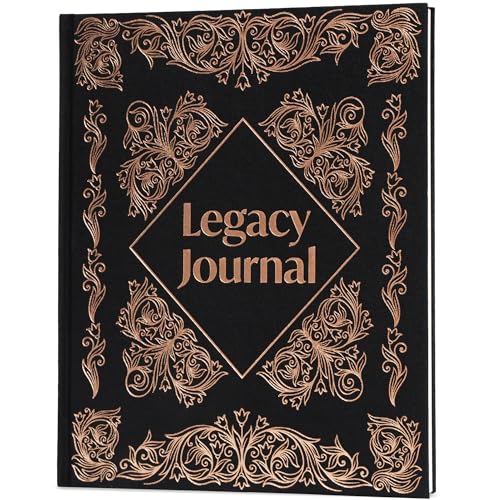
If you want a deeper dive into the practice, legacy journaling for seniors offers a full guide to getting started in a way that feels meaningful rather than like homework.
And if preserving those conversations feels important to you, the research on reminiscence therapy shows that the act of revisiting and sharing memories has real, measurable benefits – for the person sharing and the people listening.
Your Wisdom Belongs to Your Whole Family – Start This Week
You don’t need a perfect plan. You don’t need a finished product. You don’t need anyone’s permission.
The wisdom you carry is irreplaceable. No one else in your family has lived what you’ve lived or learned what you’ve learned. Your stories, your lessons, your voice – these are gifts your family hasn’t yet fully received.
Choose one thing from this article:
- A prompt to bring to your next family conversation
- A recording to make during your next visit or phone call
- A Sunday message to send this week
- A journal to fill in one page at a time
Start there. Start imperfectly. Start anyway.
The science of family connection and senior health is clear: staying actively engaged with the people you love isn’t just meaningful – it’s genuinely good for your mind and body.
What piece of wisdom do you most want to pass on? Share it in the comments – your answer might be exactly what someone else needed to hear today.



![Feat older man standing at window quiet melancholy[1]](https://www.grayingwithgrace.com/wp-content/uploads/2026/05/FEAT-older_man_standing_at_window_quiet_melancholy1-e1779546240849-450x300.jpg)

![Keep older woman tea family photos kitchen[1]](https://www.grayingwithgrace.com/wp-content/uploads/2026/05/KEEP-older_woman_tea_family_photos_kitchen1-e1778623664732-450x300.jpg)

![Older woman receiving meal dignity[1]](https://www.grayingwithgrace.com/wp-content/uploads/2026/02/older_woman_receiving_meal_dignity1-e1771334664816-450x300.jpg)


