
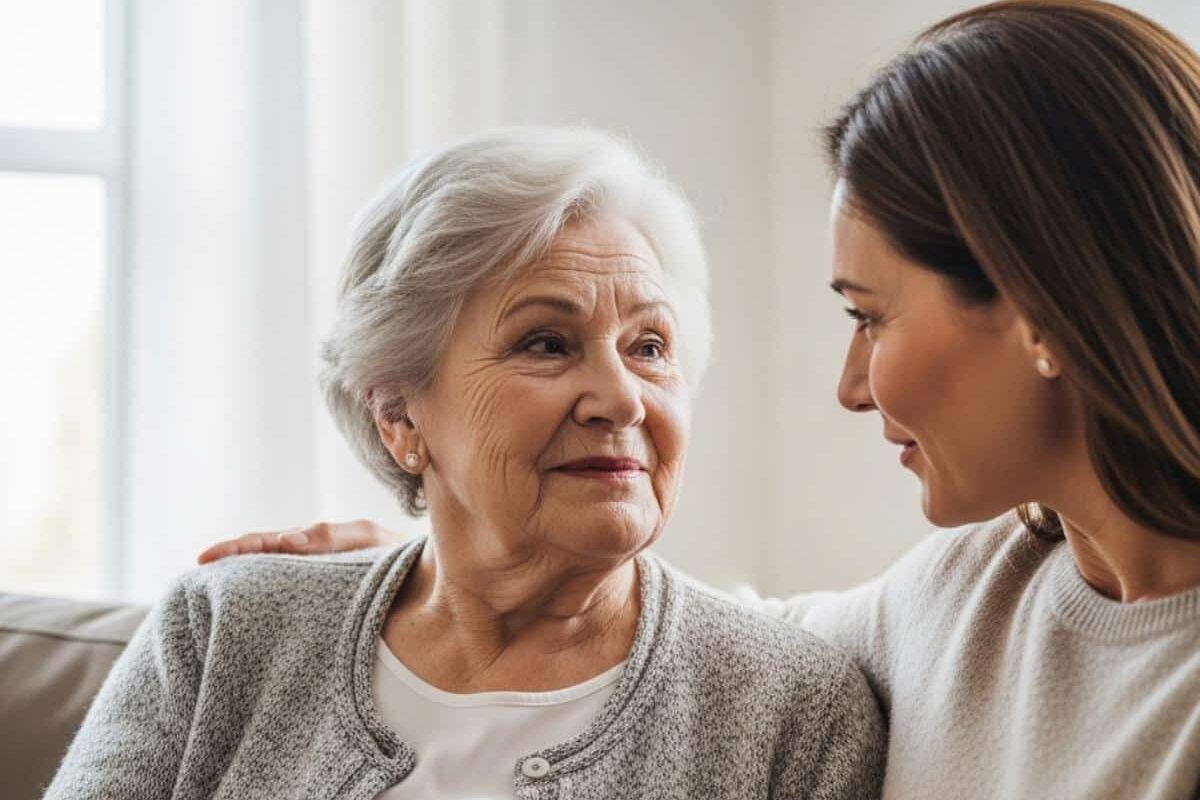
She has three phone calls a week with her daughter. She attends a Tuesday book club. Her neighbor stops by for coffee. By every measure, she is connected.
And yet something still feels missing — an ache she cannot quite name.
If that sounds familiar, this article is for you. Because what she is experiencing has a name, it is well-documented, and almost no one in senior health content ever talks about it.
Video: The Hidden Loneliness: Why Connection Alone Isn’t Enough
In this video, you’ll discover why some seniors feel deeply lonely despite regular phone calls and social activities—and what families often miss about the role of physical touch in wellbeing. Learn the signs that point to touch deprivation, what happens in the body when warmth is absent, and the simple, practical gestures that can make a real difference during your next visit.

What Is Touch Deprivation — and Why Are Seniors So Vulnerable?
Touch deprivation — sometimes called “skin hunger” — is what happens when a person receives insufficient physical contact over time. It is not a mood. It is not a character flaw. It is a documented physiological and psychological state that the body registers the same way it registers hunger or thirst.
Older adults are disproportionately vulnerable for reasons that rarely get named directly:
- Widowhood removes a primary source of daily physical closeness
- Adult children living at a distance mean that hugs become infrequent rather than routine
- Reduced social circles shrink the opportunities for casual touch — a hand on the arm, a greeting embrace
- Medical environments often default to clinical contact rather than warm, human connection
- Cultural conditioning teaches older adults not to express this need, especially if they don’t want to “be a burden”
Here is the distinction most people miss: social loneliness and physical touch deprivation are not the same thing. You can have a full calendar and an active group of friends and still go weeks without being held, hugged, or touched warmly by another person.
Feeling the effects of that gap does not mean something is wrong with you. It means you are human.

What Touch Deprivation Actually Does to the Body and Mind
This is not about sentimentality. The body keeps score, and physical touch is part of how it stays balanced.
When you receive warm physical contact, your body releases oxytocin — a hormone that lowers cortisol, reduces stress, and supports a sense of calm and safety. Without regular touch, cortisol levels can remain chronically elevated, which has measurable downstream effects:
- Increased anxiety and irritability that may seem unconnected to any external cause
- Disrupted sleep and higher sensitivity to physical pain
- Weakened immune response over time
- Heightened risk of depression and, in some research, accelerated cognitive decline
The challenge is that older adults — and the family members who love them — rarely connect these symptoms to touch deprivation. Increased fatigue gets attributed to aging. Unexplained sadness gets chalked up to the season. Restlessness goes unexamined.
Understanding the real drivers of senior health and independence means looking beyond the obvious. The absence of physical contact is one of those less-obvious drivers — and it matters more than most people realize.

The ache no one has words for
How to Recognize the Signs in Yourself or an Aging Parent
Knowing what to look for is the first step. These are the signs worth paying attention to:
Behavioral signs:
- Holding hands longer during a visit
- Lingering at goodbyes — reluctance to let go of a hug
- Increased time spent with or seeking out pets
- Moving closer physically during conversation rather than sitting at a distance
Emotional signs:
- Heightened sadness or anxiety that doesn’t clearly connect to any specific event
- Expressing feelings of being “far away” from people, even when in regular contact
- A noticeable emotional lift during in-person visits that dissipates quickly after
Physical signs:
- Increased complaints of unexplained aches or general physical unease
- Restlessness, especially in the evenings
- Difficulty settling into sleep
One thing I have noticed in my work with older adults and their families: the adult child who pays attention often sees it before the parent names it. A mother who visibly brightens when her son sits beside her on the couch — not across the room — is communicating something real. That moment of closeness is not incidental.
Older adults may not have language for this specific need, especially if they were raised in a generation that valued stoicism and self-sufficiency. Recognizing these signs is not diagnosing a problem. It is paying attention to a real human need.
This connects directly to the broader research on what happens when family visits become infrequent — the effects are physical, not just emotional.
Want more practical guidance on supporting the older adults in your life? Subscribe to the Graying With Grace newsletter for expert-tested advice delivered weekly — designed specifically for older adults and the people who care for them.

Simple, Dignity-Preserving Ways to Address Touch Deprivation
Meaningful physical contact does not need to be elaborate, clinical, or even planned. The smallest, most consistent gestures carry more weight than most people expect.
During visits:
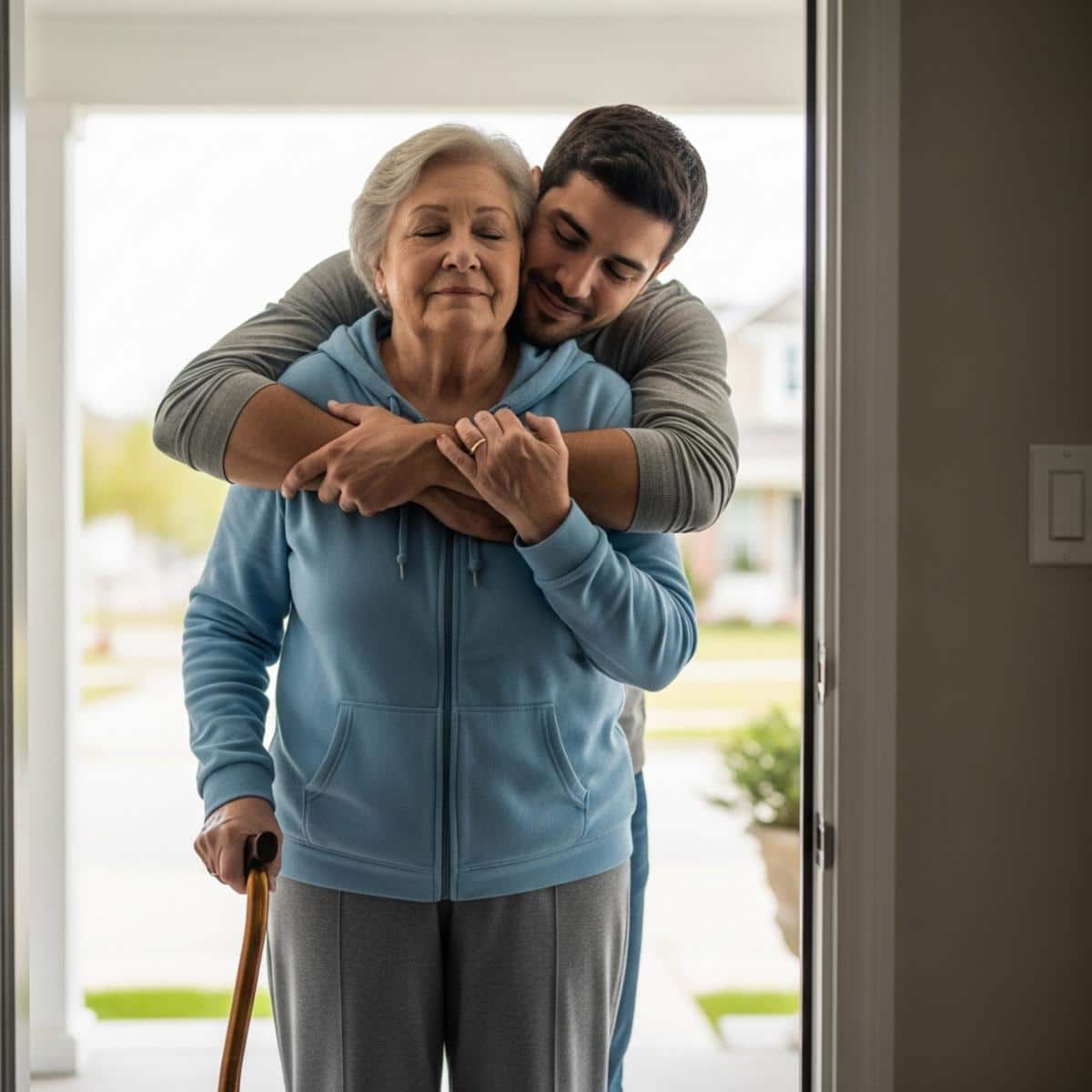
- Arrive with a genuine hug and leave the same way — make warmth a frame, not an afterthought
- Sit beside your parent on the couch rather than across the room
- Let a hand on the arm or a held hand become part of natural conversation
- Take your time at goodbye — the lingering moment matters
For older adults living independently:
- Seek out environments where touch is natural and non-clinical: dance classes, hair appointments, gentle yoga, grandchildren visits
- Consider how regular social engagement with community groups supports both mood and physical wellbeing — proximity to others creates opportunities for touch
- Massage therapy, when accessible, provides intentional therapeutic contact that has documented effects on stress and pain
The role of pets:
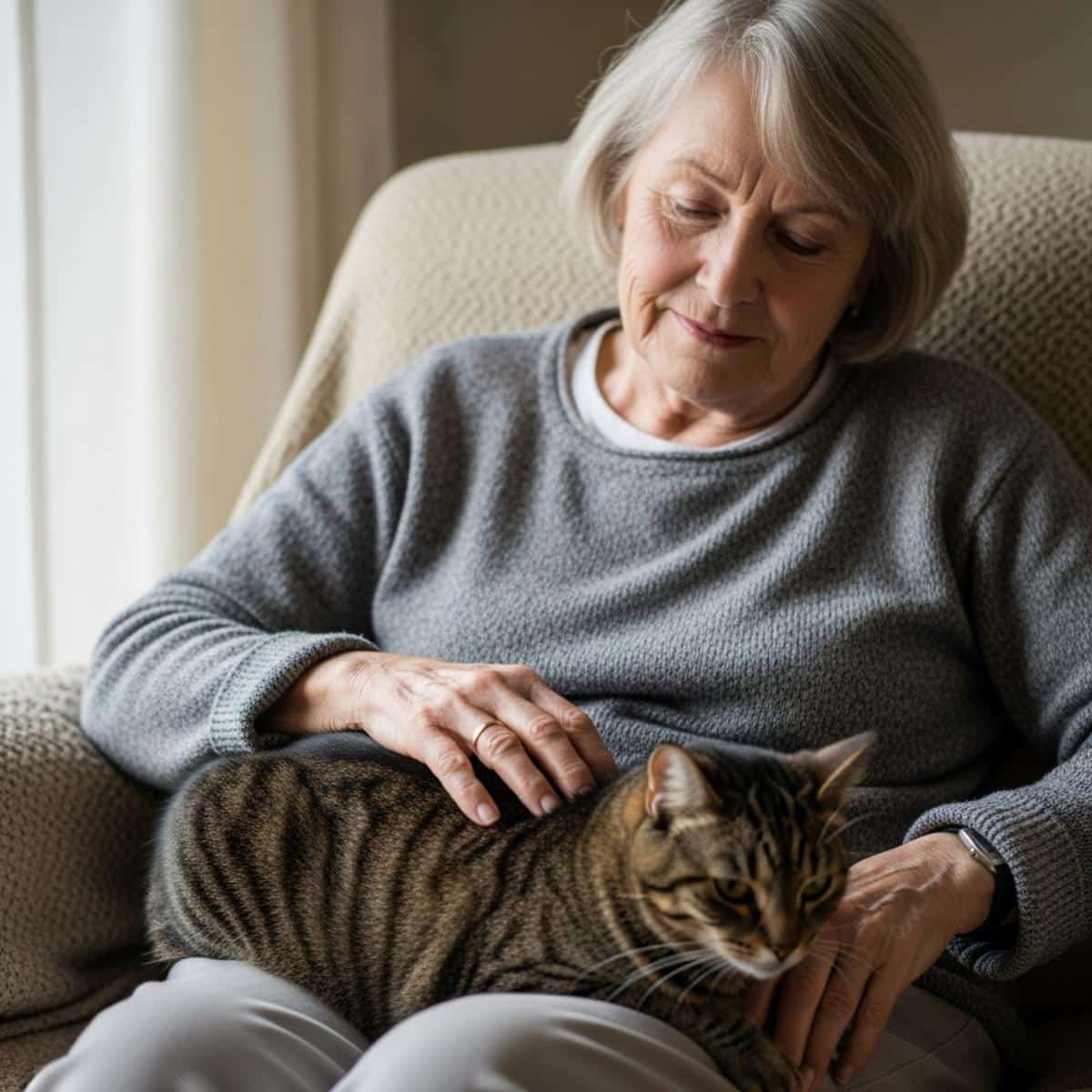
Animal interaction activates the same oxytocin response as human touch. Stroking a cat or dog — consistently, daily — is not a consolation prize. It is a genuine physiological intervention. For older adults living alone without regular in-person family contact, companion pets and pet interaction accessories provide a consistent, non-judgmental source of tactile comfort that meaningfully reduces the effects of skin hunger.





I have seen families restructure their weekly visits — not longer, just warmer — and watch the shift it creates. The visit does not need to be extended. It needs to be different in quality from the moment it starts.
This kind of intentional presence is also one of the most powerful things you can offer when making visits with an elderly parent more meaningful.
Products That Provide Tactile Comfort When Human Touch Isn’t Available
When regular human contact is limited — which is the reality for many older adults between visits — certain products can genuinely reduce the physiological effects of touch deprivation.
This is not about replacing human connection. It is about supporting the nervous system in the gaps.
What actually helps:
Weighted lap pads use deep pressure stimulation to activate the same calming neurological response as physical contact. An older adult who keeps a weighted lap pad nearby during television time may notice she feels calmer, less restless, and easier in her body — not because the product is medical, but because her nervous system responds to consistent, gentle pressure.


Massage tools — from simple handheld rollers to electric massagers — provide regular tactile stimulation that supports circulation, reduces muscle tension, and gives the skin the input it is missing.


Comfort-touch accessories like soft weighted blankets provide a low-effort, all-day option for tactile comfort that feels personal and dignified, not institutional.


The MemoryBoard is worth mentioning here not as a touch product, but as a family connection tool. When loved ones feel present — through messages, photos, and reminders that appear naturally throughout the day — the emotional gap between visits narrows. That psychological closeness is part of the same ecosystem as physical closeness.
The products that work best for older adults in this space are the ones that feel like gifts, not accommodations. A weighted blanket on the couch is an invitation to comfort, not a medical device. That framing matters — both for how it is received and how consistently it gets used.
For older adults managing the cumulative effects of isolation and reduced mobility, tactile comfort items are one practical layer of a broader approach.
Start With One Small Change
Touch deprivation is real. It is common among older adults. And it is addressable — not with grand interventions, but with small, consistent choices made by the people who love them and by older adults themselves.
If you are an older adult reading this: your need for physical warmth is not weakness. It is biology. Honoring it is an act of self-care, and now you have a name for something you may not have been able to name before.
If you are an adult child or caregiver reading this: some of the most powerful things you can do during your next visit cost nothing and take seconds. A longer hug at the door. Sitting close. Leaving the same way you arrived.
Start with one thing. Notice what shifts.
And if you have found something that works — a product, a habit, a simple change in how you structure a visit — share it in the comments. Your experience may be exactly what another family needs to hear.
Understanding how family connection functions as medicine for older adults is the first step. Acting on it, in whatever small way you can today, is the second.


![Feat older man standing at window quiet melancholy[1]](https://www.grayingwithgrace.com/wp-content/uploads/2026/05/FEAT-older_man_standing_at_window_quiet_melancholy1-e1779546240849-450x300.jpg)

![Keep older woman tea family photos kitchen[1]](https://www.grayingwithgrace.com/wp-content/uploads/2026/05/KEEP-older_woman_tea_family_photos_kitchen1-e1778623664732-450x300.jpg)

![Older woman receiving meal dignity[1]](https://www.grayingwithgrace.com/wp-content/uploads/2026/02/older_woman_receiving_meal_dignity1-e1771334664816-450x300.jpg)


