
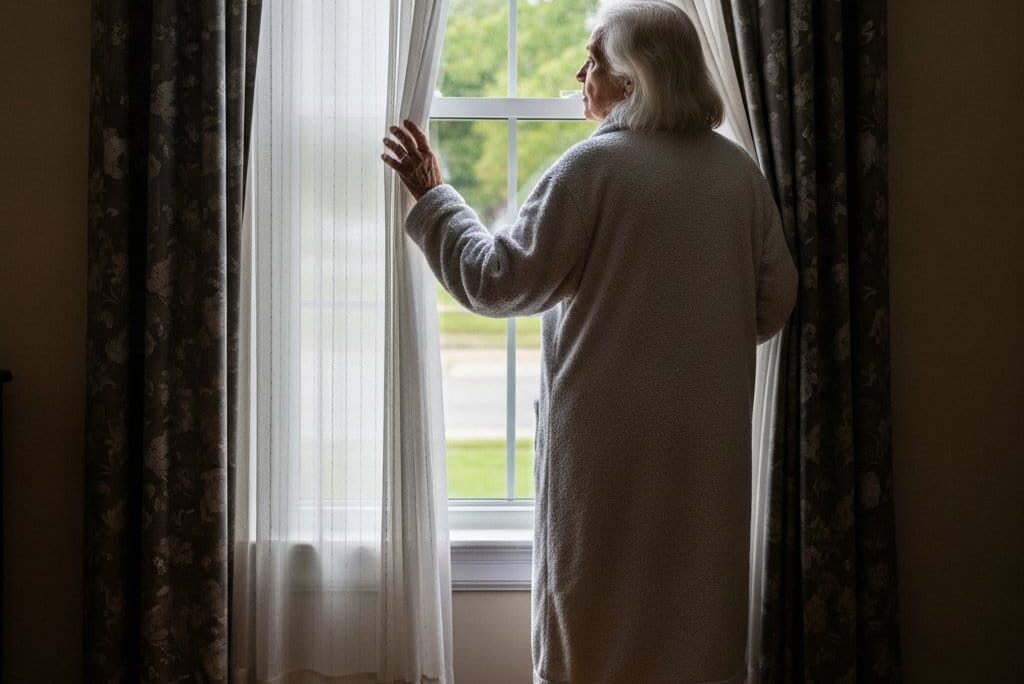
You came back from two weeks away, called your mother, and something felt slightly off.
She sounded quieter than usual. When you asked how her week went, she mentioned the television a lot. She hadn’t been out much. She said she was fine — and you believed her, mostly — but something in her voice didn’t quite match the sunny, active summer you’d imagined she was having while you were gone.
Here’s the counterintuitive truth I’ve seen play out in family after family over more than 20 years: for many older adults living alone, summer is one of the loneliest seasons of the year — not despite its reputation as a warm, social time, but partly because of it.
This article explains why summer quietly dismantles senior social connection, what signs to watch for, and five practical things you can do from a distance — starting this week — to change the shape of your aging parent’s summer without guilt or heroics.
The problem isn’t depression or stubbornness. It’s a structural collapse of routine that happens every June without anyone fully noticing.
The Summer Check-In Script: 5 Conversation Frameworks for Staying Close to an Aging Parent From a Distance
Download these 5 conversation scripts designed specifically for long-distance caregiving—so you can move beyond ‘just checking in’ and actually know how your aging parent is really doing this summer.
Why Summer Is Actually One of the Loneliest Seasons for Older Adults
Structured Connection vs. Spontaneous Connection — And Why Both Disappear
Here’s something I’ve noticed that surprised me the first time I saw it clearly: older adults don’t primarily rely on spontaneous social contact to stay connected. They rely on structured connection — the Tuesday morning exercise class, the Wednesday church committee, the Thursday library program, the Friday lunch at the senior center.
These aren’t casual nice-to-haves. For a 72-year-old living alone, they’re the architecture of the week.
And in summer, that architecture quietly collapses.
Senior center programs go on hiatus. Library programming scales back. Church committees take a summer break. Volunteer coordinators go on vacation. The structured touchpoints that anchor the week — gone, one by one, between Memorial Day and Labor Day.
Spontaneous connection evaporates at the same time. The neighbors who usually stop by are traveling. The grandchildren who might visit are at camp or on family trips. The regular walkers who pass by the front porch aren’t out in the afternoon heat.
Heat Makes It Worse
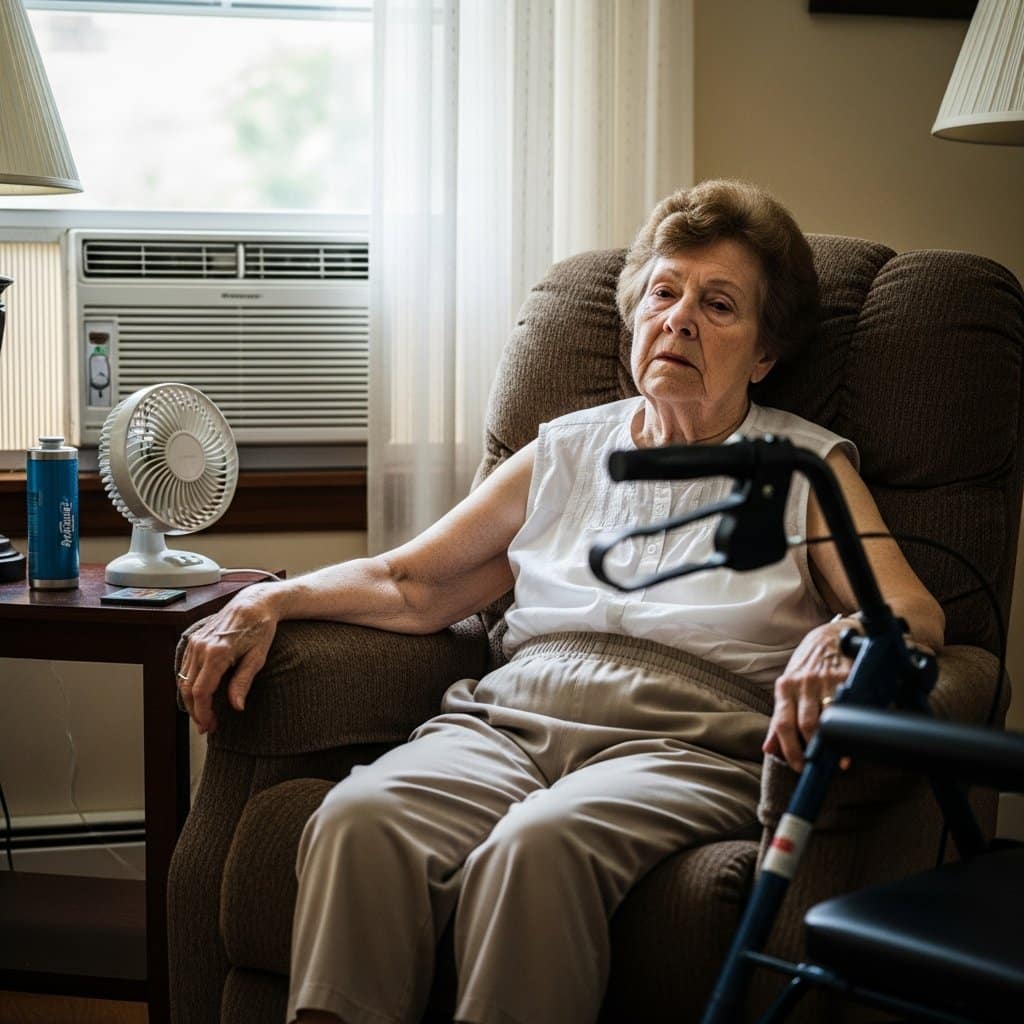
For older adults with heat sensitivity, mobility challenges, or a fear of falls on unfamiliar surfaces, high summer temperatures create a genuine barrier to going outside at all.
A park that felt welcoming in May feels risky in July.
The Gradual Fade Nobody Registers
What makes this particularly hard to catch is how gradually it happens. It’s not one dramatic loss — it’s one activity, then another, then another, across six or seven weeks.
By mid-July, an older adult who was genuinely socially engaged in April may be spending most of their waking hours alone. And because the transition was slow, neither they nor the people who love them registered how far the drift has gone.
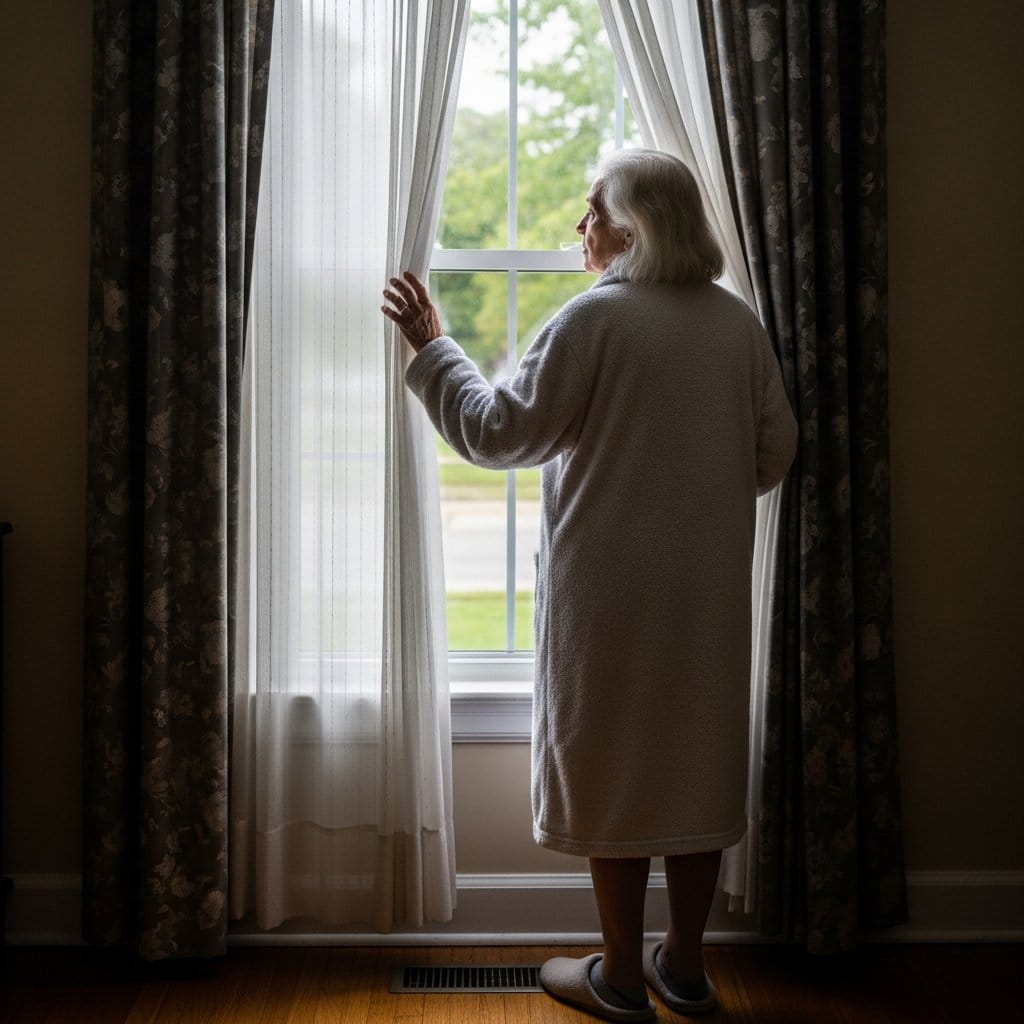
From the outside, summer looks relaxed and unhurried. From the inside, it can feel quiet, purposeless, and invisible.
Signs Your Aging Parent Is More Isolated Than You Realize This Summer
What to Listen for on the Next Call
The signs of summer isolation are subtle — not dramatic — and easy to miss on a quick check-in call.
Watch for these behavioral shifts:
- More television — if most of what she mentions involves what she’s been watching, that’s often a signal
- Vague or repetitive answers about how the week went (“oh, the usual” or “nothing much, really”)
- No outings mentioned in conversation — contrast this with spring, when she might have mentioned errands, walks, or get-togethers
- Declining invitations she would normally have accepted
- Shorter calls — not because she’s busy, but because there’s less to report
The “Fine” Conversation
Here’s something important: a senior who says she’s fine may genuinely not be aware of how much her social activity has dropped.
She’s not hiding it. She just hasn’t mapped the change consciously. The isolation feels like the new normal.
This is different from an active crisis signal — a fall, confusion, or distress — which is what most adult children are unconsciously listening for. Summer isolation doesn’t announce itself. It whispers.
The Mental Audit
Here’s a practical exercise worth doing right now: mentally audit your parent’s social calendar — not her medical calendar, her social one.
What was she doing weekly in March? A class, a committee, a standing coffee date, a volunteer shift?
Is she still doing any of it?
If the honest answer is no — or if you don’t actually know — that’s the gap this article is designed to help you close. Caring for aging parents from a distance means developing a picture of their social life, not just their physical health.

5 Simple Ways to Stay Connected With Your Aging Parent When You’re Not Nearby
Small and Consistent Beats Big and Occasional — Every Time
You’re not failing your mother by being on vacation. You’re not required to restructure your summer or cut trips short. What matters more than frequency or duration is consistency and intentionality — small, reliable contact that communicates presence even across distance.
Here are five systems that actually work:
1. The 15-Minute Connection Call
Replace the obligation check-in — “Just making sure you’re okay” — with a structured conversation that creates genuine connection.
Try this three-question framework:
- One question about the past: “What’s the best thing that happened this week?”
- One question about the present: “What does your week look like right now?”
- One forward-looking question: “Is there anything you’re looking forward to?”
This transforms a duty call into a relationship moment. It takes fifteen minutes and it matters far more than a longer, unfocused call once a month.
2. The Scheduled Video Call Window
Don’t call when you can — schedule a standing weekly appointment.
Predictability matters deeply to older adults whose weeks may feel shapeless in summer. A fixed video call — same day, same time — becomes something to anticipate. That anticipation has real emotional value.
For families where a parent is open to it, a dedicated video calling device with a large, easy-to-see screen — like an Amazon Echo Show or similar large-screen video tablet — can make these scheduled calls dramatically easier, especially for seniors who struggle with small smartphone screens or navigating apps.

3. The Photo Text Ritual
A daily or every-other-day photo text — your kid at the pool, a funny sign, something completely ordinary — communicates “I thought of you” without requiring a response or a scheduled window.
It keeps your parent inside the texture of your daily life, which is its own form of connection. You don’t need to overthink it.
4. The Neighbor or Friend Proxy
Identify one trusted person in or near your parent’s community who can provide a weekly human presence.
Not a formal check-in service — just someone who’ll knock on the door or make a five-minute call. A neighbor, a church friend, a nearby cousin.
You may need to make one phone call to set this up. That one call can create a consistent human touchpoint for the entire summer.
5. The Low-Barrier Family Group Chat
A simple family group chat — even one-directional, where your parent mostly receives rather than posts — keeps an aging parent included in daily family life without requiring technology fluency beyond receiving messages.
Photos of grandchildren, short updates, a funny video: these are small signals of belonging that add up across a week.
Want more practical strategies for supporting your aging parent from a distance? Subscribe to our newsletter for more tips: Join here

How to Find Summer Activities for Your Aging Parent (And Gently Encourage Them to Try)
More Is Available Than You Might Think
Senior centers and community programs often run summer programming specifically designed for isolated older adults — social lunches, movie screenings, cooling centers, book clubs, drop-in hours — but most older adults don’t seek these out on their own.
Here’s where to look from a distance:
- Area Agency on Aging — every region has one; their websites list local programs and you can often call directly to ask what’s available for summer
- Parks and recreation department — many run senior-specific summer programming that doesn’t get widely advertised
- Local library — senior programs, book discussions, and air-conditioned drop-in space often continue through summer
- Faith community calendar — even if the main committee is on hiatus, many congregations run informal summer social events
The Hesitant Parent Problem
Here’s what I’ve seen happen more times than I can count: you mention a program, and the default response is “I don’t need that” or “that’s not really for me.”
This usually isn’t stubbornness — it’s identity. Seeking out a senior program can feel like admitting a need, and that admission is uncomfortable for someone who values independence.
Two approaches tend to work:
The trial framing: “Just try it once. If it’s not for you, you never have to go back.” This lowers the stakes and removes the feeling of permanent commitment.
The social framing: “A neighbor mentioned they go on Thursdays. Would you want to try it once with someone you know?” Peer connection removes the stigma.
Do the Research Leg Work Yourself
Spend 20 minutes finding one specific summer program near your parent’s home. Call to confirm they’re welcoming new participants. Then present it to your parent as a concrete, specific option — not a vague suggestion.
“There’s a drop-in lunch every Wednesday at the senior center on Oak Street, and they said anyone can come” lands very differently than “you should look into senior center programs.”
The specificity is the whole difference. Understanding your aging parent’s mobility needs can also help you identify which programs are genuinely accessible for them — not just theoretically available.

Giving Your Aging Parent Something to Look Forward to This Summer
Connection Solves Isolation. Purpose Prevents It.
Here’s something I’ve found to be true and underappreciated: a calendar with nothing on it feels different than a calendar with even one upcoming thing.
Anticipation changes how isolation feels. A senior who knows something is coming — a visit, a delivery, a call, a project — experiences the quiet days between differently than one who has nothing to look forward to.
This is practical, not platitude.
Low-Lift Ways to Create Anchors From a Distance
You don’t need to be physically present to create anticipation. Here are things that work:
- Plan a future visit — even months out, having a date on the calendar changes the emotional landscape of the weeks before it
- Start a shared project — a family recipe book, a photo album, a collection of memories she narrates and you organize
- Send something in the mail — a card, a book, a small treat; something arriving creates a moment of event in an otherwise shapeless week
- Set up a recurring small pleasure — a weekly delivery, a puzzle subscription, a book club starter kit
Activity Subscription Boxes
When in-person visits aren’t possible, activity subscription boxes for seniors — curated monthly deliveries of puzzles, craft projects, games, or themed activities — can give an older adult something to look forward to and something to talk about on the next call.



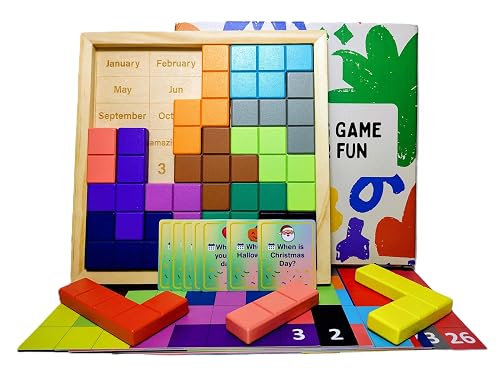


Several services design these boxes specifically for homebound or low-mobility older adults. They’re not a substitute for human connection, but they fill the space between calls with something purposeful and engaging.
For seniors who enjoy games and activities, card games and board games are also excellent items to send — familiar, low-barrier, and usable alone or with a visitor.
The Summer Check-In Script: 5 Conversation Frameworks for Staying Close to an Aging Parent From a Distance
Download these 5 conversation scripts designed specifically for long-distance caregiving—so you can move beyond ‘just checking in’ and actually know how your aging parent is really doing this summer.
The Quiet Season Doesn’t Have to Stay Quiet
Summer isn’t obviously dangerous for senior wellbeing the way winter can be. There’s no ice, no dark afternoons, no visible cold isolation. That’s exactly why it slips past everyone’s radar.
But the quiet evaporation of structured programs, regular visitors, and spontaneous neighborhood contact is real — and it compounds week by week until a genuinely social person has spent two months largely alone without anyone fully registering how it happened.
You don’t have to cut your vacation short or restructure your summer to make a meaningful difference.
Awareness is the first tool. A simple check-in structure, one phone call to a local senior center, and a standing video call window can change the shape of a parent’s week from a thousand miles away. And for older adults who value their independence, being included in daily family life — through photos, calls, and small surprises — is its own form of dignity.
Start with one thing this week: the 15-minute connection call framework, or 20 minutes searching for one summer program near your parent’s home. Small actions now matter more than a comprehensive plan in September.
What are you going to try first? Leave a comment below — your experience might be exactly what another adult child in the same situation needs to hear.



![Feat older man standing at window quiet melancholy[1]](https://www.grayingwithgrace.com/wp-content/uploads/2026/05/FEAT-older_man_standing_at_window_quiet_melancholy1-e1779546240849-450x300.jpg)

![Keep older woman tea family photos kitchen[1]](https://www.grayingwithgrace.com/wp-content/uploads/2026/05/KEEP-older_woman_tea_family_photos_kitchen1-e1778623664732-450x300.jpg)

![Older woman receiving meal dignity[1]](https://www.grayingwithgrace.com/wp-content/uploads/2026/02/older_woman_receiving_meal_dignity1-e1771334664816-450x300.jpg)


