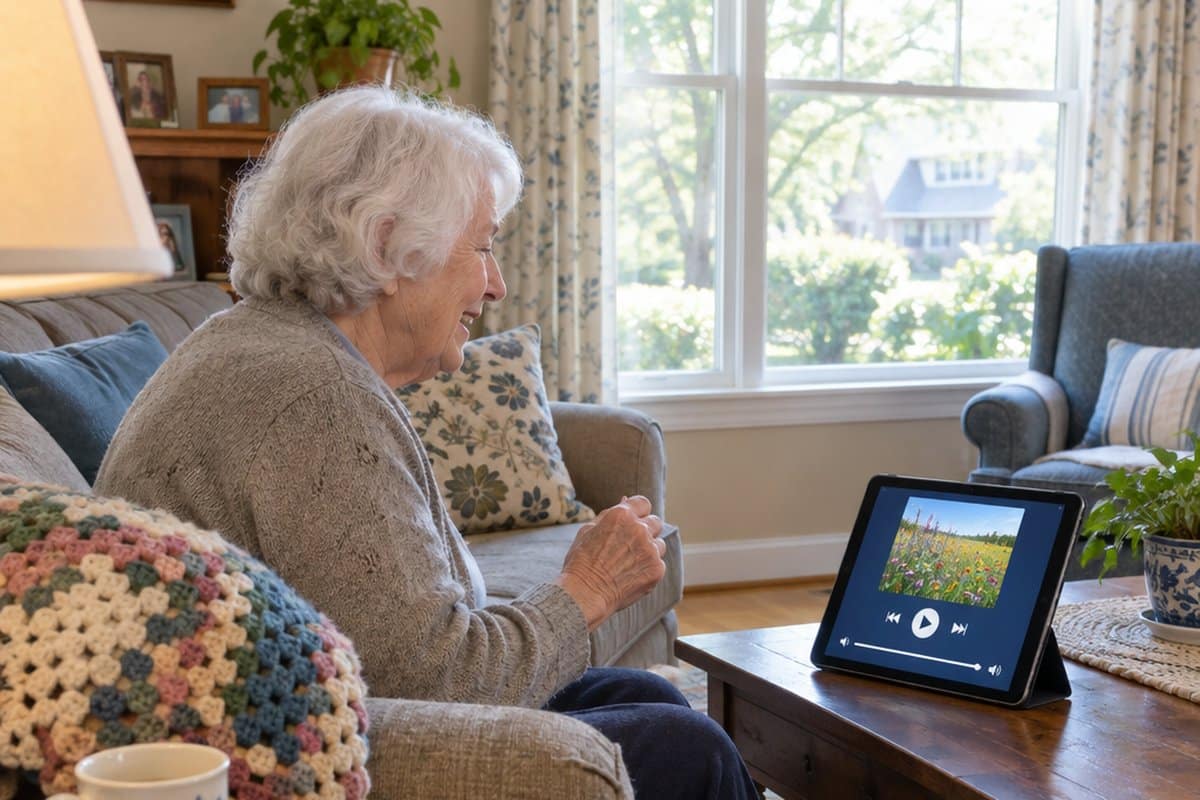
The right apps for dementia patients can take a little weight off a hard day, for the person living with memory loss and for the family helping them.
Below you’ll find reminder tools, music and brain-game apps, simple activities, and ways to keep track of a loved one who tends to wander. Each one comes with what it does well and where it falls short, so you can pick what fits your family.
Many important health apps for seniors support caregivers too. For quiet entertainment at home, you might also look at some podcast apps that are easy for older adults.
Reminder Apps For Dementia
Memoryboard Digital Calendar and Reminder Display
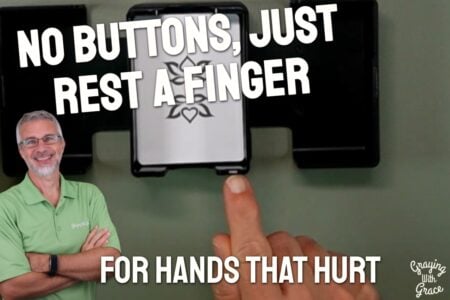
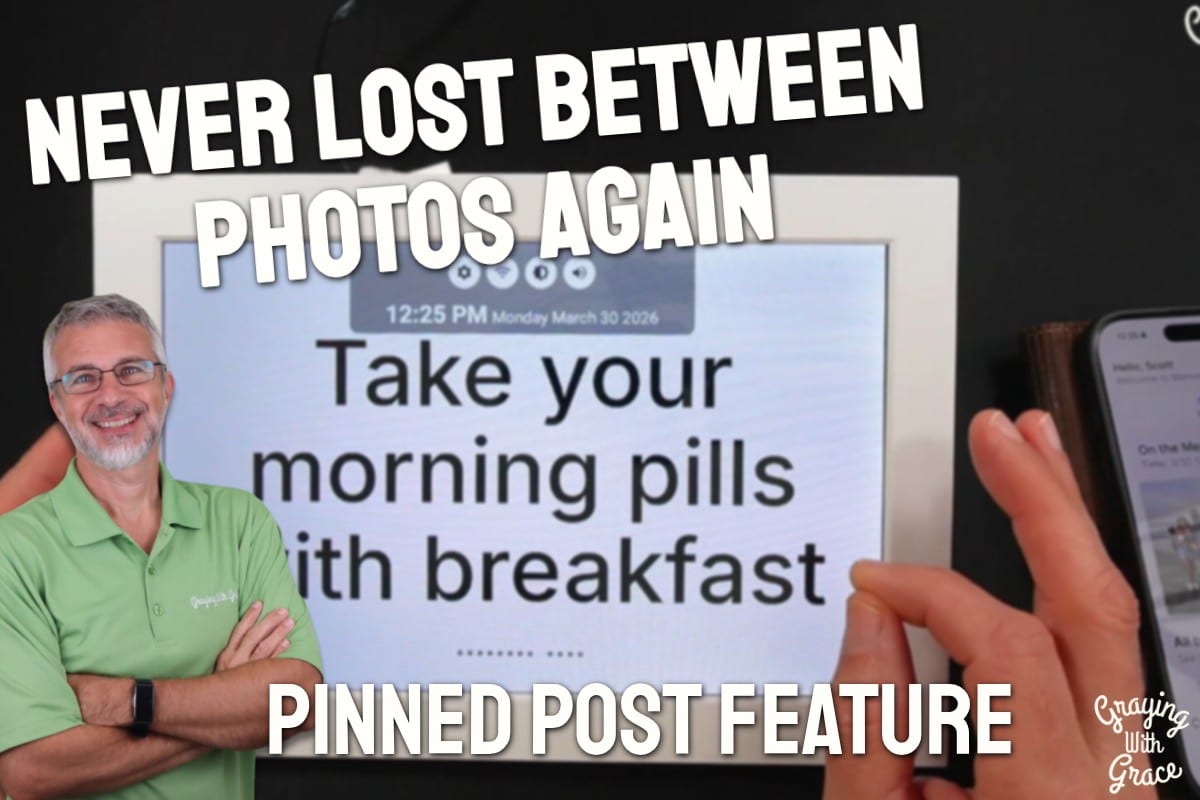
Most reminder apps expect the person with dementia to work a smartphone, and that is often the first thing to go. Memoryboard flips it around: you use the free app on your own iPhone or Android, and your reminders, messages and photos show up on a simple screen in their home.
There is nothing for your loved one to learn. No tapping, swiping or logging in, just large, easy-to-read text on a bright display that sits on a nightstand or side table.
You can send medication reminders, appointments, meal and water prompts, and a daily “tap so I know you’re okay” check-in. Brothers, sisters and caregivers can join the same Care Circle, so everyone helps from one place.
It needs a 2.4 GHz Wi-Fi network and an outlet, and there is no monthly fee. I go through it step by step in my Memoryboard review for dementia caregivers.
A reminder won’t catch everything, so keep a backup for the important ones, like a phone call at pill time. Use code GWG10 for 10% off when the site isn’t already running a better sale.

Dementia Music App
Music reaches people in a way few other things do. A good music app can calm a restless afternoon or lift a low mood.
If your loved one enjoys quiet, creative activities, take a look at these free and paid coloring apps for seniors, which can be a gentle way to relax and engage the mind.
SingFit
SingFit is a therapeutic-music app built to help the mood and health of people facing cognitive decline. It was started by a brother and sister whose mother had dementia: one a technology veteran, the other a certified music therapist.
The lyric-cueing feature shows the words as they are sung, which makes a sing-along easier and more fun. SingFit is available on Android and iOS as a monthly subscription.
Best Free Apps For Dementia Patients
Medisafe
Keeping pills straight is one of the first jobs families take over. Medisafe is a free medication reminder app for iPhone and Android that sounds an alert when each dose is due and reminds you when a refill is coming up.
In the U.S. it also warns about drug interactions, and it can make a report you can share with the doctor. I’d put it on your own phone rather than theirs, since someone with memory loss may silence an alert and forget why it went off.
The basics are free, and a paid upgrade unlocks more. A reminder won’t catch everything, so keep a backup, like a quick call at pill time.
The app’s interaction warnings don’t replace a real check, so ask the pharmacist to look over the full medicine list too.
Nymbl
Falls are a real worry for many families caring for someone with dementia. Nymbl offers fall risk checks and balance training to help with that.
It grew out of 35 years of clinical research, and it is offered through certain health insurance plans. To see if you qualify, fill out the interest form on the Nymbl website or call your insurance provider.
It’s free only through those plans, and the balance training runs on a smartphone, so it suits someone who still uses one comfortably.
Nymbl is available on iOS and Android. Check with their doctor before starting any new balance program.

Good Games And Activities For Dementia Patients
The best game is one your loved one can finish and feel good about. These are for the kitchen table, because a break from the tablet helps too, and there are no ads or surprise charges to trip over.
Yigney 48 Large Piece Jigsaw Puzzles
A jigsaw puzzle is an old favorite for good reason, and a big piece count is where it turns into frustration. The Yigney set has six 48-piece puzzles with large pieces, each with its own full-size picture to work from.
Everything fits in one storage box, and the outside of the box doesn’t say dementia or Alzheimer’s anywhere. That makes it easy to give as a gift, and it makes a good engaging and entertaining game to do together.
For someone who has done puzzles all their life and is in an early stage, 48 pieces may feel too easy. In a later stage, start with the Keeping Busy set below instead.


Keeping Busy Tile Matching Game
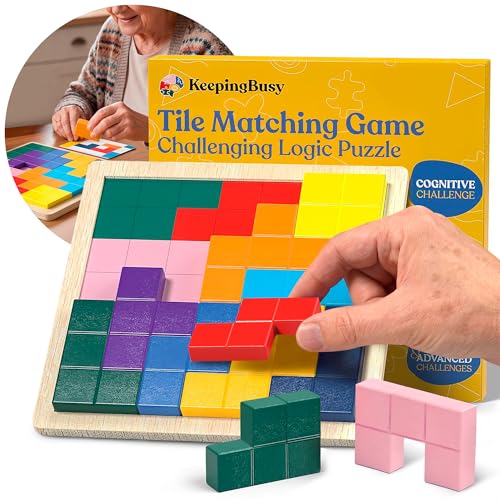
For a memory game off the screen, I like the Keeping Busy tile matching set. Your loved one fits 11 chunky, colorful wooden pieces onto a board, using one of 26 picture templates as a guide.
There are three levels, which is what makes it work. Start with a template that shows every piece, move to one with blank spaces, then try the bare board when they are ready.
The pieces are thick and easy to grip, and everything packs into a wooden storage box. You’ll need to pick the right starting level, and you can see how it plays in my Keeping Busy tile matching review.

QUOKKA Water Painting Activity Set
For someone in a later stage, a calm activity with no wrong answer is often the best kind. With the QUOKKA water painting set, they brush plain water over a page and a bright farm picture appears.
There is no paint, no color to choose and no mess to clean up. As the page dries the picture fades, so the same 10 pictures can be painted again and again.
That fading can disappoint someone who wants a finished picture to keep. The kit comes with one brush, and its thin handle may be hard for arthritic hands, so a foam grip can help.

Apps To Track Dementia Patients
Losing independence is hard, especially for someone who lived on their own for years. A tracker can’t bring memory back, but it can let your loved one keep walking to the mailbox or the neighbor’s while you worry a little less.
Any tracker only helps while it is carried and charged, and signals can drop. Keep a backup, such as a daily check-in call.
General Tracking Devices
General tracking devices such as PocketFinder can help people who care for someone with dementia. These compact devices are often used for luggage or car keys, but they can also help you find a loved one.
PocketFinder uses cellular service to find the device, and you check it from an app on your phone or computer. Geofencing lets you draw an area on the map and get an alert when the wearer leaves it.
It shows the street address, GPS coordinates and how fast the wearer is moving. Trips can be kept for up to 60 days, with updates by email or text.
Spytec Atlas GPS Tracker
If you want live GPS without a new phone or a monthly medical alert plan, the Spytec Atlas is a palm-sized tracker that fits in a coat pocket, purse or bag. You see where it is on your own phone, with updates as often as every 5 seconds and a history you can play back.
You can draw a safe area on the map and get an alert when it leaves. The battery lasts up to 14 days, so it isn’t one more thing to charge every night.
It needs a monthly subscription to work, and GPS can be spotty inside big buildings or among tall city blocks. It tracks the bag or coat, not the person, so it only helps on the days it goes along.
I’d talk it over with your loved one while they can still weigh in, and tell them it is there. Most people mind a tracker less when it was their choice too.

RAZ Memory Cell Phone (With a Caregiver App)
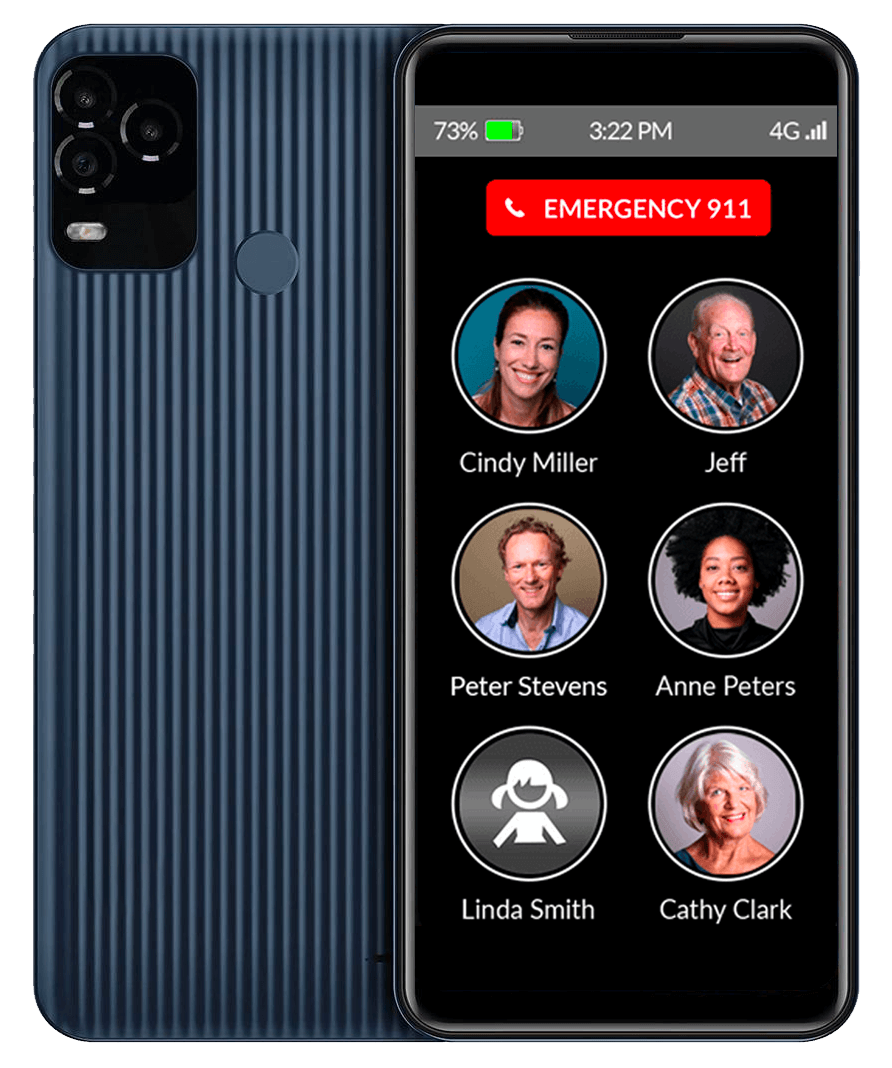
If your loved one carries a phone anyway, a phone made for dementia can be the tracker. The RAZ Memory Cell Phone shows its location, battery and signal in the RAZ Care app on your own iPhone or Android.
It only tells you where the phone is, so it helps only while it is on them and charged. The phone reminds them to charge it, and you can check the battery from the app.

Medical Alert System With GPS (From Bay Alarm Medical)
You probably remember the “I’ve fallen and I can’t get up” ads. Medical alerts have come a long way since then, and many now have GPS so a senior can call for help far from home.
The Medical Alert System with GPS from Bay Alarm Medical adds a caregiver tracking option. You see their location and history in the GPS Tracking Portal, and geofencing alerts you when they leave a set area.
It comes with a necklace lanyard, a charging pod and a carrying case with a belt clip. You can add fall detection, but it may not catch every fall, so the wearer should still press the button when they can.
The battery lasts up to 72 hours on a charge. Like any tracker, it only works when it is worn and charged.
Conclusion
There are more good tools for dementia care every year, for the person living with it and for the family helping.
From music and simple games to reminders, caregiving resources and trackers, the right few can make hard days a bit easier to manage. I’d start with the one problem that worries you most and pick one tool for it.
Whether you live with dementia or Alzheimer’s or you care for someone who does, I hope a few of these make daily life a little easier and more enjoyable.