
Mother’s Day is coming, and you aren’t sure how to face it. If you’re looking for ways to celebrate Mother’s Day with a mom who has dementia, you’re in the right place, and that mixed-up feeling in your chest is completely normal.
This article covers what to do when she doesn’t recognize you, why her senses can reach her when memory can’t, five ways to connect, and a memory box you can put together in about five minutes.
The Truth About Mother’s Day and Dementia That No One Talks About
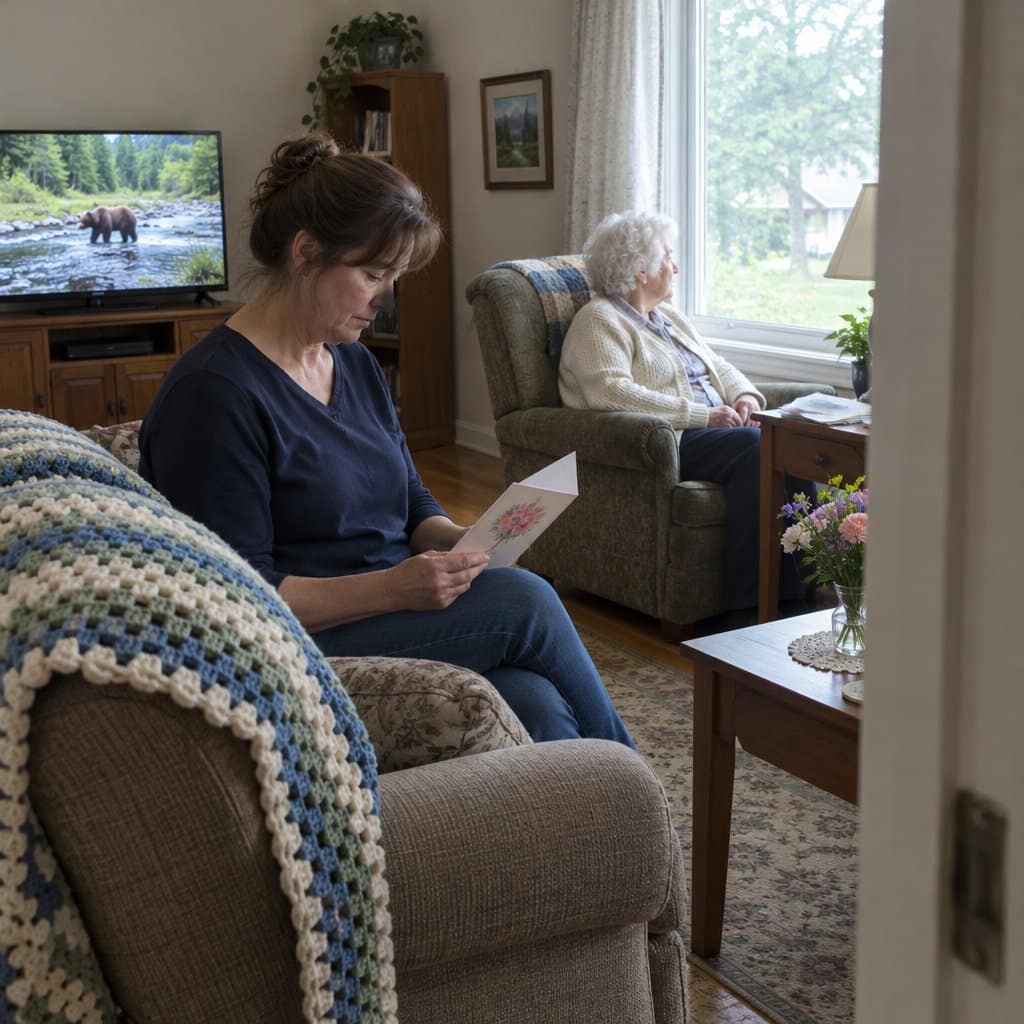
Many adult children feel a complex mix of emotions approaching Mother’s Day: grief for the mother who seems to have slipped away, guilt about not feeling “festive enough,” and even dread about navigating a day that highlights what’s been lost.
But here’s what might surprise you: letting go of traditional expectations doesn’t mean giving up on meaningful celebration. In fact, it might open doors to more authentic connection than you thought possible.
? Many caregivers report that their most precious memories came after they stopped trying to make mom remember and started meeting her where she actually is.
Discover how to create these meaningful moments! ?
Reframing Mother’s Day: The Gift of Meeting Mom Where She Is
The most overlooked aspect of celebrating with a loved one who has dementia isn’t about finding the perfect gift. It’s about shifting your focus from memory to presence.
Traditional Mother’s Day celebrations typically rely on shared memories and recognition. But when you release those expectations and instead meet your mother exactly where she is in this moment, something beautiful can happen.
This approach isn’t just better for her. It’s healing for you too. Many caregivers find that connecting is easier on both of you than correcting.
Feeling exhausted by your caregiving responsibilities? You’re not alone. Sign up for our weekly newsletter where we share practical tips and emotional support specifically for caregivers like you.
Why the Senses Reach Her When Memory Can't
Say your mom can’t tell you the date or even your name. She can still feel joy, comfort and connection in the moment she’s in.
The reason is that memories tied to touch, smell, sound, taste and sight often stay reachable, even in advanced dementia. The parts of the brain that handle thinking and recall may be affected, while the parts that handle emotion and the senses often keep working.
So your mom may still respond to the scent of her favorite flower or perfume. The feel of a familiar fabric or keepsake can reach her, and so can the taste of a treat she loved.
A meaningful song or the sight of colors and pictures that mattered to her can do the same. Any of these can bring up feelings of comfort, and none of them ask her to put words together or remember anything recent.
Music is a good example. Familiar songs can suddenly spark recognition or an emotional response, even when little else does.
If you want more ideas, I put together a guide to creating sensory engagement activities for any ability level.
One thing to keep in mind: what works one day may not work the next. She may skip right past something she loved last week, and that’s part of how dementia goes.
5 Meaningful Ways to Connect This Mother’s Day:
- Engage Her Senses: Sensory memories often remain reachable even when other memories fade. Try hand massages with her favorite lotion, play music from her young adulthood, or bring comfortable fabrics she might enjoy touching.
- Follow Her Timeline: If she believes she’s living in a different era, join her there. If she thinks she’s a young mother, bring simple crafts reminiscent of that time. Don’t correct, connect.
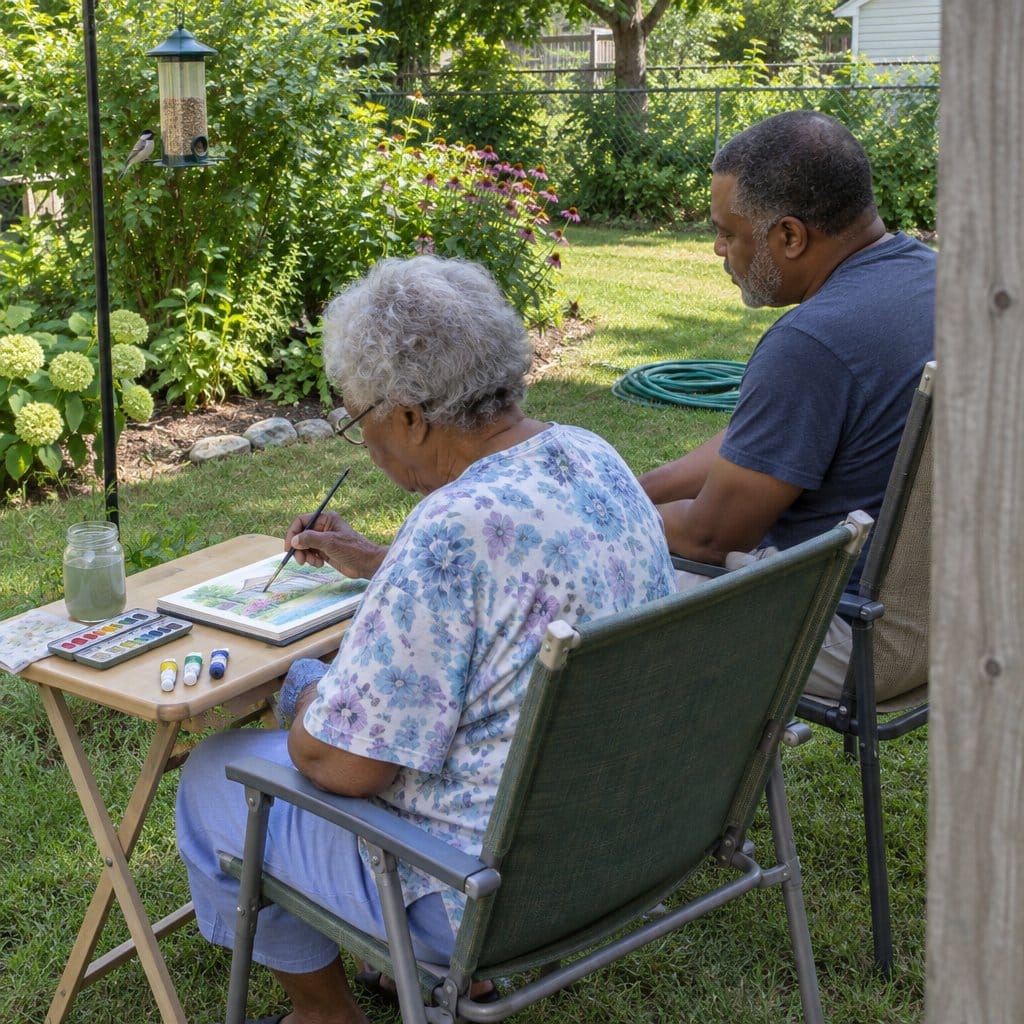
- Create No-Pressure Activities: Choose activities with no right or wrong way to participate: feeling sunshine on your faces in the garden, watching birds at a feeder, or simple watercolor painting where the process matters more than the result.
- Simplify Your Gathering: Small, quiet visits often work better than large, noisy celebrations. Consider shorter, more frequent visits instead of one long, potentially overwhelming day. Bring along a memory box like these.
- Preserve Your Own Memories: Create a private ritual to honor the mother you remember. Write her a letter, look through old photos alone, or plant something in your garden that reminds you of her.

Using the Memory Box Together on Mother's Day
How you set things up matters almost as much as what is in the box. Pick a quiet time when your mom is rested and calm.
Turn off the TV and keep background noise low. Good lighting helps, as long as it isn’t harsh or glaring.
Sit beside her instead of facing her, which feels less confrontational. Keep your voice gentle and reassuring.
Start slowly. You might say, “I brought some special things to look at together,” instead of quizzing her with questions.
If she shows interest in one item, stay with it. There is no need to rush through everything in the box.
Offer a gentle prompt, such as “This perfume always reminds me of you.” Skip “Do you remember wearing this perfume?” because that asks her to pass a test.
Share a simple story as you go: “This was from the garden you loved so much. The roses always smelled so wonderful.”
Watch her face and body. A smile, relaxed shoulders or an interested look can mean more than anything she says.
The goal isn’t to bring back a particular memory. It’s a good feeling in the moment, which is the same idea behind music that comforts her.
One trade-off: she may not care about every item, may only stay with it a short while, or may not respond the way you hope. Emotions can also come up unexpectedly, hers or yours, so go in ready for that.
How to Make a 5-Minute Memory Box for Mom
A memory box is a collection of items that hold personal meaning for your mom. It’s meant to engage her senses and bring up good feelings without asking her to remember specific events or people.
It works wherever she is in her dementia, and it only takes about 5 minutes to go through, which suits times when attention spans may be limited.
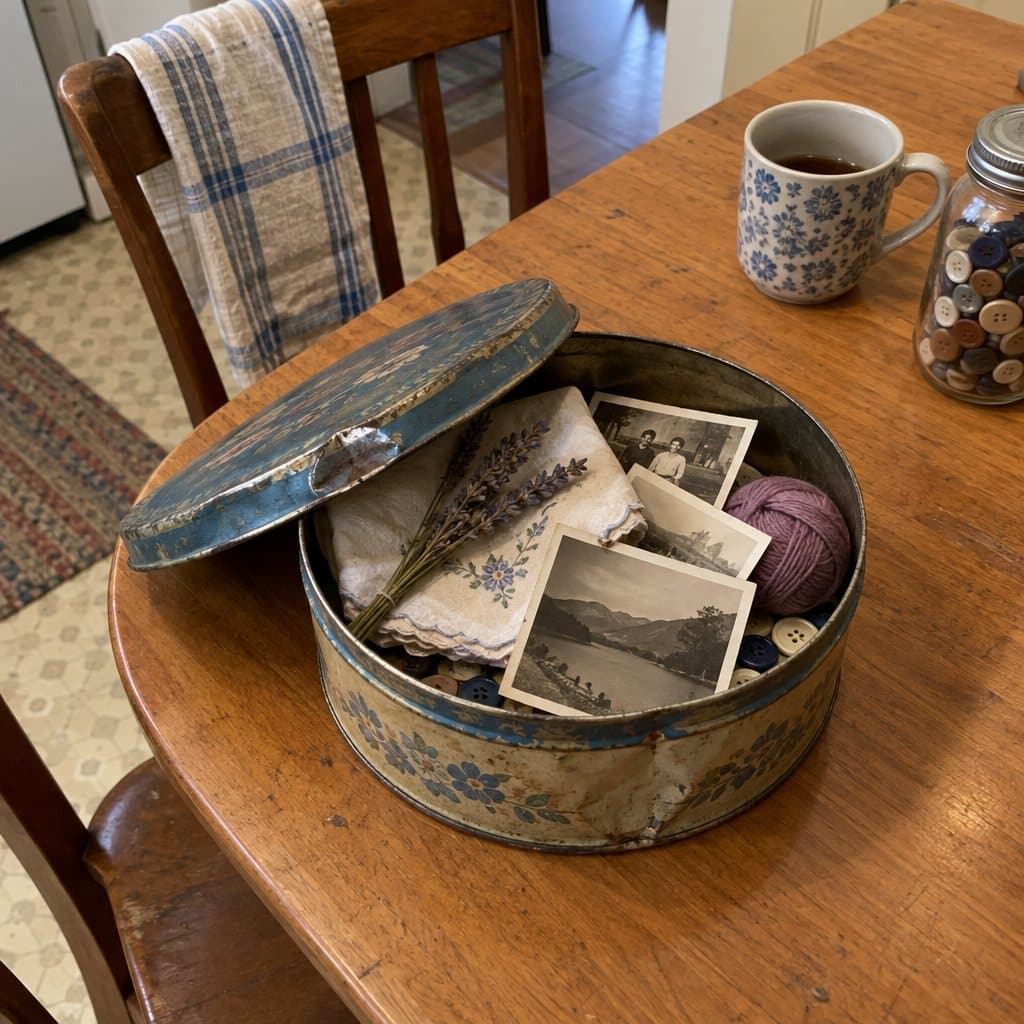
Step 1: Choose the container. Pick one that is easy to open, so skip complicated latches. It should hold several items but stay small enough to manage on her lap. A vintage cookie tin works if she loved baking, or a decorative box in her favorite color. If you would rather buy a ready-made one, there are subscription boxes to look at.
Step 2: Gather items for the senses.
- Scent: a handkerchief with a few drops of her perfume, dried lavender or roses if she gardened, coffee beans, or spices she cooked with.
- Touch: a swatch of fabric from a garment she wore, a soft brush if she enjoyed having her hair brushed, items from her hobbies like yarn or buttons, or a piece of jewelry she wore often.
- Sound: a small music box with a meaningful tune, a recordable card with family voices, or a playlist of her favorite songs on your phone. My guide to rediscovering favorite music can help you choose.
- Taste, only if safe and appropriate: her favorite hard candies, a tea bag of her usual blend, or a small chocolate.
For sight, photos from her young adulthood are often the most recognizable. Pictures of places she loved and items in her favorite colors also work.
Step 3: Personalize it to her story. Think about her career, her favorite hobbies and pastimes, places she loved to visit, and the roles she held, such as mother, teacher or artist. Cultural or religious traditions count too.
Say your mom was a teacher. You might add a chalkboard eraser, a few colorful pencils, or a children’s book she liked to read aloud.
One trade-off: she may ignore some items or lose interest quickly. A box built around her own life gives you the best chance, but it can’t promise a response.

How to Handle When Mom Doesn’t Recognize You
The hardest part of Mother’s Day might be when your mother doesn’t recognize you or understand the significance of the day. This pain is real, and acknowledging it is important.
When this happens, try this approach:
- Introduce yourself simply if needed: “Hi Mom, it’s Michael, your son. I’m here to spend some time with you today.”
- Focus on creating a pleasant moment rather than testing her memory
- Watch for non-verbal cues that show she’s enjoying your company, even if she can’t express it through words or recognition
Remember that emotional memory often persists even when factual memory fades. Your mother may not remember who you are, but she can still feel the warmth of your presence.
Finding Unexpected Gifts in the Journey
When you release expectations and embrace the mother who sits before you now, not the one who exists in your memories, surprising moments of connection become possible.
Many caregivers discover that:
- Authentic connection can happen even without recognition
- Simplifying celebrations often creates more meaningful experiences
- Being fully present in the moment is the greatest gift you can give
- The capacity to love doesn’t depend on memory
These discoveries don’t erase the pain of watching someone you love change. But they can help you find small islands of joy in what sometimes feels like an ocean of loss.
You Are Not Alone on This Journey
Navigating Mother’s Day when dementia has changed your relationship is challenging, but you don’t have to do it alone. The emotions you’re feeling (grief, guilt, frustration, and love all tangled together) are shared by many others walking this path.
Be gentle with yourself. Honor your mother as she is now. And remember that love goes beyond memory. Your presence matters, even when it doesn’t look like the Mother’s Day celebration you once imagined.
Have you found meaningful ways to connect with your mom despite dementia? What’s worked best for you? Share your experience in the comments to help other caregivers on this journey.
Looking for more support on your caregiving journey? Join our community of caregivers by signing up for our weekly newsletter filled with practical tips, emotional support, and resources specifically for those caring for loved ones with dementia.