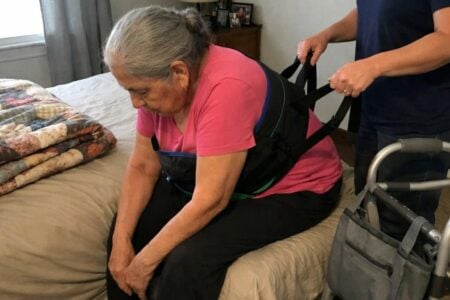
You’re staring at a screen full of product listings — or maybe standing in a medical supply aisle — and every belt looks roughly the same. You know your parent needs help walking safely. You just don’t know what “buckle type,” “weight rating,” or “transfer belt” actually means yet.
That uncertainty is completely normal. And the fact that you’re researching before buying? That already tells me something important about the kind of caregiver you are.
By the time you finish this gait belt buying guide, you’ll know exactly which features matter, how to match a belt to your loved one’s specific situation, and what common mistakes to avoid — so you can make a confident, informed choice the first time.

Gait Belt Buyer’s Cheat Sheet: Match the Right Belt to Your Loved One in 5 Minutes
Download your free Gait Belt Buyer’s Cheat Sheet and confidently choose the right belt in 5 minutes—no medical knowledge required, just a simple framework that keeps your loved one safe and your caregiving routine practical.
What Is a Gait Belt — and Is It the Same as a Transfer Belt?
This is the question I hear most often from caregivers in your situation, so let’s clear it up right away.
A gait belt is a sturdy assistive strap worn around a person’s waist that gives a caregiver a safe, secure handhold while helping someone walk, stand, or move from one position to another.
A transfer belt is essentially the same tool. The terms are often used interchangeably — and many products are designed to serve both functions, whether you’re helping someone take a few steps down the hallway or move from a bed to a chair.
The key distinction worth knowing:
- Gait belt — more commonly associated with walking assistance and balance support
- Transfer belt — more commonly associated with repositioning (bed to chair, chair to standing)
A gait belt is the right tool when your loved one has some mobility and can bear partial weight. If they cannot bear weight at all, a different type of lift or transfer aid may be needed — and a physical therapist can help you figure out which.
Understanding the terminology puts you in control. You don’t need a medical background to choose the right tool — you just need to know what you’re looking at. And now you do.
Understanding mobility aids more broadly can also help — if you’re newer to this space, this overview of mobility aids for seniors is a helpful starting point.

The Five Features That Actually Matter


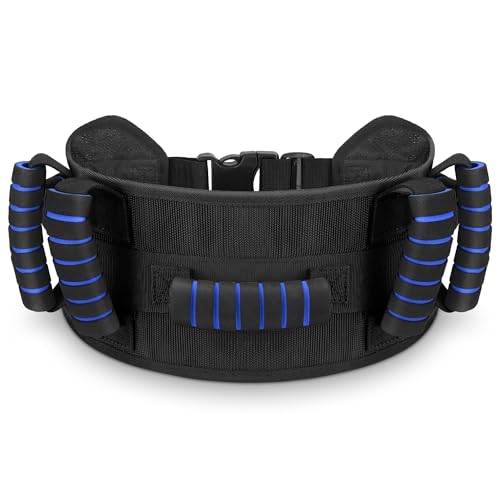
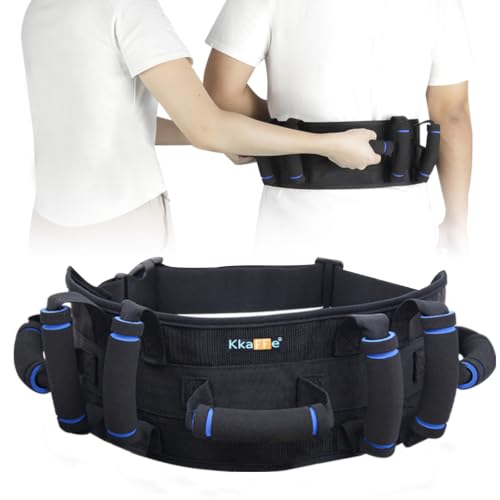
Not all gait belts are created equal — but five specific features will determine whether a belt works well for your caregiving situation. Here’s what to look for, broken down simply.
1. Length: Getting the Right Fit
Most belts range from 24 to 72 inches. The right length depends on your loved one’s waist size.
The general rule: the belt should wrap snugly around the waist with enough extra length to create a secure grip — typically 4 to 6 inches of slack after fastening. If you’re unsure what size gait belt you need, measure the waist and add about 20 to 24 inches to get your starting point.
Choosing the right gait belt length for an elderly parent is one of the most commonly skipped steps — don’t skip it.
2. Width: Comfort and Control
Standard belts are 4 inches wide. Wider belts — typically 6 inches — distribute pressure more evenly across the waist, which matters for comfort during repeated use.
A narrower belt can dig into the skin during transfers. A wider belt gives the caregiver a better grip surface and keeps the care recipient more comfortable. For bariatric use especially, wider is almost always better when comparing gait belt width options.
3. Buckle Type: Speed vs. Security
There are two primary buckle types:
- Metal buckles — more durable, standard in clinical settings, highly secure
- Plastic quick-release buckles — faster to fasten and remove, more convenient for home use
Some belts also include loop-style handles near the buckle for added control during transitions. When comparing gait belt buckle types, think about how often the belt will be used and how quickly you need to get it on and off.
4. Material: Cotton vs. Nylon
This is where personal preference meets practical need.
- Cotton — softer, breathable, machine washable; a good choice for everyday use in lower-risk environments
- Nylon or coated nylon — more durable, wipeable, easier to sanitize between uses; better for multi-caregiver households or when hygiene is a priority
When evaluating gait belt material options between cotton and nylon, ask yourself: Will this belt be used by more than one caregiver? Is incontinence a factor? If yes to either, wipeable nylon is worth the upgrade.
A wipeable gait belt — nylon or vinyl-coated — is ideal for caregivers who need easy sanitizing between uses.


5. Weight Rating: Match the Belt to the Person
Every gait belt should have a published weight rating. Always check this before purchasing.
Standard belts typically accommodate up to 250–300 lbs. Bariatric options go higher and often feature wider construction and reinforced hardware.
Using a belt that isn’t rated for your loved one’s weight is a safety risk — and it’s one of the most important items in any gait belt weight rating guide. When in doubt, size up.
For caregivers who need additional grip options during transfers and walking assistance, a multi-handle gait belt provides more flexibility and control at multiple points around the waist.



Matching the Right Belt to Your Caregiving Situation


Here’s the thing about this transfer belt selection guide for family caregivers: there’s no single “best” belt. There’s the right belt for your situation.
Here’s a simple decision framework to help you sort it out:
- How mobile is your loved one? Someone who can walk with light assistance needs something different than someone transferring from a wheelchair.
- What’s their body size? Weight rating and belt width become more important as size increases.
- How many caregivers are involved? If multiple people assist, wipeable material and a simple buckle make shared use more practical.
- How strong and tall is the primary caregiver? Belt handle placement matters — choose for the least experienced or smallest-framed person in the rotation.
Two scenarios to illustrate:
Scenario A: You’re helping an ambulatory parent with mild balance issues take short walks around the house. A standard cotton belt with a simple plastic buckle and a 250 lb. weight rating is likely all you need.
Scenario B: You’re assisting a parent recovering from a stroke, transferring them from bed to wheelchair daily, with two other family members also helping. A multi-handle belt with wipeable nylon material and a higher weight rating gives every caregiver better control and easier sanitizing between uses.
The best wipeable gait belts for seniors in hygiene-sensitive environments and the best multi-handle gait belts for bariatric care are both worth exploring based on which scenario fits your situation.


For caregivers helping a loved one transition home after a hospital stay, this fall prevention checklist pairs well with what you’re learning here.
Looking for more practical tools and trusted advice for your caregiving journey? Subscribe to our newsletter — each week I share caregiver-tested tips and product recommendations to help you care for your loved one with confidence.
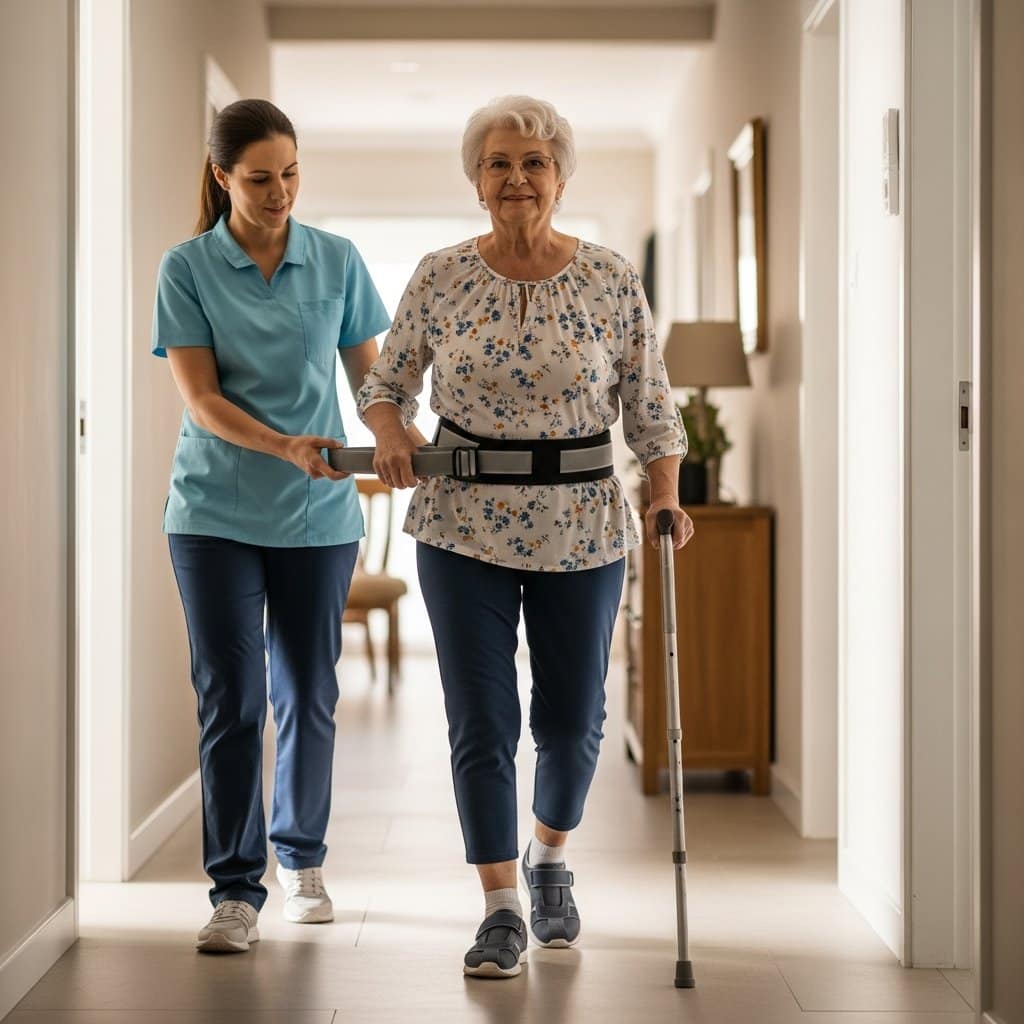
How to Use a Gait Belt Safely — The Basics Every Caregiver Should Know
Buying the right belt is step one. Knowing how to use it correctly is what keeps everyone safe.
Using a gait belt safely isn’t complicated — but a few fundamentals make all the difference.
Proper Placement
The belt goes around the waist, over clothing — never against bare skin. It should be snug but not restrictive. A reliable test: you should be able to slip two fingers underneath.
Where to Grip
Grip the belt from underneath with palms facing up. Never grab the belt overhand, and never grip clothing or arms — that reduces your control and can cause injury.
Body Mechanics
These basics protect you during every transfer or walking assist:
- Bend at the knees, not the waist
- Keep your back straight
- Position yourself close to your loved one before initiating movement
When NOT to Use a Gait Belt
Consult a healthcare provider before using a gait belt if your loved one has:
- Open wounds or skin breakdown at the waist
- Recent abdominal surgery
- Fragile skin
- Osteoporosis affecting the spine or torso
Consider Hands-On Training
An occupational therapist or physical therapist can walk you through proper technique in person — and asking for that guidance is a smart move, not an admission of inadequacy.
You don’t need medical training to safely transfer an elderly parent. You just need the right technique and the right tools. If your loved one also uses a walker or cane alongside gait belt assistance, this guide to walking canes for seniors may help you understand how those aids complement each other.

Common Mistakes First-Time Buyers Make — and How to Avoid Them
These aren’t failures — they’re the things nobody tells first-time caregivers. Now you know, and that already puts you ahead.
Buying by Price Alone
The cheapest option may lack a published weight rating or use hardware that wears out quickly. Price is a factor, but it shouldn’t be the only one when safety is involved.
Skipping the Sizing Step
Many caregivers buy a “standard” length without measuring and end up with a belt that’s too short to fasten properly or too unwieldy to control. Measure first — always.
Ignoring the Material
Cotton sounds gentle, but it isn’t always practical. If hygiene is a concern or multiple caregivers are involved, the long-term advantages of nylon often outweigh the initial stiffness. Understanding gait belt material options — cotton vs. nylon — before you buy saves a return trip.
Overlooking Handle Placement
Multi-handle belts aren’t just for bariatric care. They give any caregiver more flexibility when working with an unpredictable or inconsistent gait — which is more common than you’d think after a fall, surgery, or stroke.
Not Accounting for All the Caregivers Involved
If multiple people share caregiving duties, choose a belt that works for the least experienced or smallest-framed caregiver in the group. The features that matter most in gait belt selection should serve the full team, not just the primary caregiver.
If you’re navigating caregiving alongside a demanding schedule, you’re not alone — these caregiver support blogs and tools like automatic pill dispensers can help lighten the load in other areas of your routine.
Gait Belt Buyer’s Cheat Sheet: Match the Right Belt to Your Loved One in 5 Minutes
Download your free Gait Belt Buyer’s Cheat Sheet and confidently choose the right belt in 5 minutes—no medical knowledge required, just a simple framework that keeps your loved one safe and your caregiving routine practical.
You’re More Prepared Than You Think
Choosing the right gait belt doesn’t require medical expertise. It requires knowing which five features matter — length, width, buckle type, material, and weight rating — understanding your loved one’s specific needs, and matching the product to the situation.
You came here looking for a gait belt buying guide, and now you have a clear decision framework you can actually use. That kind of research-first instinct is exactly what makes a meaningful difference in a loved one’s safety and dignity.
I’d love to hear about your caregiving situation in the comments below. What type of care does your loved one need right now — walking assistance, transfers, or both? Did this transfer belt selection guide for family caregivers help you narrow down your choice? Your experience might be exactly what another caregiver needs to read today.